 Talmud Bavli
Bava Kamma 27b : Youtube
Daf TubeYoutube
2 video classes :
Bava Kamma Page 27b
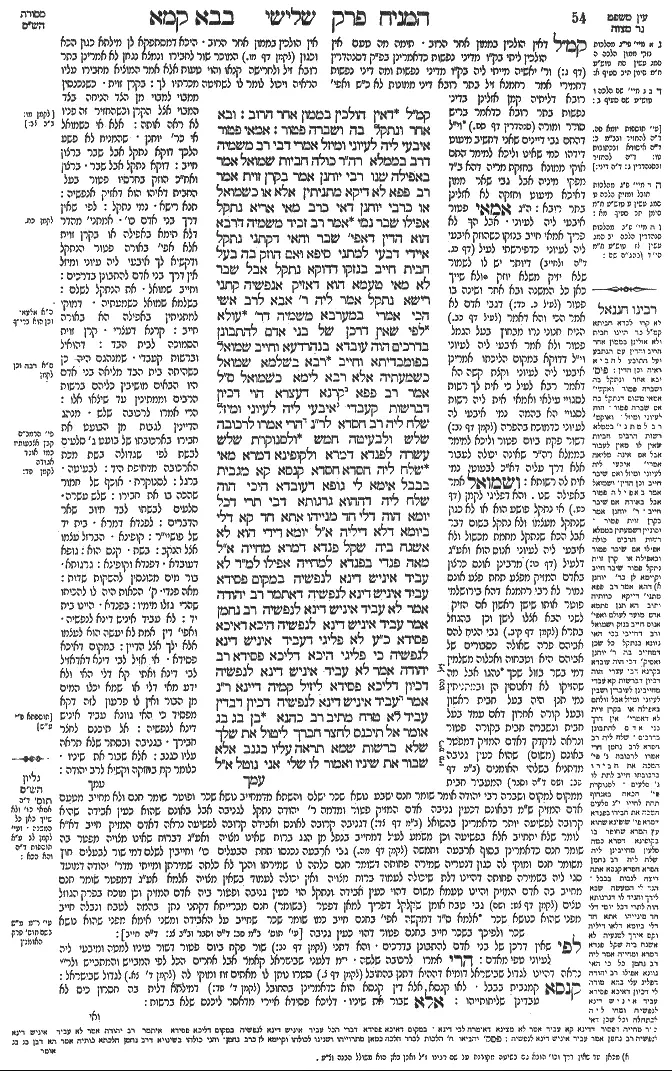
Bava Kamma 27b - Guemara
קמ"ל דאין הולכין בממון אחר הרוב:
ובא אחר ונתקל בה ושברה פטור:
אמאי פטור איבעי ליה לעיוני ומיזל אמרי דבי רב משמיה דרב בממלא רה"ר כולה חביות שמואל אמר באפילה שנו רבי יוחנן אמר בקרן זוית אמר רב פפא לא דיקא מתניתין אלא או כשמואל או כרבי יוחנן דאי כרב מאי אריא נתקל אפילו שבר נמי אמר רב זביד משמיה דרבא הוא הדין דאפי' שבר והאי דקתני נתקל איידי דבעי למתני סיפא ואם הוזק בה בעל חבית חייב בנזקו דדוקא נתקל אבל שבר לא מאי טעמא הוא דאזיק אנפשיה קתני רישא נתקל אמר ליה ר' אבא לרב אשי הכי אמרי במערבא משמיה דר' עולא לפי שאין דרכן של בני אדם להתבונן בדרכים הוה עובדא בנהרדעא וחייב שמואל בפומבדיתא וחייב רבא בשלמא שמואל כשמעתיה אלא רבא לימא כשמואל ס"ל אמר רב פפא קרנא דעצרא הוי דכיון דברשות קעבדי איבעי ליה לעיוני ומיזל שלח ליה רב חסדא לר"נ הרי אמרו לרכובה שלש ולבעיטה חמש ולסנוקרת שלש עשרה לפנדא דמרא ולקופינא דמרא מאי שלח ליה חסדא חסדא קנסא קא מגבית בבבל אימא לי גופא דעובדא היכי הוה שלח ליה דההוא גרגותא דבי תרי דכל יומא הוה דלי חד מנייהו אתא חד קא דלי ביומא דלא דיליה א"ל יומא דידי הוא לא אשגח ביה שקל פנדא דמרא מחייה א"ל מאה פנדי בפנדא למחייה אפילו למ"ד לא עביד איניש דינא לנפשיה במקום פסידא עביד איניש דינא לנפשיה דאתמר רב יהודה אמר לא עביד איניש דינא לנפשיה רב נחמן אמר עביד איניש דינא לנפשיה היכא דאיכא פסידא כ"ע לא פליגי דעביד איניש דינא לנפשיה כי פליגי היכא דליכא פסידא רב יהודה אמר לא עביד איניש דינא לנפשיה דכיון דליכא פסידא ליזיל קמיה דיינא ר"נ אמר עביד איניש דינא לנפשיה דכיון דבדין עביד לא טרח מתיב רב כהנא בן בג בג אומר אל תיכנס לחצר חברך ליטול את שלך שלא ברשות שמא תראה עליו כגנב אלא שבור את שיניו ואמור לו שלי אני נוטל א"ל
Comments from Rashi on Masechet Bava Kamma Page 27b
אין הולכין בממון אחר הרוב . היכא דמסתפקא לן מילתא כגון הכא וכגון (בבא קמא מו, א) המוכר שור לחבירו ונמצא נגחן לא אמרינן בתר רובא זיל ולחרישה קנאו והוי טעות אלא אמר המוציא מחבירו עליו הראיה ויכול לומר לו לשחיטה מכרתיו לך: בקרן זוית . כשנכנסין ממבוי למבוי מן הצד הניחה בצד המבוי אצל הקרן וכשהחזיר זה פניו לא ראה אותה: אלא אי כשמואל אי כר' יוחנן . שהמניח לא פשע הלכך דוקא נתקל אבל שבר ברצון חייב: דוקא נתקל אבל שבר . ברצון ואח"כ הוזק בחרסיו פטור בעל החבית דאיהו הוא דאזיק אנפשיה: תנא רישא . נמי נתקל: לפי שאין דרך בני אדם כו' . אמתני' מהדר דלא תימא באפילה או בקרן זוית אלא אפי' באורה פטור הנתקל ודקשיא לך איבעי ליה עיוני ומיזל אין דרך בני אדם להתבונן בדרכים: וחייב שמואל . את הנתקל לשלם: בשלמא שמואל כשמעתיה . דמוקי למתניתין באפילה הא באורה חייב: קרנא דעצרי . קרן זוית הסמוכה לבית הבד: דהואיל וברשות קעבדי . שמנהגם היה כן כשהיתה בית הבד מליאה בני אדם היו הבאים מושיבין כליהם ברשות הרבים וממתינין עד שיצאו אלו: הרי אמרו לרכובה שלש . מנהג הדיינין לגבות מן הבועט את חבירו בארכובתו של בועט ג' סלעים לבשת לפי שגדולה בשת מכת הארכובה מדחיפת היד: לבעיטה . ברגל: לסנוקרת . אוכף של חמור שהכה בו את חבירו: שלש עשרה . סלעים לבשתו לבד חיוב שאר הדברים: לפנדא דמרא . בית יד של פושיי"ר: קופינא . הברזל עצמו אצל הנקב: בשת . קנס הוא: גופא דעובדא . דפנדא וקופינא: גרגותא . בור מים מכונסין להשקות שדות: מאה פנדי . ק' הכאות היה לו להכותו שהרי גזלו מימיו: בפנדא . היינו בית יד: לא עביד איניש דינא לנפשיה . ואפי' דין אמת לא יעשה הוא לעצמו אלא ילך אצל הדיין: במקום דאיכא פסידא . אי אזיל לבי דינא דאדאזיל לבי דינא ואתי קא דלי האי ולא ידע מאי דלי או שמא יכלו המים מן הבור ואין לו פרעון לזה דקא מפסיד כי האי גוונא עביד איניש דינא לנפשיה: אל תיכנס לחצר חבירך . בגניבה ובסתר שלא תראה עליו כגנב: אלא שבור את שיניו . כלומר קח בחזקה וקשיא לרב יהודה:
Comments from Tosafot - Bava Kamma 27b
קמ"ל דאין הולכין בממון אחר הרוב . . תימה, מה טעם אין הולכין ליתי בקל וחומר מדיני נפשות, כדאמרינן בפ"ק דסנהדרין (סנהדרין ג, ב) "[ מייתי לה] ור' יאשיה [מייתי ליה] בק"ו מדיני נפשות ומה דיני נפשות דחמירי אמר רחמנא זיל בתר רובא, דיני ממונות לא כ"ש?" ואפילו רובא דליתיה קמן, אזלינן בדיני נפשות בתר רובא. כדאמר בריש סורר ומורה (סנהדרין סט, א). וי"ל דהתם גבי דיינים שאני, דחשיב מיעוט דידהו כמי שאינו, וליכא למימר התם אוקי ממונא בחזקת מריה, דהא ב"ד מפקי מיניה. אבל גבי שאר ממון דאיכא מיעוט וחזקה לא אזלינן בתר רובא: ה"ג אמאי פטור איבעי ליה לעיוני . . אבל הך לא פריך אמאי חייב בנזקו כשהוזק איבעי ליה לעיוני כדפירשתי לעיל (בבא קמא דף כג. ד"ה ולחייב) דיותר יש לו לשמור שלא יזיק משלא יוזק ולא שייך כאן כל המשנה ובא אחר ושינה בו פטור (לעיל בבא קמא כ. כד:) דגבי אדם לא אמר הכי והא דאמר (לעיל בבא קמא דף כב.) הניח חנוני נרו מבחוץ בעל הגמל פטור ולא אמר איבעי ליה לעיוני וי"ל דדוקא במקום הליכתו אמרינן איבעי ליה לעיוני וקצת קשה הא דאמר רבא לעיל כי אית לך רשות לסגויי עילאי ואמאי אית ליה רשות לסגויי הא בהמה נמי איבעי לה לעיוני כדמוכח בהפרה (לקמן בבא קמא דף נב:) דשור פקח ביום פטור וליכא למימר בממלא רה"ר שאינה יכולה לעבור אלא דרך עליה דא"כ לבעוטי נמי אית לה רשותא: ושמואל אמר באפילה שנו . . והא דפליגי לקמן (בבא קמא דף כט.) אי נתקל פושע הוא או לא כגון שנתקל מעצמו ולא נתקל בשום דבר אבל הכא שנתקל מחמת מכשול ולא איבעי ליה לעיוני אנוס הוא ואע"ג דלעיל (בבא קמא דף כו:) מרבינן אונס כרצון באדם המזיק מפצע תחת פצע אונס גמור לא רבי רחמנא דהא בירושלמי פוטר אותו שישן ראשון אם הזיק לשני הבא אצלו לישן וכן בהגוזל בתרא (לקמן בבא קמא דף קיב.) גבי הניח להם אביהם פרה שאולה כסבורים של אביהם היא וטבחוה ואכלוה משלמין דמי בשר בזול שכך נהגו אבל מה שהזיקו לא דאנוסין הן ובמתניתין נמי תנן היה בעל חבית ראשון ובעל קורה אחרון דאם עמד בעל חבית ונשברה חבית בקורה פטור ונראה לדקדק דאדם המזיק דמפטר באונס (משום) שהוא כעין גניבה מדתניא בשלהי האומנים (ב"מ דף פב: ושם ד"ה וסבר) המעביר חבית ממקום למקום ושברה רבי יהודה אומר שומר חנם ישבע נושא שכר ישלם והשתא מדמחייב נושא שכר ופוטר שומר חנם ולא מחייב מטעם אדם המזיק ש"מ דבאונס דכעין גניבה אדם המזיק פטור ומדמה ר' יהודה נתקל לגניבה אבל באונס שהוא כעין אבידה שהיא קרובה לפשיעה יותר כדאמרינן בהשואל (ב"מ דף צד:) דגניבה קרובה לאונס ואבידה קרובה לפשיעה נראה דאדם המזיק חייב דא"א לומר שלא יתחייב אלא בפשיעה וכן משמע לעיל דמחייב בנפל מן הגג ברוח שאינו מצויה ואע"ג דברוח שאינו מצויה מפטר בה שומר חנם כדאמרינן בסוף ארבעה וחמשה (לקמן בבא קמא דף מה.) גבי ארבעה נכנסו תחת הבעלים כו' וחייבין לשלם דמי שור לבעלים חוץ משומר חנם ומוקי לה כגון דנטריה שמירה פחותה דשומר חנם כלתה לו שמירתו והנך לא כלתה שמירתן ומייתי מדר' יהודה דמועד סגי ליה בשמירה פחותה דהיינו דלת שיכולה לעמוד ברוח מצויה ואין יכולה לעמוד בשאין מצויה אלמא אע"ג דמפטר שומר חנם מחייב בה אדם המזיק והיינו טעמא משום דהוי כעין אבידה ונתקל הוי כעין גניבה ופטור ביה אדם המזיק וכן מוכח בפרק הגוזל עצים (לקמן בבא קמא דף צט: ושם) גבי טבח אומן שקלקל דפריך למאן דפטר (בשומר) חנם מברייתא דקתני נתן בהמה לטבח ונבלה חייב מפני שהוא כנושא שכר אלמא ס"ד דמקשה אפי' בחנם חייב כמו שומר שכר שחייב על האבידה ומשני אימא מפני שהוא נושא שכר ולפיכך בשכר חייב בחנם פטור דהוי כעין גניבה [עי' תוס' ב"מ פב: ד"ה וסבר וב"ב צג: ד"ה חייב]: לפי שאין דרכן של בני אדם להתבונן בדרכים . . והא דתני (לקמן בבא קמא דף נב:) שור פקח ביום פטור דשור עיניו למטה ומיבעי ליה לעיוני טפי מאדם: הרי אמרו לרכובה שלשה . . י"מ דלעני שבישראל קאמר אבל אחרים הכל לפי המבייש והמתבייש ולר"י נראה דהיינו לגדול שבישראל דומיא דההיא דתנן בהחובל (לקמן בבא קמא דף צ) סטרו נותן לו מאתים זוז ומוקי לה (לקמן בבא קמא ד' צא.) לגדול שבישראל: קנסא קמגבית בבבל . . לאו קנסא אלא דין קנסא הוא כדאמרינן בהחובל (לקמן בבא קמא ד' פד:) דמילתא דלית בה חסרון כיס לא עבדינן שליחותייהו: אלא שבור את שיניו . . דליכא פסידא איירי מדאסר ליכנס שלא ברשות:
Bava Kamma 27b - Mishnah translated into english
the mishna teaches us that the court does not follow the majority with regard to monetary matters, and in cases of uncertainty the burden of proof rests upon the claimant.
§ The mishna teaches concerning the vessel placed in the public domain: If another person came and stumbled on it and broke it, he is exempt. The Gemara asks: Why is he exempt? Although this happened in the public domain, he should examine the road and then continue walking.
The Sages of the school of Rav said in the name of Rav: The ruling of the mishna is taught with regard to one who placed not just one barrel in the road, but rather filled the entire public domain with barrels, blocking the path. Since the public domain belongs to everyone, a pedestrian is entitled to traverse the road even if it necessitates breaking the vessels. Shmuel says: The ruling of the mishna is taught with regard to a case where he broke it in the dark. Therefore, he could not have avoided breaking the barrel by examining the road in front of him. Rabbi Yoḥanan says: The ruling of the mishna is taught with regard to a case where the barrel was placed at the corner of the road, and so the pedestrian could not have seen it, as he rounded the corner, before stumbling on it.
Rav Pappa said: The mishna is precise only according to either the explanation of Shmuel or that of Rabbi Yoḥanan, but not that of Rav. As, if the mishna is explained in accordance with the explanation of Rav, what is the reason it refers specifically to a case where one stumbled on the barrel? Even if he broke the barrel intentionally he should not be liable to pay, as the owner of the barrel had no right to block the public road.
Rav Zevid said in the name of Rava in defense of Rav’s explanation: The same is true even if he broke the barrel intentionally. And as for this fact, that the tanna of the mishna teaches a case where he stumbled, it is because he wants to teach in the last clause: And if he incurred damage due to the vessel, the owner of the ḥavit is liable to pay for his damage. As this ruling applies specifically when he stumbled, but if he broke the barrel intentionally and incurred damage in the process, the owner of the barrel is not required to compensate him. What is the reason for this? Although the pedestrian had the right to break the barrel, it is he who damaged himself, by not being careful while breaking it. Therefore, in the first clause the mishna teaches a case where he stumbled. Accordingly, the mishna’s wording is precise according to Rav’s explanation as well.
Rabbi Abba said to Rav Ashi that this is what they say in the West, Eretz Yisrael, in the name of Rabbi Ulla, in explanation of the mishna: Even if the barrel is clearly visible, one who stumbles on it is exempt from liability because the typical manner of people is not to examine the roads, as they assume that the road is unobstructed. Therefore, one who breaks an item placed in the road as a result of not watching is not liable to pay restitution.
The Gemara relates: There was an incident in Neharde’a where a pedestrian stumbled on a jug in an open area and broke it, and Shmuel deemed him liable to pay for the damage. A similar incident took place in Pumbedita, and Rava deemed the person liable to pay.
The Gemara asks: Granted, Shmuel ruled in accordance with his halakhic opinion that the exemption stated in the mishna refers specifically to a case where one stumbles in the dark, as otherwise he is liable for breaking the barrel, since he should have examined the road. But with regard to Rava, shall we say that he holds in accordance with Shmuel’s opinion that one who breaks an item in the public domain is exempt from paying for it only if it was dark?
Rav Pappa said: That inference is not necessary, as this incident was at the corner where there was an olive press [de’atzera], where it is known that people put their jugs down while waiting for oil. Consequently, since they were acting with permission, a pedestrian should examine the road and then continue walking.
§ Rav Ḥisda sent the following question to Rav Naḥman: The Sages said that when one strikes another, humiliating him, the judges determine liability according to the following formula: For kneeing [rekhuva] him, he must pay three sela; for kicking, five; and for punching [velisnokeret] him, thirteen. The Gemara asks: If so for hitting him with the handle of a hoe [demara] and for hitting him with the top [ulkofina] of a hoe, what amount is one liable to pay him?
Rav Naḥman sent him the following response: Ḥisda, Ḥisda, are you collecting a fine for humiliation in Babylonia, where judges are not authorized to collect fines? Tell me how the incident itself transpired.
Rav Ḥisda sent him in response: There is a certain cistern belonging to two people whose arrangement was to alternate its use so that every day one of them would draw from it in turn. It happened that one of them came and was drawing water on a day that was not his turn. His co-owner said to him: This is my day to draw, not yours. His colleague did not pay attention to him. The person whose turn it was therefore took the handle of a hoe and struck the person who was stealing his water, who then sued for damages.
Rav Naḥman said to him: In that case, he was right to do so, and he should have hit him even a hundred times with the hoe. Even according to the one who says that a person may not take justice into his own hands but should go to court, in a case where there would be a loss involved if no immediate action is taken, a person may take justice into his own hands.
This is as it was stated, that Rav Yehuda says: A person may not take justice into his own hands, whereas Rav Naḥman says: A person may take justice into his own hands.
Where there is an imminent loss that will be suffered if the injured party does not take action, everyone agrees that a person may take justice into his own hands. They disagree only when there is no imminent loss that will be suffered. Rav Yehuda says that a person may not take justice into his own hands, because since there is no loss, he should go before the judge to have him enforce the law. Rav Naḥman says that a person may take justice into his own hands. Since he is acting lawfully, as he is clearly in the right, he need not trouble himself to go before the judge to have him enforce the law.
Rav Kahana raises an objection to Rav Yehuda’s opinion based on a baraita: Ben Bag Bag says: Do not enter another person’s courtyard secretly to take what is rightfully yours without permission, lest you appear to him as a thief trying to steal his property. Rather, break his teeth, i.e., take it by force, and say to him: I am taking what is mine. Evidently one may take justice into his own hands.
Rav Yehuda said to him:
Traduction : The William Davidson digital edition of the Koren Noé Talmud, with commentary by Rabbi Adin Even-Israel Steinsaltz.