 Talmud Bavli
Bava Kamma 26b : Youtube
Daf TubeYoutube
2 video classes :
Bava Kamma Page 26b
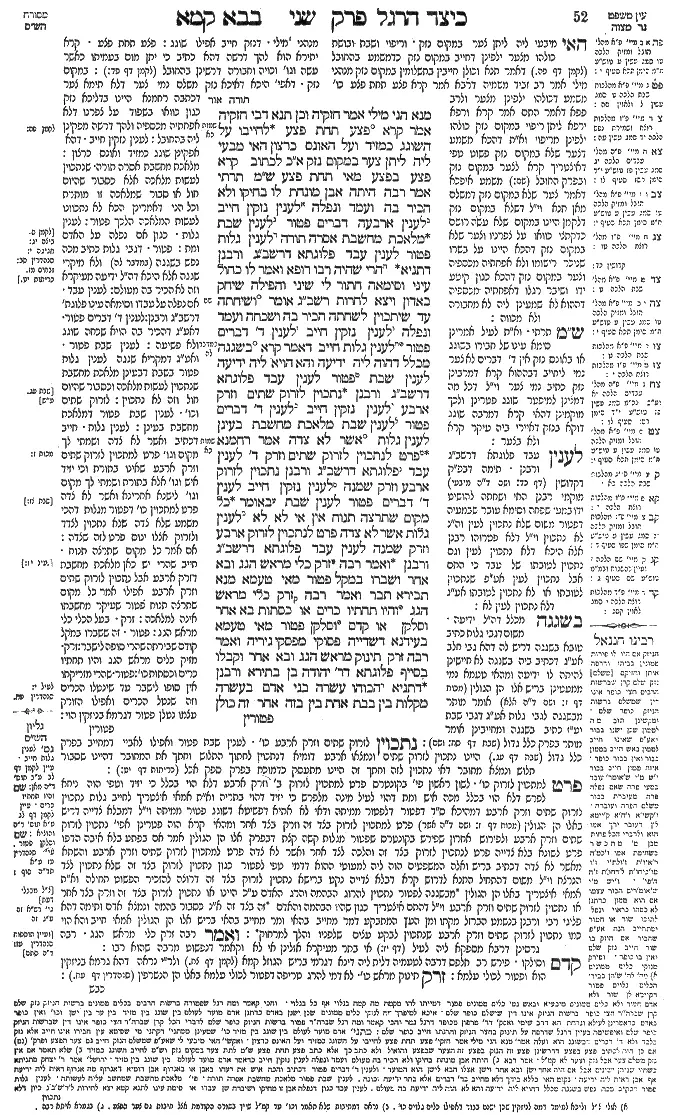
Bava Kamma 26b - Guemara
מנא הני מילי אמר חזקיה וכן תנא דבי חזקיה אמר קרא (שמות כא, כה) פצע תחת פצע לחייבו על השוגג כמזיד ועל האונס כרצון האי מבעי ליה ליתן צער במקום נזק א"כ לכתוב קרא פצע בפצע מאי תחת פצע ש"מ תרתי אמר רבה היתה אבן מונחת לו בחיקו ולא הכיר בה ועמד ונפלה לענין נזקין חייב לענין ארבעה דברים פטור לענין שבת מלאכת מחשבת אסרה תורה לענין גלות פטור לענין עבד פלוגתא דרשב"ג ורבנן דתניא הרי שהיה רבו רופא ואמר לו כחול עיני וסימאה חתור לי שיני והפילה שיחק באדון ויצא לחרות רשב"ג אומר (שמות כא, כו) ושיחתה עד שיתכוין לשחתה הכיר בה ושכחה ועמד ונפלה לענין נזקין חייב לענין ד' דברים פטור לענין גלות חייב דאמר קרא (במדבר לה, יא) בשגגה מכלל דהוה ליה ידיעה והא הויא ליה ידיעה לענין שבת פטור לענין עבד פלוגתא דרשב"ג ורבנן נתכוין לזרוק שתים וזרק ארבע לענין נזקין חייב לענין ד' דברים פטור לענין שבת מלאכת מחשבת בעינן לענין גלות (שמות כא, יג) אשר לא צדה אמר רחמנא פרט לנתכוין לזרוק שתים וזרק ד' לענין עבד פלוגתא דרשב"ג ורבנן נתכוין לזרוק ארבע וזרק שמנה לענין נזקין חייב לענין ד' דברים פטור לענין שבת באומר כל מקום שתרצה תנוח אין אי לא לא לענין גלות אשר לא צדה פרט לנתכוין לזרוק ארבע וזרק שמנה לענין עבד פלוגתא דרשב"ג ורבנן ואמר רבה זרק כלי מראש הגג ובא אחר ושברו במקל פטור מאי טעמא מנא תבירא תבר ואמר רבה זרק כלי מראש הגג והיו תחתיו כרים או כסתות בא אחר וסלקן או קדם וסלקן פטור מאי טעמא בעידנא דשדייה פסוקי מפסקי גיריה ואמר רבה זרק תינוק מראש הגג ובא אחר וקבלו בסייף פלוגתא דר' יהודה בן בתירא ורבנן דתניא הכוהו עשרה בני אדם בעשרה מקלות בין בבת אחת בין בזה אחר זה כולן
Comments from Rashi on Masechet Bava Kamma Page 26b
מנהני מילי . דנזק חייב אפילו שוגג: פצע תחת פצע . קרא יתירא הוא להך דרשה דהא כתיב כי יתן מום בעמיתו כאשר עשה וגו' וכויה וחבורה דרשינן בהחובל (לקמן בבא קמא דף פד:): במקום נזק . דאפי' היכא דאיכא נזק משלם נמי צער דלא תימא צער דכתבה רחמנא היינו בדליכא נזק כגון כוואו בשפוד על צפרנו דלא אפחתיה מכספיה ולהך דרשה מפקינן ליה בהחובל: לענין נזקין חייב . דהא אפקינן שוגג כמזיד ואונס כרצון: מלאכת מחשבת אסרה תורה . שנתכוין לעשות מלאכה אלא כסבור שהיום חול או סבור שמלאכה זו מותרת וכל הני דאמרינן הכא לא נתכוונו לעשות המלאכה הלכך פטור: לענין גלות . כגון אם נפלה על האדם ומת: פטור . דגבי גלות כתיב מכה נפש בשגגה (במדבר לה) ולא מיקרי שגגה אלא היכא דה"ל ידיעה מעיקרא וזה לא הכיר בה מעולם: לענין עבד . אם נפלה על עבדו וסימאה עינו פלוגת' דרשב"ג ורבנן: לענין ד' דברים פטור . דאע"ג דהכיר בה הויא שכחה שוגג ולא פשיעה: לענין שבת פטור . ואע"ג דמקריא שגגה לענין גלות פטור בשבת דבעינן מלאכת מחשבת שנתכוין לעשות מלאכה וכסבור שהיום חול וזה לא נתכוין: לזרוק שתים וכו' . לענין שבת פטור דמלאכת מחשבת בעינן: לענין גלות . חייב דכתיב ואשר לא צדה ושמתי לך מקום וגו' פרט למתכוין לזרוק שתים וזרק ארבע שאינו בתורת וכי יזיד איש וגו' אלא בתורת ושמתי לך מקום וגו' לישנא אחרינא ואשר לא צדה פרט למתכוין כו' דפטור מגלות דהכי משמע שלא צדה שלא נתכוין לצדד ולזרוק אצלו ינוס פרט לזה שצדה: אם אמר כל מקום שתרצה תנוח . חייב שהרי יש כאן מלאכת מחשבת דזרק ארבע אבל נתכוין לזרוק שתים וזרק ארבע אפילו אמר כל מקום שתרצה תנוח פטור שעיקר מחשבתו אינה למלאכה: זרק . בעל הכלי כלי מראש הגג: פטור . זה ששברו במקל קודם שבירתה שהרי סופה לישבר: זרק . מזיק כלים מראש הגג והיו תחתיו כרים וכסתות כו': פטור . שהרי מזריקתו אין סופו לישבר עד שינטלו הכרים וזה שנטל הכרים ואפילו הזורק עצמו נטלן פטור דגרמא בניזקין הוי:
Comments from Tosafot - Bava Kamma 26b
האי מיבעי ליה ליתן צער במקום נזק . וריפוי ושבת ובושת כולהו מצער ילפינן דחייב במקום נזק כדמשמע בהחובל (לקמן בבא קמא דף פה.) דאמר תנא וכולן חייבין בתשלומין במקום נזק מנהני מילי אמר רב זביד משמיה דרבא אמר קרא פצע תחת פצע כו' משמע דכולהו ילפינן מצער ולרב פפא דאמר התם אמר קרא ורפא ירפא ליתן ריפוי במקום נזק כולהו ילפינן מריפוי וא"ת דהכא משמע דצער שלא במקום נזק פשוט טפי דאיצטריך קרא לצער במקום נזק ובפרק החובל (שם:) משמע איפכא דאמר צער שלא במקום נזק דמשלם מאן תנא וי"ל דשלא במקום נזק דלקמן היינו במקום שלא עשה רושם כדקתני כוואו על צפרניו וצער שלא במקום נזק דהכא היינו על בשרו שניכר רישומו ולא אפחתיה מכספיה וצער במקום נזק דהכא כגון קיטע ידו ושיבר רגלו דאפחתיה מכספיה דההוא לא שמעינן ליה לא מחבורה ולא מכווה: ש"מ תרתי . וא"ת לעיל אמרינן סימא עינו של חבירו בשוגג או באונס נזק אין ד' דברים לא צער נמי ליחייב דבההוא קרא דמרבינן נזק כתיב נמי צער וי"ל דכל מה דמצינן למיפטר שוגג פטרינן ולכך מוקמינן דהאי קרא דמרבה שוגג דוקא בנזק דאיירי ביה עיקר קרא ולא בצער: לענין עבד פלוגתא דרשב"ג ורבנן. תימה דבפ"ק דקדושין (דף כד: ושם ד"ה מיבעי) מוקמי רבנן האי ושחתה להושיט ידו במעי שפחה וסימא עובר שבמעיה דפטור משום שלא נתכוין לעין וה"נ לא נתכוין וי"ל דלא פטרוהו רבנן אלא היכא דלא נתכוין לעין וגם נתכוין לטובתו של עבד כי התם אבל: בשגגה מכלל דה"ל ידיעה . משום דגבי גלות כתיב טובא בשגגה דריש לה דהא גבי חלב אע"ג דכתיב ביה בשגגה לא חיישינן להיתה לו ידיעה ומהאי טעמא נמי ממעטינן בריש אלו הן הגולין (מכות דף ז: ושם ד"ה אלא) אומר מותר מבשגגה לגבי גלות אע"ג דגבי שבת וע"ז כתיב בשגגה ומחייבינן אומר מותר בפרק כלל גדול (שבת דף סח: ושם): נתכוין לזרוק שתים וזרק ארבע כו' . לענין שבת פטור ואפילו לאביי דמחייב בפרק . כלל גדול (שבת דף עג.) היינו נתכוין לזרוק שתים ונמצאו ארבע דומיא דנתכוין לחתוך התלוש וחתך את המחובר דהיינו שסבור תלוש ונמצא מחובר דאי נתכוין לזה וחתך זה היינו מתעסק כדמוכח בפרק ספק אכל (כריתות דף יט:): פרט למתכוין לזרוק כו' . לשון ראשון פי' בקונטרס פרט למתכוין לזרוק ב' וזרק ארבע דלא הוי בכלל כי יזיד וטפי הוה ניחא לפרש דלא הוי בכלל מכה איש ומת דהוי לעיל מינה מלפרש כי יזיד דהוי בתריה וא"ת אמאי איצטריך לחייב גלות נתכוין לזרוק שתים וזרק ארבע דמהיכא ס"ד דפטור דלפטור ממיתה ודאי לא אתיא דפשיטא דשוגג פטור ממיתה וי"ל דמבלא צדייה דריש באלו הן הגולין (מכות דף ז: ושם ד"ה אשר) פרט למתכוין לזרוק בצד זה וזרק בצד אחר ומהאי קרא הוה פטרינן אפי' נתכוין לזרוק שתים וזרק ארבע ולפירוש אחרון שפירש בקונטרס שפטור מגלות קשה קצת דבפרק אלו הן הגולין אמר אם בפתע בלא איבה הדפו פרט לשונא בלא צדייה פרט לנתכוין לזרוק בצד זה והלכה לצד אחר ואשר לא צדה פרט למתכוין לזרוק שתים וזרק ארבע והשתא מאשר לא צדה דכתיב בריש ואלה המשפטים הוה ליה למעוטי ההוא דדמי טפי לפטור כגון נתכוין לזרוק בצד זה שלא נתכוין לצד הנרצח וי"ל משום דהתחיל התנא לדרוש קרא דבלא צדייה נקט ברישא נתכוין לזרוק בצד זה דרוצה להזכיר הפשוט תחילה וא"ת אמאי איצטריך באלו הן הגולין. מבשגגה לפטור נתכוין להרוג הבהמה והרג האדם ע"כ היינו או נתכוין לזרוק בצד זה וזרק בצד אחר או נתכוין לזרוק שתים וזרק ארבע וי"ל דהתם איצטריך כגון שהיו הבהמה והאדם זה בצד זה א"נ כסבור בהמה ונמצא אדם ותימה דהא פליגי רבי ורבנן בנשמט הברזל מקתו ומן העץ המתבקע דמר מחייב בהאי ומר מחייב בהאי בריש אלו הן הגולין אמאי חייב והא הוי כמו נתכוין לזרוק שתים וזרק ארבע שנתכוין לבקע עצים שלפניו והלך למרחוק: ואמר רבה זרק כלי מראש הגג . רבה גרסינן דרבא מספקא ליה לעיל (בבא קמא דף יז:) אי בתר מעיקרא אזלינן אי לא וקאמר דנפשוט מרבה שהוא רבו: קדם וסילקו . פירש רב אלפס דרבה לטעמיה דלית ליה דינא דגרמי בריש הגוזל קמא (לקמן בבא קמא דף צח.) ולר"י נראה דהא גרמא בניזקין הוא ופטור לכולי עלמא: זרק תינוק מראש כו' . לא דמי להרג טריפה דפטור לכולי עלמא באלו הן הנשרפין (סנהדרין דף עח.):
Bava Kamma 26b - Mishnah translated into english
With regard to the halakha that one must pay the full cost of the damage in a case where there was no intent to cause damage, the Gemara asks: From where are these matters derived? Ḥizkiyya says, and similarly, the school of Ḥizkiyya taught: The verse states: “Wound for wound [petza taḥat patza]” (Exodus 21:25). This phrase is superfluous, as the Torah states elsewhere (see Leviticus 24:19) that one is liable to pay compensation when injuring another. This verse serves to render him liable to pay for the unintentional damage just as he pays for the intentional damage; and he pays for damage caused by accident just as he pays for damage caused willingly.
The Gemara asks: But this verse is necessary in order to indicate that one must pay compensation for pain, even in a case where he pays compensation for damage caused by the injury. Consequently, it seems that that verse cannot also be the source of the principle derived by the school of Ḥizkiyya. The Gemara answers: If it is so that the superfluous phrase is intended to teach only that, then let the verse write: Petza befatza, which carries the same meaning. What, then, is meant by the superfluous word taḥat in the phrase “petza taḥat patza”? It indicates that we must derive two conclusions from it: That one is liable to pay for pain even in a case where he pays compensation for damage, and that he is liable for unintentional damage as he is for intentional damage, and for damage caused by accident as for damage caused willingly.
§ Rabba says: If there was a stone lying in one’s lap and he was unaware of it, and he arose and it fell and caused damage, with regard to damages he is liable to pay the full cost of the damage caused by the stone. With regard to the four types of indemnity, he is exempt. With regard to Shabbat, if the falling stone caused him to violate one of the prohibited categories of labor; for example, if the stone fell from a private domain to the public domain, he is exempt. The reason is that the Torah prohibited only planned, constructive labor on Shabbat, and he did not plan to perform this labor. With regard to exile, the punishment prescribed for one who unintentionally but negligently kills another, were this stone to kill someone he is exempt, as the incident is deemed accidental.
With regard to a Canaanite slave whose tooth was destroyed or eye was blinded by the stone, potentially enabling the slave to earn his freedom (see Exodus 21:26–27), this is the subject of a dispute between Rabban Shimon ben Gamliel and the Rabbis, as it is taught in a baraita (Tosefta 9:25): If the master was a doctor and the slave said to him: Paint the lid of my eye in order to heal it, and the master blinded it during the procedure, or if the slave requested from his master: Scrape my tooth in order to heal it, and the master knocked out the tooth while scraping it, the slave has mocked the master, as he is emancipated due to the act of the master himself.
By contrast, Rabban Shimon ben Gamliel says: The slave is not emancipated in these cases because the verse states: “And destroy it” (Exodus 21:26), from which it is derived that the slave is emancipated only in a case where the master intends to destroy the eye or the tooth, but not if he intended to heal the slave. So too, in the case where a stone fell and accidentally blinded a slave’s eye or knocked out his tooth, according to the Rabbis the slave would be emancipated and according to Rabban Shimon ben Gamliel he would not. All of the above cases relate to situations where the individual did not know the stone was in his lap.
If he was initially aware of it but forgot about it and he arose and it fell, with regard to damages he is certainly liable, being that he is liable even if he was unaware of the stone. With regard to the four types of indemnity, here too he is exempt, as he did not intend to cause injury. With regard to exile he is liable, as the verse states: “One who unwittingly strikes a person mortally” (Numbers 35:11), indicating by inference that the assailant had some previous awareness, and in this case he was in fact previously aware of the stone in his lap. The term “unwittingly” is employed to describe someone who possessed knowledge of the potential transgression then forgot about it. With regard to Shabbat he is exempt, as this was not a planned, constructive labor. With regard to a slave, the same dispute between Rabban Shimon ben Gamliel and the Rabbis applies.
In a case where he intended to throw the stone, and he intended to throw it for a distance of only two cubits but instead he threw it a distance of four cubits, as it went farther than he wanted it to go, with regard to damages he is liable. With regard to the four types of indemnity he is exempt. With regard to Shabbat he is exempt, as we require planned, constructive labor as a condition for liability. With regard to exile he is liable, as the Merciful One states in the Torah: “If a man lie not in wait” (Exodus 21:13), which serves to exclude from the death penalty a situation where one intended to throw the stone for two cubits but he actually threw it for four cubits, as he did not intend to kill, so he is exiled. With regard to a slave, the same dispute between Rabban Shimon ben Gamliel and the Rabbis applies.
And if he intended to throw the stone four cubits but instead he threw it eight cubits, with regard to damages he is liable. With regard to the four types of indemnity he is exempt. With regard to Shabbat, if he said to himself when he threw the stone that he would be satisfied wherever it may land, then yes, he is liable, as he intended to throw it a distance of four cubits, which is the minimum necessary to violate the prohibited labor of carrying in the public domain. If he did not throw the stone aimlessly but rather had selected a target that was four cubits away, then he is not liable as he did not perform the precise planned, constructive labor that he had intended. With regard to exile, the Torah states: “If a man lie not in wait” (Exodus 21:13), which serves to exclude from the death penalty a situation where one intended to throw it four cubits but he actually threw it eight cubits, as he did not intend to kill, so he is exiled. With regard to a slave, the same dispute between Rabban Shimon ben Gamliel and the Rabbis applies.
§ Since the Gemara cited Rabba’s comments about various actions for which the perpetrator is liable with regard to certain matters but exempt with regard to others, the Gemara cites similar rulings: And Rabba says: If one threw a vessel, such as an earthenware jug, from a roof and another came along and broke it with a stick during its descent, the latter is exempt from liability. What is the reason? It is because he broke a broken vessel, meaning that once the vessel was thrown from the roof it was clear that it would be broken upon landing, and therefore it is considered as if it were already broken and the one who broke it while it was still in the air is not liable.
And Rabba says: If one threw a vessel from a roof and there were cushions or blankets below so that if the vessel would land on them it would not break, and then another came and removed the cushions or blankets, or if the individual who threw the vessel went quickly before it landed and removed the cushions or blankets himself, and as a result the vessel shattered, the one who threw the vessel is exempt from liability even though the vessel broke as a consequence of his actions. What is the reason? At the time that he threw the vessel, his arrows were stopped, i.e., what he did at the time he threw the vessel, which is an act comparable to the shooting of an arrow, did not have the capacity to break the vessel. Therefore, he is not viewed as having broken the vessel, and is exempt.
And Rabba says: If one threw a child from a roof and another came along and impaled him on his sword and the child died, the question of who is liable to receive the death penalty for killing the child is dependent upon the dispute between Rabbi Yehuda ben Beteira and the Rabbis. As it is taught in a baraita: If ten people beat a victim with ten sticks, whether they did so simultaneously or sequentially, they are all
Traduction : The William Davidson digital edition of the Koren Noé Talmud, with commentary by Rabbi Adin Even-Israel Steinsaltz.