 Talmud Bavli
Bava Kamma 28b : Youtube
Daf TubeYoutube
2 video classes :
Bava Kamma Page 28b
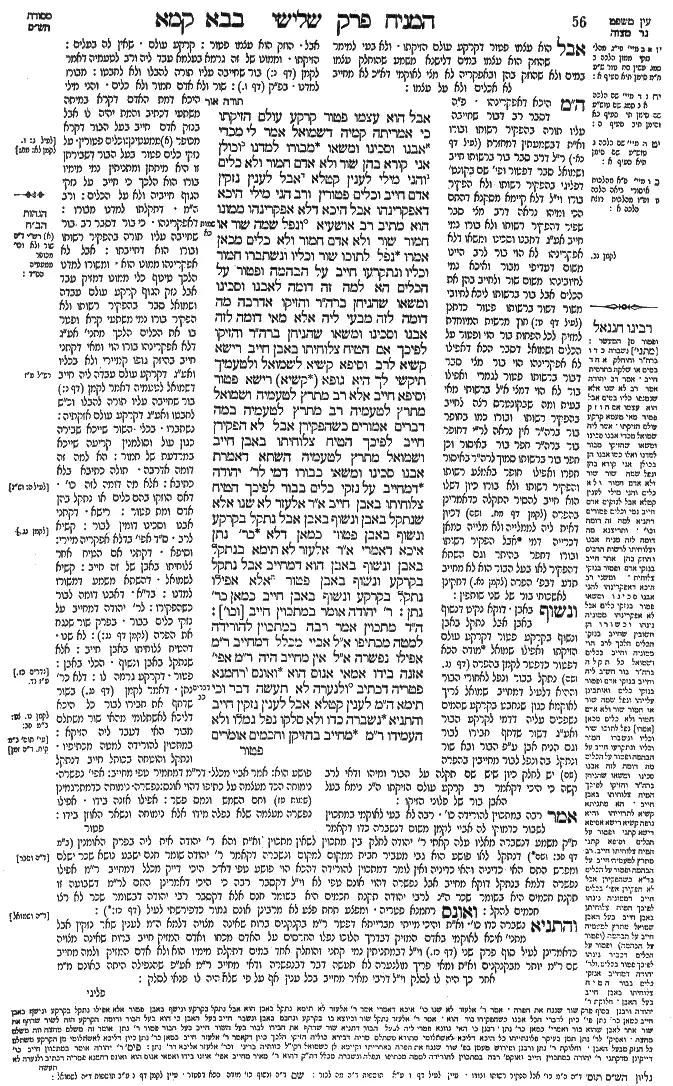
Bava Kamma 28b - Guemara
אבל הוא עצמו פטור קרקע עולם הזיקתו כי אמריתה קמיה דשמואל אמר לי מכדי אבנו וסכינו ומשאו מבורו למדנו וכולן אני קורא בהן שור ולא אדם חמור ולא כלים והני מילי לענין קטלא אבל לענין נזקין אדם חייב וכלים פטורין ורב הני מילי היכא דאפקרינהו אבל היכא דלא אפקרינהו ממונו הוא מתיב רב אושעיא (שמות כא, לג) ונפל שמה שור או חמור שור ולא אדם חמור ולא כלים מכאן אמרו נפל לתוכו שור וכליו ונשתברו חמור וכליו ונתקרעו חייב על הבהמה ופטור על הכלים הא למה זה דומה לאבנו וסכינו ומשאו שהניחן ברה"ר והזיקו אדרבה מה דומה לזה מבעי ליה אלא מאי דומה לזה אבנו וסכינו ומשאו שהניחן ברה"ר והזיקו לפיכך אם הטיח צלוחיתו באבן חייב רישא קשיא לרב וסיפא קשיא לשמואל ולטעמיך תיקשי לך היא גופא (קשיא) רישא פטור וסיפא חייב אלא רב מתרץ לטעמיה ושמואל מתרץ לטעמיה רב מתרץ לטעמיה במה דברים אמורים כשהפקירן אבל לא הפקירן חייב לפיכך הטיח צלוחיתו באבן חייב ושמואל מתרץ לטעמיה השתא דאמרת אבנו סכינו ומשאו כבורו דמי לר' יהודה דמחייב על נזקי כלים בבור לפיכך הטיח צלוחיתו באבן חייב א"ר אלעזר לא שנו אלא שנתקל באבן ונשוף באבן אבל נתקל בקרקע ונשוף באבן פטור כמאן דלא כר' נתן איכא דאמרי א"ר אלעזר לא תימא בנתקל באבן ונשוף באבן הוא דמחייב אבל נתקל בקרקע ונשוף באבן פטור אלא אפילו נתקל בקרקע ונשוף באבן חייב כמאן כר' נתן:
ר' יהודה אומר במתכוין חייב [וכו']:
ה"ד מתכוין אמר רבה במתכוין להורידה למטה מכתיפו א"ל אביי מכלל דמחייב ר"מ אפילו נפשרה א"ל אין מחייב היה ר"מ אפי' אזנה בידו אמאי אנוס הוא ואונס רחמנא פטריה דכתיב (דברים כב, כו) ולנערה לא תעשה דבר וכי תימא ה"מ לענין קטלא אבל לענין נזקין חייב והתניא נשברה כדו ולא סלקו נפל גמלו ולא העמידו ר"מ מחייב בהזיקן וחכמים אומרים
Comments from Rashi on Masechet Bava Kamma Page 28b
אבל . הוזק הוא עצמו פטור: קרקע עולם . שאין לה בעלים: הזיקתו . וממונו של זה גרמא בעלמא עבד ליה ורב לטעמיה דאמר לקמן (בבא קמא דף נ.:) בור שחייבה עליו תורה להבלו ולא לחבטו: מבורו למדנו . בפ"ק (דף ו.): שור ולא אדם חמור ולא כלים . והני מילי היכא דמת האדם דקרא במיתה משתעי דכתיב והמת יהיה לו אבל בנזק אדם חייב בעל הבור דקרא מכופר ממעטינן: וכלים פטורין . על נזקי כלים פטור בעל הבור דשבירתן זו היא מיתתן ומתניתין נמי מימיו בורו הוא הלכך כי חייב על נזקי הגוף חייביה ולא על הכלים: ורב ה"מ . דתקלתו למדנו מבורו: דאפקרינהו . כי בור דסבר רב בור שחייבה עליו תורה בהפקיר רשותו ובורו הוא דחייבתו: אבל לא אפקרינהו ממונו הוא . ומשורו למדנו הלכך טינוף כלי ממונו דמזיק עבד אבל נזק הגוף קרקע עולם עבדה ושמואל סבר בהפקיר רשותו ולא הפקיר בורו נמי משתעי קרא ופטר בו את הכלים הלכך מתני' אע"ג דלא אפקרינהו בורו הוי ומאי דקתני חייב בהיזק גופו קמיירי ולא בכליו ואע"ג דקרקע עולם עבדה ליה חייב דשמואל לטעמיה דאמר לקמן (בבא קמא דף נ.:) בור שחייבה עליו תורה להבלו וכ"ש לחבטו ואע"ג דקרקע עולם אזקתיה: נשתברו . בכלי השור שייכא שבירה כגון עול וסולמנין קריעה שייכא במרדעת של חמור: הא למה זה דומה אדרבה . תולה כתיבא בלא כתיבא: אלא מה דומה לזה כו' . דאם הוזקו בהם כלים או נתקל בהן אדם ומת פטור: אלא מה דומה לזה כו' . דאם הוזקו בהם כלים או נתקל בהן אדם ומת פטור: רישא . דקתני אבנו וסכינו דומין לבור: קשיא לרב . ס"ד אפי' בדלא אפקריה מיירי: וסיפא . דקתני אם הטיח אחר צלוחיתו באבן של זה חייב: קשיא לשמואל . דהשתא משמע דמשורו למדנו: לר' יהודה דמחייב על נזקי כלים בבור . בפרק שור שנגח את הפרה (לקמן בבא קמא דף נג:): לא שנו . דהטיח צלוחיתו באבן חייב: אלא שנתקל באבן ונשוף . הכלי באבן: פטור . דקרקע גרמה לו: דלא כר' נתן . דאמר לקמן (בבא קמא דף נג.) בשור שדחף את חבירו לבור כל היכא דליכא לאשתלומי מהאי שור משתלם מבור האי דעבד ליה הזיקא: במתכוין להורידה למטה מכתיפיו . ונתקל והוטחה בכותל חייב דנתקל פושע הוא: אמר אביי מכלל . דר"מ דמחמיר טפי מחייב: אפי' נפשרה . נימוחה הכד מעצמה על כתיפו דהוי אונס: נפשרה . נימוחה כדמתרגמינן (שמות טז) וחם השמש ונמס פשר: אפילו אזנה בידו . אפילו נפשרה מעצמה שלא נפלה מידו אלא נימוחה ונשאר האוזן בידו:
Comments from Tosafot - Bava Kamma 28b
אבל הוא עצמו פטור דקרקע עולם הזיקתו . ולא בעי למימר שהוזק הוא עצמו במים דלישנא משמע שהוחלק עצמו במים ולא שהוזק בהן ובאפקריה לא מצי לאוקמי דא"כ לא מחייב לא אכלים ולא על עצמו: ה"מ היכא דאפקרינהו . פ"ה דסבר רב דבור שחייבה עליו תורה בהפקיר רשותו ובורו וא"ת דבשמעתין דמחזרת (לעיל בבא קמא דף כא.) ר"ל דרב סבר בור ברשותו חייב ושמואל סבר דפטור ופי' שם בקונט' דפליגי בהפקיר רשותו ולא הפקיר בורו וי"ל דלא קיימא מסקנא דהתם הכי ומיהו נראה דרב מצי סבר שפיר דהפקיר רשותו ולא בורו נמי חייב אע"ג דאבנו וסכינו ומשאו דלא אפקרינהו לא הוי בור לרב היינו משום דעדיפי מבור ואיכא נמי לחיובינהו משום שור ולחייב בהן את הכלים אבל בור ברשותו ליכא לחיובי משור דשור ברשותו פטור כדתנן (לעיל בבא קמא דף ט:) חוץ מרשות המיוחדת למזיק לכל הפחות בור הוי ופטור על הכלים ושמואל דסבר הכא דאפילו לא אפקרינהו הוי בור מצי סבר דבור ברשותו פטור לגמרי ואפילו בור לא הוי דמצי א"ל ברשותי מאי בעית ומה שבקונטרס רצה לחייב בהפקיר רשותו ובורו כמו בחופר בור ברה"ר אין נראה לר"י דחופר בור ברה"ר חפר בור באיסור וכן חפר בור ברשותו סמוך לרה"ר באיסור חפרו ואפילו חופר באמצע רשותו והפקיר רשותו ולא בורו כיון דשלו הוא חייב להסיר התקלה כדאמרינן בהפרה (לקמן בבא קמא דף מח. ושם) דכיון דאית ליה לממלייה ולא מלייה כמאן דכרייה דמי אבל הפקיר רשותו ובורו דחפר בהיתר וגם השתא דהפקיר לאו בעל הבור הוא לא מחייב תדע דבפ' הפרה (לקמן בבא קמא נא.) דחקינן לאשכוחי בור של שני שותפין: ונשוף באבן . דוקא נקיט דנשוף באבן אבל נתקל באבן ונשוף בקרקע פטור דקרקע עולם הזיקתו ואפילו שמואל מודה הכא דפטור כדפטר לקמן בהפרה (בבא קמא דף נג. ושם) נתקל בבור ונפל לאחורי הבור וההיא דלעיל דמחייב שמואל צריך לאוקמא כגון שנחבט בקרקע שהמים נשפכים עליה דדמי לקרקע הבור ואע"ג דשור שדחף חבירו לבור וגם הניח אבן ע"פ הבור ובא שור ונתקל בה ונפל לבור מחייבין בהפרה (שם) יש לחלק כיון שיש שם תקלה על הבור ומיהו ודאי לרב קשה כי היכי דקאמר רב קרקע עולם הזיקתו ה"נ נימא בעל האבן בור של פלוני הזיקו: אמר רבה במתכוין להורידה כו' . רבה לא בעי לאוקמי במתכוין לשבור כדמוקי לה אביי לקמן משום דנשברה כדו דקאמר ת"ק משמע דנשברה מאליו עלה קאתי ר' יהודה לחלק בין מתכוין לשאין מתכוין. וא"ת והא ר' יהודה אית ליה בפרק האומנין (ב"מ דף פב: ושם) דנתקל לאו פושע הוא גבי מעביר חבית ממקום למקום ונשברה דקאמר ר' יהודה שומר חנם ישבע נושא שכר ישלם ומפרש התם האי כדיניה והאי כדיניה ואין לומר דמתכוין להורידה דהכא הוי פושע טפי דא"כ היכי דייק מכלל דמחייב ר"מ אפילו נפשרה דלמא בנתקל דוקא מחייב אבל נפשרה דהוי אונס טפי לא וי"ל דקסבר רבה כי היכי דאמרינן התם לר"מ דשבועה זו תקנת חכמים היא בשומר שכר ה"נ לרבי יהודה תקנת חכמים היא בשומר חנם אלא דקסבר רבי יהודה דבשומר שכר לא רצו חכמים להקל: ואונס רחמנא פטריה . ומפצע תחת פצע לא מרבינן אונס גמור כדפירשתי לעיל (בבא קמא דף כז:): והתניא נשברה כדו כו'. וא"ת והיכי מייתי מברייתא דפטר ר"מ בקנקנים ברוח שאינה מצויה דלמא ה"מ לענין שאר נזקין אבל מתני' איכא לאוקמי באדם המזיק דבדרך הלוכו נפלו החרסים על האדם מכחו ואדם המזיק חייב ברוח שאינה מצויה כדאמרינן לעיל סוף פרק שני (דף כז.) וי"ל דבמתניתין נמי קתני והוחלק אחד במים דתקלת מימיו הוא ולא אדם המזיק ולמה מחייב שם ר"מ יותר מבקנקנים וא"ת ומאי פריך מולנערה לא תעשה דבר דבנפשרה ודאי מחייב ר"מ אע"פ שהנפילה היתה באונס מ"מ אחר כך היה לו לסלק וי"ל דרבי מאיר מחייב בכל ענין אף על פי שלא היה לו פנאי לסלק:
Bava Kamma 28b - Mishnah translated into english
But if the person himself was injured, the owner of the jug is exempt, as it is the ground that caused his injury, not the jug or the water.
Rav Yehuda continued: When I stated this ruling of Rav before Shmuel, he said to me: After all, we derive the cases of damage caused by leaving one’s stone, one’s knife, or one’s load in the public domain from the case of one’s pit, and I therefore read, i.e., apply, with regard to all of them the inference of the Sages from the verse: “And an ox or a donkey fall therein” (Exodus 21:33), that the one who dug the pit is liable only if what incurred damage is an ox, but not a person, or a donkey, but not vessels.
And this statement applies with regard to a situation where the person is killed, i.e., if one fell into a pit and was killed, the person who dug it is exempt from paying restitution, since the verse refers exclusively to an animal that was killed. But with regard to damage, the digger of the pit is liable to pay restitution for injury to a person, but exempt from paying restitution for damage to vessels, for which no distinction between death and injury can be applied. Therefore, the ruling in the case of the jug that broke in the public domain should be the opposite. The owner of the jug is liable to pay restitution for injury caused to another, as Shmuel holds that he is liable even if the injury is caused by the impact with the ground, but that he is exempt from paying restitution for the damage done to the clothes of the one who slipped.
The Gemara asks: And how would Rav answer this difficulty? The Gemara answers: This presumption that liability for damage caused by one’s stone, knife, or load is derived from the category of Pit, thereby exempting him from payment for damage to vessels, applies only in a case where he renounced ownership of them. But in a case where he did not renounce ownership of them, it is considered to be like any other case where his property causes damage. Therefore, he is liable to pay for damage caused to the vessels.
Rav Oshaya raises an objection from a baraita discussing Pit: It is derived from the verse: “And if a man shall open a pit, or if a man shall dig a pit and not cover it, and an ox or a donkey fall therein” (Exodus 21:33), that the digger is liable to pay restitution only if what incurred damage is an ox but not a person, or a donkey but not vessels. From here the Sages stated that if an ox with its equipment fell into a pit, and the ox was wounded and the equipment broke; or if a donkey with its equipment fell in, and the donkey was wounded and the equipment tore, then the one who dug the pit is liable to pay restitution for any injury sustained by the animal but exempt from paying restitution for the damaged equipment. To what case is this similar? It is similar to the case of his stone, or his knife, or his load that he left in the public domain, and they caused damage.
The Gemara questions the wording of the baraita: On the contrary, it should have stated: What is similar to this, since the cases of one’s stone, knife, or load are not mentioned in the Torah, but are derived from the case of Pit. Rather, the wording should be emended as follows: What is similar to this? It is the case of his stone, or his knife, or his load that he left in the public domain, and they caused damage.
The baraita continues: Therefore, if one dropped his flask on a stone that was left in the public domain, breaking the flask, the owner of the stone is liable.
The first clause of this baraita is difficult according to the opinion of Rav, since it compares the cases of a stone, a knife, and a load to the case of Pit, and it does not distinguish between a situation in which he renounced ownership of them or one where he did not. And the last clause of the baraita, which deems the owner of a stone in the public domain liable to pay restitution for the damage to the broken flask, is difficult according to the opinion of Shmuel. According to him, the owner should be liable only for causing injury and not for damaging vessels.
The Gemara responds to this objection: And according to your reasoning, the baraita itself should pose a difficulty for you, since the first clause states that one is exempt from liability for damage to vessels, and the last clause states that he is liable.
Rather, Rav resolves the contradiction according to his line of reasoning, and Shmuel resolves it according to his line of reasoning.
Rav resolves it according to his line of reasoning as follows: In what case is this statement said? Concerning what case does the baraita rule that a stone, a knife, and a load are analogous to Pit, exempting their owner from liability for breakage to vessels caused by them? It is where he renounced ownership of them. But if he did not renounce ownership of them he is liable. Therefore, if one dropped his flask on a stone belonging to another person in the public domain, the owner of the stone is liable to pay for the damage to the flask.
And Shmuel resolves the contradiction according to his line of reasoning: Now that you said that the cases of one’s stone, one’s knife, and one’s load are similar to one’s pit, then according to Rabbi Yehuda, who deems one liable to pay for damage caused to vessels by falling into a pit that he dug, one is therefore liable in a case where someone dropped his flask on a stone belonging to him, and the flask broke.
§ Rabbi Elazar says: They taught that the owner of the stone is liable only in a case where the pedestrian stumbled on the stone and the flask scraped against the stone and broke. But if he stumbled on the ground, not the stone, and the flask consequently fell and scraped against the stone, causing the flask to break, the owner of the stone is exempt from liability for the damage.
In accordance with whose opinion is this statement? It is not in accordance with the opinion of Rabbi Natan, who maintains that if damage is caused by two people and one of them is exempt from paying compensation, the other must pay the entire amount. Similarly here, since there is no liability for damage caused by stumbling on the ground, compensation should be collected from the owner of the stone.
There are those who say an alternative version of this discourse: Rabbi Elazar says: Do not say that it is only in a case where the pedestrian stumbled on the stone and the flask scraped against the stone, causing the flask to break, that he is deemed liable, but that if he stumbled on the ground and the flask scraped against the stone, causing the flask to break, he is exempt. Rather, even if the pedestrian stumbled on the ground and the flask scraped against the stone, causing the flask to break, he is liable. In accordance with whose opinion is this statement? It is in accordance with the opinion of Rabbi Natan.
§ The mishna teaches that if someone’s jug broke in the public domain and one slipped in the water from the jug and was injured from the fall, or if he was injured by the shards of the broken jug, the owner of the jug is liable. Rabbi Yehuda says: In a case where the owner of the jug acted with intent, he is liable, and in a case where he acted without intent, he is exempt. The Gemara asks: What are the circumstances in which it is considered that he acted with intent?
Rabba says: Even where he just intends to lower the jug off his shoulder and accidentally breaks it, he is liable to pay for the damage he causes, according to Rabbi Yehuda. Abaye said to him: By inference, does Rabbi Meir, who is the anonymous first tanna of the mishna, deem him liable even if the jug cracked by itself? Rabba said to him: Indeed, Rabbi Meir would deem him liable even if he were holding the handle of the jug in his hand, the optimal manner for holding it, and the handle snapped, causing the jug to fall and break, an accident clearly beyond his control.
The Gemara asks: Why is this so? Isn’t he the victim of circumstances beyond his control? And the Merciful One exempts a victim of circumstances beyond his control from punishment, as it is written with regard to a betrothed young woman who is raped: “But to the young woman you shall do nothing” (Deuteronomy 22:26).
And if you would say that this matter applies only with regard to exemption from the death penalty, but with regard to damages one is liable even for circumstances beyond his control, but isn’t it taught in a baraita: If one’s jug broke and he did not remove its shards, or if his camel fell and he did not stand it up, Rabbi Meir deems him liable to pay for any damage they cause, and the Rabbis say that
Traduction : The William Davidson digital edition of the Koren Noé Talmud, with commentary by Rabbi Adin Even-Israel Steinsaltz.