 Talmud Bavli
Bava Kamma 29b : Youtube
Daf TubeYoutube
2 video classes :
Bava Kamma Page 29b
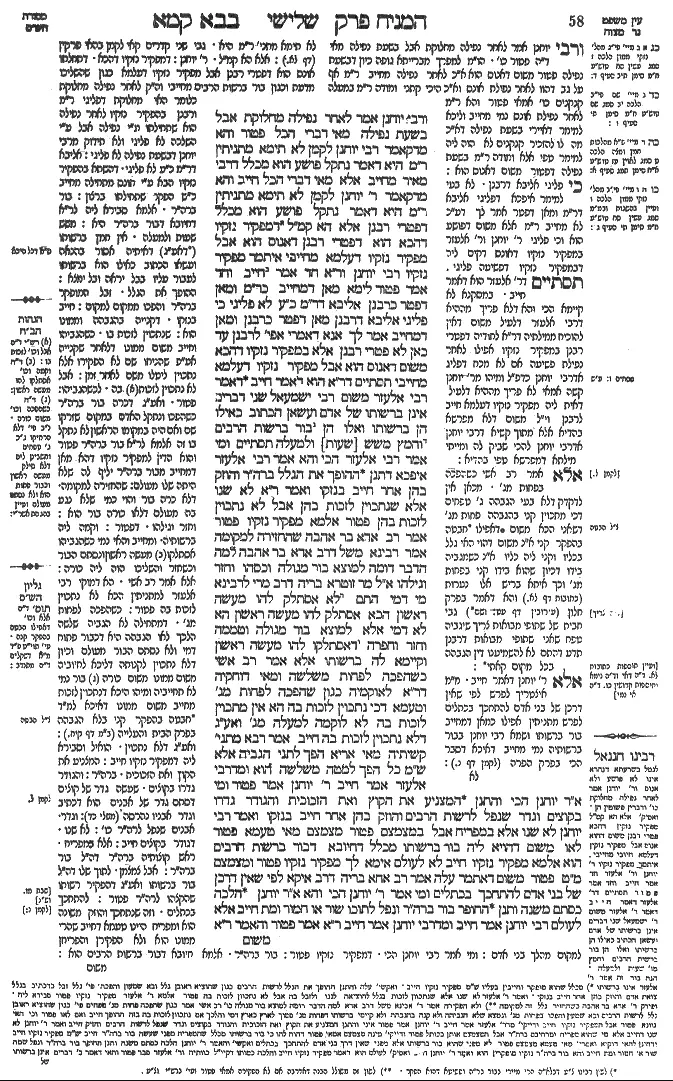
Bava Kamma 29b - Guemara
ורבי יוחנן אמר לאחר נפילה מחלוקת אבל בשעת נפילה מאי דברי הכל פטור והא מדקאמר רבי יוחנן לקמן לא תימא מתניתין ר"מ היא דאמר נתקל פושע הוא מכלל דרבי מאיר מחייב אלא מאי דברי הכל חייב והא מדקאמר ר' יוחנן לקמן לא תימא מתניתין ר"מ היא דאמר נתקל פושע הוא מכלל דפטרי רבנן אלא הא קמ"ל דמפקיר נזקיו דהכא הוא דפטרי רבנן דאנוס הוא אבל מפקיר נזקיו דעלמא מחייבי איתמר מפקיר נזקיו רבי יוחנן ור"א חד אמר חייב וחד אמר פטור לימא מאן דמחייב כר"מ ומאן דפטר כרבנן אליבא דר"מ כ"ע לא פליג כי פליגי אליבא דרבנן מאן דפטר כרבנן ומאן דמחייב אמר לך אנא דאמרי אפי' לרבנן עד כאן לא פטרי רבנן אלא במפקיר נזקיו דהכא משום דאנוס הוא אבל מפקיר נזקיו דעלמא מחייבי תסתיים דר"א הוא דאמר חייב דאמר רבי אלעזר משום רבי ישמעאל שני דברים אינן ברשותו של אדם ועשאן הכתוב כאילו הן ברשותו ואלו הן בור ברשות הרבים וחמץ משש [שעות] ולמעלה תסתיים ומי אמר רבי אלעזר הכי והא אמר רבי אלעזר איפכא דתנן ההופך את הגלל ברה"ר והוזק בהן אחר חייב בנזקו ואמר ר"א לא שנו אלא שנתכוין לזכות בהן אבל לא נתכוין לזכות בהן פטור אלמא מפקיר נזקיו פטור אמר רב אדא בר אהבה שהחזירה למקומה אמר רבינא משל דרב אדא בר אהבה למה הדבר דומה למוצא בור מגולה וכסהו וחזר וגילהו א"ל מר זוטרא בריה דרב מרי לרבינא מי דמי התם לא אסתלק להו מעשה ראשון הכא אסתלק להו מעשה ראשון הא לא דמי אלא למוצא בור מגולה וטממה וחזר וחפרה דאסתלקו להו מעשה ראשון וקיימא לה ברשותו אלא אמר רב אשי כשהפכה לפחות משלשה ומאי דוחקיה דר"א לאוקמיה כגון שהפכה לפחות מג' וטעמא דכי נתכוין לזכות בה הא אין מתכוין לזכות בה לא לוקמה למעלה מג' ואע"ג דלא נתכוין לזכות בה חייב אמר רבא מתני' קשיתיה מאי אריא הפך לתני הגביה אלא ש"מ כל הפך למטה משלשה הוא ומדרבי אלעזר אמר חייב ר' יוחנן אמר פטור ומי א"ר יוחנן הכי והתנן המצניע את הקוץ ואת הזכוכית והגודר גדרו בקוצים וגדר שנפל לרשות הרבים והוזק בהן אחר חייב בנזקו ואמר רבי יוחנן לא שנו אלא במפריח אבל במצמצם פטור מצמצם מאי טעמא פטור לאו משום דהויא ליה בור ברשותו מכלל דחיובא דבור ברשות הרבים הוא אלמא מפקיר נזקיו חייב לא לעולם אימא לך מפקיר נזקיו פטור ומצמצם מ"ט פטור משום דאתמר עלה אמר רב אחא בריה דרב איקא לפי שאין דרכן של בני אדם להתחכך בכתלים ומי אמר ר' יוחנן הכי והא א"ר יוחנן הלכה כסתם משנה ותנן החופר בור ברה"ר ונפל לתוכו שור או חמור ומת חייב אלא לעולם רבי יוחנן אמר חייב ומדרבי יוחנן אמר חייב ר"א אמר פטור והאמר ר"א
Comments from Rashi on Masechet Bava Kamma Page 29b
לא תימא מתני' ר"מ היא . גבי שני קדרים קאי לקמן בהאי פרקין (בבא קמא דף לא.): אלא הא קמ"ל . ר' יוחנן: דמפקיר נזקיו דהכא . דתחלתו אונס הוא דפטרי רבנן אבל מפקיר נזקיו דעלמא כגון שהשליכו מדעת וכגון בור ברשות הרבים מחייבי וה"ק לאחר נפילה מחלוקת כלומר האי מחלוקת דפליגי ר"מ ורבנן בהפקיר נזקיו לאחר נפילה הוא שתחילתו ע"י נפילה אבל ע"י השלכה לא פליגי ולא תידוק מרבי יוחנן דבשעת נפילה לא פליגי: אליבא דר"מ כ"ע לא פליגי . דהשתא בהפקיר נזקיו הבא ע"י אונס מתחילה מחייב כ"ש הפקר שתחילתו ברצון: בור ברה"ר . אלמא סבירא ליה לר"א דחיובא דבור ברה"ר היא: משש שעות ולמעלה . אין חמץ ברשותו (דאע"ג) דאיתיה אסור בהנאה ועשאו הכתוב כאילו הוא ברשותו לעבור עליו בבל יראה ובל ימצא: ההופך את הגלל . זבל המופקר ברה"ר והפכו ממקום למקום: חייב בנזקו . דקנייה בהגבהה וממונו הוא: שנתכוין לזכות בו . כשהגביהו וחייב משום ממונו דלאחר שקנייה אע"פ שהניחו שם לא הפקירו אלא נתכוין ליטלו משם לאחר זמן: אבל לא נתכוין לזכות בה . לכשהגביהו: פטור . ואע"ג דכרה בור ברה"ר כשהפכו ונתקל האדם במקום שזרקו שם ואם היה במקומו הראשון ולא נתקל בו זה אלמא לר"א בור ברה"ר פטור והוא הדין למפקיר נזקיו דהא מאן דמחייב מבור ברה"ר יליף לה שלא היתה שלו מעולם: שהחזירה למקומה . דלא כרה בור והוי כמי שלא נגע בה מעולם דלאו כורה בור הוא: וחזר וגילהו . דפטור: וקמה ליה ברשותיה . ומחייב והאי נמי כשהגביהו אסתלקו מעשה ראשון ונסתם הבור וכשחזר והשליכו הוה ליה כורה: אלא אמר רב אשי . הא דמוקי רבי אלעזר למתניתין הכא לא נתכוין לזכות בה פטור: כשהפכה לפחות מג' . דמתחילה לא הגביה שלשה הלכך לאו הגבהה היא דכבור פתוח דמי ולא נסתם הבור מעולם וכיון דלא נתכוין לקנותה דליכא לחיוביה משום ממונו משום כורה בור נמי לא תחייביה ומיהו היכא דנתכוין לזכות מחייב משום ממונו דאיכא למ"ד חבטה בהפקר קני בלא הגבהה בפרק הבית והעלייה (ב"מ דף קיח.): ואע"ג דלא נתכוין . הואיל וסבירא ליה דמפקיר נזקיו חייב: המצניע את הקוץ ואת הזכוכית . ברה"ר: והגודר גדרו בקוצים . שעשה גדר של קוצים דסתם גדר של אבנים הוא דכתיב וגדר אבניו נהרסה (משלי כד): וגדר . אבנים שנפל לרה"ר כו': ומי אמר רבי יוחנן הכי . דמפקיר נזקיו פטור: לא שנו . דגודר בקוצים חייב: אלא במפריח . ראש קוצותיה ברה"ר דה"ל בור ברה"ר: אבל צמצמן . לתוך שלו דה"ל בור ברשותו ואע"ג דהפקיר רשותו שהקצהו לרה"ר פטור: להתחכך בכתלים . וזה שנתחכך והוזק משונה הוא ומפריח היינו טעמא דחייב שהרי ממונו הוא ולא הפקירן והפריחן למקום מהלך בני אדם: ומי אמר רבי יוחנן הכי . דמפקיר נזקיו פטור: בור ברה"ר . אלמא סבירא ליה לר"א דחיובא דבור ברה"ר היא: בור ברה"ר . אלמא חיובא דבור ברשות הרבים הוא:
Comments from Tosafot - Bava Kamma 29b
ורבי יוחנן אמר לאחר נפילה מחלוקת אבל בשעת נפילה מאי ד"ה פטור כו'. הו"מ למפרך מברייתא גופה כיון דבשעת נפילה פטור משום דאנוס הוא א"כ לאחר נפילה מחייב ר"מ אף על גב דהוו לאחר נפילת אונס וא"כ היכי קתני ומודה ר"מ במעלה קנקנים כו' אמאי פטור והא ר"מ לאחר נפילת אונס נמי מחייב וליכא למימר דאיירי בשעת נפילה דא"כ מה לו להזכיר קנקנים לא הוה ליה למימר טפי אלא ומודה ר"מ בשעת נפילה דפטור משום דאנוס הוא: כי פליגי אליבא דרבנן . לא בעי למימר איפכא דפליגי אליבא דר"מ ומאן דפטר אמר לך דע"כ לא מחייב ר"מ אלא משום דפושע הוא וכי פליגי ר' יוחנן ור' אלעזר במפקיר נזקיו דאונס דקים ליה דבמפקיר נזקיו דפשיעה פליגי: תסתיים דר' אלעזר הוא דאמר חייב . במסקנא לא קיימא הכי והא דלא פריך מההיא דרבי אלעזר דלעיל משום דאין להוכיח ממילתיה דר"א לחודיה דפטרי רבנן במפקיר נזקיו אפילו לאחר נפילת פשיעה אם לא מכח דפליג אדרבי יוחנן כדפ"ל ומיהו מר' יוחנן קשה אמאי לא פריך מההיא דלעיל דאית ליה מפקיר נזקיו דעלמא חייב לרבנן וי"ל משום דלא מפרשא בהדיא אלא מתוך קשיא דרבי יוחנן אדרבי יוחנן להכי שביק לה ומייתי מילתא דמפרשא טפי בהדיא: אלא אמר רב אשי כשהפכה בפחות מג' . מכאן אין לדקדק דלא בעי הגבהה ג' טפחים דכי מתכוין קני בהגבהה פחות מג' דשאני הכא משום דאפילו. חבטה בהפקר קני א"נ משום דהוי האי גלל בכליו וקני ליה כליו א"נ כשמגביה בידו דכיון שהוא בידו קני בפחות מג' וכך איתא בריש אלו נערות (כתובות דף לא.) והא דאמר בפרק חלון (עירובין דף עט: ושם) גבי חבית של שתופי מבואות צריך שיגביה טפח שאני שתופי מבואות דרבנן תדע דהתם לא להשמיענו דין הגבהה בכל מקום קאתי.: אלא ר' יוחנן דאמר חייב . מ"מ איצטריך לפרש לפי שאין דרכן של בני אדם להתחכך בכתלים לפרש מתניתין אפילו כמאן דמחייב בור ברשותו ושמא רבי יוחנן בבור ברשותיה נמי מחייב דאיכא דסבר הכי בפרק הפרה (לקמן בבא קמא דף נ.):
Bava Kamma 29b - Mishnah translated into english
And Rabbi Yoḥanan says: The dispute is with regard to a situation where the damage occurred after the fall.
The Gemara asks: But at the time of the person’s fall, according to this statement, what is the halakha? Does everyone agree that the owner of the jug is exempt from liability? But from the fact that Rabbi Yoḥanan says later (31a), with regard to another mishna in this chapter: Do not say that the mishna is the opinion of Rabbi Meir, who says that one who stumbles is considered negligent, by inference it is clear that he holds that Rabbi Meir deems one who stumbles liable to pay damages. Evidently, it is not unanimously agreed upon that he is exempt.
Rather, what is the halakha in this case? Does he say that everyone agrees that he is liable? But from the fact that Rabbi Yoḥanan says later: Do not say that the mishna is the opinion of Rabbi Meir, who says that one who stumbles is considered negligent, by inference it is clear that he holds that the Rabbis deem him exempt.
The Gemara answers: Rather, this is what Rabbi Yoḥanan teaches us: That the circumstance in which the Rabbis deem one who renounces ownership of his hazardous property exempt is only the situation stated here, i.e., where he stumbled, as he is the victim of circumstances beyond his control. But in the general case of one who renounces ownership of his hazardous property, they deem him liable to pay for damage caused by it.
§ It was stated: With regard to one who renounces ownership of his hazardous property that he left in the public domain, there is a dispute between the amora’im Rabbi Yoḥanan and Rabbi Elazar. One said that he is liable, and one said that he is exempt.
The Gemara suggests: Shall we say that the one who deems him liable holds in accordance with the opinion of Rabbi Meir, and the one who deems him exempt holds in accordance with the opinion of the Rabbis?
The Gemara responds: No; in accordance with the opinion of Rabbi Meir, everyone agrees that one who renounces ownership over his hazardous property is liable. Rather, when they disagree it is in accordance with the opinion of the Rabbis. They disagree as to what the opinion of the Rabbis is. The one who deems him exempt holds that his opinion is in accordance with the opinion of the Rabbis. And the one who deems him liable could have said to you: I maintain that what I say is correct even according to the opinion of the Rabbis; the Rabbis deem one who renounces ownership over his hazardous property exempt only in the situation here, because he is a victim of circumstances beyond his control. But in a general case of one who renounces ownership of his hazardous property, they deem him liable.
The Gemara suggests: It may be concluded that Rabbi Elazar is the one who says that he is liable, as Rabbi Elazar says in the name of Rabbi Yishmael: There are two entities that are not in a person’s legal possession and nevertheless the verse rendered them as though they were in his possession with regard to certain halakhic responsibilities. And these are: A pit that he dug in the public domain and leavened bread remaining in his possession on the eve of Passover from six hours, i.e., noon, onward. Although deriving any benefit from the bread is prohibited, and it is therefore no longer in its owner’s legal possession, nevertheless he is commanded to destroy it. The Gemara concludes: It may be concluded that Rabbi Elazar is the one who says that he is liable.
The Gemara asks: And did Rabbi Elazar actually say this, that one who renounces ownership of his hazardous objects is liable? But didn’t Rabbi Elazar say the opposite? As we learned in a mishna (30a): In the case of one who turns over dung in the public domain and another person incurred damage due to it, he is liable to pay for his damage. And Rabbi Elazar says: They taught this ruling only in a case where the one who turned over the dung intended to acquire it, but in a case where he did not intend to acquire it he is exempt. Apparently, according to Rabbi Elazar, one who renounces ownership of his hazardous property is exempt, since he is liable only if he intends to take possession of the dung, even if he moved it significantly.
Rav Adda bar Ahava said: Rabbi Elazar was referring to a case where he returned the dung to its prior place. Therefore, he is exempt unless he intended to acquire it. Ravina said: This can be explained by means of a parable: To what is the statement of Rav Adda bar Ahava comparable? To one who finds an uncovered pit in the public domain and covers it, and then uncovers it again. Since he left the pit as he found it, he is exempt from paying damages, and the liability lies with the one who dug the pit.
Mar Zutra, son of Rav Mari, said to Ravina: Is this comparable? There, in the case of the pit, the result of the initial act of digging the pit was not removed, since even when he covered the pit, the pit itself still existed. But here, the result of the initial act was removed, since once the dung was moved from its prior place, there was no longer any hazardous object there. Therefore, by returning it to its place, the hazard is created anew.
Rather, it is comparable only to one who finds an uncovered pit and fills it with dirt and then digs it up again, as in this case the result of the initial act is removed, and the new pit therefore exists in his possession and he is liable. Likewise, one who moves dung in the public domain and then restores it to its prior place is deemed liable whether or not he intends to acquire it.
Rather, Rav Ashi said that Rabbi Elazar was referring to a case when he turned it over at a height of less than three handbreadths, which is not considered removal of the dung from its place.
The Gemara asks: But according to this explanation, what forced Rabbi Elazar to interpret the mishna as referring specifically to the unique case where he turned over the dung at a height of less than three handbreadths, and consequently the reason he is liable is that he intended to acquire it, but if he does not intend to acquire it he is not liable? Let him interpret the mishna as referring to a case where he turned over the dung at a height above three handbreadths, in which case even if he did not intend to acquire it, he is liable.
Rava said: What forced him was that the mishna was difficult for him. Why does it state specifically that he turned over the dung? Let it teach that he lifted the dung. Rather, learn from the fact that the mishna does not use the term: Lifted, which generally is referring to the act of lifting an object three handbreadths for the purpose of acquisition, that whenever the term turned over is used, it is referring to an act in which the object is lifted to a height of under three handbreadths from the ground.
The Gemara concludes: And from the fact that Rabbi Elazar was evidently the one who said that one who renounces ownership of his hazardous object in the public domain is still liable to pay for any damage it causes, Rabbi Yoḥanan is clearly the one who said he is exempt.
The Gemara asks: And did Rabbi Yoḥanan actually say this, that if one renounces ownership of his object he is exempt from liability for any damage it causes? But didn’t we learn in a mishna (30a): With regard to one who conceals a thorn or a piece of glass, or who puts up a fence of thorns, or who puts up a fence that subsequently fell into the public domain, and another person incurred damage due to any of these, he is liable to pay for this person’s damage.
And Rabbi Yoḥanan says: With regard to one who puts up a fence of thorns, they taught that he is liable only in a case where he projects the thorns out into the public domain, but in a case where he restricts them to his own property, he is exempt. The Gemara infers: In a case where he restricts them, what is the reason that he is exempt? Is it not because it is considered a pit on his own property? By inference, the liability in the category of Pit, according to Rabbi Yoḥanan, is in the public domain, where a pit generally does not belong to the one who dug it. Apparently, Rabbi Yoḥanan holds that one who renounces ownership of his hazardous property is liable.
The Gemara answers: No, actually I could say to you that in principle, one who renounces ownership of his hazardous property is exempt. Nevertheless, one who puts up a fence of thorns is liable, because he does not renounce ownership of the thorns that protrude into the public domain. And in a case where he restricts the thorns to his own property, what is the reason he is exempt? The reason is not that he is not liable to pay for the damage of a pit in his own property, but rather because it was stated about this case that Rav Aḥa, son of Rav Ika, said: He is exempt because it is not the typical manner of people to rub against walls, but to keep a small distance from them. Therefore, if a pedestrian is injured by the thorns, it is considered an unusual accident, for which the owner of the fence is not liable.
The Gemara asks: And did Rabbi Yoḥanan actually say that one who renounces ownership of his hazardous objects is exempt? But didn’t Rabbi Yoḥanan say that in general, the halakha is in accordance with an unattributed mishna, and we learned in an unattributed mishna (50b): In the case of one who digs a pit in the public domain and an ox or a donkey fell into it and died, he is liable. This mishna is referring to one who digs a pit in the public domain, where it is not owned by the one who dug it, yet the mishna deems him liable.
The Gemara concludes: Rather, Rabbi Yoḥanan is actually the one who said that one who renounces ownership of his hazardous objects is liable.
The Gemara asks: And from the fact that Rabbi Yoḥanan said that he is liable, is it evident that Rabbi Elazar said that he is exempt? But doesn’t Rabbi Elazar say
Traduction : The William Davidson digital edition of the Koren Noé Talmud, with commentary by Rabbi Adin Even-Israel Steinsaltz.
Bava Kamma 29b : Significance
Next step
Finished studying Bava Kamma 29b? Carry on with the rest of the tractate.
Study Bava Kamma 30aFrequently asked questions: Bava Kamma 29b
Where is Bava Kamma 29b in tractate Bava Kamma?
Bava Kamma 29b is page 56 of 236 in tractate Bava Kamma (Seder Nezikin).
When is daf 29 of Bava Kamma studied in Daf Yomi?
Daf Yomi covers one daf a day, both sides. Daf 29 of Bava Kamma will be studied on May 4, 2031.
Is there a video class on Bava Kamma 29b?
Yes, by Daf Tube, Rabbi Dr. Moshe Weisblum. These classes were published on YouTube by their authors and are gathered on this site.
What is tractate Bava Kamma about?
The Masechet Baba Kama is the first tractate of the Seder Nezikin. The Baba Kama gemara is the study of laws relating to the general aspects and specific orders of tort liability without criminal intent. As well as criminal damage, whether it be theft, violence or burglary The Baba Kama tractate is a gemara which contains 10 chapters.
Your study is also dedicated to them
- L'ilui Nishmat Nissim ben Barukh Malka
- L'ilui Nishmat Avraham Ben Simha
- L'ilui Nishmat Yaakov ben Myriam