 Talmud Bavli
The learning on the whole site is dedicated : L'ilui Nishmat Ledicia bat David Banoun
The learning on the whole site is dedicated : L'ilui Nishmat Yaakov ben Myriam
The learning on the whole site is dedicated : L'ilui Nishmat Rav Chlomo Ben Jamilla
Yevamot 116b : Youtube
Daf TubeYoutube
1 video class :
Yevamot Page 116b
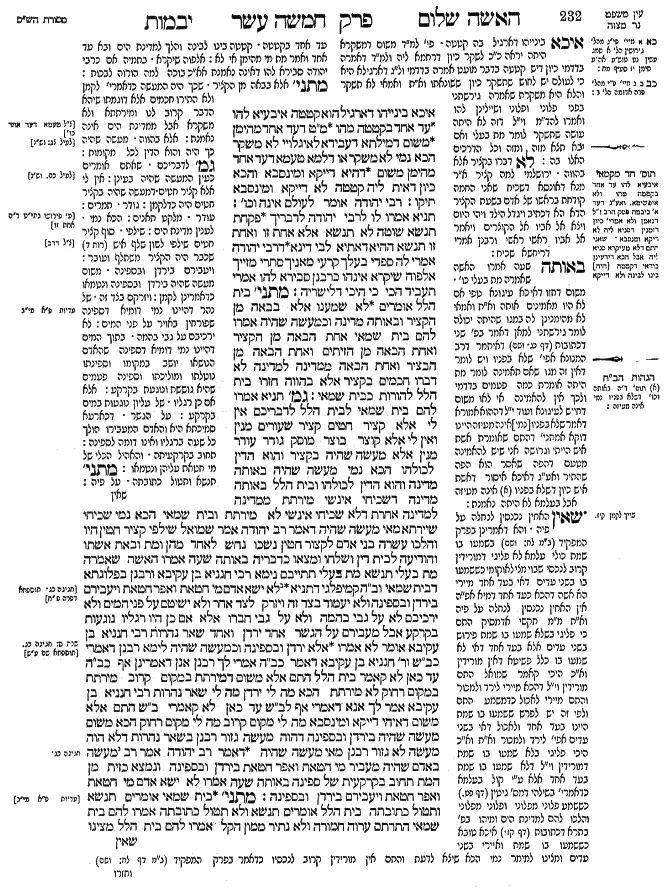
Yevamot 116b - Guemara
איכא בינייהו דארגיל הוא קטטה איבעיא להו עד אחד בקטטה מהו מ"ט דעד אחד מהימן משום דמילתא דעבידא לאיגלויי לא משקר הכא נמי לא משקר או דלמא טעמא דעד אחד מהימן משום דהיא דייקא ומינסבא והכא כיון דאית ליה קטטה לא דייקא ומינסבא תיקו:
רבי יהודה אומר לעולם אינה וכו':
תניא אמרו לו לרבי יהודה לדבריך פקחת תנשא שוטה לא תנשא אלא אחת זו ואחת זו תנשא ההיא דאתיא לבי דינא דרבי יהודה אמרי לה ספדי בעלך קרעי מאניך סתרי מזייך אלפוה שיקרא אינהו כרבנן סבירא להו אמרי תעביד הכי כי היכי דלישריה:
מתני׳ בית הלל אומרים לא שמענו אלא בבאה מן הקציר ובאותה מדינה וכמעשה שהיה אמרו להם בית שמאי אחת הבאה מן הקציר ואחת הבאה מן הזיתים ואחת הבאה מן הבציר ואחת הבאה ממדינה למדינה לא דברו חכמים בקציר אלא בהווה חזרו בית הלל להורות כבית שמאי:
גמ׳ תניא אמרו להם בית שמאי לבית הלל לדבריכם אין לי אלא קציר חטים קציר שעורים מנין ואין לי אלא קוצר בוצר מוסק גודר עודר מנין אלא מעשה שהיה בקציר והוא הדין לכולהו הכא נמי מעשה שהיה באותה מדינה והוא הדין לכולהו ובית הלל באותה מדינה דשכיחי אינשי מירתת ממדינה למדינה אחרת דלא שכיחי אינשי לא מירתת ובית שמאי הכא נמי שכיחי שיירתא מאי מעשה שהיה דאמר רב יהודה אמר שמואל שילפי קציר חטין היו והלכו עשרה בני אדם לקצור חטין נשכו נחש לאחד מהן ומת ובאת אשתו והודיעה לבית דין ושלחו ומצאו כדבריה באותה שעה אמרו האשה שאמרה מת בעלי תנשא מת בעלי תתייבם נימא רבי חנניא בן עקיבא ורבנן בפלוגתא דבית שמאי וב"ה קמיפלגי דתניא לא ישא אדם מי חטאת ואפר חטאת ויעבירם בירדן ובספינה ולא יעמוד בצד זה ויזרק לצד אחר ולא ישיטם על פני המים ולא ירכיבם לא על גבי בהמה ולא על גבי חברו אלא אם כן היו רגליו נוגעות בקרקע אבל מעבירם על הגשר אחד ירדן ואחד שאר נהרות רבי חנניא בן עקיבא אומר לא אמרו אלא ירדן ובספינה וכמעשה שהיה לימא רבנן דאמרי כב"ש ור' חנניא בן עקיבא דאמר כב"ה אמרי לך רבנן אנן דאמרינן אף כב"ה עד כאן לא קאמר בית הלל התם אלא משום דמירתת במקום קרוב מירתת במקום רחוק לא מירתת הכא מה לי ירדן מה לי שאר נהרות רבי חנניא בן עקיבא אמר לך אנא דאמרי אף לב"ש עד כאן לא קאמרי ב"ש התם אלא משום דאיהי דייקא ומינסבא מה לי מקום קרוב מה לי מקום רחוק הכא משום מעשה שהיה בירדן ובספינה דהוה מעשה גזור רבנן בשאר נהרות דלא הוה מעשה לא גזור רבנן מאי מעשה שהיה דאמר רב יהודה אמר רב מעשה באדם שהיה מעביר מי חטאת ואפר חטאת בירדן ובספינה ונמצא כזית מן המת תחוב בקרקעית של ספינה באותה שעה אמרו לא ישא אדם מי חטאת ואפר חטאת ויעבירם בירדן ובספינה:
מתני׳ בית שמאי אומרים תנשא ותטול כתובתה בית הלל אומרים תנשא ולא תטול כתובתה אמרו להם בית שמאי התרתם ערוה חמורה ולא נתיר ממון הקל אמרו להם בית הלל מצינו
Comments from Rashi on Masechet Yevamot Page 116b
עד אחד בקטטה . קטטה בינו לבינה והלך למדינת הים ובא עד אחד ואמר מת מי מהימן אי לא: אלפוה שיקרא . בתמיה. אם כרבי יהודה סבירא להו דאינה נאמנת אא"כ בוכה למה הורוה לבכות: מתני' אלא בבאה מן הקציר . שכך היה המעשה כדאמרי' לקמן ולא התירו חכמים אלא דוגמתו שיהא הדבר קרוב לנו ומירתתא ולא משקרא אבל ממדינת הים אינה נאמנת: אלא בהווה . מעשה שהיה כך היה והוא הדין לכל מקומות: גמ' לדבריכם . שאתם אומרים כעין המעשה שהיה בעינן: אין לי אלא קציר חטים . דמעשה שהיה בקציר חטים היה כדלקמן: גודר . תמרים: עודר . מלקט תאנים: הכא נמי . לענין מדינת הים: שילפי . סוף קציר חטים. שילפי לשון שלף איש (רות ד) שכבר היה הקציר משתלף ועובר: ויעבירם בירדן ובספינה . משום מעשה שהיה בירדן ובספינה ונטמאו כדאמרינן לקמן: ויזרקם בצד זה . של נהר דהיינו נמי דומיא דספינה שפורחין באויר על פני המים: לא ירכיבם על גבי בהמה . בתוך המים דהיינו נמי דומיא דספינה שהאדם הנושאו יושב במקומו וספינתו נוטלתו ומוליכתו וספינה פעמים שהיא גוששת ונוגעת בקרקע: אלא אם כן רגליו . של עליון נוגעות במים בקרקע: על הגשר . דכארעא סמיכתא היא והאדם המעבירו הולך כל שעה ברגליו ואינו דומה לספינה: תחוב בקרקעיתה . והאהיל הכלי של מי חטאת עליהן ונטמאו: מתני' תנשא ותטול כתובתה . על פיה:
Comments from Tosafot - Yevamot 116b
איכא בינייהו דארגיל בה קטטה . פי' למ"ד משום דמשקרא היתה יראה כ"כ לשקר כיון דרחמא ליה ולמ"ד דאמרה בדדמי כיון דיש קטטה בדבר מועט אמרה בדדמי ול"ג דארגילא היא כי לעולם יש לחוש שתשקר כיון ששונאתו וא"ת ואמאי לא תשקר והלא היא משקרת שאמרה גירשתני בפני פלוני ופלוני ושיילינן להו ואמרו להד"מ וי"ל דזה לא היתה עושה שתשקר לומר מת בעלי ואם יבא תצא מזה ומזה וכל הדרכים האלו בה: לא דברו בקציר אלא בהווה . ירושלמי למה קציר א"ר מנא דאונסא דשכיח שאני החמה קודחת בראשו של אדם בשעת הקציר הדא הא דכתיב ויגדל הילד ויהי היום ויצא אל אביו אל הקוצרים ויאמר אל אביו ראשי ראשי ורבנן אמרי דריחשא שכיח: באותה שעה אמרו האשה שאמרה מת בעלי כו' . משום דחזו דאיכא עיגונא טפי אם לא היו מאמינים אותה וא"ת ואמאי לא מהימנינן לה במגו שהיתה יכולה לומר גירשתני למאן דאמר בפ' שני דכתובות (דף כג. ושם) דאיתמר דרב המנונא אפי' שלא בפניו ויש לומר דאין זה מגו שאם תאמינה לומר מת היתה אומרת כמה פעמים בדדמי ולכך אין להאמינה אי לאו משום דחייש לעיגונא ועוד י"ל דההוא אמורא דאמר שלא בפניו [נמי] אינה מעיזה היינו דוקא אמתני' דהתם שאומרת אשת איש הייתי וגרושה אני שיש להאמינה מטעם דהפה שאסר הוא הפה שהתיר ואע"ג דאיכא איסור דאשת איש כיון דשלא בפניו אינה מעיזה אבל בעלמא לא היתה נאמנת:
Yevamot 116b - Mishnah translated into english
The practical difference between them is in a case where he initiated the quarrel. In this situation there is no concern that she might knowingly lie, as she loves him. However, due to the quarrel between them she might not be meticulous in her investigations.
§ A dilemma was raised before the Sages: If there was one witness who testified that the husband died, in a case that involved a quarrel between them, what is the halakha? The Gemara explains the different sides of this dilemma: What is the reason that one witness is deemed credible? Is it because it is a matter that is likely to be revealed, and one does not lie in a case of this kind? Here too, one witness would not lie. Or perhaps the reason that one witness is deemed credible is because she herself is exacting in her investigation before she marries again. And here, since there is a quarrel between them, she is not exacting in her investigation before she marries again, despite the testimony of the witness. The Gemara comments: The question shall stand unresolved.
§ The mishna taught that Rabbi Yehuda says that a wife is never deemed credible when she testifies that her husband died, unless she came crying and her clothing was torn, while the Rabbis say she may remarry in any case. It is taught in a baraita: The Rabbis said to Rabbi Yehuda: According to your statement, a crafty woman who knows how to deceive will come with torn clothes crying, and it will be permitted for her to marry. However, a foolish woman who does not know how to deceive will not be permitted to marry. Is this a fair outcome? Rather, both this woman and that woman may marry.
The Gemara relates: There was a certain woman who came to the court of Rabbi Yehuda. The people sitting there said to her: Lament your husband, tear your clothing, unbind your hair, so that you have the appearance of a mourner, and the court will believe you. The Gemara asks: Did they instruct her to lie? The Gemara answers: They thought, in accordance with the opinion of the Rabbis, that it is permitted for her to marry in any case. However, they were concerned that Rabbi Yehuda would rule that she may not remarry if she did not display her grief, in accordance with his opinion. Therefore, they said that she should do this, so that Rabbi Yehuda would also permit her to marry, and she would avoid any complications.
MISHNA: Beit Hillel say: We heard that one may accept the testimony of a woman concerning the death of her husband only when she comes from the grain harvest, and when she testified in the same country where he died, and in circumstances similar to the incident that occurred, in which a lenient ruling was issued, as will be explained.
Beit Shammai said to Beit Hillel: The same halakha applies to a wife who comes from the grain harvest, and one who comes from the olive harvest, and also one who comes from the grape harvest, and even one who comes from one country to another country. Although the incident in question took place during the grain harvest, the Sages spoke of the grain harvest only because it was the present occurrence, i.e., that is what happened in practice, but this is no proof that she is deemed credible only when she arrived specifically from the grain harvest. The mishna comments: Beit Hillel retracted their opinion, and decided to teach in accordance with the opinion of Beit Shammai on this issue.
GEMARA: It is taught in a baraita that Beit Shammai said to Beit Hillel: According to your statement that this halakha applies solely in circumstances similar to the incident that occurred, if so, I have derived only that it applies in the wheat harvest. From where do I derive that the same applies in the barley harvest? And I have derived only that it applies to one who reaps grain. From where do I derive that this halakha includes someone who harvests grapes, or harvests olives, or harvests dates, or harvests figs?
Rather, that incident which occurred during the grain harvest, and the same is true of all these other circumstances. Here too, concerning a woman who comes from another country, and other, similar cases, the incident that occurred took place in that country, but the same is true of all these other cases.
And Beit Hillel, how did they respond to this argument? In that same country, where people are commonly found moving from place to place, she is scared to lie, lest her account be contradicted. However, between one country and another country, where people are not commonly found moving back and forth, she is not scared, and therefore she might be lying when she says he died. And Beit Shammai reason: Here too caravans are found, and if he was alive the truth would eventually be revealed.
The Gemara asks: What was this incident that occurred? As Rav Yehuda said that Shmuel said: It was at the end [shilfei] of the wheat harvest, and ten people went to harvest wheat. A snake bit one of them and he died, and his wife came and told the court that her husband died. And they sent messengers, who discovered that it happened in accordance with her statement. At that time they said: The woman who says: My husband died, may marry on the basis of this testimony. Furthermore, if she says: My husband died without children, and he has a brother, she enters into levirate marriage. This is the case to which Beit Hillel referred.
§ The Gemara analyzes this dispute. Let us say that Rabbi Ḥananya ben Akiva and the Rabbis, who argued in this case, disagree with regard to the issue that is the subject of the dispute between Beit Shammai and Beit Hillel. As it is taught in a baraita: A person may not carry the waters of purification, i.e., the water containing the ashes of the red heifer for the ritual purification of one who became impure through contact with a corpse, and the ashes of purification, of the red heifer, and transport them on the Jordan River. And one may not transfer them across the river in a boat.
And one may not stand on one side of the river and throw the ashes to the other side, nor float them upon the water as he crosses, nor ride with them across the river, neither on the back of an animal nor on the back of another person, as this is similar to a boat that passes over the water, unless the legs of the rider were touching the ground. However, one may transport them across the water over a bridge. This prohibition applies to both the Jordan River and all other rivers. Rabbi Ḥananya ben Akiva says: They said this prohibition only with regard to the Jordan, and transporting in a boat, and in circumstances similar to the incident that occurred, when ritual impurity was found in a boat on the Jordan River.
Let us say that the Rabbis say in accordance with the opinion of Beit Shammai, that when a decree is enacted due to a specific case that occurred, this halakha applies to all similar circumstances. And Rabbi Ḥananya ben Akiva says in accordance with the opinion of Beit Hillel, that the decree applies only in the exact circumstances as the precedent case.
The Gemara rejects this suggestion. The Rabbis could say to you: We stated our ruling even in accordance with the opinion of Beit Hillel, as there is a difference between the two cases. Beit Hillel state their opinion, that she is not deemed credible when she comes from one country to another, only in that case there, because she is scared. In a nearby place she is scared to give false testimony, as her lie can easily be discovered, whereas in a distant place she is not scared. However, here, concerning the ashes of the red heifer, what difference does it make to me if it is the Jordan River, and what difference does it make to me if it is one of the many other rivers?
Meanwhile, Rabbi Ḥananya ben Akiva could have said to you: I stated my ruling even in accordance with the opinion of Beit Shammai, as Beit Shammai state their opinion only there, because she herself is exacting in her investigation before she marries again. Since this is the decisive consideration, what difference does it make to me if the place is near, and what difference does it make to me if the place is far? Here, however, the Sages issued their decree due to a specific incident that occurred. And therefore the Sages issued their decree with regard to the Jordan River and in a boat, the circumstances in which the incident occurred. Conversely, the Sages did not issue the decree with regard to other rivers, where the incident did not occur.
The Gemara explains: What is this incident that occurred, involving the ashes of the red heifer? As Rav Yehuda said that Rav said: An incident occurred involving a person who was transporting waters of purification and ashes of purification on the Jordan River, and in a boat, and an olive-bulk of a corpse was found stuck to the bottom of the boat, which rendered the waters and ashes ritually impure. At that time they said: A person may not carry waters of purification and ashes of purification and transport them on the Jordan River, and in a boat. Later Sages dispute whether this decree applies to similar cases, or only to the exact circumstances of this specific incident.
MISHNA: Beit Shammai say: A woman who testifies that her husband died may marry, and take the money guaranteed in her marriage contract. Beit Hillel say: She may marry, but she may not take her marriage contract, as qualified witnesses are required for monetary matters. Beit Shammai said to them: If you have permitted a woman potentially forbidden to him, which is a relatively stringent prohibition, based merely upon her own testimony, will we not permit a monetary matter, which is more lenient, as the money can be returned and this sin does not entail such a severe punishment? Beit Hillel said to them: This is no proof, as we find
Traduction : The William Davidson digital edition of the Koren Noé Talmud, with commentary by Rabbi Adin Even-Israel Steinsaltz.