 Talmud Bavli
The learning on the whole site is dedicated : L'ilui Nishmat Nissim ben Barukh Malka
The learning on the whole site is dedicated : L'ilui Nishmat Ledicia bat David Banoun
The learning on the whole site is dedicated : L'ilui Nishmat Chemouel Eliezer ben Batcheva
Shabbat 79b : Youtube
Daf TubeYoutube
3 video classes :
Shabbat Page 79b
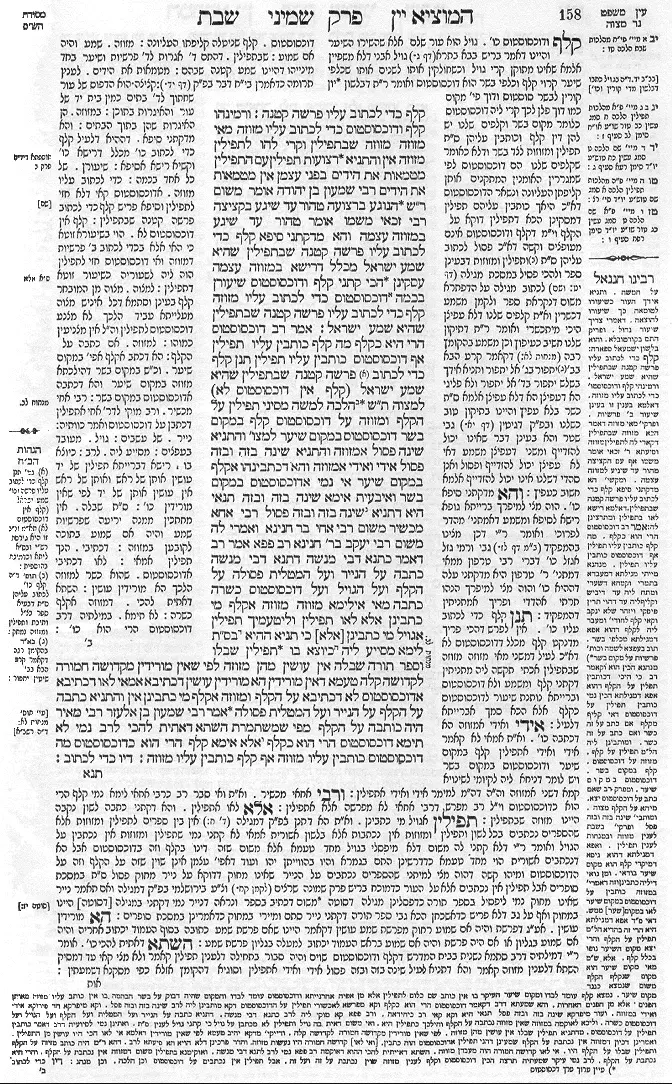
Shabbat 79b - Guemara
קלף כדי לכתוב עליו פרשה קטנה:
ורמינהו קלף ודוכסוסטוס כדי לכתוב עליו מזוזה מאי מזוזה מזוזה שבתפילין וקרי להו לתפילין מזוזה אין והתניא רצועות תפילין עם התפילין מטמאות את הידים בפני עצמן אין מטמאות את הידים רבי שמעון בן יהודה אומר משום ר"ש הנוגע ברצועה טהור עד שיגע בקציצה רבי זכאי משמו אומר טהור עד שיגע במזוזה עצמה והא מדקתני סיפא קלף כדי לכתוב עליו פרשה קטנה שבתפילין שהיא שמע ישראל מכלל דרישא במזוזה עצמה עסקינן הכי קתני קלף ודוכסוסטוס שיעורן בכמה דוכסוסטוס כדי לכתוב עליו מזוזה קלף כדי לכתוב עליו פרשה קטנה שבתפילין שהיא שמע ישראל:
אמר רב דוכסוסטוס הרי היא כקלף מה קלף כותבין עליו תפילין אף דוכסוסטוס כותבין עליו תפילין תנן קלף כדי לכתוב פרשה קטנה שבתפילין שהיא שמע ישראל (קלף אין דוכסוסטוס לא) למצוה ת"ש הלכה למשה מסיני תפילין על הקלף ומזוזה על דוכסוסטוס קלף במקום בשר דוכסוסטוס במקום שיער למצו' והתניא שינה פסול אמזוזה והתניא שינה בזה ובזה פסול אידי ואידי אמזוזה והא דכתבינהו אקלף במקום שיער אי נמי אדוכסוסטוס במקום בשר ואיבעית אימא שינה בזה ובזה תנאי היא דתניא שינה בזה ובזה פסול רבי אחא מכשיר משום רבי אחי בר חנינא ואמרי לה משום רבי יעקב בר' חנינא רב פפא אמר רב דאמר כתנא דבי מנשה דתנא דבי מנשה כתבה על הנייר ועל המטלית פסולה על הקלף ועל הגויל ועל דוכסוסטוס כשרה כתבה מאי אילימא מזוזה מזוזה אקלף מי כתבינן אלא לאו תפילין וליטעמיך תפילין אגויל מי כתבינן [אלא] כי תניא ההיא בס"ת לימא מסייע ליה כיוצא בו תפילין שבלו וספר תורה שבלה אין עושין מהן מזוזה לפי שאין מורידין מקדושה חמורה לקדושה קלה טעמא דאין מורידין הא מורידין עושין דכתיבא אמאי לאו דכתיבא אדוכסוסטוס לא דכתיבא על הקלף ומזוזה אקלף מי כתבינן אין והתניא כתבה על הקלף על הנייר ועל המטלית פסולה אמר רבי שמעון בן אלעזר רבי מאיר היה כותבה על הקלף מפני שמשתמרת השתא דאתית להכי לרב נמי לא תימא דוכסוסטוס הרי הוא כקלף אלא אימא קלף הרי הוא כדוכסוסטוס מה דוכסוסטוס כותבין עליו מזוזה אף קלף כותבין עליו מזוזה:
דיו כדי לכתוב:
Comments from Rashi on Masechet Shabbat Page 79b
דוכסוסטוס . קלף שניטלה קליפתו העליונה: מזוזה . שמע והיה אם שמוע: שבתפילין . דהתם ד' אגרות לד' פרשיות ושיער בחד מינייהו דהיינו שמע קטנה שבהם: מטמאות את הידים . לענין תרומה כדאמרן בי"ח דבר בפ"ק (דף יד.): קציצה . הוא הדפוס של עור שחתוך לד' בתים כמין בית יד של עור והאיגרות בתוכן: במזוזה . הן האיגרות שהן בתוך הבתים: והא מדקתני סיפא . דההיא דלעיל קלף כדי לכתוב כו' מכלל דרישא כו' וקשיא רישא אסיפא: שיעורן . של כל אחד בכמה: כדי לכתוב עליו מזוזה . אדוכסוסטוס דלא חזי לתפילין וסיפא פריש קלף כדי לכתוב פרשה קטנה שבתפילין: קלף אין דוכסוסטוס לא . הוי בשיעורא זוטא כי האי אלא בכדי לכתוב ב' פרשיות דמזוזה ואי דוכסוסטוס חזי לתפילין הוה ליה לשעוריה כשיעור זוטא דתפילין: למצוה . מצוה מן המובחר קלף בעינן וסתמא דכל איניש מצוה מעלייתא עביד הלכך לא מצנע דוכסוסטוס לתפילין וה"ל אין מצניעין כמוהו: למזוזה . אם כתבה על הקלף: הא דכתב אקלף אפי' במקום שיער . וכ"ש במקום בשר דהילכתא מזוזה במקום שיער והא דכתבה אדוכסוסטוס במקום בשר: רבי אחי מכשיר . ורב מוקי לדר' אחי אתפילין דכתבן על דוכסוסטוס ואמר כוותיה: נייר . של עשבים: גויל . מעובד בעפצים: מסייע ליה . לרב: כיוצא בו . רישא דברייתא תפילין של יד עושין אותן של ראש ואותן של ראש אין עושין אותן של יד לפי שאין מורידין כו': ס"ת שבלה . אין מחתכין ממנה יריעה שפרשיות שמע והיה אם שמוע בתוכה לקובען במזוזה: דכתיבי . הנך תפילין אמאי: לאו דכתיבי אדוכסוסטוס . שהוא כשר למזוזה הלכך הא מורידין עושין: השתא דאתית להכי . דמזוזה אקלף כשרה: לא תימא . במילתיה דרב דוכסוסטוס הרי הוא כו':
Comments from Tosafot - Shabbat 79b
קלף ודוכסוסטוס כו' . גויל הוא עור שלם אלא שהשירו השיער והיינו דאמר בריש בבא בתרא (דף ג.) גויל אבני דלא משפיין אלמא שאינו מתוקן קרי גויל וכשחולקין אותו לשנים אותו שכלפי שיער קרוי קלף וכלפי בשר הוא דוכסוסטוס ואומר ר"ת דבלשון יון קורין לבשר סוסטוס ודוך פי' מקום כמו דוך פלן לכך קרי ליה דוכסוסטוס כלומר מקום בשר וקלפים שלנו יש להן דין קלף וכותבין עליהן ס"ת תפילין ומזוזות לצד בשר ודלא כאומר שקלפים שלנו הם דוכסוסטוס לפי שמגררין האומנין המתקנים אותן קליפתן העליונה ונשאר הדוכסוסטוס דא"כ היאך כותבין עליהם תפילין דמסקינן הכא דתפילין דוקא על הקלף וי"מ דקלף ודוכסוסטוס אינם מעופצים וקשה דא"כ פסול לכתוב עליהן ס"ת ותפילין ומזוזות דבעינן ספר ולהכי פסיל במסכת מגילה (דף יט: ושם) לכתוב מגילה על הדפתרא משום דנקראת ספר ולקמן משמע דכשרין וא"ת קלפים שלנו דלא עפיצן היכי מיתכשרי ואומר ר"ת דתיקון שלנו חשיב כעיפוץ וכן משמע בהקומץ רבה (מנחות לח:) דקאמר קרע הבא בב' יתפור בג' אל יתפור ותניא אידך בשלש יתפור בד' אל יתפור ולא פליגי הא דעפיצן הא דלא עפיצן אלמא ס"ת כשר בלא עפיץ והיינו בתיקון טוב כשלנו ובפ"ק דגיטין (דף יא.) גבי שטר והא בעינן דבר שאינו יכול . להזדייף ומשני דעפיצן משמע דאי לא עפיצן יכול להזדייף ופסול ואנן סהדי דשלנו אינו יכול להזדייף אלמא חשוב כעפיץ: והא מדקתני סיפא כו' . הוה מצי למיפרך ברייתא גופא רישא לסיפא ומשמע דאמתני' מהדר לפרוכי ואומר ר"י דכן מצינו בהמפקיד (ב"מ דף לז.) גבי ורמי גזל אגזל כו' דברי רבי טרפון ממאי דמתני' ר' טרפון היא מדקתני עלה דההיא כו' והוה מצי למיפרך הנהו תרתי אהדדי ופריך אמתניתין דהמפקיד: תנן קלף כדי לכתוב עליו כו' . אין לפרש דהכי פריך מדנקט קלף מכלל דדוכסוסטוס לא דא"כ לעיל דמשני מאי מזוזה מזוזה שבתפילין אכתי תקשה ליה מתניתין דקתני קלף ומשמע ולא דוכסוסטוס וברייתא נותנת שיעור לדוכסוסטוס כקלף אלא הכא סמך אברייתא דלעיל: אידי ואידי אמזוזה הא דכתבה כו' . וא"ת אמאי לא קאמר אידי ואידי אתפילין קלף במקום שיער ודוכסוסטוס במקום בשר ויש לומר דניחא ליה לקיומי לשינויא קמא דשני אמזוזה וה"ה דה"מ למימר אידי ואידי אתפילין: ורבי אחאי מכשיר . וא"ת ואי סבר רב כרבי אחאי לימא נמי קלף הרי הוא כדוכסוסטוס וי"ל רב מפרש דרבי אחאי לא מפרשה אלא אתפילין: אלא לאו אתפילין . והא דקתני כתבה לשון נקבה היינו מזוזה שבתפילין: תפילין אגויל מי כתבינן . וא"ת הא דתנן בפ"ק דמגילה (דף' ח:) אין בין ספרים לתפילין ומזוזות אלא שהספרים נכתבים בכל לשון ותפילין ומזוזות אין נכתבות אלא בלשון אשורית אמאי לא קתני נמי שתפילין ומזוזות אין נכתבין על הגויל ואומר ר"י דלא קתני לה משום דלא מיפסלי בגויל מחד טעמא אלא משום שזה דינו בקלף וזה בדוכסוסטוס אבל הא דנכתבים אשורית הוי מחד טעמא כדדרשינן התם בגמרא והיו בהווייתן יהו ועוד דאפי' עצמן אינן שוין שזה על הקלף וזה על הדוכסוסטוס ומיהו קשה דהוה מצי למיתני שהספרים נכתבים על הנייר שאינו מחוק דדוקא על נייר מחוק פסול ס"ת במסכת סופרים אבל תפילין אין נכתבים אלא על העור כדמוכח בריש פרק שמונה שרצים (ליקמן קח.) וצ"ע בירושלמי בפ"ק דמגילה ואם תאמר נייר שאינו מחוק נמי ליפסיל בספר תורה כדפסלינן מגילה דסוטה משום דכתיב בספר ונראה דנייר נמי דקתני במגילה [דסוטה] היינו במחוק ואף על גב דלא פריש כדאשכחן הכא גבי ספר תורה דקתני נייר סתם ומיירי במחוק כדאמרינן במסכת סופרים: הא מורידין עושין . אע"ג דפרשת והיה אם שמוע רחוק מפרשת שמע עושין דקאמר היינו שאם פרשת שמע כתובה בסוף העמוד יכתוב אחריה והיה אם שמוע בגליון או אם היה פרשת והיה אם שמוע בראש העמוד יכתוב למעלה בגליון פרשת שמע: השתא דאתית להכי כו' . אומר ר"י דמילתיה דרב סתמא נשנית בבית המדרש דקלף ודוכסוסטוס שוים והיה סבור בתחילה דלענין תפילין קאמר ולא מצי קאי עד דמסיק השתא דלענין מזוזה קאמר והא דתניא לעיל שינה בזה ובזה פסול אידי ואידי אתפילין וסוגיא דהקומץ אזלא כפי מסקנא דשמעתין:
Shabbat 79b - Mishnah translated into english
We learned in the mishna: The measure that determines liability for carrying out parchment is equivalent to that which is used to write the shortest portion in the phylacteries. And the Gemara raised a contradiction from that which was taught: The measure that determines liability for carrying out parchment and dokhsostos is equivalent to that which is used to write a mezuza on it. The Gemara asks: What is the meaning of mezuza in this context? It means those Torah portions of the mezuza that also appear in the phylacteries. The Gemara asks: And are the phylacteries called mezuza? The Gemara answers: Yes, as it was taught in a baraita: The straps of the phylacteries, when they are with the phylacteries, render the hands ritually impure as is the case with regard to contact with any sacred texts. When they are on their own, they do not render the hands ritually impure. Rabbi Shimon ben Yehuda says in the name of Rabbi Shimon: One who touches the strap of the phylacteries remains ritually pure even if it is attached to the phylacteries, unless he touches the actual box of the phylacteries. Rabbi Zakkai says in Rabbi Shimon’s name: One remains ritually pure until he touches the mezuza itself. Apparently the Torah portions in phylacteries are called mezuza.
The Gemara asks: And from the fact that the latter clause of the mishna teaches: The measure that determines liability for carrying out parchment is equivalent to that which is used to write the shortest portion in the phylacteries, which is the portion of Shema Yisrael, by inference, in the first clause of the mishna we are dealing with a mezuza itself. Rather, this is what it teaches: With regard to parchment and dokhsostos, how much is the measure that determines liability for carrying them out? The measure that determines liability for carrying out dokhsostos is equivalent to that which one uses to write a mezuza on it. The measure that determines liability for carrying out parchment is equivalent to that which one uses to write on it the shortest passage that is in the phylacteries, which is Shema Yisrael.
Rav said: Dokhsostos has the same legal status as parchment: Just as one may write the portions of the phylacteries on parchment, so too, one may write the portions of the phylacteries on dokhsostos. The Gemara asks, we learned in the mishna: The measure that determines liability for carrying out parchment is equivalent to that which is used to write the shortest portion in the phylacteries, which is the portion of Shema Yisrael. By inference: Parchment, yes, the portions of the phylacteries may be written on it. Dokhsostos, no, the portions of the phylacteries may not be written on it. The Gemara answers: That is no proof, as the mishna is referring to the optimal manner in which to fulfill the mitzva, i.e., writing the portions of the phylacteries on parchment. However, one fulfills the mitzva by writing on dokhsostos as well. Come and hear that which was taught in a baraita: It is a halakha transmitted to Moses from Sinai that the portions of the phylacteries are written on parchment, and a mezuza is written on dokhsostos. When writing on parchment, one writes on the side of the hide that faced the flesh; on dokhsostos, one writes on the side of the hide on which there was hair. This contradicts the opinion of Rav, who said that phylacteries may be written on dokhsostos. The Gemara answers: The baraita is also referring to the optimal manner in which to fulfill the mitzva.
The Gemara asks: And wasn’t it taught in a baraita that if one deviated and wrote on something else it is invalid, indicating that the portions of the phylacteries may not be written on anything other than parchment? The Gemara rejects this: This baraita is referring to a mezuza, which is invalid if written on parchment. The Gemara asks: But was it not taught in a different baraita: If one deviated in this, phylacteries, and that, mezuza, it is invalid? The Gemara rejects this: Both this and that are referring to a mezuza, and this additional invalidation is in a case where one deviated and wrote it on parchment, on the side that faced the hair; or, alternatively, where he deviated and wrote it on dokhsostos, on the side that faced the flesh. And, if you wish, say instead: Actually, this and that are referring to phylacteries and a mezuza. However, the halakha with regard to a case where one deviated in this and that is subject to a tannaitic dispute, as it was taught in a baraita: If one deviated in this and that it is invalid. Rabbi Aḥa deems it valid in the name of Rabbi Aḥai bar Ḥanina, and some say in the name of Rabbi Ya’akov, son of Rabbi Ḥanina. Rav Pappa said: Rav said his statement in accordance with the opinion of the tanna from the school of Menashe. As it was taught in the school of Menashe: If one wrote it on paper or on a cloth it is invalid. However, if one wrote it on parchment or on a hide that was treated with gallnuts [gevil] or on dokhsostos it is valid.
The Gemara elaborates: If he wrote it; wrote what? If you say that it is referring to a mezuza, do we write a mezuza on parchment? Rather, isn’t it referring to phylacteries? Apparently, as Rav said, there are Sages who hold that the portions of the phylacteries may be written on dokhsostos. The Gemara rejects this: And according to your reasoning, do we write phylacteries on gevil? Rather, that baraita was taught with regard to a Torah scroll. The Gemara comments: Let us say that the following supports the opinion of Rav: Similarly, phylacteries that became tattered and a Torah scroll that became tattered, one may not make them into a mezuza, despite the fact that identical Torah portions appear in all three. This is prohibited because one does not downgrade from a level of greater sanctity, i.e., a Torah scroll or phylacteries, to a level of lesser sanctity, i.e., a mezuza.
The Gemara infers: The reason that one may not do so is because one does not downgrade. However, if the halakha were that one does downgrade, one would make a mezuza from phylacteries. The Gemara elaborates: On what is the portion of the phylacteries written? Isn’t it written on dokhsostos? This supports the opinion of Rav. The Gemara answers: No, the portion of the phylacteries is written on parchment. The Gemara asks: If so, how could a mezuza be made from it? Do we write a mezuza on parchment? The Gemara answers: Yes, as it was taught in a baraita: If one wrote a mezuza on parchment, or on paper, or on a cloth, it is invalid. Rabbi Shimon ben Elazar said: Rabbi Meir would write it on parchment, as it is thereby better preserved. Apparently, even a mezuza may be written on parchment, and there is no proof from the previous baraita. In reaction to the previous baraita, the Gemara comments: Now that you have arrived at this opinion that a mezuza may be written on both dokhsostos and parchment, according to Rav, as well, do not say: Dokhsostos has the same legal status as parchment with regard to phylacteries; rather, say: Parchment has the same legal status as dokhsostos. Just as on dokhsostos, one may write a mezuza, so too, on parchment, one may write a mezuza, in accordance with the opinion of Rabbi Meir.
We learned in the mishna: The measure that determines liability for carrying out ink is equivalent to that which is used to write two letters.
Traduction : The William Davidson digital edition of the Koren Noé Talmud, with commentary by Rabbi Adin Even-Israel Steinsaltz.