 Talmud Bavli
Shabbat 68b : Youtube
Daf TubeYoutube
3 video classes :
Shabbat Page 68b
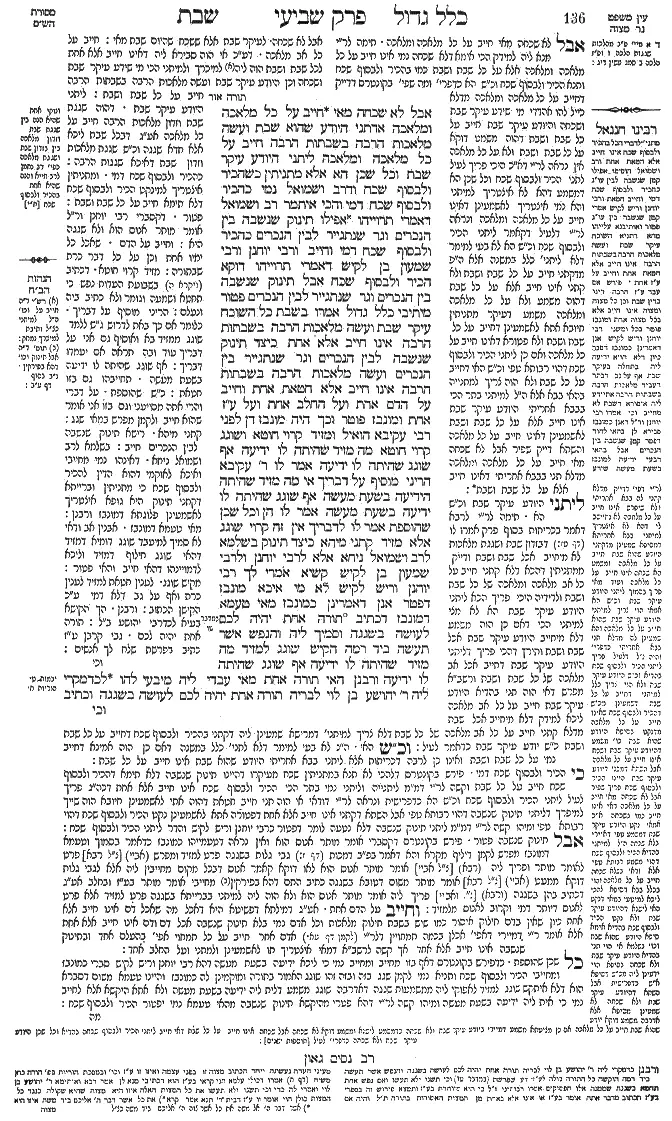
Shabbat 68b - Guemara
אבל לא שכחה מאי חייב על כל מלאכה ומלאכה אדתני היודע שהוא שבת ועשה מלאכות הרבה בשבתות הרבה חייב על כל מלאכה ומלאכה ליתני היודע עיקר שבת וכל שכן הא אלא מתניתין כשהכיר ולבסוף שכח ודרב ושמואל נמי כהכיר ולבסוף שכח דמי והכי איתמר רב ושמואל דאמרי תרוייהו אפילו תינוק שנשבה בין הנכרים וגר שנתגייר לבין הנכרים כהכיר ולבסוף שכח דמי וחייב ורבי יוחנן ורבי שמעון בן לקיש דאמרי תרוייהו דוקא הכיר ולבסוף שכח אבל תינוק שנשבה בין הנכרים וגר שנתגייר לבין הנכרים פטור מיתיבי כלל גדול אמרו בשבת כל השוכח עיקר שבת ועשה מלאכות הרבה בשבתות הרבה אינו חייב אלא אחת כיצד תינוק שנשבה לבין הנכרים וגר שנתגייר בין הנכרים ועשה מלאכות הרבה בשבתות הרבה אינו חייב אלא חטאת אחת וחייב על הדם אחת ועל החלב אחת ועל ע"ז אחת ומונבז פוטר וכך היה מונבז דן לפני רבי עקיבא הואיל ומזיד קרוי חוטא ושוגג קרוי חוטא מה מזיד שהיתה לו ידיעה אף שוגג שהיתה לו ידיעה אמר לו ר' עקיבא הריני מוסיף על דבריך אי מה מזיד שהיתה הידיעה בשעת מעשה אף שוגג שהיתה לו ידיעה בשעת מעשה אמר לו הן וכל שכן שהוספת אמר לו לדבריך אין זה קרוי שוגג אלא מזיד קתני מיהא כיצד תינוק בשלמא לרב ושמואל ניחא אלא לרבי יוחנן ולרבי שמעון בן לקיש קשיא אמרי לך רבי יוחנן וריש לקיש לא מי איכא מונבז דפטר אנן דאמרינן כמונבז מאי טעמא דמונבז דכתיב (במדבר טו, כט) תורה אחת יהיה לכם לעושה בשגגה וסמיך ליה והנפש אשר תעשה ביד רמה הקיש שוגג למזיד מה מזיד שהיתה לו ידיעה אף שוגג שהיתה לו ידיעה ורבנן האי תורה אחת מאי עבדי ליה מיבעי להו לכדמקרי ליה ר' יהושע בן לוי לבריה תורה אחת יהיה לכם לעושה בשגגה וכתיב
Comments from Rashi on Masechet Shabbat Page 68b
אבל לא שכחה . לעיקר שבת אלא ששכח שהיום שבת מאי: חייב על כל אב מלאכה . דע"כ אי הוה סבירא ליה דאינו חייב אלא אחת לכל שבת ושבת הוה ליה למיכרך ולמיתני הכי מי שידע עיקר שבת ושכחה וכן היודע עיקר שבת ועשה מלאכות הרבה בשבתות הרבה חייב על כל שבת ושבת: ליתני היודע עיקר שבת . דהוה שגגת שבת וזדון מלאכות הרבה חייב על כל מלאכה אע"ג דבכל שבת ליכא אלא חדא שגגה וכ"ש שגגת מלאכות וזדון שבת דאיכא שגגות הרבה: כהכיר ולבסוף שכח דמי . ומתניתין איצטריך למינקט הכיר ולבסוף שכח דלא תימא חייב על כל שבת ושבת: פטור . דקסברי רבי יוחנן ור"ל אומר מותר אנוס הוא ולא שגגה היא: וחייב על הדם . שאכל כל ימיו אחת וכן על כל דבר כרת שבתורה: מזיד קרוי חוטא . דכתיב (ויקרא ה) בשבועת העדות נפש כי תחטא ושמעה וגומר ולא כתיב ביה ונעלם: הריני מוסיף על דבריך . כלומר אם כך באת לדרוש ג"ש ללמד שוגג ממזיד בא ואוסיף גם אני על דבריך עוד ובה תראה אם יעמדו דבריך: אף שוגג שהיתה לו ידיעה בשעת מעשה . תחייבהו גם בזו חטאת: כ"ש שהוספת . על דברי והרי אתה מסייעני וגם בזו אני אומר שהוא חייב ולקמן מפרש במאי שגג: קתני מיהא . רישא תינוק שנשבה לבין הנכרים חייב: בשלמא לרב ושמואל ניחא . דאינהו נמי מחייבי ואיכא לאוקמי דהוא הדין להכיר ולבסוף שכח כי מתניתין וברייתא דקתני תינוק היא גופא איצטריך לאשמעינן פלוגתא דמונבז ורבנן: מאי טעמא דמונבז . אבנין אב ודאי לא סמיך למיעבד שוגג דומיא דמזיד דהאי שוגג חילוף דמזיד וליכא לדמויינהו דהאי חייב והאי פטור: מקיש שוגג . לענין חטאת למזיד לענין כרת ואף על גב דלא דמי ע"כ הקישן הכתוב: ורבנן . הך הקישא בעיא לכדרבי יהושע ב"ל: תורה אחת יהיה לכם . גבי קרבן ע"ז כתיב בפרשת שלח לך אנשים:
Comments from Tosafot - Shabbat 68b
אבל לא שכחה מאי חייב על כל מלאכה ומלאכה . תימה לר"י מנא ליה למידק הכי אימא דלא שכחה נמי אינו חייב על כל מלאכה ומלאכה אלא על כל שבת ושבת כמו בהכיר ולבסוף שכח ותנא הכיר ולבסוף שכח וכ"ש הא כדפרי' ומה שפי' בקונטרס דדייק דחייב על כל מלאכה ומלאכה מדלא כייל להו אהדדי מי שידע עיקר שבת ושכחה והיודע עיקר שבת חייב על כל שבת ושבת דהוה משמע דוקא על כל שבת ושבת ולא על כל מלאכה אין נראה לר"י דא"כ היכי פריך לעיל לתני הכיר ולבסוף שכח וכל שכן הא דמשמע דהא לא איצטריך למיתני והא נמי איצטריך לאשמעינן דאינו חייב על כל מלאכה ומלאכה ונראה לר"י דלעיל דקאמר ליתני הכיר ולבסוף שכח וכ"ש הא לא בעי למימר דלא ליתני' כלל במשנה אלא ה"פ מדקתני חייב על כל שבת ושבת ולא קתני אינו חייב אלא על כל שבת דהוה משמע ולא על כל מלאכה ומלאכה משמע דעיקר מתניתין חיובא אתא לאשמעינן דחייב על כל שבת ושבת ולא פטורא דאינו חייב על כל מלאכה ואם כן ליתני הכיר ולבסוף שכח דהוי רבותא טפי וכ"ש האי דחייב על כל שבת ולא הוה צריך למתנייה בהאי בבא אלא ה"ל למיתני בתר הכי בבבא אחריתי היודע עיקר שבת אינו חייב אלא על כל שבת ושבת לאשמעינן דאינו חייב על כל מלאכה והשתא דייק שפיר אבל לא שכחה מאי חייב על כל מלאכה ומלאכה מדלא תני בבבא אחריתי דאינו חייב אלא על כל שבת ושבת: ליתני היודע עיקר שבת וכ"ש הא . תימה לר"י לרבא דאמר בכריתות בסוף פרק אמרו לו (דף טז:) דבזדון שבת ושגגת מלאכות לא מיחייב אכל שבת ושבת ודייק ממתניתין דהכא דלא קתני חייב על כל אב מלאכה ומלאכה של כל שבת ושבת ולדידיה היכי פריך הכא ליתני היודע עיקר שבת הא לא מצי למיתני הכי דאם כן הוה משמע דלא מיחייב היודע עיקר שבת אכל שבת ושבת ותירץ דהכי פריך דליתני היודע עיקר שבת דחייב אכל אב מלאכה של כל שבת ושבת ורשב"א מפרש דאי הוה תני בהדיא היודע עיקר שבת חייב על כל אב מלאכה ליכא למידק דלא מיחייב אכל שבת מדלא קתני חייב על כל אב מלאכה של כל שבת דלא צריך למיתני' דמרישא שמעינן ליה דקתני בהכיר ולבסוף שכח דחייב על כל שבת ושבת כ"ש יודע עיקר שבת כדאמר לעיל: וכ"ש האי . ה"נ לא בעי למימר דלא לתני' כלל במשנה דאם כן הוה אמינא דחייב נמי על כל שבת ושבת ואינו כן לרבה דכריתות אלא ליתני בבא אחריתי היודע שהוא שבת אינו חייב על כל שבת: כי הכיר ולבסוף שכח דמי . פירש בקונטרס דלהכי לא תנא במתניתין שכח מעיקרו דהיינו תינוק שנשבה דלא תימא דהכיר ולבסוף שכח חייב על כל שבת וקשה לר"י דמ"מ ליתנייה וליתני נמי בתר הכי הכיר ולבסוף שכח אינו חייב אלא אחת דכה"ג פריך לעיל ליתני הכיר ולבסוף שכח וכ"ש הא כדפרישית ונראה לר"י דודאי אי הוה תני חייב חטאת דהוה אתי לאשמעינן חיובא הוה שייך למיפרך דליתני תינוק שנשבה דהוי רבותא טפי אבל השתא דקתני אינו חייב אלא אחת דפטורה אתא לאשמעינן נקט הכיר ולבסוף שכח דהוי רבותא טפי ומיהו קשה לר"י דמ"מ ליתני תינוק שנשבה דלא נטעה לומר דפטור כרבי יוחנן וריש לקיש והדר ליתני הכיר ולבסוף שכח: אבל תינוק שנשבה פטור . פירש בקונטרס דקסברי אומר מותר אנוס הוא ואין נראה דטעמייהו כמונבז כדאמר בסמוך וטעמא דמונבז מפרש לקמן דיליף מקרא והא דאמר בפ"ב דמכות (דף ז:) גבי גלות בשגגה פרט למזיד ומפרש (אביי) [צ"ל רבא] פרט לאומר מותר ופריך ליה (רבא) [צ"ל אביי] אומר מותר אנוס הוא לאו דוקא קאמר אנוס דבכל מקום מחייבין ליה אלא לגבי גלות דוקא ממעט (אביי) [צ"ל רבא] אומר מותר משום דטובא בשגגה כתיב התם דהא בפירקין מחייבי אומר מותר בע"ז ובחלב אע"ג דכתיב בהן בשגגה (ורבא) [צ"ל ואביי] פריך ליה אומר מותר אנוס הוא ולא הוה ליה למיתני בברייתא בשגגה פרט למזיד אלא פרט לאנוס דיותר דמי וקרוב לאנוס מלמזיד: וחייב על הדם אחת . אע"ג דמילתא דפשיטא היא דאכל מה שאכל דם אינו חייב אלא אחת כיון שאין בדם חילוק איסור כמו שיש בשבת חילוק מלאכות וכל אדם נמי בלא תינוק שנשבה אכל דם ודם אינו חייב אלא אחת אלא אומר ר"י דמיירי דאפי' אכלן בכמה תמחויין דלר"י (לקמן שבת דף עא.) אדם אחר חייב על כל תמחוי אפי' בהעלם אחד ובתינוק שנשבה אינו חייב אלא אחד אך קשה לרשב"א דמאי איצטריך תו לאשמעינן ולמתני ועל החלב אחד: כל שכן שהוספת . כדפירש בקונטרס דאף בזו מחייב ומחייב נמי כי ליכא ידיעה בשעת מעשה דהא רבי יוחנן וריש לקיש סברי כמונבז ומחייבי הכיר ולבסוף שכח ותניא נמי לקמן שגג בזה ובזה זהו שוגג האמור בתורה ומוקמינן לה כמונבז והיינו טעמא משום דסברא הוא דלא איתקש שוגג למזיד לאפוקי ליה ממשמעות שגגה דאדרבה שוגג משמע דלית ליה ידיעה בשעת מעשה ולא אתא היקשא אלא לחייב נמי כי אית ליה ידיעה בשעת מעשה ומיהו קשה לר"י דהא פטרי מהיקשא תינוק שנשבה מהאי טעמא נמי יפטור הכיר ולבסוף שכח:
Shabbat 68b - Mishnah translated into english
The Gemara raises another difficulty: But if he did not forget the essence of Shabbat, and he knows that today is Shabbat, what would the halakha be? Certainly he would be liable for each and every prohibited labor. If so, instead of teaching the halakha: One who knows that it is Shabbat and performs many labors on multiple Shabbatot is liable for each and every labor, let the mishna teach the halakha: One who knows the essence of Shabbat is liable for each and every labor that he performs and all the more so that one who is aware that today is Shabbat would be liable for each labor. Rather, when our mishna refers to forgetting, it is referring to a case where he knew and ultimately forgot. And the case described by Rav and Shmuel also has the same legal status as one who knew and ultimately forgot. And it was stated as follows: It was Rav and Shmuel who both said: Even a child who was taken captive among the gentiles and a convert who converted among the gentiles have the same legal status as one who knew and ultimately forgot, and they are liable to bring a sin-offering for their unwitting transgression, even though they never learned about Shabbat.
And it was Rabbi Yoḥanan and Rabbi Shimon ben Lakish who both said: He is liable to bring a sin-offering specifically if he knew of the essence of Shabbat and ultimately forgot. However, a child who was taken captive among the gentiles and a convert who converted among the gentiles are exempt from bringing a sin-offering. They have the legal status of one who performed the prohibited labor due to circumstances beyond his control. The Gemara raises an objection from that which was taught in a baraita: They stated a significant principle with regard to the halakhot of Shabbat: One who forgets the essence of Shabbat, i.e., one who does not know that there is a mitzva of Shabbat in the Torah, and performs many prohibited labors on multiple Shabbatot is liable to bring only one sin-offering. How so? With regard to a child who was taken captive among the gentiles and a convert who converted among the gentiles and does not know the essence of Shabbat; and if he performed many prohibited labors on multiple Shabbatot, he is only liable to bring one sin-offering for all his unwitting transgressions. And he is liable to bring one sin-offering for all the blood he unwittingly ate before he learned of the prohibition; and one sin-offering for all the forbidden fat that he ate; and one for all the idolatry that he worshipped. And Munbaz, one of the Sages, deems him exempt from bringing any sacrifice.
And Munbaz deliberated before Rabbi Akiva as follows: Since one who commits a transgression intentionally is called a sinner in the Torah and one who commits a transgression unwittingly is called a sinner, just as one who commits the transgression intentionally is liable for punishment only in a case where he had prior knowledge that it was prohibited, so too, one who commits the transgression unwittingly is liable to bring a sin-offering only in a case where he had prior knowledge. However, the action of one who had no prior knowledge at all is not considered unwitting; rather, it has the same legal status as an action performed due to circumstances beyond one’s control, and he is completely exempt. Rabbi Akiva said to him: I will elaborate upon your statement and follow your reasoning to its logical conclusion and thereby test the validity of your reasoning. If so, just as one who commits the transgression intentionally is liable for punishment only in a case where he had the awareness that he was sinning at the time that he performed the action, so too, with regard to one who commits the transgression unwittingly, say that he is only liable to bring a sin-offering in a case where he had awareness that he was sinning at the time that he performed the action. If that is the case, it is no longer an unwitting transgression.
Munbaz said to him: Yes, there is nothing unusual about that. In my opinion it is correct and all the more so now that you have elaborated upon my statement. Awareness at the time that one is performing the action is one of the criteria of my definition of an unwitting transgression, as will be explained below. Rabbi Akiva said to him: According to your statement, since while performing the action one is aware that it is prohibited, his action is not called unwitting; rather, it is a full-fledged intentional transgression.
Returning to our issue: In any case, as an example of one who forgot the essence of Shabbat, it was taught: How so? A child who was taken captive. Granted, according to the opinion of Rav and Shmuel it works out well, as they consider the legal status of a child taken captive equal to that of one who unwittingly forgot the essence of Shabbat. However, according to the opinion of Rabbi Yoḥanan and Rabbi Shimon ben Lakish, who consider the legal status of a child taken captive equal to that of one who committed the action due to circumstances beyond his control and is therefore exempt, it is difficult because he is liable to bring a sin-offering according to the opinion of the Rabbis in the baraita. Rabbi Yoḥanan and Rabbi Shimon ben Lakish could have said to you: Isn’t there the opinion of Munbaz who deemed him exempt in that case? We stated our opinion in accordance with the opinion of Munbaz.
The Gemara asks: What is the rationale for the opinion of Munbaz? Is it based entirely upon the fact that the Torah refers to sinners, both intentional and unwitting, as sinners? The Gemara explains that the source for the opinion of Munbaz is as it is written: “The native of the children of Israel, and the stranger who lives among them, there shall be one law for you, for one who acts unwittingly” (Numbers 15:29), and adjacent to it is the verse: “And the person who acts with a high hand, whether a native or a stranger, he blasphemes God, and that soul shall be cut off from the midst of his people” (Numbers 15:30). The Torah juxtaposes unwitting transgression to intentional transgression. Just as one who commits the transgression intentionally is only liable in a case where he had prior knowledge, so too, one who commits the transgression unwittingly is only liable in a case where he had prior knowledge.
The Gemara asks: And what do the Rabbis do with the juxtaposition derived from that verse: One law? The Gemara answers: They require it for that which Rabbi Yehoshua ben Levi taught his son. It is written: “There shall be one law for you, for one who acts unwittingly.” And it is written:
Traduction : The William Davidson digital edition of the Koren Noé Talmud, with commentary by Rabbi Adin Even-Israel Steinsaltz.