 Talmud Bavli
Shabbat 56b : Youtube
Daf TubeYoutube
3 video classes :
Shabbat Page 56b
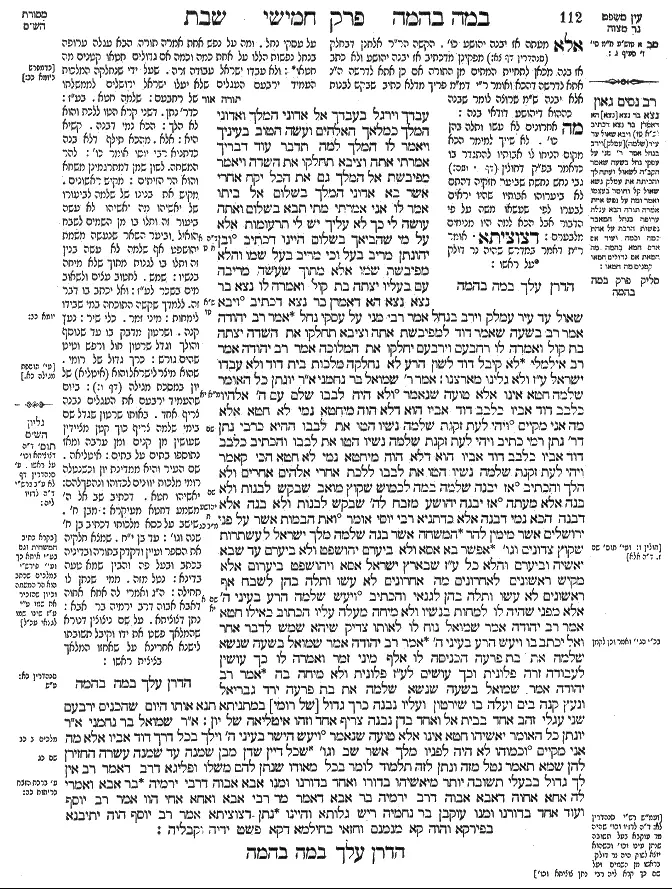
Shabbat 56b - Guemara
עבדך וירגל בעבדך אל אדוני המלך ואדוני המלך כמלאך האלהים ועשה הטוב בעיניך ויאמר לו המלך למה תדבר עוד דבריך אמרתי אתה וציבא תחלקו את השדה ויאמר מפיבשת אל המלך גם את הכל יקח אחרי אשר בא אדוני המלך בשלום אל ביתו אמר לו אני אמרתי מתי תבא בשלום ואתה עושה לי כך לא עליך יש לי תרעומות אלא על מי שהביאך בשלום היינו דכתיב (דברי הימים א ח, לד) ובן יהונתן מריב בעל וכי מריב בעל שמו והלא מפיבשת שמו אלא מתוך שעשה מריבה עם בעליו יצתה בת קול ואמרה לו נצא בר נצא נצא הא דאמרן בר נצא דכתיב (שמואל א טו, ה) ויבא שאול עד עיר עמלק וירב בנחל אמר רבי מני על עסקי נחל אמר רב יהודה אמר רב בשעה שאמר דוד למפיבשת אתה וציבא תחלקו את השדה יצתה בת קול ואמרה לו רחבעם וירבעם יחלקו את המלוכה אמר רב יהודה אמר רב אילמלי לא. קיבל דוד לשון הרע לא נחלקה מלכות בית דוד ולא עבדו ישראל ע"ז ולא גלינו מארצנו:
אמר ר' שמואל בר נחמני א"ר יונתן כל האומר שלמה חטא אינו אלא טועה שנאמר (מלכים א יא, ד) ולא היה לבבו שלם עם ה' אלהיו כלבב דוד אביו כלבב דוד אביו הוא דלא הוה מיחטא נמי לא חטא אלא מה אני מקיים (מלכים א יא, ד) ויהי לעת זקנת שלמה נשיו הטו את לבבו ההיא כרבי נתן דר' נתן רמי כתיב ויהי לעת זקנת שלמה נשיו הטו את לבבו והכתיב כלבב דוד אביו כלבב דוד אביו הוא דלא הוה מיחטא נמי לא חטא הכי קאמר ויהי לעת זקנת שלמה נשיו הטו את לבבו ללכת אחרי אלהים אחרים ולא הלך והכתיב (מלכים א יא, ז) אז יבנה שלמה במה לכמוש שקוץ מואב שבקש לבנות ולא בנה אלא מעתה (יהושע ח, ל) אז יבנה יהושע מזבח לה' שבקש לבנות ולא בנה אלא דבנה הכא נמי דבנה אלא כדתניא רבי יוסי אומר (מלכים ב כג, יג) ואת הבמות אשר על פני ירושלים אשר מימין להר המשחה אשר בנה שלמה מלך ישראל לעשתרות שקוץ צדונים וגו' אפשר בא אסא ולא ביערם יהושפט ולא ביערם עד שבא יאשיה וביערם והלא כל ע"ז שבארץ ישראל אסא ויהושפט ביערום אלא מקיש ראשונים לאחרונים מה אחרונים לא עשו ותלה בהן לשבח אף ראשונים לא עשו ותלה בהן לגנאי והכתיב (מלכים א יא, ו) ויעש שלמה הרע בעיני ה' אלא מפני שהיה לו למחות בנשיו ולא מיחה מעלה עליו הכתוב כאילו חטא אמר רב יהודה אמר שמואל נוח לו לאותו צדיק שיהא שמש לדבר אחר ואל יכתב בו ויעש הרע בעיני ה' אמר רב יהודה אמר שמואל בשעה שנשא שלמה את בת פרעה הכניסה לו אלף מיני זמר ואמרה לו כך עושין לעבודה זרה פלונית וכך עושים לע"ז פלונית ולא מיחה בה אמר רב יהודה אמר שמואל בשעה שנשא שלמה את בת פרעה ירד גבריאל ונעץ קנה בים ועלה בו שירטון ועליו נבנה כרך גדול [של רומי] במתניתא תנא אותו היום שהכניס ירבעם שני עגלי זהב אחד בבית אל ואחד בדן נבנה צריף אחד וזהו איטליאה של יון:
א"ר שמואל בר נחמני א"ר יונתן כל האומר יאשיהו חטא אינו אלא טועה שנאמר (מלכים ב כב, ב) ויעש הישר בעיני ה' וילך בכל דרך דוד אביו אלא מה אני מקיים (מלכים ב כג, כה) וכמוהו לא היה לפניו מלך אשר שב וגו' שכל דין שדן מבן שמנה עד שמנה עשרה החזירן להן שמא תאמר נטל מזה ונתן לזה תלמוד לומר בכל מאודו שנתן להם משלו ופליגא דרב דאמר רב אין לך גדול בבעלי תשובה יותר מיאשיהו בדורו ואחד בדורנו ומנו אבא אבוה דרבי ירמיה בר אבא ואמרי לה אחא אחוה דאבא אבוה דרב ירמיה בר אבא דאמר מר רבי אבא ואחא אחי הוו אמר רב יוסף ועוד אחד בדורנו ומנו עוקבן בר נחמיה ריש גלותא והיינו. נתן דצוציתא אמר רב יוסף הוה יתיבנא בפירקא והוה קא מנמנם וחזאי בחילמא דקא פשט ידיה וקבליה:
הדרן עלך במה בהמה
Comments from Rashi on Masechet Shabbat Page 56b
על עסקי נחל . ומה על נפש אחת אמרה תורה הבא עגלה ערופה בנחל נפשות הללו על אחת כמה וכמה אם גדולים חטאו קטנים מה חטאו: ולא עבדו ישראל עבודה זרה . שעל ידי שנחלקה המלכות העמיד ירבעם העגלים שלא יעלו ישראל לירושלים לממשלתו של רחבעם: שלמה חטא . בע"ז: כדר' נתן . דשני קרא הטו ללכת והוא לא הלך: הכא נמי דבנה . קשיא היא: אלא . מהכא תילף דלא בנה כדתניא רבי יוסי אומר כו': להר המשחה . לשון שמן דמתרגמינן משחא והוא הר הזיתים: מקיש ראשונים . מקיש את בנינו של שלמה לביעורו של יאשיהו מה יאשיהו לא עשה ביעור זה ותלו בו מן השמים לשבח הואיל וביער השאר שנעשה משמת יהושפט אף שלמה לא עשה בנין זה ותלו בו לגנות מתוך שלא מיחה בנשיו: שמש . לחטוב עצים ולשאוב מים בשכר לע"ז: ואל יכתב בו דבר זה . ללמדך שקשה התוכחה במי שבידו לימחות: מיני זמר . כלי שיר: נעץ קנה . ושרטון מדבק בו עד שנוסף והולך וגדל שרטון חול ורפש וטיט שהים גורש: כרך גדול של רומי . שהוא מיצר לישראל והוא (איטליא) של יון במסכת מגילה (דף ו:): ביום שהעמיד ירבעם את העגלים נבנה צריף אחד . באותו שרטון שגדל שם בימי שלמה צריף כוך קטן מציידין שעושין מן קנים ומן ערבה ומאז נתוספו בתים על בתים: איטליאה . שם העיר והיא ממדינת יון וכשנטלה רומי מלכות יוונים לכדוהו ונהפך להם: יאשיהו חטא . דכתיב שב אל ה' משמע דחטא מעיקרא: מבן ח' . שישב על כסא מלכותו דכתיב בן ח' שנה וגו': עד בן י"ח . שמצא חלקיה את הספר ועיין ודקדק בתורה ובדיניה בכתב ובעל פה והבין שמא טעה בדינא: נטל מזה . ממי שנתן לו תחילה: ה"ג ואמרי לה אחא אחוה דאבא אבוה דרב ירמיה בר אבא: נתן דצוציתא . על שם ניצוצין דנורא שהמלאך פשט את ידו וקיבל תשובתו לישנא אחרינא על שאחזו המלאך בציצית ראשו:
Comments from Tosafot - Shabbat 56b
אלא מעתה אז יבנה יהושע כו' . הקשה הר"ר אלחנן דבחלק (סנהדדין דף צא:) מפקינן מדכתיב אז יבנה יהושע ולא כתב אז בנה מכאן לתחיית המתים מן התורה אם כן אתא לדרשה ה"נ אתא לדרשה דהכא ואומר ר"י דמ"מ פריך מדלא כתיב שבקש לבנות אלא יבנה ש"מ שרוצה לומר שבנה כההוא דיהושע דודאי בנה: מה אחרונים לא עשו ותלה בהן כו' . לא שייך למימר הכא מקום הניחו לו אבותיו להתגדר בו כדאמר בפ"ק דחולין (דף. ושם:) גבי נחש נחשת שביער חזקיה דהתם לא ביערוהו אבותיו שהיו יראים לבערו לפי שעשאו משה על פי הדבור אבל הכא למה היו מניחים מלבערם: דצוציתא . אומר ר"ת דאמר במדרש שהיה נר דולק על ראשו:
Shabbat 56b - Mishnah translated into english
your servant. And he slandered your servant to my lord the king; but my lord the king is like an angel of God: Do therefore what is good in your eyes” (II Samuel 19:26–28). “And the king said to him: Why do you speak any more of your matters? I have said: You and Ziba shall divide the estate. And Mephibosheth said to the king: Let him even take all, seeing that my lord the king is come back in peace to his own house” (II Samuel 19:30–31). Mephibosheth said to David as follows: I had hoped for your return, saying: When will he come in peace, and yet you do this to me, giving Ziba half of my estate? It is not against you that I have grievances, but against He who brought you back in peace. Mephibosheth’s own statement substantiates Ziba’s report about him.
This is what is written: “And the son of Jonathan was Meriv-Baal” (I Chronicles 8:34). The Gemara asks: And was Meriv-Baal his name? Wasn’t his name Mephibosheth? However, since he entered into a quarrel [meriva] with his Master [ba’al], i.e., God, and complained about God having saved David, a Divine Voice emerged and said to him: Quarrelsome one, the son of a quarrelsome one; you are just like your father, Saul. The Gemara explains: Quarrelsome one; that which we just said that Mephibosheth complained to God about His salvation of David. The son of a quarrelsome one; as it is written: “And Saul came to a city of Amalek and quarreled in the valley” (I Samuel 15:5). And Rabbi Mani said: Saul quarreled with God with regard to matters of the valley, saying: For the murder of even a single person, there is a commandment to break the neck of a heifer in a valley to atone for the crime (see Deuteronomy 21:1–9); why then must all these Amalekites be killed?
To the matter at hand: Rav Yehuda said that Rav said: When David said to Mephibosheth: You and Ziba shall divide the estate, a Divine Voice emerged and said to him: Rehoboam and Jeroboam shall divide the kingdom.
Rav Yehuda said that Rav said: Had David not accepted Ziba’s slanderous report about Mephibosheth, the kingdom of the house of David would not have been divided, Israel would not have worshipped idols because of Jeroboam, and we would not have been exiled from our land.
Rabbi Shmuel bar Naḥmani said that Rabbi Yonatan said: Anyone who says that King Solomon sinned is nothing other than mistaken, as it is stated: “And his heart was not perfect with the Lord his God, as was the heart of David, his father” (I Kings 11:4). By inference: Solomon’s heart was not equal to the heart of David, his father; however, he also did not sin.
However, how then do I establish the meaning of the verse: “For it came to pass, when Solomon was old, that his wives turned away his heart after other gods” (I Kings 11:4)? That verse is in accordance with the statement of Rabbi Natan; as Rabbi Natan raised a contradiction between the two parts of the verse. On the one hand, it is written: “For it came to pass, when Solomon was old, that his wives turned away his heart after other gods.” On the other hand, isn’t it written: “And his heart was not perfect with the Lord his God, as was the heart of David his father,” indicating that Solomon’s heart was not equal to the heart of David his father; however, he also did not sin? Rather, the verse says as follows: For it came to pass, when Solomon was old, that his wives turned away his heart, in an attempt to spur him to go after other gods; however, he did not go after them.
The Gemara asks: Isn’t it written: “Then did Solomon build [yivne] an altar for Kemosh, the abomination of Moab, in the hill that is before Jerusalem, and for Molech, the abomination of the children of Ammon” (I Kings 11:7), indicating that Solomon did in fact stray after idols? The Gemara answers: This can be understood to mean that Solomon sought to build an altar for idols but did not build it.
The Gemara objects: But now if that is the way to understand the future tense verb form yivne, what of another instance where the same form is employed: “Then did Joshua build [yivne] an altar to the Lord God of Israel in Mount Eival” (Joshua 8:30)? There too, would you say that Joshua sought to build an altar but did not build one? Rather, there, in the case of Joshua, it means that he actually built it. Here too, with regard to Solomon, it means that he actually built the altar.
Rather, this verse should be understood as it was taught in a baraita that Rabbi Yosei says: The verse states: “And the altars that were before Jerusalem, which were on the right hand of the Mount of Olives, which Solomon the king of Israel had built for Ashtoret the abomination of the Zidonim, and for Kemosh the abomination of Moab, and for Milkom the abomination of the children of Ammon, did the king defile” (II Kings 23:13). All these were destroyed by Josiah.
The Gemara asks: Is it possible that the righteous king Asa came and did not destroy them, and the righteous king Jehosaphat came and did not destroy them until Josiah came and destroyed them? Didn’t Asa and Jehosaphat destroy all the idolatry in Eretz Yisrael? Rather, the verse juxtaposes the earlier ones, i.e., Solomon, to the later ones, i.e., Josiah. Just as the later ones, Josiah, did not effect the destruction of the altars, as it was done by his predecessors, and nevertheless the verse attributes it to him to praise him as if he had destroyed all those altars, so too, the earlier ones, Solomon, did not effect the construction, and nevertheless the verse attributes it to him to disgrace him as he did not prevent their construction.
The Gemara raises another question. Isn’t it written: “And Solomon did evil in the sight of the Lord” (I Kings 11:6), clearly indicating that Solomon sinned? Rather, since he should have protested against the conduct of his wives, i.e., their involvement in idolatry, but he did not protest, the verse ascribes to him liability as if he had sinned.
Rav Yehuda said that Shmuel said: It would have been preferable for that righteous man, Solomon, to be a servant tasked with drawing water and hewing wood for another matter, i.e., idolatry, and not have the verse write about him: “And he did evil in the sight of the Lord,” even though he did not.
Rav Yehuda said that Shmuel said: When Solomon married Pharaoh’s daughter, she brought to him a thousand musical instruments and said to him: This is the way we do it for this idolatry, and this is the way we do it for that idolatry, and he did not protest that talk.
Rav Yehuda said that Shmuel said: When Solomon married Pharaoh’s daughter, the angel Gabriel descended from heaven and implanted a reed into the sea, and a sandbar grew around it, growing larger each year, and upon it the great city of Rome was built, which became God’s instrument to punish Israel.
It was taught in a baraita: On that very day that Jeroboam introduced two golden calves, one in Beth-El and the other in Dan, a single small hut was constructed, which was the first house constructed there. And that was the inauguration of Italy of Greece.
Rabbi Shmuel bar Naḥmani said that Rabbi Yonatan said: Anyone who says that Josiah sinned is nothing other than mistaken, as it is stated: “And he did that which was right in the sight of the Lord, and walked in all the way of David his father, and turned not aside to the right hand nor to the left” (II Kings 22:2). However, how then do I establish the meaning of the verse: “And like him was there no king before him that returned to the Lord with all his heart, and with all his soul, and with all his might, according to all the Torah of Moses; neither after him arose there any like him” (II Kings 23:25)? The verse states: Josiah returned to the Lord. Apparently, in his early days he was a sinner, and later he returned to God.
The Gemara answers: The reference here is not to repentance for actual sins that Josiah committed. Rather, in every judgment that he issued from the age of eight, when he was crowned, until the age of eighteen, he returned the money to the parties whom he judged liable, due to concern that in his youth he may not have judged the cases correctly. And lest you say that he took from this one, whom he exonerated, and gave to that one, whom he found culpable, therefore the verse states: Returned to the Lord with all his might [me’odo], i.e., with all his money. It means that he gave those he judged liable in his youth from his own money.
The Gemara notes that Rabbi Yonatan disagrees with Rav, as Rav said: There is no greater penitent than Josiah in his generation, and there is one in our generation. The Gemara asks: And who is the great penitent in Rav’s generation? The Gemara answers: He is Abba, father of Rabbi Yirmeya bar Abba, and some say it is Aḥa, brother of Abba, father of Rabbi Yirmeya bar Abba, as the Master said: Rabbi Abba and Aḥa were brothers.
Rav Yosef said: And there is another great penitent in our generation. And who is he? He is Okvan, son of Neḥemya the Exilarch. And that is the one also known as Natan detzutzita, i.e., from whose head sparks emerged. Rav Yosef said: I was once sitting at the lecture delivered on the Festival [pirka] and I was dozing. And I saw in a dream how an angel stretched out his hands and received Natan detzutzita, demonstrating that his repentance was accepted.
Traduction : The William Davidson digital edition of the Koren Noé Talmud, with commentary by Rabbi Adin Even-Israel Steinsaltz.