 Talmud Bavli
The learning on the whole site is dedicated : L'ilui Nishmat Yaakov ben Myriam
The learning on the whole site is dedicated : L'ilui Nishmat אליעזר בן רחל
The learning on the whole site is dedicated : L'ilui Nishmat Rav Chlomo Ben Jamilla
Shabbat 38b : Youtube
Daf TubeYoutube
3 video classes :
Shabbat Page 38b
Shabbat 38b - Guemara
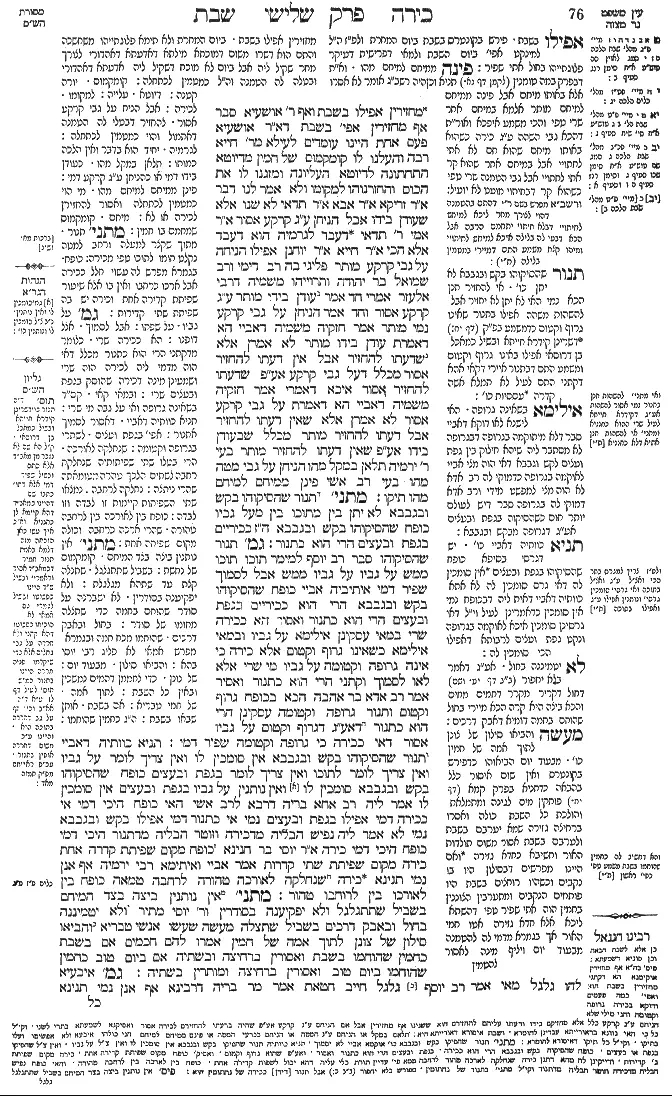
מחזירין אפילו בשבת ואף ר' אושעיא סבר אף מחזירין אפי' בשבת דא"ר אושעיא פעם אחת היינו עומדים לעילא מר' חייא רבה והעלנו לו קומקמוס של חמין מדיוטא התחתונה לדיוטא העליונה ומזגנו לו את הכוס והחזרנוהו למקומו ולא אמר לנו דבר א"ר זריקא א"ר אבא א"ר תדאי לא שנו אלא שעודן בידו אבל הניחן ע"ג קרקע אסור א"ר אמי ר' תדאי דעבד לגרמיה הוא דעבד אלא הכי א"ר חייא א"ר יוחנן אפילו הניחה על גבי קרקע מותר פליגי בה רב דימי ורב שמואל בר יהודה ותרוייהו משמיה דרבי אלעזר אמרי חד אמר עודן בידו מותר ע"ג קרקע אסור וחד אמר הניחן על גבי קרקע נמי מותר אמר חזקיה משמיה דאביי הא דאמרת עודן בידו מותר לא אמרן אלא שדעתו להחזיר אבל אין דעתו להחזיר אסור מכלל דעל גבי קרקע אע"פ שדעתו להחזיר אסור איכא דאמרי אמר חזקיה משמיה דאביי הא דאמרת על גבי קרקע אסור לא אמרן אלא שאין דעתו להחזיר אבל דעתו להחזיר מותר מכלל שבעודן בידו אע"פ שאין דעתו להחזיר מותר בעי ר' ירמיה תלאן במקל מהו הניחן על גבי מטה מהו בעי רב אשי פינן ממיחם למיחם מהו תיקו:
מתני׳ תנור שהסיקוהו בקש ובגבבא לא יתן בין מתוכו בין מעל גביו כופח שהסיקוהו בקש ובגבבא ה"ז ככיריים בגפת ובעצים הרי הוא כתנור:
גמ׳ תנור שהסיקוהו סבר רב יוסף למימר תוכו תוכו ממש על גביו על גביו ממש אבל לסמוך שפיר דמי איתיביה אביי כופח שהסיקוהו בקש ובגבבא הרי הוא ככיריים בגפת ובעצים הרי הוא כתנור ואסור הא ככירה שרי במאי עסקינן אילימא על גביו ובמאי אילימא כשאינו גרוף וקטום אלא כירה כי אינה גרופה וקטומה על גביו מי שרי אלא לאו לסמוך וקתני הרי הוא כתנור ואסיר אמר רב אדא בר אהבה הכא בכופח גרוף וקטום ותנור גרופה וקטומה עסקינן הרי הוא כתנור דאע"ג דגרוף וקטום על גביו אסור דאי ככירה כי גרופה וקטומה שפיר דמי:
תניא כוותיה דאביי תנור שהסיקוהו בקש ובגבבא אין סומכין לו ואין צריך לומר על גביו ואין צריך לומר לתוכו ואין צריך לומר בגפת ובעצים כופח שהסיקוהו בקש ובגבבא סומכין לו ואין נותנין על גביו בגפת ובעצים אין סומכין לו אמר ליה רב אחא בריה דרבא לרב אשי האי כופח היכי דמי אי ככירה דמי אפילו בגפת ובעצים נמי אי כתנור דמי אפילו בקש ובגבבא נמי לא אמר ליה נפיש הבליה מדכירה וזוטר הבליה מדתנור היכי דמי כופח היכי דמי כירה א"ר יוסי בר חנינא כופח מקום שפיתת קדרה אחת כירה מקום שפיתת שתי קדרות אמר אביי ואיתימא רבי ירמיה אף אנן נמי תנינא כירה שנחלקה לאורכה טהורה לרחבה טמאה כופח בין לאורכו בין לרוחבו טהור:
מתני׳ אין נותנין ביצה בצד המיחם בשביל שתתגלגל ולא יפקיענה בסודרין ור' יוסי מתיר ולא יטמיננה בחול ובאבק דרכים בשביל שתצלה מעשה שעשו אנשי טבריא והביאו סילון של צונן לתוך אמה של חמין אמרו להם חכמים אם בשבת כחמין שהוחמו בשבת ואסורין ברחיצה ובשתיה אם ביום טוב כחמין שהוחמו ביום טוב ואסורין ברחיצה ומותרין בשתיה:
גמ׳ איבעיא להו גלגל מאי אמר רב יוסף גלגל חייב חטאת אמר מר בריה דרבינא אף אנן נמי תנינא
Comments from Rashi on Masechet Shabbat Page 38b
מחזירין אפילו בשבת . ביום המחרת ולא תימא פלוגתייהו משחשכה והתם הוא דשרו משום דמוכחא מילתא דאדעתא דאהדורי לצורך מחר שקיל ליה אבל ביום לא מוכח דשקיל ליה אדעתא דאהדורי ובטלה לה הטמנה וה"ל כמטמין לכתחלה: קומקמוס . יורה קטנה: דיוטא . עלייה: למקומו . לכירה: אבל הניח על גבי קרקע אסור . להחזיר דבטלי לה הטמנה דאתמול והוי כמטמין לכתחלה: לגרמיה . יחיד הוא בדבר ואין הלכה כמותו: תלאן במקל מהו . כעודן בידו דמי או כהניחן ע"ג קרקע דמי: פינן ממיחם למיחם מהו . מי הוי כמטמין לכתחלה ואסור להחזירן לכירה או לא: מיחם . קומקמוס שמחמם בו חמין: מתני' תנור . מתוך שקצר למעלה ורחב למטה נקלט חומו לתוכו טפי מכירה: כופח . בגמרא מפרש לה עשוי חלל ככירה אבל ארכו כרחבו ואין בו אלא שיעור שפיתת קדירה אחת וכירה יש בה שפיתת שתי קדירות: גמ' על גביו . על שפתו: אבל לסמוך . אצל דופנו: הא ככירה שרי . כלומר מדקתני הרי הוא כתנור מכלל דאי הוה מדמי ליה לכירה הוה שרי ושמעינן מינה דכירה שהוסק בגפת ובעצים שרי: ובמאי קאי . קס"ד בשאינה גרופה ואי על גבה מי שרי: תניא כוותיה דאביי . דאסור לסמוך אתנור: אפי' בגפת ועצים . לשתרי בגרופה וקטומה: שנחלקה לאורכה . הרי בטלו שתי שפיתותיה שנחלקת רחבה לשתים הלכך טהרה מטומאתה שהרי ניתצה: נחלקה לרחבה . נמצאו שתי השפיתות קיימות זו לבדה וזו לבדה: כופח בין לאורכה בין לרחבה טהורה . שהרי ארכה כרחבה וכולה מקום שפיתה אחת: מתני' אין נותנין ביצה בצד המיחם . קומקמוס של נחשת: בשביל שתתגלגל . שתצלה קצת עד שתהא מגלגלת: ולא יפקיענה בסודרין . לא ישברנה על סודר שהוחם בחמה כדי שתצלה מחומו של סודר: בחול ובאבק דרכים . שהוחמו מכח חמה ובגמרא מפרש אמאי לא פליג רבי יוסי בהא: והביאו סילון . מבעוד יום: של צונן . כדי לחממן דהמים נמשכין ובאין כל השבת: לתוך אמה . של חמי טבריא: אם בשבת . אותן שבאו בשבת: ה"ג כחמין שהוחמו:
Comments from Tosafot - Shabbat 38b
אפילו בשבת . פירש בקונטרס בשבת ביום המחרת ולפ"ז ה"ל למינקט אפי' ביום השבת ולמאי דפרישית דעיקר פלוגתייהו בחול אתי שפיר: פינה ממיחם למיחם מהו . וא"ת דבפרק במה טומנין (לקמן שבת דף נא.) תניא וכן היה רשב"ג אומר לא אסרו אלא באותו מיחם אבל פינה ממיחם למיחם מותר אלמא במיחם אחר שרי טפי והכי משמע איפכא ואור"ת דהכא גבי השהה ע"ג כירה כשהוא באותו מיחם שהוא חם לא אתי לחתויי אבל במיחם אחר שהוא קר אתי לחתויי אבל גבי הטמנה שרי טפי כשהוא קר דבחיתוי מועט לא יועיל: ורשב"א מפרש בשם ר"י דהתם בהטמנה דהוי לצורך מחר ליכא למיחש לחיתויי דבלא חיתוי יתחמם הרבה אבל הכא דבעי לה בלילה איכא למיחש לחיתויי ומיהו קצת משמע התם דמיירי במטמין בלילה (ת"י): תנור שהסיקוהו בקש ובגבבא לא יתן כו' . אי להחזיר תנן הכא נמי האי לא יתן לא יחזיר אבל להשהות משהה אפילו בתנור שאינו גרוף וקטום כדמשמע בפ"ק (דף יח:) דשרינן קידרא חייתא ובשיל כמאכל בן דרוסאי אפילו באינו גרוף וקטום ומשמע התם דבתנור איירי דקאי אהא דקתני התם לעיל לא תמלא אשה קדרה עססיות כו': אילימא בשאינה גרופה . האי לישנא לאו דוקא דאביי סבר דלא מיתוקמה בגרופה דבגרופה לא מסתבר ליה שיהא חילוק בין גפת ועצים לקש וגבבא דאי הוה מצי אביי לאוקמה בגרופה כדמוקי לה רב אדא לא הוה מצי למפשט מידי ורב אדא דמוקי לה בגרופה סבר דיש לעולם יותר חום כשהסיקוה בגפת ובעצים אע"ג דגרופה מבקש ובגבבא: תניא כוותיה דאביי כו' . יש דגרסי בסיפא כופח שהסיקוהו בגפת ובעצים אין סומכין לה דאי גרס סומכין לה לא אתא כוותיה דאביי דאית ליה דבכופח נמי אין סומכין כדאמרינן לעיל וי"ל דאי גרסינן סומכין איכא לאוקמה בגרופה ונקט גפת ועצים לרבותא דאפילו הכי סומכין לה: לא יטמיננה בחול . אע"ג דאמר בלא יחפור (ב"ב דף ימ. ושם) דחול דקריר מקרר דחמים מחים והכא ביצה היא קרה הכא מיירי בחול שהוחם בחמה דומיא דאבק דרכים: מעשה והביאו סילון של צונן לתוך אמה של חמין כו' . מבעוד יום הביאוהו כדפירש בקונטרס ואין שום איסור כלל בהבאה כדתניא בפרק קמא (דף יח.) פותקין מים לגינה ומתמלאת והולכת כל השבת כולה ואסרו ברחיצה גזירה שמא יערבם בשבת ולערבם בשבת אסור משום תולדות האור וחשיבא כחדא גזירה ואם היינו מפרשים דבסילון היו בו נקבים וכשהיו רוחצים בשבת היו פותחים הנקבים ומתערבין הצוננין בחמין הוה אתי שפיר טפי דהשתא ליכא אלא חדא גזירה אטו חמי האור אך בגמרא מדמי לה להטמנה מבעוד יום ויליף מינה לאסור להטמין מבעוד יום בדבר המוסיף הבל גזירה שמא יטמין ברמץ ושמא יחתה ולר"י נראה דמה שהיו מתערבין צונן בחמין לא הוה דמי להטמנה וליכא למילף מינה דאיכא למימר דאסרי להו מפני שמבשל המים צוננין ונראה לו דסילון לא היה מתערב בחמין כי היה מוקף מחיצות מכל צד והיו מתחממין המים צוננים שבסילון מחמת חמי טבריא ולא היו רוחצות בחמי טבריא עצמן לפי שריחן רע והשתא דמיא להטמנה שמים צוננין היו נטמנין בתוך החמין להתחמם:
Shabbat 38b - Mishnah translated into english
that one may even return it, doing so is permitted even on Shabbat and not only on Shabbat eve. And Rav Oshaya also holds: One may even return it even on Shabbat. As Rav Oshaya said: Once we were standing on Shabbat before Rabbi Ḥiyya the Great and we passed up to him a kettle [kumkemos] of hot water from the bottom floor [deyota] to the top floor, and we poured him a cup and returned the kettle to its place on top of the stove, and he did not say anything to us. Apparently, he is of the opinion that even on Shabbat it is permitted to return a pot to the stove.
Rabbi Zerika said that Rabbi Abba said that Rabbi Tadai said: They only taught that it is permitted to return vessels with the food inside them when they are still in his hand; however, if he already placed them on the ground, he obviously regretted placing them on the fire and it is prohibited to replace them on the stove. Rabbi Ami said: That which Rabbi Tadai did and said, he did on his own, and not in accordance with the accepted halakha. Rather, Rabbi Ḥiyya said that Rabbi Yoḥanan said as follows: Even if one placed the pot on the ground, it is permitted to return it to the stove.
The Gemara remarks that Rav Dimi and Rav Shmuel bar Yehuda disagreed about this matter, and both stated their opinion in the name of Rabbi Elazar. One said that when they are still in his hand, it is permitted to return them to the stove; when they were already placed on the ground, it is prohibited to do so. And one said that even if one placed them on the ground, it is also permitted to return it to the stove. Ḥizkiya said in the name of Abaye: That which you said, that when it is still in his hand, it is permitted to return it to the stove; we only said that halakha when his original intention was to return it to the stove. However, when it was not his original intention to return it, and he reconsidered and decided to return it, it is prohibited to return it. This proves by inference that if one placed it on the ground, even if his intention was to return it, it is prohibited.
Some say a different version of what Ḥizkiya said in the name of Abaye: That which you said, if one placed it on the ground it is prohibited; we only said that halakha when it was not his original intention to return it. However, if his original intention was to return it, it is permitted. This proves by inference that while they are still in his hand, even if it was not his original intention to return it, it is permitted. With regard to this matter, Rabbi Yirmeya raised a dilemma: In a case where he neither placed them on the floor nor held them in his hand, but he hung them on a stick, what is the ruling? In a case where he placed it on top of a bed, what is the ruling? Similarly, Rav Ashi raised a dilemma: If one transferred them from one urn to another urn what is the ruling? The Gemara said: These dilemmas stand unresolved.
MISHNA: The halakhot that were stated with regard to a stove were specific to a stove’s unique structure and the manner in which it retains heat. However, with regard to other baking apparatuses, i.e., an oven or a kupaḥ, there are different rules. The mishna delineates: An oven that they lit even with straw or rakings, one may neither place a pot inside it nor atop it on Shabbat. Whereas a kupaḥ that was lit with straw or rakings, its legal status is like that of a stove, and one is permitted to place a pot atop it on Shabbat. If it were lit with pomace or with wood, its legal status is like that of an oven and it is prohibited to place a pot atop it on Shabbat.
GEMARA: With regard to that which we learned in the mishna that an oven that they lit even with straw or rakings, one may neither place a pot atop it nor inside it, Rav Yosef thought to say that when the mishna says inside it, it means actually inside it; and when it says atop it, it means actually atop it. However, to lean a pot against an oven, it may well be done. Abaye raised an objection to Rav Yosef from that which we learned in our mishna: A kupaḥ that was lit with straw or rakings, its legal status is like that of a stove. If it were lit with pomace or with wood, its legal status is like that of an oven, and it is prohibited. By inference: If it were like a stove, it would be permitted. With what circumstances are we dealing? If you say that he placed the pot atop the kupaḥ, and in what case? If you say it is referring to a case where it is not swept and covered with ashes; a stove that is not swept and covered with ashes, is it permitted even to place a pot atop it on Shabbat? Rather, isn’t it referring to a case where one seeks to lean a pot against a kupaḥ, and it taught: It is like an oven, and prohibited?
Rav Adda bar Ahava said: Here we are dealing with the cases of a kupaḥ that is swept and covered with ashes and an oven that is swept and covered with ashes, and the mishna is to be understood as follows: It is like an oven in the sense that, although it is swept and covered with ashes, it is prohibited to place a pot atop it; as, if its legal status were like that of a stove, when it is swept and covered it may well be done. The Gemara comments that there is a baraita that taught in accordance with the opinion of Abaye: An oven that one lit with straw and with rakings, one may not lean a pot against it, and needless to say one may not place a pot atop it, and needless to say one may not place a pot inside it, and, needless to say if it was lit with pomace or with wood it is prohibited. While with regard to a kupaḥ that was lit with straw or with rakings, one may lean a pot against it, but he may not place a pot atop it. If it was lit with pomace or with wood, one may not lean a pot against it.
Rav Aha, son of Rava, said to Rav Ashi: This kupaḥ, what are its circumstances? If it is considered like a stove, even if it was lit with pomace or with wood, it should also be permitted. And if it is considered like an oven, even with straw or with rakings, it should also not be permitted. Rav Ashi said to him: From a halakhic perspective, a kupaḥ has intermediate status. Its heat is greater than that of a stove; however, its heat is less than that of an oven.
The Gemara asks: What are the circumstances of a kupaḥ? What are the circumstances of a stove in terms of the configuration of the vessels? Rabbi Yosei bar Ḥanina said: A kupaḥ is a small vessel that is similar to a stove; however, it only has one hole with enough space to place a single pot. A stove is like a double kupaḥ with enough space to place two pots. Abaye said, and some say that Rabbi Yirmeya said: We also learned this matter in a mishna dealing with the laws of ritual purity and impurity: An impure stove that was divided lengthwise is pure because it can no longer be considered a vessel. It is a broken vessel, and a broken vessel cannot become ritually impure. However, if the stove was divided widthwise, between the spaces for the pots, then it remains impure because it became two small stoves. However, a kupaḥ, whether it was divided lengthwise or whether it was divided widthwise, is pure because it can no longer be used as there is no way to put even a single pot on it. That is the difference between a kupaḥ and a stove.
MISHNA: In addition to the halakhot that deal with cooking on the fire on Shabbat, several related halakhot are discussed. The mishna says: One may not place a raw egg next to an urn full of hot water so that it will roast slightly. And one may not even wrap it in cloths, i.e., one may not heat the egg inside cloths that were heated in the sun. And Rabbi Yosei permits doing so in that case. And, similarly, one may not insulate it in sand or in road dust that was heated in the sun so that it will roast. Although there is no actual cooking with fire here, it is similar to cooking and the Sages issued a decree to prohibit doing so.
The mishna relates a story about the people of the city of Tiberias, and they ran a cold-water pipe [silon] through a canal of hot water from the Tiberias hot springs. They thought that by doing so, they could heat the cold potable water on Shabbat. The Rabbis said to them: If the water passed through on Shabbat, its legal status is like that of hot water that was heated on Shabbat, and the water is prohibited both for bathing and for drinking. And if the water passed through on a Festival, then it is prohibited for bathing but permitted for drinking. On Festivals, one is even permitted to boil water on actual fire for the purposes of eating and drinking.
GEMARA: A dilemma was raised before the Sages: One who violated the halakha in the mishna and slightly roasted an egg next to an urn, what is the ruling? Rav Yosef said: One who slightly cooked an egg is liable to bring a sin-offering, as he performed the act of cooking on Shabbat, which is prohibited by Torah law. Mar, son of Ravina, said: We also learned something similar in the mishna:
Traduction : The William Davidson digital edition of the Koren Noé Talmud, with commentary by Rabbi Adin Even-Israel Steinsaltz.