 Talmud Bavli
Shabbat 40b : Youtube
Daf TubeYoutube
3 video classes :
Shabbat Page 40b
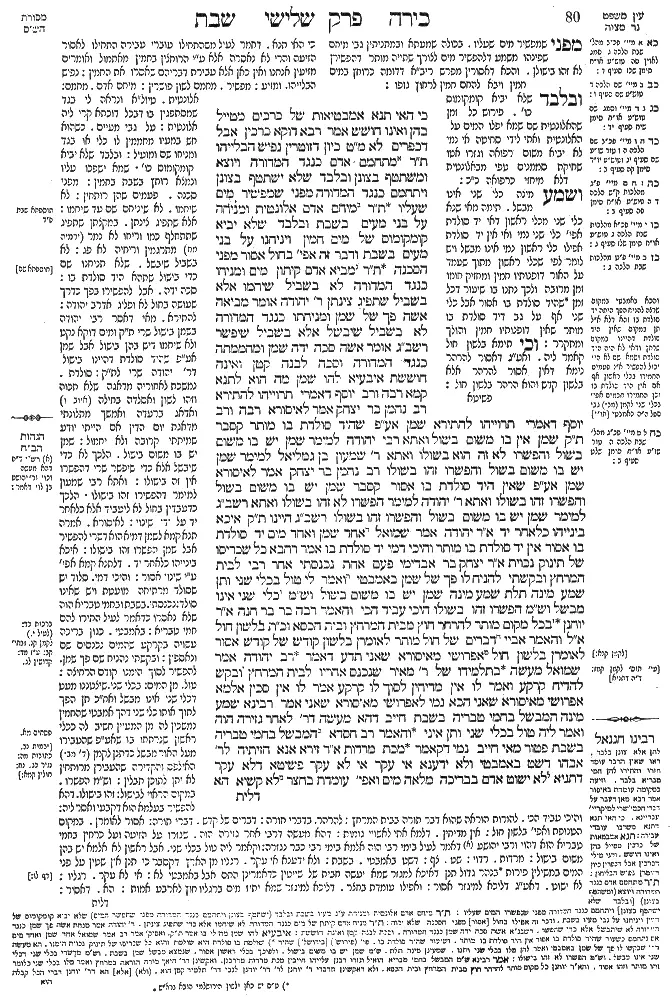
Shabbat 40b - Guemara
כי האי תנא אמבטיאות של כרכים מטייל בהן ואינו חושש אמר רבא דוקא כרכין אבל דכפרים לא מ"ט כיון דזוטרין נפיש הבלייהו ת"ר מתחמם אדם כנגד המדורה ויוצא ומשתטף בצונן ובלבד שלא ישתטף בצונן ויתחמם כנגד המדורה מפני שמפשיר מים שעליו ת"ר מיחם אדם אלונטית ומניחה על בני מעים בשבת ובלבד שלא יביא קומקומוס של מים חמין ויניחנו על בני מעים בשבת ודבר זה אפי' בחול אסור מפני הסכנה ת"ר מביא אדם קיתון מים ומניחו כנגד המדורה לא בשביל שיחמו אלא בשביל שתפיג צינתן ר' יהודה אומר מביאה אשה פך של שמן ומניחתו כנגד המדורה לא בשביל שיבשל אלא בשביל שיפשר רשב"ג אומר אשה סכה ידה שמן ומחממתה כנגד המדורה וסכה לבנה קטן ואינה חוששת איבעיא להו שמן מה הוא לתנא קמא רבה ורב יוסף דאמרי תרוייהו להתירא רב נחמן בר יצחק אמר לאיסורא רבה ורב יוסף דאמרי תרוייהו להתירא שמן אע"פ שהיד סולדת בו מותר קסבר ת"ק שמן אין בו משום בשול ואתא רבי יהודה למימר שמן יש בו משום בשול והפשרו לא זה הוא בשולו ואתא ר' שמעון בן גמליאל למימר שמן יש בו משום בשול והפשרו זהו בשולו רב נחמן בר יצחק אמר לאיסורא שמן אע"פ שאין היד סולדת בו אסור קסבר שמן יש בו משום בשול והפשרו זהו בשולו ואתא ר' יהודה למימר הפשרו לא זהו בשולו ואתא רשב"ג למימר שמן יש בו משום בשול והפשרו זהו בשולו רשב"ג היינו ת"ק איכא בינייהו כלאחר יד א"ר יהודה אמר שמואל אחד שמן ואחד מים יד סולדת בו אסור אין יד סולדת בו מותר והיכי דמי יד סולדת בו אמר רחבא כל שכריסו של תינוק נכוית א"ר יצחק בר אבדימי פעם אחת נכנסתי אחר רבי לבית המרחץ ובקשתי להניח לו פך של שמן באמבטי ואמר לי טול בכלי שני ותן שמע מינה תלת שמע מינה שמן יש בו משום בשול וש"מ כלי שני אינו מבשל וש"מ הפשרו זהו בשולו היכי עביד הכי והאמר רבה בר בר חנה א"ר יוחנן בכל מקום מותר להרהר חוץ מבית המרחץ ובית הכסא וכ"ת בלשון חול א"ל והאמר אביי דברים של חול מותר לאומרן בלשון קודש של קודש אסור לאומרן בלשון חול אפרושי מאיסורא שאני תדע דאמר רב יהודה אמר שמואל מעשה בתלמידו של ר' מאיר שנכנס אחריו לבית המרחץ ובקש להדיח קרקע ואמר לו אין מדיחין לסוך לו קרקע אמר לו אין סכין אלמא אפרושי מאיסורא שאני הכא נמי לאפרושי מאיסורא שאני אמר רבינא שמע מינה המבשל בחמי טבריה בשבת חייב דהא מעשה דר' לאחר גזירה הוה ואמר ליה טול בכלי שני ותן איני והאמר רב חסדא המבשל בחמי טבריה בשבת פטור מאי חייב נמי דקאמר מכת מרדות א"ר זירא אנא חזיתיה לר' אבהו דשט באמבטי ולא ידענא אי עקר אי לא עקר פשיטא דלא עקר דתניא לא ישוט אדם בבריכה מלאה מים ואפי' עומדת בחצר לא קשיא הא
Comments from Rashi on Masechet Shabbat Page 40b
כי האי תנא . דאמר לעיל משהתחילו עוברי עבירה התחילו לאסור הזיעה והרי לא נאסרה אלא ע"י הרוחצין בחמין מאתמול ואומרים מזיעין אנחנו ואין כאן אלא עבירת דבריהם שאסרו את החמין: נפיש הבלייהו . ומזיע: מפשיר . מחמם לשון פושרין: מיחם אדם . מחמם: אלונטית . טיול"א ונראה לי בגד שמסתפגין בו דבכל דוכתא קרי לה אלונטית: על גבי מעיים . כשהוא חש במעיו מחממין לו כלי או בגד ומניחו שם ומועיל: ובלבד שלא יביא קומקומוס כו' . שמא ישפכו עליו ונמצא רוחץ בשבת בחמין: מפני סכנה . פעמים שהן רותחין: לא שיחמו . לא שיניחם שם עד שיחמו: אלא שתפיג צינתן . במקצתן שתפיג שתתחלף כמו וריחו לא נמר (ירמיהו מח) מתרגמין וריחיה לא פג: לא בשביל שיבשל . שלא תניחנו שם כדי בישול שתהא היד סולדת בו: סכה ידה . אבל להפשירו בפך כדרך שעושה בחול לא ופליג אדרב יהודה: להתירא . מאי דאסר רבי יהודה בשמן בישול שרי ת"ק ומים דוקא נקט ולא שיחמו דיש בהן בישול אבל שמן אע"פ שהיד סולדת דהיינו בישול דר' יהודה שרי לת"ק: סולדת . נמשכת לאחוריה מדאגה שלא תכוה וזהו לשון ואסלדה בחילה (איוב ו) ואדאג ברעדה ואמשך מתלונתי מדאגת יום הדין אם הייתי יודע שמיתתי קרובה ולא יחמול: שמן יש בו משום בישול . הלכך לא כדי שיבשל אלא כדי שיפשר שרי דהפשרו אין זה בישולו: ואתא רבי שמעון למימר דהפשירו זהו בישולו . הלכך כדעבדין בחול לא ליעביד אלא כלאחר יד על ידי שינוי: לאיסורא . אמרה תנא קמא לשמן דמיא הוא דשרי להפשיר אבל שמן הפשרו זהו בישולו: איכא בינייהו כלאחר יד . דלתנא קמא אפי' ע"י שינוי אסור: והיכי דמי . סלוד יש שסולד מרתיחה מועטת ויש שאינו סולד: נכנסתי . בשבת ובחמי טבריא הוה שלא נאסרו כדאמר לעיל התירו להם חמי טבריא: באמבטי . כגון בריכה עשויה בקרקע שהמים נכנסים שם ונאספין: ובקשתי להניח שם פך שמן . להפשיר לסוך הימנו קודם הרחיצה: טול . מן המים: בכלי שני . שיצטננו מעט דכלי שני אינו מבשל ואח"כ תן הפך לתוך אותו כלי שני דהך אמבטי שהחמין נמשכין לה מן המעיין חשיב לה ככלי ראשון שנרתחו בו שאע"פ שהעבירו מעל האור מבשל כדתנן לקמן (שבת ד' מב.) האילפס והקדירה שהעבירן מרותחין לא יתן לתוכן תבלין: וש"מ הפשרו . במקום הראוי לבישול: זהו בישולו . דהא להפשיר בעלמא הוא דקבעי ואסר ליה: והיכי עביד הכי . להורות הוראה שהוא דבר תורה בבית המרחץ: להרהר . בדברי תורה: דברים של קדש . דברי תורה: אסור לאומרן . במקום הטנופת ואפי' בלשון חול: מרדות . רדוי: דהא מעשה דרבי אחר גזירה הוה . שגזרו על הזיעה ועל כרחין בחמי טבריא הוא דהוי ורבי יהושע דאמר לעיל בימי רבי הוה אלמא בימי רבי כבר נגזרה: וקאמר ליה טול בכלי שני . אבל ראשון לא אלמא יש בהן משום בישול: אין מדיחין . דלמא אתי לאשויי גומות: שט . צף: דשט באמבטי . בשבת: ולא ידענא אי עקר . רגליו מן הארץ דקסבר כי תנן אין שטין על פני המים במשילין פירות בנהר גדול תנן דאיכא למגזר שמא יעשה חבית של שייטין כדאמרינן התם אבל באמבטי לא: אי לא עקר . רגליו: לא ישוט . דאע"ג דליכא למיגזר אסור: ואפילו עומדת בחצר . דליכא למיגזר שמא יתיז מים ברגליו חוץ לארבע אמות: הא . דאסיר:
Comments from Tosafot - Shabbat 40b
מפני שמפשיר מים שעליו . בכולה שמעתא ובמתניתין גבי מיחם שפינהו משמע דלהפשיר מים לצורך שתייה מותר דהפשירן לא זהו בישולן. והכא דאסורין מפרש ריב"א דדומה כרוחץ במים חמין ויבא להחם חמין לרחוץ גופו: ובלבד שלא יביא קומקומוס כו' . פירוש כל זמן שהאלונטית שם שמא יפלו המים על האלונטית ואתי לידי סחיטה אי נמי לא יביא משום רפואה וגזרו אטו שחיקת סממנים טפי מבאלונטית דלא מיחזי כרפואה כ"כ: ושמע מינה כלי שני אינו מבשל . תימה מאי שנא כלי שני מכלי ראשון דאי יד סולדת אפי' כלי שני נמי ואי אין יד סולדת אפילו כלי ראשון נמי אינו מבשל ויש לומר לפי שכלי ראשון מתוך שעמד על האור דופנותיו חמין ומחזיק חומו זמן מרובה ולכך נתנו בו שיעור דכל זמן שהיד סולדת בו אסור אבל כלי שני אף על גב דיד סולדת בו מותר שאין דופנותיו חמין והולך ומתקרר: וכי תימא בלשון חול קאמר ליה . ואע"ג דאסור להרהר נימא דאין אסור להרהר אלא בלשון קדש והוא הרהר בלשון חול:
Shabbat 40b - Mishnah translated into english
Rabba’s statement is according to this tanna in the baraita, who referred to those who violated a rabbinic decree as transgressors.
It was taught in a Tosefta: In bathhouses in cities, one may stroll through them and, even if he sweats while doing so, need not be concerned. Rava said: This applies specifically to bathhouses in cities; but in villages, no, it does not apply. What is the reason for this distinction? Since the bathhouses in the villages are small, their heat is great, and even merely walking through them will certainly cause one to sweat.
The Sages taught: One may warm himself opposite a bonfire on Shabbat and emerge and rinse in cold water as long as he does not first rinse in cold water and then warm himself opposite the bonfire. This is prohibited because he thereby warms the water on his body and renders it lukewarm. The Sages also taught: A person whose intestines are painful may heat up a towel [aluntit] and place it on his intestines even on Shabbat. This is permitted as long as one does not bring a kettle of water and place it on his intestines on Shabbat, lest the water spill and he come to wring it out (Tosafot), which is a prohibited labor on Shabbat. And placing a kettle directly on his intestines is prohibited even on a weekday due to the danger involved. If the water is extremely hot it could spill and scald him.
Similarly, the Sages taught: One may bring a jug [kiton] full of cold water and place it opposite the bonfire on Shabbat; not so that the water will heat up, as it is prohibited to cook on Shabbat, rather to temper the cold, as one is permitted to render water less cold on Shabbat. Rabbi Yehuda says: A woman may take a cruse of oil and place it opposite the bonfire; not so the oil will cook, rather, so it will warm until it is lukewarm. Rabban Shimon ben Gamliel says: A woman may smear her hand with oil, and heat it opposite the fire, and afterward smear her young son with the heated oil, and she need not be concerned about cooking on Shabbat.
A dilemma was raised before the Sages: With regard to heating oil in this manner on Shabbat, what is its legal status according to the first tanna, who permits doing so with water? Does he permit oil as well? Rabba and Rav Yosef both said that the opinion of the first tanna is to permit doing so in the case of oil. Rav Naḥman bar Yitzḥak said that the opinion of the first tanna is to prohibit doing so. Rabba and Rav Yosef both said that the opinion of the first tanna is to permit doing so. The Gemara explains the dispute in the mishna: Oil, even though it is heated to the point at which the hand spontaneously recoils [soledet] from its heat, is permitted to be heated in this manner. The reason is because the first tanna holds that oil is not subject to the prohibition of cooking. Cooking oil to its boiling point requires a very high temperature; merely heating it is not considered cooking. And Rabbi Yehuda came to say that oil is subject to the prohibition of cooking; however, warming it to a lukewarm temperature is not tantamount to cooking it. Therefore, it is permitted to place a jar of oil near the fire in order to raise its temperature, though it is prohibited to heat it to the point of cooking. And Rabban Shimon ben Gamliel came to say that oil is subject to the prohibition of cooking, and warming it is tantamount to cooking it. He permitted it only in the specific case of a woman who smeared her hand with oil, heated it, and smeared her son with it.
Rav Naḥman bar Yitzḥak said: The opinion of the first tanna is to prohibit doing so. He explains the dispute in the following manner: According to the first tanna, with regard to oil, even if the heat is not so great that the hand spontaneously recoils from it, it is prohibited to heat it. He holds that oil is subject to the prohibition of cooking, and warming it is tantamount to cooking it. And Rabbi Yehuda came to say, leniently, that warming it is not tantamount to cooking it. And Rabban Shimon ben Gamliel came to disagree with Rabbi Yehuda and to say that oil is subject to the prohibition of cooking, and warming it is tantamount to cooking it. The Gemara questions: According to this explanation, the opinion of Rabban Shimon ben Gamliel is identical to the opinion of the first tanna. What is the difference between them? The Gemara answers: There is a practical difference between them in a case where this is done in a backhanded manner, i.e., not as it is typically done. According to the first tanna, it is totally prohibited to heat the oil, whereas according to Rabban Shimon ben Gamliel, it is permitted to heat the oil in a backhanded manner.
Rav Yehuda said that Shmuel said that the halakha is: With regard to both oil and water, heating either one to the point where the hand spontaneously recoils from it is prohibited. Heating either one to the point where the hand does not spontaneously recoil from it is permitted. The Gemara asks: And what are the circumstances in which a hand spontaneously recoils from it? Not all hands are equal in their sensitivity to heat. The Sage, Raḥava, said: Any water that could cause a baby’s stomach to be scalded is considered water from which the hand spontaneously recoils.
Rav Yitzḥak bar Avdimi said: One time I followed Rabbi Yehuda HaNasi into the bathhouse on Shabbat to assist him, and I sought to place a jar of oil in the bathtub for him, to heat the oil somewhat before rubbing it on him. And he said to me: Take water from the bath in a secondary vessel and place the oil into it. The Gemara remarks: Learn from this comment of Rabbi Yehuda HaNasi three halakhot: Learn from it that oil is subject to the prohibition of cooking. This explains why he prohibited placing it in the bathtub. And learn from it that a secondary vessel is not hot and does not cook. And learn from it with regard to oil that warming it is tantamount to cooking it.
The Gemara is astonished by this story: How did Rabbi Yehuda HaNasi do this? How did he teach his student halakha in the bathhouse? Didn’t Rabba bar bar Ḥana say that Rabbi Yoḥanan said: In all places, it is permitted to contemplate Torah matters except for the bathhouse and the bathroom? And if you say that he spoke to him in a secular language, didn’t Abaye say: Secular matters are permitted to be spoken in the sacred language, Hebrew, even in the bathhouse, and sacred matters may not be spoken in the bathhouse even in a secular language? The Gemara answers: It was permitted for Rabbi Yehuda HaNasi to conduct himself in that manner because he was preventing an individual from violating a prohibition, which is different.
Know that this is so, as Rav Yehuda said that Shmuel said: There was an incident where a student of Rabbi Meir followed him into the bathhouse on Shabbat and sought to rinse the floor in order to clean it. And Rabbi Meir said to him: One may not rinse the floor on Shabbat. The student asked if it was permitted to smear the floor with oil. He said to him: One may not smear the floor with oil. Apparently, preventing one from violating a prohibition is different. Here too, in the incident involving Rabbi Yehuda HaNasi, preventing one from violating a prohibition is different and permitted.
Ravina said: Learn from it that one who cooks in the hot springs of Tiberias on Shabbat is liable, as the incident with Rabbi Yehuda HaNasi was after the decree, and he said to his student: Take hot water in a secondary vessel and place the oil into it. Had he cooked the oil in the hot water itself, he would have violated a Torah prohibition. Since the incident with Rabbi Yehuda HaNasi took place after the Sages issued a decree to prohibit bathing in hot water on Shabbat, it must have taken place in a bath in the hot springs of Tiberias. The Gemara challenges this: Is that so? Didn’t Rav Ḥisda say that one who cooks in the Tiberias hot springs on Shabbat is not liable? The Gemara answers: There is no contradiction. What, too, is the meaning of the term liable that Ravina said? It does not mean that one who cooked in the hot springs of Tiberias is liable to be stoned or to bring a sin-offering like one who violates a Torah prohibition. Rather, it means liable to receive lashes for rebelliousness, which one receives for intentionally violating rabbinic decrees.
Rabbi Zeira said: I saw Rabbi Abbahu floating in a bath on Shabbat, and I do not know if he lifted his feet and was actually swimming in the water, or if he did not lift his feet. The Gemara questions Rabbi Zeira’s uncertainty. It is obvious that he did not lift his feet, as it was taught in a baraita: A person may not float in a pool full of water on Shabbat, and even if the pool was in a courtyard, where there is no room for concern lest he violate a prohibition. This is not difficult; this baraita is referring to a place
Traduction : The William Davidson digital edition of the Koren Noé Talmud, with commentary by Rabbi Adin Even-Israel Steinsaltz.