 Talmud Bavli
The learning on the whole site is dedicated : L'ilui Nishmat Amram ben Itshak Loubaton
The learning on the whole site is dedicated : L'ilui Nishmat רינה בת לדיסיה
The learning on the whole site is dedicated : L'ilui Nishmat Jamila bat Chlomo Abensour
Bava Metzia 74b : Youtube
Daf TubeYoutube
1 video class :
Bava Metzia Page 74b
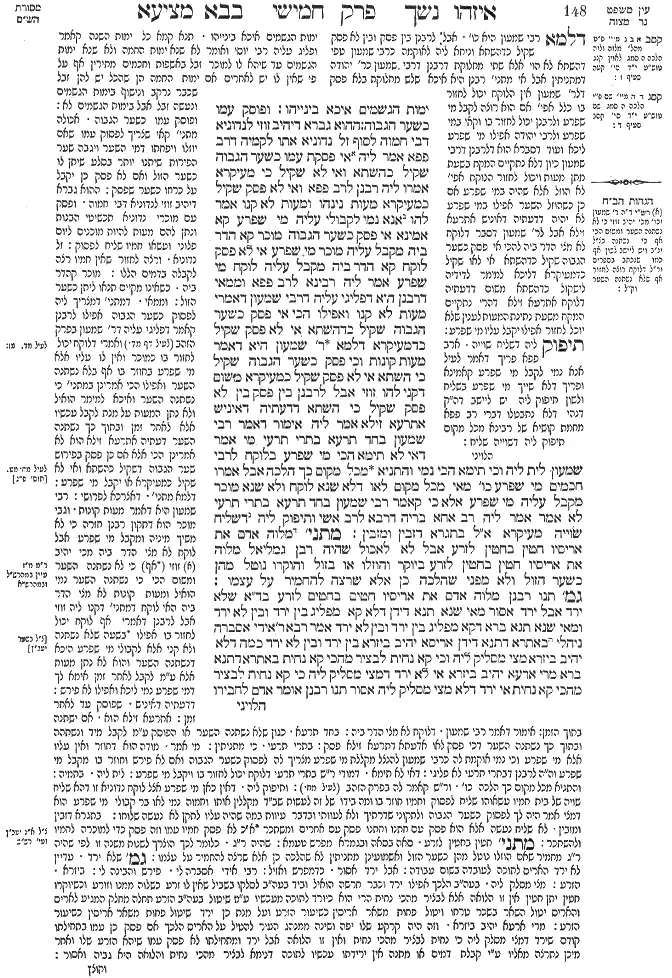
Bava Metzia 74b - Guemara
ימות הגשמים איכא בינייהו:
ופוסק עמו כשער הגבוה:
ההוא גברא דיהיב זוזי לנדוניא דבי חמוה לסוף זל נדוניא אתו לקמיה דרב פפא אמר ליה אי פסקת עמו כשער הגבוה שקיל כהשתא ואי לא שקיל כי מעיקרא אמרו ליה רבנן לרב פפא ואי לא פסק שקיל כמעיקרא מעות נינהו ומעות לא קנו אמר להו אנא נמי לקבולי עליה מי שפרע קא אמינא אי פסק כשער הגבוה מוכר קא הדר ביה מקבל עליה מוכר מי שפרע אי לא פסק לוקח קא הדר ביה מקבל עליה לוקח מי שפרע אמר ליה רבינא לרב פפא וממאי דרבנן היא דפליגי עליה דרבי שמעון דאמרי מעות לא קנו ואפילו הכי אי פסק כשער הגבוה שקיל כדהשתא אי לא פסק שקיל כדמעיקרא דלמא ר' שמעון היא דאמר מעות קונות וכי פסק כשער הגבוה שקיל כי השתא אי לא פסק שקיל כמעיקרא משום דקני להו זוזי אבל לרבנן בין פסק בין לא פסק שקיל כי השתא דדעתיה דאיניש אתרעא זילא אמר ליה אימור דאמר רבי שמעון בחד תרעא בתרי תרעי מי אמר דאי לא תימא הכי מי שפרע בלוקח לרבי שמעון לית ליה וכי תימא הכי נמי והתניא מכל מקום כך הלכה אבל אמרו חכמים מי שפרע כו' מאי מכל מקום לאו דלא שנא לוקח ולא שנא מוכר מקבל עליה מי שפרע אלא כי קאמר רבי שמעון בחד תרעא בתרי תרעי לא אמר אמר ליה רב אחא בריה דרבא לרב אשי ותיפוק ליה דשליח שוייה מעיקרא א"ל בתגרא דזבין ומזבין:
מתני׳ מלוה אדם את אריסיו חטין בחטין לזרע אבל לא לאכול שהיה רבן גמליאל מלוה את אריסיו חטין בחטין לזרע ביוקר והוזלו או בזול והוקרו נוטל מהן כשער הזול ולא מפני שהלכה כן אלא שרצה להחמיר על עצמו:
גמ׳ תנו רבנן מלוה אדם את אריסיו חטים בחטים לזרע בד"א שלא ירד אבל ירד אסור מאי שנא תנא דידן דלא קא מפליג בין ירד ובין לא ירד ומאי שנא תנא ברא דקא מפליג בין ירד ובין לא ירד אמר רבא ר' אידי אסברה ניהלי באתרא דתנא דידן אריסא יהיב ביזרא בין ירד ובין לא ירד כמה דלא יהיב ביזרא מצי מסליק ליה וכי קא נחית לבציר מהכי קא נחית באתרא דתנא ברא מרי ארעא יהיב ביזרא אי לא ירד דמצי מסליק ליה כי קא נחית לבציר מהכי קא נחית אי ירד דלא מצי מסליק ליה אסור תנו רבנן אומר אדם לחבירו
Comments from Rashi on Masechet Bava Metzia Page 74b
ימות הגשמים איכא בינייהו . תנא קמא כל ימות השנה קאמר ופליג עליה רבי יוסי ואומר לא שנא ימות החמה ולא שנא ימות הגשמים עד שיהא לו למוכר זבל באשפות וחכמים מתירין אף על פי שאין לו יש לאחרים אם ימות החמה הן שהכל יש להן זבל שכבר נרקב ונישוף בימות הגשמים ונעשה זבל אבל בימות הגשמים לא: ופוסק עמו כשער הגבוה . אכולה מתניתין קאי שצריך לפסוק עמו שאם יוזלו ויפחתו דמי השער ויגבה שער הפירות שיתנו יותר בסלע שיתן לו כשער הזול ואם לא פסק כן. יקבל על כרחו כשער שפסק: ההוא גברא דיהיב זוזי לנדוניא דבי חמוה . ופסק עם מוכרי נדוניא תכשיטי הבנות ונתן להם מעות להיות מוכנים ליום פלוני ועשאו חמיו שליח לפסוק: זל נדוניא . ורצה לחזור שאין חמיו רצה לקבלה בדמים הללו: מוכר קהדר ביה . כשאינו מקיים תנאו ליתן כשער הזול: וממאי . דמתני' דמצריך ליה לפסוק כשער הגבוה אפילו לרבנן קאמר דפליגי עליה דר' שמעון בפרק הזהב (לעיל בבא מציעא דף מד.) ואמרי דלוקח יכול לחזור בו כמוכר ואין לו עליו אלא מי שפרע בחוזר בו אף בלא נשתנה השער ואפילו הכי אמרינן במתני' כי נשתנה השער ואיכא למימר הואיל ולא נתן המעות על מנת לקבל עכשיו אלא לאחר זמן ובתוך כך נשתנה השער דעתיה אתרעא זילא הוא לא אמרינן הכי אלא אם כן פסק בפירוש שער הגבוה דשקיל כהשתא ואי לא שקיל כמעיקרא או יקבל מי שפרע: דלמא מתני' . דאצרכא לפרושי: רבי שמעון היא דאמר מעות קונות . וגבי מוכר הוא דתקון רבנן חזרה כי לא משיך מיניה ומקבל מי שפרע אבל לוקח לא מצי הדר ביה מכי יהיב זוזי (אף) כי לא נשתנה השער ומשום הכי כי נשתנה השער נמי הואיל ומעות קונות לא מצי הדר ביה האי לוקח דמתני' דקנו ליה זוזי אבל לרבנן דאמרי אף לוקח יכול לחזור בו אפילו בשעה שלא נשתנה ולא קני אלא לקבולי מי שפרע היכא דנשתנה השער והוא לא נתן מעות אלא ע"מ לקבל לאחר זמן אימא לך דמי שפרע נמי ליכא ואפילו לא פירש: דדעתיה דאיניש . שפוסק עד לאחר זמן: אתרעא זילא הוא . אם ישתנה בתוך הזמן: אימור דאמר רבי שמעון . דלוקח לא מצי הדר ביה: בחד תרעא . כגון שלא נשתנה השער או הפוסק ע"מ לקבל מיד ונשתהה ובתוך כך נשתנה השער דכי פסק לאו אדעתא דתרעא זילא פסק: בתרי תרעי . כי מתניתין: מי אמר . מודה הוא דחוזר ואין עליו אלא מי שפרע וכי נמי אוקמת לה כרבי שמעון להנצל מקללת מי שפרע מצריך לה לפסוק כשער הגבוה ואם לא פירש וחוזר בו מקבל מי שפרע וה"ה לרבנן דבתרי תרעי לא פליגי: דאי לא תימא . דמודי ר"ש בתרי תרעי דלוקח יכול לחזור בו ויקבל מי שפרע: לית ליה . בתמיה: והתניא מכל מקום כך הלכה כו' . ור"ש קאמר לה בפרק הזהב (לעיל בבא מציעא מח.): ותיפוק ליה . דאין כאן מי שפרע אצל לוקח נדוניא זו דהא שליח שויה של בית חמיו עשאוהו שליח לפסוק וחמיו חוזר בו ומה בידו של זה לעשות שב"ד מקללין אותו וחמוה נמי לאו בר קבולי מי שפרע הוא דמצי אמר היה לך לפסוק כשער הגבוה ולתקוני שדרתיך ולא לעוותי ובדבר עיוות במה שהיה עליו לתקן לא נעשה שלוחו: בתגרא דזבין ומזבין . לא שליח נעשה אלא הוא פסק עם חתנו וחתנו פסק עם אחרים ומשתכר א"כ לא פסק חמיו עמו וזה פסק כדי למוכרה לחמיו ולהשתכר: מתני' חטין בחטין לזרע . סאה בסאה ובגמרא מפרש טעמא: שהיה ר"ג . כלומר לכך הוצרך לשנות משנה זו לפי שהיה ר"ג מחמיר שאם הוזלו נוטל מהן כשער הזול ואשמועינן מתניתין לא שהלכה כן אלא שרצה להחמיר על עצמו: גמ' שלא ירד . עדיין לא ירד האריס לתוכה לעובדה בשום עבודה: אבל ירד אסור . כדמפרש ואזיל: רבי אידי אסברה לי . פירש והבינה לי: ביזרא . הזרע: מצי מסלק ליה . בעה"ב הלכך אפילו ירד וכבר חרשה הואיל וביד בעה"ב לסלקו בשביל שאין לו זרע כשלוה ממנו וזורע וכשיוקרו חטין יתן חטין אין זו הלואה אלא לבציר מהכי נחית הרי הוא כיורד לתוכה מעכשיו ע"מ שיטול בעה"ב הזרע תחלה. מחלק המגיע לאריס והאריס יטול השאר בשכר טרחו ויטול פחות משאר אריסין כשיעור הזרע ועל מנת כן ירד שיטול פחות משאר אריסין כשיעור הזרע: מרי ארעא יהיב ביזרא . וזה היה קרקע שלו יפה ושינה ממנהג העיר להטיל על האריס הלכך אם פסק כן עמו בתחילתו קודם שירד דמצי מסלק ליה כי נחית לבציר מהכי נחית ואין זו הלואה אבל ירד ומתחילתו לא פסק עמו שיהא הזרע שלו ואחר מיכן נתרצה מאליו ע"י קבלת דמים או מתנה אין ירידתו עכשיו לתוכה דנימא לבציר מהכי נחית והלואה היא גביה ואסור:
Comments from Tosafot - Bava Metzia 74b
דלמא רבי שמעון היא כו' . אבל לרבנן בין פסק ובין לא פסק שקיל כדהשתא וניחא ליה לאוקמה כרבי שמעון טפי דהשתא לא הוי אלא שתי מחלוקת דרבנן דרבי שמעון כר' יהודה דמתניתין אבל אי מתני' רבנן היא איכא שלש מחלוקת בלא פסק דלר' שמעון אין הלוקח יכול לחזור בו כלל אפי' אם הוא רוצה לקבל מי שפרע ולרבנן יכול לחזור בו וקאי במי שפרע ולרבי יהודה אפילו מי שפרע ליכא ועוד דסברא הוא דלרבנן דרבי שמעון כיון דלא נתקיים המקח בשעת מתן מעות ויכול לחזור הלוקח אפי' לא הוזל אלא שהיה במי שפרע אם כן כשהוזל השער אפילו במי שפרע לא יהיה דדעתיה דאיניש אתרעא זילא אבל לר' שמעון דסבר דלוקח לא מצי הדר ביה להכי אי פסק כשער הגבוה שקיל כדהשתא אי לאו שקיל כדמעיקרא דליכא למימר לדידיה לישקול כדהשתא משום דדעתיה דלוקח אתרעא זילא דהרי נתקיים המקח משעת נתינת המעות לענין שלא יוכל לחזור אפילו יקבל עליו מי שפרע: תיפוק ליה דשליח שוייה . ארב פפא פריך דאמר לעיל אנא נמי לקבל מי שפרע קאמינא ופריך דלא שייך מי שפרע בשליח ולשון תיפוק ליה יש ליישב דה"ק דנהי דלא נתבטלו דברי רב פפא מחמת קושיא של רבינא מכל מקום תיפוק ליה דשוייה שליח:
Bava Metzia 74b - Mishnah translated into english
The practical difference between them is with regard to the rainy season. According to the first tanna one may set a price for the future delivery of manure at any point in the year, including the rainy season, but according to the Rabbis one may not arrange for the delivery during the rainy season, because manure is not commonly available then.
§ The mishna teaches: One may set a price at the highest rate, meaning he may set a price for the future delivery of produce and stipulate that if the market rate falls below the agreed-upon price, he will purchase the product according to the lowest price in effect in the market at any point during the year, which is the price that will provide the highest amount of merchandise for the amount he agreed to pay.
The Gemara relates: There was a certain man who gave money to sellers to buy jewelry for his betrothed’s dowry [linduneya] on behalf of his father-in-law, as his intended father-in-law made him an agent to buy the jewelry for part of the dowry. The betrothed man stipulated with the sellers that they would provide the jewelry in time for the wedding. Ultimately, the jewelry for the dowry became less expensive, as the price fell. The betrothed man wanted to retract his commitment to buy the jewelry at the higher price. The parties came before Rav Pappa for a ruling. Rav Pappa said to the betrothed man: If you set a price with the seller to buy the jewelry at the highest rate, i.e., the largest amount of jewelry for the price you are willing to pay, then take the jewelry at the present price. But if not, take it at the price that you set initially.
The Sages said to Rav Pappa: And if he did not set a price at the highest rate, must he take the merchandise at the price he set initially? This is a case where he paid money, and giving money alone does not effect acquisition. Rav Pappa said to them: I did not mean that it was an actual acquisition; rather, I also agree that giving money does not effect acquisition. What I said was with regard to accepting upon himself the curse: He Who exacted payment. If the betrothed man set a price at the highest rate the buyer is in the right, and if so, the seller is the one who retracted, and therefore the seller accepts upon himself the curse: He Who exacted payment. But if the betrothed man did not set a price at the highest rate, then the betrothed man, i.e., the buyer, is the one who retracted, and therefore the buyer accepts upon himself the curse: He Who exacted payment.
Ravina said to Rav Pappa: From where do you know that the ruling of the mishna, i.e., that if he did not set a price according to the highest rate he must acquire the merchandise at the price he set initially, is in accordance with the opinion of the Rabbis who disagree with Rabbi Shimon and who say that giving money does not effect acquisition? And even so, they hold that if he set a price at the highest rate, he takes it at the current price, and if he did not set a price at the highest rate, he takes it at the price he set initially.
Perhaps the ruling of the mishna is in accordance with the opinion of Rabbi Shimon, who says that giving money effects acquisition, and therefore if he set a price at the highest rate, he takes it at the current price, and if he did not set a price at the highest rate, he takes it at the price he set initially, since giving money effects acquisition. But according to the opinion of the Rabbis, whether he set a price at the highest rate or did not set a price at the highest rate, he takes it at the current price, because a person’s intention is always to acquire merchandise at the least expensive price.
Rav Pappa said to him: Say that Rabbi Shimon said his ruling that giving money effects acquisition in a case where there was one price, i.e., the price did not change in the meantime. Did he say his ruling where there were two prices? Certainly Rabbi Shimon will concede that the buyer can withdraw from the sale if the market price changes. As, if you do not say so, then the curse: He Who exacted payment, will not apply to the buyer under any circumstances according to the opinion of Rabbi Shimon.
And if you would say: Indeed, the curse: He Who exacted payment, never applies to a buyer according to the opinion of Rabbi Shimon, isn’t it taught in a baraita: Rabbi Shimon says: Even though the Sages said that when one party takes possession of a garment, the other party acquires a gold dinar, but when one party takes possession of a gold dinar, the other party does not acquire a garment, in any case, that is what the halakha would be. But the Sages said with regard to one who withdraws from a transaction where one party performed an act of acquisition by pulling the gold dinar into his possession: He Who exacted payment from the people of the generation of the flood, and from the people of the generation of the dispersion, and from the inhabitants of Sodom and Gomorrah, and from the Egyptians in the Red Sea, will in the future exact payment from whoever does not stand by his statement.
Rav Pappa clarifies: What is the meaning of: In any case? Does it not mean that there is no difference whether it is the buyer and there is no difference whether it is the seller who withdraws from the sale, that either way he accepts upon himself the curse: He Who exacted payment? Rather, it must be that when Rabbi Shimon is saying that giving money effects acquisition, he is referring to a case where there was one price, but in a case where there were two prices he did not say it.
Rav Aḥa, son of Rava, said to Rav Ashi: But let Rav Pappa derive this halakha in the case of the dowry employing a more straightforward reasoning: The father-in-law initially made the betrothed man an agent, and since he was an agent, the father-in-law could say to him: I sent you to act for my benefit, not to my detriment. Purchasing the jewels at a more expensive price is to the detriment of the father-in-law, and therefore the agency and the sale itself are nullified. Rav Ashi said to him: It is speaking here about a case where the father-in-law did not actually make him an agent. Rather, the betrothed man was a merchant who buys and sells merchandise. The father-in-law understands that he engages in commerce and that he will not always profit from his trading.
MISHNA: A person may lend wheat to his sharecroppers in exchange for wheat, for the purpose of seeding, meaning that he may lend them a quantity of wheat with which to seed the field, and at harvest time the sharecropper will add the amount of grain that he borrowed to the landowner’s portion of the yield. But he may not lend wheat for the sharecroppers to eat and be paid back with an equivalent quantity because this creates a concern about interest, as the price of wheat may rise. As Rabban Gamliel would lend wheat to his sharecroppers in exchange for wheat, for purposes of seeding, and if he lent it at a high price and the price then fell, or if he lent it at an inexpensive price and the price subsequently rose, in all cases he would take it back from them at the inexpensive price. But this was not because this is the halakha; rather, he wanted to be stringent with himself.
GEMARA: The Sages taught in a baraita: A person may lend wheat to his sharecroppers in exchange for wheat, for the purpose of seeding. In what case is this statement said? It is said when the sharecropper has not yet gone down into the field to begin to work, but if he had already gone down into the field to begin to work, lending him wheat under these terms is prohibited. The Gemara asks: What is different about the tanna of our mishna, who does not differentiate between whether the sharecropper went down or did not go down, and what is different about the tanna of the baraita, who does differentiate between whether he went down or he did not go down?
Rava said: Rabbi Idi explained the matter to me: In the locale of the tanna of our mishna, the local custom was that the sharecropper would provide the seeds, and therefore, whether he went down or did not go down, as long as the sharecropper has not put the seeds into the field the landowner can remove him from the field. Consequently, in a case where the landowner gives the sharecropper the seeds, he sets the terms of the sharecropping tenancy, and when the sharecropper goes down into the field, he goes down into the field for less than this, under the agreement that he will reduce his share of the crop in order to return the seed to the landowner.
By contrast, in the locale of the tanna of the baraita, the landowner is the one who would provide the seeds, so if he has not yet gone down into the field the landowner can remove him, and therefore, when he goes down into the field, he goes down for less than this. But if he went down, and therefore the landowner can no longer remove him, lending him wheat under these terms is prohibited, because he took upon himself in advance to work the field without receiving seeds from the owner of the field. Consequently, these seeds that he then receives are like a loan and the prohibition of interest applies.
§ The Sages taught: A person may say to another:
Traduction : The William Davidson digital edition of the Koren Noé Talmud, with commentary by Rabbi Adin Even-Israel Steinsaltz.