 Talmud Bavli
The learning on the whole site is dedicated : L'ilui Nishmat Nissim ben Barukh Malka
The learning on the whole site is dedicated : L'ilui Nishmat Rav Chlomo Ben Jamilla
The learning on the whole site is dedicated : L'ilui Nishmat Yechayahou ben Moche
Bava Metzia 33b : Youtube
Daf TubeYoutube
1 video class :
Bava Metzia Page 33b
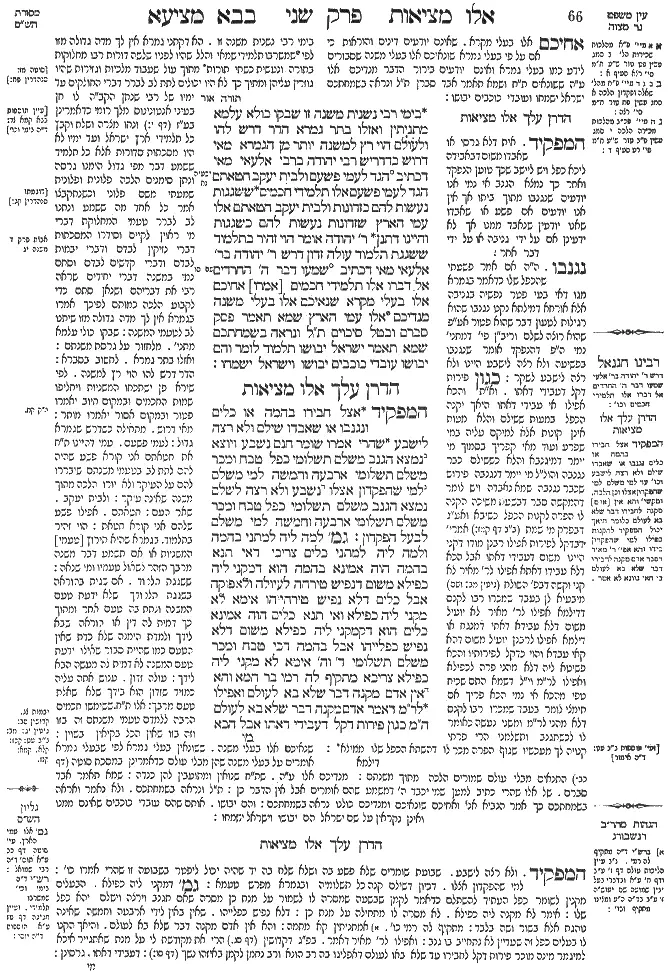
Bava Metzia 33b - Guemara
בימי רבי נשנית משנה זו שבקו כולא עלמא מתניתין ואזלו בתר גמרא הדר דרש להו ולעולם הוי רץ למשנה יותר מן הגמרא מאי דרוש כדדריש רבי יהודה ברבי אלעאי מאי דכתיב (ישעיהו נח, א) הגד לעמי פשעם ולבית יעקב חטאתם הגד לעמי פשעם אלו תלמידי חכמים ששגגות נעשות להם כזדונות ולבית יעקב חטאתם אלו עמי הארץ שזדונות נעשות להם כשגגות והיינו דתנן ר' יהודה אומר הוי זהיר בתלמוד ששגגת תלמוד עולה זדון דרש ר' יהודה בר' אלעאי מאי דכתיב (ישעיהו סו, ה) שמעו דבר ה' החרדים אל דברו אלו תלמידי חכמים [אמרו] אחיכם אלו בעלי מקרא שנאיכם אלו בעלי משנה מנדיכם אלו עמי הארץ שמא תאמר פסק סברם ובטל סיכוים ת"ל ונראה בשמחתכם שמא תאמר ישראל יבושו תלמוד לומר והם יבושו עובדי כוכבים יבושו וישראל ישמחו:
הדרן עלך אלו מציאות
מתני׳ המפקיד אצל חבירו בהמה או כלים ונגנבו או שאבדו שילם ולא רצה לישבע שהרי אמרו שומר חנם נשבע ויוצא נמצא הגנב משלם תשלומי כפל טבח ומכר משלם תשלומי ארבעה וחמשה למי משלם למי שהפקדון אצלו נשבע ולא רצה לשלם נמצא הגנב משלם תשלומי כפל טבח ומכר משלם תשלומי ארבעה וחמשה למי משלם לבעל הפקדון:
גמ׳ למה ליה למתני בהמה ולמה ליה למתני כלים צריכי דאי תנא בהמה הוה אמינא בהמה הוא דמקני ליה כפילא משום דנפיש טירחה לעיולה ולאפוקה אבל כלים דלא נפיש טירחייהו אימא לא מקני ליה כפילא ואי תנא כלים הוה אמינא כלים הוא דקמקני ליה כפילא משום דלא נפיש כפלייהו אבל בהמה דכי טבח ומכר משלם תשלומי ד' וה' אימא לא מקני ליה כפילא צריכא מתקיף לה רמי בר חמא והא אין אדם מקנה דבר שלא בא לעולם ואפילו לר"מ דאמר אדם מקנה דבר שלא בא לעולם ה"מ כגון פירות דקל דעבידי דאתו אבל הכא
Comments from Rashi on Masechet Bava Metzia Page 33b
בימי רבי נשנית משנה זו . הא דקתני תלמוד אין לך מדה גדולה מזו לפי שמשרבו תלמידי שמאי והלל שהיו לפניו שלשה דורות רבו מחלוקות בתורה ונעשית כשתי תורות מתוך עול שעבוד מלכיות וגזירות שהיו גוזרין עליהן ומתוך כך לא היו יכולים לתת לב לברר דברי החולקים עד ימיו של רבי שנתן הקב"ה לו חן בעיני אנטונינוס מלך רומי כדאמרינן בעבודה זרה (דף י.) ונחו מצרה ושלח וקבץ כל תלמידי ארץ ישראל ועד ימיו לא היו מסכתות סדורות אלא כל תלמיד ששמע דבר מפי גדול הימנו גרסה ונתן סימנים הלכה פלונית ופלונית שמעתי משם פלוני וכשנתקבצו אמר כל אחד מה ששמע ונתנו לב לברר טעמי המחלוקת דברי מי ראוין לקיים וסידרו המסכתות דברי נזיקין לבדם ודברי יבמות לבדם ודברי קדשים לבדם וסתם נמי במשנה דברי יחידים שראה רבי את דבריהם ושנאן סתם כדי לקבוע הלכה כמותם לפיכך אמרו בגמרא אין לך מדה גדולה מזו שיתנו לב לטעמי המשנה: שבקו כולי עלמא מתני' . מלחזור על גרסת משנתם: ואזלו בתר תלמודא . לחשוב בסברא: הדר דרש להו הוי רץ למשנה . לפי שירא פן ישתכחו המשניות ויחליפו שמות החכמים ובמקום חיוב יאמרו פטור ובמקום אסור יאמרו מותר: מאי דרוש . מתחילה כשדרש שגמרא גדול: לעמי פשעם . עמי דהיינו ת"ח את חטאתם אני קורא פשע שהיה להם לתת לב בטעמי משנתם שיבררו להם על העיקר ולא יורו הלכה מתוך משנה שאינה עיקר: ולבית יעקב . שאר העם: חטאתם . אפילו פשע שלהם אני קורא חטאת: הוי זהיר בתלמוד . בגמרא שהוא תירוץ [טעמי] המשניות או אם תשמע דבר משנה מרבך הזהר לשאול טעמיו ומי שנאה: שגגת תלמוד . אם שגית בהוראה בשגגת תלמודך שלא ידעת טעם המשנה ונתת בה טעם אחר ומתוך כך דמית לה דין או הוראה שבא לידך ולמדת הימנה שלא כדת שאין הטעם כמו שהיית סבור שאילו ידעת טעם המשנה לא דמית לה מעשה הבא לידך: עולה זדון . ענוש אתה עליה כמזיד שזדון הוא בידך שלא שאלת טעם מרבך: אלו ת"ח . ששימשו חכמים הרבה ללמדם טעמי משנתם זה בזו וזה בזו שאין הכל בקיאין בשוין: שנאיכם אלו בעלי משנה . ששונאין בעלי גמרא לפי שבעלי גמרא אומרים על בעלי משנה שהן מבלי עולם כדאמרינן במסכת סוטה (דף כב.) התנאים מבלי עולם שמורים הלכה מתוך משנתם: מנדיכם אלו ע"ה . שת"ח שנואין ומתועבין להן כנדה: שמא תאמר אבד סברם . של אלו שהרי כתיב למען שמי יכבד ה' דמשמע שהם אומרים אבל אין הדבר כן: ת"ל ונראה בשמחתכם . ולא נאמר ואראה בשמחתכם כך אמר הנביא אני ואחיכם שונאיכם ומנדיכם כולנו נראה בשמחתכם: והם יבושו . אותם שהם עובדי כוכבים שאינם ממנו ואינן נקראין על שם ישראל יבושו וישראל ישמחו: מתני' המפקיד. ולא רצה לישבע . שבועת שומרים שלא פשע בה ושלא שלח בה יד שהיה יכול ליפטר בשבועה זו שהרי אמרו כו': למי שהפקדון אצלו . דכיון דשילם קנה כל תשלומיה ובגמרא מפרש טעמא: גמ' דמקני ליה כפילא . הבעלים מקנין לשומר כפל העתיד להשתלם כדאמר לקמן שבשעה שמסרה לו לשמור על מנת כן מסרה שאם תגנב וירצה וישלם יהא כפל שלו: אימר לא מקנה ליה כפילא . לא מסרה לו מתחילה על מנת כן: דלא נפיש כפלייהו . שאין באין לידי ארבעה וחמשה שאינה נוהגת אלא בשור ושה בלבד: מתקיף לה רמי כו' . אמתניתין קא מתמה: והא אין אדם מקנה דבר שלא בא לעולם . והיאך הקנו לו בעלים כפל זה שעדיין לא נתחייב בו גנב: ואפילו לר' מאיר דאמר . בפ"ג דקדושין (דף סג.): הרי את מקודשת לי על מנת שאתגייר איכא למיגמר מינה מוכר פירות דקל לחבירו עד שלא באו לעולם דאפליגו בה רב הונא ורב נחמן לקמן באיזהו נשך (בבא מציעא דף סו:): דעבידי דאתו . גרסינן:
Comments from Tosafot - Bava Metzia 33b
אחיכם אלו בעלי מקרא . שאינם יודעים דינים והוראות כי אם על פי בעלי גמרא שונאיכם אלו בעלי משנה שסבורים לידע כמו בעלי גמרא ואינם יודעים בירור הדבר מנדיכם אלו ע"ה ששונאים ת"ח ושמא תאמר אבד סברן ת"ל ונראה בשמחתכם ישראל ישמחו ועובדי כוכבים יבושו: מתני' המפקיד . אית דלא גרסי או שאבדו משום דבאבידה ליכא כפל ויש ליישב שכך טוען הנפקד ואחר כך נמצא הגנב אי נמי אנו יודעים שנגנבו מתוך ביתו אך אין אנו יודעים אם פשע או שאבדו שאנו יודעין שנאבד ממנו אך לא ידעינן אם על ידי גניבה או על ידי דבר אחר: נגנבו . ה"ה אם אמר פשעתי שהכפל שלו כדאמר בגמרא מגו דאי בעי פטר נפשיה בגניבה אלא אורחא דמילתא נקט נגנבו שהוא רגילות לטעון דבר שהוא פטור אע"פ שהוא רוצה לשלם וריב"ן פי' דמתני' נמי ה"פ דהנפקד אומר שנגנבו בפשיעה ולא רצה לישבע היינו ולא רצה לישבע לשקר: כגון פירות דקל דעבידי דאתו . וא"ת והכא אפילו אי עבידי דאתו היאך יקנה הכפל במעות ששילם והלא מעות אינן קונות אלא למיקם עליה במי שפרע ועוד מאי קפריך בסמוך מי יימר דמיגנבא והלא כששילם כבר נגנבה והול"ל מי יימר דנגנבה פירוש שכבר נגנבה שמא נאבדה ויש לומר דהמקשה סבר דבשעת משיכה הקנה לו הפרה לקנות הכפל כשיבא ואע"ג דבפרק מי שמת (ב"ב דף קמז:) אמרי' דבדקל לפירות אפילו רבנן מודו דקני היינו משום דעבידי דאתו אבל הכא דלא עבידו דאתא אפילו לר' מאיר לא קני וקשה דבפ' השולח (גיטין מב: ושם) מיבעיא לן בעבד שמכרו רבו לקנס דדילמא אפילו לר' מאיר לא יועיל משום דלא עבידא דאתי דמנגח או דילמא אפילו לרבנן יועיל משום דהא קאי עבדא והוי כדקל לפירותיו והכא פשיטא ליה דלא מהני פרה לכפילא ואפילו לר"מ וי"ל דשמא התם שכיח טפי מהכא אי נמי הכא פריך אם תימצי לומר בעבד שמכרו רבו לקנס דלא מהני לר"מ ומשני נעשה כאומר לו לכשתגנב ותשלמני הרי פרתי קנויה לך מעכשיו שגוף הפרה מכר לו דהשתא הכפל שלו ממילא:
Bava Metzia 33b - Mishnah translated into english
It was during the era of Rabbi Yehuda HaNasi that the beginning of this baraita extolling the study of Talmud was taught. The result was that everyone abandoned study of the Mishna and pursued the study of the Talmud. It was then that Rabbi Yehuda HaNasi taught them: And always pursue study of the Mishna more than study of the Talmud, as without a firm basis in the fundamental halakhot of the Mishna, talmudic discourse is futile.
The Gemara asks: On the basis of what homiletic interpretation did the tanna state that there is no virtue greater than the study of Talmud? It is just as Rabbi Yehuda, son of Rabbi Elai, interpreted homiletically: What is the meaning of that which is written: “Cry aloud, spare not, lift up your voice like a horn, and declare to My people their transgression and to the house of Jacob their sins” (Isaiah 58:1)?
In the phrase “declare to My people their transgression,” these people are the Torah scholars, whose unwitting transgressions become for them tantamount to intentional transgressions. Due to their erudition, they are held to a higher standard. “And to the house of Jacob their sins,” these are the ignoramuses, whose intentional transgressions become for them tantamount to unwitting transgressions. Due to their lack of erudition, they are held to a lower standard. And that is the basis of that which we learned in a mishna (Avot 4:13), that Rabbi Yehuda says: Be careful in the study of the Talmud, as a transgression based on an unwitting misinterpretation of the Talmud is considered an intentional transgression.
Rabbi Yehuda, son of Rabbi Elai, interpreted a verse homiletically. What is the meaning of that which is written: “Hear the word of the Lord, you who tremble at His word: Your brothers that hate you, that ostracize you for My name’s sake, have said: Let the Lord be glorified, that we may gaze upon your joy, but they shall be ashamed” (Isaiah 66:5)? “Hear the word of the Lord, you who tremble at His word,” these are Torah scholars; “your brothers…have said,” these are masters of the Bible, who are aware of their shortcomings and treat the Torah scholars with deference; “that hate you,” these are masters of Mishna, who consider themselves the equals of Torah scholars and resent the fact that the Torah scholars do not treat them as equals; “that ostracize you,” these are ignoramuses, who distance themselves with their actions from the Torah scholars.
Lest you say, with regard to those groups who are not Torah scholars, that their hope has ceased and their chances are eliminated, the verse states: “That we may gaze upon your joy.” All of the Jewish people, including the groups listed above, will gaze upon the joy of the Torah scholars. Lest you say that the Jewish people will be ashamed, the verse states: “But they shall be ashamed,” meaning that gentiles will be ashamed, but the Jewish people will be joyous.
MISHNA: In the case of one who deposits an animal or vessels with another, who is acting as an unpaid bailee, and they were stolen or they were lost, and the bailee paid the owner the value of the deposit, and did not wish to take an oath that he did not misappropriate the item and that he was not negligent in safeguarding it, that will effect who keeps the deposit if it is found or returned. The bailee may also choose to take the oath, as the Sages said: An unpaid bailee takes an oath, and he is thereby released from the liability to pay the owner.
If the thief is later found, the thief pays the double payment. If the deposited item was a sheep or an ox and the thief slaughtered or sold it, he pays the fourfold or fivefold payment. To whom does the thief pay? He gives the payment to the one who had the deposit in his possession when it was stolen, i.e., the bailee. When the bailee paid the owner for the stolen item, the owner granted the rights to the item to the bailee. Therefore, the bailee is entitled to any payment the thief presents for the item, be it compensation for the item’s value or a fine.
In the case of a bailee who took an oath and did not wish to pay, if the thief is then found and required to pay the double payment, or if he slaughtered or sold the animal and is required to pay the fourfold or fivefold payment, to whom does the thief pay? He gives the payment to the owner of the deposit, not the bailee.
GEMARA: The Gemara asks: Why does the mishna need to teach the case of one who deposits an animal, and why does the mishna need to teach the case of one who deposits vessels? The mishna could have sufficed with a general halakha about one who deposits any item.
The Gemara explains: Both are necessary, as, if the mishna taught only the case of one who deposits an animal, I would say: It is only with regard to an animal that the owner agrees to transfer rights to the double payment to the bailee when the bailee pays for the stolen item. This is due to the fact that the exertion required to tend to the animal, to bring the animal in and to take it out, is great. Consequently, when it becomes clear that the bailee was not responsible for the theft of the animal but nevertheless compensated the owner, the owner waives his rights to any compensation the thief will pay. But in the case of vessels, where the exertion that is required to tend to the vessels is not great, say that the owner does not transfer to the bailee rights to the double payment.
And had the mishna taught only the case of one who deposits vessels, I would say: It is only with regard to vessels that the owner transfers rights to the double payment to the bailee when the bailee pays for the lost item. This is due to the fact that double payment, in their case, is not substantial, as that is the maximum payment that he could receive. But in the case of an animal, where if the thief slaughtered or sold it, he pays the fourfold or fivefold payment, which is substantial, I would say that the owner does not transfer the rights to the double payment to the bailee. Therefore, both cases are necessary.
Rami bar Ḥama objects to the fundamental reasoning. How can the owner of the deposit transfer rights to the double payment to the bailee? But isn’t there a principle that one cannot transfer to another ownership of an entity that has not yet come into the world? Since the thief was not yet liable to pay the double payment when the bailee paid the owner for the item, there was no way to transfer rights to that payment to another person. And even according to Rabbi Meir, who says that a person can transfer to another ownership of an entity that has not yet come into the world, that statement applies to items such as the fruits of a date palm, which are likely to come into being, as they grow on a regular basis.
But here, where the transfer of rights to the payment is part of the initial agreement between the owner and the bailee, taking effect when the item is deposited,
Traduction : The William Davidson digital edition of the Koren Noé Talmud, with commentary by Rabbi Adin Even-Israel Steinsaltz.