 Talmud Bavli
The learning on the whole site is dedicated : L'ilui Nishmat Yechayahou ben Moche
The learning on the whole site is dedicated : L'ilui Nishmat Rav Chlomo Ben Jamilla
The learning on the whole site is dedicated : L'ilui Nishmat Margalit bat Ledicia
Bava Metzia 105b : Youtube
Daf TubeYoutube
1 video class :
Bava Metzia Page 105b
Bava Metzia 105b - Guemara
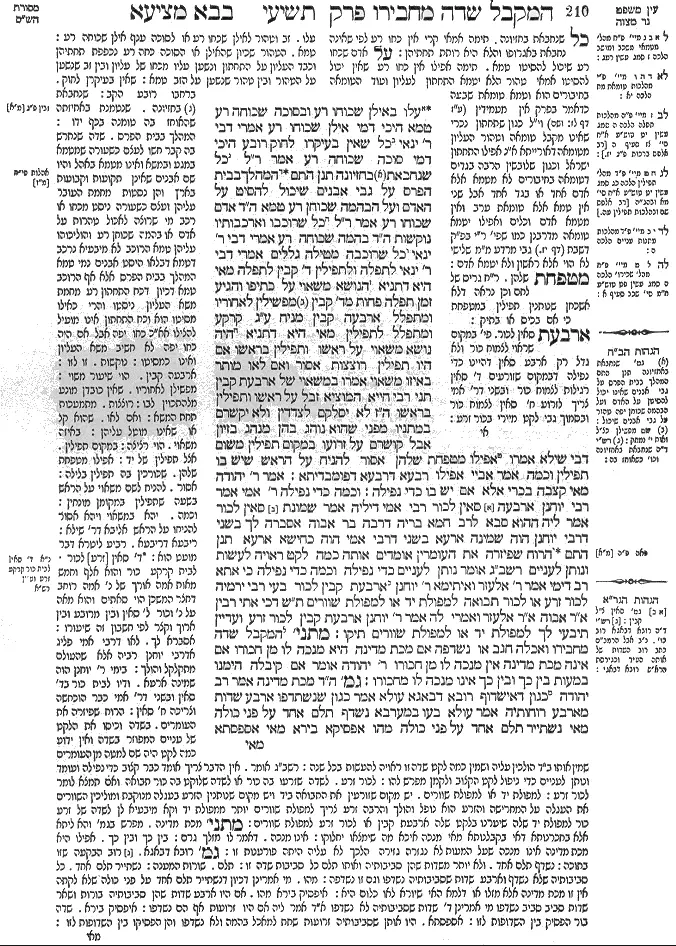
עלו באילן שכוחו רע ובסוכה שכוחה רע טמא היכי דמי אילן שכוחו רע אמרי דבי ר' ינאי כל שאין בעיקרו לחוק רובע היכי דמי סוכה שכוחה רע אמר ר"ל כל שנחבאת בחזיונה תנן התם המהלך בבית הפרס על גבי אבנים שיכול להסיט על האדם ועל הבהמה שכוחן רע טמא ה"ד אדם שכוחו רע אמר ר"ל כל שרוכבו וארכבותיו נוקשות ה"ד בהמה שכוחה רע אמרי דבי ר' ינאי כל שרוכבה מטילה גללים אמרי דבי ר' ינאי לתפלה ולתפילין ד' קבין לתפלה מאי היא דתניא הנושא משאוי על כתיפו והגיע זמן תפלה פחות מד' קבין מפשילין לאחוריו ומתפלל ארבעה קבין מניח ע"ג קרקע ומתפלל לתפילין מאי היא דתניא היה נושא משאוי על ראשו ותפילין בראשו אם היו תפילין רוצצות אסור ואם לאו מותר באיזו משאוי אמרו במשאוי של ארבעת קבין תני רבי חייא המוציא זבל על ראשו ותפילין בראשו ה"ז לא יסלקם לצדדין ולא יקשרם במתניו מפני שהוא נוהג בהן מנהג בזיון אבל קושרם על זרועו במקום תפילין משום דבי שילא אמרו אפילו מטפחת שלהן אסור להניח על הראש שיש בו תפילין וכמה אמר אביי אפילו רבעא דרבעא דפומבדיתא:
אמר ר' יהודה מאי קצבה בכרי אלא אם יש בו כדי נפילה:
וכמה כדי נפילה ר' אמי אמר רבי יוחנן ארבעה סאין לכור רבי אמי דיליה אמר שמונת סאין לכור אמר ליה ההוא סבא לרב חמא בריה דרבה בר אבוה אסברה לך בשני דרבי יוחנן הוה שמינה ארעא בשני דרבי אמי הוה כחישא ארעא תנן התם הרוח שפיזרה את העומרין אומדים אותה כמה לקט ראויה לעשות ונותן לעניים רשב"ג אומר נותן לעניים כדי נפילה וכמה כדי נפילה כי אתא רב דימי אמר ר' אלעזר ואיתימא ר' יוחנן ארבעת קבין לכור בעי רבי ירמיה לכור זרע או לכור תבואה למפולת יד או למפולת שוורים ת"ש דכי אתי רבין א"ר אבוה א"ר אלעזר ואמרי לה אמר ר' יוחנן ארבעת קבין לכור זרע ועדיין תיבעי לך למפולת יד או למפולת שוורים תיקו:
מתני׳ המקבל שדה מחבירו ואכלה חגב או נשדפה אם מכת מדינה היא מנכה לו מן חכורו אם אינה מכת מדינה אין מנכה לו מן חכורו ר' יהודה אומר אם קיבלה הימנו במעות בין כך ובין כך אינו מנכה לו מחכורו:
גמ׳ ה"ד מכת מדינה אמר רב יהודה כגון דאישדוף רובא דבאגא עולא אמר כגון שנשתדפו ארבע שדות מארבע רוחותיה אמר עולא בעו במערבא נשדף תלם אחד על פני כולה מאי נשתייר תלם אחד על פני כולה מהו אפסיקא בירא מאי אספסתא
Comments from Rashi on Masechet Bava Metzia Page 105b
עלו . זב וטהור לאילן שכחו רע או לסוכה ענף אילן שכוחה רע: טמא . הטהור שכיון שהאילן או הסוכה כחה רע נכפפת תחתיהן וכבד העליון על התחתון ונשען עליו מכחו של עליון ובין זב שנשען על הטהור ובין טהור שנשען על הזב טמא: שאין בעיקרן לחוק: ברחבו רובע הקב: שאין בעיקרן לחוק: ברחבו רובע הקב: שנחבאת בחזיונה . שנטמנת באחיזתה שהאוחז בה טומנה בכף ידו: המהלך בבית הפרס . שדה שנחרש בה קבר חשו לעצם כשעורה שמטמא במגע ובמשא ואינו מטמא באהל והיו שם אבנים שאינן תקועות וקבועות בארץ והן נסטות מחמת העובר עליהן ועצם כשעורה ניסט מכחו או רכב מי שרוצה לאכול טהרות על אדם או בהמה שכוחן רע והוליכוהו עליהן טמא הרוכב לא מיבעיא נרכב דטמא דבלאו היסט אבנים נמי טמא המהלך בבית הפרס אלא אף הרוכב טמא דכיון דכח התחתון רע מחמת משא העליון ניסטו והרי כאילו מסיטו הוא וכח התחתון אינו מועיל להצילו אא"כ כחו יפה אבל אם היה כחו יפה לא חשיב משא העליון ואינו כמסיטו: נוקשות . זו לזו: ארבעה קבין . הוי שיעור משוי: מפשילן לאחוריו . שאין כובדן מונע מלהתכוין לבו: רוצצות . מתמעכות תחת המשא: ואם לאו . שהוא קל או שאינו מוטל עליהן: באיזה משאוי . הוי רציצה: במקום תפילין . אצל תפילין של יד: אפילו מטפחת שלהן . שכורכין בה תפילין בלילה: אסור . להניח לשם משאוי על הראש בשעה שתפילין במקומן מונחין: וכמה . יהא במשאוי ויהא אסור להניחו על הראש אליבא דר' שילא: ריבעא דריבעא . רביע ליטרא דבר מועט הוא: ד' סאין [זרע] לכור . לבית קרקע כור והוא אלף וחמש מאות אמה אורך של נ' אמה רוחב דחצר המשכן הוי סאתים והוא מאה על נ' וכור ל' סאין ובין מרובע ובין ארוך וקצר לפי חשבון זה שיעורו: אסברא לך . לאו דרבי אמי פליג אדרבי יוחנן רביה אלא שהעולם מתקלקל והולך: בימי ר' יוחנן הוה שמינה ארעא . ודיו לבית כור בד' סאין ובשני דר' אמי כבר הוכחשה וצריכה ח' סאין: הרוח שפיזרה את העומרים . בשדה וכיסו את הלקט של עניים המפוזר בשדה ואין ידוע כמה לקט היה שם למטה מן העומרים שמין אותו ב"ד הולכין עליה ושמין כמה לקט שדה זו ראויה להעשות בכל שנה: רשב"ג אומר . אין הדבר צריך אומד כבר קצוב כדי נפילה ועומד ונותן לעניים כדי ניפול לקט הקצוב ולקמן מפרש להו: לכור זרע . לשדה שזרעו בה כור או לשדה שלוקט בה כור תבואה ואם תמצא לומר לכור זרע: למפולת יד או למפולת שוורים . יש מקום שזורעין את התבואה ביד ויש מקום שנותנין הזרע בעגלה מנוקבת ומוליכין השוורים את העגלה על המחרישה והזרע הוא נופל והולך והרבה זרע צריך למפולת שוורים יותר ממפולת יד וקא מיבעיא לן לשדה של זרע כור למפולת יד שלה שיערנו בלקט שלה ארבעת קבין או לכור זרע למפולת שוורים: מתני' מכת מדינה . מפרש בגמ' והא ליתא אלא בחכרנותא דאי בקבלנותא מאי מנכה איכא מה שימצאו יחלוקו: אינו מנכה . דאמר לו מזלך גרם: בין כך ובין כך . אפילו היא מכת מדינה אינו מנכה שעל המעות לא נגזרה גזירה הלכך לא עליה היתה פורענות זו: גמ' רובא דבאגא . רוב הבקעה שזו בתוכה: נשדף תלם אחד . ולא יותר משדות שהן סביבותיה ואותו תלם כל סביבות שדה זו: תלם . שורות המענה: נשתייר תלם אחד . כל סביבותיה שלא נשדף וארבע שדות שסביבותיה נשדפו וגם זו נשדפה: מהו . מי אמרינן דכיון דנשתייר תלם אחד על פני כולה שלא לקתה אין זו מכת מדינה אלא מזלו או דלמא האי שיורא לאו כלום היא: איפסיק בירא מהו . אם היו ארבע שדות שהן סביבותיה בורות ושאר שדות סביב סביב נשדפו מי אמרינן ד' שדות שסביבותיה לא נשדפו א"ד אמר ליה אם היו זרועות אף הם נשדפו: איפסיק בירא . שדה בור הפסיק בין השדופות לזו: אספסתא . היו אותן שסביבותיה זרועות שחת למאכל בהמה ולא נשדפו והן הפסיקו בין השדופות לזו:
Comments from Tosafot - Bava Metzia 105b
כל שנחבאת בחזיונה תימה אמאי קרי אין כחו רע לפי שאינה . נחבאת באגרופו והלא היא רותת תחתיהן: על אדם שכחו רע שיכול להסיטו טמא . תימה אפילו אין כחו רע שאין יכול להסיטו אמאי טהור הלא יטמא התחתון לעליון ועוד הטומאה בחיבורים הוא וטמא טומאת שבעה כדאמר בפרק אין מעמידין (ע"ז דף לז: ושם) וי"ל כגון שתחתון נכרי שאינו מקבל טומאה וטהור העליון מטומאה דאורייתא א"נ אפילו התחתון ישראל וכגון שלובשין הרבה בגדים דטומאה בחיבורים לא מטמא אלא אדם אחד או בגד אחד אבל שני אין טמא אלא טומאת ערב ואין מטמא אדם וכלים ואפילו יטמא טומאה מדרבנן כמו שפי' ר"י בפ"ק דשבת (דף יז.) גבי מרדע מ"מ שלישי לא הוי אלא ראשון ולא יטמא אדם: מטפחת שלהן . ר"ח גריס של לחם וכן נראה דלא אשכחן שנותנין תפילין במטפחת כי אם בכיס או בתיק: ארבעת סאין לכור . פי' במקום שראוי לצמוח כור ולא גדל רק ארבע סאין דהיינו כדי נפילה דבמקום שזורעים ד' סאין רגילות לצמוח כור ובשני דר' אמי צריך לזרוע ח' סאין לצמוח כור ובסמוך גבי לקט מיירי בכור זרע:
Bava Metzia 105b - Mishnah translated into english
If a zav and a ritually pure person climbed a tree that has little strength, which shook as they climbed it, or if they climbed onto a branch that has little strength, the ritually pure person is rendered ritually impure. One of the ways a zav imparts impurity is by movement, and here the zav is viewed as having moved the pure person.
The Gemara asks: What are the circumstances of this tree that has little strength, i.e., how is a tree with little strength defined? The Sages of the school of Rabbi Yannai say: It is any tree whose trunk is not broad enough that one can hollow out a vessel of a quarter-kav from it. What are the circumstances of a branch that has little strength? Reish Lakish said: It is any branch concerning which its circumference can be hidden, i.e., inserted, in a person’s fist. A branch of this size is generally not strong enough to hold two people without shaking.
We learned in a mishna elsewhere (Oholot 18:6): With regard to one who walks in an area in which uncertainty exists concerning the location of a grave or corpse [beit haperas], if he treads over stones that he can move as he walks, raising concerns that he might have moved a bone of a corpse and thereby rendered himself impure, or if he was in that location, on the back of a person or riding on an animal that had little strength, he is impure, as he is considered to have moved the impurity himself.
The Gemara asks: What are the circumstances of a person that has little strength? Reish Lakish said: Any person whose knees knock against each other when someone rides upon him. What are the circumstances of an animal that has little strength? The Sages of the school of Rabbi Yannai say: Any animal that releases excrement due to strain when a person rides upon it.
§ As the Gemara has cited the rulings of the school of Rabbi Yannai with regard to measurements, it now cites similar halakhot that the Sages of the school of Rabbi Yannai state: With regard to prayer and with regard to phylacteries, the measure is four kav.
The Gemara inquires: What is the relevance of this measure with regard to prayer? This is as it is taught in a baraita: With regard to one who carries a load on his shoulder and the time for prayer arrives, if the load is less than four kav, he lowers it behind him while still holding it and prays, as a light load of this size does not interfere with prayer. If the load is four kav, he places it on the ground and prays.
What is the relevance of this amount with regard to phylacteries? This is as it is taught in a baraita: If a man was carrying a load on his head and he had phylacteries on his head, if the phylacteries were being crushed under the load it is forbidden to leave them on his head, but if they were not being crushed, it is permitted. With regard to which load did the Sages state this halakha? They stated it with regard to a load of four kav.
Rabbi Ḥiyya teaches: With regard to one who removes garbage by carrying it on his head and has phylacteries on his head, he may not move the phylacteries to the side to prevent them from being crushed, and likewise he may not tie the phylacteries of the head to his loins because he thereby treats them in a manner of degradation. But he may tie them on his arm in the location where the phylacteries of the hand are placed.
The Sages said in the name of the school of Sheila: It is forbidden to place on the head of one that has phylacteries on it even the scarf in which they are wrapped. The Gemara asks: And how much does Rabbi Sheila permit one to place on his head while wearing phylacteries? Abaye said: Even as little as one-quarter of one-quarter of the smallest measurement of Pumbedita is still forbidden from being placed on one’s head.
§ The mishna teaches: Rabbi Yehuda says: What fixed measure is a pile? Rather, the relevant issue is whether it has a crop equivalent to the measure of seeds for dropping in a field in order to sow it. The Gemara asks: And how much is equivalent to the measure of seeds for dropping in a field in order to sow it? Rabbi Ami says that Rabbi Yoḥanan says: Four se’a for the amount of land sufficient to grow a kor. Rabbi Ami himself, though, says eight se’a for the amount of land sufficient to grow a kor. A certain elder said to Rav Ḥama, son of Rabba bar Avuh: I will explain it to you: In the years of Rabbi Yoḥanan the land was fat, while in the years of Rabbi Ami the land was lean, and it was therefore necessary to double the amount of seed for each unit of land.
We learned in a mishna elsewhere (Pe’a 5:1): If the wind scattered the standing sheaves so that it is no longer known which gleanings fell from the sheaves during the harvest and belong to the poor, one evaluates how many gleanings it was fit to produce, and he gives these to the poor. Rabban Shimon ben Gamliel says: He gives to the poor the amount equivalent to the measure of seeds dropping in the course of harvesting.
The Gemara asks: And how much is the amount equivalent to the measure of seeds dropping in the course of harvesting? When Rav Dimi came from Eretz Yisrael he said that Rabbi Elazar said, and some say it was Rabbi Yoḥanan: Four kav for a kor. Rabbi Yirmeya raised a dilemma: Does this mean for a field that requires a kor of seed to plant it, or for a kor of produce? And if it is the former, does it refer to sowing by hand or to sowing by oxen?
The Gemara answers: Come and hear, as when Ravin came from Eretz Yisrael he said that Rabbi Avuh said that Rabbi Elazar said, and some say that Rabbi Yoḥanan said: Four kav for a field sown with a kor of seed. The Gemara comments: And the other question should still raise a dilemma for you: Does this refer to sowing by hand or to sowing by oxen? No answer was found for this question, and the dilemma shall stand unresolved.
MISHNA: In the case of one who receives a field from another to cultivate and grasshoppers consumed it or it was wind blasted, if it is a regional disaster which affected all the fields in the area, the cultivator subtracts from the produce he owes as part of his tenancy. If it is not a regional disaster, the cultivator does not subtract from the produce he owes as part of his tenancy. Rabbi Yehuda says: If the cultivator received it from the owner for a fixed sum of money, whether this way, i.e., there is a regional disaster, or whether that way, i.e., there was no regional disaster, he does not subtract the produce he owes as part of his tenancy.
GEMARA: The Gemara asks: What are the circumstances of a regional disaster? Rav Yehuda said: If, for example, most of that valley in which the field was located was wind blasted, it is considered a regional disaster. Ulla said: If, for example, four fields were wind blasted on its four sides, it is considered a regional disaster.
Ulla also said: They raise the following dilemma in the West, Eretz Yisrael: If one furrow was wind blasted along its entire length, adjacent to other fields that were wind blasted, what is the halakha? Is this considered to be part of the regional disaster? Conversely, if one furrow remained undamaged along its entire length, what is the halakha? Does the remaining furrow mean that the entire field is not considered to be part of the regional disaster? If a fallow field divided between the cultivated fields and the fields that were wind blasted, what is the halakha? Alternatively, if there was a field of fodder between this field and the others that were wind blasted,
Traduction : The William Davidson digital edition of the Koren Noé Talmud, with commentary by Rabbi Adin Even-Israel Steinsaltz.