 Talmud Bavli
Bava Kamma 87b : Youtube
Daf TubeYoutube
2 video classes :
Bava Kamma Page 87b
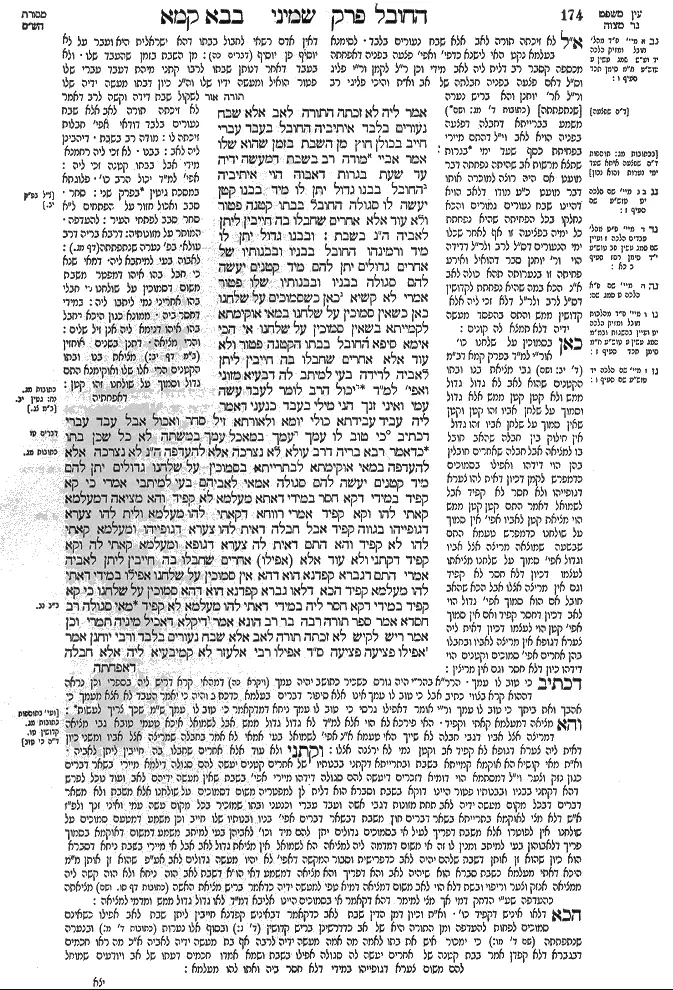
Bava Kamma 87b - Guemara
אמר ליה לא זכתה התורה לאב אלא שבח נעורים בלבד איתיביה החובל בעבד עברי חייב בכולן חוץ מן השבת בזמן שהוא שלו אמר אביי מודה רב בשבת דמעשה ידיה עד שעת בגרות דאבוה הוי איתיביה החובל בבנו גדול יתן לו מיד בבנו קטן יעשה לו סגולה החובל בבתו קטנה פטור ולא עוד אלא אחרים שחבלו בה חייבין ליתן לאביה ה"נ בשבת:
ובבנו גדול יתן לו מיד ורמינהו החובל בבניו ובבנותיו של אחרים גדולים יתן להם מיד קטנים יעשה להם סגולה בבניו ובבנותיו שלו פטור אמרי לא קשיא כאן כשסמוכים על שלחנו כאן כשאין סמוכין על שלחנו במאי אוקימתא לקמייתא בשאין סמוכין על שלחנו אי הכי אימא סיפא החובל בבתו הקטנה פטור ולא עוד אלא אחרים שחבלו בה חייבין ליתן לאביה לדידה בעי למיתב לה דבעיא מזוני ואפי' למ"ד יכול הרב לומר לעבד עשה עמי ואיני זנך הני מילי בעבד כנעני דאמר ליה עביד עבידתא כולי יומא ולאורתא זיל סחר ואכול אבל עבד עברי דכתיב (דברים טו, טז) כי טוב לו עמך עמך במאכל עמך במשתה לא כל שכן בתו כדאמר רבא בריה דרב עולא לא נצרכה אלא להעדפה ה"נ לא נצרכה אלא להעדפה במאי אוקימתא לבתרייתא בסמוכין על שלחנו גדולים יתן להם מיד קטנים יעשה להם סגולה אמאי לאביהם בעי למיתבי אמרי כי קא קפיד במידי דקא חסר במידי דאתא מעלמא לא קפיד והא מציאה דמעלמא קאתי להו וקא קפיד אמרי רווחא דקאתי להו מעלמא ולית להו צערא דגופייהו בגווה קפיד אבל חבלה דאית להו צערא דגופייהו ומעלמא קאתי להו לא קפיד והא התם דאית לה צערא דגופא ומעלמא קאתי לה וקא קפיד דקתני ולא עוד אלא (אפילו) אחרים שחבלו בה חייבין ליתן לאביה אמרי התם דגברא קפדנא הוא דהא אין סמוכין על שלחנו אפילו במידי דאתי להו מעלמא קפיד הכא דלאו גברא קפדנא הוא דהא סמוכין על שלחנו כי קא קפיד במידי דקא חסר ליה במידי דאתי להו מעלמא לא קפיד מאי סגולה רב חסדא אמר ספר תורה רבה בר רב הונא אמר דיקלא דאכיל מיניה תמרי וכן אמר ריש לקיש לא זכתה תורה לאב אלא שבח נעורים בלבד ורבי יוחנן אמר אפילו פציעה פציעה ס"ד אפילו רבי אלעזר לא קמיבעיא ליה אלא חבלה
Comments from Rashi on Masechet Bava Kamma Page 87b
מן השבת בזמן שהעבד שלו . ולא בעבד דאחר דנותן שבתו לרבו קתני מיהת דעבד עברי שלו פטור הואיל ומעשה ידיו שלו וה"נ כיון דבתו מעשה ידיה שלו לשקול שבת דידה וקשה לרב דאמר לא זיכתה תורה לאב אלא שבח נעורים בלבד דודאי אפי' חבלות זיכתה לו: מודה רב בשבת . דיהבינן ליה לאב: בבנו . לא זכי ליה רחמנא מידי אבל בבתו קטנה זכי ליה: אפי' למ"ד יכול הרב כו' . פלוגתא במסכת גיטין בפרק שני: סחר . סבב ואכול חזור על הפתחים. ל"א סחר סבב לפתחי העיר: דרבא בריה דרב עולא . בפ' נערה שנתפתתה (דף מג.): להעדפה . המותר על מזונותיה: לאבוה בעי למיתבא ליה . דמאי שנא כי חבל בהו איהו דמפטר משבת משום דסמוכין על שולחנו כי חבלי בהו אחריני נמי ליתבו ליה: והרי מציאה . דתנן בשנים אוחזין (ב"מ דף יב:) מציאת בנו ובתו הקטנים הרי אלו שלו ואוקימנא התם גדול וסמוך על שולחנו זהו קטן:
Comments from Tosafot - Bava Kamma 87b
א"ל לא זיכתה תורה לאב אלא שבח נעורים בלבד . לסימנא בעלמא נקט האי לישנא כדפי' ואפי' פצעה בפניה דאפחתה מכספה קסבר רב דלית ליה לאב מידי וכן ר"ל לקמן ור"י פליג וס"ל דאם פצעה בפניה חבלתה של אב וא"ת והיכי פליגי רב ור"ל אר' יוחנן והא בריש נערה [שנתפתתה] (כתובות ד' מג: ושם) משמע בברייתא דחבלה דפצעה בפניה הויא לאב וי"ל דהתם מיירי בפחיתת כסף שעד ימי בגרות שתצא מרשות אב שהיתה נפחתה דבר מועט אם היה רוצה למוכרה אותו דבר מועט כ"ע מודו דלאב הויא דהיינו שבח נעורים גמורים והכא נחלקו בכל הפחיתה שהיא נפחתת כל ימיה בפציעה זו אף לאחר שכלו ימי הנעורים דס"ל לרב ולר"ל דדידה הוי ור' יוחנן סבר דהואיל ואירע פחיתה זו בנערותה תהא כולה לאב א"נ הכא במה שהיא נפחתת לקדושין דס"ל לרב ולר"ל דלא זכי ליה אלא קדושין ממש והתם בהפסד מעשה ידיה דלא תמצא לה קונים: כאן בסמוכין על שלחנו כו'. אור"י למ"ד בפרק קמא דב"מ (ד' יב: ושם) גבי מציאת בנו ובתו הקטנים שהוא לאב לא גדול גדול ממש ולא קטן קטן ממש אלא גדול וסמוך על שלחן אביו זהו קטן וקטן שאין סמוך על שלחן אביו זהו גדול אין חילוק בין חבלה שהאב חובל בו למציאה אבל חבלה שאחרים חובלין בהן הוי דידהו ואפילו בסמוכים כדמפרש לקמן דכיון דאית להו צערא דגופייהו ולא חסר לא קפיד אבל לשמואל דאמר התם קטן קטן ממש הוי מציאת קטן לאביו אפי' אין סמוך על שולחנו כדמפרש טעמא התם שבשעה שמוצאה מריצה אצל אביו וגדול אפי' סמוך על שלחנו מציאתו לעצמו דכיון דלא חסר לא קפיד וגם אין מריצה אצלו אבל הכא שהאב חובל אם הוא סמוך אפי' גדול הוי לאב דכיון דחסר קפיד ואם אין סמוך אפי' קטן הוי לעצמו דכיון דאית ליה צערא דגופא אין מריצה לאביו ובחבלו בהן אחרים אפי' סמוכים וקטנים הוי דידהו כיון דלא חסר וגם אין מריצין: דכתיב כי טוב לו עמך . הרר"א בהר"י היה גורס כשכיר כתושב יהיה עמך (ויקרא כה) דמהאי קרא דריש ליה בספרי וכן נראה דההוא קרא בצווי כתיב אבל כי טוב לו עמך אינו אלא סיפור דברים בעלמא כדכתיב והיה כי יאמר העבד לא אצא מעמך כי אהבך ואת ביתך כי טוב לו עמך ור"י אומר דאפילו גרסי כי טוב לו עמך ניחא דמדקאמר כי טוב לו עמך ש"מ שכך צריך לעשות: והא מציאה דמעלמא קאתי וקפיד . האי פירכא לא הוי אלא למ"ד לא גדול גדול ממש אבל לשמואל איכא טעמי טובא גבי מציאה דמריצה אצל אביו דגבי חבלה לא שייך האי טעמא א"נ אפי' לשמואל בעי אמאי לא אמר בחבלה שמריצה אצל אביו ומשני כיון דאית ליה צערא דגופא לא קפיד אב וקטן נמי לא יריצנה אצלו: וקתני ולא עוד אלא אחרים שחבלו בה חייבין ליתן לאביה. וא"ת מאי קושיא הא אוקמא קמייתא בשבת ובתרייתא דקתני בבנותיו של אחרים קטנים יעשה להם סגולה דילמא מיירי בשאר דברים כגון נזק וצער וי"ל דמסתמא הוי דומיא דזכרים דיעשה להם סגולה דידהו מיירי אפי' בשבת שאין מעשה ידיהם לאב ועוד נוכל לפרש דהא דקתני בבניו ובבנותיו פטור היינו דוקא בשבת וסברא הוא דלית לן למפטריה משום דסמוכים על שולחנו אלא משבת ולא משאר דברים דבכל מקום מעשה ידיה לאב תחת מזונות דגבי אשה ועבד עברי וכנעני ובתו שמזכיר בכל מקום עשה עמי ואיני זנך ולפ"ז א"ש דלא מצי לאוקמא בתרייתא בשאר דברים חוץ משבת דבשאר דברים אפי' בניו ובנותיו שלו חייב וכן משמע דמטעם סמוכים על שולחנו אין לפוטרו אלא משבת דפריך לעיל אי בסמוכים גדולים יתן להם מיד וכו' לאביהן בעי למיתב משמע דמשום דאוקמא בסמוך פריך דלאבוהון בעי למיתב ומנין לו זה אי משום דמדמה ליה למציאה הא לשמואל אין מציאת גדול לאב אבל אי מיירי בשבת ניחא דסברא הוא כיון שהוא זן אותן דשבת שלהם יהיה לאב כדפרישית וסבר המקשה דאפי' לא יהיו מעשה גדולים לאב אע"פ שהוא זן אותן מ"מ היכא דאתי מעלמא כשבת סברא הוא שיהיה לאב והא דפריך והא מציאה דמשמע דאי הו"א דשבת לאב הוה ניחא ולא הוה קשה ליה ממציאה אנזק וצער וריפוי ובשת דלא הוי לאב משום דמציאה דמיא טפי למעשה ידיה כדאמר בריש מציאת האשה (כתובות דף סו. ושם) מציאתה כהעדפה שע"י הדחק דמי אך מצי למימר דהא דקאמר אי בסמוכים היינו אליבא דמ"ד לאו גדול גדול ממש ומדמי למציאה: הכא דלאו איניש דקפיד כו' . וא"ת וכיון דמן הדין שבת לאב כדקאמר דבאיניש קפדנא חייבין ליתן שבת לאב אפילו כשאינם סמוכים לפחות להעדפה ומן התורה היא של אב כדדרשינן בריש קדושין (ד' ג:) ובסוף אלו נערות (כתובות ד' מ:) ובנערה שנתפתתה (שם ד' מו:) כי ימכור אש את בתו לאמה מה אמה מעשה ידיה לרבה אף בת מעשה ידיה לאביה א"כ מה ראו חכמים דבגברא דלא קפדן אמר בבת קטנה של אחרים יעשה לה סגולה אפילו בשבת ושמא אמדו חכמים דעתו של אב ויודעים שמוחל להם משום צערא דגופייהו במידי דלא חסר ביה ואתו להו מעלמא:
Bava Kamma 87b - Mishnah translated into english
Rav said to Rabbi Elazar in response: The Torah granted the father only the profits of her youth and nothing else. Therefore, compensation for the injury goes to the daughter. Rabbi Elazar raised an objection to Rav’s statement based on the mishna: One who injures a Hebrew slave is liable for all of the five types of indemnity. This is except for compensation for loss of livelihood occurring during the time that the injured slave belongs to the one that injured him. This should be the halakha with regard to a minor daughter as well, that since the father has the right to the earnings of his minor daughter, he should receive the compensation for her loss of livelihood. Abaye said in response: Rav concedes with regard to compensation for her loss of livelihood that it is paid to the father, since her earnings belong to her father until the time of her adulthood, and therefore her inability to work is her father’s loss.
Rabbi Elazar raised an objection to Rav’s statement based on a baraita: One who injures his adult son must give him his compensation immediately. If one injured his minor son he must make a safe investment [segulla] for him with the compensation money. One who injures his minor daughter is exempt, and moreover, if there were others who injured her, they are liable to give compensation to her father. The Gemara answers: So too here, the baraita is speaking with regard to the daughter’s loss of livelihood alone, which is paid to the father. The other types of indemnity are paid to the daughter.
The Gemara questions the first ruling of the baraita: And is it so that if a father injured his adult son he must give him his compensation immediately? And the Gemara raises a contradiction from that which is taught in another baraita: In a case of one who injures the sons or daughters of others, if they are adults he must give them their compensation immediately; if they are minors he must make a safe investment for them. If one injures his own sons or daughters, he is exempt from paying them compensation.
The Sages say in response: This is not difficult. Here, where the baraita states that the father is exempt, it is dealing with a case where the children are dependent on their father’s table for support. There, where the baraita states that the father is liable, it is dealing with a case where the children are not dependent on his table.
The Gemara challenges this resolution of the two baraitot: In what manner did you interpret the first baraita? You interpreted it as dealing with a case where the children are not dependent on his table? If so, say the latter clause of that baraita: One who injures his minor daughter is exempt, and moreover, if there were others who injured her, they are liable to give compensation to her father. If this is a case where the daughter is not dependent upon her father for support, then the one who injured her would be required to give the compensation to her, because she needs to provide her own sustenance.
The Gemara continues its challenge. And even according to the one who says that a master can say to his slave: Work for me but I will not feed you, i.e., a master is not legally obligated to provide sustenance for his slave, this matter applies only to a Canaanite slave, as the master can say to him: Work for me the entire day, and at night go around, beg, and eat. But in the case of a Hebrew slave, as it is written with regard to him: “Because he fares well with you” (Deuteronomy 15:16), indicating that the Hebrew slave must be “with you” in food and “with you” in drink, i.e., the Hebrew slave is entitled to live with his master as an equal, the master may not compel the slave to serve him unless he feeds him. All the more so is it not the case with regard to his daughter, that she is not required to beg for her sustenance and should receive the compensation herself?
The Gemara answers: This is as Rava, son of Rav Ulla, said concerning a similar matter (Ketubot 43a): This halakha is necessary only for the surplus, i.e., money that a woman earns beyond what she needs for her essential sustenance. Here too, this halakha is necessary only for the surplus. If the compensation for injury is more than the daughter requires for her sustenance, the additional sum is paid to her father.
The Gemara again challenges the resolution of the two baraitot: In what manner did you interpret the latter baraita discussing one who injures the children of another? You interpreted it as dealing with a case where the sons are dependent on their father’s table. But the baraita also stated: If they are adults, he must give them their compensation immediately; if they are minors, he must make a safe investment for them. Why does he make a safe investment for them? Shouldn’t he be required to give the compensation to their father?
The Sages say in response: Where the father is particular about receiving money that would go to his child is specifically in a matter that causes him a loss, as in a case where the father himself injured his child and would need to pay compensation. But in a matter that comes from elsewhere, as in a case where someone else injured his child, he is not particular about receiving the money, and it is paid to the child.
The Gemara challenges that response: But isn’t a found item a matter that comes to the children from elsewhere, and the father is particular about receiving it? The Sages say in response: With regard to profit that comes to the children from elsewhere, and they do not suffer physical pain in obtaining it, the father is particular about receiving the money, as he does not feel that the children deserve it. But in the case of an injury, where they suffer physical pain and it comes to them from elsewhere, the father is not particular about receiving the compensation paid to his child.
The Gemara challenges: But there, in the first baraita, isn’t it discussing a case where the daughter suffers physical pain, and it is a matter that comes to her from elsewhere, and the father is particular about receiving the money, as it teaches: And moreover, if there were others who injured her, they are liable to give compensation to her father?
The Sages say in response: There, the baraita discusses a case where the father is a captious man, which is evident from the case of the baraita itself, as his children are not dependent on his table. A man like this is particular even about matters that come to them from elsewhere. By contrast, here, in the latter baraita, it discusses a case where the father is not a captious man, which is evident from the case of the baraita itself, as his children are dependent on his table. When he is particular about receiving the money, it is in a matter that causes him a loss, but in a matter that comes to them from elsewhere, he is not particular.
The two baraitot stated that the father makes a safe investment for his minor children with the compensation paid to them. The Gemara asks: What is meant by a safe investment? Rav Ḥisda says: The father should purchase a Torah scroll for his child. Rabba bar Rav Huna, says: The father should purchase a date palm, from which the child will consume dates.
The Gemara comments that the amora’im of Eretz Yisrael discussed the same issue as did those in Babylonia. And so says Reish Lakish: The Torah granted the father only the profits of her youth, and nothing else. And Rabbi Yoḥanan says: The father receives even the compensation for his daughter’s wound.
The Gemara objects: Does it enter your mind that the father receives compensation for his daughter’s wound, which, unlike an injury, does not diminish his daughter’s value? Even Rabbi Elazar raised his dilemma only with regard to an injury,
Traduction : The William Davidson digital edition of the Koren Noé Talmud, with commentary by Rabbi Adin Even-Israel Steinsaltz.