 Talmud Bavli
Bava Kamma 86b : Youtube
Daf TubeYoutube
2 video classes :
Bava Kamma Page 86b
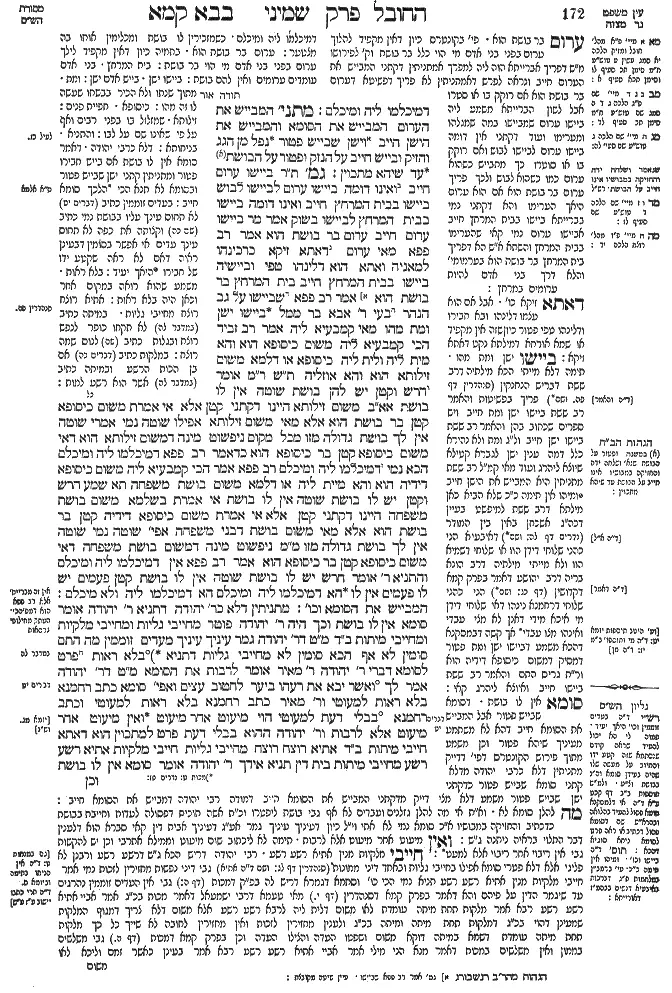
Bava Kamma 86b - Guemara
דמיכלמו ליה ומיכלם:
מתני׳ המבייש את הערום המבייש את הסומא והמבייש את הישן חייב וישן שבייש פטור נפל מן הגג והזיק ובייש חייב על הנזק ופטור על הבושת עד שיהא מתכוין:
גמ׳ ת"ר ביישו ערום חייב ואינו דומה ביישו ערום לביישו לבוש ביישו בבית המרחץ חייב ואינו דומה ביישו בבית המרחץ לביישו בשוק אמר מר ביישו ערום חייב ערום בר בושת הוא אמר רב פפא מאי ערום דאתא זיקא כרכינהו למאניה ואתא הוא דלינהו טפי וביישיה ביישו בבית המרחץ חייב בית המרחץ בר בושת הוא אמר רב פפא שביישו על גב הנהר בעי ר' אבא בר ממל ביישו ישן ומת מהו מאי קמבעיא ליה אמר רב זביד הכי קמבעיא ליה משום כיסופא הוא והא מית ליה ולית ליה כיסופא או דלמא משום זילותא הוא והא אוזליה ת"ש ר"מ אומר חרש וקטן יש להן בושת שוטה אין לו בושת אא"ב משום זילותא היינו דקתני קטן אלא אי אמרת משום כיסופא קטן בר בושת הוא אלא מאי משום זילותא אפילו שוטה נמי אמרי שוטה אין לך בושת גדולה מזו מכל מקום ניפשוט מינה דמשום זילותא הוא דאי משום כיסופא קטן בר כיסופא הוא כדאמר רב פפא דמיכלמו ליה ומיכלם הכא נמי דמיכלמו ליה ומיכלם רב פפא אמר הכי קמבעיא ליה משום כיסופא דידיה הוא והא מיית ליה או דלמא משום בושת משפחה תא שמע חרש וקטן יש לו בושת שוטה אין לו בושת אי אמרת בשלמא משום בושת משפחה היינו דקתני קטן אלא אי אמרת משום כיסופא דידיה קטן בר בושת הוא אלא מאי משום בושת דבני משפחה אפי' שוטה נמי שוטה אין לך בושת גדולה מזו מ"מ ניפשוט מינה דמשום בושת משפחה דאי משום כיסופא קטן בר כיסופא הוא אמר רב פפא אין דמיכלמו ליה ומיכלם והתניא ר' אומר חרש יש לו בושת שוטה אין לו בושת קטן פעמים יש לו פעמים אין לו הא דמיכלמו ליה ומיכלם הא דמיכלמו ליה ולא מיכלם:
המבייש את הסומא וכו':
מתניתין דלא כר' יהודה דתניא ר' יהודה אומר סומא אין לו בושת וכך היה ר' יהודה פוטר מחייבי גליות ומחייבי מלקיות ומחייבי מיתות ב"ד מ"ט דר' יהודה גמר עיניך עיניך מעדים זוממין מה התם סומין לא אף הכא סומין לא מחייבי גליות דתניא (במדבר לה, כג) בלא ראות פרט לסומא דברי ר' יהודה ר' מאיר אומר לרבות את הסומא מ"ט דר' יהודה אמר לך (דברים יט, ה) ואשר יבא את רעהו ביער לחטוב עצים ואפי' סומא כתב רחמנא בלא ראות למעוטי ור' מאיר כתב רחמנא בלא ראות למעוטי וכתב רחמנא (דברים יט, ד) בבלי דעת למעוטי הוי מיעוט אחר מיעוט ואין מיעוט אחר מיעוט אלא לרבות ור' יהודה ההוא בבלי דעת פרט למתכוין הוא דאתא חייבי מיתות ב"ד אתיא רוצח רוצח מחייבי גליות חייבי מלקיות אתיא רשע רשע מחייבי מיתות בית דין תניא אידך ר' יהודה אומר סומא אין לו בושת
Comments from Rashi on Masechet Bava Kamma Page 86b
דמיכלמו ליה ומיכלם . כשמזכירין לו בושת ומכלימין אותו בה מצטער: ערום בר בושת הוא . בתמיה. כיון דאין מקפיד לילך ערום בפני בני אדם מי הוי בר בושת: בית המרחץ . בני אדם עומדים ערומים ואין להם בושת: ביישו ישן . בייש אדם ישן: ומת . מתוך שנתו ולא הכיר בבשתו שעשה לו זה מהו: כיסופא . חפיית פנים: זילותא . שמזלזל בו בפני רבים ואף על פי שאינו שם על לבו: והתניא . בניחותא: דלא כרבי יהודה . דאמר סומא אין לו בושת אם בייש חבירו פטור ומתניתין קתני ישן שבייש פטור ובסומא לא תנא הכי הלכך סומא חייב: בעדים זוממין . כתיב (דברים יט) לא תחוס עינך עליו בבושת נמי כתיב (שם כה) וקצותה את כפה לא תחוס עינך עדים אי אפשר בסומין דבעינן ראיה דאם לא ראה שקטע ידו של חבירו היאך יעיד: בלא ראות . משמע שהוא רואה במקום אחר וכאן היה בלא ראות: אתיא רוצח רוצח מחייבי גליות . במיתה כתיב (במדבר לה) לא תקחו כופר לנפש רוצח ובגלות כתיב (שם) לנוס שמה רוצח: במלקות . כתיב (דברים כה) אם בן הכות הרשע ובמיתה כתיב (במדבר לה) אשר הוא רשע למות:
Comments from Tosafot - Bava Kamma 86b
ערום בר בושת הוא . פי' בקונטרס כיון דאין מקפיד להלוך ערום בפני בני אדם מי הוי כלל בר בושת וק' לפירושו מ"ש דפריך אברייתא הוה ליה למפרך אמתניתין דקתני המבייש את הערום חייב ונראה לפרש דאמתניתין לא פריך דפשיטא דערום בר בושת הוא אם רוקק בו או סטרו אבל לשון הברייתא משמע ליה ביישו ערום שמביישו במה שמגלהו ומערימו ועוד דקתני אין דומה ביישו ערום לביישו לבוש ואם רוקק בו או סוטרו כך מתבייש כשהוא ערום כמו כשהוא לבוש ולכך פריך ערום בר בושת הוא אם הוא ערום היאך הערימו והא דקתני נמי בברייתא ביישו בבית המרחץ חייב אביישו ערום נמי קאי שהערימו בבית המרחץ והשתא א"ש הא דפריך בית המרחץ בר בושת הוא בערמומי' והלא דרך בני אדם להיות ערומים במרחץ: דאתא זיקא כו' . אבל אם הוא עצמו דלינהו ובא חבירו ודלינהו טפי פטור כיון שזה אין מקפיד או שמא אורחא דמילתא נקט דאתא זיקא: ביישו ישן ומת מהו . תימה דלא מייתי הכא מילתיה דרב ששת דבריש הנחנקין (סנהדרין דף פה. ושם) פריך בפשיטות והאמר רב ששת ביישו ישן ומת חייב ויש ספרים שכתוב בהן והאמר רב ששת ביישו ישן חייב ול"ג ומת ולא נהירא כלל דמה ענין ישן לגברא קטילא שיוצא ליהרג ועוד מאי קמ"ל רב ששת מתניתין היא המבייש את הישן חייב ומיהו אין תימה כ"כ שלא הביא כאן מילתא דרב ששת למיפשט בעיין דכה"ג אשכחן באין בין המודר (נדרים דף לה: ושם) דאיבעיא הני כהני שלוחי דידן הוו או שלוחי דשמיא הוו ולא מייתי מילתיה דרב הונא בריה דרב יהושע דאמר בפרק קמא דקדושין (דף כג: ושם) הני כהני שלוחי דרחמנא נינהו דאי שלוחי דידן מי איכא מידי דאנן לא מצי עבדי ואינהו מצו עבדי אך קשה דבמסקנא דהכא משמע דביישו ישן ומת פטור דמסיק דמשום כיסופא דידיה הוא ור"ת גריס התם והאמר רב ששת ביישו חייב ואיוצא ליהרג קאי: סומא אין לו בושת . דסומא שבייש פטור אבל המבייש את הסומא חייב דהא לא משתמע מעיניך שיהא פטור וכן משמע מתוך פירוש הקונטרס דפי' דדייק מתניתין דלא כרבי יהודה מדלא קתני סומא שבייש פטור כדקתני ישן שבייש פטור משמע דלא מצי דייק מדקתני המבייש את הסומא חייב דמודה רבי יהודה דמבייש את הסומא חייב: מה להלן סומא לא . וא"ת אי מה להלן גזלנים ועבדים לא אף גבי בושת ליפטרו וכ"ת אשה תוכיח דפסולה לעדות וחייבת בבושת כדכתיב והחזיקה במבושיו א"כ סומא נמי לא אתי וי"ל כיון דעיניך עיניך גמר אע"ג דעיניך אבית דין קאי סברא הוא דלענין דבר התלוי בראיה ניתנה ג"ש: ואין מיעוט אחר מיעוט אלא לרבות . תימה לא ליכתוב שום מיעוט וממילא אתרבי וכן יש להקשות גבי אין ריבוי אחר ריבוי אלא למעט: חייבי מלקיות מנין אתיא רשע רשע . רבי יהודה דריש הכא ג"ש דרשע רשע ורבנן לא פליגי אלא דלא פטרי סומא אפילו בחייבי גליות ובאחד דיני ממונות (סנהדרין דף לג: ושם ד"ה אתיא) גבי דיני נפשות מחזירין לזכות נמי אמר חייבי מלקיות מנין אתיא רשע רשע תניא נמי הכי כו' וסתמא דגמרא דריש לה בפ"ק דמכות (דף ה:) גבי אין העדים זוממין נהרגים עד שיגמר הדין על פיהם והא דאמר בפרק קמא דסנהדרין (דף י.) מאי טעמא דרבי ישמעאל דאמר מכות בכ"ג אמר אביי אתיא רשע רשע רבא אמר מלקות תחת מיתה עומדת לאו משום דלית ליה לרבא רשע רשע אלא משום דלא צריך דמגוף המלקות שמעינן דהוי בכ"ג דמלקות תחת מיתה ומיתה בכ"ג ולענין מחזירין לזכות ואין מחזירין לחובה לא שייך כל כך מלקות תחת מיתה עומדת דשמא במיתה דוקא משום ושפטו העדה והצילו העדה וכן בפרק קמא דמכות (דף ה.) גבי משלשים בממון ואין משלשים במכות דאמר מנא הני מילי אמר אביי אתיא רשע רשע רבא אמר בעינן כאשר זמם וליכא לאו משום דלית ליה לרבא רשע רשע אלא משום שאין צריך דמגופיה דקרא שמעינן דאין משלשים במכות ובאלו נערות (כתובות דף לה. ושם) גבי חייבי מלקיות שוגגין ודבר אחר דאמר ר"ל בפירוש ריבתה תורה חייבי מלקיות כחייבי מיתות היכן ריבתה תורה אביי אמר רשע רשע רבא אמר מכה מכה התם ודאי לא דריש רבא רשע רשע וכן ר' יוחנן פליג אר"ל ומחייב חייבי מלקיות שוגגין בתשלומין לא דריש רשע רשע וכן בההוא פירקא (דף לז.) אמר גבי לא יהיה אסון ענוש יענש והא מהכא נפקא מהתם נפקא כדי רשעתו משום רשעה אחת אתה מחייבו כו' ומסיק חדא במיתה וממון וחדא במלקות וממון לא דריש רשע רשע והיינו טעמא דרבא ור' יוחנן וההיא סוגיא סברי דלא דרשי רשע רשע אלא לענין דברים שהן בגוף המלקות דקרא דרשע בגוף המלקות כתיב והיה אם בן הכות הרשע אבל לפטור מממון שהוא בהדי מיתה ומלקות שאין בגוף המלקות לא דרשינן אבל ממכה יליף לה רבא שפיר דבתשלומין כתיב מכה בהמה ישלמנה ואביי אית ליה אפי' התם ג"ש דרשע רשע וסוגיא דהתם גבי רשעתו אליבא דרבא אתיא ואביי הוה מוקי כרבי מאיר במיתה ומלקות דמלקות וממון לא צריך קרא דאתיא רשע רשע:
Bava Kamma 86b - Mishnah translated into english
say that the baraita discusses a case involving a minor who has reached a stage in which when others humiliate him he feels humiliation.
MISHNA: One who humiliates a naked person, or one who humiliates a blind person, or one who humiliates a sleeping person is liable, but a sleeping person who humiliates another is exempt. If one fell from the roof onto another person, and thereby caused him damage and humiliated him, then the one who fell is liable for the indemnity of damage, since a person is always considered forewarned, and exempt from the indemnity of humiliation, since a person is not liable for humiliation unless he intends to humiliate the other person.
GEMARA: The Sages taught in a baraita (Tosefta 9:12): If one humiliated another who was naked, he is liable, but the magnitude of humiliation felt when he humiliated him while naked is not comparable to the magnitude of humiliation felt had he humiliated him while clothed, since one who chooses to be naked is less sensitive to humiliation. Similarly, if one humiliated another in a bathhouse, he is liable, but the magnitude of humiliation felt when he humiliated him in a bathhouse is not comparable to the magnitude of humiliation felt had he humiliated him in the marketplace.
The Gemara clarifies the baraita: The Master says: If one humiliated another who was naked, the one who humiliated him is liable. The Gemara asks: Is a naked person subject to humiliation? Is it possible to humiliate him in this state? Rav Pappa said: What does the baraita mean when it says: Naked? It means a case where a gust of wind came and lifted his clothes, and then this one came and raised them higher and humiliated him.
The baraita also teaches: If one humiliated another in a bathhouse, he is liable. The Gemara asks: Is one in a bathhouse subject to humiliation? In a place where people stand naked, can a person be humiliated by having his clothes removed? Rav Pappa said: This is a case where he humiliated him not in an actual bathhouse, but on the bank of the river, which is a place where people behave more discreetly when they undress.
§ Rabbi Abba bar Memel raises a dilemma: If one humiliated another who was asleep, and he died before he awoke, so he never knew of his humiliation, what is the halakha? The Gemara asks: What is his dilemma? Rav Zevid said that this is his dilemma: Is the compensation for humiliation due to embarrassment, i.e., that his feelings suffer because of what he experienced, and this one died and does not have that feeling of embarrassment? Or perhaps the compensation for humiliation is due to disgrace, i.e., lessening of his honor in front of other people, and he disgraced him.
The Gemara suggests: Come and hear a resolution to the dilemma from a baraita: Rabbi Meir says: A deaf-mute and a minor have the right to receive compensation for humiliation; an imbecile does not have the right to receive compensation for humiliation. The Gemara explains: Granted, if you say that the compensation is due to disgrace, this explanation is consistent with that which the baraita teaches concerning a minor, who can be disgraced; but if you say that the compensation is due to embarrassment, is a minor subject to humiliation?
The Gemara rejects this suggestion: Rather, what do you mean by stating that the compensation is due to disgrace? If compensation is granted due to disgrace, then an imbecile should receive compensation as well. The Sages say in response: With regard to an imbecile, you can have no greater humiliation than this. It is impossible to degrade him further.
The Gemara returns to the original suggestion: In any case, resolve from this baraita that the compensation is due to disgrace, as, if it is due to embarrassment, is a minor subject to embarrassment? The Gemara rejects this proof: This is as Rav Pappa said with regard to a different halakha, cited later by the Gemara: The case involves a minor who has reached an age in which when others humiliate him he feels humiliation; here, too, say that this baraita discusses a case involving a minor who has reached an age in which when others humiliate him he feels humiliation. This is how Rav Zevid understands the dilemma of Rabbi Abba bar Memel.
Rav Pappa explains Rabbi Abba bar Memel’s dilemma differently: Rav Pappa said that this is his dilemma: Is the compensation for humiliation due to his own embarrassment, and this one died and was not embarrassed? Or perhaps the compensation for humiliation is due to his family’s humiliation, and therefore the one who humiliated him must pay compensation to his family?
The Gemara suggests: Come and hear a resolution from the same baraita: A deaf-mute and a minor have the right to receive compensation for humiliation; an imbecile does not have the right to receive compensation for humiliation. The Gemara explains: Granted, if you say that the compensation is due to his family’s humiliation, this explanation is consistent with that which the baraita teaches concerning a minor, whose family can experience humiliation based on what was done to their relative; but if you say that the compensation is due to his own embarrassment, is a minor subject to humiliation?
The Gemara rejects this suggestion: Rather, what do you mean by stating that the compensation is due to the humiliation of members of his family? If this is the case, an imbecile should receive compensation as well. The Sages say in response: If one is an imbecile, you can have no greater humiliation than this.
The Gemara returns to the original suggestion: In any case, resolve from this that the compensation is due to his family’s humiliation, as, if it is due to embarrassment, is a minor subject to embarrassment? Rav Pappa said: Yes, he is subject to embarrassment, as the baraita discusses a case involving a minor who has reached an age in which when others humiliate him he feels humiliation.
The Gemara adds: And this distinction is taught in a baraita, as Rabbi Yehuda HaNasi says: A deaf-mute has the right to receive compensation for humiliation; an imbecile does not have the right to receive compensation for humiliation. With regard to a minor, sometimes he has the right to receive compensation for humiliation, and sometimes he does not have the right. Why is this so? This case where he has the right to receive compensation for humiliation is one involving a minor who has reached the stage in which when others humiliate him he feels humiliation; that case where he does not have the right to receive compensation for humiliation is one involving a minor who has not reached the stage in which when others humiliate him he feels humiliation.
§ The mishna teaches: One who humiliates a blind person is liable to pay compensation. The Gemara comments: The mishna is not in accordance with the opinion of Rabbi Yehuda, as it is taught in a baraita that Rabbi Yehuda says: A blind person who humiliated another does not have liability for humiliation. And in this way Rabbi Yehuda deemed a blind person exempt from being among those liable to be exiled for killing unintentionally, and from being among those liable to receive lashes, and from being among those liable to receive court-imposed capital punishment, if he transgresses a prohibition for which the Torah mandates one of these punishments.
The Gemara asks: What is the reasoning of Rabbi Yehuda? He derives a verbal analogy to: “Your eye shall not pity” (Deuteronomy 25:12), stated with regard to humiliation, from: “Your eye shall not pity” (Deuteronomy 19:21), stated with regard to conspiring witnesses. The analogy teaches that just as there, with regard to the halakha of conspiring witnesses, blind people are not included, as blind people cannot see events occur in order to testify, so too here, with regard to the halakha of compensation for humiliation, blind people are not included.
The Gemara continues its explanation: Why did Rabbi Yehuda deem a blind person exempt from being among those liable to be exiled for killing unintentionally? As it is taught in a baraita that the verse states with regard to an unintentional killing: “Or with any stone, whereby one may die, seeing him not” (Numbers 35:23), this formulation serves to exclude a blind person; this is the statement of Rabbi Yehuda. Rabbi Meir says: The verse serves to include a blind person.
The Gemara explains the dispute: What is the reasoning of Rabbi Yehuda? He would say to you: The verse states with regard to an unintentional killing, without any further limiting clause: “As when one goes into the forest with his neighbor to hew wood” (Deuteronomy 19:5), and this includes even a blind person; therefore, the Merciful One wrote in the Torah: “Seeing him not” (Numbers 35:23), to exclude a blind person.
And what is the reasoning of Rabbi Meir? The Merciful One wrote in the Torah: “Seeing him not” (Numbers 35:23), apparently to exclude one who happened to not see the one he killed; and the Merciful One wrote in the Torah: “Who kills his neighbor unawares” (Deuteronomy 19:4), apparently to exclude a blind person, who is not aware of where others are standing. This is a restriction following a restriction, and there is a hermeneutical principle that a restriction following a restriction serves only to amplify the halakha and include additional cases. Therefore, a blind person is included in the halakha of those liable to be exiled for unintentional killing.
The Gemara asks: And what would Rabbi Yehuda respond to this reasoning? The Gemara explains: That verse: “Who kills his neighbor unawares,” does not exclude one who could not see, but rather, it comes to exclude one who was intending to kill a particular person and unintentionally killed someone else. That killer is not exiled.
The Gemara continues to explain the opinion of Rabbi Yehuda. Why did he deem a blind person exempt from being among those liable to receive court-imposed capital punishment? That halakha is derived by means of a verbal analogy to: “But if he smote him with an instrument of iron so that he died, he is a killer; the killer shall be put to death” (Numbers 35:16), written with regard to capital punishment, from: “You shall appoint for yourselves cities, to be cities of refuge for you, that a killer who killed any person unintentionally may flee there” (Numbers 35:11), written with regard to those liable to be exiled.
Why did Rabbi Yehuda deem a blind person exempt from being among those liable to receive lashes? That halakha is derived by means of a verbal analogy to: “Then it shall be, if the guilty one deserves to be beaten” (Deuteronomy 25:2), written with regard to lashes, from: “Moreover you shall take no ransom for the life of a murderer, that is guilty of death” (Numbers 35:31), written with regard to those liable to receive court-imposed capital punishment.
The Gemara presents another statement of Rabbi Yehuda: It is taught in another baraita that Rabbi Yehuda says: A blind person does not have humiliation,
Traduction : The William Davidson digital edition of the Koren Noé Talmud, with commentary by Rabbi Adin Even-Israel Steinsaltz.