 Talmud Bavli
Bava Kamma 14b : Youtube
Daf TubeYoutube
2 video classes :
Bava Kamma Page 14b
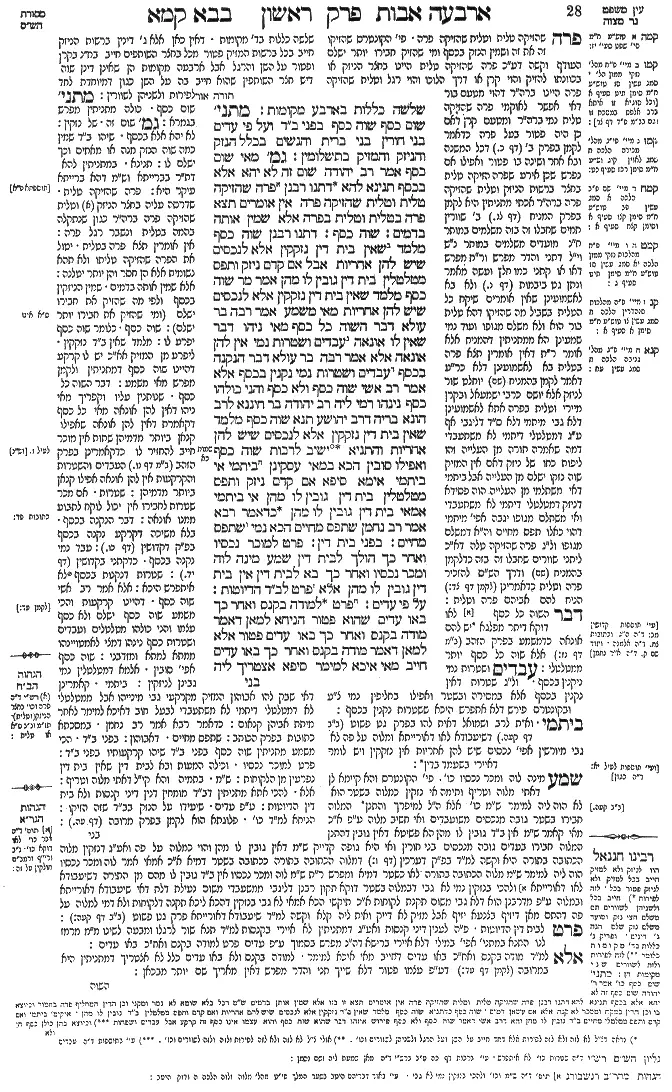
Bava Kamma 14b - Guemara
שלשה כללות בארבע מקומות מתני׳ שום כסף שוה כסף בפני ב"ד ועל פי עדים בני חורין בני ברית והנשים בכלל הנזק והניזק והמזיק בתשלומין גמ׳ מאי שום כסף אמר רב יהודה שום זה לא יהא אלא בכסף תנינא להא דתנו רבנן פרה שהזיקה טלית וטלית שהזיקה פרה אין אומרים תצא פרה בטלית וטלית בפרה אלא שמין אותה בדמים שוה כסף דתנו רבנן שוה כסף מלמד שאין בית דין נזקקין אלא לנכסים שיש להן אחריות אבל אם קדם ניזק ותפס מטלטלין בית דין גובין לו מהן אמר מר שוה כסף מלמד שאין בית דין נזקקין אלא לנכסים שיש להן אחריות מאי משמע אמר רבה בר עולא דבר השוה כל כסף מאי ניהו דבר שאין לו אונאה עבדים ושטרות נמי אין להן אונאה אלא אמר רבה בר עולא דבר הנקנה בכסף עבדים ושטרות נמי נקנין בכסף אלא אמר רב אשי שוה כסף ולא כסף והני כולהו כסף נינהו רמי ליה רב יהודה בר חיננא לרב הונא בריה דרב יהושע תנא שוה כסף מלמד שאין בית דין נזקקין אלא לנכסים שיש להן אחריות והתניא (שמות כא, לד) ישיב לרבות שוה כסף ואפילו סובין הכא במאי עסקינן ביתמי אי ביתמי אימא סיפא אם קדם ניזק ותפס מטלטלין בית דין גובין לו מהן אי ביתמי אמאי בית דין גובין לו מהן כדאמר רבא אמר רב נחמן שתפס מחיים הכא נמי שתפס מחיים:
בפני בית דין:
פרט למוכר נכסיו ואחר כך הולך לבית דין שמע מינה לוה ומכר נכסיו ואחר כך בא לבית דין אין בית דין גובין לו מהן אלא פרט לב"ד הדיוטות:
על פי עדים:
פרט למודה בקנס ואחר כך באו עדים שהוא פטור הניחא למאן דאמר מודה בקנס ואחר כך באו עדים פטור אלא למאן דאמר מודה בקנס ואחר כך באו עדים חייב מאי איכא למימר סיפא אצטריך ליה
Comments from Rashi on Masechet Bava Kamma Page 14b
שלשה כללות בד' מקומות . דאין כאן אלא ג' דינין ברשות הניזק חייב בכל ברשות המזיק פטור מכל בחצר השותפים חייב בח"נ בקרן ופטור על השן והרגל אבל ארבעה מקומות הן שאינן דינן שוה דיש חצר השותפין שהוא חייב בה על השן כגון דמיוחדת לחד לפירות ולשניהן לשוורין: מתני' שום כסף . כולה מתניתין מפרש בגמרא: גמ' שום זה . של נזקין: לא יהא אלא בכסף . שיהו ב"ד שמין כמה שוה הנזק מנה או מאתים וכך ישלם לו: תנינא . במתניתין להא דת"ר בברייתא וש"מ דהא ברייתא עיקר היא: פרה שהזיקה טלית . שדרסה עליה בחצר הניזק וטלית שהזיקה פרה ברה"ר כגון שנתקלה בהמה בטלית ונשבר רגל פרה: אין אומרין תצא פרה בטלית . יטול את הפרה שהזיקה טליתו ולא תהא נשומית אלא הן חסר והן יותר יטלנה: אלא שמין אותה בדמים . שמין הניזקין בכסף ולפי מה שהזיק את חבירו יותר ישלם (ומי שהזיק את חבירו יותר ישלם): שוה כסף . כלומר שוה כסף יפרע לו: מלמד שאין ב"ד נזקקין . ליפרע מן המזיק אא"כ יש לו קרקע דהיינו שוה כסף דמתניתין ולקמן מפרש מאי משמע: דבר השוה כל כסף . שנותנין עליו וקפריך מאי ניהו דאין להן אונאה מאי כל כסף דקאמרת דאין להן אונאה שאפילו קנאן ביותר מדמיהן שתות אין מוכר חייב להחזיר לו כדקאמרינן בפרק הזהב (ב"מ דף נו.) העבדים והשטרות והקרקעות אין להן אונאה אפילו קנאן ביותר מדמיהן: שטרות . אם מכר שטרות לחבירו אין יכול לוקח לתבוע ממנו אונאה: דבר הנקנה בכסף . בלא משיכה דקרקע נקנה בכסף בפ"ק דקדושין (דף כו.): עבד נמי נקנה בכסף . כדקתני בקדושין (דף יד.): אלא אמר רב אשי שוה כסף . דהיינו קרקעות והכי משמע שוה כסף ישלם ולא כסף עצמו והני כולהו מטלטלים ועבדים ושטרות כסף נינהו דמצי לאמטויינהו ממתא למתא ומזדבני: שוה כסף אפי' סובין . אלמא דמטלטלין נמי גבינן לניזקין: ביתמי . קאמרינן דאי שבק להו אבוהון המזיק מקרקעי גבי מינייהו אבל ממטלטלי לא דמטלטלי דיתמי לא משתעבדי לבעל חוב דאיכא למימר לאחר מיתת אביהן קנאום: כדאמר רבא אמר רב נחמן . במסכתא כתובות בפרק הכותב: שתפס מחיים . דאבוהון: בפני ב"ד . הכי משמע מתניתין שוה כסף בפני ב"ד שיהו קרקעותיו בפני ב"ד: פרט למוכר נכסיו . וכילה המעות ובא לבית דין שאין בית דין נפרעין מן הלקוחות: ש"מ . בתמיה והא קי"ל דאתי מלוה וטריף: אלא . להכי אתא מתניתין דב"ד מומחין דנין דיני קנסות ולא בית דין הדיוטות: ע"פ עדים . שיעידו על הנזק בב"ד שזה הזיקו: הניחא למ"ד כו' . פלוגתא הוא לקמן בפרק מרובה (בבא קמא דף עה.):
Comments from Tosafot - Bava Kamma 14b
פרה שהזיקה טלית וטלית שהזיקה פרה . פי' הקונטרס שהזיקו זה את זה ושמין הנזק בכסף ומי שהזיק חבירו יותר ישלם העודף וקשה דע"כ פרה שהזיקה טלית היינו בחצר הניזק או בכוונתו להזיק והוי קרן או דרך. הלוכו והוי רגל וטלית שהזיקה פרה היינו ברה"ר דהוי מטעם בור דאי אפשר לאוקמי פרה שהזיקה . טלית נמי ברה"ר ומטעם קרן דאם כן היה פטור בעל פרה כדאמר לקמן בפרק ב' (בבא קמא דף כ.) דכל המשנה ובא אחר ושינה בו פטור ואפילו אם נפרש שכן אירע שפרה הזיקה טלית בחצר ברשות הניזק וטלית שהזיקה פרה ברה"ר אכתי מתניתין היא לקמן בפרק המניח (בבא קמא דף לג.) ב' שוורין תמים שחבלו זה בזה משלמים במותר ח"נ מועדים משלמים במותר נ"ש וי"ל דקתני והדר מפרש ור"ת מפרש דאו או קתני כמו חלץ ועשה מאמר ונתן גט ביבמות (דף נ.) ולא בא לאשמועינן שאין אומרים שיקח כל הטלית בשביל מה שהזיקו דהא טלית בור הוא ולא משלם מגופו ועוד נמי שמעינן הא ממתניתין דהמניח אלא אומר ר"ת דאין אומרין תצא פרה בטלית בא לאשמועינן דלא כר"ע דאמר לקמן בהמניח (שם) יוחלט שור לניזק אלא יושם כרבי ישמעאל ובקרן מיירי וטלית בפרה אתא לאשמועינן דלא גבי מיתמי דלא ס"ד דליגבי אף ע"ג דמטלטלי דיתמי לא משתעבדי דמה שאמרה תורה מן העלייה זהו ליפות כחו של ניזק דאם אין המזיק שוה נזקו ישלם מן העלייה אבל ביתמי דאי משתלמי מן העלייה הוה פסידא דניזק דמטלטלי דיתמי לא משתעבדי ואי משתלם מגופו יגבה אפי' מיתמי דהוי כאלו תפס מחיים וה"א דמשלם מגופו ול"ג פרה שהזיקה טלה דא"כ ליתני שוורים שחבלו זה בזה כדלקמן בהמניח (שם) ודרך הש"ס להזכיר פרה וטלית כדאמרינן (לקמן בבא קמא דף צד:) הניח להם אביהם פרה וטלית: דבר השוה כל כסף . לאו דוקא דיתר מפלגא. יש להם אונאה כדמשמע בפרק הזהב (ב"מ דף נז:) אלא שוה כל כסף יותר ממטלטלי: עבדים ושטרות נמי ניקנין בכסף . ול"ג שטרות דאין נקנין בכסף אלא במסירה ובשטר ואפילו בחליפין נמי צ"ע ובקונטרס פירש דלא אתפרש היכא ששטרות נקנין בכסף: ביתמי . וא"ת לרב ושמואל דאית להו בפרק גט פשוט (ב"ב דף קעה.) דשיעבודא לאו דאורייתא ומלוה על פה לא גבי מיורשין אפי' נכסים שיש להן אחריות אין נזקקין ויש לומר דאיירי בשעמד בדין.: שמע מינה לוה ומכר נכסיו כו' . פי' הקונטרס והא קיימא לן דאתי מלוה וטריף ותימה אי נזקין כמלוה בשטר הוא לא הוה ליה למימר ש"מ כו' אלא ה"ל למיפרך והתנן. המלוה חבירו בשטר גובה מנכסים משועבדים ואי חשיב מלוה ע"פ א"כ מאי קאמר ש"מ אין ב"ד גובין לו מהן הא פשיטא דאין גובין דהתנן המלוה חבירו בעדים גובה מנכסים בני חורין ואי היא גופה קדייק ש"מ דאין גובין לו מהן והוי כמלוה על פה ואע"ג דנזקין מלוה הכתובה בתורה היא וקשה למ"ד בפ"ק דערכין (דף ו:) דמלוה הכתובה בתורה ככתובה בשטר דמיא א"כ אמאי אמר לוה ומכר נכסיו. הוה ליה למימר ש"מ מלוה הכתובה בתורה לאו כשטר דמיא ומפרש ר"ת ש"מ לוה ומכר נכסיו אין ב"ד גובין לו מהם מן התורה דשיעבודא לאו דאורייתא ולהכי בנזקין נמי לא גבי דבמלוה בשטר דוקא תקון רבנן דליגבי ממשעבדי משום נעילת דלת דאי שיעבודא דאורייתא ובמלוה ע"פ מדרבנן הוא דלא גבי משום תקנת לקוחות א"כ תיקשי הכא אמאי לא גבי בנזקין דהכא ליכא תקנה דלקוחות ולא דמי למלוה על פה דהתם מאן דיזיף בצנעא יזיף אבל מזיק לא דייק ואית ליה קלא וקשה למ"ד שיעבודא דאורייתא פרק גט פשוט (ב"ב דף קעה:): פרט לבית דין הדיוטות . פ"ה לענין דיני קנסות ואע"ג דמתניתין לא איירי בקנסות למ"ד תנא שור לרגלו ומבעה לשינו מ"מ מרמז לנו התנא במתני' אפי' במילי דלא איירי ברישא דה"נ מפרש בסמוך ע"פ עדים פרט למודה בקנס ואח"כ באו עדים: אלא למ"ד מודה בקנס ואח"כ באו עדים דחייב מאי איכא למימר . למודה בקנס ולא באו עדים כלל לא אצטריך דמתניתין היא במרובה (לקמן בבא קמא דף עד:) דע"פ עצמו פטור דלא שייך תני והדר מפרש דאין מאריך שם יותר מבכאן:
Bava Kamma 14b - Mishnah translated into english
There are only three distinct principles, but they are listed as four cases because they apply in four different places.
MISHNA: The determination of payment of damages is made by monetary appraisal. One pays with items worth money. This halakha applies before a court. And it is based upon the testimony of witnesses who are free men, i.e., men who are not Canaanite slaves, and who are members of the covenant, i.e., Jews. And women are included in the halakhot of damages in the same way as men. And both the injured party and the one liable for the damage are involved in the payment. The Gemara will explicate each of these principles.
GEMARA: What is the meaning of: The determination of payment of damages is made by monetary appraisal?
Rav Yehuda says: This appraisal of the damage caused should be made only in terms of the monetary value of the damage.
The Gemara notes: We learn, in this mishna, this halakha that the Sages taught explicitly: In a case in which a cow damaged a cloak, and the cloak injured the cow, e.g., the cow tread on it, thereby damaging it, and it became entangled in the cow’s legs, causing the cow to trip, one does not say that it may be presumed that the damage to the cow is offset by the damage to the cloak and the damage to the cloak is offset by the damage to the cow, and therefore the owners of both are exempt from any payment. Rather, the court appraises separately the damage caused to each side in terms of its monetary value and only then calculates to what extent the liabilities offset each other.
§ The mishna continues: With items worth money; to what does this refer?
This is as the Sages taught in a baraita: Payment is made with items worth money. This teaches that the court attends to the collection of damages only in order to collect from property that serves as a guarantee, i.e., land. But if the injured party proceeded, of his own accord, to seize movable property from the one liable for the damage, the court collects damages for him from those items he seized. According to the baraita, the phrase: Items worth money, is referring to land.
The Gemara analyzes this: The Master said in the baraita: Payment is made with items worth money. This teaches that the court attends to the collection of damages only in order to collect from property that serves as a guarantee, i.e., land. The phrase: Items worth money, therefore, is used as a term for land. The Gemara asks: From where is this inferred?
Rabba bar Ulla says that the phrase: Items worth money, is referring to something that is worth any amount of money, and what is that? It is something that is not subject to price fraud, which is the halakha with regard to land. Unlike the sale of movable property, the sale of land is valid irrespective of the sum for which the land is sold. The Gemara challenges this explanation: But slaves and documents are also not subject to price fraud, and yet these are not included in the phrase: Items worth money, as the court does not collect payments of damages from them.
Rather, Rabba bar Ulla said: The phrase is referring to something that is acquired with money, which is the halakha with regard to land but not with regard to movable property (see Kiddushin 26a). The Gemara rejects this explanation: But slaves and documents are also acquired with money.
Rather, Rav Ashi said: The phrase is referring to something that is worth money, but is not actually money, and all these things, i.e., movable property, slaves, and documents, are considered like actual money because they have the defining characteristics of money in that they are valuable and portable.
Rav Yehuda bar Ḥinnana raises a contradiction to the opinion of Rav Huna, son of Rav Yehoshua: In the baraita cited earlier it is taught: The mishna’s statement that payment is made with items worth money teaches that the court attends to the collection of damages only in order to collect from property that serves as a guarantee, i.e., land. But it is taught also in another baraita: The verse states the superfluous phrase: “He shall recompense” (Exodus 21:34), to include items worth money, and even bran, a relatively inferior commodity, is accepted as a valid form of payment. The first baraita teaches that only land is a valid form of payment, whereas the second baraita teaches that one may pay even with movable property.
The Gemara answers: With what are we dealing here in the baraita that teaches that the court collects damages only from land? We are dealing with a case where damages are collected from orphans whose father was liable to pay damages. The baraita teaches that the liability inherited by the orphans applies only to the land they inherited from their father as it is liened to their father’s debts.
The Gemara asks: If the baraita is referring to collection from orphans, say, and try to explain accordingly, the latter clause of the baraita: But if the injured party proceeded, of his own accord, to seize movable property from the one liable for the damage, the court collects damages for him from those items he seized. The Gemara asks: If, as suggested, the baraita is referring to collection from orphans, why does the court collect damages for him from those items he seized, as the father’s movable property is not liened to his debts?
The Gemara answers: The case is like that which Rava says that Rav Naḥman says with regard to a mishna (Ketubot 84a), which teaches that creditors who seize movable property as payment for a debt may keep those items: That is referring to a case in which he seized the property while the debtor was still alive. Here also, the baraita is referring to a case in which he seized the property while the one liable for the damage was still alive.
§ The mishna continues: Before a court. What does this phrase mean?
This phrase should be understood as a qualification of the previous phrase in the mishna that teaches, as the Gemara explained, that a court collects damages only from land. The mishna then teaches that the court collects only from land that is still in the possession of the one liable for the damage when he appears in court. This excludes a case where the one liable for the damage sells his landed property and afterward goes to court. Since at the time of the hearing he no longer owns land, the court does not collect damages from it.
The Gemara challenges this: Should we conclude from the mishna that if one borrows money and then sells his landed property, and afterward he goes to the court, the court does not collect the loan from those landed properties that he sold? This is certainly incorrect, as the creditor has a lien on the debtor’s property from the time that he borrows the money.
Rather, the phrase: Before a court, should be understood as an independent clause that excludes a court of non-ordained judges [hedyotot] from judging all types of damages, as the payment for certain types of damage is considered to be a fine, and only expert judges who have been ordained are able to impose fines.
§ The mishna continues: Payment is made based upon the testimony of witnesses.
The Gemara explains: This clause is stated to exclude from liability one who admits he is liable to pay a fine, even if witnesses come afterward and testify that he is liable to pay it. The mishna teaches that he is nevertheless exempt, due to his admission.
The Gemara asks: This works out well according to the one who says: One who admits he is liable to pay a fine is exempt, even if witnesses come afterward and testify to his liability. But according to the one who says: With regard to one who admits he is liable to pay a fine and then witnesses come afterward and testify that he is guilty, he is liable to pay the fine, what is there to say in explanation of this clause of the mishna?
The Gemara answers: This clause does not serve to exclude some other case; rather, it is needed to preface the latter clause that teaches that the only people who are accepted as witnesses in cases of damages are both
Traduction : The William Davidson digital edition of the Koren Noé Talmud, with commentary by Rabbi Adin Even-Israel Steinsaltz.