 Talmud Bavli
The learning on the whole site is dedicated : L'ilui Nishmat Avraham Ben Simha
The learning on the whole site is dedicated : L'ilui Nishmat Jamila bat Chlomo Abensour
The learning on the whole site is dedicated : L'ilui Nishmat Yaakov ben Myriam
Kiddushin 76b : Youtube
Daf TubeYoutube
2 video classes :
Kiddushin Page 76b
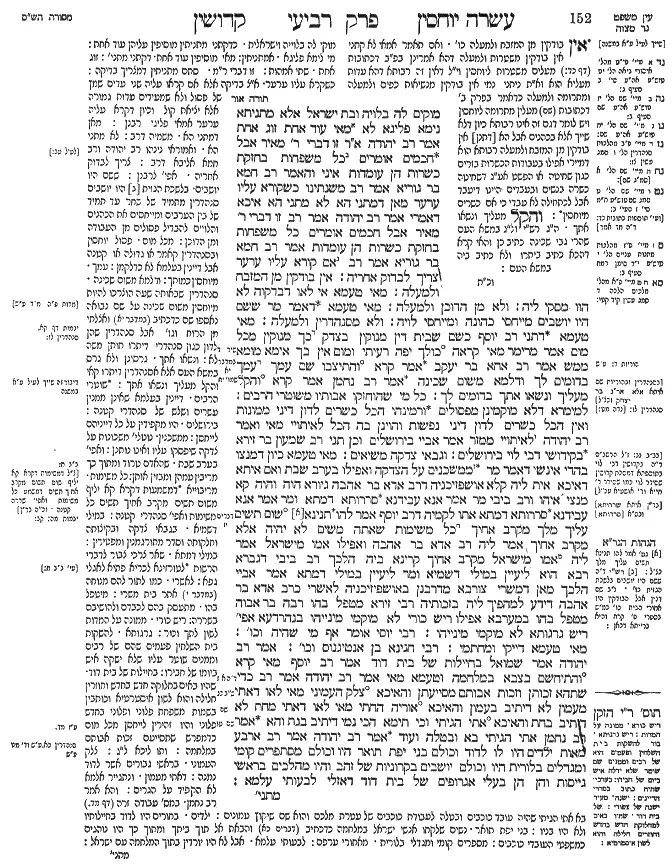
Kiddushin 76b - Guemara
מוקים לה בלויה ובת ישראל אלא מתניתא נימא פליגא לא מאי עוד אחת זוג אחת אמר רב יהודה א"ר זו דברי ר' מאיר אבל חכמים אומרים כל משפחות בחזקת כשרות הן עומדות איני והאמר רב חמא בר גוריא אמר רב משנתינו כשקורא עליו ערער מאן דמתני הא לא מתני הא איכא דאמרי אמר רב יהודה אמר רב זו דברי ר' מאיר אבל חכמים אומרים כל משפחות בחזקת כשרות הן עומדות אמר רב חמא בר גוריא אמר רב אם קורא עליו ערער צריך לבדוק אחריה אין בודקין מן המזבח ולמעלה מאי טעמא אי לאו דבדקוה לא הוו מסקי ליה ולא מן הדוכן ולמעלה מאי טעמא דאמר מר ששם היו יושבים מייחסי כהונה ומייחסי לויה ולא מסנהדרין ולמעלה מאי טעמא דתני רב יוסף כשם שבית דין מנוקין בצדק כך מנוקין מכל מום אמר מרימר מאי קראה (שיר השירים ד, ז) כולך יפה רעיתי ומום אין בך אימא מומא ממש אמר רב אחא בר יעקב אמר קרא (במדבר יא, טז) והתיצבו שם עמך עמך בדומים לך ודלמא משום שכינה אמר רב נחמן אמר קרא (שמות יח, כב) והקל מעליך ונשאו אתך בדומים לך כל מי שהוחזקו אבותיו משוטרי הרבים למימרא דלא מוקמינן מפסולים ורמינהו הכל כשרים לדון דיני ממונות ואין הכל כשרים לדון דיני נפשות והוינן בה הכל לאיתויי מאי ואמר רב יהודה לאיתויי ממזר אמר אביי בירושלים וכן תני רב שמעון בר זירא בקידושי דבי לוי בירושלים וגבאי צדקה משיאים מאי טעמא כיון דמנצו בהדי אינשי דאמר מר ממשכנים על הצדקה ואפילו בערב שבת ואם איתא דאיכא אית ליה קלא אושפזיכניה דרב אדא בר אהבה גיורא הוה והוה קא מנצי איהו ורב ביבי מר אמר אנא עבידנא סררותא דמתא ומר אמר אנא עבידנא סררותא דמתא אתו לקמיה דרב יוסף אמר להו תנינא (דברים יז, טו) שום תשים עליך מלך מקרב אחיך כל משימות שאתה משים לא יהיה אלא מקרב אחיך אמר ליה רב אדא בר אהבה ואפילו אמו מישראל אמר ליה אמו מישראל מקרב אחיך קרינא ביה הלכך רב ביבי דגברא רבא הוא ליעיין במילי דשמיא ומר ליעיין במילי דמתא אמר אביי הלכך מאן דמשרי צורבא מדרבנן באושפיזיכניה לאשרי כרב אדא בר אהבה דידע למהפיך ליה בזכותיה רבי זירא מטפל בהו רבה בר אבוה מטפל בהו במערבא אפילו ריש כורי לא מוקמי מינייהו בנהרדעא אפי' ריש גרגותא לא מוקמי מינייהו רבי יוסי אומר אף מי שהיה וכו' מאי טעמא דייקי ומחתמי רבי חנינא בן אנטיגנוס וכו' אמר רב יהודה אמר שמואל בחיילות של בית דוד אמר רב יוסף מאי קרא (דברי הימים א ז, מ) והתיחשם בצבא במלחמה וטעמא מאי אמר רב יהודה אמר רב כדי שתהא זכותן וזכות אבותם מסייעתן והאיכא (שמואל ב כג, לז) צלק העמוני מאי לאו דאתי מעמון לא דיתיב בעמון והאיכא (שמואל ב כג, לט) אוריה החתי מאי לאו דאתי מחת לא דיתיב בחת והאיכא (שמואל ב טו, יט) אתי הגיתי וכי תימא הכי נמי דיתיב בגת והא אמר רב נחמן אתי הגיתי בא ובטלה ועוד אמר רב יהודה אמר רב ארבע מאות ילדים היו לו לדוד וכולם בני יפת תואר היו וכולם מסתפרים קומי ומגדלים בלורית היו וכולם יושבים בקרוניות של זהב והיו מהלכים בראשי גייסות והן הן בעלי אגרופים של בית דוד דאזלי לבעותי עלמא
Comments from Rashi on Masechet Kiddushin Page 76b
מוקי לה בלוייה וישראלית . כדקתני מתניתין מוסיפין עליהן עוד אחת: מי לימא פליגא . אמתניתין: מאי מוסיפין עוד אחת . דקתני מתני': זוג אחת . שתי אמהות: זו דברי ר"מ . סתם מתניתין דמצריך בדיקה: כשקרא עליו ערער . א"צ בדיקה אלא אם קראו עליה שני עדים שמץ של פסול ולא שמעידים עדות גמורה אלא יציאת קול וכיון דקרא עליה ערער אמאי פליגי רבנן: מאן דמתני הא . משמיה דרב: לא מתני הא . ואמוראי נינהו רב יהודה ורב חמא אליבא דרב: צריך לבדוק אחריה . אפי' לרבנן: ששם היו יושבים . בלשכת הגזית היו יושבים סנהדרין מתמיד של שחר עד תמיד של בין הערבים ומייחסים את הכהנים והלויים להבדיל פסולים מן העבודה ומן הדוכן: מכל מום . פסול יוחסין ובסנהדרין קאמר או גדולה או קטנה אבל דיינין בעלמא לא כדלקמן: עמך . מיוחסין כמותך: ודלמא משום שכינה . סנהדרין שבאותה שעה הוצרכו להיות מיוחסין משום שכינה על שם נבואה נאספו שם כדכתיב (במדבר יא) ואצלתי מן הרוח וגו' אבל סנהדרין שהן לדון כגון סנהדרי דיתרו חותן משה לא: ונשאו אתך . גרסינן ולא גרס במשא העם אלא אסנהדרין דיתרו קאי והקל מעליך ונשאו אתך: שוטרי הרבים . דיינין בעלמא שאינן ממנין עשרים ושלש של סנהדרי קטנה: בירושלים . היו מקפידין על כל דייניהם לייחסן: ממשכנין . נוטלי' משכונות על צדקה שיפסקו עליו ואינו נותנן: ואפי' בערב שבת . שהאדם טרוד ומתוך כך מריבין עמהן ומבזין אותן: כל משימות . מריבוייא דמשמעות דקרא קא יליף משום תשים מקרב אחיך תשים כל משימות ואפי' סנהדרי קטנה: במילי דשמיא . בגבאי צדקה ובקיצותה וחלוקתה וסדר מתורגמנין ומפטירין: במילי דמתא . שאר צרכי צבור לדברי הרשות לטורזינא לכריא פתיא לאגלי גפא: לאשרי . כמו לתור להם מנוחה (במדבר י) אתר בית משרי: מיטפל בהו . מתעסק בהם לכבדם ולהושיבם בשררה: ריש כורי . ממונה על המדות לשון לתך וכור: גרגותא . להשקות בית השלחין פעמים שהם של רבים וממנים שוטר עליו שלא ישקה איש ביומו של חבירו: בחיילות של בית דוד . שהיו באים בחלוקה חדש בחדש וחוזרין חלילה והוא לשון איסטרטיא וכותבין בשמות משפחת פלוני ופלוני בחדש פלוני והיו זהירין לייחסן מכל מום כדמפרש שתסייעם זכות אבותם במלחמה: ותו ליכא . ל"ג: צלק העמוני . בראשי גבורים אשר לדוד נמנה: דאתי מעמון . ונתגייר אלמא לא הקפיד על הגרים: והא אמר רב נחמן . במס' עבודה זרה (דף מד.) בא אתי הגיתי שהיה עובד כוכבים ובטלה לעבודת כוכבים של עטרת מלכם והוא שם שיקוץ עמונים: ילדים . בחורים היו לדוד בחיילותיו ולא היו בניו: בני יפת תואר . נשים שלקחו אנשי ישראל במלחמה כדכתיב (דברים כא) והבאתה אל תוך ביתך ומתוך כך היו נוהגים כמשפטי העובדי כוכבים: מספרים קומי ומגדלי בלורית . מאחורי ערפם: לבעותי עלמא . אבל לא היו יורדין בתוך המלחמה עם ישראל:
Comments from Tosafot - Kiddushin 76b
אין בודקין מן המזבח ולמעלה כו' . ואם תאמר אמאי לא קתני אין בודקין משטרות ולמעלה דהא אמרינן בפ"ב דכתובות (דף כד:) מעלים משטרות ליוחסין וי"ל דאין זה רבותא דהא עדות מעליא הוא וא"ת ניתני נמי אין בודקין מנשיאות כפים ולמעלה ומתרומה ולמעלה כדאמר בפרק ב' דכתובות (שם) מעלין מתרומה ליוחסין ויש לומר דגם זה אינו רבותא כיון דלא שייך אלא בכהנים אבל הא [דתנן] אין בודקין מן המזבח ולמעלה רבותא הוא דמיירי אפילו בעבודות הכשרות בזרים כגון שחיטה או הפשט אע"ג דשחיטה כשרה בנשים ובעבדים היינו דיעבד אבל לכתחילה לא עבדי כי אם כשרים מיוחסין: והקל מעליך ונשאו אתך . ה"ג רש"י ול"ג במשא העם שהרי גבי שכינה כתיב כן והאי קרא דהכא כתיב ביתרו ולא כתיב ביה במשא העם:
Kiddushin 76b - Mishnah translated into english
he interprets his statement as referring to a Levite woman or an Israelite woman, about whom the mishna states that one must investigate one additional generation. Therefore, Rav Adda bar Ahava’s ruling accords with that of the mishna. But shall we say the baraita disputes the mishna? The Gemara rejects this: No, what is the meaning of the mishna’s phrase: One additional? It means one pair, i.e., two more mothers on each side.
Rav Yehuda says that Rav says: This mishna presents the statement of Rabbi Meir, but the Rabbis say: All families retain a presumptive status of fitness, and do not require investigation. The Gemara asks: Is that so, did Rav really say this? But doesn’t Rav Ḥama bar Gurya say that Rav says: Our mishna is referring only to a case when an objection was registered about the family concerning its lineage, but if no objection was registered, everyone agrees that the family retains its presumptive status of fitness. The Gemara answers: The one who taught this statement in the name of Rav did not teach that other statement.
There are those who say that this discussion occurred as follows: Rav Yehuda says that Rav says: This mishna presents the statement of Rabbi Meir, but the Rabbis say: All families retain presumptive status of fitness. Rav Ḥama bar Gurya says that Rav says: When an objection is registered about a family concerning its lineage, everyone agrees that he must investigate it. According to this version, there is no contradiction between these two complementary statements.
§ The mishna teaches that one need not investigate from the altar and above. The Gemara asks: What is the reason for this? The Gemara answers: If the Sanhedrin had not examined his lineage they would not have allowed him to ascend to the altar and perform the sacrificial rites. The mishna further teaches: Nor must one investigate from the platform and above. The Gemara asks: What is the reason? The Gemara answers: It is as the Master said in his description of the Temple chambers (Tosefta, Ḥagiga 2:4): For there in the Hewn Chamber those of the priesthood with unflawed lineage and the Levites of unflawed lineage sat and examined the lineage of everyone who came to serve in the Temple.
The mishna also taught: Nor must one investigate from the Sanhedrin and above. What is the reason there is no need to investigate further? The Gemara answers: It is as Rav Yosef taught that just as the court is clean in justice, so too, it is clean of any blemish, i.e., it does not include anyone of flawed lineage. Mareimar said: What is the verse from which it is derived? It states: “You are all fair, my love; and there is no blemish in you” (Song of Songs 4:7).
The Gemara asks: But perhaps you should say that this is referring to an actual blemish, that one who has a physical blemish may not be appointed to the Sanhedrin. Rav Aḥa bar Ya’akov said: It is not necessary to derive the halakha that one who has a physical blemish may not be appointed to the Sanhedrin from this verse, as the verse states with regard to the transfer of the Divine Spirit from Moses to the Elders: “That they may stand there with you” (Numbers 11:16), and the phrase “with you” is explained to mean: With similarity to you, teaching that the members of the Sanhedrin must be whole in body like Moses.
The Gemara rejects this proof: But perhaps those who were with Moses had to be free of any blemish due to the Divine Presence, which rested upon them, but this is not a requirement for judges on the Sanhedrin. Rav Naḥman said that the verse states: “So shall they make it easier for you and bear the burden with you” (Exodus 18:22). The phrase “with you” is explained to mean: With similarity to you, i.e., without blemish. This verse is referring to the appointment of regular judges, upon whom the Divine Presence does not rest, and teaches that all members of the Sanhedrin must be whole in body. The verse from Song of Songs teaches that they must be of unflawed lineage as well.
§ The mishna teaches: Anyone whose ancestors held public posts may marry into the priesthood without investigation. The Gemara asks: Is this to say that we do not establish officers and other public appointees from people with flawed lineage? And the Gemara raises a contradiction from the following statement: All are fit to judge cases of monetary law, but not all are fit to judge cases of capital law. And we discussed it: What does the word: All, serve to include? And Rav Yehuda says: It serves to include a mamzer, that he may judge cases of monetary law. This indicates that even a mamzer may occupy a public position. Abaye said: The mishna is referring to public officials in Jerusalem, where they were particular that all their judges should be of unflawed lineage. And Rav Shimon bar Zeira similarly taught in the baraita of Kiddushin from the school of Levi: It is referring to public officials in Jerusalem.
The mishna teaches: And anyone whose ancestors were charity collectors may marry into the priesthood without investigation. The Gemara asks: What is the reason for this? The Gemara answers: It is due to the fact that they quarrel with people, as the Master said: Those appointed to collect charity may forcibly take collateral for charity from those who have not fulfilled their obligations even on the eve of Shabbat, when people are preoccupied and rushed, leading to quarrels. And if it is so that there is a flaw in the lineage of the collector’s family, it would generate publicity through the quarrels that are an unavoidable aspect of his job.
The Gemara relates: Rav Adda bar Ahava’s host was the son of a convert, and he and Rav Beivai were quarreling. One said: I will perform the service of the city, i.e., I will be appointed to a position of authority, and one said: I will perform the service of the city. They came before Rav Yosef to decide between them. Rav Yosef said to them: We learned: “You shall set him king over you, whom the Lord your God shall choose; one from among your brothers” (Deuteronomy 17:15). The repetition of the verb “set” in the verse [som tasim] indicates: All appointments that you appoint may be only from among your brothers. Therefore, a convert may not serve in any official position.
Rav Adda bar Ahava said to Rav Yosef: And does this halakha apply even if the mother of the person in question is born Jewish? In other words, does this apply to one whose father is a convert? Rav Yosef said to him: If his mother is born Jewish, the words: “From among your brothers” are said about him. Therefore, now that it has been determined that this person’s mother was born Jewish and that he is fit to serve a public role, Rav Beivai, who is a great man in Torah learning, should oversee the matters of Heaven, i.e., the public issues that involve the performance of mitzvot; and the Master, Rav Adda bar Ahava’s host, should oversee the other matters of the city. Abaye said, as a moral of the story: Therefore, if one has a Torah scholar as a guest, let him host a person such as Rav Adda bar Ahava, who knows how to plead in his favor, as it was the argument of Rav Adda bar Ahava that led to his host’s appointment.
The Gemara relates: Rabbi Zeira would deal with converts and assign them to positions of authority. Similarly, Rabba bar Avuh would deal with them. In the West, Eretz Yisrael, they would not establish even an appointee over measurements from them, as they extended the prohibition against appointing a convert as a king to include all positions of power. In Neharde’a, they would not establish even an appointee over irrigation of the city fields from them.
The mishna teaches that Rabbi Yosei says: Even the descendants of one who had signed as a witness in the Old Court of Tzippori does not need to have their lineage investigated. The Gemara explains: What is the reason for this? The Gemara answers: In that city, they would first examine witnesses and only afterward have them sign. Consequently, anyone who signed as a witness in Tzippori must certainly have been of unflawed lineage.
The mishna teaches that Rabbi Ḥanina ben Antigonus says: Even the descendants of one who was written in the army list of the Jewish king does not have their lineage investigated. Rav Yehuda says that Shmuel says: The reference is to one who was written in the list of the military troops of the House of David, who were all of pure lineage. Rav Yosef said: What is the verse from which it is derived? The phrase is: “Reckoned by lineage for service in war” (I Chronicles 7:40). The Gemara asks: And what is the reason for this requirement that they be of unflawed lineage? Rav Yehuda says that Rav says: It is in order that their merit and the merit of their ancestors will help them in battle.
The Gemara asks: But isn’t there Zelek the Ammonite, one of David’s warriors (II Samuel 23:37); what, is it not indicated that he was a convert who came from Ammon? The Gemara rejects this: No, his name indicates only that he dwelled in Ammon, but he was born a Jew. The Gemara asks: But isn’t there Uriah the Hittite (II Samuel 23:39); what, is it not indicated that he came from Heth? The Gemara rejects this: No, his name indicates only that he dwelled in Heth.
The Gemara further asks: But isn’t there Ittai the Gittite (II Samuel 15:19)? And if you would say that so too his name indicates that he dwelled in Gath but was born a Jew, but doesn’t Rav Naḥman say, to explain how David could make use of the crown of the idol of Ammon in apparent violation of the prohibition against deriving benefit from idolatry: Ittai the Gittite came and nullified its status of an idol. The halakha is that only a gentile can nullify an idol, by doing something degrading to it. This indicates that Ittai the Gittite must have been a gentile.
The Gemara again questions the statement that all of the soldiers in David’s army were of unflawed lineage. And further, Rav Yehuda says that Rav says: David had four hundred youths in his camp, all sons of beautiful women, i.e., born to women captured in war, who were therefore gentiles, all of whom had their hair cut in the komei style or who grew their hair in a gentile hairstyle [belorit] on the back of their heads, and all of them sat in gold carts [bikroniyyot] and would march at the head of troops in David’s army; and these very ones were the strong men of the House of David, i.e., David would rely on their strength. This states that David’s army included men of flawed lineage. The Gemara answers: These four hundred youths did not fight in the battles, but rather they would go forth in front of the troops in order to frighten everyone.
Traduction : The William Davidson digital edition of the Koren Noé Talmud, with commentary by Rabbi Adin Even-Israel Steinsaltz.