 Talmud Bavli
The learning on the whole site is dedicated : L'ilui Nishmat Ledicia bat David Banoun
The learning on the whole site is dedicated : For the success of Elyahou ben H'anna & family
The learning on the whole site is dedicated : L'ilui Nishmat אסתר בת חיים
Kiddushin 42b : Youtube
Daf TubeYoutube
2 video classes :
Kiddushin Page 42b
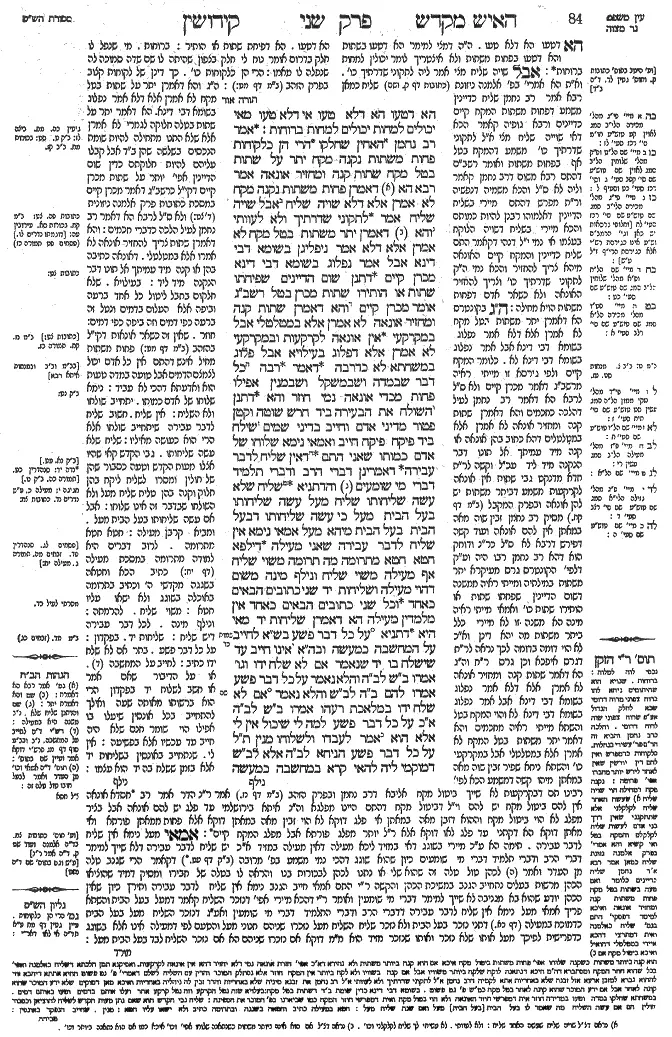
Kiddushin 42b - Guemara
הא דטעו הא דלא טעו אי דלא טעו מאי יכולים למחות יכולים למחות ברוחות אמר רב נחמן האחין שחלקו הרי הן כלקוחות פחות משתות נקנה מקח יתר על שתות בטל מקח שתות קנה ומחזיר אונאה אמר רבא הא דאמרן פחות משתות נקנה מקח לא אמרן אלא דלא שויה שליח אבל שויה שליח אמר לתקוני שדרתיך ולא לעוותי והא דאמרן יתר משתות בטל מקח לא אמרן אלא דלא אמר ניפליגן בשומא דבי דינא אבל אמר נפלוג בשומא דבי דינא מכרן קיים דתנן שום הדיינים שפיחתו שתות או הותירו שתות מכרן בטל רשב"ג אומר מכרן קיים והא דאמרן שתות קנה ומחזיר אונאה לא אמרן אלא במטלטלי אבל במקרקעי אין אונאה לקרקעות ובמקרקעי לא אמרן אלא דפלוג בעילויא אבל פלוג במשחתא לא כדרבה דאמר רבה כל דבר שבמדה ושבמשקל ושבמנין אפילו פחות מכדי אונאה נמי חוזר והא דתנן השולח את הבעירה ביד חרש שוטה וקטן פטור מדיני אדם וחייב בדיני שמים שילח ביד פיקח פיקח חייב ואמאי נימא שלוחו של אדם כמותו שאני התם דאין שליח לדבר עבירה דאמרינן דברי הרב ודברי תלמיד דברי מי שומעים והדתניא שליח שלא עשה שליחותו שליח מעל עשה שליחותו בעל הבית מעל כי עשה שליחותו דבעל הבית בעל הבית מיהא מעל אמאי נימא אין שליח לדבר עבירה שאני מעילה דילפא חטא חטא מתרומה מה תרומה משוי שליח אף מעילה משוי שליח ונילף מינה משום דהוי מעילה ושליחות יד שני כתובים הבאים כאחד וכל שני כתובים הבאים כאחד אין מלמדין מעילה הא דאמרן שליחות יד מאי היא דתניא (שמות כב, ח) על כל דבר פשע בש"א לחייב על המחשבה כמעשה ובה"א אינו חייב עד שישלח בו יד שנאמר אם לא שלח ידו וגו' אמרו ב"ש לב"ה והלא נאמר על כל דבר פשע אמרו להם ב"ה לב"ש והלא נאמר (שמות כב, י) אם לא שלח ידו במלאכת רעהו אמרו ב"ש לב"ה א"כ על כל דבר פשע למה לי שיכול אין לי אלא הוא אמר לעבדו ולשלוחו מנין ת"ל על כל דבר פשע הניחא לב"ה אלא לב"ש דמוקמי ליה להאי קרא במחשבה כמעשה
Comments from Rashi on Masechet Kiddushin Page 42b
הא דטעו . הא דפיחת שתות או הותיר: ברוחות . מי שנפל לו חלק בדרום אומר נוח לי חלק בצפון שהיתה לו שם שדה סמוכה לה שנפלה לו מאמו: הרי הן כלקוחות כו' . כך דינן של לקוחות קצוב בפרק הזהב (ב"מ דף מט:): ה"ג והא דאמרן יתר על שתות בטל מקח לא אמרן אלא דלא אמר נפלוג בשומא דבי דינא. הא דאמר יתר על שתות בטלה חלוקה לגמרי לא אמרן אלא שלא התנו מתחילה להיות שומת הנכסים בשלשה שהן ב"ד אבל קבלו עליהם להיות חלוקתם כדין שום הדיינין אפי' יותר על שתות מכרן קיים דקי"ל כרשב"ג דאמר מכרן קיים במסכת כתובות פרק אלמנה ניזונית (ד' צט:) ולא ס"ל לרבא הא דאמר רב נחמן לעיל הלכה כדברי חכמים: והא דאמרן שתות צריך להחזיר אונאה לא אמרו אלא במטלטלי . דאונאה כתיבה בהן או קנה מיד עמיתך אל תונו דבר הנקנה מיד ליד: בעילויא . שלא חלקום בחבל ליטול כל אחד ברעה וביפה אלא העלום בדמים ונטל זה ברעה כפי דמים וזה ביפה כפי דמים: חוזר . שאין זה כשאר אונאות דקי"ל בהזהב (ב"מ דף מט:) פחות משתות מחיל אינש דהתם אין כל אדם יכול לצמצם הדמים אבל טועה במדה טעות הוא ואדעתא דהכי לא עביד: נימא שלוחו של אדם כמותו . יתחייב שולחו ולא השליח: אין שליח . חשוב שליח לדבר עבירה שיתחייב שולחו אלא הרי הוא כעושה מאיליו: שליח שלא עשה שליחותו . גבי הקדש קאי שהיו אצלו מעות הקדש וטעה כסבור שהן של חולין ומסרו לשליח ליקח בהן חלוק וקנה בהן טלית שליח מעל ולא השולחו שבדבר זה אינו שלוחו: אבל אם עשה שליחותו בעל הבית מעל . ומביא קרבן מעילה: חטא חטא מתרומה . לרוב דברים היא למודה מתרומה במסכת מעילה (דף יח:) כתיב הכא וחטאה בשגגה מקדשי ה' וכתיב בתרומה באוכלה בשוגג ולא ישאו עליו חטא: משוי שליח . להרמתה: ונילף מינה . לכל דבר עבירה דיש שליח: שליחות יד . בפקדון: על כל דבר פשע . בתר אם לא שלח ידו כתיב: לחייב על המחשבה . או על הדיבור שאם אמר או חשב לשלוח יד בפקדון הרי הוא ברשותו מאותה שעה ואילך להתחייב בכל אונסין שיעלו בו אפילו הוי שומר חנם שלא היה חייב עד עכשיו אלא בפשיעה: אין לי . שנתחייב באונסין בשליחות יד אלא בזמן ששלח בה יד הוא עצמו:
Comments from Tosafot - Kiddushin 42b
הא דטעו הא דלא טעו . ה"ה דמצי למימר הא דטעו בשתות והא דטעו בפחות משתות ולא איצטריך לומר יכולין למחות ברוחות: אבל שויה שליח מצי אמר ליה לתקוני שדרתיך כו' . וא"ת הא אמרי' בפ' אלמנה ניזונת (כתובות דף ק. ושם) שליח כמאן רבא אמר רב נחמן שליח כדיינין משמע דפחות משתות המקח קיים כדיינים ורבא גופיה קאמר הכא דאי שוייה שליח מצי א"ל לתקוני שדרתיך כו' משמע דהמקח בטל אף בפחות משתות ואומר רשב"ם דהתם רבא משום דרב נחמן קאמר וליה לא ס"ל והכא משמיה דנפשיה ור"ת מפרש דהתם מיירי בשליח הדיינין דאלמוהו רבנן להיות כמותם והכא מיירי בשליח דשויה הלוקח בעצמו אי נמי י"ל דנהי דקאמר התם שליח כדיינין והמקח קיים האונאה מיהא צריך להחזיר והכא נמי ה"ק לתקוני שדרתיך כו' וצריך להחזיר האונאה ולא כשאר אדם דפחות משתות הויא מחילה: ה"ג בקונטרס הא דאמרן יתר משתות בטל מקח לא אמרן אלא דלא אמר נפלוג בשומא דבי דינא אבל אמר נפלוג בשומא דבי דינא לא. כלומר המקח קיים ולפי גירסא זו מייתי ראיה מרשב"ג דאמר מכרן קיים ולא ס"ל לרבא הא דאמר רב נחמן לעיל דהלכה כחכמים והא דאמרן שתות קנה ומחזיר אונאה לא אמרן אלא במטלטלים דהא כתוב בהן אונאה או קנה מיד עמיתך אל תונו דבר הנקנה מיד ליד עכ"ל וקשה לר"ת חדא מדנקט גבי שתות אין אונאה לקרקעות משמע דביתר משתות יש להן אונאה ובפרק המקבל (ב"מ דף קח.) מסיק רב נחמן זבין שוה מאה במאתן אין להם אונאה ועוד קשה דפירש דרבא לא ס"ל כר"נ ודוחק הוא דהא רב נחמן רבו היה וע"ק דלפי' הקונטרס גרס מעיקרא יתר משתות במילתיה ומייתי ראיה ממשנה דשום הדיינין שפחתו שתות או הותירו שתות כו' ואמאי מייתי ראיה מינה הא משנה זו לא מיירי כלל ביתר משתות מה יהא דינן וא"כ לא הוי דומה בדומה לכך נראה לר"ת דגרס איפכא וכן גרס ר"ח וה"ג הא דאמר שתות קנה ומחזיר אונאה לא אמרן אלא דלא אמר נפלוג בשומא דבי דינא אבל אמר נפלוג בשומא דבי דינא לא והוי המקח בטל והשתא מייתי ראיה מחכמים והא דאמר יתר משתות בטל המקח לא אמרן אלא במטלטלי אבל במקרקעי כו' והשתא ניחא שפיר זבין שוה מאה במאתן מיהו קשה דמשמע הכא לפי' רבינו תם דבקרקעות לא שייך ביטול מקח אליבא דרב נחמן ובפרק הזהב (ב"מ דף נז.) אמר ר"נ הדר אמר רב. חסדא אונאה אין להם ביטול מקח יש להם וי"ל דביטול מקח דהתם היינו מפלגא וה"נ איתא בירושלמי עד פלג יש להם אונאה אבל בציר מפלג לא הוי ביטול מקח וההוא דזבן מאה במאתן אי פלג דוקא לא הוי זבין מאה במאתן דוקא אלא פחות ממאתן פורתא ואי מאתן דוקא הא דקתני עד פלג לאו דוקא אלא ר"ל יותר מפלג פורתא אבל מפלג המקח קיים: אמאי מעל נימא אין שליח לדבר עבירה . תימה הא ע"כ מיירי בשוגג דאי במזיד ליכא מעילה דאין מעילה במזיד א"כ יש שליח לדבר עבירה דלא שייך למימר דברי הרב ודברי תלמיד דברי מי שומעים כיון שהוא שוגג דהכי נמי משמע בפ' מרובה (ב"ק דף עט:) דקאמר הרי שגנב טלה מן העדר ואמר לכהן טול טלה זה שהוא שלי או נתנו לכהן לבכורות בנו והראה לו בטלה של חבירו ומסיק דמיד שהוציאו הכהן מרשות בעלים נתחייב הגנב במשיכת הכהן והקשה ר"י התם אמאי חייב הגנב נימא אין שליח לדבר עבירה ותירץ כיון שאין הכהן יודע שהוא בא מגניבה לא שייך למימר דברי מי שומעין ואומר ר"י דהכא מיירי אפי' דנזכר השליח קאמר דמעל בעל הבית והשתא פריך אמאי מעל נימא אין שליח לדבר עבירה דדברי הרב ודברי התלמיד דברי מי שומעין ואע"ג דנזכר השליח מעל בעל הבית כדמוכח במעילה (דף כא.) דתני נזכר בעל הבית ולא נזכר שליח השליח מעל נזכרו שניהם חנוני מעל והטעם לפי דמעילה אינו אלא בשוגג כדפרישית לפיכך מעל אותו שלא נזכר ואותו שנזכר מזיד הוא מ"מ דוקא אם נזכרו שניהם הא אם נזכר השליח לבד בעל הבית מעל:
Kiddushin 42b - Mishnah translated into english
In this case, where Rav Naḥman ruled that their transaction is void, in accordance with the Rabbis, the court erred by one-sixth. But in that case, where Rav Naḥman ruled that the orphans cannot protest when they grow up, they did not err by one-sixth. The Gemara asks: If Rav Naḥman’s ruling that the orphans cannot protest is referring to a case where they did not err by one-sixth, why did Shmuel say that they can later protest; what is the nature of their protest? The Gemara answers: They can protest with regard to the locations. One of the orphans can contend that he prefers property in a different location than he was given.
§ Rav Naḥman says: With regard to brothers who divided property received as an inheritance, they are considered like they are purchasers from each other, and the halakhot of fraud are like those for regular transactions: If there was an error of less than one-sixth in the distribution, the transaction is acquired, i.e., valid. If it was more than one-sixth, the transaction is void. If the error was precisely one-sixth, it is acquired, and the one who received more than his fair share must return the amount of the fraud.
Rava says: That which we said, that with regard to less than one-sixth the transaction is valid and the item is acquired, we said only in a case where the brother receiving a smaller share did not appoint an agent to deal with the distribution on his behalf. But if the brother receiving a smaller share appointed an agent, this halakha does not apply, as the one who appointed the agent can say: I sent you to act for my benefit and not to my detriment. The agent’s right to act in this capacity did not extend to a case where it was to the detriment of the one who appointed him.
Rava continues: And that which we said, that if the brothers erred by more than one-sixth the transaction is void, we said only when the brother receiving a smaller share did not say: Let us divide the estate by an appraisal of the court. But if he said: Let us divide it by an appraisal of the court, the transaction is valid, as we learned in a mishna (Ketubot 99b): This is the halakha with regard to the appraisal of an article’s value in order to sell it, as done by the judges: In a case where they decreased the price by one-sixth of its market value or added one-sixth to its market value, their sale is void. Rabban Shimon ben Gamliel says: Their sale is valid.
Rava continues: And that which we said, that if the brothers erred by one-sixth the one receiving a larger share acquired it and he must return the amount of the fraud, we said only with regard to movable property. But with regard to land, the halakha is that there is no fraud with regard to land. And with regard to land, we said that the halakha of fraud does not apply only when they divided it according to the value of the land. But if they divided it by measure and erred in the measurement, we do not say that there is no fraud. This is in accordance with the statement of Rabba, as Rabba said: Any matter that is according to measure, or according to weight, or according to number, if it turned out to be in error, even if the error was less than the amount that constitutes fraud, it is also returned.
§ The Gemara returns to discuss various aspects of agency. And there is a difficulty from that which we learned in a mishna (Bava Kamma 59b): In the case of one who sends an item that causes a fire in the hands of a deaf-mute, an imbecile, or a minor, the one who sent it is exempt according to human laws but liable according to the laws of Heaven. If he sent it in the hands of a halakhically competent person, only the halakhically competent person is liable.
But why is the halakhically competent person liable? Let us say that the legal status of a person’s agent is like that of himself. The Gemara answers: There it is different, as there is no agency for transgression, as we say: When there is a conflict between the words of the Master, i.e., God, and the words of the student, i.e., a human being, whose words should be listened to? Consequently, the agent is considered to have acted of his own accord, and the one who sent him bears no responsibility.
The Gemara comments: And there is a difficulty from that which is taught in a baraita with regard to the halakhot of misuse of consecrated property: In the case of an agent who did not perform his agency but deviated from the instructions of the one who appointed him and made use of consecrated property, the agent has misused consecrated property and is liable to bring the guilt-offering for that sin. In the case of an agent who performed his agency, the owner has misused consecrated property and is liable to bring the offering. The Gemara asks: The baraita states that when the agent performed the agency of the owner, the owner has in any event misused consecrated property. Why? Let us say that there is no agency for transgression.
The Gemara answers: The case of misuse of consecrated property is different, as it is derived by means of a verbal analogy of “sin” in this case and “sin” from teruma, as the verse states: “And sin through error” (Leviticus 5:15), with regard to misuse of consecrated property, and it states: “Lest they bear sin for it” (Leviticus 22:9) with regard to teruma: Just as with teruma one can appoint an agent, so too with misuse of consecrated property one can appoint an agent, although the latter is a transgression.
The Gemara suggests: And let us derive a principle from misuse of consecrated property, that one can appoint an agent even to perform a transgression. The Gemara explains: This is not done because misuse of consecrated property and misappropriation of a deposit, i.e., a bailee using an item that was deposited with him, are two verses that come as one, i.e., they teach the same matter, that an agent can be appointed to perform a transgression. And any two verses that come as one do not teach their common aspect to apply to other cases. The Gemara clarifies this statement: The verse pertaining to misuse of consecrated property is that which we said, but what is the verse pertaining to misappropriation?
This is as it is taught in a baraita: The Torah uses the inclusive term “every” with regard to one suspected of misappropriating a deposit: “For every matter of trespass” (Exodus 22:8). Beit Shammai say: This inclusive term “every” serves to render one liable for speech and thought, i.e., intent to misappropriate, like action. And Beit Hillel say: One is liable only if he actually misappropriates it, as it is stated: “Whether he has not put his hand unto his neighbor’s goods” (Exodus 22:7).
Beit Shammai said to Beit Hillel: But isn’t it stated: “For every matter of trespass,” which indicates that one is liable without actually misappropriating the deposit? Beit Hillel said to Beit Shammai: But isn’t it stated: “Whether he has not put his hand unto his neighbor’s goods”? Beit Shammai said to Beit Hillel: If so, if one is liable only for actual misappropriation, why do I need: “For every matter of trespass”? Beit Hillel replied: It is necessary, as one might have thought that I have derived liability only if he himself misappropriated it; from where do I derive that he is liable also if he told his slave or his agent to do so? The verse states: “For every matter of trespass,” to teach that the bailee is liable if one acting on his behalf misappropriates the deposit.
The Gemara explains further: This answer, that misuse of consecrated property and misappropriation are two verses that come to teach the same matter, works out well according to the opinion of Beit Hillel. But according to the opinion of Beit Shammai, who establish this verse as rendering one liable for thought like action and do not learn from here that the bailee is liable if one acting on his behalf misappropriates the deposit,
Traduction : The William Davidson digital edition of the Koren Noé Talmud, with commentary by Rabbi Adin Even-Israel Steinsaltz.