 Talmud Bavli
The learning on the whole site is dedicated : L'ilui Nishmat אליעזר בן רחל
The learning on the whole site is dedicated : L'ilui Nishmat רינה בת לדיסיה
The learning on the whole site is dedicated : L'ilui Nishmat Amram ben Itshak Loubaton
Kiddushin 32b : Youtube
Daf TubeYoutube
2 video classes :
Kiddushin Page 32b
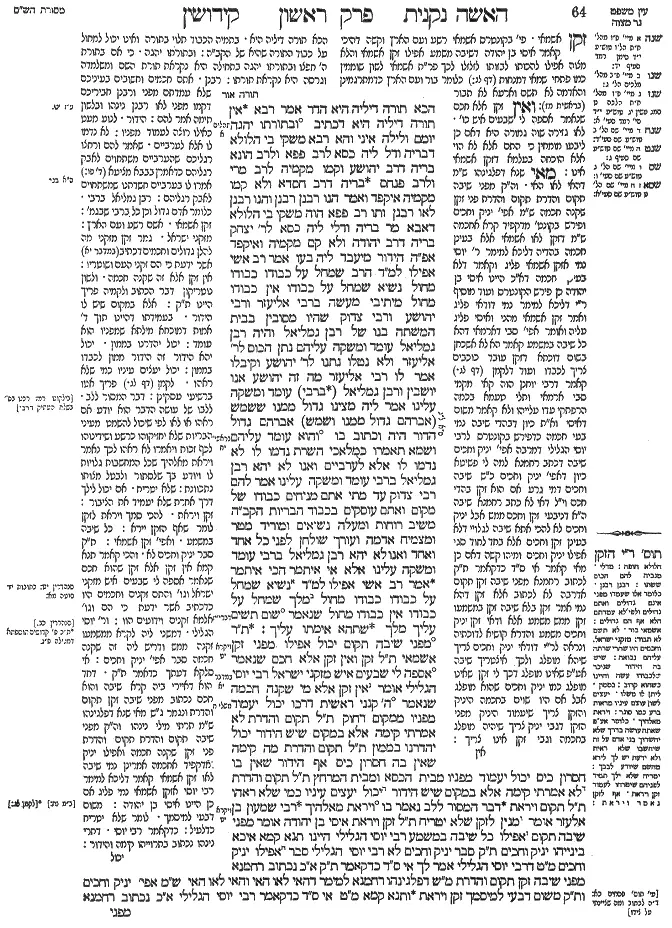
Kiddushin 32b - Guemara
הכא תורה דיליה היא הדר אמר רבא אין תורה דיליה היא דכתיב (תהלים א, ב) ובתורתו יהגה יומם ולילה איני והא רבא משקי בי הלולא דבריה ודל ליה כסא לרב פפא ולרב הונא בריה דרב יהושע וקמו מקמיה לרב מרי ולרב פנחס בריה דרב חסדא ולא קמו מקמיה איקפד ואמר הנו רבנן רבנן והנו רבנן לאו רבנן ותו רב פפא הוה משקי בי הלולא דאבא מר בריה ודלי ליה כסא לר' יצחק בריה דרב יהודה ולא קם מקמיה ואיקפד אפ"ה הידור מיעבד ליה בעו אמר רב אשי אפילו למ"ד הרב שמחל על כבודו כבודו מחול נשיא שמחל על כבודו אין כבודו מחול מיתיבי מעשה ברבי אליעזר ורבי יהושע ורבי צדוק שהיו מסובין בבית המשתה בנו של רבן גמליאל והיה רבן גמליאל עומד ומשקה עליהם נתן הכוס לר' אליעזר ולא נטלו נתנו לר' יהושע וקיבלו אמר לו רבי אליעזר מה זה יהושע אנו יושבין ורבן גמליאל (ברבי) עומד ומשקה עלינו אמר ליה מצינו גדול ממנו ששמש (אברהם גדול ממנו ושמש) אברהם גדול הדור היה וכתוב בו (בראשית יח, ח) והוא עומד עליהם ושמא תאמרו כמלאכי השרת נדמו לו לא נדמו לו אלא לערביים ואנו לא יהא רבן גמליאל ברבי עומד ומשקה עלינו אמר להם רבי צדוק עד מתי אתם מניחים כבודו של מקום ואתם עוסקים בכבוד הבריות הקב"ה משיב רוחות ומעלה נשיאים ומוריד מטר ומצמיח אדמה ועורך שולחן לפני כל אחד ואחד ואנו לא יהא רבן גמליאל ברבי עומד ומשקה עלינו אלא אי איתמר הכי איתמר אמר רב אשי אפילו למ"ד נשיא שמחל על כבודו כבודו מחול מלך שמחל על כבודו אין כבודו מחול שנאמר (דברים יז, טו) שום תשים עליך מלך שתהא אימתו עליך ת"ר (ויקרא יט, לב) מפני שיבה תקום יכול אפילו מפני זקן אשמאי ת"ל זקן ואין זקן אלא חכם שנאמר (במדבר יא, טז) אספה לי שבעים איש מזקני ישראל רבי יוסי הגלילי אומר אין זקן אלא מי שקנה חכמה שנאמר (משלי ח, כב) ה' קנני ראשית דרכו יכול יעמוד מפניו ממקום רחוק ת"ל תקום והדרת לא אמרתי קימה אלא במקום שיש הידור יכול יהדרנו בממון ת"ל תקום והדרת מה קימה שאין בה חסרון כיס אף הידור שאין בו חסרון כיס יכול יעמוד מפניו מבית הכסא ומבית המרחץ ת"ל תקום והדרת לא אמרתי קימה אלא במקום שיש הידור יכול יעצים עיניו כמי שלא ראהו ת"ל תקום ויראת דבר המסור ללב נאמר בו (ויקרא יט, יד) ויראת מאלהיך רבי שמעון בן אלעזר אומר מנין לזקן שלא יטריח ת"ל זקן ויראת איסי בן יהודה אומר מפני שיבה תקום אפילו כל שיבה במשמע רבי יוסי הגלילי היינו תנא קמא איכא בינייהו יניק וחכים ת"ק סבר יניק וחכים לא רבי יוסי הגלילי סבר אפילו יניק וחכים מ"ט דרבי יוסי הגלילי אמר לך אי ס"ד כדקאמר ת"ק א"כ נכתוב רחמנא מפני שיבה זקן תקום והדרת מ"ש דפלגינהו רחמנא למימר דהאי לאו האי והאי לאו האי ש"מ אפי' יניק וחכים ות"ק משום דבעי למיסמך זקן ויראת ותנא קמא מ"ט אי ס"ד כדקאמר רבי יוסי הגלילי א"כ נכתוב רחמנא
Comments from Rashi on Masechet Kiddushin Page 32b
הכא תורה דיליה היא . בתמיה הכבוד תלוי בתורה ואינו יכול למחול על כבוד התורה שהיא של הקב"ה: ובתורתו יהגה . כי אם בתורת ה' חפצו ובתורתו יהגה בתחילה היא נקראת תורת השם ומשלמדה וגרסה היא נקראת תורתו: רבנן . אתם חכמים וחשובים בעיניכם שלא עמדתם מפני ורבנן חביריכם דקמו מפני לאו רבנן נינהו ובלשון תימה אמר להם: הידור . לנוע מעט כאילו רוצה לעמוד מפניו: לא נדמו לו אלא לערביים . שאמר להם ורחצו רגליכם שהערביים משתחוים לאבק רגליהם כדאמרן בבבא מציעא (ד' פו:) אמרו לו בערביים חשדתנו שמשתחוים לאבק רגליהם: רבן גמליאל ברבי . כלומר אדם גדול וכן כל ברבי שבגמ': אי סלקא דעתך כדאמר ת"ק . דחד הוא דאיירי ביה קרא שיבה והוא חכם נכתוב מפני שיבה זקן תקום והדרת ונגמר ג"ש מאי שנא דפלגינהו ש"מ תרתי מילי נינהו וה"ק מפני שיבה תקום והדרת תקום והדרת פני זקן שקנה חכמה ואפילו יניק ומדקפיד אחכמה אמרינן נמי שיבה לאו זקן אשמאי קאמר דליכא למימר רבי יוסי אזקן אשמאי נמי פליג אם כן היינו איסי בן יהודה: זקן אשמאי . אשם רשע ועם הארץ: מזקני ישראל . גמר זקן מזקני מה להלן גדולים וחכמים דכתיב (במדבר יא) אשר ידעת כי הם זקני העם ושוטריו: אין זקן אלא זה שקנה חכמה . ולשון נוטריקון דבר הכתוב ולקמיה פריך היינו ת"ק: אלא במקום שיש לו הידור . בעמידתו דהיינו תוך ד' אמות דמוכחא מילתא שמפניו הוא עומד: יכול יהדרנו בממון . יכול יהא הידור זה הידור ממון לכבדו בממון: יכול יעצים עיניו כמי שלא ראהו . לקמן (קידושין דף לג.) פריך אטו ברשיעי עסקינן: דבר המסור ללב . ללבו של עושה הדבר הוא יודע אם ראהו או לאו לפי שיכול להשמט מעיני הבריות שלא יחזיקוהו כרשע ושידינוהו לכף זכות ויאמרו לא ראהו לכך נאמר ויראת מאלהיך שכל המחשבות גלויות לו ויודע בך שלסתור ולבטל מצותו נתכוונת: שלא יטריח . אם יכול לילך דרך אחרת שלא יעמיד את הציבור: זקן ויראת . להכי סמך ויראת לזקן לומר שאף הזקן יירא: כל שיבה במשמע . ואפי' זקן אשמאי: ת"ק סבר יניק וחכים לא . והכי קאמר תנא קמא אין זקן אלא זקן שהוא חכם שנאמר אספה לי שבעים איש מזקני ישראל וגו' והתם זקנים וחכמים היו כדכתיב אשר ידעת כי הם וגו' אלמא זקנים וידועים הוו: ור' יוסי הגלילי . דמשני ליה לקרא ממשמעו זקנה ממש ודריש ליה זה שקנה חכמה סבר אפי' יניק וחכים: אי סלקא דעתך כדאמר ת"ק . דחד הוא דאיירי ביה קרא שיבה והוא חכם נכתוב מפני שיבה זקן תקום והדרת ונגמר ג"ש מאי שנא דפלגינהו ש"מ תרתי מילי נינהו וה"ק מפני שיבה תקום והדרת תקום והדרת פני זקן שקנה חכמה ואפילו יניק ומדקפיד אחכמה אמרינן נמי שיבה לאו זקן אשמאי קאמר דליכא למימר רבי יוסי אזקן אשמאי נמי פליג אם כן היינו איסי בן יהודה: משום דבעי למיסמך . לומר שלא יטריח כדלעיל: כדקאמר רבי יוסי . דתרי נינהו נכתוב בתרוייהו קימה והידור.
Comments from Tosafot - Kiddushin 32b
מאי שנא דפלגינהו ש"מ דהאי לאו האי . וה"ק מפני שיבה תקום והדרת תקום והדרת פני זקן שקנה חכמה ש"מ אפי' יניק וחכים ופירש בקונט' מדקפיד קרא אחכמה ש"מ דזקן לאו אשמאי אלא בעינן חכמה בהדיה דליכא למימר ר' יוסי נמי אזקן אשמאי פליג וקאמר דלא בעינן חכמה דא"כ היינו איסי בן יהודה כן פירש הקונטרס ועוד מוסיף ר"י דליכא למימר נמי דודאי פליג ואמר זקן אשמאי מהני ואיסי פליג עליה ואומר אפי' סבי דארמאי דהא כל שיבה במשמע קאמר הא לא אשכחן בשום דוכתא דזקן עובד כוכבים צריך לכבדו ועוד דלקמן (קידושין דף לג.) קאמר דרבי יוחנן הוה קאי מקמי סבי ארמאי ותלי טעמא בכמה הרפתקי עדו עלייהו ולא קאמר משום דאיסי וא"ת כיון דבהדי שיבה נמי בעי חכמה כדפירש בקונטרס לרבי יוסי הגלילי דמרבה אפי' יניק וחכים שיבה דכתב רחמנא למה לי פשיטא כיון דאפי' יניק וחכים כ"ש שיבה וחכים דמי גרע אם הוא זקן בהדי חכם וי"ל דאי לא כתב רחמנא שיבה ה"א דניבעי זקן וחכם ממש אבל יניק וחכים לא להכי אתא שיבה לגלויי דלא בעינן זקן וחכים אלא בחד לחוד סגי אפילו יניק וחכים ומיהו קשה דאם כן מאי קאמר אי ס"ד כדקאמר ת"ק לכתוב רחמנא מפני שיבה זקן תקום אדרבה לא לכתוב אלא זקן דהא נמי אמר זקן בלא שיבה זקן במשמעו זקן ממש משמע אלא ודאי זקן יניק וחכים משמע והדרא קושיא לדוכתיה ונראה לר"י דודאי יניק וחכים צריך שיהא מופלג ולכך איצטריך שיבה אע"פ שאינו מופלג דכך לי זקן שאינו מופלג כמו יניק וחכים שהוא מופלג אבל אם היו שוים בחכמה היניק והזקן צריך שיעמוד היניק מפני הזקן דגבי יניק צריך שיהיה מופלג בחכמה וגבי זקן אינו צריך: זקן אשמאי . פי' בקונטרס אשמאי רשע ועם הארץ וקשה דהיכי קאמר איסי בן יהודה דשיבה משמע אפילו זקן אשמאי והלא מצוה אפילו להכותו לבזותו לזלזלו לכך פר"ת אשמאי לשון שוממין כמו פתחי שמאי דמנחות (דף לג:) כלומר בור ועם הארץ כדמתרגמינן והאדמה לא תשם וארעא לא תבור (בראשית מז): ואין זקן אלא חכם שנאמר אספה לי שבעים איש כו' . לאו גזירה שוה גמורה היא דאם כן ליבעו מומחין כי התם אלא לא הוי אלא הוכחה בעלמא דזקן אשמאי אינו: מאי שנא דפלגינהו ש"מ דהאי לאו האי. וה"ק מפני שיבה תקום והדרת תקום והדרת פני זקן שקנה חכמה ש"מ אפי' יניק וחכים ופירש בקונט' מדקפיד קרא אחכמה ש"מ דזקן לאו אשמאי אלא בעינן חכמה בהדיה דליכא למימר ר' יוסי נמי אזקן אשמאי פליג וקאמר דלא בעינן חכמה דא"כ היינו איסי בן יהודה כן פירש הקונטרס ועוד מוסיף ר"י דליכא למימר נמי דודאי פליג ואמר זקן אשמאי מהני ואיסי פליג עליה ואומר אפי' סבי דארמאי דהא כל שיבה במשמע קאמר הא לא אשכחן בשום דוכתא דזקן עובד כוכבים צריך לכבדו ועוד דלקמן (קידושין דף לג.) קאמר דרבי יוחנן הוה קאי מקמי סבי ארמאי ותלי טעמא בכמה הרפתקי עדו עלייהו ולא קאמר משום דאיסי וא"ת כיון דבהדי שיבה נמי בעי חכמה כדפירש בקונטרס לרבי יוסי הגלילי דמרבה אפי' יניק וחכים שיבה דכתב רחמנא למה לי פשיטא כיון דאפי' יניק וחכים כ"ש שיבה וחכים דמי גרע אם הוא זקן בהדי חכם וי"ל דאי לא כתב רחמנא שיבה ה"א דניבעי זקן וחכם ממש אבל יניק וחכים לא להכי אתא שיבה לגלויי דלא בעינן זקן וחכים אלא בחד לחוד סגי אפילו יניק וחכים ומיהו קשה דאם כן מאי קאמר אי ס"ד כדקאמר ת"ק לכתוב רחמנא מפני שיבה זקן תקום אדרבה לא לכתוב אלא זקן דהא נמי אמר זקן בלא שיבה זקן במשמעו זקן ממש משמע אלא ודאי זקן יניק וחכים משמע והדרא קושיא לדוכתיה ונראה לר"י דודאי יניק וחכים צריך שיהא מופלג ולכך איצטריך שיבה אע"פ שאינו מופלג דכך לי זקן שאינו מופלג כמו יניק וחכים שהוא מופלג אבל אם היו שוים בחכמה היניק והזקן צריך שיעמוד היניק מפני הזקן דגבי יניק צריך שיהיה מופלג בחכמה וגבי זקן אינו צריך:
Kiddushin 32b - Mishnah translated into english
By contrast, here, is it his Torah, that the teacher can forgo its honor? Rava then said: Yes, if he studies, it is his Torah, as it is written: “For his delight is the Torah of the Lord, and in his Torah he meditates day and night” (Psalms 1:2). This indicates that at first it is “the Torah of the Lord,” but after he studies, it becomes “his Torah.”
The Gemara asks: Is that so? But Rava served drinks to the guests at his son’s wedding celebration, and he poured a cup for Rav Pappa and Rav Huna, son of Rav Yehoshua, and they stood before him when he approached them. When he poured a cup for Rav Mari and for Rav Pineḥas, son of Rav Ḥisda, they did not stand before him. Rava became angry and said: Are these Sages, i.e., Rav Mari and Rav Pineḥas, Sages, and are those Sages, who stood to honor me, not Sages? Do you think you are so great that you are not required to honor a Sage?
And furthermore, it happened that Rav Pappa was serving drinks to the guests at the wedding celebration [hillula] of Abba Mar, his son, and he poured a cup for Rav Yitzḥak, son of Rav Yehuda, and he did not stand before him, and Rav Pappa became angry. These anecdotes indicate that even when a rabbi forgoes the honor due to him by serving drinks to his guests, his honor is not forgone. The Gemara answers: A rabbi can forgo the full measure of honor due to him, but even so, others are required to perform some act of reverence, such as preparing to stand before him.
Rav Ashi said: Even according to the one who says that if a rabbi forgoes the honor due him, his honor is forgone, if a Nasi forgoes the honor due him, his honor is not forgone. The Gemara raises an objection: There was an incident involving Rabbi Eliezer and Rabbi Yehoshua and Rabbi Tzadok, who were reclining at the wedding of Rabban Gamliel’s son. And Rabban Gamliel, who was Nasi of the Sanhedrin at the time, was standing over them and serving them drinks. He gave the cup to Rabbi Eliezer and he would not accept it; he gave it to Rabbi Yehoshua and he accepted it. Rabbi Eliezer said to him: What is this, Yehoshua? We sit and the esteemed Rabban Gamliel stands over us and serves us drinks?
Rabbi Yehoshua said to him: We found one greater than him who served his guests, as our forefather Abraham was greater than him and he served his guests. Abraham was the greatest man of his generation and it is written about him: “And he stood over them under the tree, and they ate” (Genesis 18:8). And lest you say: His guests appeared to him as ministering angels, and that is why he honored them, in fact they appeared to him only as Arabs. And if so, should not the esteemed Rabban Gamliel stand over us and serve us drinks?
Rabbi Tzadok said to them: For how long will you ignore the honor due to the Omnipresent, and deal with the honor of people? You could cite a proof from God Himself. After all, the Holy One, Blessed be He, makes the winds blow, and raises the clouds, and brings the rain, and causes the earth to sprout, and sets a table before each and every creature. And should not the esteemed Rabban Gamliel stand over us and serve us drinks? This discussion indicates that even a Nasi may forgo the honor due him.
Rather, if it was stated, it was stated as follows: Rav Ashi said: Even according to the one who says that if a Nasi forgoes the honor due him, his honor is forgone, if a king forgoes the honor due him, his honor is not forgone. As it is stated: “You shall set a king over you” (Deuteronomy 17:15), which indicates that his fear should be upon you. The people are commanded to fear a king, and therefore it is not permitted for him to forgo the honor due to him.
§ The Sages taught with regard to the verse: “Before the hoary head you shall stand and you shall revere the face of an elder, and you shall fear your God” (Leviticus 19:32): One might have thought that it is obligatory to stand before a simple [ashmai] elder. Therefore, the verse states: “elder,” and an “elder” means nothing other than a wise man, as it is stated: “Gather unto Me seventy men of the Elders of Israel, whom you know to be the Elders of the people” (Numbers 11:16). Rabbi Yosei HaGelili says: An “elder [zaken]” means nothing other than one who has acquired wisdom. He interprets the word zaken as a contraction of the phrase zeh kanna, meaning: This one has acquired. Elsewhere the word kanna is used in reference to wisdom, as it is stated that wisdom says: “The Lord acquired me [kanani] at the beginning of His way” (Proverbs 8:22).
The baraita continues: One might have thought that one must stand before an elder as soon as he sees him, even from a distance. Therefore the verse states: “You shall stand and you shall revere” (Leviticus 19:32), which teaches: I said that one is obligated to stand only in a place where there is reverence. If he stands while the elder is still far away, it is not clear that he is doing so in his honor.
The baraita continues: One might have thought that he should revere him through money, i.e., that one is required to give an elder money in his honor. Therefore, the verse states: “You shall stand and you shall revere.” Just as standing includes no monetary loss, so too, reverence is referring to an action that includes no monetary loss. One might have thought that one should also stand before him in the lavatory or in the bathhouse. Therefore, the verse states: “You shall stand and you shall revere,” which indicates: I said the mitzva of standing only in a place where there is reverence. It is inappropriate to show respect for someone in places of this kind.
The baraita continues: One might have thought that one may close his eyes like one who does not see the elder. Therefore, the verse states: “Before the hoary head you shall stand and you shall revere the face of an elder, and you shall fear your God” (Leviticus 19:32). With regard to any matter given over to the heart, it is stated: “And you shall fear your God.” This phrase is referring to a situation where it is impossible to prove whether one purposefully made it appear as if he were not aware that he was obligated to perform a mitzva, as only that individual and God know the truth.
The baraita continues: Rabbi Shimon ben Elazar says: From where is it derived that an elder should not trouble others to honor him? The verse states: “And you shall revere the face of an elder, and you shall fear your God.” The phrase “an elder, and you shall fear,” read by itself, without the rest of the verse, indicates that an elder is also commanded to fear God, and not purposefully act in a manner to cause others to have to honor him. In conclusion, the baraita cites another opinion. Isi ben Yehuda says that the verse: “Before the hoary head you shall stand,” indicates that even any person of hoary head is included in this mitzva, not only a Sage.
The Gemara analyzes this baraita. Apparently the opinion of Rabbi Yosei HaGelili is the same as that of the first tanna, as they both say that an elder is a Torah scholar. What does Rabbi Yosei HaGelili add? The Gemara answers: There is a difference between them with regard to one who is young and wise. The first tanna maintains: One who is young and wise is not considered an elder, as the mitzva applies only to one who is both elderly and wise. Rabbi Yosei HaGelili maintains: It is even a mitzva to honor one who is young and wise. According to Rabbi Yosei HaGelili, the mitzva is not referring to old age at all, but only to wisdom.
The Gemara asks: What is the reasoning of Rabbi Yosei HaGelili? He could have said to you that if it enters your mind to explain as the first tanna says, that for the obligation to honor another to be in effect that person must be both elderly and wise, if so, let the Merciful One write: Before the hoary head of an elder you shall stand and you shall revere. What is the difference between the two terms “hoary head” and “elder,” that the Merciful One separates them? This serves to say that this term is not the same as that one, and that term is not the same as this one, i.e., an elder is not required to have a hoary head. Learn from the verse that even one who is young and wise is called an elder.
And the first tanna would say that the verse is written this way because the Torah wants to juxtapose “elder” with “and you shall fear,” in accordance with Rabbi Shimon ben Elazar’s statement above that an elder should not trouble others to honor him. The Gemara asks: And what is the reasoning of the first tanna? Why does he maintain that one is obligated to stand only before an elder, wise man? The Gemara answers: The first tanna maintains that if it enters your mind to explain as Rabbi Yosei HaGelili says, let the Merciful One write:
Traduction : The William Davidson digital edition of the Koren Noé Talmud, with commentary by Rabbi Adin Even-Israel Steinsaltz.