 Talmud Bavli
Shabbat 45b : Youtube
Daf TubeYoutube
3 video classes :
Shabbat Page 45b
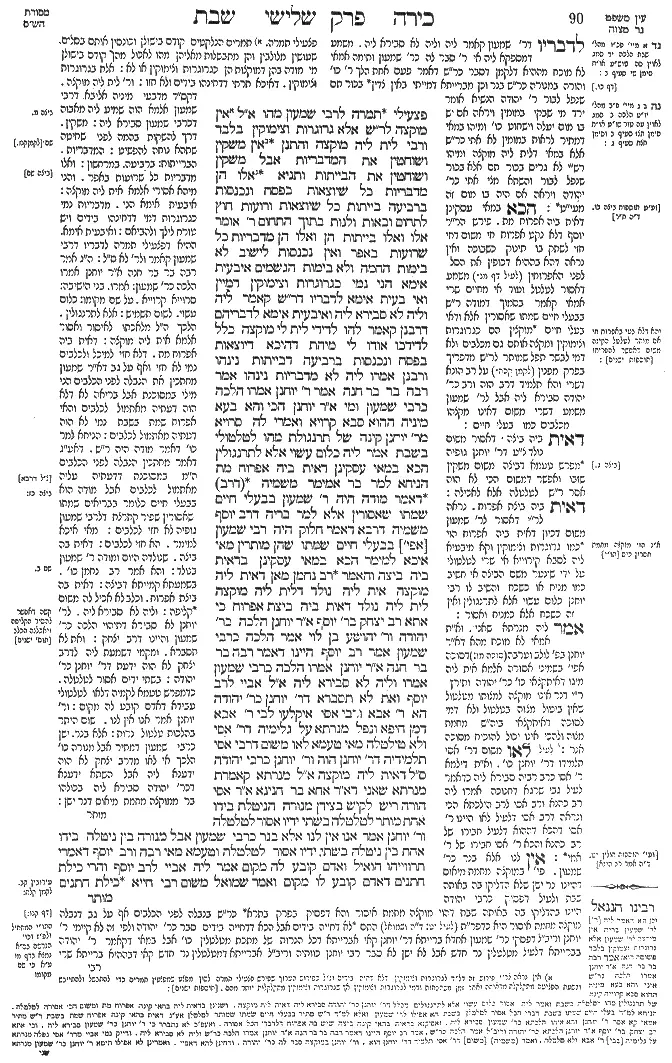
Shabbat 45b - Guemara
פצעילי תמרה לרבי שמעון מהו א"ל אין מוקצה לר"ש אלא גרוגרות וצימוקין בלבד ורבי לית ליה מוקצה והתנן אין משקין ושוחטין את המדבריות אבל משקין ושוחטין את הבייתות ותניא אלו הן מדבריות כל שיוצאות בפסח ונכנסות ברביעה בייתות כל שיוצאות ורועות חוץ לתחום ובאות ולנות בתוך התחום ר' אומר אלו ואלו בייתות הן ואלו הן מדבריות כל שרועות באפר ואין נכנסות לישוב לא בימות החמה ולא בימות הגשמים איבעית אימא הני נמי כגרוגרות וצימוקין דמיין ואי בעית אימא לדבריו דר"ש קאמר ליה וליה לא סבירא ליה ואיבעית אימא לדבריהם דרבנן קאמר להו לדידי לית לי מוקצה כלל לדידכו אודו לי מיהת דהיכא דיוצאות בפסח ונכנסות ברביעה דבייתות נינהו ורבנן אמרו ליה לא מדבריות נינהו אמר רבה בר בר חנה אמר ר' יוחנן אמרו הלכה כרבי שמעון ומי א"ר יוחנן הכי והא בעא מיניה ההוא סבא קרויא ואמרי לה סרויא מר' יוחנן קינה של תרנגולת מהו לטלטולי בשבת אמר ליה כלום עשוי אלא לתרנגולין הכא במאי עסקינן דאית ביה אפרוח מת הניחא למר בר אמימר משמיה (דרב) דאמר מודה היה ר' שמעון בבעלי חיים שמתו שאסורין אלא למר בריה דרב יוסף משמיה דרבא דאמר חלוק היה רבי שמעון [אפי'] בבעלי חיים שמתו שהן מותרין מאי איכא למימר הכא במאי עסקינן בדאית ביה ביצה והאמר רב נחמן מאן דאית ליה מוקצה אית ליה נולד דלית ליה מוקצה לית ליה נולד דאית ביה ביצת אפרוח כי אתא רב יצחק בר' יוסף א"ר יוחנן הלכה כר' יהודה ור' יהושע בן לוי אמר הלכה כרבי שמעון אמר רב יוסף היינו דאמר רבה בר בר חנה א"ר יוחנן אמרו הלכה כרבי שמעון אמרו וליה לא סבירא ליה א"ל אביי לרב יוסף ואת לא תסברא דר' יוחנן כר' יהודה הא ר' אבא ורבי אסי איקלעו לבי ר' אבא דמן חיפא ונפל מנרתא על גלימיה דר' אסי ולא טילטלה מאי טעמא לאו משום דרבי אסי תלמידיה דר' יוחנן הוה ור' יוחנן כרבי יהודה ס"ל דאית ליה מוקצה א"ל מנרתא קאמרת מנרתא שאני דא"ר אחא בר חנינא א"ר אסי הורה ריש לקיש בצידן מנורה הניטלת בידו אחת מותר לטלטלה בשתי ידיו אסור לטלטלה ור' יוחנן אמר אנו אין לנו אלא בנר כרבי שמעון אבל מנורה בין ניטלה בידו אחת בין ניטלה בשתי ידיו אסור לטלטלה וטעמא מאי רבה ורב יוסף דאמרי תרווייהו הואיל ואדם קובע לה מקום אמר ליה אביי לרב יוסף והרי כילת חתנים דאדם קובע לו מקום ואמר שמואל משום רבי חייא כילת חתנים
Comments from Rashi on Masechet Shabbat Page 45b
פצעילי תמרה . תמרים הנלקטים קודם בישולן וכונסין אותם בסלים שעושין מלולבין והן מתבשלות מאליהן מהו לאכול מהן קודם בישולן מי מודה בהן דמוקצות הן כגרוגרות וצימוקין או לא: אלא בגרוגרות וצימוקין . דאיכא תרתי דדחינהו בידים ולא חזו: ור' לית ליה מוקצה . דקס"ד מדבעי מיניה אליבא דרבי שמעון אלמא הוה שמיע ליה מאבוה דכרבי שמעון סבירא ליה: משקין . דרך להשקות בהמה לפני שחיטה שתהא נוחה להפשיט: המדבריות . הברייתות: ברביעה . במרחשון: ואלו מדבריות כל שרועות באפר . והני מיהא אסירי אלמא אית ליה מוקצה: איבעית אימא הני . מדבריות נמי כגרוגרות דמי דדחינהו בידים ויש טורח לילך ולהביאם: ואיבעית אימא . ההיא דפצעילי תמרה לדבריו דרבי שמעון קאמר ולר' לא ס"ל: ה"ג אמר רבה בר בר חנה אמר ר' יוחנן אמרו הלכה כר' שמעון: אמרו . בני הישיבה: סרוייא קרוייא . על שם מקומו: כלום עשוי . לשום תשמיש: אלא לתרנגולין . הלכך ה"ל מלאכתו לאיסור ואסור אלמא אית ליה מוקצה: דאית ביה אפרוח מת . דלא חזי למיכל ולכלבים נמי לא חזי ואף על גב דא"ר שמעון מחתכין את הנבלה לפני הכלבים הני מילי במסוכנת אבל בריאה לא דלא הוה דעתיה מאתמול לכלבים והאי אפרוח שמת בשבת נמי לא הוה דעתיה מאתמול לכלבים: הניחא למר כו' דאמר מודה היה ר"ש . דאע"ג דאמר מחתכין הנבלה לפני הכלבים ה"מ במסוכנת דדעתיה עליה מאתמול לכלבים אבל מודה הוא בבעלי חיים כלומר בבריאים שמתו שאסורין שפיר קתרצת דלרבי שמעון גופיה לא חזי לכלבים: מאי איכא למימר . הא חזי לכלבים: דאית בה ביצה . שנולדה היום ומודה ר' שמעון בנולד: והא אמר רב נחמן כו' . בשמעתא קמייתא דביצה: דאית בה ביצת אפרוח . וכלב לא אכיל לה משום קליפה: וליה לא סבירא ליה . לר' יוחנן לא סבירא דתיהוי הלכה כר' שמעון והיינו דרב יצחק: ואת לא תסברא . ומקמי דשמעת ליה לדרב יצחק לא הוה ידעת דר' יוחנן כר' יהודה: בשתי ידים אסור לטלטלה . כדמפרש טעמא לקמיה דלאו לטלטולי עבידא דאדם קובע לה מקום: ור' יוחנן אמר אנו אין לנו . שום היתר בהלכות טלטול נרות: אלא בנר . ישן כרבי שמעון דמתיר אבל מנורה כו' הלכך אי לאו מדרב יצחק לא הוה ידענא ליה אבל השתא ידענא דכר' יהודה סבירא ליה בכולהו בר ממוקצה מחמת מיאוס דנר ישן:
Comments from Tosafot - Shabbat 45b
לדבריו דר' שמעון קאמר ליה וליה לא סבירא ליה . משמע דמספקא ליה אי ר' סבר לה כר' שמעון ותימה אמאי לא מוכח מההיא דלקמן דסבר כר"ש דאמר פעם אחת הלך ר' כו' והורה במנורה כר"ש בנר וכן מברייתא דמייתי באין צדין בכור תם שנפל לבור ר' יהודה הנשיא אומר ירד מי שבקי במומין ויראה אם יש בו מום יעלה וישחוט כו' ומיהו במאי דמתיר לראות במומין לא אתי כר"ש אלא במאי דלית ליה מוקצה ומיהו רש"י לא גריס בכור תם אלא בכור שנפל לבור והשתא מצי אתי כר' יהודה ויראה אם היה בו מום זה מעי"ט: הכא במאי עסקינן דאית ביה אפרוח מת . פירש הר"ר יוסף דלא נקט אפרוח חי משום דחי חזי לשתק בו תינוק כשבוכה ואין נראה דהא בההיא דכופין את הסל לפני האפרוחין (לעיל שבת דף מג.) משמע דאסור לטלטל ועוד אי מחיים שרי אמאי קאמר בסמוך דמודה ר"ש בבעלי חיים שמתו שאסורין אלא ודאי בעלי חיים מוקצין הם כגרוגרות וצימוקין ומקצה אותם גם מכלבים ולא דמי לבשר תפל שמותר לר"ש מדפריך בפרק מפנין (לקמן שבת קכח.) על רב הונא דשרי והא תלמיד דרב הוה ורב כר' יהודה סבירא ליה אבל לר' שמעון משמע דשרי משום דאינו מקצהו מכלבים כמו בעלי חיים: דאית ביה ביצה . דאסור משום נולד צ"ע דר' יוחנן גופיה מפרש טעמא דביצה משום משקין שזבו ואפשר דמשום הכי לא הוה אסר ר"ש לטלטלה אלא לאכילה: דאית ביה ביצת אפרוח . נראה לר"י דאסור לר' שמעון משום דכיון דאית ביה אפרוח הוי כמו גרוגרות וצימוקין וקא מיבעיא ליה לסבא קירוייא אי שרי לטלטולי על ידי שינער משם הביצה אי חשיב כמו מניח או כשכח והשיב לו רבי יוחנן כלום עשוי אלא לתרנגולין ואין זה כשכח אלא כמניח ואסור: לאו משום דר' אסי תלמידו דר' יוחנן כו' . וא"ת דילמא ר' אסי כרב רביה סבירא ליה כדאמר לעיל גבי שרגא דחנוכה אמרו ליה רב כהנא ורב אסי לרב הילכתא הכי ונראה דרב אסי דלעיל לאו היינו ר' אסי דהכא דההוא דלעיל חבירו של רב כהנא והכא ר' אסי חבירו של ר' אמי: אמר ליה מנרתא שאני . וא"ת אמאי לא מוכח מהא דא"ר יוחנן בפ' לולב וערבה (סוכה מו:) דסוכה אפי' בשמיני אסורה אלמא אית ליה מיגו דאיתקצאי כו' כר' יהודה ותירץ ר"י דנר אינו מוקצה למצותו מטלטול שאין ביטול מצוה בטלטול ולא דמי לסוכה דאיתקצאי ביה"ש מחמת מצוה ולהכי אינו יכול להוכיח מסוכה אנר: אין לנו אלא בנר כר' שמעון . פי' במוקצה מחמת מיאוס דהיינו נר ישן שלא הדליקו בה באותה שבת ולעיל דפסיק כרבי יהודה היינו בהדליקו בה באותה שבת דהוי מוקצה מחמת איסור והא דפסיק בפרק בתרא כר"ש בנבלה לפני הכלבים אף על גב דנבלה מוקצה מחמת איסור היא כדפר"ת (לעיל שבת יט: ד"ה ושמואל) התם לא דחייה בידים אבל הכא דדחייה בידים סבר כר' יהודה ולפי זה לא קיימי ר' יוחנן וריב"ל דפסקי כר' שמעון אחדא ברייתא דר' יוחנן קאי אברייתא דכל הנרות של מתכת מטלטלין כו' אבל במאי דקאמר ר' יהודה בברייתא דלעיל מטלטלין נר חדש אבל לא ישן לא סבר רבי יוחנן כוותיה וריב"ל אברייתא דמטלטלין נר חדש קאי דבההיא ברייתא שרי רבי שמעון נר שהדליקו באותה שבת והא דלא פסיק רבי יוחנן כרבי מאיר דהא סבר לגמרי כוותיה דשרי מוקצה מחמת מיאוס ואסר מוקצה מחמת איסור נקט רבי יהודה משום דבכל מקום הוזכר גבי מוקצה ועוד דלא מצינו דאית ליה לרבי מאיר מוקצה מחמת איסור גרידא אלא בנר ישן דאיכא תרתי מחמת מיאוס ומחמת איסור אך לפי זה קשה לרשב"א דמשמע דנקט במנורה אין לנו כרבי שמעון אבל רבי שמעון מיהא שרי במנורה ולמאי דמפרש טעמא דמנורה משום דאדם קובע לו מקום היכי שרי רבי שמעון הא אמרי' בריש כל הכלים (לקמן שבת דף קכג.) הכל מודים בסיכי וזירי ומזורי כיון דקפיד עלייהו מיחד להו מקום ונראה לפרש דרבי יוחנן פסק כרבי יהודה במוקצה מחמת מיאוס וכ"ש במוקצה מחמת איסור כדמוכח בפרק בתרא (דף קנז.) דקאמר בכולי שבת הלכה כרבי שמעון בר ממוקצה מחמת מיאוס וחד אמר במוקצה מחמת מיאוס נמי הלכה כרבי שמעון בר ממוקצה מחמת איסור דהיינו שהדליקו בה באותה שבת והא דקאמר אנו אין לנו אלא בנר כרבי שמעון לאו משום דסבר כוותיה בנר אלא כלומר אין לנו שיתיר אפי' רבי שמעון דמיקל אלא בנר אבל במנורה אסר והשתא קיימי תרוייהו אחד ברייתא ולא מצי נמי למינקט רבי מאיר: והא כילת חתנים דאדם קובע לה מקום . פי' רשב"א דאדם קובע לה מקום כמו למנורה ואפ"ה שרי שמואל אלא ודאי לא חשיב קביעות שלה ושל מנורה קביעות אלא היכא דקבע מקום לגמרי כדאמר בפ' כל הכלים (לקמן שבת קכג. ושם):
Shabbat 45b - Mishnah translated into english
Unripe dates that are placed in baskets to ripen and until they are ripe can only be eaten with difficulty, according to the opinion of Rabbi Shimon, what is their legal status as far as moving them on Shabbat is concerned? Are they considered set-aside? Rabbi Yehuda HaNasi said to him: There is only a prohibition of set-aside according to Rabbi Shimon in the cases of dried figs and raisins alone.
The Gemara challenges this: And does Rabbi Yehuda HaNasi not hold that there is a prohibition of set-aside? Didn’t we learn in a mishna that on a Festival, before they are slaughtered, one may neither give water to, in order to ease removal of their hides, nor slaughter non-domesticated, desert animals, animals that are always grazing in the fields? Since people do not generally tend to them, they are considered set-aside and may not be used. However, one may give water to and slaughter domesticated animals. And it was taught in a baraita that these are non-domesticated, desert animals: Any animals that leave their sheds on Passover and only enter their sheds with the advent of the rainy season. Domesticated animals are any animals that go out to graze beyond the city limits, and come and sleep within the city limits. Rabbi Yehuda HaNasi says: These and those are both domesticated. And these are the non-domesticated, desert animals that are prohibited due to the prohibition of set-aside: Any animals that graze in the grazing area and neither enter the town during the summer nor during the rainy season. It is these animals that it is prohibited to give water to or slaughter on a Festival. Apparently, Rabbi Yehuda HaNasi holds that there is a prohibition of set-aside even in the case of animals.
Several resolutions are proposed to this contradiction: If you wish, say that these non-domesticated animals that graze in the grazing areas throughout the year are also considered like dried figs and raisins. Even Rabbi Shimon would agree to this halakha. And if you wish, say instead: When Rabbi Yehuda HaNasi told his son that answer, he was saying it to him in accordance with the opinion of Rabbi Shimon, and he himself does not hold that way.
And if you wish, say instead: In that baraita, he spoke to them in accordance with the statement of the Rabbis, and this is how his statement must be understood: In my opinion I do not hold that there is a prohibition of set-aside at all. However, according to your opinion, at least agree with me that animals that leave their sheds on Passover and only enter their sheds with the advent of the rainy season are domesticated. And the Rabbis said to him: No, those are non-domesticated animals.
As to the essential dispute with regard to the laws of set-aside, Rabba bar bar Ḥana said that Rabbi Yoḥanan said: They said that the halakha is in accordance with the opinion of Rabbi Shimon who holds that there is no prohibition of set-aside. The Gemara asks: Did Rabbi Yoḥanan actually say this? Didn’t an Elder from Keruya, and some say that he was from Seruya, raise a dilemma before Rabbi Yoḥanan: With regard to a hen’s roost, what is its legal status as far as moving it on Shabbat is concerned? Rabbi Yoḥanan said to him: Isn’t the roost made exclusively for hens to be inside it? Since it is not designated for use by people, moving it is prohibited. Apparently, he holds in accordance with the opinion of Rabbi Yehuda with regard to set-aside. The Gemara answers: With what are we dealing here? With a special case, when there is a dead chick in the roost. Moving the roost is prohibited due to the dead chick, which is set-aside.
The Gemara continues to ask: This works out well according to the opinion of Mar bar Ameimar in the name of Rav, who said: Rabbi Shimon agreed in the case of animals that died on Shabbat, that they are prohibited on Shabbat due to set-aside. However, according to the opinion of Mar, son of Rav Yosef, in the name of Rava, who said: Rabbi Shimon was in disagreement even in the case of animals that died, and said that they are permitted and are not prohibited as set-aside, what can be said? The Gemara responds: With what are we dealing here? With a case where there is an egg that was laid on Shabbat in the roost. Because it was laid on Shabbat it is considered set-aside, and using the egg is prohibited. The thought of using it never entered anyone’s mind before Shabbat.
The Gemara asks: Didn’t Rav Naḥman say: One who is of the opinion that there is a prohibition of set-aside, is also of the opinion that there is a prohibition of an object that came into being on Shabbat or on a Festival; and one who is not of the opinion that there is a prohibition of set-aside, is also not of the opinion that there is a prohibition of an object that came into being. This case is no different than other cases of set-aside. The Gemara responds: This is referring to a case where the roost has an egg with a chick in it. Even Rabbi Shimon would agree that moving an egg of that sort is prohibited since it is fit for neither human nor animal consumption.
This explanation was cited to explain that Rabbi Yoḥanan could hold in accordance with the opinion of Rabbi Shimon. However, when Rav Yitzḥak, son of Rabbi Yosef, came from Eretz Yisrael to Babylonia, he said that Rabbi Yoḥanan said: The halakha is in accordance with the opinion of Rabbi Yehuda that there is a prohibition of set-aside. And Rabbi Yehoshua ben Levi said: The halakha is in accordance with the opinion of Rabbi Shimon, that there is no prohibition of set-aside. Rav Yosef said: That is what Rabba bar bar Ḥana said that Rabbi Yoḥanan said: They said that the halakha is in accordance with the opinion of Rabbi Shimon. The inference is: They said; however, he himself does not hold that this is the halakha.
Abaye said to Rav Yosef: And you yourself did not hold that Rabbi Yoḥanan rules in accordance with the opinion of Rabbi Yehuda, even before Rav Yitzḥak came and cited this statement in his name? Didn’t Rabbi Abba and Rabbi Asi happen to come to the house of Rabbi Abba who was from the city Haifa, and a candelabrum fell onto Rabbi Asi’s cloak and he did not move it? What is the reason that he did not lift it? Is it not because Rabbi Asi was a student of Rabbi Yoḥanan, and Rabbi Yoḥanan holds in accordance with the opinion of Rabbi Yehuda, who holds that there is a prohibition of set-aside? Apparently, Rabbi Yoḥanan holds in accordance with the opinion of Rabbi Yehuda.
Rav Yosef said to Abaye: Candelabrum you say; are you citing a proof from the case of a candelabrum? A candelabrum is different because there is a unique halakha in that case. As Rabbi Aḥa bar Rabbi Ḥanina said that Rabbi Asi said that Reish Lakish issued a ruling in the city of Sidon: A candelabrum that can be moved in one of his hands, one is permitted to move it on Shabbat. However, if it is so heavy that one must move it with his two hands, it is prohibited to move it. And Rabbi Yoḥanan said: We have permission to carry only in the case of an oil lamp, according to the opinion of Rabbi Shimon. However, with regard to a candelabrum, both one that is carried in one hand and one that is carried in two hands, it is prohibited to move it.
The Gemara asks: And what is the reason that there is a unique prohibition in the case of a candelabrum? Rabba and Rav Yosef both said: Since a person usually designates a fixed place for it due to its size and its use, it is considered a built-in part of the house, and moving the candelabrum is like dismantling the house. Abaye said to Rav Yosef: A groom’s canopy is an object for which a person designates a set place, and, nevertheless, Shmuel said in the name of Rabbi Ḥiyya: With regard to a groom’s canopy,
Traduction : The William Davidson digital edition of the Koren Noé Talmud, with commentary by Rabbi Adin Even-Israel Steinsaltz.
Shabbat 45b : Significance
Next step
Finished studying Shabbat 45b? Carry on with the rest of the tractate.
Study Shabbat 46aFrequently asked questions: Shabbat 45b
Where is Shabbat 45b in tractate Shabbat?
Shabbat 45b is page 88 of 312 in tractate Shabbat (Seder Moed).
When is daf 45 of Shabbat studied in Daf Yomi?
Daf Yomi covers one daf a day, both sides. Daf 45 of Shabbat will be studied on September 22, 2027.
Is there a video class on Shabbat 45b?
Yes, by Daf Tube, Rabbi Dr. Moshe Weisblum. These classes were published on YouTube by their authors and are gathered on this site.
What is tractate Shabbat about?
The Masechet Shabbat is the first tractate of the Seder Moed. The Gemara Shabbat is the study of the laws concerning the Shabbat day during which one must suspend all work according to what is written in the Torah. The preparations before the start of Shabbos, the 39 Melachot that the Torah forbids to be performed on Shabbos, as well as the rabbinical decrees intended to avoid transgressing them. The Shabbat tractate has 24 chapters.
Your study is also dedicated to them
- L'ilui Nishmat Nissim ben Barukh Malka
- L'ilui Nishmat Avraham Ben Simha
- L'ilui Nishmat Jamila bat Chlomo Abensour