 Talmud Bavli
The learning on the whole site is dedicated : L'ilui Nishmat Nissim ben Barukh Malka
The learning on the whole site is dedicated : L'ilui Nishmat אליעזר בן רחל
The learning on the whole site is dedicated : L'ilui Nishmat Margalit bat Ledicia
Shabbat 20b : Youtube
Daf TubeYoutube
3 video classes :
Shabbat Page 20b
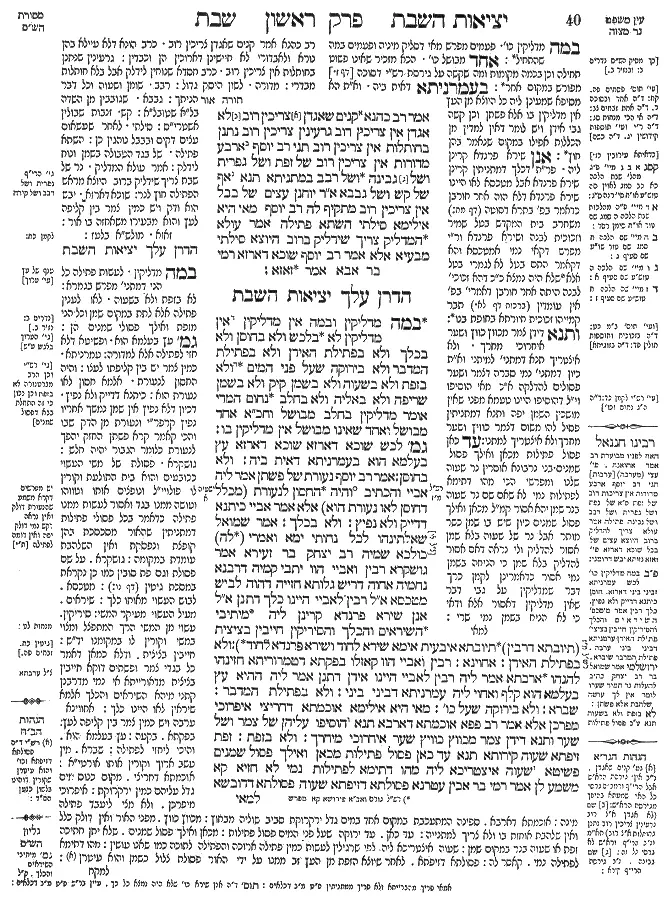
Shabbat 20b - Guemara
אמר רב כהנא קנים שאגדן צריכין רוב לא אגדן אין צריכין רוב גרעינין צריכין רוב נתנן בחותלות אין צריכין רוב תני רב יוסף ארבע מדורות אין צריכין רוב של זפת ושל גפרית ושל גבינה ושל רבב במתניתא תנא אף של קש ושל גבבא א"ר יוחנן עצים של בבל אין צריכין רוב מתקיף לה רב יוסף מאי היא אילימא סילתי השתא פתילה אמר עולא המדליק צריך שידליק ברוב היוצא סילתי מבעיא אלא אמר רב יוסף שוכא דארזא רמי בר אבא אמר זאזא:
הדרן עלך יציאות השבת
מתני׳ במה מדליקין ובמה אין מדליקין אין מדליקין לא בלכש ולא בחוסן ולא בכלך ולא בפתילת האידן ולא בפתילת המדבר ולא בירוקה שעל פני המים ולא בזפת ולא בשעוה ולא בשמן קיק ולא בשמן שריפה ולא באליה ולא בחלב נחום המדי אומר מדליקין בחלב מבושל וחכ"א אחד מבושל ואחד שאינו מבושל אין מדליקין בו:
גמ׳ לכש שוכא דארזא שוכא דארזא עץ בעלמא הוא בעמרניתא דאית ביה:
ולא בחוסן:
אמר רב יוסף נעורת של פשתן אמר ליה אביי והכתיב (ישעיהו א, לא) והיה החסון לנעורת (מכלל דחוסן לאו נעורת הוא) אלא אמר אביי כיתנא דדייק ולא נפיץ:
ולא בכלך:
אמר שמואל שאלתינהו לכל נחותי ימא ואמרי (לה) כולכא שמיה רב יצחק בר זעירא אמר גושקרא רבין ואביי הוו יתבי קמיה דרבנא נחמיה אחוה דריש גלותא חזייה דהוה לביש מטכסא א"ל רבין לאביי היינו כלך דתנן א"ל אנן שירא פרנדא קרינן ליה מיתיבי השיראים והכלך והסיריקין חייבין בציצית (תיובתא דרבין) תיובתא איבעית אימא שירא לחוד ושירא פרנדא לחוד:
ולא בפתילת האידן:
אחוינא:
רבין ואביי הוו קאזלו בפקתא דטמרוריתא חזינהו להנהו ארבתא אמר ליה רבין לאביי היינו אידן דתנן אמר ליה ההיא עץ בעלמא הוא קלף ואחוי ליה עמרניתא דביני ביני:
ולא בפתילת המדבר:
שברא:
ולא בירוקה שעל כו':
מאי היא אילימא אוכמתא דחריצי איפרוכי מפרכן אלא אמר רב פפא אוכמתא דארבא תנא הוסיפו עליהן של צמר ושל שער ותנא דידן צמר מכווץ כוויץ שער איחרוכי מיחרך:
ולא בזפת:
זפת זיפתא שעוה קירותא תנא עד כאן פסול פתילות מכאן ואילך פסול שמנים פשיטא שעוה איצטריכא ליה מהו דתימא לפתילות נמי לא חזיא קא משמע לן אמר רמי בר אבין עטרנא פסולתא דזיפתא שעוה פסולתא דדובשא
Comments from Rashi on Masechet Shabbat Page 20b
רב כהנא אמר קנים שאגדן צריכין רוב . כרב הונא דלא עיילא בהן נורא ולאבדורי לא חיישינן דארוכין הן וכבדין: גרעינין שנתנן בחותלות אין צריכין רוב . כרב חסדא שנוחין לידלק אבל בלא חותלות מבדרי: מדורה . לשון היסק גדול: רבב . שומן ושעוה וכל דבר הניתך: גבבא . שגובבין מן השדה בל"א שטובל"א: קש . זנבות שבולין אשטרי"ס: סילתי . לאחר שעשאום עצים דקים ובבבל נוהגין כן: השתא פתילה . של בגד הטבולה בשמן ונוח לידלק: אמר עולא המדליק . נר של שבת צריך שידליק ברוב היוצא מראש הפתילה חוץ לנר: שוכא דארזא . יבש הוא ודק ויש כמין צמר בין קליפה לעץ והוא מבעירו משאחזה בו אור: זאזא . מולש"א בלעז: במה מדליקין . לעשות פתילה כל הני דמתני' מפרש בגמרא: לא בזפת ולא בשעוה . לאו לענין פתילה אלא לתת במקום שמן וכל הני מזפת ואילך פסולי שמנים הן: הכי גרסינן נחום אומר מדליקין בחלב מבושל . והוא מהותך: גמ' עץ בעלמא הוא . ופשיטא דלא חזי לפתילה אלא למדורה: עמרניתא . כמין צמר יש בין קליפתו לעצו: והיה החסון לנעורת . אלמא חסון לאו נעורת הוא: כיתנא דדייק ולא נפיץ . דכיון דלא נפיץ אין שמן נמשך אחריו נפיץ קרפר"י לפורר ונעורת מן הדק שבו והכי קאמר קרא פשתן החזק יהפך לנעורת כלומר הגבור יהיה חלש: גושקרא . פסולת של משי העשוי ככובעים והוא בית התולעת וקורין לו פולויי"ל ונופצים אותו וטווהו ועושה ממנו בגד ואסור לעשות ממנו פתילה כדאמר בכל פסולי פתילות דמתניתין שהאור מסכסכת בהן קופצת ונפסקת ואין השלהבת עומדת במקומה: גושקרא . על שם פסולת וגם פת סובין כמו כן נקראת במסכת גיטין (דף נו:): מטכסא . לבוש העשוי מאותו כלך: שיראים . מעיל העשוי מעיקר המשי: סיריקין . עשוי מן המשי הרך המתפצל ומצוי במשי וקורין לו במקומנו יד"ש: חייבין בציצית . ודלא כמאן דאמר כל בגדי צמר ופשתים דוקא חייבין בציצית מדאורייתא אי נמי מדרבנן קתני מיהא השיראים והכלך אלמא שיראין לאו היינו כלך: אחווינא . ערבה ויש כמין צמר בין קליפה לעץ: בפקתא . בקעה: עץ בעלמא הוא . והיכי ליחזי לפתילה: שברא . מין עשב ארוך וקורין אותו אורטי"א: אוכמתא דחריצי . מקום כנוס מים גדל עליהם כמין ירקרוקת: איפרוכי מיפרכן . ולא מצי ליעבד פתילה מינה: אוכמתא דארבא . ספינה המתעכבת במקום אחד במים גדל ירקרוקת סביב שוליה מבחוץ: מכווץ כווץ . מפני האור ואין דולק כלל ואין שלהבת אוחזת בו ולא צריך למתנייה: עד כאן . עד ירוקה שעל פני המים פסול פתילות: מכאן ואילך פסול שמנים . שלא יתן חתיכה זפת או שעוה בנר במקום שמן: שעוה איצטריכא ליה . לפי שרגילין לעשות כמין פתילה ארוכה והפתילה לתוכה כמו שאנו עושין: מהו דתימא לפתילה נמי . קאסר לה: פסולתא דזיפתא . לאחר שיוצא הזפת מן העץ זב ממנו על ידי האור פסולת צלול כשמן והוא עיטרן:
Comments from Tosafot - Shabbat 20b
מתני' במה מדליקין כו' . פעמים מפרש מאי דסליק מיניה ופעמים במה שהתחיל: אחד מבושל כו' . הכא מזכיר שאינו פשוט תחילה וכן בכמה מקומות ומה שקשה על גירסת רש"י דסוכה [דף ז.] מפורש במקום אחר: בעמרניתא דאית ביה . וא"ת הא מסיפא שמעינן ליה כל היוצא מן העץ אין מדליקין בו אלא פשתן וכן קשה גבי אידן ויש לומר דאין למדין מן הכללות אפילו במקום שנאמר בהן חוץ: אנן שירא פרנדא קרינן ליה . פר"ת דכלך דמתניתין קרינן שירא פרנדא אבל מטכסא לאו היינו שירא פרנדא דלא הוה אחר חורבן כדאמר בפ' בתרא דסוטה (דף מר:) משחרב בית המקדש בטל שמיר וזכוכית לבנה ושירא פרנדא ור"י מפרש דקאי נמי אמטכסא והא דקאמר התם בטל לא לגמרי בטל אלא שלא היה נמצא כ"כ דהא זכוכי' לבנה היתה אחר חורבן דאמרי' בפ' אין עומדין (ברכות דף לא.) תבר קמייהו זכוכית חיורתא בחופת בנו: ותנא דידן צמר מכווץ כווץ ושער איחרוכי מחרך . ולא איצטריך תנא דמתני' למיתני וא"ת כיון דמתני' נמי סברה דצמר ושער פסולים להדלקה א"כ מאי הוסיפו וי"ל דהוסיפו היינו טעמא מפני שאין מושכין השמן יפה ותנא דמתניתין פסיל להו משום דצמר כוויץ ושער מחרך ולא איצטריך למתני: עד כאן פסול פתילות מכאן ואילך פסול שמנים . בני נרבונא אוסרין נר שעוה שלנו ומפרשי הכי מהו דתימא לפתילות נמי לא שאם שם נר שעוה בנר שמן יהא אסור קמ"ל מכאן ואילך פסול שמנים כיון שיש בו שמן כשר מותר אבל נר של שעוה בלא שמן אסור להדליק ולי נראה דאם אסור להדליק בלא שמן כי הניחה בשמן נמי אסור כדאמרינן לקמן כרך דבר שמדליקין על גבי דבר שאין מדליקין דאסור אלא ודאי כי לא הניח בשמן נמי שרי:
Shabbat 20b - Mishnah translated into english
on a similar note, Rav Kahana said: Reeds that one tied them into a bundle, require that most of them ignite. If one did not tie them into a bundle, they do not require that most of them ignite, in accordance with the statement of Rav Huna. However, seeds require that most of them ignite. And if he placed them in woven baskets, they do not require that most of them catch fire.
Rav Yosef taught a baraita: Four bonfires do not require that most of the flammable materials catch fire, as their materials burn easily once the fire takes hold of them. And they are: A bonfire of pitch, and of sulfur, and of dry cheese, and of fatty materials. And it was taught in a baraita: A bonfire of straw and one of rakings of wood gathered from the field also do not require that most of it catch fire.
Rabbi Yoḥanan said: Babylonian wood does not require that most of it catch fire. Rav Yosef the Babylonian objects: What is that wood that they use in Babylonia that burns so well? If you say that it refers to wood slivers used for burning and light, now that with regard to a wick, Ulla said that one who lights it for a Shabbat lamp must light most of what emerges from the vessel; is it necessary to mention with regard to wood slivers that most of them must be lit? Rather, Rav Yosef said: Certainly the reference is to the branch of a cedar tree. And Rami bar Abba said: The reference here is to a hyssop [zaza].
We shall return to you, Yiziot HaShabbat
This mishna cites a list of fuels and wicks that one may not use in kindling the Shabbat lights, either because their use might induce one to perform a prohibited labor on Shabbat or because they are not in keeping with the deference due Shabbat. The mishna begins by listing the materials that one may not use as wicks. That is followed by a list of the substances that one may not use as fuel.
MISHNA: With what may one light the Shabbat lamp, and with what may one not light it? With regard to types of prohibited wicks, one may light neither with cedar bast [lekhesh], nor with uncombed flax [ḥosen], nor with raw silk [kalakh], nor with willow bast [petilat ha’idan], nor with desert weed [petilat hamidbar], nor with green moss that is on the surface of the water. With regard to types of prohibited oils, one may light neither with pitch [zefet], nor with wax [sha’ava], nor with castor oil [shemen kik], nor with burnt oil [shemen sereifa], nor with fat from a sheep’s tail [alya], nor with tallow [ḥelev]. Naḥum the Mede says: One may light with boiled tallow. And the Rabbis say: Both tallow that was boiled and tallow that was not boiled, one may not light with them.
GEMARA: Most of the terms used in the mishna were not understood in Babylonia. Therefore, the Gemara translated and clarified them. We learned in the mishna that one may not light with lekhesh. The Gemara explains that lekhesh is the branch of the cedar tree. The Gemara asks: Isn’t the cedar mere wood? How would one fashion a wick out of wood? The Gemara answers: The mishna is referring to the woolly substance that is beneath its bark.
The mishna taught further that one may not light with ḥosen. Rav Yosef said: Ḥosen is tow, thin chaff that falls off the stalk of combed flax. Abaye said to him: Isn’t it written: “And the ḥason shall be as tow” (Isaiah 1:31)? By inference, ḥosen is not tow. Rather, Abaye said: Ḥosen is flax whose stalk was crushed but not yet combed. The threads in the stalk are still covered by a shell and therefore do not burn well.
And we also learned in the mishna that one may not light with kalakh. Shmuel said: I asked all seafarers, and they said to me that the present-day name of kalakh mentioned in the mishna is kulka. Rav Yitzḥak bar Ze’ira said: Kalakh is the cocoon of the silkworm [gushkera].
The Gemara relates that Ravin and Abaye were sitting before Rabbana Neḥemya, brother of the Exilarch. Ravin saw that Rabbana Neḥemya was wearing metaksa, a type of silk. Ravin said to Abaye: This is the kalakh that we learned in our mishna. Abaye said to him: We call it shira peranda.
The Gemara raises an objection from that which we learned: The shira’im, the kalakh, and the sirikin, different types of silk, all require ritual fringes. Apparently, shira’im and kalakh are different types of silk. This is a conclusive refutation of the statement of Ravin who identified kalakh with shira peranda. The Gemara responds: Indeed, it is a conclusive refutation. If you wish, say instead that shira is a distinct entity, and shira peranda is a distinct entity. Shira peranda is kalakh.
And we learned in the mishna that one may not light with petilat ha’idan. The Gemara explains that petilat ha’idan is willow, which does not burn well. The Gemara relates that Ravin and Abaye were walking in the valley of Tamrurita. They saw these willow trees. Ravin said to Abaye: This is the idan that we learned in the mishna. Abaye said to him: But this is mere wood. How would one fashion a wick from it? Ravin peeled the bark and showed him the wool-like substance between the bark and the tree. We also learned in the mishna: Nor with desert silk [petilat hamidbar]. That is the mullein plant, which does not burn well.
And we learned in the mishna that one may not use the green moss that is on the surface of the water to fashion a wick for lighting the Shabbat lamp. The Gemara asks: What is this green moss? If you say that it is the moss found on standing water, isn’t that moss brittle and therefore unfit material from which to fashion a wick? Rather, Rav Pappa said: It is referring to the moss that accumulates on ships, which is more pliable and when dried can be fashioned into a wick.
It was taught in a baraita: The Sages added to the list of prohibited wicks in the mishna those made of wool and hair as well. The Gemara remarks: And our tanna did not consider it necessary to enumerate these because it is virtually impossible to fashion wicks from these materials, as, when they burn, wool shrinks and hair is scorched. Consequently, they are unsuitable for use as wicks.
And we learned in the mishna that one may not use zefet or sha’ava as fuel in lighting the Shabbat lamp. The Gemara explains that zefet is pitch, and sha’ava is wax. It was taught in a baraita: Until this point, the word zefet, the mishna is dealing with disqualification of materials unfit for use as wicks, and from this point on it is dealing with disqualification of substances unfit for use as oils. The Gemara asks: Obviously, a wick cannot be made from pitch and similar materials. The Gemara answers: It was necessary for the mishna to mention wax, lest you say that it is also unfit for use as a coating for wicks, in the manner that wicks are usually made. Therefore, it teaches us that even though wax is unfit for use as oil, it is fit for use as coating for wicks.
Rami bar Avin said: Tar [itran] is the by-product of pitch. When wood is burned to extract pitch, a clearer liquid oozes out after the pitch, and that is tar. Similarly, wax is the by-product of honey.
Traduction : The William Davidson digital edition of the Koren Noé Talmud, with commentary by Rabbi Adin Even-Israel Steinsaltz.