 Talmud Bavli
Shabbat 154b : Youtube
Daf TubeYoutube
2 video classes :
Shabbat Page 154b
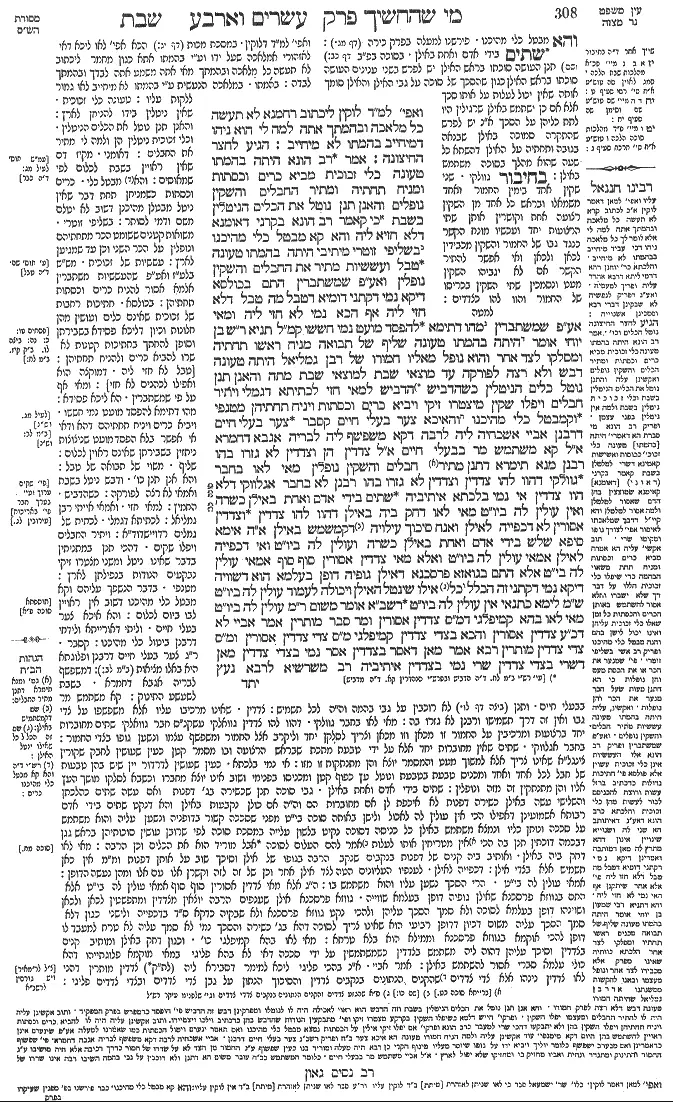
Shabbat 154b - Guemara
ואפי' למ"ד לוקין ליכתוב רחמנא לא תעשה כל מלאכה ובהמתך אתה למה לי הוא ניהו דמיחייב בהמתו לא מיחייב:
הגיע לחצר החיצונה:
אמר רב הונא היתה בהמתו טעונה כלי זכוכית מביא כרים וכסתות ומניח תחתיה ומתיר החבלים והשקין נופלים והאנן תנן נוטל את הכלים הניטלין בשבת כי קאמר רב הונא בקרני דאומנא דלא חזיא ליה והא קא מבטל כלי מהיכנו בשליפי זוטרי מיתיבי היתה בהמתו טעונה טבל ועששיות מתיר את החבלים והשקין נופלין ואע"פ שמשתברין התם בכולסא דיקא נמי דקתני דומיא דטבל מה טבל דלא חזי ליה אף הכא נמי לא חזי ליה ומאי אע"פ שמשתברין מהו דתימא להפסד מועט נמי חששו קמ"ל תניא ר"ש בן יוחי אומר היתה בהמתו טעונה שליף של תבואה מניח ראשו תחתיה ומסלקו לצד אחר והוא נופל מאליו חמורו של רבן גמליאל היתה טעונה דבש ולא רצה לפורקה עד מוצאי שבת למוצאי שבת מתה והאנן תנן נוטל כלים הניטלין כשהדביש הדביש למאי חזי לכתיתא דגמלי ויתיר חבלים ויפלו שקין מיצטרו זיקי ויביא כרים וכסתות ויניח תחתיהן מטנפי וקמבטל כלי מהיכנו והאיכא צער בעלי חיים קסבר צער בעלי חיים דרבנן אביי אשכחיה ליה לרבה דקא משפשף ליה לבריה אגבא דחמרא א"ל קא משתמש מר בבעלי חיים א"ל צדדין הן וצדדין לא גזרו בהו רבנן מנא תימרא דתנן מתיר חבלים והשקין נופלין מאי לאו בחבר גוולקי דהוו להו צדדין וצדדין לא גזרו בהו רבנן לא בחבר אגלווקי דלא הוו צדדין אי נמי בלכתא איתיביה שתים בידי אדם ואחת באילן כשרה ואין עולין לה ביו"ט מאי לאו דחק ביה באילן דהוו להו צדדין וצדדין אסורין לא דכפייה לאילן ואנח סיכוך עילויה דקמשמש באילן א"ה אימא סיפא שלש בידי אדם ואחת באילן כשרה ועולין לה ביו"ט ואי דכפייה לאילן אמאי עולין לה ביו"ט ואלא מאי צדדין אסורין סוף סוף אמאי עולין לה בי"ט אלא התם בגואזא פרסכנא דאילן גופיה דופן בעלמא הוא דשוויה דיקא נמי דקתני זה הכלל כל אילו שינטל האילן ויכולה לעמוד עולין לה ביו"ט ש"מ לימא כתנאי אין עולין לה ביו"ט רשב"א אומר משום ר"מ עולין לה ביו"ט מאי לאו בהא קמיפלגי דמ"ס צדדין אסורין ומר סבר מותרין אמר אביי לא דכ"ע צדדין אסורין והכא בצדי צדדין קמיפלגי מ"ס צדי צדדין אסורין ומ"ס צדי צדדין מותרין רבא אמר מאן דאסר בצדדין אסר נמי בצדי צדדין מאן דשרי בצדי צדדין שרי נמי בצדדין איתיביה רב משרשיא לרבא נעץ
Comments from Rashi on Masechet Shabbat Page 154b
ואפי' למ"ד דלוקין . במסכת מכות (דף יג:) הכא אפי' לאו ליכא דאי לאזהורי אמלאכה שעל ידו וע"י בהמתו אתא כגון מחמר ליכתוב לא תעשה כל מלאכה ובהמתך מאי אתה משמע אתה לבדך ובהמתך לבדה: בהמתו . במלאכה הנעשית ע"י בהמתו לא מיחייב לאו גמור ללקות עליו: טעונה כלי זכוכית . שאין ניטלין בידו להניחן לארץ: והאנן תנן נוטל את הכלים הניטלין . וכלי זכוכית ניטלין הן ולמה לי מתיר את החבלים: דאומני . מקיז דם שאין ראויין בשבת לכלום לפי שמאוסים: והא מבטל כלי . כרים וכסתות כשמניחן תחת דבר שאין ניטל מבטלן מהיכנן דשוב לא יטלם משם ודמי לסותר: בשליפי זוטרי . משואות קטנים ששומט הכר מתחתיהם ונופלין על הכר השני וכן עד שמגיען לארץ: עששיות של זכוכית . מש"ש בלע"ז ואע"פ שהעששיות משתברין אלמא אסור להניח כרים וכסתות תחתיהן: בכולסא . חתיכות רחבות של זכוכית שאינם כלים ועושין מהן חלונות וכיון דליכא פסידא בשבירתן וסופן להחתך בחתיכות קטנות לא שרו להביא כרים ולהניח תחתיהן: [טבל לא חזי ליה . דמוקצה הוא ואפילו לכהנים לא חזי]: ומאי אף על פי שמשתברין . הא ליכא פסידא: מהו דתימא להפסד מועט נמי חששו . ויביא כרים ויניח תחתיהם דהא ודאי אי אפשר בלא הפסד מועט שניצוצות ניתזין בשבירתן שאינם ראוין לכלום: שליף . משוי של תבואה של טבל: והא אנן תנן כו' . ודבש ניטל בשבת ואמאי לא רצה לפורקה: כשהדביש . החמיץ: למאי חזי . ואמאי אייתי רבן גמליאל: לכתיתא דגמלי . לכתית של גמלים רדויישדוד"א: ויתיר החבלים ויפלו שקים . דהכי תנן במתניתין בדבר שאינו ניטל ומשני מצטרו זיקי נבקעים הנודות בנפילתן לארץ: מטנפי . בדבר הנשפך עליהם וקא מבטל כלי מהיכנו דשוב אין ראויין לבו ביום לכלום: והא איכא צער בעלי חיים . וליתי דאורייתא ולידחי דרבנן ביטול כלי מהיכנו: קסבר . ר"ג צער בעלי חיים דרבנן ופלוגתא היא באלו מציאות (ב"מ לב:): דמשפשף לבריה אגבא דחמרא . בשבת לשעשע התינוק: קא משתמש מר בבעלי חיים . ותנן (ביצה דף לו.) לא רוכבין על גבי בהמה וה"ה לכל תשמיש: צדדין . שאינו מרכיבו עליו אלא משפשפו על צדי גבו ואין זה דרך תשמישו ורבנן לא גזרו בה: מאי לאו בחבר גוולקי . דהוו להו צדדין גוואלקי עשקנ"ס חבר גוואלקי שתים מחוברות יחד ברצועות ומרכיבין על החמור זו מכאן וזו מכאן וצריך לסלקן יחד וליקרב אצל החמור ומשפשף עצמו ונשען גופו בצדי החמור: בחבר אגלווקי . שתים שאין מחוברות יחד אלא על ידי טבעת מתכת שבראש הרצועה ובו מסמר קטן כעין שעושין לחבק שקורין צינגל"א שאינו צריך אלא למשוך מעט והמסמר יוצא והן מתנתקות זו מזו: אי נמי בלכתא . כעין שעושין לדרדור יין שיש בהן טבעות של חבל לכל אחד ואחד ומכניס טבעת בטבעת ונוטל עץ כפוף קטן ומכניסו בפנימי ושוב אינו יוצא מחברו וכשבא לסלקו מושך העץ אליו והן מתנתקין זה מזה ונופלין: שתים בידי אדם ואחת באילן . גבי סוכה תנן שכשירה בג' דפנות ואם עשה שתים כהלכתן והשלישי עשה באילן כשירה דפנות לא איכפת לן אם מחוברות הם וה"ה אם כולן נקבעות באילן והא דנקט שתים בידי אדם רבותא אשמועינן דאפילו הכי אין עולין לה לאכול ולישן באותה סוכה בי"ט מפני שסככה קשור בדופניה ונשען עליה והוא משתמש על סככה ונותן כליו ונמצא משתמש באילן כל כניסה דסוכה נקיט בלשון עלייה במסכת סוכה לפי שרובן עושין סוכותיהן בראש גגן דבכמה דוכתין תנן בה הכי אין מטריחין אותו לעלות אמר להם העלום לסוכה אבל מוריד הוא את הכלים וכן הרבה: מאי לאו דחק ביה באילן . ואותיב ביה קנים של דפנות בנקבים שנקב הרבה בגופו של אילן וסיכך שוב על אותן דפנות ומ"מ אין כאן תשמיש אלא בצדי אילן: דכפייה לאילן . לענפיו העליונים הטה לצד אילן אחר וכן של זה לזה וקשרן אלו עם אלו ומהן נעשה הדופן: אמאי עולין לה בי"ט . הרי הסכך נשען עליו והוא משתמש בו: ה"ג אלא מאי צדדין אסורין סוף סוף אמאי עולין לה בי"ט אלא התם בגווזא פרסכנא שאילן גופיה דופן בעלמא שווייה. גווזא פרסכנא אילן שענפים הרבה יוצאין מצדדין ומתפשטין לכאן ולכאן ושוינהו דופן בעלמא לסוכה ולא סמך הסכך עליהן ולהכי נקט גווזא פרסכנא ולא שבקיה כדקא ס"ד בדכפייה ולישני כגון דלא סמך הסכך עליה משום דכיון דדופן רביעי הוא שאינו צריך לסוכה דהא בג' כשירה והסכך נמי לא סמך עליה לא טרח למעבד לו דופן להכי אוקמא בגווזא פרסכנא וממילא הוא בלא טרחא: מאי לאו בהא קמיפלגי כו' . וכגון דחק באילן ומותיב קנים בצדדין וסיכך עליהן דהוה ליה משתמש בצדדין כשמשתמשין על ידי סככה דאי לא בהא פליגי במאי מוקמא פלוגתייהו דהא כולי עלמא סברי אסור להשתמש באילן: אמר אביי . א"נ בהכי פליגי ליכא למימר דסבירא ליה (לת"ק) צדדין מותרין דהני לאו צדדין נינהו אלא צדי צדדים שהקנים הנתונים בנקבים צדדין והסיכוך הנתון על גבן צדי צדדים ובצדי צדדים פליגי:
Comments from Tosafot - Shabbat 154b
והא מבטל כלי מהיכנו . פירשנו למעלה בפרק כירה (דף מג.): בחיבור גוולקי . שני שקין אחד בימין החמור ואחד משמאלו ובראש כל אחד מן השקין רצועה אחת וקושרין אותן שתי הרצועות יחד ועכשיו מונח הקשר כנגד גבו של החמור והשקין מכבידין לכאן ולכאן ואי אפשר להתיר הקשר אם לא יגביהו השקין מעט ונסמכין שתי השקין בכריסו של החמור והוו להו כצדדים: שתים בידי אדם ואחת באילן . בסוכה בפ"ב (דף כב: ושם) תנן העושה סוכתו בראש האילן יש לפרש בשני ענינים העושה סוכתו בראש האילן כגון שהסכך של סוכה על גבי האילן והאילן סומך אותה שאין יכול לעלות על אותו סכך אלא אם כן ישתמש באילן שרגילין היו לתת כליהן על הסכך א"נ יש לפרש שהתקרה סמוכה באילן שבנאה בגובה ותחתיה על האילן דהשתא כל שעה שהוא מהלך בסוכה משתמש באילן:
Shabbat 154b - Mishnah translated into english
And even according to the one who said that one is flogged for violating a prohibition that was given as a warning of court-imposed capital punishment, the halakha with regard to driving a laden animal can be derived by means of an inference from the language of the verse. Let the Torah write: “You shall not perform any manner of labor…and neither shall your animal.” Why do I need the superfluous word you in the phrase: You and your animal? Rather it is to teach that it is he himself who is liable for performing a prohibited labor on Shabbat; however, for a prohibited labor performed by his animal, he is not liable.
We learned in the mishna: Once he reached the outer courtyard, he may untie the ropes that attach his bags to the donkey, and the bags of vessels that may not be moved on Shabbat fall on their own. Rav Huna said: If one’s animal was laden with glass vessels, which would break if he let them fall to the ground, he may bring cushions and blankets and place them beneath the animal and untie the ropes and let the bags fall onto the cushions.
The Gemara asks: Why is it necessary to unload glass vessels in so complicated a manner? Didn’t we learn in the mishna: He takes the vessels that may be moved on Shabbat off the donkey? As glass vessels fall into that category, why not simply remove the glass vessels and then untie the bags?
The Gemara answers: When Rav Huna stated this halakha, he was referring to the horns of a blood letter, which are not suitable for any other purpose and are therefore set-aside on Shabbat due to prohibition and repulsiveness. The Gemara asks: Isn’t he thereby negating a vessel’s preparedness? Initially, the cushion was available for any use. Since it now has the set-aside vessels on it, the cushion, too, may no longer be moved. The Sages ruled that one may not place a vessel in a circumstance that will render it prohibited to move. The Gemara answers: This mishna is referring to small bundles of glass vessels that will not break if the cushions are subsequently removed from beneath them.
The Gemara raises an objection based on that which was taught in a baraita: If one’s animal was laden with untithed produce and chunks of glass [ashashiot], one unties the ropes and the bags fall on their own, even though they break. Apparently, placing cushions beneath the animal is prohibited. The Gemara answers: There, the baraita is not referring to vessels but rather to chunks [kulsa] of glass that are designated to be broken so that they can be melted and crafted into vessels. The Gemara adds: The language of the baraita is also precise, as it teaches that chunks are similar to untithed produce: Just as untithed produce is not fit for his use, here too, the chunks are also not fit for his use.
The Gemara explains: And what is the meaning of the phrase: Even though they break? If the mishna is indeed referring to chunks of glass, they are designated to be broken. Rather, lest you say that the Sages were also concerned about a minimal loss, as certainly some small slivers of glass will be lost when the chunks fall and break, the tanna in the baraita teaches us that the Sages did not consider minimal loss a reason significant enough to permit carrying the prohibited glass.
It was taught in a baraita that Rabbi Shimon ben Yoḥai says: If one’s animal was loaded with a burden of untithed grain, he may place his head beneath the pile and move it to a different side of the animal, and it falls by itself. The Sages prohibited moving set-aside objects in the typical manner, but there is no concern about doing so in an unusual manner.
The Gemara relates: Rabban Gamliel’s donkey was laden with honey and he did not want to unload the donkey until the conclusion of Shabbat. At the conclusion of Shabbat, the donkey died of fatigue. The Gemara asks: Didn’t we learn in the mishna: He takes the vessels that may be moved on Shabbat off the donkey? Why, then, did Rabban Gamliel not unload the honey? The Gemara answers: This is a case where the honey had spoiled. The Gemara asks: For what use is spoiled honey suited? Why did Rabban Gamliel bring it? The Gemara answers: It can be used to rub on the wounds of camels.
The Gemara asks: And let Rabban Gamliel untie the ropes and the bags will fall on their own. The Gemara answers: It was due to the concern that the jugs containing the honey would crack. The Gemara asks: And let him bring cushions and blankets and place them beneath the jugs. The Gemara answers: He was concerned lest they become soiled and he would thereby negate the vessel’s preparedness, i.e., the cushions and blankets would be rendered unusable. The Gemara asks: Isn’t there the matter of the suffering of a living creature? He should suffer monetary loss rather than cause the animal to suffer. The Gemara answers: Rabban Gamliel holds that causing a living creature to suffer is prohibited not by Torah law but rather by rabbinic law. Therefore, he need not suffer monetary loss due to the rabbinic prohibition (Ramban).
The Gemara relates: Abaye found Rabba sliding his son on the back of a donkey on Shabbat to entertain him. He said to him: The Master is making use of living creatures on Shabbat, and the Sages prohibited doing so. Rabba said to him: I placed my son on the side of the donkey, and as they are sides, the Sages did not issue a decree prohibiting making use of them. From where do you say that this is so? As we learned in the mishna: One may untie the ropes and the bags fall on their own. What, is it not referring to a case where one attached the bags by means of guvalaki, where the bags are strapped to the animal and the only way to loosen them involves leaning against the sides of animal in order to unstrap them? That is because it is a case of making use of the sides, and the Sages did not issue a decree prohibiting making use of an animal’s sides.
Abaye answered: No, this is a case where one attached the bags by means of agalavki, i.e., where the bags were not tightly strapped to the animal, but rather attached by means of a hook. In such a case, there is no need to make use of the sides of the animal in order to unhook the strap. Alternatively, the bags were tied to the sides of the animal with a rope, which could likewise be untied with ease and without leaning against the animal.
Abaye raised an objection to Rabba’s opinion based on that which was taught in a mishna: A sukka that had two of its walls on the ground, built by a person, and one wall on a tree is valid and can be used to fulfill the mitzva of sukka. However, one may not enter it on the festival day of Sukkot because it is prohibited to use trees rooted in the ground on Shabbat or a Festival. What, is this not referring to a case where one carved a hole in the tree and inserted a beam into the hole for support, in which case these are sides of the tree that are being used, and apparently, using the sides of the tree is prohibited?
Rabba rejected this: No, it is referring to a case where one bent the tree over and placed the roofing atop it, as in that case, he is making use of the tree itself and not its sides. Abaye asked: If so, say the latter clause of the mishna: If there are three walls built by a person and one on a tree, it is a valid sukka and one may enter it on a Festival. And if one bent a tree and placed the roofing atop it, why may one enter it on a Festival?
Rabba rejected this question: Rather, what would you say? Making use of sides is prohibited. If so, the same problem still exists, why is the sukka fit for use in the latter case? Ultimately, why may one enter it on a Festival? Rather, there it is referring to a case where the branches [gavaza] are spread out and where one made the tree itself into a wall, not where he leaned a wall against it. The language of the mishna is also precise. The wall may not be used if it is an integral part of the sukka, meaning that it is one of the three required walls. However, if it serves as a fourth wall, one may use the sukka on a Festival as it is taught that this is the principle: In any case where if the tree was taken the sukka would still be able to stand, one may enter it on a Festival. Then it is clear that the walls are not leaning against the tree; rather, the tree itself serves as a wall. The Gemara says in summary: Learn from here that this is so.
The Gemara suggests: Let us say that these amora’im disagree in a dispute parallel to a dispute between tanna’im with regard to making use of the sides of a tree, as it was taught in the Tosefta: One may not enter a sukka whose walls are leaning against a tree on a Festival. Rabbi Shimon ben Elazar says in the name of Rabbi Meir: One may enter it on a Festival. What, is it not that they are disagreeing about this issue, as this Master, meaning the Rabbis, holds that making use of the sides is prohibited, and this Master, Rabbi Meir, holds that they are permitted?
Abaye said: No. Everyone agrees that the sides are prohibited, and it is with regard to the sides of the sides, i.e., not a wall leaning against the tree itself, but a wall that is supported by a beam that is placed in the hole carved in the tree, that they disagree. This Master, meaning the Rabbis, holds that the sides of the sides are prohibited, and this Master, Rabbi Meir, holds that the sides of the sides are permitted.
Rava said: The one who prohibited making use of the sides also prohibited making use of the sides of the sides, and the one who permitted making use of the sides of the sides also permitted making use of the sides. Rav Mesharshiyya raised an objection to the opinion of Rava: If one drove
Traduction : The William Davidson digital edition of the Koren Noé Talmud, with commentary by Rabbi Adin Even-Israel Steinsaltz.