 Talmud Bavli
Shabbat 134b : Youtube
Daf TubeYoutube
2 video classes :
Shabbat Page 134b
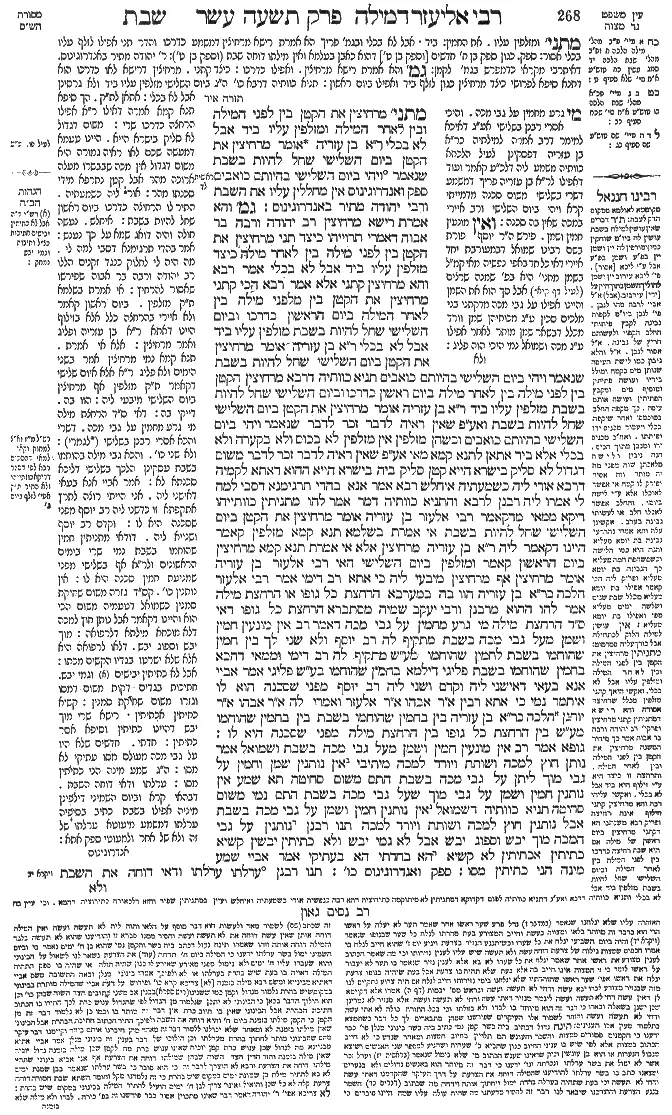
Shabbat 134b - Guemara
מתני׳ מרחיצין את הקטן בין לפני המילה ובין לאחר המילה ומזלפין עליו ביד אבל לא בכלי ר"א בן עזריה אומר מרחיצין את הקטן ביום השלישי שחל להיות בשבת שנאמר (בראשית לד, כה) ויהי ביום השלישי בהיותם כואבים ספק ואנדרוגינוס אין מחללין עליו את השבת ורבי יהודה מתיר באנדרוגינוס:
גמ׳ והא אמרת רישא מרחיצין רב יהודה ורבה בר אבוה דאמרי תרוייהו כיצד תני מרחיצין את הקטן בין לפני מילה בין לאחר מילה כיצד מזלפין עליו ביד אבל לא בכלי אמר רבא והא מרחיצין קתני אלא אמר רבא הכי קתני מרחיצין את הקטן בין מלפני מילה בין לאחר המילה ביום הראשון כדרכו וביום השלישי שחל להיות בשבת מזלפין עליו ביד אבל לא בכלי ר"א בן עזריה אומר מרחיצין את הקטן ביום השלישי שחל להיות בשבת שנאמר ויהי ביום השלישי בהיותם כואבים תניא כוותיה דרבא מרחיצין הקטן בין לפני מילה בין לאחר מילה ביום ראשון כדרכו וביום השלישי שחל להיות בשבת מזלפין עליו ביד ר"א בן עזריה אומר מרחיצין את הקטן ביום השלישי שחל להיות בשבת ואע"פ שאין ראיה לדבר זכר לדבר שנאמר ויהי ביום השלישי בהיותם כואבים וכשהן מזלפין אין מזלפין לא בכוס ולא בקערה ולא בכלי אלא ביד אתאן לתנא קמא מאי אע"פ שאין ראיה לדבר זכר לדבר משום דגדול לא סליק בישרא הייא קטן סליק ביה בישרא הייא ההוא דאתא לקמיה דרבא אורי ליה כשמעתיה איחלש רבא אמר אנא בהדי תרגימנא דסבי למה לי אמרו ליה רבנן לרבא והתניא כוותיה דמר אמר להו מתניתין כוותייהו דיקא ממאי מדקאמר רבי אלעזר בן עזריה אומר מרחיצין את הקטן ביום השלישי שחל להיות בשבת אי אמרת בשלמא תנא קמא מזלפין קאמר היינו דקאמר ליה ר"א בן עזריה מרחיצין אלא אי אמרת תנא קמא מרחיצין ביום הראשון קאמר ומזלפין ביום השלישי האי רבי אלעזר בן עזריה אומר מרחיצין אף מרחיצין מיבעי ליה כי אתא רב דימי אמר רבי אלעזר הלכה כר"א בן עזריה הוו בה במערבא הרחצת כל גופו או הרחצת מילה אמר להו ההוא מרבנן ורבי יעקב שמיה מסתברא הרחצת כל גופו דאי ס"ד הרחצת מילה מי גרע מחמין על גבי מכה דאמר רב אין מונעין חמין ושמן מעל גבי מכה בשבת מתקיף לה רב יוסף ולא שני לך בין חמין שהוחמו בשבת לחמין שהוחמו מע"ש מתקיף לה רב דימי וממאי דהכא בחמין שהוחמו בשבת פליגי דילמא בחמין שהוחמו בע"ש פליגי אמר אביי אנא בעאי דאישני ליה וקדם ושני ליה רב יוסף מפני שסכנה הוא לו איתמר נמי כי אתא רבין א"ר אבהו א"ר אלעזר ואמרי לה א"ר אבהו א"ר יוחנן הלכה כר"א בן עזריה בין בחמין שהוחמו בשבת בין בחמין שהוחמו מע"ש בין הרחצת כל גופו בין הרחצת מילה מפני שסכנה היא לו:
גופא אמר רב אין מונעין חמין ושמן מעל גבי מכה בשבת ושמואל אמר נותן חוץ למכה ושותת ויורד למכה מיתיבי אין נותנין שמן וחמין על גבי מוך ליתן על גבי מכה בשבת התם משום סחיטה תא שמע אין נותנין חמין ושמן על גבי מוך שעל גבי מכה בשבת התם נמי משום סחיטה תניא כוותיה דשמואל אין נותנין חמין ושמן על גבי מכה בשבת אבל נותנין חוץ למכה ושותת ויורד למכה תנו רבנן נותנין על גבי המכה מוך יבש וספוג יבש אבל לא גמי יבש ולא כתיתין יבשין קשיא כתיתין אכתיתין לא קשיא הא בחדתי הא בעתיקי אמר אביי שמע מינה הני כתיתין מסו:
ספק ואנדרוגינוס כו':
תנו רבנן (ויקרא יב, ג) ערלתו ערלתו ודאי דוחה את השבת
Comments from Rashi on Masechet Shabbat Page 134b
מתני' ומזלפין עליו . את החמין: ביד . אבל לא בכלי ובגמ' פריך הא אמרת רישא מרחיצין דמשמע כדרכו והדר תני אפילו לזלף עליו בכלי אסור: ספק . כגון ספק בן ח' חדשים [וספק בן ט'] דהוא כאבן בעלמא ואין מילתו דוחה שבת (וספק בן ט'): ר' יהודה מתיר באנדרוגינוס . דאיתרבי מקראי כדמפרש בגמ' לקמן: גמ' והא אמרת רישא מרחיצין . ואפילו כדרכו: כיצד קתני . מרחיצין דרישא לאו כדרכו הוא דתנא סיפא לפרושי כיצד מרחיצין כגון לזלף ביד ואפילו ביום ראשון: תניא כוותיה דרבא כו' ה"ג ביום השלישי מזלפין עליו ביד ולא גרסינן אבל לא בכלי: אתאן לת"ק . הך סיפא תנא קמא אמרה דאילו ר"א אפילו הרחצה כדרכו שרי: משום דגדול לא סליק בישרא הייא . היינו טעמא דמעשה שכם לאו ראיה גמורה היא משום דגדול אין מכה שבבשרו מעלה ארוכה מהר אבל קטן נתרפא מידי סכנתו מהר: אורי ליה כשמעתיה . התיר לו הרחיצה כדרכו ביום ראשון שחל להיות בשבת: איחלש . נעשה חולה והיה דואג שמא על כך נענש: אמר בהדי תרגימנא דסבי למה לי . מה היה לי לחלוק כנגד זקנים הללו רב יהודה ורבה בר אבוה שפירשו שאסור להרחיץ: אי אמרת בשלמא ת"ק מזלפין . ביום ראשון קאמר ולא איירי בהרחצה כלל אלא בזילוף היינו דאתא ר"א בן עזריה ופליג ואמר מרחיצין: אלא אי אמרת . תנא קמא נמי מרחיצין אמר בשני הימים ולא פליג ר"א אלא איום שלישי דקאמר ת"ק מזלפין אף מרחיצין ביום השלישי מיבעי ליה: הוו בה . דייקי בה: דאי ס"ד הרחצת מילה מי גרע מחמין על גבי מכה . דשרי והכא אסרי רבנן בשלישי (לגמרי): ולא שני כו' . והכא גבי מילה בהוחמו בשבת עסקינן הלכך בשלישי דליכא סכנתא לא: אמר אביי אנא בעאי דאישני ליה . אני הייתי רוצה לתרץ אתקפתא זו כדשני ליה רב יוסף מפני שסכנה היא לו: וקדם רב יוסף ושנייא ליה . דודאי מתניתין חמין שהוחמו בשבת נמי שרי בימים הראשונים ולר"א אף בשלישי מפני שמניעת חמין סכנה היא לו: אין נותנין כו' . קס"ד גזרה משום שחיקת סמנין כשמואל דטעמיה משום הכי הוא והיינו דקאמר אבל נותן חוץ למכה דלא מוכחא מילתא דלרפואה: מוך יבש וספוג יבש . דלאו לרפואה היא אלא שלא ישרטו בגדיו הקשים מכתו: אבל לא כתיתין יבישים וגמי יבש . חתיכות בגדים דקות משום דמסו וגזרו משום שחיקת סמנין: קשיא כתיתין אכתיתין . רישא שרי מוך יבש דהיינו כתיתין וסיפא אסר כתיתין: חדתי . חדשים שלא היו על גבי מכה מעולם מסו עתיקי לא מסו: ה"ג שמע מינה הני כתיתין מסו: ערלתו ודאי דוחה השבת . דבהאי קרא וביום השמיני דילפינן מיניה אפילו בשבת כתיב בסיפיה ערלתו דמשמע מיעוטא ערלתו של זה ולא אחר ולמעוטי ספק אתא:
Comments from Tosafot - Shabbat 134b
מי גרע מחמין על גבי מכה . והיכי אסרי רבנן בשלישי אע"ג דאיכא למימר דרב אמרה למילתיה כר"א בן עזריה דפסקינן לעיל הלכתא כוותיה משמע ליה דלכ"ע קאמר ועוד דאפילו לר"א בן עזריה פריך דמשמע דשרי בשלישי משום סכנה מדמייתי קרא ויהי ביום השלישי ורב איירי במכה שאין בה סכנה: ואין מונעין חמין ושמן . פירש ה"ר יוסף פורת בשם רבינו שמואל דבמעורבת יחד איירי דאי כל חד באפי נפשיה מאי קמ"ל בשמן מתני' היא בפ' שמנה שרצים (לעיל שבת דף קיא.) אבל סך הוא את השמן והיינו אפילו על גבי מכה מדקתני בני מלכים סכין ע"ג מכותיהן שמן וורד מכלל דבשאר שמן מותר לאחר אפילו ע"ג מכה ושמואל נמי היכי הוה פליג:
Shabbat 134b - Mishnah translated into english
MISHNA: One may wash the baby on Shabbat, both before the circumcision and after the circumcision. And one may sprinkle hot water on him by hand but not with a vessel, in order to depart from the usual manner in which this is done. Rabbi Elazar ben Azarya says: One may wash the baby on the third day following his circumcision, even if that third day occurs on Shabbat. On the third day following circumcision, the baby is considered to be in danger, as it is stated with regard to the men of Shekhem, who were circumcised: “And it came to pass on the third day, when they were in pain” (Genesis 34:25). This teaches us that on the third day the pain of circumcision poses a danger.
If there is uncertainty whether or not to circumcise a baby, and likewise in the case of a hermaphrodite [androginos] baby, who possesses both male and female genitals, one does not desecrate Shabbat to perform the circumcision, since it is not certain that the circumcision is required. And Rabbi Yehuda permits doing so for a hermaphrodite baby.
GEMARA: The Gemara questions the mishna’s statement that one may sprinkle hot water on the baby only by hand: Didn’t you say in the first clause of the mishna that one may wash him? If it is permissible to wash the baby, it is certainly permitted to sprinkle water on him with a vessel.
It was Rav Yehuda and Rabba bar Avuh who both said that this mishna is taught employing the style known as: How. In this style, the latter clause clarifies the former. It should be understood as follows: One may wash the baby both before circumcision and after circumcision. How may one wash him? One sprinkles water on him by hand, but not with a vessel.
Rava said: Doesn’t it teach the phrase one may wash, and washing is not sprinkling. Rather, Rava said that this is what the mishna is teaching: One may wash the baby, both before circumcision and after circumcision. On the first day, one may wash him in his usual manner. However, on the third day following his circumcision, if that third day occurs on Shabbat, one may sprinkle water on him only by hand, but not with a vessel, and one may certainly not wash him. Rabbi Elazar ben Azarya says: One may even wash the baby on the third day following his circumcision, if that third day occurs on Shabbat, because the baby is considered to be in a state of danger, as it is stated: “And it came to pass on the third day, when they were in pain.”
A baraita was taught in accordance with the opinion of Rava: One may wash the baby, both before circumcision and after circumcision. On the first day, the baby is washed in its usual manner; and on the third day that occurs on Shabbat, one sprinkles water on him by hand but not with a vessel, and one may not wash him. Rabbi Elazar ben Azarya says: One may even wash the baby on the third day that occurs on Shabbat. And although there is no absolute proof for this matter, there is an allusion to this matter, as it is stated: “And it came to pass on the third day, when they were in pain.”
The baraita continues: And when one sprinkles water, he may not sprinkle it with a cup or with a bowl or with any other vessel; rather, he does so by hand. The Gemara comments: We have arrived at the opinion of the first tanna, as this clarification of how the sprinkling was performed is not in accordance with the opinion of Rabbi Elazar ben Azarya. Rather, it is an elaboration of the statement of the first tanna.
The Gemara comments: What is the meaning of the baraita’s statement: And although there is no absolute proof for this matter, there is an allusion to this matter? Why does the baraita refer to it as a mere allusion when it appears to offer absolute proof that the pain of circumcision is significant on the third day? The Gemara answers: Indeed, it is not a complete proof, because an adult’s flesh does not heal immediately, but a child’s flesh heals immediately. Perhaps a baby is not considered to be in danger on the third day.
The Gemara relates: A certain person came before Rava to ask a question with regard to washing a baby after circumcision. Rava ruled in accordance with its halakhic ruling, that everyone agrees that it is permitted to wash the baby on the first day. Afterward, Rava became ill. He said: Why did I involve myself in the opinions of the Elders? The Sages of the previous generation, Rav Yehuda and Rabba bar Avuh, articulated the halakha in a different, more stringent manner. Rava felt that his illness was divine punishment for taking their opinions lightly.
The Sages said to Rava: Wasn’t it taught in the baraita in accordance with the opinion of the Master, so why are you concerned with regard to your ruling, which is correct? Rava said to them: The language of the mishna is precise according to their opinion.
From where can this be concluded? From the fact that it is stated: Rabbi Elazar ben Azarya says: One may wash the baby on the third day that occurs on Shabbat. Granted, if you say that the first tanna is saying only that one may sprinkle, but prohibited washing the baby even on the first day, that explains what Rabbi Elazar ben Azarya said to him in response: One may wash. However, if you say that the first tanna is saying one may wash on the first day and one may sprinkle on the third day, this statement: Rabbi Elazar ben Azarya says that one may wash, is imprecise. Rather, he should have said that one may even wash on the third day. Rabbi Elazar ben Azarya is not disputing whether it is ever permitted to wash the baby, as the first tanna also agrees that it is permitted on the first day; the dispute is whether or not that leniency extends to the third day as well. Since a precise reading of the mishna supports the opinion of Rav Yehuda and Rabba bar Avuh, the baraita supporting Rava’s opinion is not sufficiently authoritative to supplant that understanding.
When Rav Dimi came from Eretz Yisrael to Babylonia, he said that Rabbi Elazar said: The halakha is in accordance with the opinion of Rabbi Elazar ben Azarya.
They discussed the following question in the West, in Eretz Yisrael: Is this referring to washing the entire body of the baby, or to washing the place of the circumcision?
One of the Sages, named Rabbi Ya’akov, said to them: It stands to reason that it is referring to washing his entire body, as if it should enter your mind that the dispute is with regard to washing the place of the circumcision, is this washing any worse than placing hot water on a wound? Rav said: One does not prevent placing hot water and oil on a wound on Shabbat. Therefore, it should certainly be permissible to wash the place of the circumcision.
Rav Yosef strongly objects to this proof: And is there no difference for you between hot water heated on Shabbat and hot water heated on Shabbat eve? Placing hot water heated on Shabbat eve on a wound violates only the rabbinic decree prohibiting healing; whereas heating hot water on Shabbat violates a Torah prohibition.
Rav Dimi strongly objects to Rav Yosef’s point: And from where do you know that here it is with regard to hot water heated on Shabbat that they disagree? Perhaps it is with regard to hot water heated on Shabbat eve that they disagree. Abaye said: I wanted to answer him, but Rav Yosef answered him first: The dispute is certainly with regard to heating water on Shabbat, because failure to do so poses a danger for the baby.
It was also stated that when Ravin came to Babylonia from Eretz Yisrael, he said that Rabbi Abbahu said that Rabbi Elazar said, and others say that Rabbi Abbahu said that Rabbi Yoḥanan said: The halakha is in accordance with the opinion of Rabbi Elazar ben Azarya, both with regard to hot water heated on Shabbat and with regard to hot water heated on Shabbat eve; both with regard to washing the entire body and with regard to washing the place of the circumcision alone, because failure to do so poses a danger for the baby.
Rav’s statement with regard to the treatment of a wound on Shabbat was mentioned in passing. The Gemara proceeds to discuss the matter itself. Rav said: One does not prevent placing hot water and oil on a wound on Shabbat. And Shmuel said: It is prohibited to place hot water or oil directly onto the wound, because it appears to be medical treatment. Rather, one places the hot water or the oil outside the wound, above it, and it flows and descends to the wound itself.
The Gemara raises an objection from that which was taught in a baraita: One may not place oil or hot water on soft material to place it on a wound on Shabbat. This supports the opinion of Shmuel, who prohibits performing actions that appear to be medical treatment. However, that ruling contradicts the opinion of Rav. The Gemara answers: There, the baraita prohibited placing oil or hot water on a rag, not because it appears to be medical treatment; rather, it is prohibited due to concern that one might perform the prohibited labor of squeezing.
The Gemara cites an additional proof. Come and hear that which was taught in a similar baraita: One may not place oil or hot water on soft material that is on a wound on Shabbat. This baraita supports the opinion of Shmuel. The Gemara answers: There too, it is prohibited due to concern for squeezing.
A baraita was taught explicitly in accordance with the opinion of Shmuel: One may not place oil or hot water on a wound on Shabbat; however, one may place it outside the wound so it flows and descends to the wound.
The Sages taught another baraita: One may place a dry compress and a dry sponge on a wound, but not a dry reed and not dry rags. The Gemara comments: This is difficult, as the first statement with regard to rags, i.e., a dry compress which is a type of rag, contradicts the second statement with regard to rags, as the baraita first permitted placing rags on a wound and then prohibited doing so. The Gemara answers: This is not difficult. This statement, which prohibits placing rags on a wound, is referring to new rags, which heal the wound; that statement, which permits placing rags on a wound, is referring to old rags, which are not effective in healing. Abaye said: Conclude from this that these rags heal, which is useful information with regard to the treatment of wounds.
We learned in the mishna: If there is uncertainty whether or not to circumcise a baby, and likewise in the case of a hermaphrodite baby, one does not desecrate Shabbat to perform the circumcision of a hermaphrodite, even on the eighth day following the birth. The Sages taught in a baraita: The verse states: “And on the eighth day the flesh of his foreskin shall be circumcised” (Leviticus 12:3), and they interpreted the verse: “His foreskin” indicates that only the circumcision of his halakhically certain foreskin overrides Shabbat,
Traduction : The William Davidson digital edition of the Koren Noé Talmud, with commentary by Rabbi Adin Even-Israel Steinsaltz.