 Talmud Bavli
Bava Kamma 8b : Youtube
Daf TubeYoutube
2 video classes :
Bava Kamma Page 8b
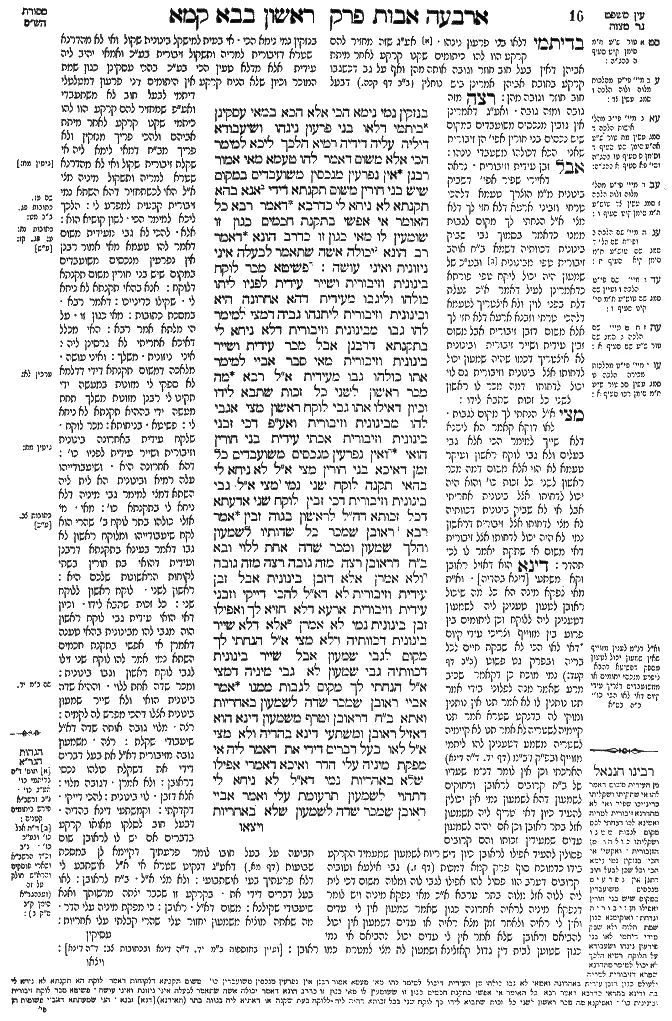
Bava Kamma 8b - Guemara
בנזקין נמי נימא הכי אלא הכא במאי עסקינן ביתמי דלאו בני פרעון נינהו ושיעבודא דיליה עליה דידיה רמיא הלכך ליכא למימר הכי אלא משום דאמר להו טעמא מאי אמור רבנן אין נפרעין מנכסין משועבדים במקום שיש בני חורין משום תקנתא דידי אנא בהא תקנתא לא ניחא לי כדרבא דאמר רבא כל האומר אי אפשי בתקנת חכמים כגון זו שומעין לו מאי כגון זו כדרב הונא דאמר רב הונא יכולה אשה שתאמר לבעלה איני ניזונית ואיני עושה:
פשיטא מכר לוקח בינונית וזיבורית ושייר עידית לפניו ליתו כולהו וליגבו מעידית דהא אחרונה היא ובינונית וזיבורית ליתנהו גביה דמצי למימר להו גבו מבינונית וזיבורית דלא ניחא לי בתקנתא דרבנן אבל מכר עידית ושייר בינונית וזיבורית מאי סבר אביי למימר אתו כולהו גבו מעידית א"ל רבא מה מכר ראשון לשני כל זכות שתבא לידו וכיון דאילו אתו גבי לוקח ראשון מצי אגבי להו מבינונית וזיבורית ואע"פ דכי זבני בינונית וזיבורית אכתי עידית בני חורין הואי ואין נפרעין מנכסים משועבדים כל זמן דאיכא בני חורין מצי א"ל לא ניחא לי בהאי תקנה לוקח שני נמי מצי א"ל גבי בינונית וזיבורית דכי זבין לוקח שני אדעתא דכל זכותא דה"ל לראשון בגוה זבין אמר רבא ראובן שמכר כל שדותיו לשמעון והלך שמעון ומכר שדה אחת ללוי ובא ב"ח דראובן רצה מזה גובה רצה מזה גובה ולא אמרן אלא דזבן בינונית אבל זבן עידית וזיבורית לא דא"ל להכי דייקי וזבני עידית וזיבורית ארעא דלא חזיא לך ואפילו זבן בינונית נמי לא אמרן אלא דלא שייר בינונית דכוותיה דלא מצי א"ל הנחתי לך מקום לגבי שמעון אבל שייר בינונית דכוותיה גבי שמעון לא גבי מיניה דמצי א"ל הנחתי לך מקום לגבות ממנו אמר אביי ראובן שמכר שדה לשמעון באחריות ואתא ב"ח דראובן וטרף משמעון דינא הוא דאזיל ראובן ומשתעי דינא בהדיה ולא מצי א"ל לאו בעל דברים דידי את דאמר ליה אי מפקת מיניה עלי הדר ואיכא דאמרי אפילו שלא באחריות נמי דא"ל לא ניחא לי דתהוי לשמעון תרעומת עלי ואמר אביי ראובן שמכר שדה לשמעון שלא באחריות
Comments from Rashi on Masechet Bava Kamma Page 8b
בנזקין נמי נימא הכי . אי בעית למישקל בינונית שקול ואי לא מהדרנא שטרא דזיבורית למריה ותשקול זיבורית בע"כ ואמאי יהיב ליה עידית אלא מדלא טעין הכי בע"כ בהכי עסקינן כגון שמת המוכר וכיון שלא הניח קרקע אין היתומים בני פרעון דמטלטלי דיתמי לבעל חוב לא משתעבדי ואע"פ שמחזיר להם קרקע הוו להו כיתמי שקנו קרקע לאחר מיתת אביהם ולהכי פריך מנזקין ולא פריך מב"ח דמאי לימא ליה אי שקלת זיבורית שקול ואי לא מהדרנא שטרא למריה ותשקול מיניה מצי א"ל האי לכשתחזיר דהא השתא נמי זיבורית קבעית למפרע לי: הלכך ליכא למימר הכי . לשון קושיא הוא: משום דא"ל . ראובן: אלא . להכי לא גבי מעידית משום דאמר להו טעמא מאי אמור רבנן אין נפרעין מנכסים משועבדים במקום שיש בני חורין משום תקנתא דלוקח: אנא בהאי תקנתא לא ניחא לי . שקילו כדינייכו: דאמר רבא במסכת כתובות: דאמר רבא . במסכת כתובות: מאי כגון זו . על הי מלתא אמר רבא: האי מכלל דאיכא אחריתי לא גרסינן ליה איני ניזונית . משלך: ואיני עושה מלאכה דמשום תקנתא דידי דדלמא לא ספקי לי מזונות במעשה ידי תקינו לי רבנן מזונות משלך תחת מעשה ידי בההיא תקנתא לא ניחא לי: פשיטא . בניחותא: מכר לוקח . שלקח עידית באחרונה בינונית וזיבורית ושייר עידית לפניו כו': דהא אחרונה היא . ושיעבודייהו עלה רמיא ובינונית הא לית ליה השתא דמצי למימר גבי מיניה דלא ניחא לי בתקנתא כו': מאי . מי אזלי כולהו בתר לוקח ב' שהרי הוא לקח שיעבודייהו ומלוקח ראשון לא גבו דאמר בעינא בתקנתא דרבנן ועידית דהואי בת חורין בשתי לקוחות הראשונות שלכם היא: ראשון לשני . לוקח ראשון ללוקח שני: כל זכות שתבא לידו . וכיון דאי הואי עידית גבי לוקח ראשון הוה מגבי להו מבינונית בהאי טענה דאמרן אי אפשי בתקנת חכמים השתא נמי אמר להו לוקח שני זילו לגבי לוקח ראשון וגבו בינונית: ומכר שדה אחת ללוי . וההיא שדה בינונית הואי ולא שייר שמעון בינונית אצלו דהכי מפרש לה לקמיה: רצה . מלוי גובה אותה שדה דא"ל שיעבודי שקלת: רצה . משמעון גובה מזיבורית דא"ל את בעל דברים דידי את דשקלת כולהו נכסי דראובן: ולא אמרן . דגובה מלוי: אלא דזבן . לוי בינונית: להכי דייקי . דקדקתי: וקמשתעי דינא בהדיה . דבעל חוב לסלקו מאותו קרקע בדברים אם יש לו לראובן שום תביעה על בעל חובו לומר פרעתיך דקיימא לן במסכת שבועות (דף מא.) דאע"ג דנקיט שטרא אי א"ל אישתבע לי דלא פרעתיך בעי אישתבועי: ולא מצי א"ל . ב"ח לראובן: לאו בעל דברים דידי את . בקרקע זו שכבר יצתה מרשותך ואנא שיעבודי שקילנא: משום דא"ל . ראובין: כי מפקת מיניה עלי הדר . מה שאתה מוציא משמעון יחזור עלי שהרי קבלתי עלי אחריות:
Comments from Tosafot - Bava Kamma 8b
בדיתמי דלאו בני פרעון נינהו . אע"ג שזה מחזיר להם קרקע הוו להו כיתומים שקנו קרקע לאחר מיתת אביהן דאין בעל חוב חוזר וגובה אותה מהן ואף על גב דכשגבו קרקע בחובת אביהן אמרינן ביש נוחלין (ב"ב דף קכה.) דבעל חוב חוזר וגובה מהן: רצה מזה גובה ומזה גובה . ואע"ג דאמרינן אין גובין מנכסים משועבדים במקום שיש נכסים בני חורין אפי' הן זיבורית שאני הכא דכולהו משעבדי נינהו: אבל זבן עידית וזיבורית . נראה דאיירי שפיר אפי' דשביק בינונית מ"מ הוצרך טעמא דלהכי טרחי וזביני ארעא דלא חזי לך דלא מצי א"ל הנחתי לך מקום לגבות ממנו כדאמר בסמוך גבי שביק בינונית דכוותיה דשמא ב"ח אוהב זיבורית טפי מבינונית ובע"כ של שמעון היה יכול ליקח טפי פורתא כדאמרינן לעיל דאמר א"כ נעלת דלת בפני לוין ולא איצטריך לטעמא דלהכי טרחי וזבנא ארעא דלא חזי לך אלא משום דזבן זיבורית אבל משום זבין עידית ושייר זיבורית ובינונית לא איצטריך דכמו שהיה שמעון יכול לדחותו אצל בינונית וזיבורית גם לוי יכול לדחותו דמה מכר לו ראשון לשני כל זכות שתבא לידו: מצי א"ל הנחתי לך מקום לגבות . לאו דוקא קאמר הא לישנא דלא שייך למימר הכי אלא גבי בעלים ולא גבי לוקח ראשון ועיקר טעמא לא הוי אלא משום דמה מכר ראשון לשני כל זכות כו' והוא היה יכול לדחותו אצל בינונית אחריתי אבל אי לא שביק בינונית דכוותיה לא מצי לדחותו אצל זיבורית דראשון נמי לא היה יכול לדחותו אצל זיבורית דאי משום אי שתקת יאמר לו לכי תהדר: דינא הוא דאזיל ראובן וקא משתעי [דינא בהדיה] . וא"ת מאי נפקא מינה הא כל מה שיכול ראובן לטעון טענינן ליה לשמעון דטענינן ליה ללוקח וכן ליתומים בין פרוע בין מזוייף וצריכי עידי קיום . דאי לאו הכי לא שבקת חיים לכל בריה ובפרק גט פשוט (ב"ב דף קעד:) נמי מוכח כן דקאמר שכיב מרע שאמר מנה לפלוני בידי אמר תנו נותנין לו לא אמר תנו אין נותנין ומוקי לה בדנקט שטרא אמר תנו קיימיה לשטריה לא אמר תנו לא קיימיה לשטריה משמע דטענינן להו ליתמי מזוייף ובפ"ק דב"מ (דף יד. ד"ה דינא) הארכתי וכן אין לומר דנ"מ שעדיו של ב"ח קרובים לראובן ורחוקים לשמעון דהא לשמעון נמי אין יכולין להעיד כיון דאי טריף ליה משמעון אזל בתר ראובן וכן אם יהיה לשמעון עדים שמעידין זכותו והם קרובים פסולין להעיד אפילו לראובן כיון דיש ריוח לשמעון שמעמיד הקרקע בידו כדמוכח סוף פרק קמא דמכות (דף ז.) גבי אילעא וטוביה קרובים דערב הוו פסיל להו אפילו לגבי לוה ומלוה משום דכי לית ליה ללוה אזל מלוה בתר ערבא א"כ מאי נפקא מיניה ויש לומר דנפקא מיניה לראיה אחרונה כגון שאמר שמעון אין לי עדים ואין לי ראיה ולאחר זמן מצא ראיה או עדים דשמעון אין יכול להביאם וראובן שלא אמר אין לי עדים יכול להביאם אי נמי כגון שטוען לבית דין גדול קאזלינא ושמעון לא מצי למטרח כמו ראובן:
Bava Kamma 8b - Mishnah translated into english
then also with regard to damages, let the buyer say this to the injured party. He could threaten to return the bill of sale of the inferior-quality land to the debtor, which would force the injured party to collect directly from the debtor’s inferior-quality land. Since the buyer can do so, he can effectively force the injured party to collect from the purchased intermediate-quality land instead of fulfilling his right to collect from superior-quality land. Yet, the baraita teaches that in this case each party collects from the land that was originally liened to him, which means that damages are collected from the superior-quality land, indicating that this threat would not be effective.
Rather, with what are we dealing here? We are dealing with a case in which the debtor died and his inheritors are his orphans, who are not subject to an obligation to repay the debts of their father. When one dies, his monetary debts are not inherited by his children. And therefore, the lien of the creditor rests solely upon the buyer of the land. Any lien that was in effect with regard to the land he owned at the time he incurred the obligation remains, and his creditors can therefore collect what they are owed from that land, even if it is in the possession of a buyer.
Therefore, one cannot say that the ruling in the baraita is based on the fact that the buyer can threaten to return the bill of sale to the debtor, or in this case, to his orphans. In this case, even if he were to return the bill of sale, the creditors would not be able to collect from the land now in the orphans’ possession, as they received it anew, not as an inheritance from their father. Therefore, the creditors can still collect from the plots of land that remain with the buyer.
The Gemara suggests another explanation of the Tosefta: Rather, not all the creditors collect from the superior-quality land, which was the last plot of land purchased from the debtor, because the buyer can say to them: What is the reason that the Sages said one is not paid from liened property, i.e., property liened to a creditor that has been sold by the debtor, whenever there is unsold property still in the debtor’s possession? It is due to an ordinance created solely for my benefit, as I should not be expected to pay from the land I purchased when the debtor is still able to pay. If that ordinance were to be in effect in this case, all of their liens would be in effect with regard to the superior-quality land, as that was purchased last. In this case I do not find this ordinance satisfactory to me, and I would prefer for the lien of each creditor to remain in effect with regard to the land it had been on initially, and I will give each of you that land.
The Gemara notes: This fact that one is not required to avail himself of the financial benefit provided by a rabbinic ordinance is in accordance with the opinion of Rava. As Rava says: Anyone who says: I do not want to avail myself of the financial benefit provided by an ordinance of the Sages, such as this one, one listens to him.
The Gemara asks: What does Rava mean by saying: An ordinance of the Sages, such as this one?
The Gemara answers: His statement is in accordance with the opinion of Rav Huna. As Rav Huna says: The Sages enacted that a husband must sustain his wife. They also enacted that he receives her earnings in exchange. Yet, a wife is legally entitled to say to her husband: I will not be sustained by you, and in turn I will not work i.e., you will not keep my earnings. Since his obligation to sustain her is only for her benefit, she may forgo her sustenance and retain her earnings for herself.
The Gemara discusses a limitation on the buyer’s ability to refuse the benefit of the rabbinic ordinance: It is obvious that if the buyer sold, of the land he purchased from the debtor, the intermediate- and inferior-quality land to another buyer and retained in his possession only the superior-quality land, which he had purchased last, then all the creditors may come and collect from the superior-quality land.
For if the intermediate-quality and inferior quality land were in his possession, he would be able to say to the creditors: Collect from the intermediate-quality land and from the inferior-quality land, as it is not satisfactory to me to avail myself of the ordinance of the Sages. Now that he has sold the land of intermediate and inferior quality, however, he cannot unilaterally waive the ordinance without the consent of the second buyer. The second buyer benefits from the ordinance, since it compels the creditors to collect from the first buyer, and he will therefore certainly not agree to waive it.
But if the first buyer sold only the superior-quality land that he had purchased last, and he retained in his possession the intermediate-quality and inferior-quality land, what is the halakha?
Abaye thought to say: All the creditors should come and collect from the superior-quality land. Since that land was the last plot of land in the debtor’s possession, the creditors’ right of collection was restricted to that land, irrespective of the fact that it was then subsequently sold twice.
Rava said to him: What has the first person sold to the second in any sale? Any rights that will come into his possession. And since, if the creditors were to come to the first buyer while he was still in possession of all three plots of land, he could have had them collect from the intermediate-quality and inferior-quality land; and this is the halakha even though when he initially purchased the intermediate-quality and inferior-quality land the superior-quality land was still unsold property in the debtor’s possession. As although there is the rabbinic ordinance that one does not exact payment from liened property when there is unsold property still in the debtor’s possession, the buyer could have said to them: I do not find this ordinance satisfactory to me.
Rava continues: Therefore, since the first buyer had the right to say this, the second buyer can also say to them: Collect from the intermediate-quality and inferior-quality land in the first buyer’s possession. As, when the second buyer purchased the superior-quality land, he purchased it with the understanding that he also acquired all the rights that the first buyer had with regard to that land. Accordingly, he also acquires the right to insist that the creditors collect from the intermediate-quality and inferior-quality land.
In a related ruling, Rava says: In the case of Reuven, who sold all of his fields to Shimon simultaneously and Shimon proceeded to sell one field of those purchased to Levi, and Reuven’s creditor came to collect the debt, if the creditor so desires, he collects from this one, i.e., Shimon, and if he so desires, he collects from that one, i.e., Levi. And we said this only in a case where Levi purchased intermediate-quality land from Shimon. A creditor’s right is to collect the debt from intermediate-quality land. Accordingly, in this case, Reuven’s creditor can collect his loan from the intermediate-quality land even after it has been transferred into Levi’s possession. Nevertheless, if he so desires, he may insist on collecting his loan from any inferior-quality land left in Shimon’s possession. This is because a creditor also has the right to demand payment from a borrower’s inferior-quality land instead of his intermediate-quality land, and therefore that land is also liened to the loan.
But if Levi purchased superior-quality and inferior-quality land from Shimon, no, the creditor can collect only from Shimon’s intermediate-quality land, as Levi could say to him: For this reason I was particular to purchase superior-quality and inferior-quality land, which is land that is not fit for you to collect from as a creditor.
And if Levi purchased the intermediate-quality land from Shimon as well, we said that Reuven’s creditor can collect from him only in a case where he did not leave some similar intermediate-quality land in Shimon’s possession, as in that case, Levi is unable to say to the creditor: I left a place for you, i.e., a plot of land, in Shimon’s possession, from which to collect. But where Levi did leave some similar intermediate-quality land in Shimon’s possession, the creditor does not collect from Levi, as Levi is able to say to him: I left a place for you from which to collect.
In another related ruling, Abaye says: In the case of Reuven, who sold a field liened to his creditor to Shimon with a guarantee, meaning that Reuven agreed to reimburse Shimon should Reuven’s creditor collect the debt from that field, and Reuven’s creditor came and seized the field from Shimon, the halakha is that Reuven can go and litigate with his creditor and claim that he had already repaid the debt, and insist that the field be returned to Shimon. And the creditor is unable to say to Reuven: I am not legally answerable to you, as I am not taking away your land, since you sold it to Shimon. This is because Reuven could say to him: If you extract the field from him, Shimon will return to me and demand that I reimburse him for his loss. Consequently, I am involved in this matter.
And there are those who say: Even in a case where he sold the field without a guarantee, as well, in which case even if the creditor seizes Shimon’s land there are no legal consequences for Reuven, Reuven can litigate with the creditor, as he could say to him: It is not satisfactory for me for Shimon to have a grievance against me because he lost the field I sold him on account of the fact that I was unable to pay my debt. Consequently, I am involved in this matter.
And in another related ruling, Abaye says: In the case of Reuven, who sold a field to Shimon without a guarantee,
Traduction : The William Davidson digital edition of the Koren Noé Talmud, with commentary by Rabbi Adin Even-Israel Steinsaltz.