 Talmud Bavli
The learning on the whole site is dedicated : L'ilui Nishmat Rav Chlomo Ben Jamilla
The learning on the whole site is dedicated : L'ilui Nishmat יוסף בן מושה
The learning on the whole site is dedicated : L'ilui Nishmat Chemouel Eliezer ben Batcheva
Bava Kamma 60b : Youtube
Daf TubeYoutube
2 video classes :
Bava Kamma Page 60b
Bava Kamma 60b - Guemara
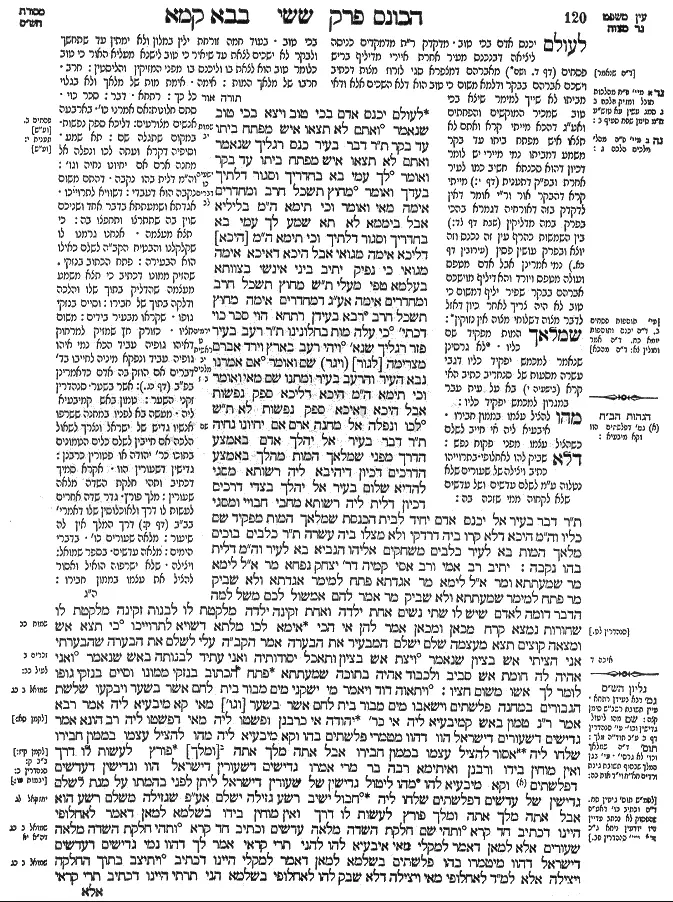
לעולם יכנס אדם בכי טוב ויצא בכי טוב שנאמר (שמות יב, כב) ואתם לא תצאו איש מפתח ביתו עד בקר ת"ר דבר בעיר כנס רגליך שנאמר ואתם לא תצאו איש מפתח ביתו עד בקר ואומר (ישעיהו כו, כ) לך עמי בא בחדריך וסגור דלתיך בעדך ואומר (דברים לב, כה) מחוץ תשכל חרב ומחדרים אימה מאי ואומר וכי תימא ה"מ בליליא אבל ביממא לא תא שמע לך עמי בא בחדריך וסגור דלתיך וכי תימא ה"מ [היכא] דליכא אימה מגואי אבל היכא דאיכא אימה מגואי כי נפיק יתיב ביני אינשי בצוותא בעלמא טפי מעלי ת"ש מחוץ תשכל חרב ומחדרים אימה אע"ג דמחדרים אימה מחוץ תשכל חרב רבא בעידן רתחא הוי סכר כוי דכתי' (ירמיהו ט, כ) כי עלה מות בחלונינו ת"ר רעב בעיר פזר רגליך שנא' (בראשית יב, י) ויהי רעב בארץ וירד אברם מצרימה [לגור] (ויגר) שם ואומר (מלכים ב ז, ד) אם אמרנו נבא העיר והרעב בעיר ומתנו שם מאי ואומר וכי תימא ה"מ היכא דליכא ספק נפשות אבל היכא דאיכא ספק נפשות לא ת"ש (מלכים ב ז, ד) לכו ונפלה אל מחנה ארם אם יחיונו נחיה ת"ר דבר בעיר אל יהלך אדם באמצע הדרך מפני שמלאך המות מהלך באמצע הדרכים דכיון דיהיבא ליה רשותא מסגי להדיא שלום בעיר אל יהלך בצדי דרכים דכיון דלית ליה רשותא מחבי חבויי ומסגי ת"ר דבר בעיר אל יכנס אדם יחיד לבית הכנסת שמלאך המות מפקיד שם כליו וה"מ היכא דלא קרו ביה דרדקי ולא מצלו ביה עשרה ת"ר כלבים בוכים מלאך המות בא לעיר כלבים משחקים אליהו הנביא בא לעיר וה"מ דלית בהו נקבה:
יתיב רב אמי ורב אסי קמיה דר' יצחק נפחא מר א"ל לימא מר שמעתתא ומר א"ל לימא מר אגדתא פתח למימר אגדתא ולא שביק מר פתח למימר שמעתתא ולא שביק מר אמר להם אמשול לכם משל למה הדבר דומה לאדם שיש לו שתי נשים אחת ילדה ואחת זקינה ילדה מלקטת לו לבנות זקינה מלקטת לו שחורות נמצא קרח מכאן ומכאן אמר להן אי הכי אימא לכו מלתא דשויא לתרוייכו (שמות כב, ה) כי תצא אש ומצאה קוצים תצא מעצמה שלם ישלם המבעיר את הבערה אמר הקב"ה עלי לשלם את הבערה שהבערתי אני הציתי אש בציון שנאמר (איכה ד, יא) ויצת אש בציון ותאכל יסודותיה ואני עתיד לבנותה באש שנאמר (זכריה ב, ט) ואני אהיה לה חומת אש סביב ולכבוד אהיה בתוכה שמעתתא פתח הכתוב בנזקי ממונו וסיים בנזקי גופו לומר לך אשו משום חציו:
(שמואל ב כג, טו) ויתאוה דוד ויאמר מי ישקני מים מבור בית לחם אשר בשער ויבקעו שלשת הגבורים במחנה פלשתים וישאבו מים מבור בית לחם אשר בשער [וגו'] מאי קא מיבעיא ליה אמר רבא אמר ר"נ טמון באש קמיבעיא ליה אי כר' יהודה אי כרבנן ופשטו ליה מאי דפשטו ליה רב הונא אמר גדישים דשעורים דישראל הוו דהוו מטמרי פלשתים בהו וקא מיבעיא ליה מהו להציל עצמו בממון חבירו שלחו ליה אסור להציל עצמו בממון חבירו אבל אתה מלך אתה [ומלך] פורץ לעשות לו דרך ואין מוחין בידו ורבנן ואיתימא רבה בר מרי אמרו גדישים דשעורין דישראל הוו וגדישין דעדשים דפלשתים וקא מיבעיא להו מהו ליטול גדישין של שעורין דישראל ליתן לפני בהמתו על מנת לשלם גדישין של עדשים דפלשתים שלחו ליה (יחזקאל לג, טו) חבול ישיב רשע גזילה ישלם אע"פ שגזילה משלם רשע הוא אבל אתה מלך אתה ומלך פורץ לעשות לו דרך ואין מוחין בידו בשלמא למאן דאמר לאחלופי היינו דכתיב חד קרא (שמואל ב כג, יא) ותהי שם חלקת השדה מלאה עדשים וכתיב חד קרא (דברי הימים א יא, יג) ותהי חלקת השדה מלאה שעורים אלא למאן דאמר למקלי מאי איבעיא להו להני תרי קראי אמר לך דהוו נמי גדישים דעדשים דישראל דהוו מיטמרו בהו פלשתים בשלמא למאן דאמר למקלי היינו דכתיב (שמואל ב כג, יב) ויתיצב בתוך החלקה ויצילה אלא למ"ד לאחלופי מאי ויצילה דלא שבק להו לאחלופי בשלמא הני תרתי היינו דכתיב תרי קראי
Comments from Rashi on Masechet Bava Kamma Page 60b
בכי טוב . בעוד חמה זורחת ילין במלון ולא ימתין עד שתחשך ולבקר לא ישכים לצאת עד שיאיר כי טוב לישנא מעליא האור כי טוב כלומר טוב הוא לצאת בו וליכנס בו מפני המזיקין והליסטין: חרב . חרבו של מלאך המות: אימה . אימת מות של מלאך ולא בגלוי כל כך: תא שמע . וסיפיה דקרא ועתה לכו ונפלה אל מחנה ארם אם יחיונו נחיה וגו': אימה . אימת מות של מלאך ולא בגלוי כל כך: רתחא . דבר: סכר כוי . סתם חלונות: אם אמרנו כו' . בארבעה אנשים מצורעים: דליכא ספק נפשות . במקום שתגלה שם: וה"מ דלית בהו נקבה . דהתם משום נקבה הוא דעבדי: דשוויא לתרוייכו . אגדתא ושמעתתא בדבר אחד ושניכם שוין בה שתתרצו ותחפצו בה: כי תצא מעצמה . אנחנו גרמנו לו שקלקלנו והבטיח הקב"ה לשלם כאילו הוא הבעירה: פתח הכתוב בנזקי . שהזיק ממונו דכתיב כי תצא משמע מעצמה שהדליק בתוך שלו והלכה ודלקה בתוך של חבירו: וסיים בנזקי גופו . שקראו מבעיר בידים: משום חציו . כזורק חץ שמזיק למרחוק דאיהו גופיה עביד הכא נמי איהו גופיה עביד ונפקא מיניה לחייבו בד' דברים אם הוזק בה אדם כדאמרינן בפ"ב (דף כג.): אשר בשער . סנהדרין זקני השער: טמון באש קמיבעיא ליה . מעשה בא לפניו במחנה ששרפו אנשיו גדיש של ישראל ונצרך לשאול הלכה אם חייבין לשלם כלים הטמונים בתוכו כר' יהודה או פטורין כרבנן: גדישין דשעורין הוו . אקרא סמיך דכתיב ותהי חלקת השדה מלאה שעורין: מלך פורץ . גדר שדה אחרים לעשות לו דרך ולאוכלוסין שלו דאמרי' בב"ב (דף ק:) דרך המלך אין לה שיעור: מלאה עדשים . בספר שמואל: מלאה שעורים כו' . בדברי הימים: ויצילה . שלא ישרפוה הואיל ואסור להציל את עצמו בממון חבירו:
Comments from Tosafot - Bava Kamma 60b
לעולם יכנס אדם בכי טוב . מדקדק ר"ת מדמקדים כניסה ליציאה דבנכנס מעיר אחרת איירי מדיליף בריש פסחים (דף ד. ושם) מאברהם דמצפרא סגי לזרוז מצות דכתיב וישכם אברהם בבקר ודלמא משום כי טוב הוא דלא השכים אלא ודאי מביתו לא שייך למימר שיצא בכי טוב שמכיר המוקשים והפחתים ואע"ג דהכא מייתי קרא ואתם לא תצאו איש מפתח ביתו עד בקר משמע דמביתו נמי מיירי יש לומר דכיון דהוא סכנתא חשיב כמו לעיר אחרת ובפ"ק דתענית (דף י:) מייתי קרא דהבקר אור ור"י אומר דאין לדקדק בזה דאורחיה דגמרא בהכי בפרק במה מדליקין (שבת דף לד:) בין השמשות כהרף עין זה נכנס וזה יוצא ובפרק עושין פסין (עירובין דף כא.) נמי אמרינן אבל אדם מטפס ועולה מטפס ויורד והא דיליף מוישכם אברהם בבקר שפיר יליף דמשום כי טוב לא היה צריך לאחר כיון דאזל לדבר מצוה דשלוחי מצוה אין נזוקין: שמלאך המות מפקיד שם כליו . לא גרסינן שנאמר למכמש יפקיד כליו דגבי עשרה מסעות של סנחריב כתיב האי קרא (בישעיהו י) בא על עית עבר במגרון למכמש יפקיד כליו: מהו להציל עצמו בממון חבירו . איבעיא ליה אי חייב לשלם כשהציל עצמו מפני פקוח נפש: דלא שביק להו לאחלופי . בתרוייהו כתיב ויצילה של שעורים שלא נטלוה ע"מ לשלם עדשים ושל עדשים שלא לקחוה ממי שזכה בה:
Bava Kamma 60b - Mishnah translated into english
A person should always enter an unfamiliar city at a time of good, i.e., while it is light, as the Torah uses the expression “It is good” with regard to the creation of light (see Genesis 1:4). This goodness is manifest in the sense of security one feels when it is light. And likewise, when one leaves a city he should leave at a time of good, meaning after sunrise the next morning, as it is stated in the verse: “And none of you shall go out of the opening of his house until the morning” (Exodus 12:22).
§ The Sages taught: If there is plague in the city, gather your feet, i.e., limit the time you spend out of the house, as it is stated in the verse: “And none of you shall go out of the opening of his house until the morning.” And it says in another verse: “Come, my people, enter into your chambers, and shut your doors behind you; hide yourself for a little moment, until the anger has passed by” (Isaiah 26:20). And it says: “Outside the sword will bereave, and in the chambers terror” (Deuteronomy 32:25).
The Gemara asks: What is the reason for citing the additional verses introduced with the term: And it says? The first verse seems sufficient to teach the principle that one should not emerge from one’s house when there is a plague. The Gemara answers: And if you would say that this matter, the first verse that states that none of you shall go out until morning, applies only at night, but in the day one may think that the principle does not apply, for this reason the Gemara teaches: Come and hear: “Come, my people, enter into your chambers, and shut your doors behind you.”
And if you would say that this matter applies only where there is no fear inside, which explains why it is preferable to remain indoors, but where there is fear inside, one might think that when he goes out and sits among people in general company it is better, therefore, the Gemara introduces the third verse and says: Come and hear: “Outside the sword will bereave, and in the chambers terror.” This means that although there is terror in the chambers, outside the sword will bereave, so it is safer to remain indoors.
At a time when there was a plague, Rava would close the windows of his house, as it is written: “For death is come up into our windows” (Jeremiah 9:20).
The Sages taught: If there is famine in the city, spread your feet, i.e., leave the city, as it is stated in the verse: “And there was a famine in the land; and Abram went down into Egypt to sojourn there” (Genesis 12:10). And it says: “If we say: We will enter into the city, then the famine is in the city, and we shall die there; and if we sit here, we die also, now come, and let us fall unto the host of the Arameans; if they save us alive, we shall live; and if they kill us, we shall but die” (II Kings 7:4).
What is the reason for citing the second verse, introduced with the term: And it says? And if you would say that this matter, the principle of leaving the city, applies only where there is no uncertainty concerning a life-threatening situation, but where there is uncertainty concerning a life-threatening situation this principle does not apply, come and hear: “Come, and let us fall unto the host of the Arameans; if they save us alive, we shall live; and if they kill us, we shall but die.”
The Sages taught: If there is a plague in the city, a person should not walk in the middle of the road, due to the fact that the Angel of Death walks in the middle of the road, as, since in Heaven they have given him permission to kill within the city, he goes openly in the middle of the road. By contrast, if there is peace and quiet in the city, do not walk on the sides of the road, as, since the Angel of Death does not have permission to kill within the city, he hides himself and walks on the side of the road.
The Sages taught: If there is a plague in the city, a person should not enter the synagogue alone, as the Angel of Death leaves his utensils there, and for this reason it is a dangerous place. And this matter, the danger in the synagogue, applies only when there are no children learning in the synagogue, and there are not ten men praying in it. But if there are children learning or ten men praying there, it is not a dangerous place.
The Sages taught: If the dogs in a certain place are crying for no reason, it is a sign that they feel the Angel of Death has come to the city. If the dogs are playing, it is a sign that they feel that Elijah the prophet has come to the city. These matters apply only if there is no female dog among them. If there is a female dog nearby, their crying or playing is likely due to her presence.
§ Rav Ami and Rav Asi sat before Rabbi Yitzḥak Nappaḥa. One Sage said to Rabbi Yitzḥak Nappaḥa: Let the Master say words of halakha, and the other Sage said to Rabbi Yitzḥak Nappaḥa: Let the Master say words of aggada. Rabbi Yitzḥak Nappaḥa began to say words of aggada but one Sage did not let him, so he began to say words of halakha but the other Sage did not let him.
Rabbi Yitzḥak Nappaḥa said to them: I will relate a parable. To what can this be compared? It can be compared to a man who has two wives, one young and one old. The young wife pulls out his white hairs, so that her husband will appear younger. The old wife pulls out his black hairs so that he will appear older. And it turns out that he is bald from here and from there, i.e., completely bald, due to the actions of both of his wives.
Rabbi Yitzḥak Nappaḥa continued and said to them: If so, I will say to you a matter that is appropriate to both of you, which contains both halakha and aggada. In the verse that states: “If a fire breaks out, and catches in thorns” (Exodus 22:5), the term “breaks out” indicates that it breaks out by itself. Yet, the continuation of the verse states: “The one who kindled the fire shall pay compensation,” which indicates that he must pay only if the fire spread due to his negligence. The verse can be explained allegorically: The Holy One, Blessed be He, said that although the fire broke out in the Temple due to the sins of the Jewish people, it is incumbent upon Me to pay restitution for the fire that I kindled.
I, God, kindled a fire in Zion, as it is stated: “The Lord has accomplished His fury, He has poured out His fierce anger; and He has kindled a fire in Zion, which has devoured its foundations” (Lamentations 4:11). And I will build it with fire in the future, as it is stated: “For I, says the Lord, will be for her a wall of fire round about; and I will be the glory in her midst” (Zechariah 2:9).
There is a halakha that can be learned from the verse in Exodus, as the verse begins with damage caused through one’s property: “If a fire breaks out,” and concludes with damage caused by one’s body: “The one who kindled the fire.” This indicates that when damage is caused by fire, it is considered as though the person who kindled the fire caused the damage directly with his body. That serves to say to you that the liability for his fire damage is due to its similarity to his arrows. Just as one who shoots an arrow and causes damage is liable because the damage was caused directly through his action, so too, one who kindles a fire that causes damage is liable because it is considered as though the damage were caused directly by his actions.
§ The Gemara continues with another statement of aggada on a related topic: The verse states: “And David longed, and said: Oh, that one would give me water to drink of the well of Bethlehem, which is by the gate! And the three mighty men broke through the host of the Philistines, and drew water out of the well of Bethlehem, that was by the gate, and took it, and brought it to David; but he would not drink it, but poured it out to the Lord” (II Samuel 23:15–16). The Sages understood that David was not simply asking for water, but was using the term as a metaphor referring to Torah, and he was raising a halakhic dilemma.
What is the dilemma that David is raising? Rava says that Rav Naḥman says: He was asking about the halakha with regard to a concealed article damaged by a fire. He wanted to know whether the halakha is in accordance with the opinion of Rabbi Yehuda, who holds that one is liable to pay for such damage, or whether the halakha is in accordance with the opinion of the Rabbis, who hold that one is exempt from liability for damage by fire to concealed articles. And the Sages in Bethlehem answered him what they answered him.
Rav Huna stated a different explanation of the verse: There were stacks of barley belonging to Jews in which the Philistines were hiding, and David wanted to burn down the stacks to kill the Philistines and save his own life. He raised the dilemma: What is the halakha? Is it permitted to save oneself by destroying the property of another?
They sent the following answer to him: It is prohibited to save oneself by destroying the property of another. But you are king, and a king may breach the fence of an individual in order to form a path for himself, and none may protest his action, i.e., the normal halakhot of damage do not apply to you since you are king.
The Rabbis, and some say that it was Rabba bar Mari, give an alternative explanation of the dilemma and said: The stacks of barley belonged to Jews, and there were stacks of lentils belonging to the Philistines. David needed barley to feed his animals. And David raised the following dilemma: What is the halakha? I know that I may take the lentils belonging to a gentile to feed my animals, but is it permitted to take a stack of barley belonging to a Jew, to place before one’s animal for it to consume, with the intent to pay the owner of the barley with the stacks of lentils belonging to the Philistines?
The Sages of Bethlehem sent the following reply to him: “If the wicked restore the pledge, give back that which he had taken by robbery, walk in the statutes of life, committing no iniquity; he shall surely live, he shall not die” (Ezekiel 33:15). This verse teaches that even though the robber repays the value of the stolen item, he is nevertheless considered to be wicked, and is described as such in the verse, and a commoner would not be allowed to act as you asked. But you are king, and a king may breach the fence of an individual in order to form a path for himself, and none may protest his action.
The Gemara discusses the different explanations: Granted, according to the one who says that David was asking whether he could take the stacks of barley and exchange them, i.e., repay the owners of the barley, with stacks of lentils, this is as it is written in one verse: “And the Philistines were gathered together into a troop, where was a plot of ground full of lentils; and the people fled from the Philistines” (II Samuel 23:11), and it is written in one other verse: “He was with David at Pas Dammim, and there the Philistines were gathered together to battle, where was a plot of ground full of barley; and the people fled from before the Philistines” (I Chronicles 11:13). This apparent contradiction can be reconciled by saying that there were two fields, one of barley and one of lentils.
But according to Rav Huna, the one who says that David’s question was asked because he wanted to burn the stacks of barley, for what purpose does he require these two verses? How does he explain this contradiction? Rav Huna could have said to you that there were also stacks of lentils belonging to Jews, inside which the Philistines were hiding.
Granted, according to the one who says that David asked his question because he wanted to burn the stacks, this is as it is written in the following verse with regard to David: “But he stood in the midst of the plot, and saved it, and slew the Philistines; and the Lord performed a great victory” (II Samuel 23:12). But according to the one who says that David’s question was asked with regard to exchanging the lentils for the barley, what is the meaning of the phrase: “And saved it”?
The Rabbis answer that David saved it in that he did not permit them to exchange the value of the barley with the lentils.
Granted, according to both of these two opinions, this is as it is written in two distinct verses, one describing the field of lentils and one describing the field of barley.
Traduction : The William Davidson digital edition of the Koren Noé Talmud, with commentary by Rabbi Adin Even-Israel Steinsaltz.