 Talmud Bavli
Bava Kamma 59b : Youtube
Daf TubeYoutube
2 video classes :
Bava Kamma Page 59b
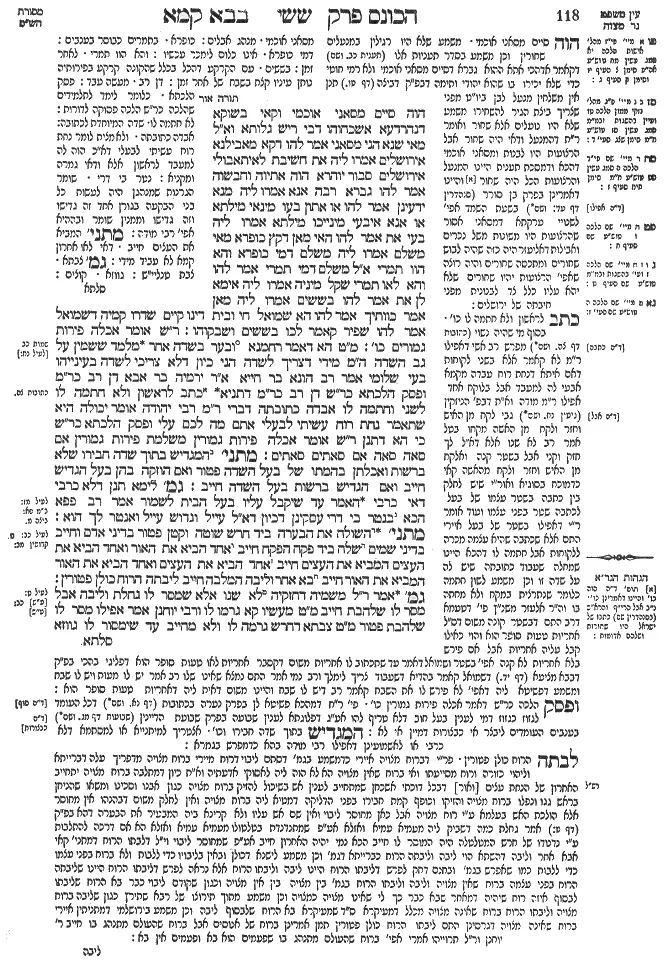
Bava Kamma 59b - Guemara
הוה סיים מסאני אוכמי וקאי בשוקא דנהרדעא אשכחוהו דבי ריש גלותא וא"ל מאי שנא הני מסאני אמר להו דקא מאבילנא אירושלים אמרו ליה את חשיבת לאיתאבולי אירושלים סבור יוהרא הוה אתיוה וחבשוה אמר להו גברא רבה אנא אמרו ליה מנא ידעינן אמר להו או אתון בעו מינאי מילתא או אנא איבעי מינייכו מילתא אמרו ליה בעי את אמר להו האי מאן דקץ כופרא מאי משלם אמרו ליה משלם דמי כופרא והא הוו תמרי א"ל משלם דמי תמרי אמר להו והא לאו תמרי שקל מיניה אמרו ליה אימא לן את אמר להו בששים אמרו ליה מאן אמר כוותיך אמר להו הא שמואל חי ובית דינו קיים שדרו קמיה דשמואל אמר להו שפיר קאמר לכו בששים ושבקוהו:
ר"ש אומר אכלה פירות גמורים כו':
מ"ט הא דאמר רחמנא (שמות כב, ד) ובער בשדה אחר מלמד ששמין על גב השדה ה"מ מידי דצריך לשדה הני כיון דלא צריכי לשדה בעינייהו בעי שלומי אמר רב הונא בר חייא א"ר ירמיה בר אבא דן רב כר"מ ופסק הלכתא כר"ש דן רב כר"מ דתניא כתב לראשון ולא חתמה לו לשני וחתמה לו אבדה כתובתה דברי ר"מ רבי יהודה אומר יכולה היא שתאמר נחת רוח עשיתי לבעלי אתם מה לכם עלי ופסק הלכתא כר"ש כי הא דתנן ר"ש אומר אכלה פירות גמורין משלמת פירות גמורין אם סאה סאה אם סאתים סאתים:
מתני׳ המגדיש בתוך שדה חבירו שלא ברשות ואכלתן בהמתו של בעל השדה פטור ואם הוזקה בהן בעל הגדיש חייב ואם הגדיש ברשות בעל השדה חייב:
גמ׳ לימא תנן דלא כרבי דאי כרבי האמר עד שיקבל עליו בעל הבית לשמור אמר רב פפא הכא בנטר בי דרי עסקינן דכיון דא"ל עייל וגדוש עייל ואנטר לך הוא:
מתני׳ השולח את הבערה ביד חרש שוטה וקטן פטור בדיני אדם וחייב בדיני שמים שלח ביד פקח הפקח חייב אחד הביא את האור ואחד הביא את העצים המביא את העצים חייב אחד הביא את העצים ואחד הביא את האור המביא את האור חייב בא אחר וליבה המלבה חייב ליבתה הרוח כולן פטורין:
גמ׳ אמר ר"ל משמיה דחזקיה לא שנו אלא שמסר לו גחלת וליבה אבל מסר לו שלהבת חייב מ"ט מעשיו קא גרמו לו ורבי יוחנן אמר אפילו מסר לו שלהבת פטור מ"ט צבתא דחרש גרמה לו ולא מחייב עד שימסור לו גווזא
Comments from Rashi on Masechet Bava Kamma Page 59b
מסאני אוכמי . מנהג אבלים: כופרא . בתמרים כבוסר בענבים: דמי כופרא . אינו כלום לימכר עכשיו: והא הוו תמרי . לאחר זמן: בששים . עם הקרקע דהכל בכלל שהקונה קרקע בפירותיה נותן עיניו קצת בשבח של אחר זמן: דן רב . מעשה עבד: פסק הלכתא . כלומר לימד לתלמידים שהלכה כר"ש הלכה פסוקה לדורות: לא חתמה לו . שדה המיוחדת לכתובה: אבדה כתובתה . ולא מצית לומר נחת רוח עשיתי לבעלי דא"כ הוה לה למעבד לראשון אלא ודאי גמרה ומקניא: נטר בי דרי . שומר הגרנות שמנהגן היה לעשות כל בני הבקעה בגורן אחד זה גדישו וזה גדישו וממנין שומר ובההיא אפי' רבי מודה: מתני' המביא את העצים חייב . דאי לאו אחרון קמא לא עביד מידי: גמ' צבתא . צבת טנליי"ש: גמ' צבתא . צבת טנליי"ש: גווזא . קיצים:
Comments from Tosafot - Bava Kamma 59b
הוה סיים מסאני אוכמי . משמע שלא היו רגילין במנעלים שחורין וכן משמע בסדר תעניות אלו (תענית כב. ושם) דקאמר אדהכי אתא ההוא גברא דסיים מסאני אוכמי ולא רמי חוטי כדי שלא יכירו בו שהוא יהודי ותימה דבפ"ק דביצה (דף טו.) תנן אין משלחין מנעל לבן ביו"ט מפני שצריך ביצת הגיר להשחירו משמע שלא היו נועלים אלא שחור ואומר ר"ת דהמנעל ודאי היה שחור אבל הרצועות היו לבנות ומסאני אוכמי דהכא ודמסכת תענית היינו המנעל והרצועות הכל היה שחור והיינו דאמרינן בפרק בן סורר (סנהדרין דף עד: ושם) בשעת השמד אפי' לשנויי ערקתא דמסאני אסור שהרצועות היו משונות משל נכרים ואבילות דאליעזר היה כזה שהיה לבוש שחורים ומתכסה שחורים והיה רוצה שאפי' הרצועות יהיו שחורים שלא יהא עליו כלל צד לבנונית מפני חיבתה של ירושלים: כתב לראשון ולא חתמה לו כו' . בסוף מי שהיה נשוי (כתובות דף צה. ושם.) מפרש רב אשי דאפילו ר"מ לא קאמר אלא בשני לקוחות דאם איתא דנחת רוח עבדה מקמא אבעי לה למעבד אבל בלוקח אחד אפילו ר"מ מודה וא"ת דבפ' הניזקין (גיטין נח. ושם) גבי לקח מן האיש וחזר ולקח מן האשה מקחו בטל אמר רב לא שנו אלא דא"ל לך חזק וקני אבל בשטר קנה ואלקח מן האיש וחזר ולקח מהאשה קאי כדמוכח בסוגיא ואור"י שיש לחלק בין כתבה בשטר עצמו של בעל לכתבה שטר בפני עצמו ועוד אומר ר"י דאפילו בשטר של בעל איירי התם אלא שכתבה שהיא עצמה מכרה ללקוחות אבל חתמה לו דהכא היינו שמחלה שעבוד כתובתה שיש לה על שדה זו וכן משמע לשון חתמה כלומר שנתרצית במקח ולא מחתה בו וה"ר אלעזר משנ"ץ פי' דטעמא דרב התם דבשטר קונה משום דס"ל אחריות טעות סופר הוא והוי כאילו קבל עליה אחריות אבל אם פירש בלא אחריות לא קנה אפי' בשטר ושמואל דאמר עד שתכתוב לו אחריות משום דקסבר אחריות לאו טעות סופר הוא דפליגי בהכי בפ"ק דבבא מציעא (דף יד.) דשמואל קאמר בהדיא דשעבוד צריך לימלך ורב נמי אמר התם נמצא שאינו שלו רב אמר יש לו מעות ויש לו שבח ומשמע דפשיטא ליה דאפי' לא פירש לו את השבח קאמר רב דיש לו שבח והיינו משום דאית ליה דאחריות טעות סופר הוא: ופסק הלכה כר"ש דאמר אכלה פירות גמורין כו' . פי' ר"ח דמהכא פשיטא לן בפרק נערה בכתובות (דף נא. ושם.) דכל העומד לגזוז כגזוז דמי לענין בעל חוב דלא טריף להו אע"ג דפלוגתא לענין שבועה בפרק שבועת הדיינין (שבועות דף מג. ושם) בענבים העומדים ליבצר אי כבצורות דמיין אי לא: המגדיש בתוך שדה חבירו וכו' . אצטריך למיתנייא או למסתמא דלא כרבי או לאשמועינן דאפילו רבי מודה בהא כדמפרש בגמרא: לבתה הרוח כולן פטורין . פר"י דברוח מצויה איירי כדמשמע בגמ' דסתם ליבוי דרוח מיירי ברוח מצויה מדפריך עלה דברייתא וליהוי כזורה ורוח מסייעתו ואי ברוח שאין מצויה הא לא הוה ליה לאסוקי אדעתיה וא"ת כיון דמתלבה ברוח מצויה יתחייב האחרון של הנחת עצים [ואור] דבכל דוכתי אשכחן שמתחייב לענין אש בשיכול להזיק ברוח מצויה כגון אבנו וסכינו ומשאו שהניחן בראש גגו ונפלו ברוח מצויה והזיקו וכופף קמת חבירו בפני הדליקה דמטיא ליה ברוח מצויה ואין לחלק משום דבהנהו אין מחוסר אלא הולכת האש בעלמא ע"י רוח מצויה אבל כאן מחוסר ליבוי ואין שם אש עליו ולא קרינא ביה המבעיר את הבערה דהא בפ"ק (דף ט:) אמר גחלת כמה דשביק ליה מעמיא עמיא ואזלא אע"פ שמתנדנדת בטלטולו מעמיא עמיא ואזלא הא אם דרכה להתלבות ע"י נדנודו של חרש המטלטלה היה המוסר לו חייב הכא נמי יהיה האחרון חייב אע"פ שמחוסר ליבוי וי"ל דלבתו הרוח דמתני' קאי אבא אחר וליבה דהשתא הוי ליבה וליבתה הרוח כברייתא דגמ' וכן משמע לישנא דכולן ובאין בליבויו כדי ללבות ולא ברוח בפני עצמו כדי ללבות כמו שאפרש בגמ' ובחנם דחק לפרש דליבתו הרוח היינו ליבה וליבתו הרוח אלא נראה לפרש דליבתו הרוח היינו שליבתה הרוח בפני עצמה ברוח שאין מצויה וליבה וליבתו הרוח בגמ' בין מצויה בין אין מצויה וכגון שקודם ליבוי כבר בא הרוח שליבתו לבסוף איזה רוח שיהיה דמאחר שבא כבר כך לי שאינו מצויה כמצויה וכן משמע מתוך תירוצו של רבא שתירץ כגון שליבה ברוח מצויה וליבתו הרוח ברוח שאינה מצויה מכלל דמעיקרא ס"ד שמעיקרא בא הרוח שלבסוף ליבה וכן משמע בירושלמי דמתניתין איירי ברוח שאינה מצויה דגרסינן התם ליבתו הרוח כולן פטורין תמן אמרינן ברוח של אנוסים אבל ברוח שהעולם מתנהג בו חייב ר' יוחנן ור"ל תרוייהו אמרי אפי' ברוח שהעולם מתנהג בו שפעמים הוא בא ופעמים אין בא:
Bava Kamma 59b - Mishnah translated into english
was wearing black shoes, unlike the Jewish custom of that time, and standing in the market of Neharde’a. Officials of the house of the Exilarch found him and said to him: What is different about you that causes you to wear these shoes? He said to them: I am wearing them because I am in mourning over the destruction of the Temple and Jerusalem, and so I wear black shoes, as is the custom of mourners. They said to him: Are you a man of such importance to publicly mourn over Jerusalem? They thought that it was simply presumptuousness on his part. Since he was acting against the prevalent Jewish custom, they brought him to the prison and incarcerated him.
Eliezer Ze’eira said to them: I am a great man, a scholar, and it is fitting for me to mourn publicly over the destruction of Jerusalem. They said to him: How do we know that you are a scholar? He said to them: Either you ask of me a matter of halakha and I will answer you, or I will ask you a matter of halakha and you will answer me. They said to him: You ask.
He said to them: With regard to one who cuts a cluster of flowers on the stem of a date palm belonging to another, what is he required to pay? They said to him: He pays the value of the date stem. He said to them: But ultimately they will become ripe dates, which are worth more. They said to him: If so, he pays the value of the future dates. He said to them: But he did not take ripe dates from the other person, so how can the court obligate him to pay for damage that he did not cause?
They said to Eliezer Ze’eira: You tell us the correct appraisal for the date stem. He said to them: The court appraises the damage relative to a similar piece of land sixty times the size. They said to him: Who says an opinion as you do, so that you can prove you are correct? He said to them: Shmuel is alive and his court exists; you can ask him. They sent the question before Shmuel, together with the ruling of Eliezer Ze’eira. Shmuel said to them: He is saying well to you, because the halakha is as he says; the appraisal is relative to an area sixty times greater. Upon hearing this, the officials of the Exilarch realized that he was a great man and they released him.
§ The mishna (55b) teaches that Rabbi Shimon says: If the animal ate ripe produce, the owner pays the value of the ripe produce eaten. What is the reason for Rabbi Shimon’s opinion? This that the Merciful One states in the Torah: “And it feed in another’s field” (Exodus 22:4), which teaches that the court appraises the damage relative to another field, this statement applies specifically with regard to produce that requires a field to grow. For one’s animal eating this produce, which do not require the field in order to ripen further, the animal’s owner must pay their value as they are.
Rav Huna bar Ḥiyya says that Rabbi Yirmeya bar Abba says: Rav judged a practical halakha on a certain issue in accordance with the opinion of Rabbi Meir, despite the fact that in general the halakha is not in accordance with his opinion. And furthermore, he ruled that the halakha is in accordance with the opinion of Rabbi Shimon, even though in that case his was a minority opinion.
Rav Huna bar Ḥiyya explains: Rav judged a practical halakha in accordance with the opinion of Rabbi Meir, as it is taught in a baraita: In the case of a field designated by its owner as a lien for his wife’s marriage contract, which he subsequently wants to sell, if he wrote a document of sale to a first buyer, but his wife did not sign for him to endorse the sale, and subsequently the husband wrote a document of sale to a second buyer, and his wife signed for him, she thereby loses the lien of her marriage contract, since the sale is effective and she can no longer collect from this field; this is the statement of Rabbi Meir. Rabbi Yehuda says that she can say: I did it only to please my husband, but I did not mean it and never intended to forgo my rights. What claim do you, the purchasers, have against me? Therefore, the lien is still in effect. Rav judged a case in accordance with the opinion of Rabbi Meir.
And Rav ruled that the halakha is in accordance with the opinion of Rabbi Shimon, as we learned in the mishna: Rabbi Shimon says: If one’s animal ate ripe produce, the owner pays the value of ripe produce eaten. Therefore, if it ate one se’a of produce, he pays the value of one se’a of produce, and if it ate two se’a, he pays for two se’a. Although Rabbi Shimon’s opinion is the minority one, Rav ruled in accordance with it.
MISHNA: In a case of one who stacks his produce in another’s field without permission from the owner of that field, and an animal belonging to the owner of the field eats the produce, the owner of the field is exempt. And if the animal is injured by the produce, the owner of the stack is liable. But if he stacked them in that field with permission, the owner of the field is liable for damage caused to the produce.
GEMARA: The Gemara asks: Shall we say that that which we learned in the mishna is not in accordance with the opinion of Rabbi Yehuda HaNasi? As, if the mishna were in accordance with the opinion of Rabbi Yehuda HaNasi, doesn’t he say: A homeowner who gives another permission to bring items into his courtyard is not responsible for them unless the homeowner accepts on himself to safeguard them? The mishna does not mention any such acceptance of responsibility. Rav Pappa said: Here we are dealing with the supervisor of the threshing floors, to whom people would entrust their produce. As, since the supervisor says to the owner of the produce: Bring it in and stack it, it is as though he had said to him: Bring it in and I will supervise it for you.
MISHNA: One who sends a fire, i.e., places a burning object, in the hand of a deaf-mute, an imbecile, or a minor is exempt for any damage later caused by the fire according to human laws but liable according to the laws of Heaven. If he sent it in the hand of a halakhically competent person, the halakhically competent person is liable, not the one who sent him.
If one person brought the fire, and one other person subsequently brought the wood, causing the fire to spread, the one who brought the wood is liable for any damage caused. Conversely, if one person first brought the wood, and subsequently one other person brought the fire, the one who brought the fire is liable, since it was he who actually kindled the wood.
If another came and fanned the flame, and as a result the fire spread and caused damage, the one who fanned it is liable, since he is the proximate cause of the damage. If the wind fanned the flames, all the people involved are exempt, since none of them actually caused the damage.
GEMARA: Reish Lakish says in the name of Ḥizkiyya: They taught that one who sends fire in the hand of a deaf-mute, an imbecile, or a minor is exempt only when he conveyed to him a glowing coal and one of these people fanned it himself and set it alight. But if one conveyed a torch to a deaf-mute, imbecile, or minor, the one who gave it to him is liable. What is the reason for this halakha? The action of the one who gave it to him directly caused the fire to spread.
And Rabbi Yoḥanan says: Even if he conveyed a torch to him, he is exempt. What is the reason? It is the tongs of the deaf-mute that caused the damage, since torches do not cause fires on their own. And the one who gives dangerous objects to a deaf-mute is not rendered liable for the damage caused, unless he conveys branches [gavza] to him
Traduction : The William Davidson digital edition of the Koren Noé Talmud, with commentary by Rabbi Adin Even-Israel Steinsaltz.