 Talmud Bavli
Yevamot 83b : Youtube
Daf TubeYoutube
2 video classes :
Yevamot Page 83b
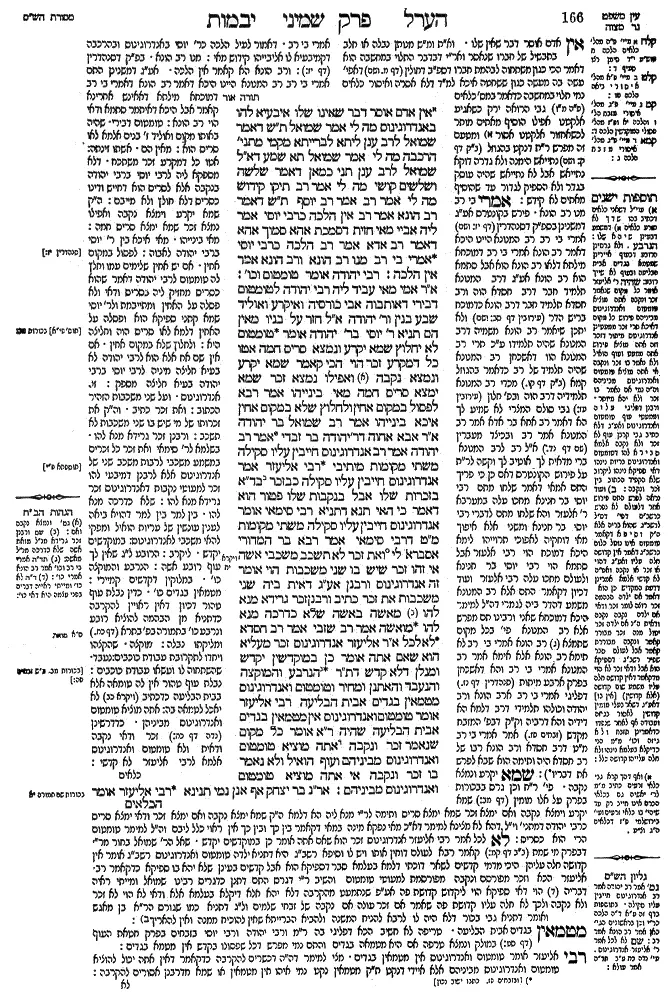
Yevamot 83b - Guemara
אין אדם אוסר דבר שאינו שלו איבעיא להו באנדרוגינוס מה לי אמר שמואל ת"ש דאמר שמואל לרב ענן ליתא לברייתא מקמי מתני' הרכבה מה לי אמר שמואל תא שמע דא"ל שמואל לרב ענן תני כמאן דאמר שלשה ושלשים קושי מה לי אמר רב תיקו קידוש מה לי אמר רב אמר רב יוסף ת"ש דאמר רב הונא אמר רב אין הלכה כרבי יוסי אמר ליה אביי מאי חזית דסמכת אהא סמוך אהא דאמר רב אדא אמר רב הלכה כרבי יוסי אמרי בי רב מנו רב הונא ורב הונא אמר אין הלכה:
רבי יהודה אומר טומטום וכו':
א"ר אמי מאי עביד ליה רבי יהודה לטומטום דבירי דאותבוה אבי כורסיה ואיקרע ואוליד שבע בנין ור' יהודה א"ל חזר על בניו מאין הם תניא ר' יוסי בר' יהודה אומר טומטום לא יחלוץ שמא יקרע ונמצא סריס חמה אטו כל דמקרע זכר הוי הכי קאמר שמא יקרע ונמצא נקבה ואפילו נמצא זכר שמא ימצא סריס חמה מאי בינייהו אמר רבא לפסול במקום אחין ולחלוץ שלא במקום אחין איכא בינייהו אמר רב שמואל בר יהודה א"ר אבא אחוה דר' יהודה בר זבדי אמר רב יהודה אמר רב אנדרוגינוס חייבין עליו סקילה משתי מקומות מיתיבי רבי אליעזר אמר אנדרוגינוס חייבין עליו סקילה כבזכר בד"א בזכרות שלו אבל בנקבות שלו פטור הוא דאמר כי האי תנא דתניא רבי סימאי אומר אנדרוגינוס חייבין עליו סקילה משתי מקומות מ"ט דרבי סימאי אמר רבא בר המדורי אסברא לי (ויקרא יח, כב) ואת זכר לא תשכב משכבי אשה אי זהו זכר שיש בו שני משכבות הוי אומר זה אנדרוגינוס ורבנן אע"ג דאית ביה שני משכבות את זכר כתיב ורבנן זכר גרידא מנא להו מאשה באשה שלא כדרכה מנא להו מואשה אמר רב שזבי אמר רב חסדא לא לכל א"ר אליעזר אנדרוגינוס זכר מעליא הוא שאם אתה אומר כן במוקדשין יקדש ומנלן דלא קדש דת"ר הנרבע והמוקצה והנעבד והאתנן ומחיר וטומטום ואנדרוגינוס מטמאין בגדים אבית הבליעה רבי אליעזר אומר טומטום ואנדרוגינוס אין מטמאין בגדים אבית הבליעה שהיה ר"א אומר כל מקום שנאמר זכר ונקבה אתה מוציא טומטום ואנדרוגינוס מביניהם ועוף הואיל ולא נאמר בו זכר ונקבה אי אתה מוציא טומטום ואנדרוגינוס מביניהם:
אר"נ בר יצחק אף אנן נמי תנינא רבי אליעזר אומר
Comments from Rashi on Masechet Yevamot Page 83b
אמרי בי רב . דאמור לעיל הלכה כר' יוסי באנדרוגינוס ובהרכבה דקמיבעיא לו אליבייהו קידוש מאי: מנו רב הונא . בפ"ק דסנהדרין (דף יז:): ורב הונא הא קאמר אין הלכה . אע"ג דמשנינן התם אמרי בי רב רב המנונא היינו היכא דאמר רב הונא דאמרי בי רב דמוכחא מילתא דאאינש אחרינא קאמר אבל היכא דאיתמר סתמא ודאי הוי רב הונא: טומטום דבירי . שהיה באותו מקום ואוליד ז' בנים אלמא לאו סריס הוא: מאין הם . אשתו זינתה: אטו כל דמקרע זכר משתכח . דלא מספקא ליה לרבי יוסי ברבי יהודה בנקבה אלא לסריס הוא דחייש ודינו כסריס דלא חולץ ולא מייבם: ה"ק שמא יקרע וימצא נקבה ואפילו נמצא זכר שמא ימצא סריס חמה: מאי בינייהו . מאי איכא בין ר' יוסי ברבי יהודה לאבוה: לפסול במקום אחין . אם יש אחין שלימים עמו וחלץ לה טומטום לרבי יהודה דאמר שהוא כסריס מחזיק ליה בסריס ודאי ולא פסלה על האחין ומתייבמת ולר' יוסי שמא קתני ספיקא הוא ופסלה על האחין דלמא לאו סריס הוה וחליצה היא: ולחלוץ שלא במקום אחין . אם אין שם אח אלא הוא לרבי יהודה לא בעיא חליצה מיניה לרבי יוסי ברבי יהודה בעיא חליצה מספק: זה אנדרוגינוס . ועל שני משכבות הזהיר הכתוב: ואת זכר כתיב . וה"ק את זכרותו של מי שיש בו שני משכבות לא תשכב: ורבנן זכר גרידא מנא להו . בשלמא לר' סימאי ואת זכר כל זכרים במשמע משכבי לרבות משכב שני של אנדרוגינוס אלא לרבנן דמיבעי להו זכר למעוטי נקבות דאנדרוגינוס זכר גרידא מנא להו: שלא כדרכה מנא להו . בין למר בין למר דהויא ביאה לענין עונשין של עריות הואיל ומפקי להאי משכבי לאנדרוגינוס: במוקדשים יקדש . ליקרב: הרובע ל"ג שאין לך עוף רובע אשה: הנרבע והמוקצה כו' . במלוקין דקדשים קמיירי: מטמאין בגדים כו' . כדין נבלת עוף טהור דכיון דאין ראויין להקרבה כדתניא מן הבהמה להוציא רובע ונרבע כו' בתמורה בפ' בתרא (דף כח.) ומליקתו נבלה: מוקצה . שהקצהו ויחדו לתקרובת עבודת כוכבים: נעבד . שהשתחוה לו ועשאו עבודת כוכבים: נבלת עוף טהור אין לה טומאה אלא בבית הבליעה כדכתיב (ויקרא כב) לא יאכל לטמאה בה: אתה מוציא טומטום ואנדרוגינוס מביניהן . כדדרשינן (נדה דף כח:) זכר ודאי נקבה ודאית ולא טומטום ואנדרוגינוס. אלמא לרבי אליעזר לא קדשי:
Comments from Tosafot - Yevamot 83b
אין אדם אוסר דבר שאין שלו . וא"ת ומ"ש מנותן נבלה או חלב בתבשיל של חברו שנאסר ואר"י דבדבר התלוי במחשבה הוא דאמר הכי כגון משתחוה לבהמת חברו דספ"ב דחולין (דף מ. ושם) דאפי' עשה בה מעשה כגון ששחטה איכא למ"ד דלא אסרה ואיסור כלאים נמי תלוי במחשבה כדאמר במס' כלאים (פ"ה מ"ו) גבי הרואה ירק כשאגיע אלקטנו אפילו הוסיף מאתים מותר לכשאחזור אלקטנו אסור ומטעם זה מפרש ר"ת דנקט בהגוזל (ב"ק דף ק: ושם) נתייאש הימנה ולא גדרה דוקא נתייאש אבל לא נתייאש שהיה עוסק בגדר ולא הספיק לגדור עד שהוסיף מאתים לא קידש: אמרי בי רב מנו רב הונא . פירש בקונטרס אע"ג דמשנינן בספ"ק דסנהדרין (דף יז: ושם) אמרי בי רב רב המנונא היינו היכא דאמר רב הונא אמרי בי רב דמוכחא מילתא דלאו רב הונא הוא אבל סתמא הוא רב הונא אע"ג דרב המנונא תלמיד חבר דרב חסדא הוה ורב חסדא תלמיד חבר דרב הונא כדמוכח בריש הדר (עירובין דף סב: ושם) ולא יתכן שיאמר רב הונא משמיה דרב המנונא שהיה תלמידו ע"כ תרי רב המנונא הוו דאשכחן רב המנונא שהיה תלמיד של רב כדאמר בהגוזל קמא (ב"ק דף קו.) מכדי רב המנונא תלמידיה דרב הוה ובפ' חלון (עירובין עז:) גבי סולם המצרי לא שמיע לך הא דאמר רב אחא בר אדא אמר רב המנונא אמר רב ובכיצד מעברין (שם דף נד.) א"ל רב לרב המנונא ברי מדאית לך אוטיב לך וקשה לר"ת על פירוש הקונטרס דאם כן כי פריך התם אמאי דאמר שלחו מתם רבי יוסי בר חנינא מחכו עלה במערבא ר' אלעזר והא שלחו מתם לדברי רבי יוסי בר חנינא ומשני אלא איפוך מאי דוחקיה לאפוכי תרוייהו לימא היכא דמוכח הוי רבי אלעזר אבל סתמא הוי רבי יוסי בר חנינא ולעולם מחכו עלה רבי אלעזר ועוד דכיון דקאמר התם אלא רב המנונא משמע דהדר ביה לגמרי דה"ל למימר היכא דמוכחא שאני ורבינו תם מפרש אלא רב המנונא פי' בכל מקום שתמצא רב הונא אמרי בי רב לא תימא רב הונא אלא אימא אמר רב המנונא אמרי בי רב והא דאשכחן בפרק ארבע מיתות (סנהדרין דף נז.) דפליגי אמרי בי רב ארב הונא ורב יהודה וכולהו תלמידי דרב דלמא הא דידיה והא דרביה וק"ק דבפ' המזבח מקדש (זבחים פז.) אמר אמרי בי רב מ"ט דרב חסדא ורב הונא רבו של רב חסדא היה ותימה הוא שבא לפרש את דבריו: שמא יקרע ונמצא נקבה . פי' ר"ח וכן גרס בבכורות בפרק על אלו מומין (דף מב:) שמא יקרע וימצא נקבה ואם ימצא זכר שמא ימצא סריס ותימה לר"י מנא ליה הא דלמא ה"ק שמא ימצא נקבה ואם ימצא זכר ודאי ימצא סריס כרבי יהודה דמתני' וי"ל דהא לא מצינא למימר דא"כ מאי נפקא מינה במאי דקאמר בין כך ובין כך אין ראוי כלל ליבם וה"ל למימר טומטום הרי הוא כסריס: לא לכל אמר רבי אליעזר אנדרוגינוס זכר הוא שאם אתה אומר כן במוקדשים יקדש . שאל הר' שמואל בחור מר"י דבפרק מי שמת (ב"ב דף קמ:) קאמר רבא לעולם דוחין אותו ויש לו וסיפא רשב"ג היא דתניא ילדה טומטום ואנדרוגינוס רשב"ג אומר אין קדושה חלה עליהן היכי מדמי קדשים לשאר דוכתי דלמא בעלמא סבר דספיקא הוא אבל קדשים בעינן שלא יהא בו ספיקא כדקאמר רבי אליעזר הכא וזכר מפורסם ונקבה מפורסמת למעוטי טומטום והשיב ר"י דגרס התם דתנן כדגריס רבינו שמואל ומייתי ראיה דבריה הוי דאי ספיקא הוי ליקדוש קדושת פה אע"פ שנתמעט מהקרבה דלא יהא אלא דיקלא בעלמא אלא ודאי לא הוי לא זכר ולא נקבה ולכך לא חלה עליו קדושת פה שאמר אם זכר עולה אם נקבה של זבחי שלמים ול"ג דתניא כמו שגורס הר"א בן מאגש ואומר דתניא גבי בכור דלא היה לו לרבא להניח המשנה ולהביא הברייתא שאין להוכיח ממנה ואין להאריך: מטמאין בגדים אבית הבליעה . טריפה לא חשיב הכא דפליגי בה ר"מ ורבי יהודה ורבי יוסי בזבחים בפרק חטאת העוף (דף סט:) במולק ונמצא טרפה אם היא מטמאה בגדים והתם נמי מפרש דכל שפסולו בקדש אין מטמא בגדים: רבי אליעזר אומר טומטום ואנדרוגינוס אין מטמאין בגדים . מצי למימר דה"ה דכשרים להקרבה כדקאמר דאין אתה יכול להוציא טומטום ואנדרוגינוס מביניהם אלא איידי דנקט ת"ק מטמאין נקט נמי איהו אין מטמאין או שמא מדרבנן אסורים להקרבה:
Yevamot 83b - Mishnah translated into english
A person cannot render forbidden an item that is not his. Since the grain does not belong to him, he cannot render it forbidden. According to Shmuel, the halakha is in accordance with Rabbi Yosei in this case as well.
A dilemma was raised before the Sages: As for a hermaphrodite, what did Shmuel say? It was stated in the name of Rav that the halakha is ruled in accordance with the opinion of Rabbi Yosei with regard to a hermaphrodite, but no ruling was attributed to Shmuel concerning this case. The Gemara suggests: Come and hear, as Shmuel said to Rav Anan: The baraita is not to be relied upon in the presence of the mishna. This indicates that Shmuel rejects Rabbi Yosei’s opinion as stated in the baraita that a hermaphrodite is considered a creature unto himself.
The Gemara asks further: Concerning grafting, what did Shmuel say? The Gemara suggests: Come and hear, as Shmuel said to Rav Anan that he should teach in accordance with the opinion of the one who said that it is prohibited to plant for thirty-three days before Rosh HaShana of the Sabbatical Year. Evidently, he ruled on this matter in accordance with the opinion of Rabbi Yehuda, and not that of Rabbi Yosei.
The Gemara continues to ask along these lines: With regard to the case of protracted labor, what did Rav say? Does he accept Rabbi Yosei’s opinion, as does Shmuel? No resolution was found for this question, and the Gemara concludes that this dilemma shall stand unresolved.
The Gemara further inquires: With regard to proscription, what did Rav say? Rav Yosef said: Come and hear, as Rav Huna said that Rav said that the halakha is not in accordance with the opinion of Rabbi Yosei. Abaye said to him: What did you see that led you to rely on that source? Rely on this source; as Rav Adda said that Rav said that the halakha is in fact in accordance with the opinion of Rabbi Yosei. There is, then, a tradition that Rav accepted Rabbi Yosei’s view. The Gemara responds: When it is stated that the Sages of the school of Rav said a teaching, to whom is it referring? The reference is to Rav Huna. And it was Rav Huna who said that the halakha is not in accordance with the opinion of Rabbi Yosei. It may be presumed, then, that Rav Adda’s version of Rav’s ruling is in error, as preference is given to the report of Rav’s preeminent disciple, Rav Huna.
§ It is taught in the mishna that Rabbi Yehuda says: If a tumtum, whose external sexual organs are indeterminate, was torn open so that his genitals were exposed, and he was found to be a male, he must not perform ḥalitza because he is treated like a eunuch. Rabbi Ami said: What would Rabbi Yehuda do with the tumtum living in the town of Biri, who was placed in a seat for an operation, and the tissue covering his genitals was torn open and he later fathered seven children? Evidently, a tumtum who was torn open is not necessarily sexually impotent. The Gemara answers that Rabbi Yehuda could have said to you: Go and inquire about his children and find out from where they came. He did not believe that they were fathered by this man but rather by someone else.
It is taught in a baraita: Rabbi Yosei, son of Rabbi Yehuda, says: A tumtum must not perform ḥalitza, as perhaps he will be torn open and found to be a eunuch by natural causes. The Gemara asks: Why did he formulate his teaching in this manner? Is that to say that every tumtum who is torn open is a male? It is certainly possible for a tumtum to be found to be a female. The Gemara explains: This is what he said: A tumtum must not perform ḥalitza, as perhaps he will be torn open and found to be a female, who certainly cannot perform ḥalitza, and even if he is found to be a male, perhaps he will be found to be a eunuch by natural causes.
The Gemara asks: What is the practical halakhic difference between the opinions of Rabbi Yehuda and Rabbi Yosei? Rava said: There is a practical difference between them as to whether the ḥalitza performed by a tumtum disqualifies the brothers in a case where there are other brothers in addition to the tumtum. According to Rabbi Yehuda, a tumtum is regarded as definitely sexually impotent, and therefore his ḥalitza is of no consequence. Therefore, if the tumtum went ahead and performed ḥalitza, he has not disqualified the other brothers from performing levirate marriage. According to Rabbi Yosei, however, he is only doubtfully sexually impotent, and therefore he has disqualified the other brothers from performing levirate marriage. And there is also a difference between them as to whether the tumtum must perform ḥalitza where there are no other brothers besides him. According to Rabbi Yehuda he need not do so, whereas according to Rabbi Yosei he must perform ḥalitza owing to his uncertain status.
§ Rav Shmuel bar Yehuda said that Rabbi Abba, brother of Rabbi Yehuda bar Zavdi, said that Rav Yehuda said that Rav said: With regard to a hermaphrodite, one is liable to receive the punishment of stoning on his account for intercourse at two places, whether one penetrated him anally, in the manner of homosexual intercourse, or through his female organ. The Gemara raises an objection against this from the following teaching. Rabbi Eliezer said: If one had intercourse with a hermaphrodite, he is liable to be punished with stoning on his account as if he had relations with a male. In what case is this statement said? It is if he had relations with him through his male organ, i.e., in the manner of homosexual intercourse, but if he engaged in intercourse with him through his female organ, he is exempt.
The Gemara answers that Rav stated his opinion in accordance with the opinion of this tanna, as it is taught in the following baraita: Rabbi Simai says: With regard to a hermaphrodite, one is liable to be punished with stoning on his account for intercourse at two places. The Gemara asks: What is the reasoning of Rabbi Simai? Rava said: The Sage bar Hamedurei explained the matter to me, based on an allusion to this halakha found in the Bible. The verse states: “And you shall not lie with a male as with a woman [mishkevei isha]” (Leviticus 18:22). The phrase mishkevei isha, referring to lying with a woman, appears in the plural. Now, what male has two manners of lying? You must say that this is referring to a hermaphrodite, and the plural form mishkevei, meaning: Lyings, indicates that there is liability for both manners of intercourse with him.
The Gemara asks: And how do the Rabbis who disagree with Rabbi Simai counter this argument? The Gemara explains: Although he has two manners of lying, it is nevertheless written: “With a male,” indicating that one is liable to be stoned on a hermaphrodite’s account only if he had relations with him in the manner of a male.
The Gemara asks: And the Rabbis, who explain this entire verse as referring to a hermaphrodite, from where do they derive that a man is prohibited from engaging in relations with an ordinary male? The Gemara answers: They derive it from the words “a woman.” The Gemara asks further: And from where do the Rabbis derive that one is liable to be punished for engaging in intercourse with a woman who is forbidden to him even if he engaged in relations in an unnatural manner, i.e., anal intercourse? The Gemara responds: They derive it from the inclusive “and” in “and…with a woman.”
§ Rav Shezvi said that Rav Ḥisda said: Not in all regards did Rabbi Eliezer say that a hermaphrodite is a proper male. As, if you say so, that a hermaphrodite is a proper male in every aspect, then with regard to consecrated animals an animal that is a hermaphrodite should become sacred if one consecrated it.
And from where do we derive that it does not become sacred? As the Sages taught in a baraita: With regard to a bird used for sexual relations with a human being, and one set aside for idolatrous purposes, and one that itself was worshipped as an idol, and one given as payment to a prostitute (see Deuteronomy 23:19), and one that was the price of a dog received in exchange for the sale of a dog (see Deuteronomy 23:19), and similarly, a bird that is a tumtum or a hermaphrodite, if one killed any of these birds by pinching their necks in the manner of an offering rather than by ritual slaughter, the birds render him and the garments he is wearing ritually impure, when the birds are eaten and come into contact with his throat. The reason is that pinching is valid only for sacrificial birds; any other bird that is killed by pinching is deemed an unslaughtered carcass. Since none of these birds are fit to be sacrificed, pinching their necks renders them unslaughtered carcasses, and the unslaughtered carcass of a clean bird imparts ritual impurity when it is eaten and reaches the individual’s throat.
Rabbi Eliezer says: If one pinched the neck of a bird that is a tumtum or a hermaphrodite, it does not render him and the garments he is wearing ritually impure when it is eaten and comes into contact with his throat, as the sanctity of an offering does in fact apply to it. As Rabbi Eliezer would say: Wherever it is explicitly stated in the Torah “male” and “female,” you are to remove a tumtum and a hermaphrodite from among them, as their gender status is in doubt. This is true of animal offerings, with regard to which the Torah uses the terms male and female. In the case of a bird-offering, however, since male and female are not stated with regard to it, but instead the Torah simply mentions turtledoves and young pigeons, you are not to remove a tumtum and a hermaphrodite from among them, as they are fit for the altar. It is evident then that Rabbi Eliezer maintains that a hermaphrodite is not considered a proper male with respect to offerings.
Rav Naḥman bar Yitzḥak said: We too learned this explicitly in a baraita that states: Rabbi Eliezer says:
Traduction : The William Davidson digital edition of the Koren Noé Talmud, with commentary by Rabbi Adin Even-Israel Steinsaltz.