 Talmud Bavli
Yevamot 6b : Youtube
Daf TubeYoutube
2 video classes :
Yevamot Page 6b
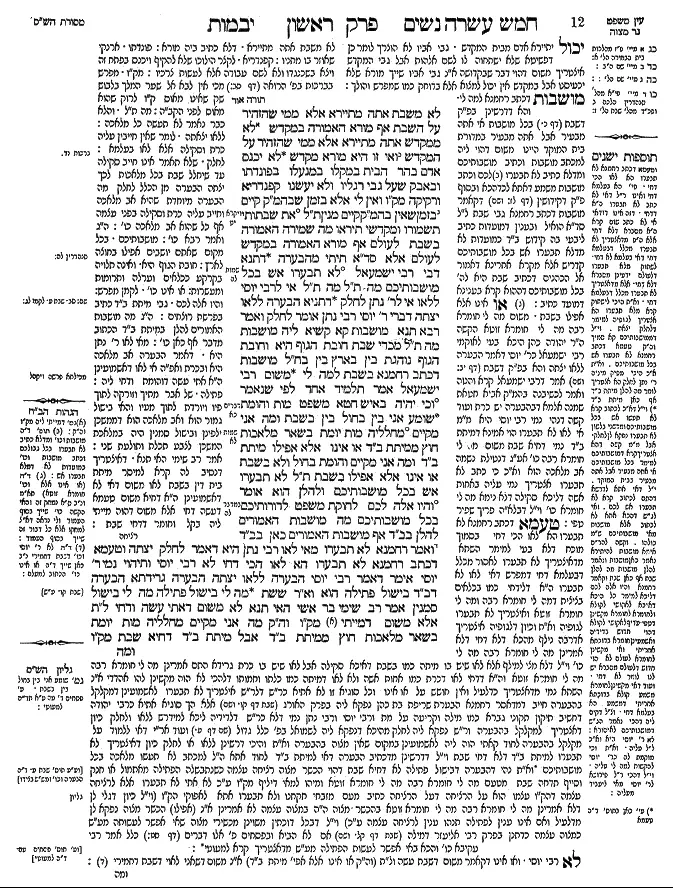
Yevamot 6b - Guemara
לא משבת אתה מתיירא אלא ממי שהזהיר על השבת אף מורא האמורה במקדש לא ממקדש אתה מתיירא אלא ממי שהזהיר על המקדש ואי זו היא מורא מקדש לא יכנס אדם בהר הבית במקלו במנעלו בפונדתו ובאבק שעל גבי רגליו ולא יעשנו קפנדריא ורקיקה מק"ו ואין לי אלא בזמן שבהמ"ק קיים בזמן שאין בהמ"ק קיים מנין ת"ל (ויקרא יט, ל) את שבתותי תשמורו ומקדשי תיראו מה שמירה האמורה בשבת לעולם אף מורא האמורה במקדש לעולם אלא סד"א תיתי מהבערה דתנא דבי רבי ישמעאל (שמות לה, ג) לא תבערו אש בכל מושבותיכם מה ת"ל מה ת"ל אי לרבי יוסי ללאו אי לר' נתן לחלק דתניא הבערה ללאו יצתה דברי ר' יוסי רבי נתן אומר לחלק ואמר רבא תנא מושבות קא קשיא ליה מושבות מה ת"ל מכדי שבת חובת הגוף היא וחובת הגוף נוהגת בין בארץ בין בח"ל מושבות דכתב רחמנא בשבת למה לי משום רבי ישמעאל אמר תלמיד אחד לפי שנאמר (דברים כא, כב) וכי יהיה באיש חטא משפט מות והומת שומע אני בין בחול בין בשבת ומה אני מקיים (שמות לא, יד) מחלליה מות יומת בשאר מלאכות חוץ ממיתת ב"ד או אינו אלא אפילו מיתת ב"ד ומה אני מקיים והומת בחול ולא בשבת או אינו אלא אפילו בשבת ת"ל לא תבערו אש בכל מושבותיכם ולהלן הוא אומר (במדבר לה, כט) והיו אלה לכם לחוקת משפט לדורותיכם בכל מושבותיכם מה מושבות האמורים להלן בב"ד אף מושבות האמורים כאן בב"ד ואמר רחמנא לא תבערו מאי לאו רבי נתן היא דאמר לחלק יצתה וטעמא דכתב רחמנא לא תבערו הא לאו הכי דחי לא רבי יוסי ותיהוי נמי ר' יוסי אימר דאמר רבי יוסי הבערה ללאו יצתה הבערה גרידתא הבערה דב"ד בישול פתילה הוא וא"ר ששת מה לי בישול פתילה מה לי בישול סמנין אמר רב שימי בר אשי האי תנא לא משום דאתי עשה ודחי ל"ת אלא משום דמייתי מק"ו וה"ק מה אני מקיים מחלליה מות יומת בשאר מלאכות חוץ ממיתת ב"ד אבל מיתת ב"ד דחיא שבת מק"ו
Comments from Rashi on Masechet Yevamot Page 6b
לא משבת אתה מתיירא . דלא כתיב ביה מורא: פונדתו . ארנקי שאוזר בו מתניו: קפנדריא . לקצר הילוכו שלא להקיף ויכנס בפתח זה ויצא בשכנגדו ולא לשם עבודה אלא לעשות צרכיו: מק"ו . מפרש בברכות בפ' הרואה (דף סב:) מכי אין לבא אל שער המלך בלבוש שק שאינו מאוס ק"ו לרוק שהוא מאוס לפני הקב"ה: מה ת"ל . והלא כבר נאמר לא תעשה כל מלאכה: ללאו יצאתה . לומר שאין חייבין עליה כרת וסקילה אלא לאו בעלמא: לחלק . שלא תאמר אינו חייב סקילה עד שיחלל שבת בכל מלאכות לכך יצתה הבערה מן הכלל לחלק מה הבערה מיוחדת שהיא אב מלאכה וחייב עליה כרת וסקילה בפני עצמה אף כל שהוא אב מלאכה כו': ה"ג ואמר רבא כו': מושבותיכם . בכל מקום שאתם יושבים אפילו בחוצה לארץ: חובת הגוף היא . ואינה תלויה בקרקע ככלאים וערלה ותרומות ומעשרות: או אינו כו' . לקמן מפרש: והיו אלה לכם . גבי מיתת ב"ד כתיב בפרשת רוצחים: ה"ג מה מושבות האמורים להלן במיתת ב"ד הכתוב מדבר אף כאן כו': מאי לאו ר' נתן היא . דאמר הבערה אב מלאכה היא ובכרת ואפ"ה אי לאו דאשמועינן ה"א אתי עשה דוהומת ודחי ליה: פתילה . של אבר מתיך וזורקה לתוך פיו ויורדת לתוך מעיו. והאי בישול גמור הוא ואב מלאכה הוא דממשכן ילפינן ובישול סמנין היה במלאכת המשכן לצבע תכלת ותולעת שני: אמר רב שימי האי תנא . דאיצטריך דנסיב לה קרא למיסר מיתת בית דין בשבת לאו משום דאי לא דאשמועינן ה"א דחיא משום טעמא דעשה דחי אלא משום דהוה מייתי ליה בקל וחומר דדחי שבת:
Comments from Tosafot - Yevamot 6b
מושבות דכתב רחמנא למה לי . והא דדרשינן בפ"ק דשבת (דף כ.) בכל מושבות אי אתה מבעיר אבל אתה מבעיר במדורת בית המוקד היינו משום דהוי ליה למכתב מושבות וכתיב מושבותיכם ומדלא כתיב לא תבערו לכם וכתב מושבות משמע דאתא לכדהכא ובסוף פ"ק דקידושין (דף לז: ושם) דקאמר מושבות דכתב רחמנא גבי שבת ל"ל סד"א הואיל ובענין דמועדות כתיב ליבעי בה קידוש ב"ד כמועדות לא מדלא תבערו אש בכל מושבותיכם קדריש אלא מקרא אחרינא דאמור אל הכהנים דכתיב שבת היא לה' בכל מושבותיכם דההוא קרא בענינא דמועד כתיב: או אינו אלא אפילו בשבת. משום מה לי חומרא רבה מה לי חומרא זוטא הקשה ה"ר יהודה כהן היכא בעי לאוקמי רבי ישמעאל כר' יוסי דאמר הבערה ללאו יצתה והא בפ"ק דשבת (דף יב: ושם) אמר דרבי ישמעאל קרא והטה ואמר לכשיבנה בהמ"ק אביא חטאת שמנה אלמא דבהבערה יש כרת ועוד קשה דנהי נמי רבי יוסי היא מ"מ אי לאו לא תבערו הוי אמינא דמיתת ב"ד נמי דחיא שבת משום מה לי חומרא רבה כו' אע"ג דנטילת נשמה אב מלאכה הוא וא"כ כי כתב לא תבערו אצטריך נמי עליה באחות אשה דליכא סקילה דלא נימא מה לי חומרא כו' וי"ל דבלא"ה פריך שפיר טפי: טעמא דכתב רחמנא לא תבערו הא לאו הכי דחי . בסמוך מוכח דלא בעי למימר השתא מדאיצטריך לא תבערו לאסור מכלל דבעלמא דחי דמפרש דאי לאו לא תבערו ה"א דלידחי כמו בכלאים בציצית דמה לי חומרא רבה ומה לי חומרא זוטא ואיצטריך לא תבערו לגופיה וא"ת וכיון דלגופיה איצטריך אדרבה נילף מהכא דלא דחי דלא אמרינן מה לי חומרא רבה מה לי כו' וי"ל דלא מצי למילף אלא לאו שיש בו מיתה כמו בשבת דאיכא סקילה אבל לאו שיש בו כרת גרידא התם אמרינן מה לי חומרא רבה מה לי חומרא זוטא וה"א דדחי לאו דכרת כמו אחות אשה ולא לאו דמיתה כמו כלתו וחמותו דלהכי לא הוה מקשינן להו אהדדי א"נ השתא נמי מדאצטריך כדלעיל ואין חושש על או אינו וכל סוגיא זו לא אתיא כר"ש דלר"ש איצטריך לא תבערו לאשמועינן דמקלקל בהבערה חייב דמדאסר רחמנא הבערת שריפת בת כהן נפקא ליה בפרק האורג (שבת דף קו. ושם) אלא הך סוגיא אתיא כרבי יהודה דחשיב תיקון תקוני גברא כמו מילה וקריעה על מת ורבי יוסי ורבי נתן נמי דלא כר"ש דלדידיה ליכא למידרש ללאו ולחלק כיון דאצטריך למקלקל בהבערה ור"ש נפקא ליה לחלק מהיכא דנפקא ליה לשמואל בפ' כלל גדול (שם דף ע.) ועוד אר"י דאי ללמוד על מקלקל בהבערה לחוד קאתי הוה ליה לאשמועינן במקום שאין מצוה בהבערה וא"ת והיכי דרשינן ללאו או לחלק כיון דאיצטריך לא תבערו למיתת ב"ד דלא דחי שבת וי"ל דדרשינן מדכתיב הבערה דאי למיתת ב"ד לחוד אתא ה"ל למכתב לא תעשו מלאכה בכל מושבותיכם וא"ת נהי דהבערה דבישול פתילה לא דחיא שבת דהוי הכשר מצוה רציחה עצמה כשנתבשלה הפתילה מאתמול או חנק וסייף תדחה שבת מטעם מה לי חומרא רבה מה לי חומרא זוטא ומיהו למאי דיליף מק"ו ע"כ לא אתי לא תבערו אלא לרציחה עצמה דהק"ו עצמו הוא על הרציחה דעל הרציחה כתיב מעם מזבחי תקחנו ולא תבערו אתא לאפוקי הק"ו (וי"ל כיון דגלי לן דלא אמרינן מה לי חומרא רבה מה לי חומרא זוטא בהכשר מצוה ה"ה במצוה עצמה לא אמרינן א"נ (אפילו הכשר מצוה נפקא לן מדלעיל ואם אינו ענין לפתילה תנהו ענין לרציחה עצמה ע"כ) וי"ל דבכל דוכתין משוינן מכשירי מצוה שאי אפשר לעשותה מע"ש כמצוה עצמה כדתנן בפרק רבי אליעזר דמילה (שבת דף קל. ושם) אם לא הביא ובפסחים פ' אלו דברים (דף סט:) כלל אמר רבי עקיבא כו' והכא באי אפשר לעשות הפתילה מע"ש מדאצטריך קרא למעוטי: לא רבי יוסי . ואו אינו דקאמר משום דשבת עשה ול"ת (וה"ק או אינו אלא אפי' מיתת ב"ד) א"נ משום דשאני לאוי דשבת דחמירי:
Yevamot 6b - Mishnah translated into english
you do not revere Shabbat itself, as reverence is not mentioned in this context, but rather, one reveres He Who warned about the observance of Shabbat, so too, the same applies to the reverence stated with regard to the Temple: You do not revere the Temple itself but He Who warned about the Temple.
The baraita explains: And what is the reverence of the Temple? In deference to the Temple, a person may not enter the Temple Mount with his staff, his shoes, his money belt [punda], or even the dust on his feet. One may not make the Temple a shortcut [kappendarya] to pass through it, and through an a fortiori inference, all the more so one may not spit on the Temple Mount, as no disrespect is meant by the other actions, whereas spitting is repulsive even in one’s own private home, and certainly on the Temple Mount.
And I have derived only that one is obligated to act in this manner when the Temple is standing. From where do I derive that the mitzva to revere the Temple is in force when the Temple is not standing, i.e., that it is prohibited to be disrespectful toward the place where the Temple stood? The verse states: “You shall keep My Shabbatot, and revere My Sanctuary” (Leviticus 19:30). Just as the keeping stated with regard to Shabbat applies forever, so too, the reverence stated with regard to the Temple is forever.
§ With regard to the issue at hand, the Gemara has not yet found an explanation as to why a specific inference was required to teach that a positive mitzva overrides a prohibition that incurs karet. Rather, it might enter your mind to say that this claim might be derived from the halakha of kindling, as the school of Rabbi Yishmael taught with regard to the verse: “You shall kindle no fire throughout your habitations on Shabbat day” (Exodus 35:3). What is the meaning when the verse states this, as the general prohibition against performing labor on Shabbat appears elsewhere?
The Gemara expresses puzzlement at this question: What is the meaning when the verse states this? What kind of question is this? If the halakha is in accordance with the opinion of Rabbi Yosei, the verse comes to teach that one who kindles fire on Shabbat merely violates a regular prohibition, which does not entail the penalty of stoning, unlike other prohibited labors. If the halakha is in accordance with the opinion of Rabbi Natan, kindling was singled out to divide the various prohibited labors of Shabbat and to establish liability for the separate performance of each of them.
As it is taught in a baraita: The prohibition against kindling was singled out from the general category of prohibited labors and written explicitly to teach that it is unlike other prohibited labors, as it is a regular prohibition, which does not entail the punishment of stoning. This is the statement of Rabbi Yosei. Rabbi Natan says: Kindling is like any other labor prohibited on Shabbat, and it was singled out to divide. In other words, by stating one prohibited labor separately, the Torah teaches that each labor on Shabbat constitutes its own separate prohibition. Consequently, one who unwittingly violates several categories of labor is obligated to bring as many sin-offerings as the prohibited labors he violated.
And Rava said in explanation of the question asked by the school of Rabbi Yishmael: For this tanna, the term “habitations” poses a difficulty with regard to his opinion. The baraita should be understood as follows: What is the meaning when the verse states “habitations”? What additional inference is indicated by this term, which might lead to the erroneous conclusion that this Shabbat prohibition applies only in certain places of habitation?
The Gemara explains why “habitations” cannot mean that Shabbat observance applies only in certain places. Since Shabbat is an obligation that applies to the body, i.e., to the individual himself and not to an external object, and there is a principle that obligations of the body apply both in Eretz Yisrael and outside of Eretz Yisrael, then why do I need the term “habitations” that the Merciful One writes with regard to Shabbat?
A student said in the name of Rabbi Yishmael that since it is stated: “And if a man has committed a sin worthy of death, and he is put to death” (Deuteronomy 21:22), I would derive that the death penalty is administered whether on a weekday or on a Shabbat. And how do I establish the verse: “And you shall keep Shabbat, for it is sacred to you; every one who profanes it shall surely be put to death” (Exodus 31:14)? This verse applies to other prohibited labors, except for court-imposed capital punishment, which must be administered even on Shabbat. Or perhaps it is only the case that even court-imposed capital punishment is included in the list of prohibited labors on Shabbat. How, then, do I establish the verse: “And he is put to death”? This is referring to a weekday and not to Shabbat.
Surprisingly, the tanna reverts back to his earlier claim: Or perhaps it is only the case that capital punishments may be administered even on Shabbat? Therefore, the verse states by way of a verbal analogy: “You shall kindle no fire throughout your habitations on Shabbat day” (Exodus 35:3) and below it says, at the end of the chapter dealing with murderers: “And these things shall be for you a statute of judgment to you throughout your generations in all your habitations” (Numbers 35:29).
Just as the term “habitations” stated below, in Numbers, means in the court, where judgment is performed, so too, the term “habitations” stated here means in the court, i.e., in the place where judges preside. And the Merciful One states in the Torah: “You shall kindle no fire.” Since one of the court-imposed death penalties is burning, which is performed by kindling fire, then evidently, court-imposed death penalties do not override Shabbat.
With the above conclusion in mind, the Gemara comments: What, is it not the case that the opinion of the school of Rabbi Yishmael is in accordance with that of Rabbi Natan, who said that the prohibition against kindling fire was singled out to divide, and therefore lighting a fire is punishable by karet and stoning? And if so, the reason why capital punishments are not administered on Shabbat is that the Merciful One writes: “You shall kindle no fire,” from which it may be inferred that if it were not so, then court-imposed capital punishment would override Shabbat. In other words, the positive mitzva of legal execution would override the prohibition against lighting a fire on Shabbat, which incurs karet.
The Gemara rejects this: No, there is no proof from here, as it can be claimed that the opinion of the tanna from the school of Rabbi Yishmael is in accordance with the opinion of Rabbi Yosei that kindling fire is an ordinary prohibition. The Gemara retorts: And let it even be according to the opinion of Rabbi Yosei. You can say that when Rabbi Yosei said that kindling was singled out as a prohibition, he was referring to kindling alone, i.e., that lighting a regular fire is only a regular prohibition.
Conversely, the kindling by the court for the execution of burning is actually the cooking of a leaden wick. Since execution by burning involves melting, or cooking, a piece of lead, called a wick, and pouring it into the mouth of the convict, it therefore constitutes the prohibited labor of cooking, which is a different prohibition than kindling fire.
And Rav Sheshet said in this regard: What difference is there to me between cooking a wick, which is performed for court-imposed capital punishments, and what difference is there to me between the cooking of herbs used to dye curtains for the Tabernacle, from whose work the list of prohibited labors on Shabbat is derived? Since the court-imposed death penalty involves the prohibited labor of cooking, which according to all opinions incurs karet, this apparently indicates that without the special verse that renders this prohibited, one would have said that a positive mitzva overrides a prohibition for which one is liable to receive karet.
The Gemara rejects this argument as well. Rav Shimi bar Ashi said: This tanna does not raise the possibility that a court-administered death penalty might override Shabbat because a positive mitzva comes and overrides a prohibition. Rather, he entertains this option because he learns this by means of an a fortiori inference, and this is what he is saying: How do I establish the verse “Every one who profanes it shall surely be put to death” (Exodus 31:14)? This applies to other prohibited labors, except for court-imposed capital punishment. However, it could be said that court-imposed capital punishment overrides Shabbat, by an a fortiori inference:
Traduction : The William Davidson digital edition of the Koren Noé Talmud, with commentary by Rabbi Adin Even-Israel Steinsaltz.