 Talmud Bavli
Bava Kamma 43b : Youtube
Daf TubeYoutube
2 video classes :
Bava Kamma Page 43b
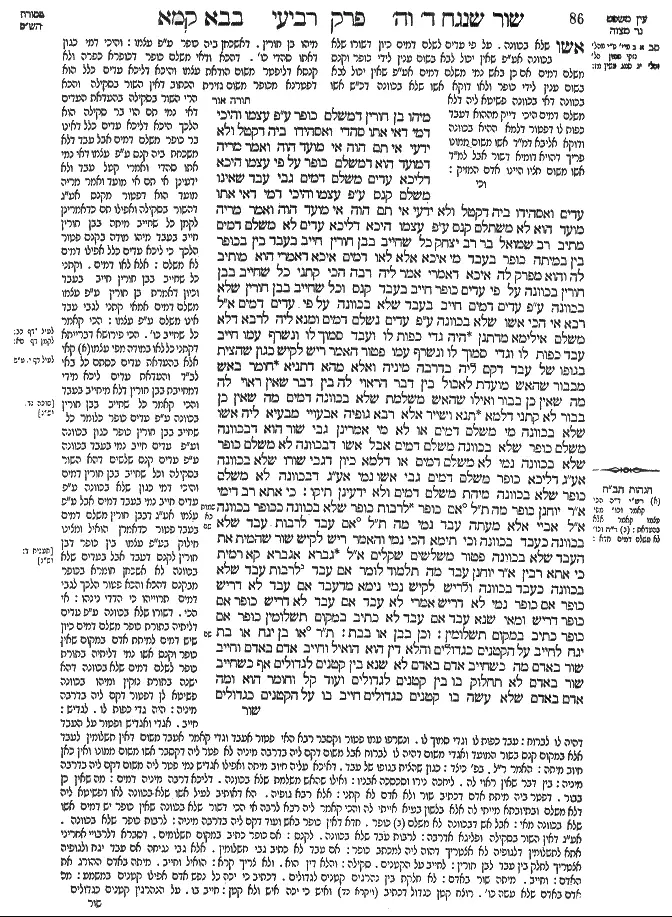
Bava Kamma 43b - Guemara
מיהו בן חורין דמשלם כופר ע"פ עצמו והיכי דמי דאי אתו סהדי ואסהידו ביה דקטל ולא ידעי אי תם הוה אי מועד הוה ואמר מריה דמועד הוא דמשלם כופר על פי עצמו היכא דליכא עדים משלם דמים גבי עבד שאינו משלם קנס ע"פ עצמו והיכי דמי דאי אתו עדים ואסהידו ביה דקטל ולא ידעי אי תם הוה אי מועד הוה ואמר מריה מועד הוא לא משתלם קנס ע"פ עצמו היכא דליכא עדים לא משלם דמים מתיב רב שמואל בר רב יצחק כל שחייב בבן חורין חייב בעבד בין בכופר בין במיתה כופר בעבד מי איכא אלא לאו דמים איכא דאמרי הוא מותיב לה והוא מפרק לה איכא דאמרי אמר ליה רבה הכי קתני כל שחייב בבן חורין בכוונה על פי עדים כופר חייב בעבד קנס וכל שחייב בבן חורין שלא בכוונה ע"פ עדים דמים חייב בעבד שלא בכוונה על פי עדים דמים א"ל רבא אי הכי אשו שלא בכוונה ע"פ עדים נשלם דמים ומנא ליה לרבא דלא משלם אילימא מדתנן היה גדי כפות לו ועבד סמוך לו ונשרף עמו חייב עבד כפות לו וגדי סמוך לו ונשרף עמו פטור האמר ריש לקיש כגון שהצית בגופו של עבד דקם ליה בדרבה מיניה ואלא מהא דתניא חומר באש מבבור שהאש מועדת לאכול בין דבר הראוי לה בין דבר שאין ראוי לה מה שאין כן בבור ואילו שהאש משלמת שלא בכוונה דמים מה שאין כן בבור לא קתני דלמא תנא ושייר אלא רבא גופיה אבעויי מבעיא ליה אשו שלא בכוונה מי משלם דמים או לא מי אמרינן גבי שור הוא דבכוונה משלם כופר שלא בכוונה משלם דמים אבל אשו דבכוונה לא משלם כופר שלא בכוונה נמי לא משלם דמים או דלמא כיון דגבי שורו שלא בכוונה אע"ג דליכא כופר משלם דמים גבי אשו נמי אע"ג דבכוונה לא משלם כופר שלא בכוונה מיהת משלם דמים ולא ידעינן תיקו:
כי אתא רב דימי א"ר יוחנן כופר מה ת"ל (שמות כא, ל) אם כופר לרבות כופר שלא בכוונה ככופר בכוונה א"ל אביי אלא מעתה עבד נמי מה ת"ל (שמות כא, לב) אם עבד לרבות עבד שלא בכוונה כעבד בכוונה וכי תימא הכי נמי והאמר ריש לקיש שור שהמית את העבד שלא בכוונה פטור משלשים שקלים א"ל גברא אגברא קא רמית כי אתא רבין א"ר יוחנן עבד מה תלמוד לומר אם עבד לרבות עבד שלא בכוונה כעבד בכוונה ולריש לקיש נמי נימא מדעבד אם עבד לא דריש כופר אם כופר נמי לא דריש אמרי לא עבד אם עבד לא דריש כופר אם כופר דריש ומאי שנא עבד אם עבד לא כתיב במקום תשלומין כופר אם כופר כתיב במקום תשלומין וכן בבן או בבת ת"ר (שמות כא, לא) או בן יגח או בת יגח לחייב על הקטנים כגדולים והלא דין הוא הואיל וחייב אדם באדם וחייב שור באדם מה כשחייב אדם באדם לא שנא בין קטנים לגדולים אף כשחייב שור באדם לא תחלוק בו בין קטנים לגדולים ועוד קל וחומר הוא ומה אדם באדם שלא עשה בו קטנים כגדולים חייב בו על הקטנים כגדולים
Comments from Rashi on Masechet Bava Kamma Page 43b
מיהו בן חורין . דאשכחן ביה כופר ע"פ עצמו: והיכי דמי כגון דאתו סהדי כו' . דהכא ודאי משלם כופר דכופרא כפרה ולא קנסא דליפטר משום הודאת עצמו והיכא דליכא עדים כלל הוא דפטרנא מכופר משום גזירת הכתוב דאין השור בסקילה והכא הרי השור בסקילה בהעדאת העדים דאי נמי תם הוי בר סקילה הוא הלכך היכא דליכא עדים כלל דאינו בר כופר משלם דמים אבל עבד דלא משכחת ביה קנס ע"פ עצמו דאי נמי אתו סהדי ואמרי קטל עבד ולא ידעינן אי תם אי מועד ואמר מריה מועד הוא דפטור מקנס אע"ג דהשור בסקילה ואפילו תם כדאמרינן לקמן כל שחייב מיתה בבן חורין חייב בעבד מיהו מודה בקנס פטור הלכך כי ליכא עדים כלל אפילו דמים לא משלם: אלא לאו דמים . וקתני כל שחייב בבן חורין חייב בעבד וכיון דאמרת בן חורין ע"פ עצמו משלם דמים אמאי קתני לגבי עבד אינו משלם ע"פ עצמו: הכי קאמר כל שחייב כו' . הכי פירושא דברייתא דקתני כל לאו במודה מפי עצמו קאי אלא בהעדאת עדים כסתם כל באי לב"ד והעדאת עדים ליכא מידי דמחייבת בבן חורין דלא מיחייב בעבד והכי קאמר כל שחייב בבן חורין בכוונה ע"פ עדים כופר כלומר כל שחייב בבן חורין כופר כגון בכוונה וע"פ עדים חייב נמי בעבד בכוונה ע"פ עדים קנס שלשים דהא השור בסקילה וכל שחייב בבן חורין דמים והיכי דמי כגון שלא בכוונה ע"פ עדים חייב נמי בעבד דמים אבל ע"פ עצמו אע"ג דבבן חורין משלם דמים בעבד פטור כדאמרן הואיל ומצינו חילוק בע"פ עצמו בין כופר דבן חורין לקנס דעבד אבל בעדים שלא בכוונה לא אשכחן חומרא בכופר מבקנס דהכא והכא פטור הלכך לגבי דמים תרוייהו כי הדדי נינהו: אי הכי . דשורו שלא בכוונה ע"פ עדים דליתיה בתורת כופר משלם דמים כיון שיש דמים למיתת אדם במקום שאין כופר וקנס אשו נמי דליתיה בתורת כופר לשלם דמים שלא בכוונה דהא ישנה בתורת נזקין ומיהו בכוונה פשיטא לן דפטור דקם ליה בדרבה מיניה: היה גדי כפות לו . לגדיש: חייב . אגדי ואגדיש ופטור על העבד דהיה לו לברוח: עבד כפות לו וגדי סמוך לו . ונשרפו עמו פטור וקסבר רבא האי פטור אעבד וגדי קאמר אעבד משום דאין תשלומין לעבד אלא במקום קנס בשור המועד ואגדי משום דהיה לו לברוח אבל משום דקם ליה בדרבה מיניה לא פטר ליה דקסבר אשו משום ממונו ואין כאן חיוב מיתה: האמר ר"ל . בפ' כיצד: כגון שהצית בגופו של עבד . דאיכא עליה חיוב מיתה ואפילו אגדיש נמי פטר ליה משום דקם ליה בדרבה מיניה: בין דבר שאין ראוי לה . ליחכה נירו וסכסכה אבניו: ואילו שהאש משלמת שלא בכוונה . דליכא דרבה מיניה דמים: מה שאין כן בבור . דפטר ביה מיתת אדם דכתיב שור ולא אדם לא קתני: אלא רבא גופיה . הא דאותיב לעיל אשו שלא בכוונה לאו דפשיטא ליה דלא משלם ובתיובתא מייתי לה אלא בלשון בעיא אייתי לה והכי קאמר ליה רבא לרבה אי הכי דשור שלא בכוונה שאין כופר יש דמים אשו שלא בכוונה מאי: אבל אש דבכוונה לא משלם כופר . חדא דאין כופר באש ועוד דקם ליה בדרבה מיניה: לרבות כופר שלא בכוונה . אע"ג דאין השור בסקילה ופליגא אדרבה: לרבות עבד שלא בכוונה . לקנס: הכי קאמר כל שחייב כו' . הכי פירושא דברייתא דקתני כל לאו במודה מפי עצמו קאי אלא בהעדאת עדים כסתם כל באי לב"ד והעדאת עדים ליכא מידי דמחייבת בבן חורין דלא מיחייב בעבד והכי קאמר כל שחייב בבן חורין בכוונה ע"פ עדים כופר כלומר כל שחייב בבן חורין כופר כגון בכוונה וע"פ עדים חייב נמי בעבד בכוונה ע"פ עדים קנס שלשים דהא השור בסקילה וכל שחייב בבן חורין דמים והיכי דמי כגון שלא בכוונה ע"פ עדים חייב נמי בעבד דמים אבל ע"פ עצמו אע"ג דבבן חורין משלם דמים בעבד פטור כדאמרן הואיל ומצינו חילוק בע"פ עצמו בין כופר דבן חורין לקנס דעבד אבל בעדים שלא בכוונה לא אשכחן חומרא בכופר מבקנס דהכא והכא פטור הלכך לגבי דמים תרוייהו כי הדדי נינהו: אם כופר כתיב במקום תשלומים . דסברא דלרבויי אחריני אתא לתשלומין דלגופיה לא אצטריך דהוה ליה למכתב כופר: אם עבד לא כתיב גבי תשלומין . אלא גבי נגיחה אם עבד יגח ולגופיה אצטריך לחלק בין עבד לבן חורין: לחייב על הקטנים . סקילה: והלא דין הוא . ולא צריך קרא: הואיל וחייב . מיתה באדם ההורג את האדם: וחייב . מיתה שור באדם: לא חלקת בין נהרגים קטנים לגדולים . דכתיב כי יכה כל נפש אדם אפילו קטנים במשמע: מה אדם באדם שלא עשה כו' . רוצח קטן כגדול דכתיב (ויקרא כד) ואיש כי יכה איש ולא קטן: חייב בו . על הנהרגין קטנים כגדולים:
Comments from Tosafot - Bava Kamma 43b
אשו שלא בכוונה. על פי עדים לשלם דמים כיון דשורו שלא בכוונה אע"פ שאין יכול לבא בשום ענין לידי כופר וקנס משלם דמים אם כן באש נמי משלם דמים אע"פ שאין יכול לבא בשום ענין לידי כופר ולאו דוקא אשו שלא בכוונה דכ"ש אשו בכוונה דאי בכוונה פשיטא ליה דלא משלם דמים היכי דייק מההוא דעבד כפות לו דפטור דלמא ההיא בכוונה ודוקא אליבא דמ"ד אשו משום ממונו פריך דהויא דומיא דשור אבל למ"ד אשו משום חציו היינו אדם המזיק:
Bava Kamma 43b - Mishnah translated into english
but there is a distinction between the two cases. With regard to an ox killing a freeman, there is a scenario where the owner pays ransom based on his own admission. And what are the circumstances? If witnesses came and testified that the ox killed a freeman and is therefore liable to be killed by stoning, but they did not know whether it was innocuous or if it was forewarned, and its owner said that it was forewarned. In this case, the owner pays ransom based on his own admission, since the ox is liable to be killed, and the ransom is for atonement and does not constitute a fine. Therefore, even where there are no witnesses, and the ox is therefore not liable to be killed by stoning for killing a person, nevertheless, the owner at least pays the monetary value of the victim based on his admission.
By contrast, with regard to an ox killing a slave, there is a scenario where one does not pay the fine of thirty shekels based on his own admission. And what are the circumstances where one would be liable to pay this fine due to his own admission? If witnesses came and testified that the ox killed a slave, but they did not know whether it was innocuous or if it was forewarned, and its owner said that it was forewarned. In this case, even though the ox is liable to be killed, the owner does not pay the fine based on his own admission, due to the principle that one does not pay a fine based on his own admission. Therefore, in a case where there are no witnesses, he does not even pay the value of the victim based on his own admission.
Rav Shmuel bar Rav Yitzḥak raises an objection from a baraita that states a principle: In any scenario where a person is liable for his ox killing a freeman, he is liable for his ox killing a Canaanite slave, whether with regard to liability to pay ransom or with regard to the ox being put to death.
The wording of the baraita is unclear: Is there a ransom to be paid in the case of a slave? Ransom is paid only for the killing of a freeman. Rather, is it not referring to payment of the value of the victim? This poses a difficulty for Rabba’s opinion that one is not liable to pay the value of the victim for admitting to his ox’s killing of a slave.
There are those who say that he, Rav Shmuel bar Rav Yitzḥak, raised the objection and he resolved it, and there are those who say it was Rabba who said to him in response, that this is what the baraita is teaching: In any scenario where a person is liable to pay ransom for his ox killing a freeman, e.g., where it gored intentionally based on the testimony of witnesses, he is liable to pay a fine for his ox killing a slave. And in any scenario where one is liable to pay the value of the victim for his ox killing a freeman, e.g., where it gored unintentionally based on the testimony of witnesses, for a slave too, one is liable to pay the value, namely, where it gored unintentionally based on the testimony of witnesses. Accordingly, one does not pay the value of a slave based on his own admission, although he does pay the value of a freeman if he admits that his ox killed him.
Rava said to Rabba: If that is so, that one is liable to pay the value of the victim in cases where he is exempt from paying ransom, then if a person burns another to death unintentionally with his fire, and the proof is based on the testimony of witnesses, he should, likewise, at least pay the value of the victim.
The Gemara asks: And from where does Rava know that he does not pay the value of the victim if he started the fire unintentionally?
If we say that it is from what we learned in a mishna (61b): If one ignites a heap of grain and there was a goat bound to an item adjacent to it, and there was also a slave adjacent to it but not bound, and they were burned together with the heap of grain, he is liable to pay for the heap of grain and for the goat. If the slave was bound to it in such a way that he was unable to flee from the fire, and the goat was adjacent to it, and they were burned with it, he is exempt from liability. Apparently, there is no liability even if he unintentionally burned the slave to death.
The Gemara comments: If this is Rava’s source, there is no proof from here. Didn’t Reish Lakish say that the mishna is referring to a case where he ignited the body of the slave directly, in which case he is exempt from paying damages because he receives the greater punishment of them? Since he is liable to receive court-imposed capital punishment for killing the slave, he is not liable to pay damages. Therefore, this does not serve as proof that one is not liable to pay the value of a fire victim.
And if Rava’s proof is rather from that which is taught in a baraita (10a): The stringency that applies to Fire as opposed to Pit is that the one responsible for Fire is considered forewarned with regard to its consuming both something that is fitting for it and something that is not fitting for it, i.e., both flammable and non-flammable items. This is not so with regard to Pit, as damages are not paid for everything that can be damaged by a pit. But the baraita does not teach: That with regard to Fire, one is liable to pay the value of the victim even if the fire was ignited unintentionally. This is not so with regard to Pit. This would seem to support Rava’s opinion that one is not liable to pay the value of an unintentional victim of fire.
The Gemara comments: If this is Rava’s source, there is no proof from here. Perhaps the baraita taught one distinction and omitted another; it simply did not enumerate all the differences.
Rather, Rava’s statement should not be understood as an objection to Rabba’s opinion, as Rava himself had a dilemma with regard to the matter: If a person burns another to death unintentionally with his fire, does he pay the value of the victim or not?
The Gemara elaborates on the question: Do we say that it is specifically with regard to death caused by one’s ox, where if it was done intentionally he pays ransom and where it was done unintentionally he pays the victim’s monetary value instead; but with regard to death caused by his fire, where even if it was done intentionally he does not pay ransom, if it was done unintentionally he does not pay the value either? Or perhaps, since with regard to the case where his ox gored unintentionally, although there is no liability to pay ransom, nevertheless, he at least pays the value of the victim. One should say that with regard to his fire too, even though in a case where it was done intentionally he does not pay ransom, when it was done unintentionally, he should pay the value in any event.
The Gemara concludes: And we do not know the solution to this dilemma, which shall stand unresolved.
§ With regard to Rabba’s statement that for an ox that killed a person unintentionally one is exempt from paying ransom, the Gemara relates that when Rav Dimi came from Eretz Yisrael, he reported that Rabbi Yoḥanan says: It would have been sufficient for the verse to state: “A ransom is laid on him.” What is the meaning when the verse states: “If a ransom is laid on him” (Exodus 21:30)? It is to include liability to pay ransom in a case where the ox killed unintentionally, just as one is liable to pay ransom when it killed intentionally, in contrast to Rabba’s opinion.
Abaye said to Rav Dimi: If Rabbi Yoḥanan’s interpretation is so, it should be implemented with regard to the fine for a Canaanite slave as well, and it would have been sufficient for the verse to state: The ox gores a slave or a maidservant, he shall give to their master thirty shekels of silver. What is the meaning when the verse states: “If the ox gores a slave” (Exodus 21:32)? It is to include liability in a case where the ox killed a Canaanite slave unintentionally, just as when it killed a slave intentionally. And if you would say that indeed this is the halakha, but doesn’t Reish Lakish say that for an ox that killed a slave unintentionally its owner is exempt from paying the thirty shekels?
Rav Dimi said to Abaye: Are you setting the statement of one man against the statement of another man? It could be that although Reish Lakish maintains that he is exempt, Rabbi Yoḥanan holds that he is liable.
When Ravin came from Eretz Yisrael, he confirmed that this is the opinion of Rabbi Yoḥanan, as he says that it would have been sufficient for the verse to state: “The ox gores a slave.” What is the meaning when the verse states: “If the ox gores a slave”? It is to include liability in a case where the ox killed a slave unintentionally, just as when it killed a slave intentionally.
The Gemara suggests: And according to Reish Lakish, let us say similarly that from the fact that he does not interpret the difference between the terms “a slave” and “if a slave” to derive an additional halakha, it may be inferred that he does not interpret the difference between the terms “a ransom” and “if a ransom” either, and holds that ransom is not paid if the incident was unintentional.
The Sages said: No, that is not a valid comparison. Although Reish Lakish does not interpret the difference between the terms “a slave” and “if a slave,” he does interpret the difference between the terms “a ransom” and “if a ransom.”
And what is different between the two verses? The terms “a slave” and “if a slave” are not written where the liability for payment is stated, but rather in the presentation of the case: “If the ox gores a slave.” Therefore, the use of the word “if” is warranted. By contrast, the terms “a ransom” and “if a ransom” are written where the liability for payment is stated, where it would have been sufficient for the verse to state: “A ransom is laid on him.” Therefore, the superfluous word “if” lends itself to interpretation to include liability to pay ransom even in a case where the killing was unintentional.
§ The mishna teaches: And the same halakha applies in a case where the ox killed a boy or in a case where it killed a girl. The Sages taught: The verse states: “Whether it has gored a son or has gored a daughter” (Exodus 21:31), to deem the owner liable for the death of minors just as for adults.
The baraita asks: And could this not be derived through logical inference? Since the Torah renders a person liable to receive court-imposed capital punishment for killing another person, and, similarly, renders an ox liable to be killed for killing a person, it should be derived that just as when the Torah renders a person liable for killing a person the Torah makes no distinction between killing minors and killing adults, so too, when it renders an ox liable to be killed for killing a person, do not differentiate with regard to it between minors and adults.
And furthermore, it could be inferred a fortiori: If in the case of a person killing a person the Torah does not render minors entirely like adults with regard to this act, inasmuch as minors are exempt from liability for killing, but nevertheless it renders a person liable for killing minors as well as adults,
Traduction : The William Davidson digital edition of the Koren Noé Talmud, with commentary by Rabbi Adin Even-Israel Steinsaltz.