 Talmud Bavli
Bava Kamma 107b : Youtube
Daf TubeYoutube
2 video classes :
Bava Kamma Page 107b
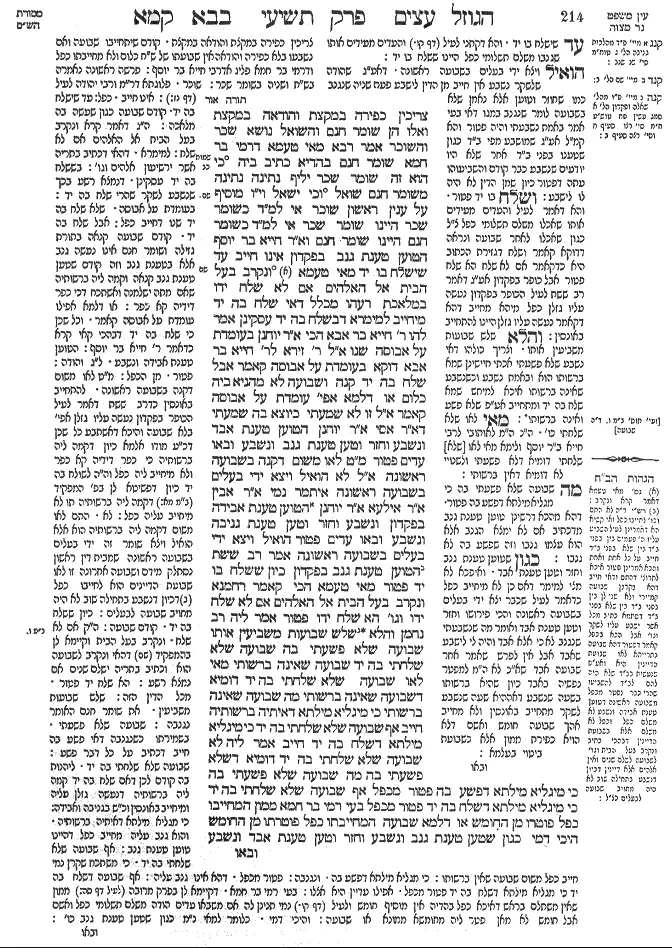
Bava Kamma 107b - Guemara
צריכין כפירה במקצת והודאה במקצת ואלו הן שומר חנם והשואל נושא שכר והשוכר אמר רבא מאי טעמא דרמי בר חמא שומר חנם בהדיא כתיב ביה (שמות כב, ח) כי הוא זה שומר שכר יליף נתינה נתינה משומר חנם שואל (שמות כב, יג) וכי ישאל וי"ו מוסיף על ענין ראשון שוכר אי למ"ד כשומר שכר היינו שומר שכר אי למ"ד כשומר חנם היינו שומר חנם וא"ר חייא בר יוסף הטוען טענת גנב בפקדון אינו חייב עד שישלח בו יד מאי טעמא (שמות כב, ז) ונקרב בעל הבית אל האלהים אם לא שלח ידו במלאכת רעהו מכלל דאי שלח בה יד מיחייב למימרא דבשלח בה יד עסקינן אמר להו ר' חייא בר אבא הכי א"ר יוחנן בעומדת על אבוסה שנו א"ל ר' זירא לר' חייא בר אבא דוקא בעומדת על אבוסה קאמר אבל שלח בה יד קנה ושבועה לא מהניא ביה כלום או דלמא אפי' עומדת על אבוסה קאמר א"ל זו לא שמעתי כיוצא בה שמעתי דא"ר אסי א"ר יוחנן הטוען טענת אבד ונשבע וחזר וטען טענת גנב ונשבע ובאו עדים פטור מ"ט לאו משום דקנה בשבועה ראשונה א"ל לא הואיל ויצא ידי בעלים בשבועה ראשונה איתמר נמי א"ר אבין א"ר אילעא א"ר יוחנן הטוען טענת אבידה בפקדון ונשבע וחזר וטען טענת גניבה ונשבע ובאו עדים פטור הואיל ויצא ידי בעלים בשבועה ראשונה אמר רב ששת הטוען טענת גנב בפקדון כיון ששלח בו יד פטור מאי טעמא הכי קאמר רחמנא ונקרב בעל הבית אל האלהים אם לא שלח ידו וגו' הא שלח ידו פטור אמר ליה רב נחמן והלא שלש שבועות משביעין אותו שבועה שלא פשעתי בה שבועה שלא שלחתי בה יד שבועה שאינה ברשותי מאי לאו שבועה שלא שלחתי בה יד דומיא דשבועה שאינה ברשותי מה שבועה שאינה ברשותי כי מיגליא מילתא דאיתיה ברשותיה חייב אף שבועה שלא שלחתי בה יד כי מיגליא מילתא דשלח בה יד חייב אמר ליה לא שבועה שלא שלחתי בה יד דומיא דשלא פשעתי בה מה שבועה שלא פשעתי בה כי מיגליא מילתא דפשע בה פטור מכפל אף שבועה שלא שלחתי בה יד כי מיגליא מילתא דשלח בה יד פטור מכפל בעי רמי בר חמא ממון המחייבו כפל פוטרו מן החומש או דלמא שבועה המחייבתו כפל פוטרתו מן החומש היכי דמי כגון שטען טענת גנב ונשבע וחזר וטען טענת אבד ונשבע
Comments from Rashi on Masechet Bava Kamma Page 107b
צריכין כפירה במקצת והודאה במקצת . קודם שיתחייבו שבועה ואם נשבעו בלא כפירה והודאה אין שבועתו של ש"ח כלום ולא מחייבתו כפל ודרמי בר חמא פליג אדרבי חייא בר יוסף: פרשה ראשונה . נאמרה בש"ח ושניה בשומר שכר: שוכר . פלוגתא דר"מ ורבי יהודה לעיל (בבא קמא דף נז:): אינו חייב . כפל: עד שישלח בה יד . קודם שבועה כגון שעשה בה מלאכה: ה"ג . דאמר קרא ונקרב בעל הבית אל האלהים אם לא שלח: למימרא . דהאי דכתיב בתריה אשר ירשיעון אלהים וגו': בששלח בה יד עסקינן . דנמצא רשע בכך שנשבע לשקר שהרי שלח בה יד: בעומדת על אבוסה . שלא שלח בה יד שנו דחייב כפל: אבל שלח בה יד . קודם שבועה קנאה בתורת גזילה ושומר חנם אינו נעשה גנב אלא בטענת גנב וזה קודם שטען טענת גנב קנאה וקמה ליה ברשותיה שאם מתה ישלמנה ואשתכח דכי כפר דידיה קא כפר: או דלמא אפילו עומדת על אבוסה קאמר . וכל שכן כי שלח בה יד דבהכי קאי קרא כדאמר ר' חייא בר יוסף: הטוען טענת אבידה ונשבע . ל"ג והודה: פטור . מן הכפל: מ"ט לאו משום דקנה בשבועה ראשונה . להתחייב באונסין כדרב ששת דאמר לעיל הכופר בפקדון נעשה עליו גזלן אפי' בלא שבועה והיכא דאשתבע כל שכן דכ"ע מודו אלמא כיון דקמה ליה ברשותיה כי כפר דידיה קא כפר ולא מיחייב ליה כפל וה"ה לשולח בה יד כיון דפשיטא לן בפ' המפקיד (ב"מ מא:) דקמה ליה ברשותיה תו לא מיחייב עליה כפל: לא . התם לאו משום דקמה ליה ברשותיה הוא אלא הואיל ויצא שומר זה ידי בעלים בשבועה ראשונה שמבית דין ראשון נסתלק מידם ושבועה אחרונה זו לאו שבועת הדיינים הוא לחייבו כפל דכיון דנשבע בתחילה שוב לא היה מחויב שבועה לבעלים: כיון ששלח בה יד . קודם שבועה: ה"ק אם לא שלח . ונקרב בעל הבית וקיימא לן בהמפקיד (שם) דהאי ונקרב לשבועה הוא וכתיב בתריה ישלם שנים אם נמצא רשע: הא שלח יד פטור . מכל הדין הזה: שלש שבועות משביעין . את שומר חנם האומר נגנבה: שבועה שלא פשעתי . בשמירתו כשנגנבה דאי פשע בה חייב דכתיב על כל דבר פשע: שבועה שלא שלחתי בה יד . ליהנות בה קודם לכן דאם שלח בה יד קמה ליה ברשותיה דנעשה גזלן עליה ומיחייב באונסין וכ"ש בגניבה ואבידה: כי מגליא מילתא דפשע בה . ונגנבה: פטור מכפל . דהא אינו גנב עליה: אף שבועה דשלח בה יד כי מגליא מילתא דשלח בה יד פטור מכפל . אפילו עדיין היא אצלו: בעי רמי בר חמא . דקיימא לן בפרק מרובה (לעיל בבא קמא דף סה:) ממון שאין משתלם בראש דאיכא כפל בהדיה אין מוסיף חומש ולעיל (בבא קמא דף קו.) נמי תנינן לה אם משבאו עדים הודה משלם תשלומי כפל ואשם אבל חומש לא מאן פטר ליה מחומשא ממונא או שבועה: והיכי דמי . כלומר למאי נ"מ כגון שטען טענת גנב כו':
Comments from Tosafot - Bava Kamma 107b
עד שישלח בו יד . והא דקתני לעיל (בבא קמא דף קו.) והעדים מעידים אותו שגנבו משלם תשלומי כפל היינו ששלח בו יד: הואיל ויצא ידי בעלים בשבועה ראשונה . דאע"ג שהודה שלשקר נשבע אין חייב מן הדין לישבע פעם שניה שנגנב כמו שחוזר וטוען אלא נאמן שלא בשבועה לומר שנגנב במגו דאי בעי אמר באמת נשבעתי והיה פטור והא קמ"ל אע"ג. שמושבע מפי ב"ד כגון שטענו בפני ב"ד אחר שלא היו יודעים שנשבע כבר קודם והשביעוהו עתה דפטור כיון שמן הדין לא היה לו לישבע: ושלח בו יד פטור . והא דאמר לעיל והעדים מעידים אותו שאכלו משלם תשלומי כפל צ"ל כגון שאכלו לאחר שבועה ונראה דדוקא קאמר ושלח דגזירת הכתוב היא כדקאמר אם לא שלח הא שלח פטור אבל כופר בפקדון אע"ג דאמר רב ששת לעיל הכופר בפקדון נעשה עליו גזלן כפל מיהא מחייב דהא דקאמר נעשה עליו גזלן היינו להתחייב באונסין: והלא שלש שבועות משביעין אותו . וצריך כולהו דאי נשבע שלא פשעתי אכתי חיישינן שמא ברשותו הוא ובאמת נשבע וכשנשבע שאינה ברשותו איכא למיחש שמא שלח בה יד ומתחייב אע"פ שלא פשע ואינה ברשותו: מאי לאו שלא שלחתי כו' . ה"נ ה"מ לאותובי לרבי חייא ב"ר יוסף ולימא מאי לאו [שלא] שלחתי דומיא דלא פשעתי ולשנויי לא דומיא דאין ברשותי: מה שבועה שלא פשעתי בה כי מגליא מילתא דפשע בה פטור . דהא מהכא דרשינן טוען טענת גנב מדכתיב אם לא ימצא הגנב אלא הוא עצמו גנבו וזה שפשע בה לא גנבו: כגון שטוען טענת גנב וחזר וטען טענת אבד . ואיפכא לא מצי למימר דאם כן לא מיחייב כפל כדאמר לעיל שכבר יצא ידי בעלים בשבועה ראשונה והכי פירושו וחזר וטען טענת אבד ואומר מה שנשבעתי שנגנב לא כי אלא אבד והיה לי לישבע שאבד אבל אין לפרש שאמר אחר שבועה אבד שא"כ לא ה"מ למפטר נפשיה באבד כיון שהיא ברשותו בשעה שנשבע דאההיא שעה שנשבע לשקר מתחייב באונסין ולא מחייב אהך שבועה חומש ואשם דלא הויא כפירת ממון אלא כשבועת ביטוי בעלמא:
Bava Kamma 107b - Mishnah translated into english
require denial of a part of the claim and admittance of a part of the claim in order to be obligated to take an oath when someone claims to have given them an item as a deposit, and these are they: An unpaid bailee, and a borrower, a paid bailee, and a renter.
The Gemara quotes the source for this statement. Rava said: What is the reasoning for the statement of Rami bar Ḥama? Concerning an unpaid bailee, it is explicitly written with regard to him: “This is it,” as explained earlier. Concerning a paid bailee, Rami bar Ḥama learns by means of a verbal analogy to the term giving used with regard to a paid bailee from the term giving used with regard to an unpaid bailee, since the verses about both a paid and an unpaid bailee begin: “If a man gives his neighbor” (Exodus 22:6, 9).
Rava continues: Rami bar Ḥama learns the halakha concerning a borrower from the verse: “And if [vekhi] a man borrow” (Exodus 22:13). There is a principle that the conjunction “and,” represented by the letter vav, adds to the previous topic. Based on this principle, the halakhot of a borrower are connected to those of the subject of the previous verse, the bailee. Concerning a renter, if Rami bar Ḥama is stating his ruling according to the one who says that a renter is like a paid bailee, this is the same as a paid bailee; if he is stating his ruling according to the one who says that a renter is like an unpaid bailee, this is the same as an unpaid bailee.
§ And Rabbi Ḥiyya bar Yosef says: With regard to an unpaid bailee who falsely states the claim, with regard to a deposit, that a thief stole it, and is discovered to have lied, he is not liable to pay double payment unless he misappropriates it, i.e., uses it for his own needs, before taking his oath. What is the reason for this? The verse states: “If the thief shall not be found, the owner of the house shall approach the judges to determine if he misappropriated his neighbor’s goods” (Exodus 22:7), and the following verse concludes: “The one whom the judges convict shall pay double to his neighbor.” By inference, one can learn that if he misappropriated it, he is liable for double payment; that is to say that we are dealing only with a case where he misappropriates it.
Rabbi Ḥiyya bar Abba said to his students: This is what Rabbi Yoḥanan says: They taught this halakha that one who falsely claims that the deposit was stolen is liable for double payment with regard to an animal still standing over its feeding trough, i.e., the bailee is still safeguarding it for its owner. Rabbi Zeira said to Rabbi Ḥiyya bar Abba: Is he stating his ruling specifically with regard to an animal standing over its feeding trough, but if the bailee misappropriated it before taking an oath, he has acquired it, and an oath is not effective for him at all, not even to cause him to be liable to pay double payment? Or perhaps he is stating his ruling even with regard to an animal standing over its feeding trough, in addition to an animal that the bailee misappropriated?
Rabbi Ḥiyya bar Abba said to him: I did not hear this ruling, so I cannot transmit Rabbi Yoḥanan’s opinion, but I did hear something similar to it, as Rabbi Asi says that Rabbi Yoḥanan says: With regard to an unpaid bailee who falsely states the claim that the deposit was lost and takes an oath to that effect, and retracted and falsely states the claim that a thief stole the deposit and takes an oath to that effect, and witnesses came and testified that he lied, he is exempt from double payment for the second claim. What is the reason; is it not due to the fact that he already acquired the item with the first oath, and therefore the second oath is disregarded, which is why he is not liable for double payment for a false claim of theft? So too, one who misappropriates the deposit thereby acquires it and is no longer obligated to take an oath.
Rabbi Zeira said to him: No, there is no proof from there, because one could argue that the reason is not because he acquired the item with the first oath; rather, since it left the owner’s possession with the bailee taking the first oath, he is exempt from taking an additional oath with regard to the same claim, but his oath will be significant even after having misappropriated the item.
It was also stated: Rabbi Avin says that Rabbi Ile’a says that Rabbi Yoḥanan says: With regard to one who falsely states the claim, with regard to a deposit, that it is now lost, and takes an oath to that effect, and retracts and falsely states the claim that the deposit was taken through theft and takes an oath to that effect, and witnesses come and testify that he lied with regard to the claim of theft, he is exempt from double payment for the second claim, since it left the owner’s possession with the bailee taking the first oath.
The Gemara cites an amora who disputes the ruling of Rabbi Ḥiyya bar Yosef. Rav Sheshet says: With regard to an unpaid bailee who falsely states the claim, with regard to a deposit, that a thief stole it, and is discovered to have lied, once he misappropriated it before he took an oath he is exempt. What is the reason for this? This is what the Merciful One is saying, i.e., this is how the verse is to be understood: “If the thief shall not be found, the owner of the house shall approach the judges if he has not misappropriated his neighbor’s goods” (Exodus 22:7), indicating that this verse speaks specifically with regard to a case where he did not misappropriate the deposit; consequently, if he misappropriated it, he is exempt from double payment.
Rav Naḥman said to Rav Sheshet: But aren’t three oaths administered by the court to any unpaid bailee who claims that the deposit was stolen from him? The first is: An oath that I was not negligent in safeguarding it, thereby enabling it to be stolen; the second is: An oath that I did not misappropriate it; the third is: An oath that it is not in my possession. What, is it not so that: An oath that I did not misappropriate it, is similar to: An oath that it is not in my possession, in the following manner: Just as with regard to: An oath that it is not in my possession, when the matter becomes revealed that it is in his possession, he is liable, so too, with regard to: An oath that I did not misappropriate it, when the matter becomes revealed that he did misappropriate it, he should be liable?
Rav Sheshet said to him: No, there is no proof from there, because one could say that the halakha of: An oath that I did not misappropriate it, is similar to the halakha of: An oath that I was not negligent in safeguarding it, in the following manner: Just as with regard to: An oath that I was not negligent in safeguarding it, when the matter becomes revealed that he was negligent in safeguarding it, he is exempt from double payment, so too, with regard to: An oath that I did not misappropriate it, when the matter becomes revealed that he did misappropriate it, he is exempt from double payment. Since the comparison can be made between different pairings of the oaths to suggest opposite conclusions, none of these comparisons are definitive.
§ The baraita quoted earlier (65b) teaches that a bailee who would be liable for double payment if witnesses were to testify that he had in fact stolen a deposit about which he had taken an oath attesting to its theft does not pay the additional one-fifth payment normally imposed upon one who takes a false oath with regard to a monetary claim. The Gemara explores the reason for this halakha. Rami bar Ḥama raises a dilemma: Is it the monetary obligation that renders him liable for double payment which exempts him from the additional one-fifth payment, or perhaps is it the taking of the oath that renders him liable for double payment which exempts him from the additional one-fifth payment?
The Gemara explains: What are the circumstances in which there is a practical difference between these possibilities? It is in a case where he falsely states the claim that a thief stole the deposit and takes an oath to that effect, and retracts and falsely states the claim that it was lost and takes an oath to that effect,
Traduction : The William Davidson digital edition of the Koren Noé Talmud, with commentary by Rabbi Adin Even-Israel Steinsaltz.