 Talmud Bavli
The learning on the whole site is dedicated : L'ilui Nishmat Jacques Isaac Ben Amram Loubaton
The learning on the whole site is dedicated : L'ilui Nishmat Amram ben Itshak Loubaton
The learning on the whole site is dedicated : L'ilui Nishmat Yaakov ben Myriam
Bava Kamma 79b : Youtube
Daf TubeYoutube
2 video classes :
Bava Kamma Page 79b
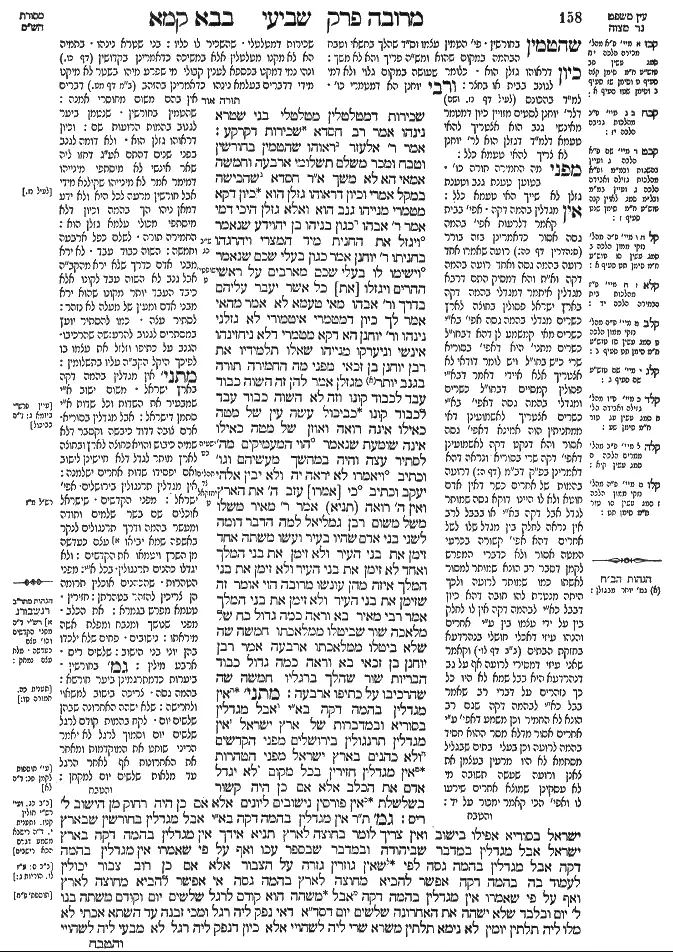
Bava Kamma 79b - Guemara
שכירות דמטלטלין מטלטלי בני שטרא נינהו אמר רב חסדא שכירות דקרקע:
אמר ר' אלעזר ראוהו שהטמין בחורשין וטבח ומכר משלם תשלומי ארבעה וחמשה אמאי הא לא משך א"ר חסדא שהכישה במקל אמרי וכיון דראוהו גזלן הוא כיון דקא מטמרי מנייהו גנב הוא ואלא גזלן היכי דמי אמר ר' אבהו כגון בניהו בן יהוידע שנאמר (שמואל ב כג, כא) ויגזל את החנית מיד המצרי ויהרגהו בחניתו ר' יוחנן אמר כגון בעלי שכם שנאמר (שופטים ט, כה) וישימו לו בעלי שכם מארבים על ראשי ההרים ויגזלו [את] כל אשר יעבר עליהם בדרך ור' אבהו מאי טעמא לא אמר מהאי אמר לך כיון דמטמרי איטמורי לא גזלני נינהו ור' יוחנן הא דקא מטמרי דלא ניחזינהו אינשי וניערקו מנייהו שאלו תלמידיו את רבן יוחנן בן זכאי מפני מה החמירה תורה בגנב יותר מגזלן אמר להן זה השוה כבוד עבד לכבוד קונו וזה לא השוה כבוד עבד לכבוד קונו כביכול עשה עין של מטה כאילו אינה רואה ואוזן של מטה כאילו אינה שומעת שנאמר (ישעיהו כט, טו) הוי המעמיקים מה' לסתיר עצה והיה במחשך מעשיהם וגו' וכתיב (תהלים צד, ז) ויאמרו לא יראה יה ולא יבין אלהי יעקב וכתיב (יחזקאל ט, ט) כי [אמרו] עזב ה' את הארץ ואין ה' רואה (תניא) אמר ר' מאיר משלו משל משום רבן גמליאל למה הדבר דומה לשני בני אדם שהיו בעיר ועשו משתה אחד זימן את בני העיר ולא זימן את בני המלך ואחד לא זימן את בני העיר ולא זימן את בני המלך איזה מהן עונשו מרובה הוי אומר זה שזימן את בני העיר ולא זימן את בני המלך אמר רבי מאיר בא וראה כמה גדול כח של מלאכה שור שביטלו ממלאכתו חמשה שה שלא ביטלו ממלאכתו ארבעה אמר רבן יוחנן בן זכאי בא וראה כמה גדול כבוד הבריות שור שהלך ברגליו חמשה שה שהרכיבו על כתיפו ארבעה:
מתני׳ אין מגדלין בהמה דקה בא"י אבל מגדלין בסוריא ובמדברות של ארץ ישראל אין מגדלין תרנגולין בירושלים מפני הקדשים ולא כהנים בארץ ישראל מפני הטהרות אין מגדלין חזירין בכל מקום לא יגדל אדם את הכלב אלא אם כן היה קשור בשלשלת אין פורסין נישובים ליונים אלא אם כן היה רחוק מן הישוב ל' ריס:
גמ׳ ת"ר אין מגדלין בהמה דקה בא"י אבל מגדלין בחורשין שבארץ ישראל בסוריא אפילו בישוב ואין צריך לומר בחוצה לארץ תניא אידך אין מגדלין בהמה דקה בארץ ישראל אבל מגדלין במדבר שביהודה ובמדבר שבספר עכו ואף על פי שאמרו אין מגדלין בהמה דקה אבל מגדלין בהמה גסה לפי שאין גוזרין גזרה על הצבור אלא אם כן רוב צבור יכולין לעמוד בה בהמה דקה אפשר להביא מחוצה לארץ בהמה גסה אי אפשר להביא מחוצה לארץ ואף על פי שאמרו אין מגדלין בהמה דקה אבל משהה הוא קודם לרגל שלשים יום וקודם משתה בנו ל' יום ובלבד שלא ישהה את האחרונה שלשים יום דסד"א דאי נפק ליה רגל ומכי זבנה עד השתא אכתי לא מלו ליה תלתין יומין לא נימא תלתין משרא שרי ליה לשהויי אלא כיון דנפק ליה רגל לא מבעי ליה לשהויי
Comments from Rashi on Masechet Bava Kamma Page 79b
שכירות דמטלטלי . שהשכיר לו כליו: בני שטרא נינהו . בתמיה הא לא מקנו מטלטלין אלא במשיכה כדאמרינן בקדושין (דף כו.) ונהי נמי דמקנו בכספא לענין קבולי מי שפרע מיהו בשטר לא מיקנו מידי דדברים בעלמא נינהו כדאמרינן בהזהב (ב"מ דף מט.) דברים אין בהם משום מחוסרי אמנה: שהטמין בחורשין . שנטמן ביער לגנוב בהמות הרועות שם: גמ' בחורשין . ביערות כדמתרגמינן ביער חורשא: וכיון דראוהו גזלן הוא . ולא דומה לגנב בפני שנים דהתם אע"ג דחזו ליה שאר אינשי לא מיסתפי מינייהו דמימר אמר לא מינייהו שקילנא מידי אבל חורשין מרעה לכל היא ולא ידע דמאן ניהו הך בהמה וכיון דלא מיסתפי מכולי עלמא גזלן הוא: החמירה תורה . לשלם כפל ארבעה וחמשה: השוה כבוד עבד . לא ירא מבני אדם כדרך שלא ירא מהקב"ה אבל גנב לא השוה עבד לקונו אלא כיבד העבד יותר מקונו שהוא ירא מבני אדם ומעין של מעלה לא נזהר: לסתיר עצה . כמו להסתיר יועץ במסתרים לגנוב להרע: שה שהרכיבו . הגנב על כתיפו וזלזל את עצמו בו לפיכך היקל הקב"ה עליו בתשלומין: מתני' אין מגדלין בהמה דקה בארץ ישראל . משום ישוב א"י שמבעיר את השדות וכל שדות א"י סתמן דישראל: אבל מגדלין בסוריא . ארם צובה דדוד כיבשה וקסבר דלא שמיה כיבוש והויא כחוצה לארץ ובחוצה לארץ מותר לגדל דלא חיישינן לישוב ואם יפסידו שדות אחרים ישלמנה: אין מגדלין תרנגולין בירושלים . אפי' ישראל: מפני הקדשים . שישראל אוכלים שם בשר שלמים ותודה ומעשר בהמה ודרך תרנגולים לנקר באשפה שמא יביאו עצם כעדשה מן השרץ ויטמאו את הקדשים: ולא יגדלו כהנים תרנגולין . בכל א"י: מפני הטהרות . שהכהנים אוכלין תרומה הן צריכין להזהר בטהרתן: חזירין . טעמא מפרש בגמרא: את הכלב . מפני שנושך ומנבח ומפלת אשה מיראתו: נישובים . פחים שלא ילכדו בהן יוני בני הישוב: שלשים ריס . ארבע מילין: גמ' בחורשין . ביערות כדמתרגמינן ביער חורשא: בהמה גסה . צריכה בישוב למשאוי ולחרישה: שלא ישהה האחרונה שבהן שלשים יום . לקח בהמות קודם לרגל שלשים יום וסמוך לרגל לא יאמר הריני שוחט את המוקדמות ומאחר את האחרונות אף לאחר הרגל עד מלאות שלשים יום למקחן:
Comments from Tosafot - Bava Kamma 79b
שהטמין בחורשין . פי' הטמין עצמו וס"ד שהלך בחשאי וטבח ' הבהמה במקום שהוא ומש"ת פריך והא לא משך: כיון דראוהו גזלן הוא . כלומר שעושה במקום גלוי ולא דמי לגונב בבית או בחצר: ורבי יוחנן הא דמטמרי כו' . למ"ד בהכונס (לעיל בבא קמא דף נז. ושם) דלר' יוחנן לסטים מזויין כיון דמטמר מאינשי גנב הוא אצטריך להאי טעמא דלמ"ד דגזלן הוא לר' יוחנן לא צריך להאי טעמא כלל: מפני מה החמירה תורה כו' . בטוען טענת גנב וטענת גזלן לא שייך האי טעמא כלל: אין מגדלין בהמה דקה . אפי' בבית קאמר דלרעות אפי' בהמה גסה אסור כדאמרינן בזה בורר (סנהדרין דף כה:) רועה שאמרו אחד רועה בהמה גסה ואחד רועה בהמה דקה וא"ת והא דמסיק התם דרבא מגדלין איתמר דמגדלי בהמה דקה בארץ ישראל פסולין בחוצה לארץ כשרים מגדלי בהמה גסה אפי' בא"י כשרים מאי קמשמע לן דהא דבחו"ל כשרים מתני' היא דאפי' בסוריא שרי כ"ש בחו"ל ויש לומר דודאי לא אצטריך אלא איידי דאמר דבא"י פסולין קמסיים דבחו"ל כשרים ומגדלי בהמה גסה דאפי' בא"י כשרים אצטריך לאשמועינן דאי ממתניתין הוה אמינא דאפי' גסה אסור והא דנקט דקה לאשמועינן דאפי' דקה שרי בסוריא ונראה דהא דאמרינן בפ"ק דב"מ (דף ה:) דרועה בהמות של אחרים כשר דאין אדם חוטא ולא לו היינו דוקא גסה שמותר לגדל אבל דקה בא"י או בבבל לרב אין נראה לחלק בין מגדל שלו לשל אחרים דהא אפי' קשורה בכרעי המטה אסור ולא כדברי המפרש לקמן דסבר רב הונא שמותר למסור לאשתו כמו שמותר לרועה ולכך היתה מנטרת להו חובה דהא כיון דבבל כא"י לבהמה דקה אין לו לחלק בין על ידי עצמו בין ע"י אחרים והנהו עיזי דאכלי חושלי בנהרדעא בחזקת הבתים (ב"ב דף לו.) וקאמר שאני עיזי דמסירי לרועה אף על גב דנהרדעא היא בבל שמא לא היו כל כך נזהרים על דברי רב שאמר בבל כא"י לבהמה דקה שגם רב הונא לא החמיר וכן משמע דאפי' ע"י אחרים אסור מדלא מסר ההוא חסיד בהמה לרועה וכן בעלי בתים שבגליל מסתמא לא היו מרעין בעצמן את צאנן ורועה שעשה תשובה מי לא עסקינן שמוצא אחרים שירעו לו ואפי' הכי קאמר ימכור על יד
Bava Kamma 79b - Mishnah translated into english
it is speaking of the rental of movable property, is movable property subject to the writing of a deed? Rather, Rav Ḥisda said: It is referring to the rental of land.
§ Rabbi Elazar says: If people saw a thief who was hiding in the woods near a herd of grazing animals, and that individual emerged and slaughtered or sold one of the animals from the herd, he pays the fourfold or fivefold payment. The Gemara asks: Why is the thief liable to the fourfold or fivefold payment? But he did not pull the animal. Rabbi Elazar is apparently describing a case where the thief emerged from the forest and slaughtered one of the animals without first moving it, and there is no fourfold or fivefold payment unless the thief first steals the animal. Rav Ḥisda says: This is referring to a case where he hit the animal with a stick, causing it to move.
With regard to Rabbi Elazar’s statement, the Sages say: But since people saw him doing all this, he is a robber, not a thief, and the fourfold or fivefold payment applies only to thieves. A thief is one who sneaks into a house or other private property; one who commits his act brazenly, in public, is classified as a robber. The Gemara answers: Since he was hiding from them, he is considered a thief, despite the fact that they saw him.
The Gemara asks: But if so, what are the circumstances of a robber? Rabbi Abbahu said: Robbers are like the case of Benaiah ben Jehoiada, as it is stated concerning him: “He slew an Egyptian, a goodly man; and the Egyptian had a spear in his hand; but he went down to him with a staff, and he robbed the spear out of the Egyptian’s hand, and slew him with his own spear” (II Samuel 23:21).
Rabbi Yoḥanan said: A different example of a robber is a case like that of the men of Shechem, as it is stated: “And the men of Shechem set ambushers for him on the tops of the mountains, and they robbed all that came along that way by them” (Judges 9:25).
The Gemara asks: And what is the reason that Rabbi Abbahu did not say the example from this verse, which discusses the men of Shechem? He could have said to you: Since the men of Shechem were hiding in ambush, they are not considered robbers but thieves. And how would Rabbi Yoḥanan respond to this claim? This fact that they were hiding was not because they were hesitant to steal in view of the public. Rather, they acted in this manner so that the travelers should not see them in advance and flee from them.
§ The Gemara concludes its discussion of theft with several aggadic statements. His students asked Rabban Yoḥanan ben Zakkai: For what reason was the Torah stricter with a thief than with a robber? Only a thief is required to pay the double, fourfold, or fivefold payment, not a robber. Rabban Yoḥanan ben Zakkai said to them in response: This one, the robber, equated the honor of the servant to the honor of his Master, and that one, the thief, did not equate the honor of the servant to the honor of his Master. The robber fears neither God nor people, as he is not afraid to rob in public. The thief does not fear God but he does fear other people, which demonstrates that he is more concerned about humans than God.
As it were, the thief establishes the eye below, i.e., God’s eye, as though it does not see, and the ear below, i.e., God’s ear, as though it does not hear. The Gemara cites verses that describe people who imagine that God does not see their actions, as it is stated: “Woe to them who seek deeply to hide their counsel from the Lord, and their works are in the dark, and they say: Who sees us, and who knows us?” (Isaiah 29:15). And it is written: “And they say: The Lord will not see, neither will the God of Jacob give heed” (Psalms 94:7). And it is written: “For they say: The Lord has forsaken the land, and the Lord does not see” (Ezekiel 9:9).
It is taught in a baraita that Rabbi Meir said: To illustrate the severity of a thief over a robber, as per Rabban Yoḥanan ben Zakkai’s explanation, they stated a parable in the name of Rabban Gamliel. To what is this matter comparable? To two people who were living in the same city, and both of them prepared a feast. One of them invited the people of the city to his feast but he did not invite the king’s sons. And the other did not invite the people of the city and also did not invite the king’s sons. Which of them deserves a greater punishment? You must say that it is this one who invited the people of the city but did not invite the king’s sons. Likewise, both the thief and the robber show disdain for God, but the robber does not display more respect for people.
The Gemara discusses why there is a fourfold payment for a sheep but a fivefold payment for an ox. Rabbi Meir said: Come and see how great the power of labor is. The theft of an ox, which was forced by the thief to cease its labor, leads to a fivefold payment; whereas the theft of a sheep, which was not forced by the thief to cease its labor, as a sheep performs no labor, leads to only a fourfold payment.
Rabban Yoḥanan ben Zakkai said: Come and see how great human dignity is. The theft of an ox, which walked on its own legs as the thief stole it, leads to a fivefold payment, whereas the theft of a sheep, which the thief carried on his shoulder as he walked, thereby causing himself embarrassment, leads to only a fourfold payment.
MISHNA: One may not raise small domesticated animals, i.e., sheep and goats, in settled areas of Eretz Yisrael, as they graze on people’s crops. But one may raise them in Syria, despite the fact that with regard to many other halakhot Syria is treated like Eretz Yisrael, and in the wilderness of Eretz Yisrael.
One may not raise chickens in Jerusalem, due to the sacrificial meat that is common there. There is a concern that chickens will pick up garbage that imparts ritual impurity and bring it into contact with sacrificial meat, thereby rendering it ritually impure. And priests may not raise chickens anywhere in Eretz Yisrael, because of the many foods in a priest’s possession that must be kept ritually pure, e.g., teruma.
Furthermore, one may not raise pigs anywhere, and a person may not raise a dog unless it is tied with chains. One may spread out traps [nishovim] for pigeons only if this was performed at a distance of at least thirty ris, which is 8,000 cubits, from any settled area, to ensure that privately owned pigeons are not caught in the traps.
GEMARA: The Sages taught in a baraita: One may not raise small domesticated animals, i.e., sheep and goats, in settled areas of Eretz Yisrael. But one may raise them in the forests of Eretz Yisrael. In Syria, it is permitted to do so even in a settled area. And, needless to say, it is permitted to do so outside of Eretz Yisrael.
It is taught in another baraita: One may not raise small domesticated animals in settled areas of Eretz Yisrael. But one may raise them in the wilderness that is in Judea and in the wilderness that is on the border near Akko. And even though the Sages said that one may not raise small domesticated animals, nevertheless, one may raise large, domesticated animals, i.e., cattle, because the Sages issue a decree upon the public only if a majority of the public is able to abide by it.
This difference is that it is possible for someone to bring small domesticated animals from outside of Eretz Yisrael in the event that they are needed. But it is not possible for someone to bring large, domesticated animals from outside of Eretz Yisrael whenever he needs one, since there is a constant need for them as beasts of burden. Therefore, the Sages did not issue a decree with regard to these types of animals.
The baraita continues: And even though they said that one may not raise small domesticated animals, however, one may keep these animals on his premises for thirty days before a pilgrimage Festival, and thirty days before the wedding feast of one’s son, when many animals are needed for food, provided that he does not leave the last one, i.e., the animal which he purchased immediately before the Festival, for thirty days.
The Gemara clarifies the final line of the baraita: The baraita needs to state this ruling as it might enter your mind to say that if the pilgrimage Festival has passed and thirty days have not yet elapsed from the time when he bought the animal until now, he may keep the animal until thirty days have elapsed. To counter this, the baraita teaches that we do not say: It is permitted to keep it for a total of thirty days. Rather, once the pilgrimage Festival has passed, he should not keep it any longer.
Traduction : The William Davidson digital edition of the Koren Noé Talmud, with commentary by Rabbi Adin Even-Israel Steinsaltz.