 Talmud Bavli
The learning on the whole site is dedicated : L'ilui Nishmat Nissim ben Barukh Malka
The learning on the whole site is dedicated : L'ilui Nishmat אליעזר בן רחל
The learning on the whole site is dedicated : L'ilui Nishmat Margalit bat Ledicia
Bava Kamma 116b : Youtube
Daf TubeYoutube
2 video classes :
Bava Kamma Page 116b
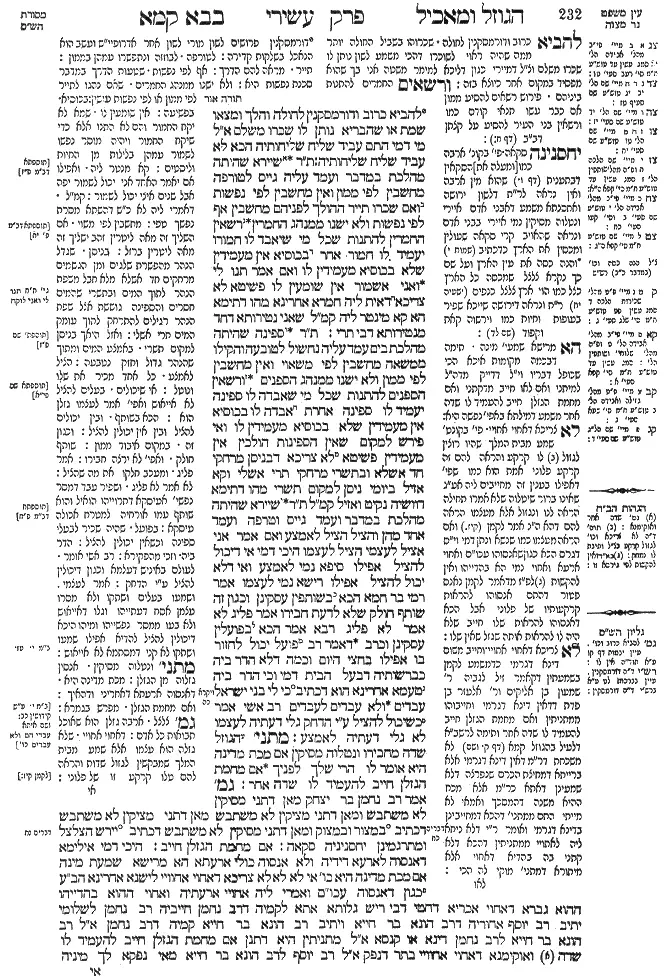
Bava Kamma 116b - Guemara
להביא כרוב ודורמסקנין לחולה והלך ומצאו שמת או שהבריא נותן לו שכרו משלם א"ל מי דמי התם עביד שליח שליחותיה הכא לא עביד שליח שליחותיה:
ת"ר שיירא שהיתה מהלכת במדבר ועמד עליה גייס לטורפה מחשבין לפי ממון ואין מחשבין לפי נפשות ואם שכרו תייר ההולך לפניהם מחשבין אף לפי נפשות ולא ישנו ממנהג החמרין רשאין החמרין להתנות שכל מי שיאבד לו חמורו יעמיד לו חמור אחר בכוסיא אין מעמידין שלא בכוסיא מעמידין לו ואם אמר תנו לי ואני אשמור אין שומעין לו פשיטא לא צריכא דאית ליה חמרא אחרינא מהו דתימא הא קא מינטר ליה קמ"ל שאני נטירותא דחד מנטירותא דבי תרי:
ת"ר ספינה שהיתה מהלכת בים עמד עליה נחשול לטובעה והקילו ממשאה מחשבין לפי משאוי ואין מחשבין לפי ממון ולא ישנו ממנהג הספנים ורשאין הספנים להתנות שכל מי שאבדה לו ספינה יעמיד לו ספינה אחרת אבדה לו בכוסיא אין מעמידין שלא בכוסיא מעמידין לו ואי פירש למקום שאין הספינות הולכין אין מעמידין פשיטא לא צריכא דבניסן מרחקי חד אשלא ובתשרי מרחקי תרי אשלי וקא אזיל ביומי ניסן למקום תשרי מהו דתימא דוושיה נקיט ואזיל קמ"ל ת"ר שיירא שהיתה מהלכת במדבר ועמד גייס וטרפה ועמד אחד מהן והציל הציל לאמצע ואם אמר אני אציל לעצמי הציל לעצמו היכי דמי אי דיכול להציל אפילו סיפא נמי לאמצע ואי דלא יכול להציל אפילו רישא נמי לעצמו אמר רמי בר חמא הכא בשותפין עסקינן וכגון זה שותף חולק שלא לדעת חבירו אמר פליג לא אמר לא פליג רבא אמר הכא בפועלין עסקינן וכרב דאמר רב פועל יכול לחזור בו אפילו בחצי היום וכמה דלא הדר ביה כברשותיה דבעל הבית דמי וכי הדר ביה טעמא אחרינא הוא דכתיב (ויקרא כה, נה) כי לי בני ישראל עבדים ולא עבדים לעבדים רב אשי אמר כשיכול להציל ע"י הדחק גלי דעתיה לעצמו לא גלי דעתיה לאמצע:
מתני׳ הגוזל שדה מחבירו ונטלוה מסיקין אם מכת מדינה היא אומר לו הרי שלך לפניך אם מחמת הגזלן חייב להעמיד לו שדה אחר:
גמ׳ אמר רב נחמן בר יצחק מאן דתני מסיקין לא משתבש ומאן דתני מציקין לא משתבש מאן דתני מציקין לא משתבש דכתיב (דברים כח, נג) במצור ובמצוק ומאן דתני מסיקין לא משתבש דכתיב (דברים כח, מב) יירש הצלצל ומתרגמינן יחסניניה סקאה:
אם מחמת הגזלן חייב:
היכי דמי אילימא דאנסוה לארעא דידיה ולא אנסוה כולי ארעתא הא מרישא שמעת מינה אם מכת מדינה היא כו' אי לא לא לא צריכא דאחוי אחוויי לישנא אחרינא הב"ע כגון דאנסוה עכו"ם ואמרי ליה אחויי ארעתיה ואחוי ההוא בהדייהו ההוא גברא דאחוי אכריא דחטי דבי ריש גלותא אתא לקמיה דרב נחמן חייביה רב נחמן לשלומי יתיב רב יוסף אחוריה דרב הונא בר חייא ויתיב רב הונא בר חייא קמיה דרב נחמן א"ל רב הונא בר חייא לרב נחמן דינא או קנסא א"ל מתניתין היא דתנן אם מחמת הגזלן חייב להעמיד לו שדה ואוקימנא דאחוי אחוויי בתר דנפק א"ל רב יוסף לרב הונא בר חייא מאי נפקא לך מיניה
Comments from Rashi on Masechet Bava Kamma Page 116b
דורמסקנין . פרושים לשון מורי. לשון אחר אדרופיי"ש ועשב הוא הנאכל בשלקות קדירה: לטורפה . לבזזה ונתפשרו עמהן בממון: תייר . מראה להם הדרך: אף לפי נפשות . שטעות הדרך במדבר סכנת נפשות היא: ולא ישנו ממנהג החמרים . שאם נהגו לתייר לפי ממון או לפי נפשות עושין: בכוסיא . בפשיעה: אין שומעין לו . שמא לא יקח החמור והם לא התנו אלא כדי שיקח החמור ויהיה מוסר נפשו לשמור עמהן בלילות מן החיות וליסטים: קא מנטר ליה . ואפילו אם יאמר האחד אני יכול לשמור יפה אבל שנים איני יכול לשמור: קמ"ל . דאמרי ליה לא כ"ש דהשתא מסרת נפשך טפי: מחשבין לפי משוי . אם השליך זה מאה ליטרין זהב ישליך זה מאה ליטרין ברזל: בניסן . שגדל הנהר מהפשרת שלגים ומן הגשמים מרחקים חד אשלא מלא חבל משפת הנהר לתוך המים ובתשרי שהמים חסרים והספינה גוששת אצל שפת הנהר רגילים להתרחק לתוך עומק המים תרי אשלי: ואזל היאך בניסן למקום תשרי . באמצע המים ומתוך שהנהר גדול וחזק נטבעה: הציל לאמצע . כל אחד מכיר את שלו ונוטל: אי שיכולים . בעלים להציל לא אייאוש ואפי' אמר לעצמו גזלן הוא: הכא בשותף . ובין יכולים להציל ובין אין יכולין להציל: וכגון זה . במקום איבוד ממון: שותף חולק . ואפי' לא ירצה חבירו: אמר פליג . ומעכב חלקו את מה שהציל: לא אמר לא פליג . ושפיר עבד דמסר נפשי' אעיסקא דתרוייהו הואיל והוא שותף עמו אורחיה למטרח אכולה עיסקא: בפועל . שהיה שכיר לבעלי ספינה וכשאין יכולין להציל: הדר ביה . וזכי מהפקירא: רב אשי אומר . לעולם באיניש דעלמא וכגון דיכולין להציל ע"י הדחק: מתני' ונטלוה מסיקין . אנסין גזלוה מן הגזלן: מכת מדינה היא . דאנסוה ארעתא דאחריני ודהאיך: ואם מחמת הגזלן . מפרש בגמרא: גמ' צלצל . ארבה גזלן הוא שאוכל תבואות כל אדם: דאחוי אחויי . שלא גזלה הוא עצמו אלא שמע מבית המלך שמבקשין לגזול שדות והראה להם טלו קרקע זו של פלוני:
Comments from Tosafot - Bava Kamma 116b
להביא כרוב ודורמסקנין לחולה . שכרוהו בשביל החולה יותר ממה שהיה ראוי לשוכרו דהכי משמע לשון נותן לו שכרו משלם וצ"ל דמיירי כגון דליכא למימר משטה אני בך שהוא מפסיד במקום אחר כיוצא בזה: ורשאים החמרים להתנות ביניהם . פירוש רשאים להסיע ממון אם כבר עשו תנאי קודם כמו ורשאין בני העיר להסיע על קצתן דב"ב (דף ח:): יחסנינה סקאה . פי' בקונ' ארבה כמו [ומעלה את] הסקאין דבתענית (דף ו.) שהוא מין ארבה ואין נראה לר"ת דלשון ירושה ואחסנתא משמע דאבני אדם איירי ונטלוה מסיקין נמי איירי בבני אדם ונראה שהאויב קרי סקאה שעולין ומכסין את הארץ כדכתיב (שמות י) . והנה כסה את עין הארץ ועל שם כך נקרא צלצל שמכסה כל הארץ כצל כמו הוי ארץ צלצל כנפים (ישעיהו יח) ר"ת ונראה דירושה שייכא שפיר בעופות וחיות כמו וירשוה קאת וקפוד (שם לד): הא מרישא שמעי' מינה . תימה דבכמה מקומות איכא הכי שכופל דבריו וי"ל דדייק מדה"ל למיתני ואם לאו חייב מדקתני ואם מחמת הגזלן חייב להעמיד לו שדה אחר משמע דמילתא באפי' נפשה היא: לא צריכא דאחוי אחויי . וחייב משום דינא דגרמי כדמשמע לקמן בשמעתין דקאמר זיל לגביה ר' שמעון בן אליקים ור' אלעזר בן פדת דדאין דינא דגרמי וחייבוהו ממתניתין ואם מחמת הגזלן חייב להעמיד לו שדה אחר ותימה לרשב"א דלעיל בהגוזל קמא (בבא קמא דף ק. ושם) לא משכחת דר"מ דאין דינא דגרמי אלא ברייתא דמחיצת הכרם שנפרצה דלא שמעינן דאתא כר"מ אלא מכח ההיא משנה דהמסכך ואמאי לא מייתי התם ממתני' דהכא דמחייבינן בדינא דגרמי ואומר ר"י דלא ניחא ליה לאתויי ממתניתין דהכא דלא קתני בה בהדיא דאחוי אלא מיתורא דמתני' מוקי לה הכי:
Bava Kamma 116b - Mishnah translated into english
to bring cabbage and plums to an ill person, and he went and found that the patient had already died or recovered, the employer nevertheless gives the worker his entire wage. Evidently, one is paid for his efforts even if the desired result is not accomplished. Accordingly, the rescuer’s stipulation should apply, and one should be obligated to pay another for attempting to salvage his donkey even if he did not actually succeed in doing so.
Rabbi Yehuda HaNasi said to him: Are those two cases comparable? There, in the case of the ill person, the agent performed his assignment, as he procured and delivered the foods to the ill person, but here, in the case of the donkeys, the agent did not perform his assignment, as he was unable to rescue the animal from the river.
§ Apropos the episode involving Rav Safra, the Gemara discusses the division of expenses among travelers in a caravan. The Sages taught in a baraita: In the case of a caravan that was traveling in the desert and a troop of bandits stood over it in order to attack and pillage it, and the members of the caravan agreed to pay ransom to the bandits, they calculate each traveler’s contribution according to the amount of money he is carrying, and they do not calculate according to the number of souls in the caravan, i.e., the expense is not divided equally among the travelers.
But if they hired a scout who travels in front of them and leads them safely through the desert, the travelers calculate each one’s contribution to paying the scout’s wages even according to the number of souls. And they should not differ from the usual custom of donkey drivers, who often have set procedures for such situations.
The donkey drivers are permitted to stipulate that with regard to anyone whose donkey becomes lost, the caravan will provide him with a different donkey. If the donkey was lost through negligence, they do not provide him with another donkey, but if it was lost not through negligence, they provide him with another donkey. And if the individual whose donkey became lost said: Give me money instead of the donkey and I will guard the caravan along with everyone else, they do not listen to him.
The Gemara asks: Isn’t this obvious? No, it is necessary to teach this for a case where he already has another donkey, lest you say that he will guard the caravan for its sake. Since he still owns one donkey, he never lost his incentive to guard the caravan, and the other drivers should therefore give him money if he wishes. The baraita therefore teaches us that guarding one donkey is different from guarding two donkeys, and the driver will be more likely to guard the caravan properly if they supply him with another donkey.
§ The Gemara cites another baraita that discusses the division of expenses among a group. The Sages taught: In a case of a boat that was traveling on the sea when a gale arose and threatened to sink it, and the sailors lightened its load by throwing some of their belongings overboard, the sailors calculate the amount that each must throw out according to weight, but they do not calculate it according to how much money the items are worth. And they should not differ from the usual custom of sailors.
And if a number of boats are traveling together, the sailors are permitted to stipulate that with regard to anyone whose boat was lost, the others will provide him with a different boat. If his boat was lost through negligence, the other sailors do not provide him with another boat, but if it was lost not through negligence, the sailors provide him with another boat. And if the boat sailed to a place where the boats do not travel, the other sailors do not provide him with a different boat.
The Gemara asks: Isn’t this obvious? The Gemara answers: No, it is necessary because in the month of Nisan, the boats distance themselves from the shore by one rope length, and in the month of Tishrei, they distance themselves by two rope lengths. And in this case, the boat was traveling during Nisan and sailed to the place where boats sail during Tishrei. Lest you say that the sailor is not considered negligent because he is taking his usual route and traveling as he is accustomed to, the baraita teaches us that his actions are considered negligent.
The Sages taught in a baraita: In a case of a caravan that was traveling in the desert and a troop of bandits stood over it and pillaged it, and one of the travelers arose and rescued the caravan from the bandits, he has rescued the property for the common good, i.e., each member of the caravan receives back his property. And if he stated: I will rescue the property from the bandits for myself, then he has effectively rescued the items for himself, and he is now the legal owner of all the property.
The Gemara asks: What are the circumstances of the case? If each member of the caravan is able to rescue his property, then even in the latter clause, where the rescuer states that he is saving the property for himself, the halakha should also be that the possessions are rescued for the common good, as the other members of the caravan did not despair of retrieving their property. And if each member of the caravan is unable to rescue his property, they despair of retrieving their property and relinquish ownership of it. Consequently, even in the first clause, the halakha should also be that the possessions are saved for himself, so that he is their legal owner. Why is there a discrepancy between the halakha in the first clause and the halakha in the latter clause?
The Gemara answers: Rami bar Ḥama said: Here, in the case of the baraita, we are dealing with a caravan whose members are partners and jointly own the confiscated property, and in a case such as this, a partner may divide the property without the other partner’s consent. Therefore, if he said that he intends to save the property for himself, he has dissolved the partnership and divided the property so that if he is able to rescue only some of the property, the property he rescues is his share of the joint property. If he did not say that he intends to save the property for himself, he has not divided the property, and whatever he rescues is jointly owned by the partners.
Rava stated a different answer: Here, in the baraita, we are dealing with laborers who were hired to protect the caravan, and one of these guards saved the travelers’ property. And it is in accordance with the opinion of Rav, as Rav says: A laborer may retract his commitment to his employer even in the middle of the day.
The Gemara explains: As long as he did not retract his commitment, he is considered to be under the jurisdiction of the employer, so that anything he saves automatically belongs to the employer. And when he retracts his commitment, it is for a different reason that he is able to do so, as it is written: “For unto Me the children of Israel are servants” (Leviticus 25:55), indicating that Jews are servants of God, but not servants of servants, i.e., of other Jews. Consequently, it is permitted for a laborer to conclude his term of employment whenever he wants. Once he does so, if he saves property that the members of the caravan are unable to rescue, the property belongs to him.
Rav Ashi stated another answer: The baraita is discussing a case where the other members of the caravan are able to rescue the property with difficulty. Therefore, if he revealed his intention to rescue the property for himself and the other travelers did not protest, it is clear that they have despaired of recovering their property, and the rescuer has secured the property for himself. If he did not reveal his intention to rescue the property for himself, the status quo remains and the property has been rescued for the common good.
MISHNA: In a case of one who robs a field from another and thugs [massikin] subsequently take the field from the robber, the halakha is dependent upon the circumstances: If it is a regional disaster in which the thugs seize all the property in the region, the robber says to the owner of the field: That which is yours is before you, i.e., it is your prerogative to try to reclaim it from the thugs. No compensation is required since the thugs would have seized the property in any event. But if the thugs took that field alone due to the robber, the robber is obligated to provide the owner with a different field.
GEMARA: Rav Naḥman bar Yitzḥak said: One who teaches the mishna using the term massikin does not err, and one who teaches the mishna using the term matzikin also does not err, as both terms may be used to refer to thugs. One who teaches the mishna using the term matzikin does not err, as it is written: “In the siege and in the distress [matzok] with which your enemies shall distress you” (Deuteronomy 28:55). Consequently, matzikin are individuals who cause distress to others.
And one who teaches the mishna using the term massikin does not err, as it is written: “All your trees and the fruit of your land shall the locust consume” (Deuteronomy 28:42), and, in the standard Aramaic translation, we translate this phrase as: Shall the locust [sakke’a] consume. Consequently, massikin are those who consume the property of others.
§ The mishna teaches: If the thugs took the field due to the robber, the robber is obligated to provide the owner with a different field. The Gemara asks: What are the circumstances of the case in the latter clause of the mishna? If we say that they seized only his land, i.e., the robber’s land, and did not seize all the other lands in the region, you already learned this from the first clause of the mishna: If it is a regional disaster in which the thugs seize all the property in the region, the robber is not obligated to compensate the owner of the field, which indicates that if it is not a regional disaster, the robber is not exempt from payment. What novelty does the latter clause teach?
The Gemara explains: No, it is necessary for a case where the individual did not actually take control of the property before it was seized by the thugs, but rather showed the field to the thugs and thereby facilitated their occupation of the field. A different version of this answer is as follows: With what are we dealing here? A case where gentiles coerced someone and told him to show them his land for them to seize, and he showed them that field belonging to another, along with his own fields, and the thugs then seized all the land he showed them.
The Gemara recounts a related incident: There was a certain man who showed piles of wheat, belonging to the Exilarch’s household, to thugs, who seized them. The case came before Rav Naḥman for judgment, and Rav Naḥman deemed that man liable to pay the Exilarch for the stolen wheat. Rav Yosef was sitting behind Rav Huna bar Ḥiyya, and Rav Huna bar Ḥiyya was sitting before Rav Naḥman. Rav Huna bar Ḥiyya said to Rav Naḥman: Did you deem him liable to pay because that is the halakha, or was it a fine?
Rav Naḥman said to him: This individual’s liability is written explicitly in the mishna, i.e., it is the halakha, as we learned in the mishna: If thugs took the field due to the robber, he is obligated to provide the owner with a different field. And it was established that the mishna is referring to a case where an individual showed the field to thugs, who later seized it. So too, in this case, the one who showed the Exilarch’s wheat pile to the thugs is obligated to pay for them. After Rav Naḥman left, Rav Yosef said to Rav Huna bar Ḥiyya: What difference does it make to you
Traduction : The William Davidson digital edition of the Koren Noé Talmud, with commentary by Rabbi Adin Even-Israel Steinsaltz.