 Talmud Bavli
Eruvin 86a : Youtube
Rabi Yitzchok LobensteinYoutube
2 video classes :
Eruvin Page 86a
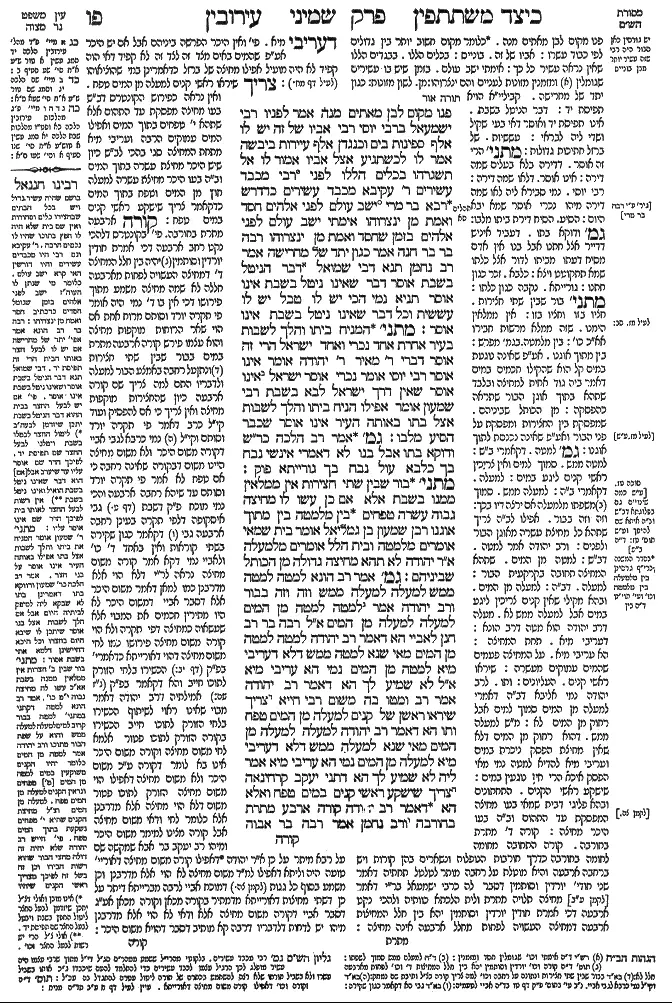
Eruvin 86a - Guemara
פנו מקום לבן מאתים מנה אמר לפניו רבי ישמעאל ברבי יוסי רבי אביו של זה יש לו אלף ספינות בים וכנגדן אלף עיירות ביבשה אמר לו לכשתגיע אצל אביו אמור לו אל תשגרהו בכלים הללו לפני רבי מכבד עשירים ר' עקיבא מכבד עשירים כדדרש רבא בר מרי (תהלים סא, ח) ישב עולם לפני אלהים חסד ואמת מן ינצרוהו אימתי ישב עולם לפני אלהים בזמן שחסד ואמת מן ינצרוהו רבה בר בר חנה אמר כגון יתד של מחרישה אמר רב נחמן תנא דבי שמואל דבר הניטל בשבת אוסר דבר שאינו ניטל בשבת אינו אוסר תניא נמי הכי יש לו טבל יש לו עששית וכל דבר שאינו ניטל בשבת אינו אוסר:
מתני׳ המניח ביתו והלך לשבות בעיר אחרת אחד נכרי ואחד ישראל הרי זה אוסר דברי ר' מאיר ר' יהודה אומר אינו אוסר רבי יוסי אומר נכרי אוסר ישראל אינו אוסר שאין דרך ישראל לבא בשבת רבי שמעון אומר אפילו הניח ביתו והלך לשבות אצל בתו באותה העיר אינו אוסר שכבר הסיע מלבו:
גמ׳ אמר רב הלכה כר"ש ודוקא בתו אבל בנו לא דאמרי אינשי נבח בך כלבא עול נבח בך גורייתא פוק:
מתני׳ בור שבין שתי חצירות אין ממלאין ממנו בשבת אלא אם כן עשו לו מחיצה גבוה עשרה טפחים בין מלמטה בין מתוך אוגנו רבן שמעון בן גמליאל אומר בית שמאי אומרים מלמטה ובית הלל אומרים מלמעלה א"ר יהודה לא תהא מחיצה גדולה מן הכותל שביניהם:
גמ׳ אמר רב הונא למטה למטה ממש למעלה למעלה ממש וזה וזה בבור ורב יהודה אמר למטה למטה מן המים למעלה למעלה מן המים א"ל רבה בר רב חנן לאביי הא דאמר רב יהודה למטה למטה מן המים מאי שנא למטה ממש דלא דעריבי מיא למטה מן המים נמי הא עריבי מיא א"ל לא שמיע לך הא דאמר רב יהודה אמר רב ומטו בה משום רבי חייא צריך שיראו ראשן של קנים למעלה מן המים טפח ותו הא דאמר רב יהודה למעלה למעלה מן המים מאי שנא למעלה ממש דלא דעריבי מיא למעלה מן המים נמי הא עריבי מיא אמר ליה לא שמיע לך הא דתני יעקב קרחינאה צריך שישקע ראשי קנים במים טפח ואלא הא דאמר רב יהודה קורה ארבע מתרת בחורבה ורב נחמן אמר רבה בר אבוה
Comments from Rashi on Masechet Eruvin Page 86a
פנו מקום לבן מאתים מנה . כלומר מקום חשוב יותר בין גדולים לפי כבוד עשרו: אביו של זה . בונייס: בכלים הללו . בבגדים הללו שאין נראה עשיר כל כך: אימתי ישב עולם . בזמן שיש בו עשירים שגומלין ומזמנין מזונות לעניים והם ינצרוהו: מן . לשון מזונות: כגון יתד של מחרישה . קביליי"א הויא תפיסת יד: דבר הניטל בשבת . אינו תפיסת יד ואוסר דאי בעי שקיל ושדי ליה לבראי: עששיות . של ברזל חתיכות גדולות: מתני' הרי זה אוסר . דדירה בלא בעלים שמה דירה: אינו אוסר . דלאו שמה דירה: רבי יוסי . נמי סבירא ליה לאו שמה דירה מיהו נכרי אוסר שמא יבא היום: הסיע . הסיח דירת ביתו מלבו: גמ' ודוקא בתו . דעביד איניש דדייר אצל חתנו אבל בנו אין אדם מסיח דעתו מביתו לדור אצל כלתו שמא תתקוטט ויצא: כלבא . זכר כגון חתנו: גורייתא . נקבה כגון כלתו: מתני' בור שבין שתי חצירות . חציו בזו וחציו בזו: אין ממלאין הימנו . שזה ממלא מרשות חבירו אא"כ כו': בין מלמטה . בגמ' מפרש: בין מתוך אוגנו . אע"פ שאינה נוגעת במים קל הוא שהקילו חכמים במים דאמר ביה גוד אחית למחיצה ובלבד שתהא בתוך אוגן הבור שתראה כהפסקה: מן הכותל שביניהם . שמפסקת בין החצירות ומפסקת על פני הבור ואע"פ שאינה נכנסת לתוך אוגנו: גמ' למטה . דקאמרי ב"ש: למטה ממש . סמוך למים ואין צריכין ראשי קנים ליגע במים: למעלה . דקאמרי בית הלל: למעלה ממש . סמוך משפתו מלמעלה אם ירצה דיו בכך: וזה וזה בבור . אפילו לב"ה צריך שתהא כל מחיצת עשרה מאוגן הבור ולפנים: ורב יהודה אמר למטה . דב"ש: למטה מן המים . שתהא המחיצה תחובה בקרקעית הבור: למעלה . דב"ה: למעלה מן המים . ובהא מקילי שאין קנים צריכין ליגע במים אבל למעלה ממש לא מעלה דרב יהודה הוא מטה דרב הונא: דעריבי מיא . תחת המחיצה: הא עריבי מיא . על המחיצה פעמים שהמים עמוקים מעשרה: שיראו ראשי קנים . העליונים: ותו . לרב יהודה נמי אליבא דבית הלל דאמרי למעלה מן המים סמוך למים אבל רחוק מן המים לא: מ"ש למעלה ממש . דהוא רחוק מן המים דלא שאין מחיצת הפסק ניכרת במים ועריבי מיא להדיא למטה נמי מאי הפסק איכא הרי אין נוגעין במים: שישקע ראשי הקנים . התחתונים ובהא פליגי דבית שמאי בעו מחיצה המפסקת עד התהום וב"ה בעו היכר מחיצה: קורה ד' מתרת בחורבה . קורה התחובה מחומה לחומה בחורבה כדרך חורבות הנופלות ונשארים בהן קורות ויש ברחבה ארבעה והיא מוטלת על רחבה מותר לטלטל תחתיה דאמר שני חודיה יורדין וסותמין דסבר לה כרבי ישמעאל בר"י דאמר [לקמן ע"ב] מחיצה תלויה מתרת ולית הלכתא כוותיה ולהכי נקט ד' דכי אמרת חודין יורדין וסותמין יהא בין חלל המחיצות ארבעה דמחיצה העשויה לפחות מחלל ארבעה אינה מחיצה:
Comments from Tosafot - Eruvin 86a
דעריבי מיא . פי' ואין היכר הפרשה ביניהם אבל אם יש היכר אע"פ שהמים באים מצד זה לצד זה לא קפיד דאי הוה קפיד לא היה מועיל אפילו מחיצה של ברזל כדאמרינן במי שהוציאוהו (לעיל עירובין דף מח.): צריך שיראו ראשי קנים למעלה מן המים טפח . ואין נראה כפירוש הקונטרס דב"ש בעו מחיצה מפסקת עד התהום אלא שתהא י' טפחים בתוך המים ואפילו המים עמוקים הרבה ועריבי מיא מתחת המחיצה סגי בהכי לב"ש כיון שיש היכר מחיצת עשרה בתוך המים וב"ה בעו היכר מחיצת עשרה למעלה חוץ מן המים וטפח בתוך המים כדקאמר צריך שישקע ראשי קנים במים טפח: קורה ארבעה מתרת בחורבה . פי' בקונטרס דלהכי נקט רחב ארבעה דכי אמרת חודין יורדין וסותמין יהיה בין חלל המחיצה ד' דמחיצה העשויה לפחות מארבעה חללה לא שמה מחיצה משמע מתוך פירושו דכי אין בו ד' נמי היה אומר פי תקרה יורד וסותם מרוח אחת אם הוי שאר הרוחות מוקפות מחיצה והוא עצמו פירש קורה ארבעה מתרת במים בבור שבין שתי חצירות ונתן על רחבה באמצע הבור למעלה ולדבריו התם למה צריך שם קורה ארבעה כיון שהחצירות מוקפות מחיצה ואין צריך כי אם להפסיק ועוד קי"ל כרב דאמר פי תקרה יורד וסותם וקי"ל נמי כרבא לגבי אביי דקורה משום היכר ולא משום מחיצה היינו משום דבקורה שאינה רחבה כי אם טפח לא אמר פי תקרה יורד וסותם עד שיהא רחבה ארבעה והכי נמי מוכח פ"ק דשבת (דף ט.) גבי איסקופה דלפי תקרה בעינן רחבה ארבעה גבי דקאמר כגון שקירה בשתי קוראות ואין באחד ד' כו' ולאביי נמי דקא אמר קורה משום מחיצה נראה לר"י דלא הוי אלא מדרבנן כמו למאן דאמר משום היכר אלא דסבר אביי דמשום היכר לא היו מתירין חכמים את המבוי אלא שעשאוה כמחיצה דפי תקרה ולא הוי קורה משום מחיצה פירושו כמו לחי משום מחיצה דהוי דאורייתא כדאמרי' בפ"ק (דף יב:) הכשירו בלחי הזורק לתוכו חייב והא דקאמר בפ"ק (ג"ז שם:) אמילתיה דרב יהודה דאמר מבוי שאינו ראוי לשיתוף הכשירו בלחי הזורק לתוכו חייב הכשירו בקורה הזורק לתוכו פטור אלמא לחי משום מחיצה וקורה משום היכר אינו בא לומר דקורה ע"כ משום היכר ולא משום מחיצה דאפילו הוי משום מחיצה הזורק לתוכו פטור משום דלא הוי מחיצה אלא מדרבנן אלא כלומר לחי ודאי משום מחיצה אבל קורה מצינו למימר משום היכר ומיהו רב יעקב בר אבא שמקשה שם על רבא מיתר על כן א"ר יהודה דאפילו קורה משום מחיצה דאוריי' טועה היה וליתא דאפילו למ"ד משום מחיצה לא הוי אלא מדרבנן וכן משמע בסוף כל גגות (לקמן עירובין צה.) דמוכח אביי לרבה מברייתא דיתר על כן דשתי מחיצות דאורייתא מדמתיר בקורה מכאן וקורה מכאן אע"ג דסבר אביי דקורה משום מחיצה אלא ודאי לא הוי אלא מדרבנן מיהו יש לדחות דלדבריו דרבה קא מותיב דסבר דהויא משום היכר: קורה ד' מתרת בחורבה . פי' בקונטרס דסבר לה כר' ישמעאל ברבי יוסי דאמר מחיצה תלויה מתרת ולית הלכתא כוותיה ואין נראה לר"י דרבי ישמעאל לא התיר אלא במבוי אבל במחיצה תלויה דחורבה הפרוצה לרה"ר לא ועוד דקורה ד' לא מטעם מחיצה תלויה מתרת דהא ליכא מחיצה כלל אלא מטעם פי תקרה ופי תקרה לא אשכחנא תנאי דפליגי ורב נמי דאית ליה (לקמן עירובין דף צ:) פי תקרה יורד וסותם קאמר הכא בסמוך דאין מחיצה תלויה מתרת אלא במים:
Eruvin 86a - Mishnah translated into english
Make way even more for one who possesses two hundred maneh. Rabbi Yishmael, son of Rabbi Yosei, said before him: My teacher, Bonyas, father of this one, has a thousand ships out at sea and, corresponding to them, a thousand towns on land. He should be granted pride of place due to his exorbitant wealth. Rabbi Yehuda HaNasi said to him: When you reach his father, tell him: Do not send him to me in these garments. Dress him in accordance with his wealth and status, so that he will be honored accordingly.
In explanation of this story, the Gemara comments: Rabbi Yehuda HaNasi would honor the wealthy, and Rabbi Akiva would likewise honor the wealthy, in accordance with Rava bar Mari’s interpretation of the verse: “May he be enthroned before God forever; appoint mercy and truth, that they may preserve him” (Psalms 61:8). When may he be enthroned before God forever? When he appoints [man] mercy and truth that they may preserve him. Rava bar Mari explains the word man as referring to portions of food and interprets the verse as follows: If one provides food to others, he deserves to be enthroned before God, to be shown honor and respect. Consequently, it is proper to honor the wealthy who bestow such kindnesses.
Rabba bar bar Ḥana said: What is considered a right of usage? For example, if the homeowner stores the pin of a plough in his tenant’s quarters. The tenant is prohibited to remove this pin from his residence on Shabbat due to its being set aside from use [muktze], and the homeowner therefore enjoys a fixed right of usage there.
Rav Naḥman said: A Sage of the school of Shmuel taught the following baraita: If the homeowner stores an object that can be moved on Shabbat with his tenant, the tenant’s residence renders the other residence prohibited if he neglected to join the eiruv. This is not considered a right of usage. If the object being stored is one that cannot be moved on Shabbat, the tenant’s residence does not render it prohibited for them to use the courtyard.
The Gemara adds: So too, it was taught in a baraita that if the tenant has untithed produce that may not be moved on Shabbat; or if he has lumps of glass or iron; or anything else that may not be moved on Shabbat that the homeowner deposited with him, the tenant does not render it prohibited for the other residents to use the courtyard.
MISHNA: One who leaves his house, which is located in a shared courtyard, and goes to spend Shabbat in a different town, whether he is a gentile or a Jew, he renders it prohibited for the other residents to use the courtyard as though he were still at home; this is the statement of Rabbi Meir. Rabbi Yehuda says: He does not render it prohibited for them, as he left behind him an empty residence.
Rabbi Yosei says: A gentile renders it prohibited but a Jew does not render it prohibited, as it is not the manner of a Jew to come home on Shabbat. A Jew will not return home, therefore his empty residence does not render it prohibited. By contrast, a gentile might return over the course of Shabbat. Therefore, he is not considered to have fully uprooted himself from his house, and he renders it prohibited.
Rabbi Shimon says: Even if the Jew left his house and went to spend Shabbat with his daughter who lived in the same town, he does not render it prohibited. Although he can return home at any time, it is assumed that he has already removed from his mind any thought of going back there and has established his Shabbat residence away from his home.
GEMARA: Rav said: The halakha is in accordance with the opinion of Rabbi Shimon. The Gemara comments: And this is the halakha only if one went to his daughter’s house; but if he went to his son’s house, no, this is not the halakha. One cannot be sure that he will be able to stay at his son’s house, for his daughter-in-law might object to his presence and force him to return home. As people say: If a dog barks at you, enter; if a female dog barks at you, leave. In other words, the objections of a female, such as one’s daughter-in-law, who will certainly not be opposed by her husband, are more powerful than those of a male, such as one’s son-in-law.
MISHNA: In the case of a cistern that is located between two courtyards, situated partly in each courtyard, one may not draw water from it on Shabbat, lest the residents of one courtyard draw water from the domain of the other courtyard, unless a partition ten handbreadths high was erected for it as a separation between the domains. This partition is effective whether it is below, in the water, or whether it is within the airspace of the cistern below the rim, above the surface of the water.
Rabban Shimon ben Gamliel said: This is the subject of an early dispute of tanna’im, as Beit Shammai said that the partition, which permits drawing water, must be placed below; and Beit Hillel said it should be positioned above. Rabbi Yehuda said: A partition is no better than the wall between them. A wall dividing the two courtyards passes over the cistern, therefore it is not necessary to erect an additional partition in the cistern’s airspace.
GEMARA: Rav Huna said: When Beit Shammai said below, they meant actually below, near the water; the partition need not touch the water itself. When Beit Hillel said above, they meant actually above, higher than the water and near the rim of the cistern. And both of these are within the airspace of the cistern. And Rav Yehuda said: Below means below the water, so that part of the partition is inside the water; whereas above means above the water, in such a manner that the partition does not come into contact with the water.
Rabba bar Rav Ḥanan said to Abaye: With regard to that which Rav Yehuda said: Below means below the water, what is different about a case where the partition is actually below, in the airspace of the cistern near the water, that led Rav Yehuda to say that one may not draw water in that case? It is because he was concerned lest the water of the two courtyards become intermingled beneath the partition. In a case where the partition is located below the water, near the bottom of the cistern, as well, won’t the water of the two courtyards become intermingled above it?
Abaye said to him: Didn’t you hear that which Rav Yehuda said that Rav said, and some arrived at this statement in the name of Rabbi Ḥiyya: The tops of the reeds of the partition must be visible a handbreadth above the surface of the water? This will ensure that there is a full partition between the two sides of the cistern.
And Rabba bar Rav Ḥanan further asked: With regard to that which Rav Yehuda said: Above means above the water, we can inquire: What is different about a case where the partition is actually above, i.e., near the rim of the cistern that led Rav Yehuda to say that one may not draw water in that case? It is because he was concerned lest the water of the two courtyards become intermingled beneath the partition. However, even if the partition is above the water below the rim of the cistern, the water of the two courtyards will also become intermingled beneath it. Abaye said to him: Haven’t you heard that which Ya’akov from Karḥina taught: The ends of the reeds of a partition must be immersed at least a handbreadth into the water, so that they divide the water in the cistern?
But the Gemara raises a further question. Rav Yehuda said: If there is a cross beam of four handbreadths, it permits one to carry underneath it in a ruin. If a crossbeam four handbreadths wide is laid across the walls of a ruin, its edges are viewed as though they descended to the ground on each side, thereby forming partitions that permit one to carry under the cross beam. And Rav Naḥman said that Rabba bar Avuh said:
Traduction : The William Davidson digital edition of the Koren Noé Talmud, with commentary by Rabbi Adin Even-Israel Steinsaltz.