 Talmud Bavli
Eruvin 23a : Youtube
Rabi Yitzchok LobensteinYoutube
2 video classes :
Eruvin Page 23a
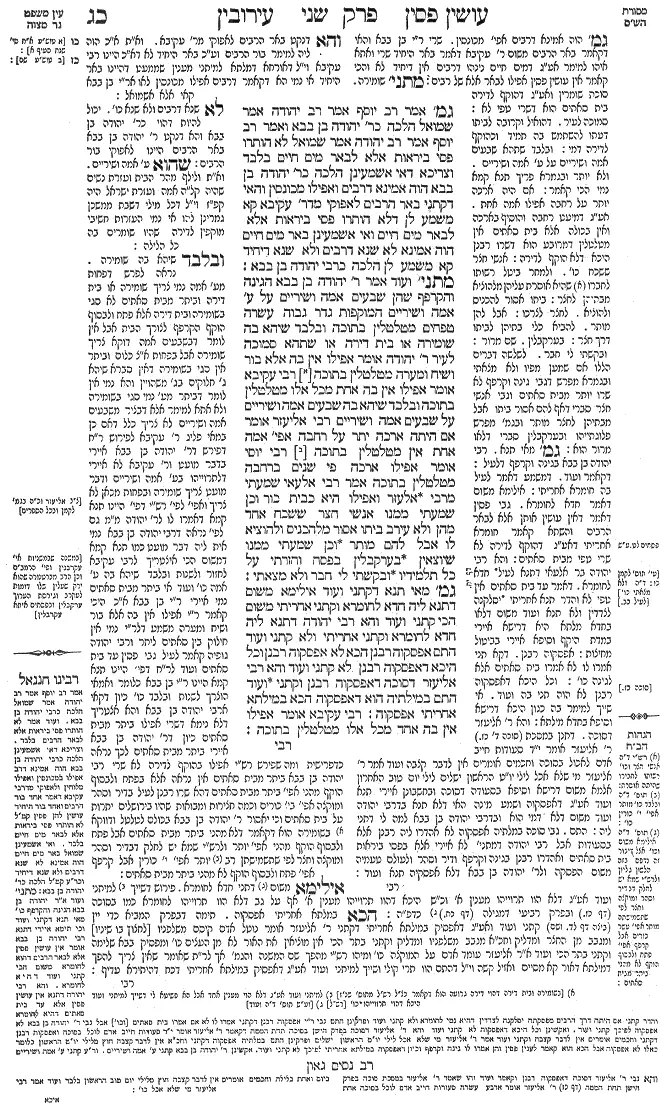
Eruvin 23a - Guemara
גמ׳ אמר רב יוסף אמר רב יהודה אמר שמואל הלכה כר' יהודה בן בבא ואמר רב יוסף אמר רב יהודה אמר שמואל לא הותרו פסי ביראות אלא לבאר מים חיים בלבד וצריכא דאי אשמעינן הלכה כר' יהודה בן בבא הוה אמינא דרבים ואפילו מכונסין והאי דקתני באר הרבים לאפוקי מדר' עקיבא קא משמע לן דלא הותרו פסי ביראות אלא לבאר מים חיים ואי אשמעינן באר מים חיים הוה אמינא לא שנא דרבים ולא שנא דיחיד קא משמע לן הלכה כרבי יהודה בן בבא:
מתני׳ ועוד אמר ר' יהודה בן בבא הגינה והקרפף שהן שבעים אמה ושיריים על ע' אמה ושיריים המוקפות גדר גבוה עשרה טפחים מטלטלין בתוכה ובלבד שיהא בה שומירה או בית דירה או שתהא סמוכה לעיר ר' יהודה אומר אפילו אין בה אלא בור ושיח ומערה מטלטלין בתוכה רבי עקיבא אומר אפילו אין בה אחת מכל אלו מטלטלין בתוכה ובלבד שיהא בה שבעים אמה ושיריים על שבעים אמה ושיריים רבי אליעזר אומר אם היתה ארכה יתר על רחבה אפי' אמה אחת אין מטלטלין בתוכה רבי יוסי אומר אפילו ארכה פי שנים ברחבה מטלטלין בתוכה אמר רבי אלעאי שמעתי מרבי אלעזר ואפילו היא כבית כור וכן שמעתי ממנו אנשי חצר ששכח אחד מהן ולא עירב ביתו אסור מלהכניס ולהוציא לו אבל להם מותר וכן שמעתי ממנו שיוצאין בערקבלין בפסח וחזרתי על כל תלמידיו ובקשתי לי חבר ולא מצאתי:
גמ׳ מאי תנא דקתני ועוד אילימא משום דתנא ליה חדא לחומרא וקתני אחריתי משום הכי קתני ועוד והא רבי יהודה דתנא ליה חדא לחומרא וקתני אחריתי ולא קתני ועוד התם אפסקוה רבנן הכא לא אפסקוה רבנן וכל היכא דאפסקוה רבנן לא קתני ועוד והא רבי אליעזר דסוכה דאפסקוה רבנן וקתני ועוד התם במילתיה הוא דאפסקוה הכא במילתא אחריתי אפסקוה:
רבי עקיבא אומר אפילו אין בה אחד מכל אלו מטלטלין בתוכה:
Comments from Rashi on Masechet Eruvin Page 23a
גמ' הוה אמינא דרבים אפי' מכונסין . שרי ר"י בן בבא והאי דקאמר באר הרבים משום ר' עקיבא דאמר באר היחיד שרי ואתא איהו למימר אע"ג דמים חיים נינהו דרבים אין דיחיד לא והכי קאמר אין עושין פסין אפילו לבאר אלא של רבים: מתני' שומירה . סוכת שומרין ואע"ג דהוקף לדירה בית סאתים הוא דשרי טפי לא: סמוכה לעיר . דהואיל וקרובה לביתו דעתו להשתמש בה תמיד וכהוקף לדירה דמי: ובלבד שתהא שבעים אמה ושיריים על שבעים אמה ושיריים . ולא יותר ובגמרא פריך תנא קמא נמי הכי קאמר: אם היה ארכה יותר על רחבה אפילו אמה אחת . אע"ג דמיעט רחבה והוסיף בארכה ואין בכולה אלא בית סאתים אין מטלטלין דמרובע הוא דשרו רבנן היכא דלא הוקף לדירה: אנשי חצר ששכח כו' . ולמחר ביטל רשותו לחברו שהיא אוסרת עליהן מלהוציא מבתיהן לחצר: ביתו אסור להכניס ולהוציא . לחצר לצרכו: אבל להן מותר . להביא כלי בתיהן לביתו דרך חצר: בערקבלין . שם מרור: ובקשתי לי חבר . לשלשה דברים הללו אם שמען מפיו ולא מצאתי ובגמרא מפרש דגבי גינה וקרפף לא שרו יותר מבית סאתים וגבי אנשי חצר סברי דאף להם אסור ביתו אבל מבתיהן לחצר מותר ובגמ' מפרש פלוגתייהו ובערקבלין סברי דלאו מרור הוא: גמ' מאי תנא . רבי יהודה בן בבא בגינה וקרפף דלעיל: דקאמר ועוד . דמשמע דאמר לעיל בה חומרא אחריתי: אילימא משום דאמר חדא לחומרא . גבי פסין דאמר דאין עושין אותן אלא לבאר הרבים והשתא קאמר חומרא אחריתי דאע"ג דהוקף לדירה לא שרי טפי מבית סאתים: והא רבי יהודה בר אלעאי דתנא לעיל חדא לחומרא . דאמר עד בית סאתים אין טפי לא והדר תנא אחריתי יסלקנה לצדדין ולא תנא ועוד משום דלאו בחדא מלתא היא דרישא איירי במדת היקף וסיפא איירי בביטול מחיצות: אפסקוה רבנן . דקא תני אמרו לו לא אמרו בית סאתים אלא לגינה כו': וכל היכא דאפסקוה רבנן לא הוה תני בה ועוד . אי שייך למימר בה כגון היכא דרישא וסיפא בחדא מילתא: והא ר' אליעזר דסוכה . דתנן במסכת (סוכה ד' כז.) ר' אליעזר אומר י"ד סעודות חייב אדם לאכול בסוכה וחכמים אומרים אין לדבר קצבה ועוד אמר ר' אליעזר מי שלא אכל לילי יו"ט הראשון ישלים לילי יום טוב האחרון אלמא משום דרישא וסיפא בסעודה דסוכה ובחשבונן איירי תנא ועוד אע"ג דאפסקוה ושמע מינה האי דלא תנא בדרבי יהודה ועוד. משום דלא דמי הוא ובדרבי יהודה בן בבא למה לי דתני ליה: התם . גבי סוכה במלתיה אפסקוה לא אהדרו ליה רבנן אלא בסעודות אבל רבי יהודה דמתני' לא איירי אלא בפסי ביראות בית סאתים ואהדרו רבנן בגינה וקרפף ודיר וסהר ולעולם טעמיה משום הפסקה ולר' יהודה בן בבא דלא אפסקיה תנא ועוד:
Comments from Tosafot - Eruvin 23a
והא דנקט באר הרבים לאפוקי מר' עקיבא . וא"ת א"כ הוה ליה למימר בור הרבים וע"כ באר היחיד לא דא"כ היינו רבי עקיבא וי"ל דאורחא דמלתא למיתני מענין שממעט דהיינו באר היחיד אי נמי הא דקאמר דרבים אפילו מכונסין לאו אר"י בן בבא קאי אלא אשמואל: לא שנא דרבים ולא שנא כו' . יכול להיות דהוי כר' יהודה בן בבא והא דנקט ר' יהודה בן בבא באר הרבים היינו לאפוקי בור הרבים: שהוא ע' אמה ושיריים . וא"ת ולילף מהר הבית ועזרת נשים שהיה קל"ה אמה ועזרת ישראל היה קפ"ז וי"ל דכל מילי דשבת ממשכן גמרינן להו אי נמי העזרות חשיבי מוקפין לדירה שהיו שומרים בה כל הלילה: ובלבד שיהא בה שומירה . נראה לפרש דפחות מע' אמה נמי צריך שומירה או בית דירה וביתר מבית סאתים לא סגי בשומירה ובית דירה אלא פתח ולבסוף הוקף הקרפף לצורך הבית אבל אין לומר דבשבעים אמה דוקא צריך שומירה אבל בפחות א"צ כלום וביתר אין סגי בשומירה דאין סברא שיהא ג' חלוקים בג' משהויין והא נמי אין לומר דביתר מע' נמי סגי בשומירה ולא אתא למימר אלא דבציר משבעים אמה ושיריים לא צריך כלל דאם כן במאי פליג ר' עקיבא לפירוש ר"ח דפירש דר' יהודה בן בבא איירי בדבר מועט ור' עקיבא לא איירי דלתרוייהו בע' אמה ושיריים ודבר מועט צריך שומירה ובפחות מכאן לא צריך ואפי' לפי' רש"י דפי' היינו תנא קמא דאמרו לו לר' יהודה מ"מ גם לפי' נראה דרבי יהודה בן בבא נמי אית ליה דבר מועט כמו תנא קמא דמשום הכי איצטריך לרבי עקיבא לחזור ולשנות ובלבד שיהא בה ע' אמה כו' ועוד אי ביתר מבית סאתים נמי איירי ר"י בן בבא א"כ היכי קאמר ר"י אפילו אין בה אלא בור ושיח ומערה משמע דלר"י נמי אין חילוק בין סאתים ליתר ורבי יהודה גופיה קאמר לעיל גבי פסין עד בית סאתים ועוד לר"ח דפי' היינו תנא קמא היינו ר"י בן בבא כלומר ואמאי הוצרך לשנות ובלבד כו' כיון דקאי ארבי יהודה בן בבא והא אצטריך דלא נימא דשרי אפילו ביתר מבית סאתים כיון דר' יהודה בן בבא איירי ביתר מבית סאתים לכך נראה כדפרישית ומה שפירש רש"י אפילו בהוקף לדירה לא שרי רבי יהודה בן בבא ביתר מבית סאתים אין נראה אלא בפתח ולבסוף הוקף מהני אפי' ביתר מבית סאתים דהא שרו רבנן לעיל בדיר וסהר ומוקצה אפי' בי' כורים וכמה חצירות ומבואות שהיו בירושלים יתרות על בית סאתים וכי יאסור ר' יהודה בן בבא בכולם לטלטל ודווקא בשומירה הוא דקאמר דלא מהני ביתר מבית סאתים אבל פתח ולבסוף הוקף מהני אפי' יותר ולרש"י שמא יש לחלק דבדיר וסהר ומוקצה וחצר לפי שתשמישתן רב יותר אפי' י' כורין אבל קרפף אפי' פתח ולבסוף הוקף לא מהני ביתר מבית סאתים: אילימא משום דתני חדא לחומרא . פירוש דשייך למיתני ועוד אע"ג דלא הוו תרוייהו מענין א' וכ"ש היכא דהוו תרוייהו מענין א' אף על גב דלא הוו תרוייהו לחומרא כמו בסוכה (דף כז.) ובפרק רביעי דמגילה (דף כח.) כדפ"ה: הכא במלתא אחריתי אפסקוה . תימה דבפרק המביא כדי יין (ביצה דף לד. ושם) קתני ועוד ואע"ג דאפסיק במילתא אחריתי דקתני ר' אליעזר אומר נוטל אדם קיסם משלפניו [לחצוץ בו שיניו] ומגבב מן החצר ומדליק וחכ"א מגבב משלפניו ומדליק וקתני בתר הכי אין מוציאין את האור לא מן העצים כו' ומפסיק בבא שלימה וקתני בתר הכי ועוד א"ר אליעזר עומד אדם על המוקצה כו' ומיהו רש"י מהפך שם המשנה והגמ' אך לר"ת שאומר שאין צריך להפך דמילתא דאור קא מסיים ואזיל קשה וי"ל דהתם הוו תרי קולי ושייך למיתני ועוד אע"ג דאפסיק במילתא אחריתי דכח דהיתירא עדיף:
Eruvin 23a - Mishnah translated into english
GEMARA: Rav Yosef said that Rav Yehuda said that Shmuel said: The halakha is in accordance with the opinion of Rabbi Yehuda ben Bava. And Rav Yosef also said that Rav Yehuda said that Shmuel said: Upright boards surrounding a well were permitted only in the case of a well containing potable, running spring water.
The Gemara comments: And it was necessary to cite both of these statements, even though their content appears to be the same. As had he taught us only that the halakha is in accordance with the opinion of Rabbi Yehuda ben Bava that upright boards may only be set arranged for a well, I would have said that with regard to water belonging to the public, upright boards are permitted not only in the case of spring water, but even in the case of water collected in a cistern.
And that which was taught: One may only arrange boards for a public well, that was to exclude the opinion of Rabbi Akiva that upright boards may be arranged even for a private well, but not to allow us to infer that boards may not be arranged for a public cistern filled with collected water. Therefore, Shmuel teaches us that boards surrounding a well were permitted only in the case of a well of spring water.
And in the opposite direction, had he taught us that upright boards may only be arranged for a well containing potable, running spring water, I would have said that there is no difference whether it is a public well and there is no difference whether it is a private well. Shmuel therefore teaches us that the halakha is in accordance with the opinion of Rabbi Yehuda ben Bava, who says that upright boards may be arranged only for a public well, but not for one that belongs to an individual.
MISHNA: And furthermore, Rabbi Yehuda ben Bava said: With regard to a garden or a karpef, an enclosed courtyard used for storage, that is not more than seventy cubits and a remainder, a little more, as will be explained below, by seventy cubits and a remainder, and is surrounded by a wall ten handbreadths high, one may carry inside it, as it constitutes a proper private domain. This is provided that it contains a watchman’s booth or a dwelling place, or it is near the town in which its owner lives, so that he uses it and it is treated like a dwelling.
Rabbi Yehuda says: This is not necessary, for even if it contains only a water cistern, an elongated water ditch, or a cave, i.e., a covered pit containing water, one may carry inside it, as the water bestows upon it the status of a dwelling. Rabbi Akiva says: Even if it has none of these one may carry inside it, provided that it measures not more than seventy cubits and a remainder by seventy cubits and a remainder.
Rabbi Eliezer says: If its length is greater than its breadth, even by one cubit, one may not carry inside it, even though its total area does not exceed an area of two beit se’a, because in an area that was enclosed not for the purpose of residence, carrying is only permitted if the area is perfectly square. Rabbi Yosei says: Even if its length is double its breadth, one may carry inside it, and there is no need to be particular about a square shape.
Rabbi Elai said: I heard from Rabbi Eliezer that one is permitted to carry in a garden or karpef, even if the garden is an area of a beit kor, i.e., thirty times larger than the area of a beit se’a.
Incidentally, he adds: And I also heard from him another halakha: If one of the residents of a courtyard forgot and did not join in an eiruv with the other residents when they established an eiruv, and on Shabbat he ceded ownership of his part in the courtyard to the other residents, then it is prohibited for him, the one who forgot to establish an eiruv, to bring in objects or take them out from his house to the courtyard; however, it is permitted to them, the other residents, to bring objects from their houses to that person’s house via the courtyard, and vice versa. We do not say that the failure of one resident to join in the eiruv nullifies the validity of the eiruv for the entire courtyard.
And I also heard from him another halakha, that one may fulfill his obligation to eat bitter herbs on Passover with arkablin, a certain bitter herb. With regard to all three rulings, I circulated among all of Rabbi Eliezer’s disciples, seeking a colleague who had also heard these matters from him, but I could not find one.
GEMARA: The Gemara first analyzes the wording of this mishna: What was taught previously, that the tanna teaches in this mishna: And furthermore Rabbi Yehuda ben Bava said, which implies a continuation of the previous mishna?
If you say that because he first taught one stringency concerning the upright boards surrounding a well, and then he teaches another stringency about an enclosure, and for that reason the tanna of the mishna teaches: And furthermore, then there is a difficulty. Didn’t Rabbi Yehuda also teach one stringency and then teach another stringency, and yet the tanna of the mishna does not teach: And furthermore Rabbi Yehuda said?
The Gemara answers that the cases are different: There, the Rabbis interrupted Rabbi Yehuda’s statements in order to disagree with him, and hence it is not possible to say: And furthermore Rabbi Yehuda said. Here, however, the Rabbis did not interrupt him, as the two statements of Rabbi Yehuda ben Bava immediately follow one another.
The Gemara raises a difficulty: Does this mean that wherever the disputing Rabbis interrupt their colleague, the tanna does not teach: And furthermore? But with regard to Rabbi Eliezer in a mishna in tractate Sukka (27a), where the Rabbis interrupted his statements, nonetheless the tanna teaches: And furthermore.
The Gemara answers: It is not the same; there, they interrupted Rabbi Eliezer with a ruling with regard to his own topic; here, however, they interrupted Rabbi Yehuda with a ruling with regard to an altogether different matter. Consequently, his first statement had already been forgotten, and it is not the Mishna’s style to join together statements where the sequential link between them has already been severed.
We learned in the mishna: Rabbi Akiva said: Even if the courtyard has none of these elements that indicate dwelling stipulated by the other Rabbis, one may carry inside it, provided that it measures no more than seventy cubits and a remainder by seventy cubits and a remainder.
Traduction : The William Davidson digital edition of the Koren Noé Talmud, with commentary by Rabbi Adin Even-Israel Steinsaltz.