 Talmud Bavli
Eruvin 104a : Youtube
Rabi Yitzchok LobensteinYoutube
2 video classes :
Eruvin Page 104a
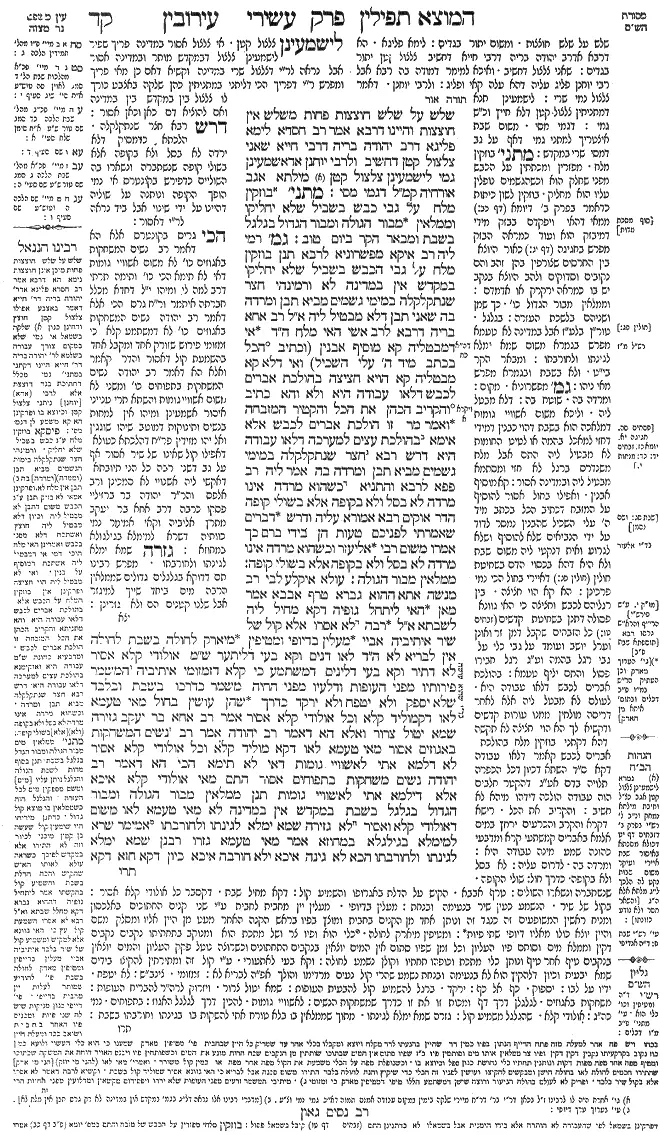
Eruvin 104a - Guemara
שלש על שלש חוצצות פחות משלש אין חוצצות והיינו דרבא אמר רב חסדא לימא פליגא דרב יהודה בריה דרבי חייא שאני צלצול קטן דחשיב ולרבי יוחנן אדאשמעינן גמי לישמעינן צלצול קטן מילתא אגב אורחיה קמ"ל דגמי מסי:
מתני׳ בוזקין מלח על גבי כבש בשביל שלא יחליקו וממלאין מבור הגולה ומבור הגדול בגלגל בשבת ומבאר הקר ביום טוב:
גמ׳ רמי ליה רב איקא מפשרוניא לרבא תנן בוזקין מלח על גבי הכבש בשביל שלא יחליקו במקדש אין במדינה לא ורמינהי חצר שנתקלקלה במימי גשמים מביא תבן ומרדה בה שאני תבן דלא מבטיל ליה א"ל רב אחא בריה דרבא לרב אשי האי מלח ה"ד אי דמבטליה קא מוסיף אבנין (וכתיב (דברי הימים א כח, יט) הכל בכתב מיד ה' עלי השכיל) ואי דלא קא מבטליה קא הויא חציצה בהולכת אברים לכבש דלאו עבודה היא ולא והא כתיב (ויקרא א, יג) והקריב הכהן את הכל והקטיר המזבחה ואמר מר זו הולכת אברים לכבש אלא אימא בהולכת עצים למערכה דלאו עבודה היא דרש רבא חצר שנתקלקלה במימי גשמים מביא תבן ומרדה בה אמר ליה רב פפא לרבא והתניא כשהוא מרדה אינו מרדה לא בסל ולא בקופה אלא בשולי קופה הדר אוקים רבא אמורא עליה ודרש דברים שאמרתי לפניכם טעות הן בידי ברם כך אמרו משום רבי אליעזר וכשהוא מרדה אינו מרדה לא בסל ולא בקופה אלא בשולי קופה:
ממלאין מבור הגולה:
עולא איקלע לבי רב מנשה אתא ההוא גברא טרף אבבא אמר מאן האי ליתחל גופיה דקא מחיל ליה לשבתא א"ל רבה לא אסרו אלא קול של שיר איתיביה אביי מעלין בדיופי ומטיפין מיארק לחולה בשבת לחולה אין לבריא לא ה"ד לאו דנים וקא בעי דליתער ש"מ אולודי קלא אסיר לא דתיר וקא בעי דלינים דמשתמע כי קלא דזמזומי איתיביה המשמר פירותיו מפני העופות ודלעיו מפני החיה משמר כדרכו בשבת ובלבד שלא יספק ולא יטפח ולא ירקד כדרך שהן עושין בחול מאי טעמא לאו דקמוליד קלא וכל אולודי קלא אסיר אמר רב אחא בר יעקב גזירה שמא יטול צרור ואלא הא דאמר רב יהודה אמר רב נשים המשחקות באגוזים אסור מאי טעמא לאו דקא מוליד קלא וכל אולודי קלא אסיר לא דלמא אתי לאשוויי גומות דאי לא תימא הכי הא דאמר רב יהודה נשים משחקות בתפוחים אסור התם מאי אולודי קלא איכא אלא דילמא אתי לאשוויי גומות תנן ממלאין מבור הגולה ומבור הגדול בגלגל בשבת במקדש אין במדינה לא מאי טעמא לאו משום דאולודי קלא ואסיר לא גזירה שמא ימלא לגינתו ולחורבתו אמימר שרא למימלא בגילגלא במחוזא אמר מאי טעמא גזרו רבנן שמא ימלא לגינתו ולחורבתו הכא לא גינה איכא ולא חורבה איכא כיון דקא חזא דקא
Comments from Rashi on Masechet Eruvin Page 104a
שלש על שלש חוצצות . ומשום יתור בגדים: לימא פליגא . הא דרבא אדרב יהודה בריה דרבי חייא דחשיב צלצול קטן יתור בגדים: שאני צלצול דחשיב . ואיכא למימר דמודה בה רבא אבל רבי יוחנן פליג עליה דהא עלה קאי ופליג: ולרבי יוחנן . דאמר צלצול נמי שרי: לישמעינן . תנא דמתניתין צלצול קטן דלא חייץ וכ"ש גמי: דגמי מסי . משום שבת איצטריך למתני גמי דאף על גב דמסי שרי במקדש: מתני' בוזקין מלח . מפזרין ומכתתין על הכבש מפני שחלק הוא וכשהגשמים נופלין עליו הוא מחליק. בוזקין לשון כיתות כדאמר בפרק ב' דיומא (דף כב:) ממאי דהאי ויפקדם בבזק מידי דמיבזק הוא ועוד כמראה הבזק מפרש בחגיגה (דף יג:) כאור היוצא בין החרסים שצורפין בהן זהב והם נקובים וסדוקים ולהב היוצא בנקב יש בו כמראה ירקרק או אדמדם: וממלאין מבור הגדול כו' . כך שמן ושניהם בלשכת העזרה: בגלגל . טור"ן בלע"ז אבל במדינה לא טעמא מפרש בגמרא משום שמא ימלא לגינתו ולחורבתו: ומבאר הקר בי"ט . ולא בשבת ובגמרא מפרש מאי ניהו: גמ' מפשרוניא . מקום: ומרדה בה . שוטח בה: דלא מבטל ליה . וליכא משום אשוויי גומות דמלאכה הוא בשבת דהוי כבנין דמידי דחזי למאכל בהמה או לטיט החומות לא מבטיל ליה התם אבל מלח משנדרס ברגל לא חזי ומסתמא מבטיל ליה ובמדינה אסור: קא מוסיף אבנין . ואפילו בחול אסור להוסיף על המזבח דכתיב הכל בכתב מיד ה' עלי השכיל שהבנין נמסר לדוד על ידי הנביאים שלא להוסיף ושלא לגרוע ואית דנקטי ליה משום שבת ולא היא דהא בכסוי הדם בשחיטת חולין (חולין פג:) דאיירי בחול הכי נמי פרכינן: הא קא הוי חציצה . בין רגליהם לכבש וחציצה כי האי גוונא פסולה דתנן בשחיטת קדשים (זבחים טו:) כל הזבחים שקבל דמן זר ואונן וערל יושב ועומד על גבי כלי על גבי רגל בהמה וע"ג רגל חבירו פסול והתם יליף טעמא: בהולכת אברים לכבש דלאו עבודה היא . לעולם לא מבטל ליה אלא לאחר דריסה מולחין ממנו עורות קדשים ודקשיא לך הא הוי חציצה לא תקשה דהא דקתני בוזקין מלח בהולכת אברים לכבש קאמר דלאו עבודה דקא ס"ד השתא דכיון דכל הכפרה תלויה בדם אע"ג דהקטר חלבים הוה עבודה הולכה דידהו מיהא לא חשיב: והקריב את הכל . רישא דקרא והקרב והכרעים ירחץ במים אלמא באברים קמשתעי קרא ומדבעי כהונה שמע מינה עבודה היא: ומרדה בה . לדרוס עליה: לא בסל ולא בקופה . כדרך חול: שולי הקופה . שנשתברה ונשארו השולים: טרף אבבא . הקיש על הדלת באגרופו והשמיע קול: דקא מחיל שבת . דקסבר כל אולודי קלא אסיר: בקול של שיר . הנשמע כעין שיר בנעימה ובנחת: מעלין בדיופי . מעלין יין מחבית לחבית ע"י שני קנים החתוכים באלכסון ומניח ראשין המשופעים זה כנגד זה ונותן אחד מן הקנים בחבית ומוצץ בפיו בראש הקנה האחר מעט מן היין אליו ומסלק משם והיין יוצא כולו מאליו דיופי שתי פיות: ומטיפין מיארק לחולה . כלי הוא ופיו צר ושל מתכת הוא ומנוקב בתחתיתו נקבים נקבים דקין וממלא מים וסותם פיו העליון וכל זמן שפיו סתום אין המים יוצאין בנקבים התחתונים וכשרוצה נוטל פקק העליון והמים יוצאין בנקבים טיף אחר טיף ונותן כלי מתכת וכופהו תחתיו וקולן נשמע לחולה: וקא בעי לאתעורי . ע"י קול זה ומתיראין להקיצו בידים שמא יבעית וכיון דלהקיץ הוא לא בנעימה ובנחת נשמע שהרי קול נעים מרדימו והולך אפ"ה לבריא לא: זמזומי . צינב"ש: לא יטפח . ידיו על לבו: יספוק . כף אל כף: ירקד . ברגל להשמיע קול להבעית העופות: שמא יטול צרור . ויזרוק לרה"ר להבריח העופות: משחקות באגוזים . לגלגלן דרך דף ומכות זו את זו כדרך שמשחקות הנשים: לאשוויי גומות . להכין דרך לגלגל האגוז: בתפוחים . נמי כה"ג: אולודי קלא . שהגלגל משמיע קול: גזרה שמא ימלא לגינתו . מתוך שממלאין בו בלא טורח אתי להשקות בו בגינתו וחורבתו בשבת:
Comments from Tosafot - Eruvin 104a
לישמעינן צלצול קטן . אי צלצול אסור במדינה פריך שפיר לישמעינן צלצול דבמקדש מותר ובמדינה אסור אבל נראה לר"י דצלצול שרי במדינה וקשיא דאם כן מאי פריך ומפרש ר"י דפריך הכי דליתני במתניתין כהן שלקה באצבע כורך לו צלצול בין במקדש בין במדינה ואם להוציא דם כאן וכאן אסור: דרש רבא חצר שנתקלקלה . הלכתא כדמסיק דלא ירדה לא בסל ולא בקופה אלא בשולי קופה שנשתברה ונשארו בה השוליים כדפירש בקונטרס אי נמי הופך הקופה ונותנה על שוליה דהיינו על ידי שינוי אבל ביד נראה לר"י דאסור: הכי גריס בקונטרס אלא הא דאמר רב נשים המשחקות באגוזים כו' לא משום אשוויי גומות דאי לא תימא הכי כו' . ותימה תרתי דרב למה לי ומיהו י"ל דחדא מכלל חברתה איתמר ור"ח גרס הכי אלא דאמר רב יהודה נשים המשחקות באגוזים כו' לא דמשתמע קלא כי זמזומי פירוש שזורק אחד ומקבל אחד בהשמעת קול דאסור והדר קאמר ואלא הא דאמר רב יהודה נשים המשחקות בתפוחים כו' ומשני לא משום אשוויי גומות והשתא תרי ענייני איסור אשמעינן ומיהו אין למחות בנשים ותינוקות דמוטב שיהו שוגגין ואל יהו מזידין פר"ח דהלכתא כעולא דאפילו קול שאינו של שיר אסור אף על גב דשני רבה כל הני תיובתא דאקשי ליה אשנויי לא סמכינן ורב אלפס והר"ר יהודה בר ברזיליי פסקו כרבה דרב אחא בר יעקב מתרץ אליביה וקאי אמימר נמי כוותיה דשרא למימלא בגילגולא במחוזא: גזרה שמא ימלא לגינתו ולחורבתו . מפרש רבינו תם דדוקא בגלגלים גדולים שממלאין הרבה מים ביחד שייך למיגזר אבל שלנו קטנים הם ולא גזרינן:
Eruvin 104a - Mishnah translated into english
If the fabric was three fingerbreadths by three fingerbreadths, it interposes; but if it was less than three fingerbreadths by three fingerbreadths, it does not interpose. And this is the same teaching that Rava said that Rav Ḥisda said.
The Gemara suggests: Let us say that this disagrees with the opinion of Rav Yehuda, son of Rabbi Ḥiyya, who prohibits a sash even smaller than three fingerbreadths by three fingerbreadths. The Gemara rejects this contention: This is not necessarily so, as a small sash is different, since it is significant. It is therefore like a garment, even if it is smaller than three fingerbreadths by three fingerbreadths.
The Gemara raises a question: And according to the opinion of Rabbi Yoḥanan: Rather than teaching us the halakha with regard to a reed, let the mishna teach us that a priest may wrap his wounded finger with a small sash, as that does not constitute an interposition.
The Gemara explains: The tanna teaches us another matter in passing, that a reed heals. However, as far as a priest involved in the service in concerned, there is no concern with regard to this prohibition either, as it is also a rabbinic decree that is not in effect in the Temple.
MISHNA: One may scatter salt on Shabbat on the ramp that leads to the altar so that the priests will not slip on their way up. And likewise, one may draw water from the Cistern of the Exiles and from the Great Cistern, which were located in the Temple, by means of the wheel designed for drawing water, even on Shabbat. And one may draw water from the Heker Well only on a Festival.
GEMARA: Rav Ika from Pashronya raised a contradiction before Rava: We learned in the mishna: One may scatter salt on Shabbat on the ramp that leads to the altar, so that the priests will not slip, from which it can be inferred: In the Temple, yes, it is permitted to do so, but outside the Temple, in the rest of the country, no, it is prohibited to scatter salt on a ramp. And he raised his contradiction from a baraita: With regard to a courtyard that was damaged on Shabbat by rainwater, so that it became difficult to cross, one may bring straw and scatter it about to absorb the water. Apparently, an action of this kind is permitted even outside the Temple.
The Gemara answers: Straw is different, as one does not negate it; rather, he intends to remove it once the water has been absorbed. He is therefore permitted to scatter the straw in the courtyard, just as it is permitted to put it in any other place. However, it is prohibited to scatter objects that one intends to leave in place, such as salt, as this appears as though he is adding to the ground and building.
Rav Aḥa, son of Rava, said to Rav Ashi: This salt, what are the circumstances? If one negates it vis-à-vis the ramp so that it becomes part of the ramp, he effectively adds to the structure of the Temple, and it states with regard to the Temple: “All this do I give you in writing as God has made me wise by His hand upon me, even all the works of this pattern” (I Chronicles 28:19). This verse indicates that all the details of the Temple structure were determined through prophecy and may not be changed in any way, even on a weekday.
And if he does not negate the salt vis-à-vis the ramp, it would constitute an interposition between the feet of the priests and the altar. This would mean that they would not be walking on the ramp during their service, and consequently they would not be performing the service as required by the Torah.
The Gemara answers: In fact, he does not negate the salt. However, he scatters it when the limbs of the sacrifice are brought up the ramp, a procedure that is not considered part of the Temple service subject to disqualification due to interposition, as it is merely preparation for the burning of the limbs.
The Gemara asks: And is this not a service? But isn’t it written: “And the priest shall offer it whole and make it smoke upon the altar” (Leviticus 1:13), and the Master said in explanation: This is referring to bringing the limbs to the top of the ramp. Evidently, this too is a service written in the Torah. Rather, say that he scatters the salt when the wood is brought up the ramp to the arrangement of wood on the altar, a procedure that is not a service.
Rava taught: In a courtyard that was damaged on Shabbat by rainwater, one may bring straw and scatter it about to make it easier to walk across. Rav Pappa said to Rava: But wasn’t it taught in a baraita: When one scatters the straw, he must not scatter it either with a small basket or with a large basket, but only with the bottom of a broken basket, i.e., he must scatter the straw in a manner different from that of an ordinary weekday. Rava, however, indicates that he may scatter the straw in the usual fashion.
Rava then appointed an amora before him to publicize his teaching, and taught: The statement I issued before you was a mistake of mine. However, in fact they said in the name of Rabbi Eliezer as follows: And when one scatters the straw, he must not scatter it either with a small basket or with a large basket, but only with the bottom of a broken basket.
We learned in the mishna: One may draw water from the Cistern of the Exiles by means of a wheel. The Gemara relates: Ulla happened to come to the house of Rav Menashe when a certain man came and knocked at the door. Ulla said: Who is that? May his body be desecrated, as he desecrates Shabbat by producing a sound.
Rabba said to him: The Sages prohibited only a pleasant musical sound on Shabbat, not the rasping sound of knocking on a door. Abaye raised an objection to Rabba from a baraita: One may draw up wine from a barrel with a siphon [diyofei], and one may drip water from a vessel that releases water in drops [miarak], for an ill person on Shabbat.
The Gemara infers: For an ill person, yes, this is permitted, but for a healthy person, no, one may not do so, what are the circumstances? Is it not the case that he is dozing off and they wish to waken him, and as they do not want to alarm him due to his illness, they do it by means of the sound of water poured from a vessel? And one can learn from here that it is prohibited to produce a sound on Shabbat, even one that is unpleasant, as the Sages permitted this only for an ill person.
The Gemara rejects this contention: No, it is referring to an ill person who is awake and whom they want to have fall asleep, and to this end they let water fall in drops, producing a sound that is heard as melodious.
Abaye raised another objection to Rabba from a baraita: One who is guarding his produce from birds or his gourds from beasts may guard them, in the manner that he typically does so, on Shabbat, as his guarding does not entail a prohibited labor, provided that he neither claps, nor slaps his hands against his body, nor dances and produces noise with his feet, in the manner that is performed on weekdays to chase away birds and animals.
The Gemara asks: What is the reason that these activities are prohibited? Is it not because he is producing a sound on Shabbat, and any production of a sound is prohibited? Rav Aḥa bar Ya’akov said: This is not the reason. Rather, it is a decree issued by the Sages, lest while acting in his usual weekday fashion he mistakenly picks up a pebble to throw at the birds, thereby handling an object that is set-aside.
The Gemara asks: However, with regard to that which Rav Yehuda said that Rav said: Women who play with nuts by rolling them on the ground until they collide with each other, it is prohibited for them to do so; what is the reason for this prohibition? Is it not because knocking nuts together produces a sound, and any production of a sound is prohibited?
The Gemara rejects this contention: No, it is prohibited because perhaps they will come to level the holes. As small holes in the ground will interfere with their game, they might level them out and seal them up on Shabbat, which is prohibited as building.
For if you do not say that this is the reason, there is a difficulty with that which Rav Yehuda said: Women who play with apples, this is prohibited, as what production of a sound is involved there? Apples do not produce a sound when they collide with each other. Rather, the reason is that they will perhaps come to level holes, and the same reasoning applies to nuts.
We learned in the mishna: One may draw water from the Cistern of the Exiles and from the Great Cistern by means of the wheel on Shabbat. From this it can be inferred: In the Temple, yes, it is permitted to do so; but outside the Temple in the rest of the country, no, it is prohibited to draw water from cisterns. What is the reason for this? Is it not because he is producing a sound, and that is prohibited on Shabbat?
The Gemara again rejects this contention: No, it is a decree issued by the Sages, lest he draw water for his garden and for his ruin. As the wheel draws up large quantities of water, once he starts to use it, he might draw water for his garden as well and thereby transgress the prohibition against watering on Shabbat, a subcategory of a prohibited labor.
The Gemara relates that Ameimar permitted people to draw water on Shabbat by means of a wheel in Meḥoza, as he said: What is the reason the Sages decreed that this is prohibited? They did so lest one draw water for his garden and for his ruin. However, here in Meḥoza there are neither gardens nor ruins. Meḥoza was entirely built up and lacked gardens or empty areas for sowing, and consequently, there was no concern that people might transgress.
However, once he saw that
Traduction : The William Davidson digital edition of the Koren Noé Talmud, with commentary by Rabbi Adin Even-Israel Steinsaltz.