 Talmud Bavli
Eruvin 5a : Youtube
Rabi Yitzchok LobensteinYoutube
2 video classes :
Eruvin Page 5a
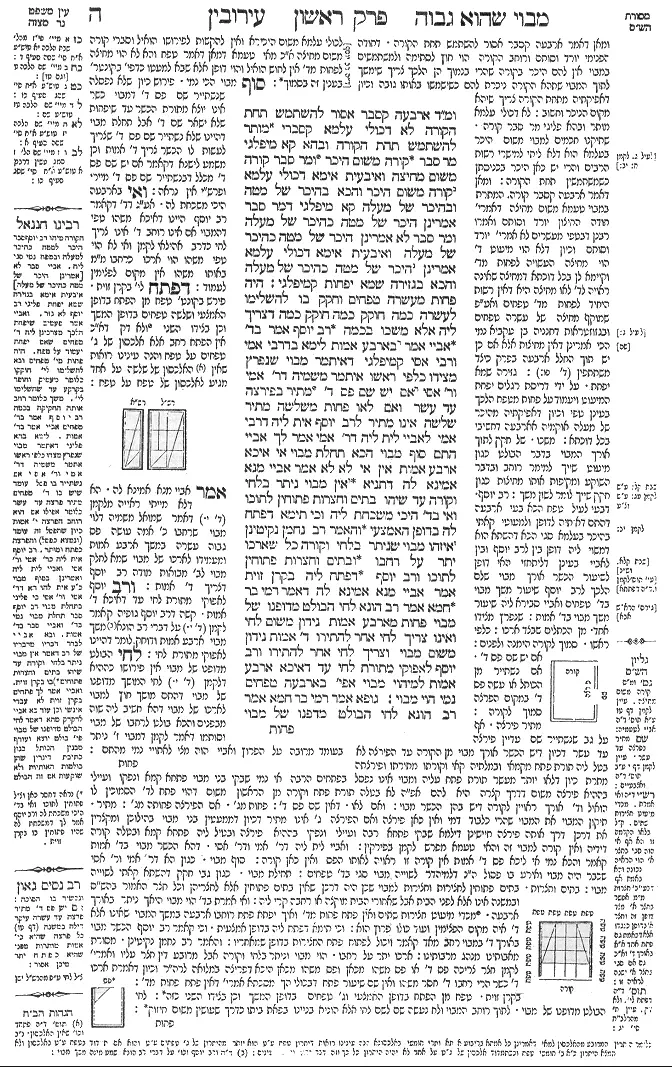
Eruvin 5a - Guemara
ומ"ד ארבעה קסבר אסור להשתמש תחת הקורה לא דכולי עלמא קסברי מותר להשתמש תחת הקורה ובהא קא מיפלגי מר סבר קורה משום היכר ומר סבר קורה משום מחיצה ואיבעית אימא דכולי עלמא קורה משום היכר והכא בהיכר של מטה ובהיכר של מעלה קא מיפלגי דמר סבר אמרינן היכר של מטה כהיכר של מעלה ומר סבר לא אמרינן היכר של מטה כהיכר של מעלה ואיבעית אימא דכולי עלמא אמרינן היכר של מטה כהיכר של מעלה והכא בגזירה שמא יפחות קמיפלגי:
היה פחות מעשרה טפחים וחקק בו להשלימו לעשרה כמה חוקק כמה חוקק כמה דצריך ליה אלא משכו בכמה רב יוסף אמר בד' אביי אמר בארבע אמות לימא בדרבי אמי ורבי אסי קמיפלגי דאיתמר מבוי שנפרץ מצידו כלפי ראשו איתמר משמיה דר' אמי ור' אסי אם יש שם פס ד' מתיר בפירצה עד עשר ואם לאו פחות משלשה מתיר שלשה אינו מתיר לרב יוסף אית ליה דרבי אמי לאביי לית ליה דר' אמי אמר לך אביי התם סוף מבוי הכא תחלת מבוי אי איכא ארבע אמות אין אי לא לא אמר אביי מנא אמינא לה דתניא אין מבוי ניתר בלחי וקורה עד שיהו בתים וחצרות פתוחין לתוכו ואי בד' היכי משכחת ליה וכי תימא דפתח לה בדופן האמצעי והאמר רב נחמן נקיטינן איזהו מבוי שניתר בלחי וקורה כל שארכו יתר על רחבו ובתים וחצרות פתוחין לתוכו ורב יוסף דפתח ליה בקרן זוית אמר אביי מנא אמינא לה דאמר רמי בר חמא אמר רב הונא לחי הבולט מדופנו של מבוי פחות מארבע אמות נידון משום לחי ואינו צריך לחי אחר להתירו ד' אמות נידון משום מבוי וצריך לחי אחר להתירו ורב יוסף לאפוקי מתורת לחי עד דאיכא ארבע אמות למיהוי מבוי אפי' בארבעה טפחים נמי הוי מבוי:
גופא אמר רמי בר חמא אמר רב הונא לחי הבולט מדפנו של מבוי
Comments from Rashi on Masechet Eruvin Page 5a
ומאן דאמר ארבעה קסבר אסור להשתמש תחת הקורה . דחודה הפנימי יורד וסותם ורוחב הקורה הוי חוץ לסתימה ולמשתמשים במבוי אין להם היכר בקורה שהרי בנמוך הן הלכך צריך שימשך לתוך המבוי שתהא הקורה ניכרת להם כשישמשו באותו גובה וכיון דאפיקתיה מתחת הקורה צריך שיהא מקום הניכר וחשוב: לא דכולי עלמא מותר ובהא פליגי מר סבר קורה . שתיקנו חכמים למבוי משום היכר בעלמא הוא דלא ליתי למישרי רשות הרבים והרי יש כאן היכר בכניסתן כשמשתמשין תחת הקורה: ומאן דאמר ארבעה קסבר קורה . המתרת במבוי טעמא משום מחיצה דאמרינן חודה החיצון יורד וסותם ואמרו רבנן דבטפי מעשרים לא אמרינן יורד וסותם וכיון דלא הוי מיעוט ד' הוי מחיצה העשויה לפחות מד' וקיימא לן בכל דוכתא דמחיצה שאינה ראויה לד' לאו מחיצה היא דאין רשות היחיד לפחות מד' טפחים ואע"פ שמוקף מחיצה של עשרה טפחים ובגזוזטראות דחנניה בן עקביא נמי הכי אמרינן דאין מחיצות אלא אם כן יש תוך החלל ארבעה בפרק כיצד משתתפין (לקמן עירובין פו:): גזירה שמא יפחת . על ידי דריסת רגלים יפחת המיעוט ויעמוד על פחות מטפח הלכך בעינן טפי וכיון דאפיקתיה מהיכר של מעלה אוקמיה אד' דחשיבי בכל דוכתא: משכו . של חקק לתוך אורך המבוי בדבר הבולט כגון מיעוט שייך למימר רוחב ובדבר השוקע ומקיפות אותו מחיצות כגון חקק שייך לומר לשון משך: רב יוסף . דבעי לעיל טפח הכא בעי ארבעה דהתם דאיתיה לדופן ולמעוטי קאתי בהיכר בעלמא סגי הכא דהשתא הוא דמשוי ליה דופן בין לרב יוסף ובין לאביי בעינן דליתחזי האי דופן לשיעור הכשר אורך מבוי שלם הלכך לרב יוסף שיעור משך מבוי בד' טפחים ואביי סבירא ליה שיעור משך מבוי בד' אמות: שנפרץ מצידו אחד . מן הכתלים שבצד ארכו: כלפי ראשו . סמוך לקורה הימנה ולפנים: אם יש שם פס ד' . אם נשתייר מן הכותל או עשה פס ד' במקום הפרצה סמוך לקורה:  מתיר פירצה . אף על גב שנשתייר שם עדיין פירצה עד עשר דכיון דיש הכשר אורך מבוי מן הקורה עד הפירצה לא בטל ליה תורת פתח מקמאי ובמלתיה קאי וקורתו מתירתו ופירצתה מתרת כיון דלאו יותר מעשר תורת פתח עליה ומבוי אינו נפסל בפתחים הרבה אי נמי שבקו בני מבוי פתחא קמא ונפקו ועיילי בההיא פירצה משום דדרך קצרה היא להם אפ"ה לא בטלה תורת פתח וקורה מן הראשון משום דהוי פתח לד' הסמוכין לו הואיל וד' אורך ראויין לקורה דיש בהן הכשר מבוי: ואם לאו . דאין שם פס ד': פחות מג' . אם הפירצה פחותה מג': מתיר . תיקון המבוי את המבוי שהרי כלבוד דמי ואין כאן פירצה ואם הפירצה ג' אינו מתיר דכיון דממעטין בני מבוי בהילוכן ומקצרין את דרכן דרך אותה פירצה חיישינן דילמא שבקי פתחא רבה ועיילי ונפקי בההיא פירצה ובטיל ליה פתחא קמא ובטלה קורה דידיה ואין קורה למבוי זה והאי טעמא מפרש לקמן בפירקין: ואביי לית ליה דר' אמי ודר' אסי . דהא הכשר מבוי בד' אמות קאמר והכא נמי אי ליכא פס ד' אמות אין קורה זו ראויה לאותו הפס ואין כאן קורה: סוף מבוי . כגון הא דר' אמי ור' אסי שכבר היה מבוי ואירע בו פסול ה"נ דלמיהדר לשוייה מבוי סגי בד' טפחים: תחילת מבוי . כגון גבי חקק דהשתא קאתי לשוייה מבוי: בתים וחצרות . בתים פתוחין לחצירות וחצירות למבוי שכן היה דרכן שאין בתים פתוחין אלא לחצריהן וכל חצר האמור בהש"ס ובמשנה אינו אלא לפני הבית אבל שאחורי הבית מוקצה או רחבה קרי ליה: ואי אמרת בד' הוי מבוי היאך ניתר באורך ארבעה . מכדי מיעוט חצירות שתים ואין פתח פחות מד' ואיך יפתח פתח רוחבו ארבעה במשך המבוי שאינו אלא ד' איה מקום הפצימין ועוד כולו פרוץ הוא: וכי תימא דפתח ליה בדופן אמצעית . וכי קאמר רב יוסף הכשר מבוי באורך ד' במבוי רחב מאד קאמר ויכול לפתוח פתח החצירות בדופן שמאחריו: והאמר רב נחמן נקיטינן . מסורת מאבותינו מנהג מרבותינו: ארכו יתר על רחבו . הוי מבוי וניתר בלחי וקורה אבל מרובע דין חצר עליו ואמרי' לקמן חצר צריכה פס ד' או פס משהו מכאן ופס משהו מכאן היכא דפריצה במלואה לרה"ר וכיון דאמרת ארכו ד' כשר הרי רחבו ד' חסר משהו ואין שם שיעור פתח דבכולי הך מסכתא אמרי' דאין פתח פחות מד': בקרן זוית . טפח מן הפתח בדופן האמצעי ושלשה טפחים בדופן המשך וכן בצידו השני כזה:
 לחי הבולט מדופנו של מבוי . לתוך רוחב המבוי ולא נעשה שם לשם לחי אלא הוציא בניינו בפאת ביתו כדרך שעושין משום חיזוק:

Comments from Tosafot - Eruvin 5a
סוף מבוי הכי נמי . פירוש כיון שלא נפסלה שנשתייר שם פס ד' דמבוי כשר אינו יוצא מתורת הכשר עד שיפחות שלא ישאר שם ד' אבל תחלת מבוי דהיינו שלא נשתייר שם פס ד' שצריך לעשות לו הכשר צריך ד' אמות וכן משמע לישנא דקאמר אם יש שם פס ד' מכלל דבנשתייר שם פס ד' מיירי ופרש"י אין נראה: ואי בארבעה היכי משכחת לה . אע"ג דד' דקאמר רב יוסף היינו דאיכא משהו טפי דהמבוי אם אינו רוחב ד' אינו צריך לחי כדרב אהילאי לקמן ואי לא הוי טפי משהו הוי ארכו כרחבו מ"מ באותו משהו אין מקום לפצימין לעמוד: דפתח לי' בקרן זוית . פירש בקונט' טפח מן הפתח בדופן האמצעי ושלשה טפחים בדופן המשך וכן בצידו השני ולא דק דא"כ אין הפתח רחב אלא אלכסון של ג' טפחים על טפח והנה עינינו רואות שאין האלכסון של שלשה על אחד מגיע לאלכסון של טפח על טפח:  אמר אביי מנא אמינא לה . הא דלא מייתי ראייה מלקמן (עירובין ד' י.) דאמר שמואל משמיה דלוי מבוי שרחבו כ' אמה עושה פס גבוה עשרה במשך ארבע אמות ומעמידו לארכו של מבוי שמא לחלק מבוי לב' מבואות מודה רב יוסף דצריך ד' אמות: ורב יוסף לאפוקי מתורת לחי עד דאיכא ד' אמות . קשה דרב יוסף גופיה קאמר לקמן (עירובין ד' י.) על דברי רב הונא משך מבוי ארבע אמות ודוחק לומר דהיינו לאפוקי מתורת לחי: לחי הבולט מדופנו של מבוי . אין פירושו כההיא דלקמן (עירובין ד' י.) לחי המושך מדופנו של מבוי דהתם מושך חוץ למבוי לארכו של מבוי דהא חשיב ליה שוה מבפנים והכא בולט לרחבו של מבוי וסותמו דאמר לקמן דמבוי ז' ניתר בעומד מרובה על הפרוץ ואביי הוה מצי לאתויי נמי מהתם:
Eruvin 5a - Mishnah translated into english
And the one who said four handbreadths holds that the alleyway is considered as if it were sealed from the inside edge of the cross beam, and consequently it is prohibited to utilize the area beneath the cross beam. As the area beneath the cross beam is not part of the alleyway, a significant demarcation, i.e., one of four handbreadths, is required within the alleyway itself.
The Gemara rejects this explanation: No, everyone agrees that it is permitted to utilize the area beneath the cross beam, and they disagree with regard to this: This Master, Rav Yosef, holds that a cross beam functions in an alleyway as a conspicuous marker that demarcates the alleyway from the public domain, and consequently a mere handbreadth is sufficient, as even a handbreadth is sufficiently conspicuous. And this Master, Abaye, holds that a cross beam serves as a partition, and a partition is not effective for an area of less than four handbreadths. The principle that an outer edge descends and seals the alleyway does not apply if the beam is higher than twenty cubits. In order for it to be considered a partition, there must be at least four handbreadths that are less than twenty cubits beneath the cross beam.
The Gemara proposes an alternative explanation: And if you wish, say instead that everyone agrees that a cross beam serves as a conspicuous marker, and here they disagree with regard to the relationship between a conspicuous marker below, i.e., the raised area of the alleyway, and a conspicuous marker above, i.e., the cross beam. This Master, Rav Yosef, holds that we say that the halakha that governs the conspicuous marker below is like the halakha that applies to the conspicuous marker above, and one handbreadth suffices. And this Master, Abaye, holds that we do not say that the halakha that governs the conspicuous marker below is like the halakha that applies to the conspicuous marker above. The lower sign must be more prominent and extend four handbreadths.
The Gemara proposes yet another explanation of the amoraic dispute: And if you wish, say instead that everyone agrees that we say that fundamentally, the halakha that governs the conspicuous marker below is like the halakha that applies to the conspicuous marker above, and even a handbreadth should suffice. But here they disagree whether the Sages decreed that four handbreadths are necessary, lest people treading upon it will erode and diminish the raised area. Rav Yosef is not concerned that it will be diminished and therefore holds that a raised area of a handbreadth is sufficient, whereas Abaye is concerned that the raised area of a handbreadth will erode to less than a handbreadth, rendering it inconspicuous, and the alleyway will come to be utilized in a prohibited manner.
The Gemara considers a new case: If the cross beam spanning the entrance to an alleyway was less than ten handbreadths above the ground, and one hollowed out the ground under the cross beam in order to complete the distance from the ground to the cross beam to ten, how much must he hollow out? The Gemara is surprised by the question: How much must he hollow out? However much is necessary for it to increase the height to at least ten handbreadths. Rather, the question is as follows: How far must the hollowed-out area extend into the alleyway in order to render it permitted to carry throughout the alleyway? Rav Yosef said: Four handbreadths. Abaye said: Four cubits.
The Gemara suggests: Let us say that these amora’im disagree with regard to the ruling of Rabbi Ami and Rabbi Asi. As it was stated with regard to the following question: If the side wall of an alleyway was breached toward its entrance, i.e., close to where the alleyway opens into the public domain, what is the halakha? It was stated in the name of Rabbi Ami and Rabbi Asi: If an upright board four handbreadths wide remains of the original wall or is set up where the original wall had ended, the cross beam or side post at the entrance to the alleyway renders it permitted to carry in the alleyway even if there is a breach of up to ten cubits wide.
And if there is no upright board there, the following distinction applies: If the breach is less than three handbreadths, the cross beam or side post renders it permitted to carry in the alleyway, based on the principle of lavud. If the breach is three or more handbreadths, the cross beam or side post does not render it permitted to carry. The Gemara proposes that Rav Yosef, who says that the hollowed-out area need only extend four handbreadths, adopts the opinion of Rabbi Ami, whereas Abaye, who requires a hollowed-out area of four cubits, does not adopt the opinion of Rabbi Ami.
The Gemara rejects this argument: Abaye could have said to you that the two cases are not comparable: There, in Rav Ami’s case, we are dealing with the final stage of an alleyway, i.e., an alleyway that had at first been properly structured, and only later did it become breached. Here, we are dealing with the initial stage of an alleyway, i.e., an alleyway that from the very outset did not fulfill the necessary conditions. In this case: If there are four cubits in the hollowed-out area, yes, it is considered an alleyway, and if not, no, it is not considered an alleyway.
Abaye said: From where do I say that a length of at least four cubits is required? As it was taught in a baraita: An alleyway is permitted by means of a side post or cross beam only if it has both houses opening into courtyards and courtyards opening into it, as only in that case can it be called an alleyway.
And if the entire length of the alleyway is only four handbreadths, as is indicated by Rav Yosef’s opinion, how can you find this case? Under what circumstances is it possible for such a short alleyway to have courtyards opening into it? Even if there are only two such courtyards, the entrance to each is at least four handbreadths wide.
And if you say that the alleyway opens into the courtyards through its middle wall, i.e., the alleyway is only four handbreadths long but is wide enough to have two entrances opening into two courtyards, this is difficult. Didn’t Rav Naḥman say that we hold on the authority of tradition: Which is an alleyway that is permitted by a side post or a cross beam? Any alleyway whose length is greater than its width and has houses and courtyards opening into it. Accordingly, if the alleyway is only four handbreadths long, its width must be even less than that. Consequently, argues Abaye, a length of at least four cubits is required.
And Rav Yosef, how would he respond to this? Rav Yosef explains that the baraita is dealing with a case where the courtyards open into the alleyway at its corners. In this way it is possible to have two openings, each of which is at least four handbreadths wide, although the length of the alleyway itself is no greater than four handbreadths, as the four handbreadths of the openings to the courtyards are divided between the width and the length of the alleyway.
Abaye further said: From where do I say that a length of at least four cubits is required? As Rami bar Ḥama said that Rav Huna said: With regard to a side post that protrudes from the wall on the side of an alleyway into the opening of the alleyway, if its protrusion was less than four cubits, it is deemed a side post that renders it permitted to carry in the alleyway, and no other side post is required to render it permitted to carry in it. However, if it protruded four cubits, that section is deemed an alleyway, as though there were an additional alleyway within an alleyway, and another side post is required to render it permitted to carry there. This shows that anything less than four cubits does not have the status of an alleyway, which supports the position of Abaye.
The Gemara asks: And Rav Yosef, how would he respond to this? Rav Yosef distinguishes between the cases: With regard to removing its status as a side post, this status remains until there are four cubits in the length of the side post. However, in order to be deemed an independent alleyway, even with a wall of four handbreadths it is also considered an alleyway.
The Gemara examines Rami bar Ḥama’s statement cited in the course of the previous discussion. As to the matter itself: Rami bar Ḥama said that Rav Huna said: With regard to a side post that protrudes from the wall on the side of an alleyway into the entrance of the alleyway,
Traduction : The William Davidson digital edition of the Koren Noé Talmud, with commentary by Rabbi Adin Even-Israel Steinsaltz.