 Talmud Bavli
Eruvin 93a : Youtube
Rabi Yitzchok LobensteinYoutube
2 video classes :
Eruvin Page 93a
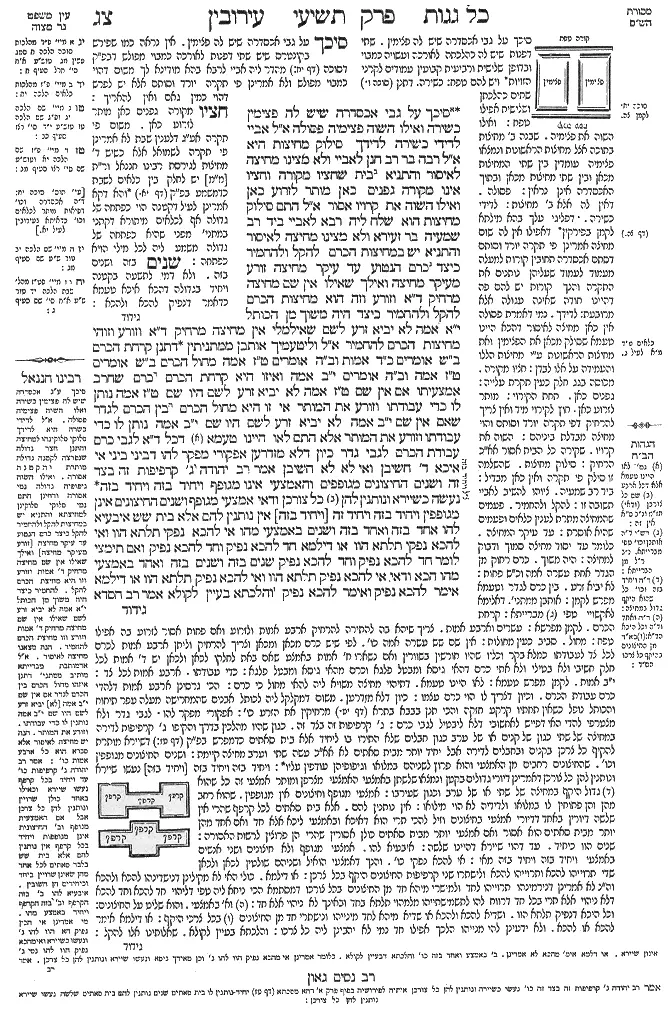
Eruvin 93a - Guemara
סיכך על גבי אכסדרה שיש לה פצימין כשירה ואילו השוה פצימיה פסולה א"ל אביי לדידי כשירה לדידך סילוק מחיצות היא א"ל רבה בר רב חנן לאביי ולא מצינו מחיצה לאיסור והתניא בית שחציו מקורה וחציו אינו מקורה גפנים כאן מותר לזרוע כאן ואילו השוה את קרויו אסור א"ל התם סילוק מחיצות הוא שלח ליה רבא לאביי ביד רב שמעיה בר זעירא ולא מצינו מחיצה לאיסור והתניא יש במחיצות הכרם להקל ולהחמיר כיצד כרם הנטוע עד עיקר מחיצה זורע מעיקר מחיצה ואילך שאילו אין שם מחיצה מרחיק ד"א וזורע וזה הוא מחיצות הכרם להקל ולהחמיר כיצד היה משוך מן הכותל י"א אמה לא יביא זרע לשם שאילמלי אין מחיצה מרחיק ד"א וזורע וזוהי מחיצות הכרם להחמיר א"ל וליטעמיך אותבן ממתניתין דתנן קרחת הכרם ב"ש אומרים כ"ד אמות וב"ה אומרים ט"ז אמה מחול הכרם ב"ש אומרים ט"ז אמה וב"ה אומרים י"ב אמה ואיזו היא קרחת הכרם כרם שחרב אמצעיתו אם אין שם ט"ז אמה לא יביא זרע לשם היו שם ט"ז אמה נותן לו כדי עבודתו וזורע את המותר אי זו היא מחול הכרם בין הכרם לגדר שאם אין שם י"ב אמה לא יביא זרע לשם היו שם י"ב אמה נותן לו כדי עבודתו וזורע את המותר אלא התם לאו היינו טעמא דכל ד"א לגבי כרם עבודת הכרם לגבי גדר כיון דלא מזדרען אפקורי מפקר להו דביני ביני אי איכא ד' חשיבן ואי לא לא חשיבן אמר רב יהודה ג' קרפיפות זה בצד זה ושנים החיצונים מגופפים והאמצעי אינו מגופף ויחיד בזה ויחיד בזה נעשה כשיירא ונותנין להן כל צורכן ודאי אמצעי מגופף ושנים החיצונים אינן מגופפין ויחיד בזה ויחיד זה [ויחיד בזה] אין נותנין להם אלא בית שש איבעיא להו אחד בזה ואחד בזה ושנים באמצעי מהו אי להכא נפקי תלתא הוו ואי להכא נפקי תלתא הוו או דילמא חד להכא נפיק וחד להכא נפיק ואם תימצי לומר חד להכא נפיק וחד להכא נפיק שנים בזה ושנים בזה ואחד באמצעי מהו הכא ודאי אי להכא נפיק תלתא הוו ואי להכא נפיק תלתא הוו או דילמא אימר להכא נפיק ואימר להכא נפיק והלכתא בעיין לקולא אמר רב חסדא
Comments from Rashi on Masechet Eruvin Page 93a
סיכך על גבי אכסדרה שיש לה פצימין . שתי דפנות שיש לה כהלכתה לאורכה ועשויה כמבוי ובדופן שלישית ורביעית קבועין עמודים לקרני הזויות ויש להם טפח:  כשירה . דתנן (סוכה ו.) שתים כהלכתן ושלישית אפילו טפח: ואילו השוה את פצימיה . שבנה ב' מחיצות בתוכה אצל מחיצות הראשונות ונמצאו פצימיה עומדין בין שתי' המחיצות מכאן ובין שתי מחיצות מכאן ובתוך האכסדרה אינן נראין: פסולה . דאין לה אלא ב' מחיצות: לדידי כשירה . דפליגי עלך בהא מילתא לקמן בפירקין דאפילו אין לה שום מחיצה אמרינן פי תקרה יורד וסותם דסתם אכסדרה תחובין קורות למעלה מעמוד לעמוד שעליהן נותנים את התקרה והנך קורות יש להם פה דהיינו חודה שאינה עגולה אלא מרובעת: לדידך . נמי דאמרת פסולה אין כאן מחיצה לאיסור דהכא היינו טעמא שסילק מכאן את הפצימין ואת מחיצות הראשונות ע"י מחיצות הללו והעמידה על אלו לבדן: חציו מקורה . מכוסה בגג חלק כעין תקרת עלייה: גפנים כאן . תחת הקירוי: מותר לזרוע כאן . חוץ לקירוי מיד ואין צריך להרחיק דפי תקרה יורד וסותם והוי מחיצה מבדלת ביניהם: השוה את קרויו . שקירה כל הבית אסור אא"כ הרחיק: סילוק מחיצות . שהשלמה זו סילק פי תקרה ואין כאן מבדיל: ביד רב שמעיה . ציוהו להשיב לאביי תשובה זו: להקל ולהחמיר . פעמים שהמחיצה מתרת לענין כלאים ופעמים שהיא אוסרת: עד עיקר המחיצה . כלומר עד יסוד מחיצה סמוך ודבוק למחיצה: היה משוך . כרם רחוק מן הגדר אחת עשרה אמה וכ"ש פחות: לא יביא זרע . בין כרם לגדר וטעמא מפרש לקמן: אותבן ממתני' . דאלימא לאקשויי טפי מברייתא: קרחת הכרם . לקמן מפרשא: י"ב אמות . לקמן מפרש טעמא: מחול . סביב כעין מחולות: אין שם שש עשרה אמה כו' . לפי שיש כרם מכאן ומכאן וצריך להרחיק וליתן ארבע אמות לכרם לכל צד לעבודתו כמלא בקר וכליו שהיו חורשין בשוורין ואם נשארו ח' אמות באמצע שאם באת לחלקו לכאן ולכאן יש ד' אמות לכל חלק חשיבי ולא בטילי ולא אתי כרם דהאי גיסא ומבטל פלגא וכרם מהאי גיסא ומבטל פלגא: כדי עבודתו . ארבע אמות לכל צד: י"ב אמות . לקמן מפרש טעמא: לאו היינו טעמא . דתיהוי מחיצה משויא ליה להאי מחול כי כרם: הכי גרסינן ארבע אמות דלהדי כרם עבודת הכרם . וכיון דצריך לו הוי כרם עצמו: כיון דלא מזדרען . משום דמקלקל ליה לכותל אבנים שהמחרישה מעלה עפר תיחוח והכותל נופל כשאין תחתיו קרקע חזקה והכי תנן בבבא בתרא (דף יט.) מרחיקין את הזרע כו': אפקורי מפקר להו . לגבי גדר ולא מצטרפי להדי האי דפייש לאחשובי דלא ליבטיל לגבי כרם: ג' קרפיפות זה בצד זה . כגון שהיו מהלכין בדרך והקיפו ג' קרפיפות לדירה במחיצה של שתי כגון של קנים או של ערב כגון חבלים שלא התירו בו ליחיד אלא בית סאתים כדמפרש בפ"ק (דף טז:) דשיירא מותרת להקיף כל צרכן בקנים ובחבלים לדירה אבל יחיד יותר מבית סאתים לא אא"כ עשה שתי וערב מחיצה קיימת: ושנים החיצונים מגופפין וכו' . שהחיצונים רחבים מן האמצעי והוא פרוץ לשניהם במלואו וגיפופיהן עודפין עליו:
 ויחיד בזה ויחיד בזה [ויחידי בזה] נעשו שיירא ונותנין להן כל צרכן . דאמרינן דיורי גדולים בקטן ונמצאו שלשתן באמצעי האמצעי מצרפן ומותר אמצעי זה כל שהוא גדול היקף במחיצה של שתי או של ערב וכגון שעירבו: אמצעי מגופף וחיצונים אין מגופפין . שהוא רחב מהן והן פתוחין לו במלואו ולדידיה לא הוי מילואו:
 אין נותנין להם . אלא בית סאתים לכל קרפף שהרי אין שלשה דיורין באחד דדיורי אמצעי בחיצונים וזיל להכי תרי הוא דאיכא ובאמצעי ליכא אלא חד ואם אחד מהן יותר מבית סאתים הוא אסור ואם אמצעי יותר מבית סאתים כולן אסורין שהרי הן פרוצין לרשות האסורה: שנים הוו כיחיד . עד דהוי שיירא דהיינו שלשה: איבעיא להו . אמצעי מגופף ולא חיצונים ושני אנשים באמצעי ויחיד בזה ויחיד בזה מאי: אי להכא נפקי כו' . והנך דאמצעי הואיל ושניהם שולטין לכאן ולכאן שדי תרוייהו להכא ותרוייהו להכא ולישתרו שני קרפיפות החיצונים היקף בכל צרכן: או דילמא . כולי האי לא מקילינן דנישדינהו להכא ולהכא וה"נ לא אמרינן דנירמינהו תרוייהו לחד ולמישרי מיהא חד מן החיצונים בכל צורכו דמסתמא הכי ניחא ליה טפי דליהוי חד להכא וחד להכא דלא ניהוי אלא תרי בכל חד דרווח להו לתשמישתייהו מלמהוי תלתא בחד ובאינך לא ניהוי אלא חד: וא' באמצעי . והוא שליט על החיצונים: וכל היכא דנפיק תלתא הוו . ושדיא להכא ולהכא או שדיא מיהא לחד מינייהו ונישתרי חד מן החיצונים בכל צרכי היקף: או דילמא אימר להכא או להכא . ולא ידעינן להי מנייהו הלכך אפילו חד נמי לא יהבינן ליה כל צרכו: והלכתא בעיין לקולא . שאלותינו אלו להקל:
Comments from Tosafot - Eruvin 93a
סיכך על גבי אכסדרה שיש לה פצימין . אין נראה כמו שפירש בקונטרס שיש שתי דפנות לאורכה כמבוי מפולש דבפ"ק דסוכה (דף יח:) מהדר ליה אביי לרבא בהא מודינא לך משום דהוי כמבוי מפולש ולא אמרינן פי תקרה יורד וסותם אלא יש לפרש דהוי כמין גאם ואין להאריך: חציו מקורה גפנים כאן מותר לזרוע כאן . משום פי תקרה אע"ג דלענין שבת לא אמרינן פי תקרה לשמואל אלא כשיש ד' מחיצות לגירסת רבינו חננאל ור"ת [מ"מ] יש לחלק בין כלאים לשבת כדמשמע בפ"ק (דף יא.) והא דקא אמרינן לעיל דקטנה הוי כפתחה של גדולה אף לכלאים מיתורא דקתני במתני' מפני שהיא כפתחה של גדולה משמע ליה לכל מילי הויא כפתחה: שנים בזה ושנים בזה . ולא דמי לתשעה בקטנה ויחיד בגדולה דהכא איכא טעמא כדאמר דנפיק להכא ולהכא:
Eruvin 93a - Mishnah translated into english
If one placed roofing on top of a portico that has doorposts, i.e., a portico with two parallel walls that are valid for a sukka, as well as posts in the corners supporting the portico and protruding like doorposts, which are considered as sealing the other two sides of the portico, it is a valid sukka. However, if he evened the doorposts by constructing walls adjacent to the existing walls, obscuring the posts so that they do not protrude, the sukka is invalid. This teaching indicates that the creation of a partition can cause prohibition.
Abaye said to him: In my opinion, with regard to that case of a portico, the sukka is valid. However, even according to your opinion, this is another instance of the removal of partitions. Evening the doorposts does not render the sukka invalid through the establishment of new partitions, but because it negates the original partitions of the sukka.
Rabba bar Rav Ḥanan said to Abaye: And didn’t we find that a partition causes prohibition? But wasn’t it taught in a baraita: With regard to a house, half of which is roofed and half unroofed, if there are vines here, under the roofed section of the house, it is permitted to sow crops there, in the open section. The reason is that it is as though the edge of the roof descends to the ground and forms a partition between the two sections of the house.
And if he evened its roofing, by extending the roof to cover the entire house, it would be prohibited to sow other crops there. It is evident that the very placement of a partition, in this case a roof, causes prohibition. Abaye said to him: There too it is an instance of the removal of partitions. It is prohibited to sow not due to the added roofing; rather, it is prohibited due to the negation of the imaginary partition.
Rava sent a different proof to Abaye by means of Rav Shemaya bar Ze’eira, with regard to the same issue. And didn’t we find a partition causes prohibition? But wasn’t it taught in a baraita: There is an element in the partitions of a vineyard that causes leniency with regard to diverse kinds of seeds and an element that causes stringency. How so? With regard to a vineyard that is planted until the very base of a partition, one sows crops from the base of the other side of the partition onward. This is a leniency, as were there no partition there, he would be required to distance himself four cubits from the last vine and only then sow there. And this is an element in partitions of a vineyard that causes leniency.
And as for an element in partitions that causes stringency, how so? If the vineyard was distanced eleven cubits from a wall, one may not bring the seeds of other crops there, between the vineyard and the wall, and sow that area. This is a stringency, as were there no partition, it would suffice to distance himself four cubits from the last vine, and sow there. This is an element of partitions in a vineyard that causes stringency, a clear situation of a partition that causes prohibition.
Abaye said to him: And according to your reasoning that this presents a difficulty, raise an objection against our opinion from a mishna, rather than a less authoritative baraita, as we learned in a mishna: With regard to a clearing in a vineyard, Beit Shammai say: Its measure is twenty-four cubits, and Beit Hillel say: Sixteen cubits. With regard to the perimeter of a vineyard, Beit Shammai say: Sixteen cubits, and Beit Hillel say: Twelve cubits.
The mishna explains: And what is a clearing in a vineyard? It is referring to a vineyard whose middle section was laid bare of vines. If there are not sixteen cubits across in the clearing, one may not bring foreign seeds and sow them there, due to the Torah prohibition against sowing other crops in a vineyard (Deuteronomy 22:9). If there were sixteen cubits across in the clearing, one provides the vineyard with its requisite work area, i.e., four cubits along either side of the vines are left unsown to facilitate cultivation of the vines, and he sows the rest of the cleared area with foreign crops.
The mishna continues: What is the perimeter of a vineyard? It is the vacant area between the vineyard and the fence surrounding it. If there are not twelve cubits in that area, one may not bring foreign seeds and sow them there. If there are twelve cubits in that area, he provides the vineyard with its requisite work area, four cubits, and he sows the rest. However, were the vineyard not surrounded by a fence, all he would need to do is distance himself four cubits from the last vine. It is clear from this halakha that the partition causes prohibition.
Rather, the objection was not raised from there because there, isn’t this the reason that the partition is not considered to cause prohibition? It is because the entire area of four cubits alongside a vineyard is considered the vineyard’s work area, and is therefore an actual part of it. Likewise, with regard to the four cubits alongside the fence surrounding the vineyard, since they cannot easily be sown due to the wall, he renounces ownership over the area. With regard to the space in between, if it is four cubits, it is deemed significant in its own right, and if not, it is not significant and is nullified relative to the rest, and it is prohibited to sow there. A similar reasoning applies to the baraita. The stringency is not due to the fact that the partition causes prohibition, but because the partition impedes cultivation of the vineyard.
Rav Yehuda said: If there are three enclosures alongside one another, and the two outer ones protrude, i.e., they are wider than the middle one, so that there are partitions on both sides of the breach between them and the middle enclosure, and the middle one does not protrude, and there are no partitions between it and the outer enclosures, as it is totally breached, and there is one person in this one and one person in that one and yet another person in the third enclosure, the people in the enclosures are considered as though they are all living in one large enclosure. Consequently, the legal status of the group becomes like that of a caravan, and one provides them with all the space that they require. In other words, they may use the entire enclosure even if it is very large, just as there are no limits to the size of the enclosed area in which members of a caravan may carry.
However, if the middle enclosure protruded, and the two outer ones did not protrude, i.e., they were narrower than the middle enclosure, so that their entire width was breached into it, and there is one person in this one and one person in that one and yet another in the third, one provides them only an area of six beit se’a, in accordance with the halakha of individuals in a field, who may enclose an area of only two beit se’a per person. As the middle enclosure is larger than the two outer ones, it determines their status, in accordance with the principle stated above, not the other way around. Consequently, the person in the middle enclosure is regarded as though he established residence in only one of the outer enclosures, constituting a group of no more than two, which does not have the legal status of a caravan.
Based on these assumptions, a dilemma was raised before the Sages: If there is one person in this outer enclosure, and one person in the other outer enclosure, and two people in the middle enclosure, what is the halakha? Is the ruling that if the pair exit to here, one of the outer enclosures, they are three people in one place, and if they exit to there, the other outer enclosure, they are three people in one place, and three people are considered a caravan and provided with all the space they require, as stated above?
Or perhaps, as one may exit to here and the other may exit to there, in which case there would be no more than two people in each enclosure, they are provided with only two beit se’a per person.
And if you say that one may exit to here and one may exit to there, if there were two people in this outer enclosure, and two people in that outer enclosure, and one person in the middle enclosure, what is the halakha? Is the ruling that here, certainly, if he exits to here they are three, and if he exits to there they are likewise three, and consequently they should be provided with all the space they require in any case? Or perhaps, in this case too there is uncertainty, as say that he might exit to here, and say that he might exit to there. As the direction in which he will leave his enclosure is undetermined, they should be provided with only two beit se’a each.
These dilemmas were essentially left unresolved, but the halakha is that these dilemmas are decided leniently, and they are provided with all the space they require in these cases.
Rav Ḥisda said:
Traduction : The William Davidson digital edition of the Koren Noé Talmud, with commentary by Rabbi Adin Even-Israel Steinsaltz.