 Talmud Bavli
Eruvin 75a : Youtube
Rabi Yitzchok LobensteinYoutube
2 video classes :
Eruvin Page 75a
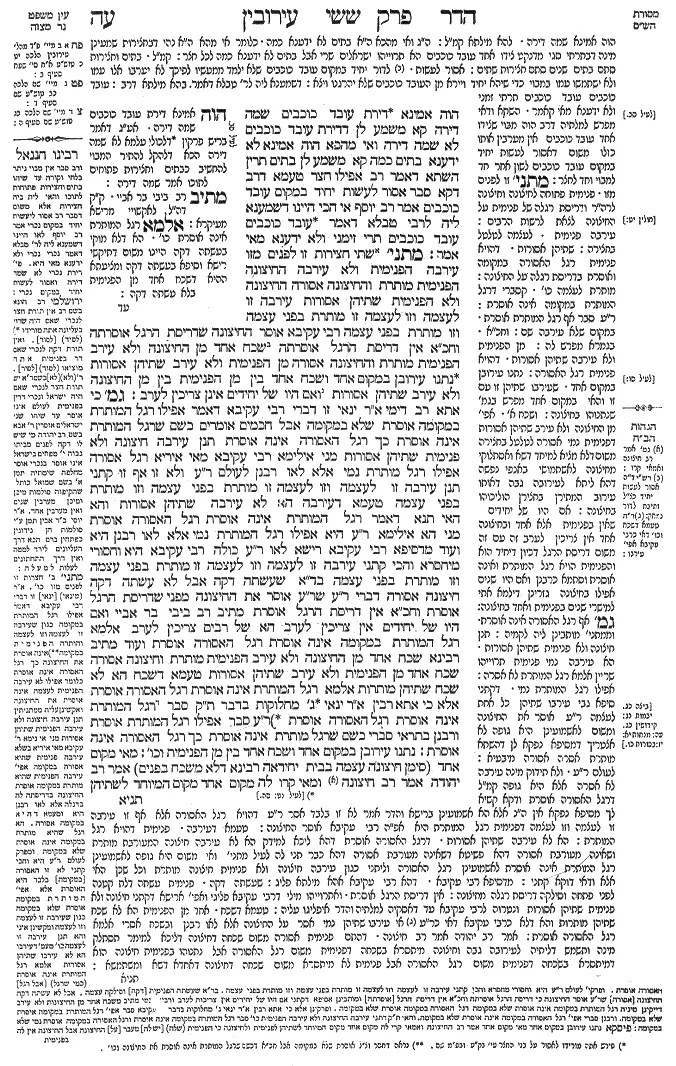
Eruvin 75a - Guemara
הוה אמינא דירת עובד כוכבים שמה דירה קא משמע לן דדירת עובד כוכבים לא שמה דירה ואי מהכא הוה אמינא לא ידענא בתים כמה קא משמע לן בתים תרין השתא דאמר רב אפילו חצר טעמא דרב דקא סבר אסור לעשות יחיד במקום עובד כוכבים אמר רב יוסף אי הכי היינו דשמענא ליה לרבי טבלא דאמר עובד כוכבים עובד כוכבים תרי זימני ולא ידענא מאי אמר:
מתני׳ שתי חצירות זו לפנים מזו עירבה הפנימית ולא עירבה החיצונה הפנימית מותרת והחיצונה אסורה החיצונה ולא הפנימית שתיהן אסורות עירבה זו לעצמה וזו לעצמה זו מותרת בפני עצמה וזו מותרת בפני עצמה רבי עקיבא אוסר החיצונה שדריסת הרגל אוסרתה וחכ"א אין דריסת הרגל אוסרתה שכח אחד מן החיצונה ולא עירב הפנימית מותרת והחיצונה אסורה מן הפנימית ולא עירב שתיהן אסורות נתנו עירובן במקום אחד ושכח אחד בין מן הפנימית בין מן החיצונה ולא עירב שתיהן אסורות ואם היו של יחידים אינן צריכין לערב:
גמ׳ כי אתא רב דימי א"ר ינאי זו דברי רבי עקיבא דאמר אפילו רגל המותרת במקומה אוסרת שלא במקומה אבל חכמים אומרים כשם שרגל המותרת אינה אוסרת כך רגל האסורה אינה אוסרת תנן עירבה חיצונה ולא פנימית שתיהן אסורות מני אילימא רבי עקיבא מאי איריא רגל אסורה אפילו רגל מותרת נמי אלא לאו רבנן לעולם ר"ע ולא זו אף זו קתני תנן עירבה זו לעצמה וזו לעצמה זו מותרת בפני עצמה וזו מותרת בפני עצמה טעמא דעירבה הא לא עירבה שתיהן אסורות והא האי תנא דאמר רגל המותרת אינה אוסרת רגל האסורה אוסרת מני הא אילימא ר"ע היא אפילו רגל המותרת נמי אלא לאו רבנן היא ועוד מדסיפא רבי עקיבא רישא לאו ר"ע כולה רבי עקיבא היא וחסורי מיחסרא והכי קתני עירבה זו לעצמה וזו לעצמה זו מותרת בפני עצמה וזו מותרת בפני עצמה בד"א שעשתה דקה אבל לא עשתה דקה חיצונה אסורה דברי ר"ע שר"ע אוסר את החיצונה מפני שדריסת הרגל אוסרת וחכ"א אין דריסת הרגל אוסרת מתיב רב ביבי בר אביי ואם היו של יחידים אין צריכין לערב הא של רבים צריכין לערב אלמא רגל המותרת במקומה אינה אוסרת רגל האסורה אוסרת ועוד מתיב רבינא שכח אחד מן החיצונה ולא עירב הפנימית מותרת וחיצונה אסורה שכח אחד מן הפנימית ולא עירב שתיהן אסורות טעמא דשכח הא לא שכח שתיהן מותרות אלמא רגל המותרת אינה אוסרת רגל האסורה אוסרת אלא כי אתא רבין א"ר ינאי ג' מחלוקות בדבר ת"ק סבר רגל המותרת אינה אוסרת רגל האסורה אוסרת ר"ע סבר אפילו רגל המותרת אוסרת ורבנן בתראי סברי כשם שרגל מותרת אינה אוסרת כך רגל האסורה אינה אוסרת:
נתנו עירובן במקום אחד ושכח אחד בין מן הפנימית וכו':
מאי מקום אחד (סימן חיצונה עצמה בבית יחידאה רבינא דלא משכח בפנים) אמר רב יהודה אמר רב חיצונה ומאי קרו לה מקום אחד מקום המיוחד לשתיהן
Comments from Rashi on Masechet Eruvin Page 75a
הוה אמינא שמה דירה . להא מילתא קמ"ל: ה"ג ואי מהכא ה"א בתים לא ידענא כמה . כלומר אי מהא ה"א נהי דבחצירות שמעינן מינה דבתרתי סגי מדנקט צידו אחד עובד כוכבים הא תרוייהו ישראלים שרי אבל בתים לא ידענא כמה לכל חצר: אסור לעשות . לדור יחיד במקום נכרי שלא ילמד ממעשיו לפיכך לא יערבו אלו עמו ולא ישתמשו עמו במבוי כדי שיהא יחיד ויירא מן הנכרי שלא יהרגנו ויצא: דשמענא ליה לר' טבלא דאמר . בהא מילתא דרב: עובד כוכבים עובד כוכבים תרתי זמני ולא ידענא מאי קאמר . השתא ודאי מפרש למלתיה דרב הוה מבוי שצידו אחד עובד כוכבים אין מערבין אותו כולו משום דאסור לעשות יחיד במקום עובד כוכבים לשון אחר חד למבוי וחד לחצר: מתני' זו לפנים מזו . פנימית פתוחה לחיצונה וחיצונה לרה"ר ודריסת רגלה של פנימית על החיצונה לצאת לרשות הרבים: עירבה פנימית . לעצמה לטלטל בחצירה: מן הפנימית ולא עירבה שתיהן אסורות . דהויא פנימית רגל האסורה: נתנו עירובן במקום אחד . שעירבו שתיהן זו עם זו והאי במקום אחד מפרש בגמ' שנתנוהו בחיצונה: ושכח א' . אפי' מן החיצונה ולא עירב שתיהן אסורות דפנימית נמי אסורה לטלטל בחצירה משום דלא מציא למיחד דשא ואסתלוקי מחיצונה לאשתמושי באנפי נפשה דהא ליתא לעירובה גבה דאותו עירוב המתירן בחצירן הוליכוהו בחיצונה: אם היו של יחידים . שאין בפנימית אלא אחד ובחיצונה אחד אין צריכין לערב זה עם זה משום דריסת הרגל דכיון דיחיד הוא והפנימית הויא רגל המותרת ואינה אוסרת וסתמא כרבנן ואם היו שנים אפילו בחיצונה גזרינן דילמא אתי למישרי שנים בפנימית ואחד בחיצונה: גמ' אף רגל האסורה אינה אוסרת . וממתני' מותבינן ליה לקמיה: תנן חיצונה ולא פנימית שתיהן אסורות . הא עירבה נמי פנימית תרוייהו שריין אלמא רגל המותרת לא אסרה: אפילו רגל המותרת נמי . דקתני סיפא גבי עירבו שתיהן כל אחת לעצמה ר"ע אוסר את החיצונה ומשום לאשמועינן היא גופה לא איצטריך דמסיפא נפקא לן דהשתא מותרת אסרה אסורה מיבעיא: לעולם ר"ע . ולא תידוק מינה עירבה לא אסרה אלא היא גופה קמ"ל דרגל האסורה אוסרת ודקא קשיא לך מסיפא נפקא אין ה"נ אלא הא אשמועינן ברישא והדר אמר לא זו בלבד אסר ר"ע דהויא רגל האסורה אלא אף זו עירבה זו לעצמה וזו לעצמה דפנימית רגל המותרת היא אפ"ה רבי עקיבא אוסר החיצונה: טעמא דעירבה . פנימית דהויא רגל המותרת: הא לא עירבה שתיהן אסורות . דרגל האסורה אוסרת דהא ליכא למידק הא לא עירבה חיצונה המעורבת מותרת ושאינה מעורבת אסורה דהא פשיטא דשאינה מעורבת אסורה דהא כבר תני לה לעיל מתני' ואי משום היא גופה לאשמועינן רגל המותרת אינה אוסרת לאשמועינן רגל האסורה וליתני כגון עירבה חיצונה ולא פנימית חיצונה מותרת וכל שכן האי אלא ודאי דוקא קתני: מדסיפא רבי עקיבא . דהא רבי עקיבא אהא מילתא פליג: שעשתה דקה . פנימית עשתה דלת קטנה לפני פתחה וסילקה דריסת רגלה מחיצונה: אין דריסת הרגל אוסרת . ואתרוייהו מילי דרבי עקיבא פליגי ואפי' ארישא דקתני חיצונה ולא פנימית שתיהן אסורות ונטרוה לרבי עקיבא עד דאסקיה למלתיה והדר איפליגו עליה: טעמא דשכח . אחד מן הפנימית הא לא שכח שתיהן מותרות והא דלא כרבי עקיבא דאי כר"ע אי עירבו שתיהן נמי אסר על החיצונה אלא לאו רבנן ובשכח אסרי אלמא רגל האסורה אוסרת: אמר רבי יהודה אמר רב חיצונה . דהתם פנימית אסורה משום שכחה דחיצונה דליכא למימר תסתלק מינה ותשמש דליתיה לעירובה גבה וחיצונה מיתסרא בשכחה דפנימית משום רגל האסורה אבל נתנוה בפנימית חיצונה הוא דמיתסרא בשכחה דפנימית משום רגל האסורה אבל פנימית לא מיתסרא משום שכחה דחיצונה דאחדא דשא ומשתמשא:
Comments from Tosafot - Eruvin 75a
הוה אמינא דירת עובד כוכבים שמה דירה . אע"ג דאמר בריש פרקין דלכולי עלמא לא שמה דירה הכא דלהקל להתיר המבוי להחשיב כבתים וחצירות פתוחים לתוכו אמר שמה דירה: מתיב רב ביבי בר אביי . ק"ק דה"ל לאקשויי מרישא מעיקרא: אלמא רגל המותרת אינה אוסרת כו' . הא דלא מוקי בעשתה דקה היינו משום דתיקשי רישא וסיפא בעשתה דקה ומציעתא ההיא דשכח אחד מן הפנימית בלא עשתה דקה:
Eruvin 75a - Mishnah translated into english
I would have said that the residence of a gentile is considered a residence with regard to defining an area as an alleyway. Therefore, he teaches us that the legal status of the residence of a gentile is not considered a full-fledged residence in this regard. And if Rav had taught this halakha only from the ruling here, with regard to gentiles, I would have said that I do not know how many houses there are. Therefore, he teaches us that there must be at least two houses and two courtyards.
Now that Rav has said that this halakha applies even to a courtyard, this implies that the reason for the opinion of Rav is that he holds: It is prohibited for an individual to establish his home in the place where a gentile resides. Consequently, he is prohibited from establishing an eiruv, so that the difficulties of living there will force him to move.
Rav Yosef said: If so, this is why I heard Rabbi Tavla say: A gentile, a gentile, two times while teaching this subject, even though I did not understand then what he meant to say. Now I realize that he was speaking about both an alleyway and a courtyard.
MISHNA: With regard to two courtyards, one of which was within the other, and the outer one opened into the public domain, the following distinctions apply: If the inner courtyard established an eiruv for itself and the outer one did not establish an eiruv, carrying in the inner one is permitted and carrying in the outer one is prohibited.
If the outer courtyard established an eiruv and the inner one did not, carrying in both is prohibited, as the residents of the inner courtyard pass through the outer one, and are considered to a certain extent as residents of the courtyard who did not participate in the eiruv. If this courtyard established an eiruv for itself, and that courtyard also established an eiruv for itself, but they did not establish a joint eiruv with one another, this one is permitted by itself, and that one is permitted by itself, but they may not carry from one to the other.
Rabbi Akiva prohibits carrying in the outer one even in such a case, as the right of entry to the outer courtyard enjoyed by the residents of the inner courtyard renders it prohibited. And the Rabbis disagree and say: The right of entry enjoyed by the residents of the inner courtyard does not render it prohibited. Since the residents of the inner courtyard do not use the outer one other than to pass through it, and they are permitted to carry in their own courtyard, they do not render it prohibited to carry in the outer courtyard.
If one resident of the outer courtyard forgot and did not contribute to the eiruv, carrying in the inner courtyard is permitted and in the outer one is prohibited. If one resident of the inner courtyard forgot and did not contribute to the eiruv, they are both prohibited, as the right of way enjoyed by the members of the inner courtyard through the outer courtyard renders the outer one prohibited as well.
If the residents of both courtyards put their eiruv in one place, and one person, whether he was from the inner courtyard or from the outer one, forgot and did not contribute to the eiruv, they are both prohibited for carrying within them, as the two courtyards are treated as one. And if the courtyards belonged to individuals, i.e., if only one person lived in each courtyard, they are not required to establish an eiruv, as this requirement applies only to a courtyard occupied by multiple residents.
GEMARA: When Rav Dimi came from Eretz Yisrael to Babylonia he said in the name of Rabbi Yannai: This mishna, which states that if the residents of the outer courtyard established an eiruv but the residents of the inner one did not, they are both prohibited from carrying, is the statement of Rabbi Akiva, who said: Even the foot of one who is permitted in its own place, i.e., even someone from a courtyard in which he is permitted to carry, renders it prohibited when he is not in its own place. If he enjoys the right of entry to another courtyard he is considered like a resident of that courtyard as well, and if he does not participate in the eiruv, no one in that courtyard may carry. However, the Rabbis say: Just as the foot of one who is permitted in its own place does not render it prohibited to carry in another courtyard, so too, the foot of one who is prohibited in his place does not render it prohibited to carry in another courtyard. Consequently, if only the residents of the outer courtyard established an eiruv, the residents of the inner one do not render it prohibited to carry in the outer courtyard.
We learned in the mishna: If the residents of the outer courtyard established an eiruv and the residents of the inner courtyard did not, they are both prohibited. Whose opinion is this? If you say it is that of Rabbi Akiva, why discuss particularly the case of a foot that is prohibited, i.e., a case where the inner courtyard did not establish an eiruv? According to Rabbi Akiva, even a foot that is permitted also renders it prohibited to carry. Therefore, even if the residents of the inner courtyard had established an eiruv, they would still render it prohibited to carry in the outer courtyard. Rather, is it not in accordance with the opinion of the Rabbis? This would indicate that the Rabbis agree that one who may not carry in his own courtyard does, in fact, render it prohibited to carry in a different courtyard through which he has right of entry, contrary to Rabbi Yannai’s claim.
The Gemara rejects this argument: Actually, this part of the mishna is in accordance with the opinion of Rabbi Akiva, and he teaches the mishna employing the style: Not only this but also that. In other words, he begins by teaching the halakha in a relatively straightforward case and then proceeds to a more complicated example. Consequently, the mishna should be understood as follows: Not only is it prohibited to carry in both courtyards if the residents of the outer courtyard established an eiruv and the residents of the inner one did not, but even if the residents of both courtyards established separate eiruvin, it remains prohibited to carry in the outer one.
The Gemara continues: We learned in the mishna: If this courtyard established an eiruv for itself, and that courtyard also established an eiruv for itself, but the two courtyards did not establish a joint eiruv with one another, this one is permitted by itself, and that one is permitted by itself, but it is prohibited to carry from one courtyard to the other. The reason both courtyards are permitted by themselves is that the residents of the inner courtyard established an eiruv. By inference, if they did not establish an eiruv carrying in both would be prohibited.
But this tanna, who said that the foot of one who is permitted in his own place does not render it prohibited to carry, while the foot of one who is prohibited in its own place does render it prohibited to carry, who is this tanna? If you say it is Rabbi Akiva, there is a difficulty, as he holds that even the foot of one who is permitted in its own place also renders it prohibited to carry in a different place. Rather, is it not the opinion of the Rabbis, which indicates that the Rabbis agree that the foot of one who is prohibited in its own place does, in fact, render it prohibited to carry in a different place, in contrast to the statement of Rabbi Yannai? And furthermore, from the fact that the latter clause that follows immediately states the opinion of Rabbi Akiva, it is clear that the first clause, with which Rabbi Akiva disagrees, is not in accordance with the opinion of Rabbi Akiva.
The Gemara responds: The entire mishna in accordance with the opinion of Rabbi Akiva, and it is incomplete and teaches the following: If this courtyard established an eiruv for itself, and that courtyard also established an eiruv for itself, but they did not establish a joint eiruv with one another, this one is permitted by itself, and that one is permitted by itself, but they may not carry from one to the other. In what case is this statement said? In a case where the inner courtyard constructed a small partition at its entrance. However, if it did not construct a partition, the outer courtyard is prohibited. This is the statement of Rabbi Akiva, as Rabbi Akiva prohibits carrying in the outer courtyard because the right of entry enjoyed by the members of the inner courtyard renders it prohibited to carry. And the Rabbis say: The right of entry enjoyed by the members of the inner courtyard does not render it prohibited to carry.
Rav Beivai bar Abaye raised an objection based upon the final clause of the mishna: And if the courtyards belonged to individuals, i.e., if only one person lived in each courtyard, they are not required to establish an eiruv. Doesn’t this indicate that if they belong to many people jointly, they need to establish an eiruv? Apparently, the foot of one who is permitted in his own place does not render it prohibited, but the foot of one who is prohibited in his own place does render it prohibited. This contradicts Rabbi Yannai’s understanding of Rabbi Akiva’s opinion.
And Ravina raised a further objection from the mishna: If one resident of the outer courtyard forgot and did not contribute to the eiruv, the inner courtyard is permitted for carrying and the outer one is prohibited. If one resident of the inner courtyard forgot and did not contribute to the eiruv, both courtyards are prohibited, as the right of way enjoyed by the members of the inner courtyard through the outer courtyard renders the outer one prohibited as well. The reason is that one of the residents forgot to contribute to the eiruv. But if he did not forget, and each courtyard established its own valid eiruv, both of them would be permitted. Apparently, the foot of one who is permitted in his own place does not render it prohibited to carry, but the foot of one who is prohibited in his own place does render it prohibited to carry. This cannot be in accordance with the opinion of Rabbi Akiva, as he holds that even the foot of one who is permitted in his own place renders it prohibited to carry elsewhere. Rather, it must be the opinion of the Rabbis, which proves that even they agree that the foot of one who is prohibited in his own place does render a different courtyard prohibited.
Rather, this version must be rejected, and when Ravin came from Eretz Yisrael to Babylonia he cited a different version. Rabbi Yannai said: There are three disputes with regard to this matter. The first tanna holds that the foot of one who is permitted in his own place does not render it prohibited to carry elsewhere, but the foot of one who is prohibited in his own place does render it prohibited to carry. Rabbi Akiva holds that even the foot of one who is permitted in his own place renders it prohibited to carry in a different place. And the latter Rabbis hold that just as the foot of one who is permitted in his own place does not render it prohibited to carry, so too, the foot of one who is prohibited does not render it prohibited to carry. This explanation resolves all of the difficulties posed earlier.
It was stated in the mishna: If the residents of both courtyards put their eiruv in one place, and one person, whether he was from the inner courtyard or from the outer one, forgot and did not contribute to the eiruv, it is prohibited to carry in both courtyards. The Gemara asks: What is the meaning of one place? Is the halakha different if the two courtyards established their eiruv in one place or in different places?
Before continuing, the Gemara provides a mnemonic for the ensuing discussion: Outer; for itself; in the house of an individual; Ravina; where the inner one did not forget.
Rav Yehuda said that Rav said: The mishna is referring to a case when the residents of both courtyards established their eiruv in the outer courtyard. And why did they call it one [eḥad] place? Because it is a place that is designated [meyuḥad] for the residents of both courtyards, as the members of the inner one also pass through the outer courtyard. Therefore, if a member of the outer courtyard forgot to contribute to the eiruv, the inner courtyard is also prohibited. Since the eiruv of the inner courtyard is located in the outer courtyard, the residents of the inner courtyard cannot separate themselves from the outer one. However, if the eiruv was deposited in the inner courtyard and a member of the outer courtyard forgot to contribute to the eiruv, carrying in the inner courtyard is permitted, because in that situation they can separate themselves from the outer courtyard.
Traduction : The William Davidson digital edition of the Koren Noé Talmud, with commentary by Rabbi Adin Even-Israel Steinsaltz.