 Talmud Bavli
Eruvin 53a : Youtube
Rabi Yitzchok LobensteinYoutube
2 video classes :
Eruvin Page 53a
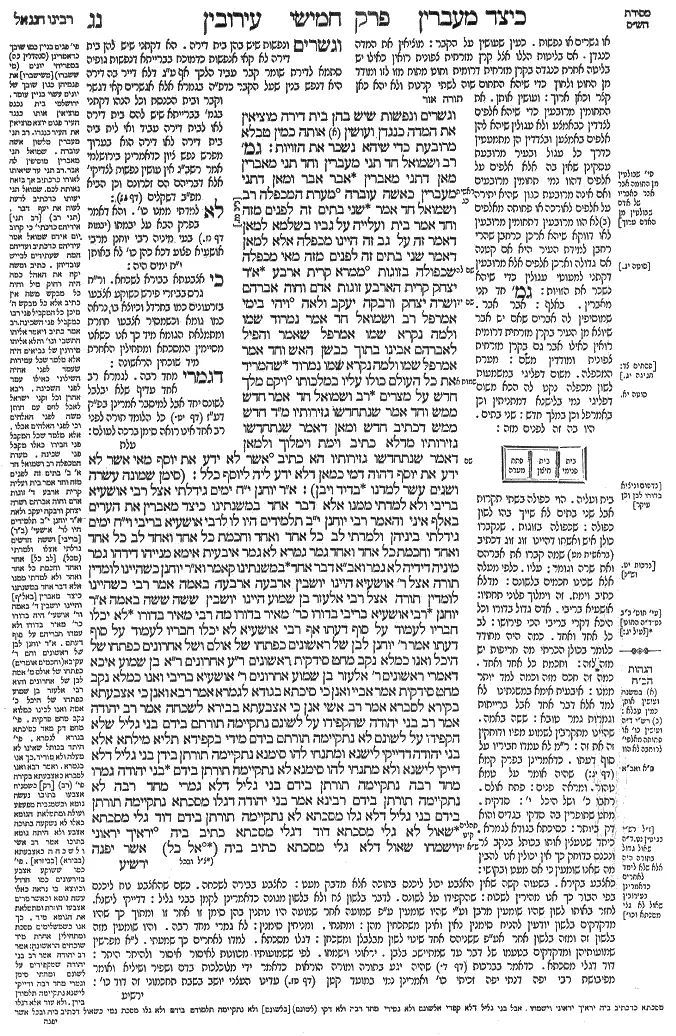
Eruvin 53a - Guemara
וגשרים ונפשות שיש בהן בית דירה מוציאין את המדה כנגדן ועושין אותה כמין טבלא מרובעת כדי שיהא נשכר את הזויות:
גמ׳ רב ושמואל חד תני מעברין וחד תני מאברין מאן דתני מאברין אבר אבר ומאן דתני מעברין כאשה עוברה (בראשית כג, ט) מערת המכפלה רב ושמואל חד אמר שני בתים זה לפנים מזה וחד אמר בית ועלייה על גביו בשלמא למאן דאמר זה על גב זה היינו מכפלה אלא למאן דאמר שני בתים זה לפנים מזה מאי מכפלה שכפולה בזוגות (בראשית לה, כז) ממרא קרית ארבע א"ר יצחק קרית הארבע זוגות אדם וחוה אברהם ושרה יצחק ורבקה יעקב ולאה (בראשית יד, א) ויהי בימי אמרפל רב ושמואל חד אמר נמרוד שמו ולמה נקרא שמו אמרפל שאמר והפיל לאברהם אבינו בתוך כבשן האש וחד אמר אמרפל שמו ולמה נקרא שמו נמרוד שהמריד את כל העולם כולו עליו במלכותו (שמות א, ח) ויקם מלך חדש על מצרים רב ושמואל חד אמר חדש ממש וחד אמר שנתחדשו גזירותיו מ"ד חדש ממש דכתיב חדש ומאן דאמר שנתחדשו גזירותיו מדלא כתיב וימת וימלוך ולמאן דאמר שנתחדשו גזירותיו הא כתיב (שמות א, ח) אשר לא ידע את יוסף מאי אשר לא ידע את יוסף דהוה דמי כמאן דלא ידע ליה ליוסף כלל:
(סימן שמונה עשרה ושנים עשר למדנו בדוד ויבן):
א"ר יוחנן י"ח ימים גידלתי אצל רבי אושעיא בריבי ולא למדתי ממנו אלא דבר אחד במשנתינו כיצד מאברין את הערים באלף איני והאמר רבי יוחנן י"ב תלמידים היו לו לרבי אושעיא בריבי וי"ח ימים גידלתי ביניהן ולמדתי לב כל אחד ואחד וחכמת כל אחד ואחד לב כל אחד ואחד וחכמת כל אחד ואחד גמר גמרא לא גמר איבעית אימא מנייהו דידהו גמר מיניה דידיה לא גמר ואב"א דבר אחד במשנתינו קאמר וא"ר יוחנן כשהיינו לומדין תורה אצל ר' אושעיא היינו יושבין ארבעה ארבעה באמה אמר רבי כשהיינו לומדין תורה אצל רבי אלעזר בן שמוע היינו יושבין ששה ששה באמה א"ר יוחנן רבי אושעיא בריבי בדורו כר' מאיר בדורו מה רבי מאיר בדורו לא יכלו חבריו לעמוד על סוף דעתו אף רבי אושעיא לא יכלו חבריו לעמוד על סוף דעתו אמר ר' יוחנן לבן של ראשונים כפתחו של אולם ושל אחרונים כפתחו של היכל ואנו כמלא נקב מחט סידקית ראשונים ר"ע אחרונים ר"א בן שמוע איכא דאמרי ראשונים ר' אלעזר בן שמוע אחרונים ר' אושעיא בריבי ואנו כמלא נקב מחט סידקית אמר אביי ואנן כי סיכתא בגודא לגמרא אמר רבא ואנן כי אצבעתא בקירא לסברא אמר רב אשי אנן כי אצבעתא בבירא לשכחה אמר רב יהודה אמר רב בני יהודה שהקפידו על לשונם נתקיימה תורתם בידם בני גליל שלא הקפידו על לשונם לא נתקיימה תורתם בידם מידי בקפידא תליא מילתא אלא בני יהודה דדייקי לישנא ומתנחי להו סימנא נתקיימה תורתן בידן בני גליל דלא דייקי לישנא ולא מתנחי להו סימנא לא נתקיימה תורתן בידם בני יהודה גמרו מחד רבה נתקיימה תורתן בידם בני גליל דלא גמרי מחד רבה לא נתקיימה תורתן בידם רבינא אמר בני יהודה דגלו מסכתא נתקיימה תורתן בידם בני גליל דלא גלו מסכתא לא נתקיימה תורתן בידם דוד גלי מסכתא שאול לא גלי מסכתא דוד דגלי מסכתא כתיב ביה (תהלים קיט, עד) יראיך יראוני וישמחו שאול דלא גלי מסכתא כתיב ביה ((שמואל א יד, מז) אל כל) אשר יפנה
Comments from Rashi on Masechet Eruvin Page 53a
או גשרים או נפשות . כעין שעושין על הקבר: מוציאין את המדה כנגדן . אם בליטות הללו אצל קרן מזרחית צפונית רואין כאילו יש בליטה אחרת כנגדה בקרן מזרחית דרומית וחוט מתוח מזו לזו ומודד מן החוט ולחוץ כדי שיהא התחום שוה לשתי קרנות ולא יהא כאן קצר וכאן ארוך: ועושין אותן . את התחומין מרובעין כדי שיהא אלפים לצדדין כבאמצע ולא עגולין שיהא להן אלפים באמצען ובצדדין הן מתמעטין כדרך כל עגול ובעיר מרובעת עסקינן שאין בה אלא אלפים על אלפים דהוו נמי תחומין מרובעים ואם אינה מרובעת כגון שהיא יתירה על אלפים לאורכה או פחותה מאלפים לא הוו מרובעין דתחומין מרובעין לאו דווקא שיהא ארכן כרחבן שהרי רחבן למידת העיר היא אם קטנה אם גדולה וארכן אלפים אלא מרובעין דקתני למעוטי עגולין כדי שיהא נשכר את הזויות: גמ' חד תני מאברין . באלף: אבר אבר . שמוסיפין לה אברים שאם יש אבר שיוצא מן העיר בקרן מזרחית דרומית רואין כאילו אבר גם בקרן מזרחית צפונית ומודדין משם: מערת המכפלה . משום דפליגי במשמעות לשון מכפלה נקט לה הכא משום דפליגי נמי בלישנא דמתניתין וכן באמרפל וכן במלך חדש: שני בתים . היו בה זה לפנים מזה:  בית ועליה . הוי כפולה בשתי תקרות אבל שני בתים לא שייך בהו לשון כפולה: שכפולה בזוגות . שנקברו כולן איש ואשתו דהיינו זוג זוג דכתיב (בראשית מט) שמה קברו את אברהם ואת שרה וגו': עליו . כלפי מעלה אלא שכינו חכמים בלשונם: מדלא כתיב וימת . זה וימלוך פלוני תחתיו: אושעיא בריבי . אדם גדול בדורו וכל היכי דקרי בריבי הכי פירושו: לב כל אחד ואחד . כמה היה מחודד כלומר בכולן הכרתי מה חריפות יש מזה לזה: וחכמת כל אחד ואחד . כמה זה חכם מזה וכמה למד יותר ממנו: איבעית אימא . במשנתינו לא למד אלא דבר אחד אבל ברייתות וגמרות גמר טובא: ששה באמה . שהיינו מתקרבין לשמוע מפיו ודוחקין זה את זה: ר"מ לא עמדו חביריו על סוף דעתו . כדאמרינן בפרק קמא (דף יג:) שהיה אומר על טמא טהור ומראה פנים: פתח אולם . רחבו כ' ושל היכל י': סדקית . מחט שתופרין בה סדקי בגדים והוא דק ביותר: כסיכתא בגודא לגמרא . כיתד שנועצין אותו בכותל בנקב צר ונכנס בדוחק כך אין יכולין אנו להבין מה שאנו שומעין כי אם מעט ובקושי: כאצבע בקירא . בשעוה קשה שאין האצבע יכול ליכנס בתוכה אלא מדבק מעט: כאצבע בבירה לשכחה . כשם שהאצבע נוח ליכנס בפי הבור כך אנו מהירין לשכוח: שהקפידו על לשונם . לדבר בלשון צח ולא בלשון מגונה כדאמרינן לקמן בבני גליל: דדייקי לישנא . לחזר באותו לשון שהיו שומעין מרבן וע"י שהיו שומעין ע"פ שמועה אחר שמועה היו נותנין בהן סימן זו אחר זו ומתוך כך שהיו מדקדקים בלשון יודעין להניח סימנין נאין ואינן משתכחין מהן: ומתנחי . ומניחין סימנין: לא גמרי מחד רבה . והיו שומעין מזה בלשון זה ומזה בלשון אחר אע"פ ששניהם אחד שינוי לשון מבלבלן ומשכחן: דגלו מסכתא . למדו לאחרים כך שמעתי. ל"א מפרשין שמועותיהן ומדקדקים בטעמו של דבר עד שמתיישב בלבן: יראוני וישמחו . לפי ששמועותיו מכוונות לאיסור איסור ולהיתר היתר: דוד דגלי מסכתא . כדאמר בברכות (דף ד.) שהיה יגע בתורה ומורה הוראות כדאמר ידי מלוכלכות בדם ושפיר ושיליא ואומר מפיבושת רבי יפה דנתי יפה זכיתי כו' ואמרינן נמי במועד קטן (דף טז.) עדינו העצני יושב בשבת תחכמוני זה דוד כו':
Comments from Tosafot - Eruvin 53a
וגשרים ונפשות שיש בהן בית דירה . הא דקתני שיש להן בית דירה לא קאי אנפשות כדמוכח בברייתא דנפשות גופיה סתמא לדירת שומר קבר עביד הלכך אף ע"ג דלא דייר בה דירה היא דנפש בנין שעל הקבר כדפ"ה בגמרא אלא אגשרים קאי דגשר וקבר ובית הכנסת וכל הנהו דקתני בגמ' בברייתא שיש להם בית דירה לאו לבית דירה עביד ואי לית ביה בית דירה לאו דירה הוא בערוך מפרש נפש ציון כדאמרינן בירושלמי אמר רשב"ג אין עושין נפשות לצדיקי' אלא דבריהם הם זכרונם וכן הביא מפ"ב דשקלים (דף ו:): לא למדתי ממנו כו' . והא דאמר בפרק הבא על יבמתו (יבמות דף נז.) בעי מיניה רבי יוחנן מרבי אושעיא פצוע דכא כהן כו' לא באותן י"ח ימים היה: כי אצבעתא בבירא לשכחא . ור"ח גרס בביזרי פירש כשוקע אצבעו בזרעונים כמו בחרדל וכיוצא בו נראה כמו גומא וכשמסיר אצבעו חוזרת ומתמלאת הגומא מיד כך אנו כשאנו מסיימין המסכתא ומתחילין האחרת מיד שוכחין הראשונה: דגמרי מחד רבה . לגמרא רב אחד עדיף שלא יבלבל לשונם יחד אבל למיסבר אמרינן בפ"ק דע"ז (דף יט.) כל הלומד תורה לפני רב אחד אינו רואה סימן ברכה לעולם:
Eruvin 53a - Mishnah translated into english
and bridges and monuments over graves in which there is a residence, one extends the measure of that side of the city as though there were other structures opposite them in the adjacent corner of the city. And prior to measuring the Shabbat limit, one renders the city like a square tablet so that it gains the corners, although there are actually no houses in those corners.
GEMARA: The Gemara cites a dispute with regard to the mishna’s terminology. Rav and Shmuel disagreed: One taught that the term in the mishna is me’abberin, with the letter ayin, and one taught that the term in the mishna is me’abberin, with the letter alef.
The Gemara explains: The one who taught me’abberin with an alef explained the term in the sense of limb [ever] by limb. Determination of the city’s borders involves the addition of limbs to the core section of the city. And the one who taught me’abberin with an ayin explained the term in the sense of a pregnant woman [ubbera] whose belly protrudes. In similar fashion, all the city’s protrusions are incorporated in its Shabbat limit.
Apropos this dispute, the Gemara cites similar disputes between Rav and Shmuel. With regard to the Machpelah Cave, in which the Patriarchs and Matriarchs are buried, Rav and Shmuel disagreed. One said: The cave consists of two rooms, one farther in than the other. And one said: It consists of a room and a second story above it.
The Gemara asks: Granted, this is understandable according to the one who said the cave consists of one room above the other, as that is the meaning of Machpelah, double. However, according to the one who said it consists of two rooms, one farther in than the other, in what sense is it Machpelah? Even ordinary houses contain two rooms.
Rather, it is called Machpelah in the sense that it is doubled with the Patriarchs and Matriarchs, who are buried there in pairs. This is similar to the homiletic interpretation of the alternative name for Hebron mentioned in the Torah: “Mamre of Kiryat Ha’Arba, which is Hebron” (Genesis 35:27). Rabbi Yitzḥak said: The city is called Kiryat Ha’Arba, the city of four, because it is the city of the four couples buried there: Adam and Eve, Abraham and Sarah, Isaac and Rebecca, and Jacob and Leah.
They disagreed about this verse as well: “And it came to pass in the days of Amraphel” (Genesis 14:1). Rav and Shmuel both identified Amraphel with Nimrod. However, one said: Nimrod was his name. And why was his name called Amraphel? It is a contraction of two Hebrew words: As he said [amar] the command and cast [hippil] our father Abraham into the fiery furnace, when Abraham rebelled against and challenged his proclaimed divinity. And one said: Amraphel was his name. And why was his name called Nimrod? Because he caused the entire world to rebel [himrid] against God during his reign.
They also disagreed about this verse: “There arose a new king over Egypt, who knew not Joseph” (Exodus 1:8). Rav and Shmuel disagreed. One said: He was actually a new king, and one said: He was in fact the old king, but his decrees were new.
The Gemara explains. The one who said he was actually a new king based his opinion on the fact that it is written in the verse that he was new. And the one who said that his decrees were new derived his opinion from the fact that it is not written: And the king died, and his successor reigned, as it is written, for example, with regard to the kings of Edom (Genesis 36).
The Gemara asks: And according to the one who said that his decrees were new, isn’t it written: “Who knew not Joseph”? If it were the same king, how could he not know Joseph? The Gemara explains: What is the meaning of the phrase: “Who knew not Joseph”? It means that he conducted himself like one who did not know Joseph at all.
The Gemara cites a mnemonic of key words from a series of traditions cited below: Eighteen and twelve we studied, with regard to David, and he will understand.
Rabbi Yoḥanan said: I spent eighteen days with Rabbi Oshaya the Distinguished [Beribbi], and I learned from him only one matter in our Mishna. In the phrase: How does one extend cities, the word me’abberin is spelled with an alef.
The Gemara asks: Is this so? Didn’t Rabbi Yoḥanan say: Rabbi Oshaya the Distinguished had twelve students, and I spent eighteen days among them, and I learned the heart of each and every one, i.e., the nature and character of each student, and the extent of the wisdom of each and every one? How could Rabbi Yoḥanan say that he learned only one matter?
The Gemara answers: It is possible that he learned the heart of each and every one and the wisdom of each and every one, but he did not learn substantive tradition. And if you wish, say instead: From the students themselves he learned many things; from Rabbi Oshaya himself he did not learn anything beyond that one matter. And if you wish, say instead: Rabbi Yoḥanan meant to say that he learned only one matter in our Mishna from Rabbi Oshaya, but he learned other matters from him based on baraitot and other sources.
And Rabbi Yoḥanan said about that period: When we were studying Torah with Rabbi Oshaya, it was so crowded with students that we would sit four in each square cubit. Similarly, Rabbi Yehuda HaNasi said: When we were studying Torah with Rabbi Elazar ben Shamua, we would sit six in each square cubit.
Rabbi Yoḥanan said about his teacher: Rabbi Oshaya the Distinguished was as great in his generation as Rabbi Meir was in his generation: Just as with regard to Rabbi Meir, in his generation his colleagues were unable to fully grasp the profundity of his thinking due to the subtlety of his great mind, so it was with Rabbi Oshaya; his colleagues were unable to fully grasp the profundity of his thinking.
Similarly, Rabbi Yoḥanan said: The hearts, i.e., the wisdom, of the early Sages were like the doorway to the Entrance Hall of the Temple, which was twenty by forty cubits, and the hearts of the later Sages were like the doorway to the Sanctuary, which was ten by twenty cubits. And we, i.e., our hearts, are like the eye of a fine needle.
He explains: The term early Sages is referring to Rabbi Akiva, and the term later Sages is referring to his student, Rabbi Elazar ben Shamua. Some say that the term early Sages refers to Rabbi Elazar ben Shamua and that the term the later Sages refers to Rabbi Oshaya the Distinguished. And we are like the eye of a fine needle.
On the topic of the steady decline of the generations, Abaye said: And we, as far as our capabilities are concerned, are like a peg in the wall with regard to Torah study. Just as a peg enters a wall with difficulty, our studies penetrate our minds only with difficulty. Rava said: And we are like a finger in wax [kira] with regard to logical reasoning. A finger is not easily pushed into wax, and it extracts nothing from the wax. Rav Ashi said: We are like a finger in a pit with regard to forgetfulness. Just as a finger easily enters a large pit, similarly, we quickly forget our studies.
The Gemara continues the discussion relating to study and comprehension, and cites that which Rav Yehuda said that Rav said: With regard to the people of Judea, who were particular in their speech and always made certain that it was both precise and refined, their Torah knowledge endured for them; with regard to the people of the Galilee, who were not particular in their speech, their Torah knowledge did not endure for them.
The Gemara asks: Is this matter at all dependent on being particular with one’s language? Rather, with regard to the people of Judea, who were precise in their language and who would formulate mnemonics for their studies, their Torah knowledge endured for them; with regard to the people of the Galilee, who were not precise in their language and who would not formulate mnemonics, their Torah knowledge did not endure for them.
Furthermore, with regard to the people of Judea, who studied from one teacher, their Torah knowledge endured for them, as their teacher provided them with a consistent approach; however, with regard to the people of the Galilee, who did not study from one teacher, but rather from several teachers, their Torah knowledge did not endure for them, as it was a combination of the approaches and opinions of a variety of Sages.
Ravina said: With regard to the people of Judea, who would publicly disclose the tractate to be studied in the coming term so that everyone could prepare and study it in advance (ge’onim), their Torah knowledge endured for them; with regard to the people of the Galilee, who would not disclose the tractate to be studied in the coming term, their Torah knowledge did not endure for them.
The Gemara relates that King David would disclose the tractate to be studied in advance, whereas Saul would not disclose the tractate to be studied. With regard to David, who would disclose the tractate, it is written: “Those who fear You will see me and be glad” (Psalms 119:74), since all were prepared and could enjoy his Torah. With regard to Saul, who would not disclose the tractate to be studied, it is written: “And wherever he turned himself
Traduction : The William Davidson digital edition of the Koren Noé Talmud, with commentary by Rabbi Adin Even-Israel Steinsaltz.