 Talmud Bavli
Eruvin 55a : Youtube
Rabi Yitzchok LobensteinYoutube
2 video classes :
Eruvin Page 55a
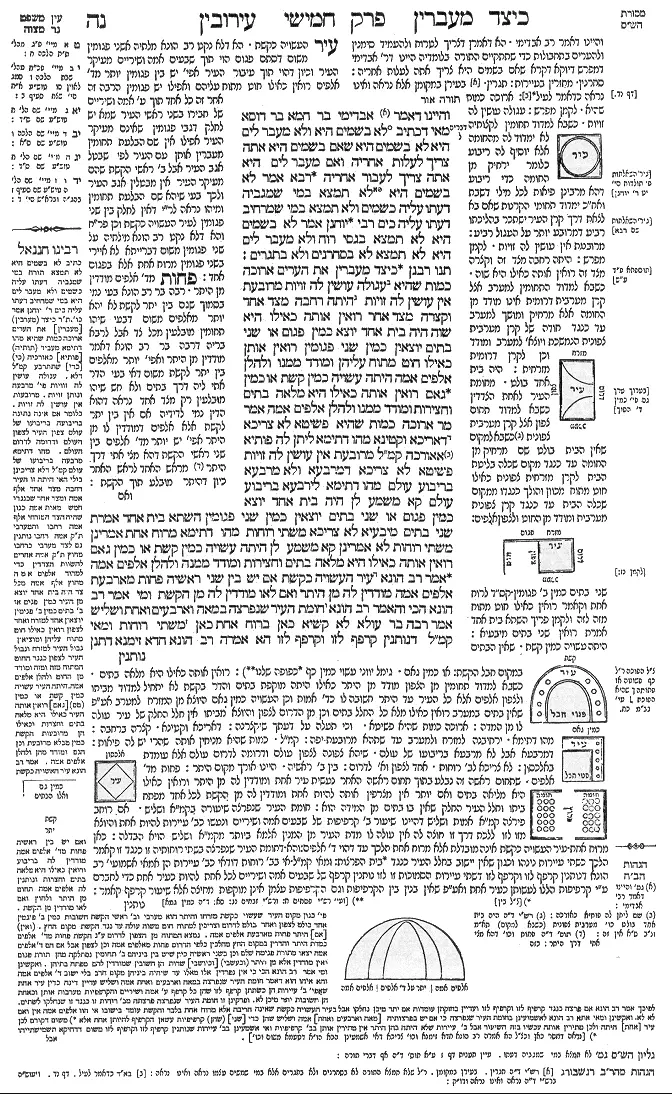
Eruvin 55a - Guemara
והיינו דאמר אבדימי בר חמא בר דוסא מאי דכתיב (דברים ל, יב) לא בשמים היא ולא מעבר לים היא לא בשמים היא שאם בשמים היא אתה צריך לעלות אחריה ואם מעבר לים היא אתה צריך לעבור אחריה רבא אמר לא בשמים היא לא תמצא במי שמגביה דעתו עליה כשמים ולא תמצא במי שמרחיב דעתו עליה כים רבי יוחנן אמר לא בשמים היא לא תמצא בגסי רוח ולא מעבר לים היא לא תמצא לא בסחרנים ולא בתגרים:
תנו רבנן כיצד מעברין את הערים ארוכה כמות שהיא עגולה עושין לה זויות מרובעת אין עושין לה זויות היתה רחבה מצד אחד וקצרה מצד אחר רואין אותה כאילו היא שוה היה בית אחד יוצא כמין פגום או שני בתים יוצאין כמין שני פגומין רואין אותן כאילו חוט מתוח עליהן ומודד ממנו ולהלן אלפים אמה היתה עשויה כמין קשת או כמין גאם רואין אותה כאילו היא מלאה בתים וחצירות ומודד ממנו ולהלן אלפים אמה אמר מר ארוכה כמות שהיא פשיטא לא צריכא דאריכא וקטינא מהו דתימא ליתן לה פותיא אאורכה קמ"ל מרובעת אין עושין לה זויות פשיטא לא צריכא דמרבעא ולא מרבעא בריבוע עולם מהו דתימא לירבעא בריבוע עולם קא משמע לן היה בית אחד יוצא כמין פגום או שני בתים יוצאין כמין שני פגומין השתא בית אחד אמרת שני בתים מיבעיא לא צריכא משתי רוחות מהו דתימא מרוח אחת אמרינן משתי רוחות לא אמרינן קא משמע לן היתה עשויה כמין קשת או כמין גאם רואין אותה כאילו היא מלאה בתים וחצירות ומודד ממנה ולהלן אלפים אמה אמר רב הונא עיר העשויה כקשת אם יש בין שני ראשיה פחות מארבעת אלפים אמה מודדין לה מן היתר ואם לאו מודדין לה מן הקשת ומי אמר רב הונא הכי והאמר רב הונא חומת העיר שנפרצה במאה וארבעים ואחת ושליש אמר רבה בר עולא לא קשיא כאן ברוח אחת כאן משתי רוחות ומאי קמ"ל דנותנין קרפף לזו וקרפף לזו הא אמרה רב הונא חדא זימנא דתנן
Comments from Rashi on Masechet Eruvin Page 55a
והיינו דאמר רב אבדימי . הא דאמרן דצריך לטרוח ולהעמיד סימנין ולהערים בתחבולות כדי שתתקיים התורה בלומדיה היינו דר' אבדימי דמפרש דיוקא דקרא שאם בשמים היא צריך אתה לעלות אחריה: סחרנין . מחזרין בעיירות: תגרין . בעירן במקומן אלא נראה ואינו נראה כדאמר לעיל: ארוכה כמות שהיא . לקמן מפרש: עגולה עושין לה זויות . כשבא למדוד תחומין לקצותיה לא ימדוד לה מהחומה אלא יוסיף לה ריבוע כלומר ירחיק מן החומה כדי ריבוע  דהא מרבינן פיאות לכל מילי דשבת ואח"כ ימדוד תחומי הקרנות שאם בא לצאת דרך קרן העיר ישתכר בהליכתו רביע דמרובע יותר על העגול רביע: מרובעת אין עושין לה זויות . לקמן מפרש: היתה רחבה מצד זה וקצרה מצד זה רואין אותה כאילו היא שוה . כשבא למדוד התחומין למערב אצל קרן מערבית דרומית אינו מודד מן החומה אלא מרחיק ומושך למערב עד כנגד חודה של קרן מערבית צפונית הנמשכת ויוצא' למערב ומודד וכן לקרן דרומית מזרחית:
 היה בית אחד בולט . מחומת העיר לאחת הצדדין כשבא למדוד תחום צפון אצל קרן מערבית צפונית כשבא למקום שאין הבית בולט שם מרחיק מן החומה עד כנגד מקום שכלה בליטת הבית לקרן מזרחית צפונית כאילו חוט מתוח מכוון והולך כנגדו ממקום שכלה הבית עד כנגד קרן צפונית מערבית ומודד מן החוט ולצפון אלפים:
 שני בתים כמין ב' פגומין . קס"ד לרוח אחת וקאמר רואין כאילו חוט מתוח מזה לזה ולקמן פריך השתא בית אחד אמרת רואין שני בתים מיבעיא: היתה עשויה כמין קשת . שאין הבתים במקום חבל הקשת:
 או כמין גאם . גימל יווני עשוי כמין כף כפופה שלנו:
 רואין אותה כאילו היא מלאה בתים . כשבא למדוד תחומין מן הצפון מודד מן היתר כאילו היתה מוקפת בתים והדר בקשת לא יתחיל למדוד מביתו ולצפון אלפים אלא כל העיר עד היתר חשובה לו כד' אמות וכן העשויה כמין גאם היוצא מן המזרח למערב אע"פ שאין בתים במערב רואין כאילו מלא כל החלל בתים וכן מן הדרום לצפון והיוצא מביתו אין חלל החלק של עיר עולה לו מן המדה: ארוכה כמות שהיא פשיטא . וכי תעלה על דעתך שיקצרנה: דאריכא וקטינא . קצרה ברחבה: מהו דתימא . ירחיבנה למזרח ולמערב עד שתהא מרובעת יפה: קמ"ל . כמות שהיא מניחין אותה שהרי יש לה פיאות: דמרבעא אבל לא מרבעא בריבועו של עולם . שיהא צפונה לצפון עולם ודרומה לדרום עולם אלא עומדת באלכסון:

Comments from Tosafot - Eruvin 55a
אם היה בית אחד יוצא כמין פגום . נראה דפגום אחד נמי רואין כאילו היה פגום אחר כנגדו ומותחין חוט עליהן ולא שמותחו בחוט באלכסון מן הפגום עד ראש הא' של העיר דהא רחבה מן הצד האחד רואין אותה כאילו שוה ועגולה כאילו היתה מרובעת השתא פריך שפיר השתא פגום אחד כו': עיר העשויה כקשת . הא דלא נקט רב הונא מלתיה אשני פגומין משום דסתם פגום הוי תוך שבעים אמה ושיריים מעיקר העיר וכיון דהוי תוך עיבור העיר אפי' יש בין פגומין יותר מד' אלפים רואין כאילו חוט מתוח עליהם ואפילו יש פגומין הרבה זה אחר זה כל אחד תוך ע' אמה ושיריים של חבירו בשני ראשי העיר שמא יש לחלק דגבי פגומין שאינם מעיקר העיר אפילו אין שם הבלעת תחומין מעברין אותן עם העיר לפי שבטל אגב העיר אבל ב' ראשי הקשת שהם מעיקר העיר אין מבטלין אגב העיר ולכך בעי שיהא שם הבלעת תחומין ומיהו נראה לר"י דאין לחלק בין שני פגומין לעיר העשויה כקשת וכן פר"ח והא דלא נקט רב הונא מילתיה על שני פגומין משום דברייתא לא איירי בשני פגומין מרוח אחת אלא בפגום אחד: פחות מד' אלפים מודדין מן היתר . רבה בר רב הונא בעי נמי בסמוך שגם בין יתר לקשת לא יהא יותר מאלפים משום דבעי שיהו תחומין מובלעין מכל צד אבל לרבא בריה דרבה בר רב הונא דאמר מודדין מן היתר ואפי' יותר מאלפים בין יתר לקשת משום דאי בעי הדר אתי ליה דרך בתים ולא חש שיהו מובלעין רק מצד אחד נראה דהוא הדין נמי לדידיה אם אין בין יתר לקשת אלא אלפים דמודדין לו מן היתר אפי' יש יותר מד' אלפים בין שני ראשי הקשת דהא מצי אתי דרך היתר מראש האחד לראש האחר כיון דהיתר מובלע תוך הקשת: ואם לאו מודדין לה מן הקשת . לא מן הקשת ממש אלא ממקום שמתקצר בפנים ואין שם ד' אלפים דלא גרע מאילו ניטל אותו של מעלה ור"ח פירש עיר העשויה כקשת שאין מתקצר והולך:
Eruvin 55a - Mishnah translated into english
And this idea, that one must exert great effort to retain one’s Torah knowledge, is in accordance with what Avdimi bar Ḥama bar Dosa said: What is the meaning of that which is written: “It is not in heaven…nor is it beyond the sea” (Deuteronomy 30:12–13)? “It is not in heaven” indicates that if it were in heaven, you would have to ascend after it, and if it were beyond the sea, you would have to cross after it, as one must expend whatever effort is necessary in order to study Torah.
Expounding the verse differently, Rava said: “It is not in heaven” means that Torah is not to be found in someone who raises his mind over it, like the heavens, i.e., he thinks his mind is above the Torah and he does not need a teacher; nor is it to be found in someone who expands his mind over it, like the sea, i.e., he thinks he knows everything there is to know about the topic he has learned.
Rabbi Yoḥanan said: “It is not in heaven” means that Torah is not to be found in the haughty, those who raise their self-image as though they were in heaven. “Nor is it beyond the sea” means that it is not to be found among merchants or traders who are constantly traveling and do not have the time to study Torah properly.
After the lengthy aggadic digression, the Gemara returns to the topic of the mishna, extending the outskirts of a city. The Sages taught in the Tosefta: How does one extend the boundaries of cities? If the city is long, in the shape of a rectangle, the Shabbat limit is measured from the boundary as it is. If the city is round, one creates simulated corners for it, rendering it square, and the Shabbat limit is measured from there. If it is square, one does not create additional corners for it. If the city was wide on one side and narrow on the other side, one regards it as though the two sides were of equal length, adding to the narrow side to form a square.
If one house in a row of dwellings was protruding like a turret, or if two houses were protruding like two turrets, one regards them as though a cord is stretched over their outer edge along the length of the city, and one measures two thousand cubits beginning from there. If the city was shaped like a bow or like the Greek letter gamma, one regards it as though the interior space were full of houses and courtyards, and one measures two thousand cubits beginning from there.
The Gemara proceeds to analyze the Tosefta. The Master said: If the city is long, the Shabbat limit is measured from the boundary as it is. The Gemara expresses surprise: That is obvious. The Gemara explains: It was necessary to teach this halakha only with regard to a case where the city is long and narrow. Lest you say: Let us give its breadth the dimension of its length and regard the city as if it were square, it teaches us that we do not do so.
The Tosefta stated: If the city is square, one does not create additional corners for it. Once again the Gemara asks: That is obvious. The Gemara answers: It was necessary to teach this halakha only with regard to a case where the shape of the city is square but that square is not aligned with the four directions of the world, i.e., north, south, east, and west. Lest you say: Let us align the square with the four directions of the world, it teaches us that this is not done.
The Tosefta also stated: If one house in a row of dwellings was protruding like a turret, or if two houses were protruding like two turrets, one regards them as though a cord is stretched over their outer edge along the length of the city, and one measures two thousand cubits beginning from there. The Gemara asks: Now, if with regard to one house, you said to extend the city’s boundaries, with regard to two houses, is it necessary to say so?
The Gemara answers: It was necessary to teach this halakha only with regard to a case where the two houses were protruding on two different sides of the city. Lest you say: When a house protrudes from one side, we say that the city is extended even due to a single house, but if houses protrude from two sides we do not say so; therefore, it teaches us to regard the city as though it is extended on both sides.
The Tosefta stated: If the city was shaped like a bow or like the Greek letter gamma, one regards it as if the interior space were full of houses and courtyards, and one measures two thousand cubits beginning from there. Rav Huna said: With regard to a city that is shaped like a bow, the following distinction applies: If there are less than four thousand cubits between the two ends of the bow, so that the Shabbat limits measured from the two ends of the city overlap, the interior space of the bow is regarded as if it were filled with houses, and one measures the Shabbat limit of the city from the imaginary bowstring stretched between the two ends of the bow. But if that is not the case, and the distance between the two ends of the bow is four thousand cubits or more, one measures the Shabbat limit from the bow itself.
The Gemara asks: Did Rav Huna actually say that the distance between two sections of a single city that renders them separate entities is four thousand cubits? Didn’t Rav Huna say: With regard to the wall of a city that was breached, even if there is a gap between two sections of the city, the city is still considered a single entity if the breach is no more than 141⅓ cubits? However, if the breach is wider, the two sections are considered separate entities. Apparently, a distance of 141⅓ cubits suffices to separate between two sections of a city and to render them separate entities.
Rabba bar Ulla said: That is not difficult. Here, where Rav Huna speaks of four thousand cubits, he is referring to a case where the gap is on only one side, as the other side, the bow, is inhabited; but there, where he speaks of 141⅓ cubits, he is referring to a case where the breach is from two sides, which truly renders the city two separate entities.
The Gemara asks: If so, what is Rav Huna teaching us in the case of the breached city wall, that one allocates a karpef, an area measuring slightly more than seventy cubits, to this section of the city and a karpef to that section of the city? Didn’t Rav Huna already say this on one occasion? As we learned in a mishna:
Traduction : The William Davidson digital edition of the Koren Noé Talmud, with commentary by Rabbi Adin Even-Israel Steinsaltz.