 Talmud Bavli
Eruvin 85b : Youtube
Rabi Yitzchok LobensteinYoutube
2 video classes :
Eruvin Page 85b
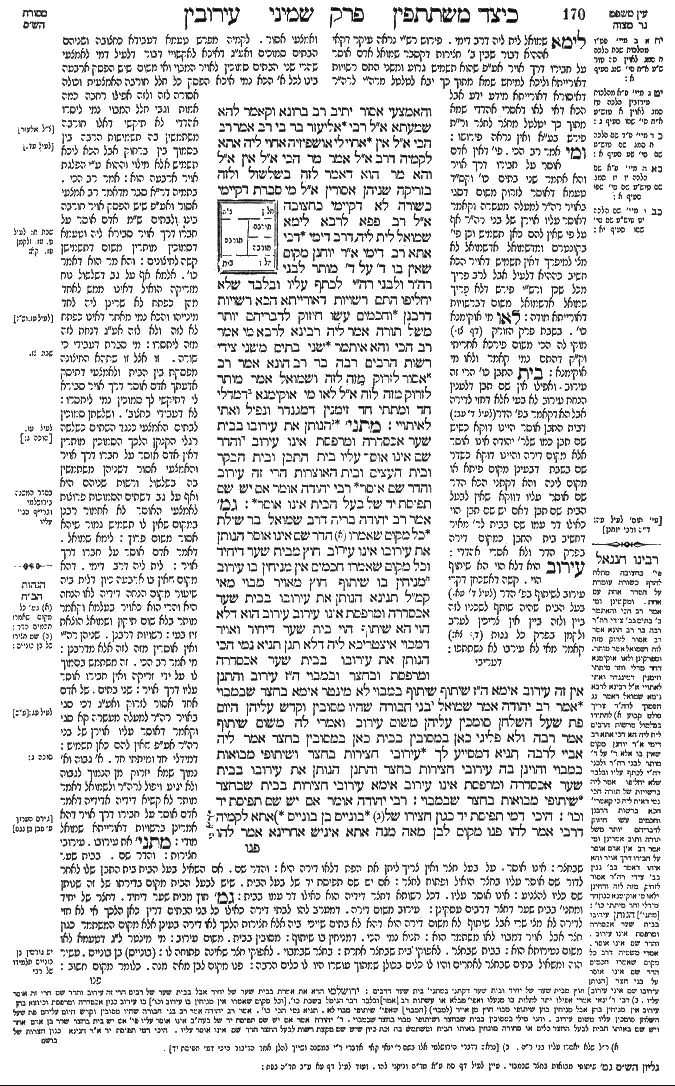
Eruvin 85b - Guemara
והאמצעי אסור יתיב רב ברונא וקאמר להא שמעתא א"ל רבי אליעזר בר בי רב אמר רב הכי א"ל אין אחוי לי אושפיזיה אחוי ליה אתא לקמיה דרב א"ל אמר מר הכי א"ל אין א"ל והא מר הוא דאמר לזה בשלשול ולזה בזריקה שניהן אסורין א"ל מי סברת דקיימי כשורה לא דקיימי כחצובה א"ל רב פפא לרבא לימא שמואל לית ליה דרב דימי דכי אתא רב דימי א"ר יוחנן מקום שאין בו ד' על ד' מותר לבני רה"ר ולבני רה"י לכתף עליו ובלבד שלא יחליפו התם רשויות דאורייתא הכא רשויות דרבנן וחכמים עשו חיזוק לדבריהם יותר משל תורה אמר ליה רבינא לרבא מי אמר רב הכי והא איתמר שני בתים משני צידי רשות הרבים רבה בר רב הונא אמר רב אסור לזרוק מזה לזה ושמואל אמר מותר לזרוק מזה לזה א"ל לאו מי אוקימנא דמדלי חד ומתתי חד זימנין דמגנדר ונפיל ואתי לאיתויי:
מתני׳ הנותן את עירובו בבית שער אכסדרה ומרפסת אינו עירוב והדר שם אינו אוסר עליו בית התבן ובית הבקר ובית העצים ובית האוצרות הרי זה עירוב והדר שם אוסר רבי יהודה אומר אם יש שם תפיסת יד של בעל הבית אינו אוסר:
גמ׳ אמר רב יהודה בריה דרב שמואל בר שילת כל מקום שאמרו הדר שם אינו אוסר הנותן את עירובו אינו עירוב חוץ מבית שער דיחיד וכל מקום שאמרו חכמים אין מניחין בו עירוב מניחין בו שיתוף חוץ מאויר מבוי מאי קמ"ל תנינא הנותן את עירובו בבית שער אכסדרה ומרפסת אינו עירוב עירוב הוא דלא הוי הא שיתוף הוי בית שער דיחיד ואויר דמבוי איצטריכא ליה דלא תנן תניא נמי הכי הנותן את עירובו בבית שער אכסדרה ומרפסת ובחצר ובמבוי ה"ז עירוב והתנן אין זה עירוב אימא ה"ז שיתוף שיתוף במבוי לא מינטר אימא בחצר שבמבוי אמר רב יהודה אמר שמואל בני חבורה שהיו מסובין וקדש עליהן היום פת שעל השלחן סומכין עליהן משום עירוב ואמרי לה משום שיתוף אמר רבה ולא פליגי כאן במסובין בבית כאן במסובין בחצר אמר ליה אביי לרבה תניא דמסייע לך עירובי חצירות בחצר ושיתופי מבואות במבוי והוינן בה עירובי חצירות בחצר והתנן הנותן את עירובו בבית שער אכסדרה ומרפסת אינו עירוב אימא עירובי חצירות בבית שבחצר שיתופי מבואות בחצר שבמבוי:
רבי יהודה אומר אם יש שם תפיסת יד וכו':
היכי דמי תפיסת יד כגון חצירו של בונייס בן בונייס אתא לקמיה דרבי אמר להו פנו מקום לבן מאה מנה אתא איניש אחרינא אמר להו
Comments from Rashi on Masechet Eruvin Page 85b
ואמצעי אסור . לקמיה מפרש טעמא דעבידא כחצובה ושניהם הבתים סמוכים ואע"ג דאיכא לאקשויי דבור דלעיל דמי לאמצעי שהרי שני הבתים סמוכין לאויר המבוי ואי משום שיש הפסק ארבעה בינו לכל אחד הכא נמי איכא הפסק כל חלל חורבה האמצעית וכולה אסורה לזה ולזה אפילו רחבה כמה אמות וגבי חלל המבוי נמי ליסרו אהדדי לא תיקשי דאלו חורבה משתמשין בה תשמישות הרבה בין בסמוך בין ברחוק אבל הכא ליכא תשמיש אלא מילוי וההוא על ידי הפלגת אויר ארבעה הוא: אמר רב הכי . בתמיה דר"א סבר מדאמר רב אמצעי אסור ואע"פ שיש הפסק אויר חורבה בינו ולבתים ש"מ אדם אוסר על חברו דרך אויר סבירא ליה וטעמא דסמוכין מותרין משום דתשמישן קשה לחיצונים: והא מר הוא דאמר כו' . אלמא אף על גב דשלשול נוח מזריקה הואיל דאינו ממש לאחד מהן כפתח לא שרינן ליה לחד מינייהו והכא נמי מאחר דאינו כפתח לא לזה ולא לזה אע"ג דנחת לזה מזה ליתסרו: מי סברת דעבידי כי שורה . זו אצל זו שתהא החיצונה מפסקת בין הבית ולאמצעי דתיסק אדעתך אדם אוסר דרך אויר סבירא לי דתיקשי לך סמוכין נמי ליתסרו: לא דעבידי כחצוב' . ושלשתן סמוכין לבתים האמצעי כנגד השתים כשלשה רגלי הקנקן הלכך הסמוכין מותרין דאין אדם אוסר על חברו דרך אויר והאמצעי אסור דשניהן משתמשין בה בשלשול ורשות שניהם היא ואף על גב דשתים הסמוכות פרוצות לאמצעי האוסר לא אחמור רבנן במקום שאין לו תשמיש גמור שיהא אסור משום פרוץ: לימא שמואל . דאמר אדם אוסר על חברו דרך אויר: לית ליה דרב דימי . דהא מקום שאין בו ארבעה כיון דלית ביה שיעור מקום הנחה דידיה לאו הנחה היא והרי הוא כאויר בעלמא וקאמר מותר בלא שום תיקון ושמואל הוצאת זיז בעי: רשויות דרבנן . שניהן רה"י ואין אוסרין מזה לזה אלא מדרבנן: מי אמר רב הכי . זה משתמש בסמוך לו על ידי זריקה ואין חבירו אוסר עליו דרך אויר: שני בתים . של אדם אחד אסור לזרוק ואע"ג דכי סגי באויר רה"ר למעלה מעשרה קא סגי וקאמר דאוסר עליו אוירן של בני רה"ר אע"פ שאין להם כאן תשמיש: דמידלי חד ומיתתי חד . א' גבוה וא' נמוך שמא יזרוק מן הנמוך לגבוה ולא יגיע ויפול לרה"ר ולשמואל דאמר מותר לא קשיא דידיה אדידיה דאמר אדם אוסר על חבירו דרך אויר דהא אמרינן ברשויות דאורייתא שמואל מודי: מתני' את עירובו . עירובי חצירות: והדר שם . בבית שער שבחצר: אינו אוסר . על בעל חצר ואין צריך ליתן את הפת דלאו דירה היא: והדר שם . אם השאיל בעל הבית בית התבן שלו לאחר לדור שם אוסר עליו בחצר הואיל ופתוח לחצר: אם יש שם תפיסת יד של בעל הבית . שיש לבעל הבית מקום בדירתו של זה שנותן שם כליו להצניע: אינו אוסר עליו . דכל רשותא דחצר דידיה הוא כאילו דר עמו בבית: גמ' חוץ מבית שער דיחיד . דחצר של יחיד ומתני' בבית שער דחצר דרבים עסקינן: עירוב משום דירה . דמערב להו לבתי דירה כאילו כל בני הבתים דרין כאן הלכך אי לא חזי לדירה לא מצי שרי אבל שיתוף לאו משום דירה הוא דהא לא בתים שייכי ביה אלא חצירות הלכך לאו דירה בעינן אלא מקום המשתמר כגון חצר אבל אויר דמבוי לאו משתמר הוא: תניא נמי הכי . דמניחין בו שיתוף: סובין בבית . משום עירוב: מי מינטר ל"ג דטעמא לאו משום נטירותא הוא: בבית שבחצר . לאפוקי בית שבחצר אחרת: בחצר שבמבוי . לאפוקי חצר שאינה פתוחה לו: (בונייס) בן בונייס . עשיר הוה ומשאיל בתים שבחצר לאחרים והיו לו כלים בכולן שמתוך עושרו היו לו כלים הרבה: פנו מקום לבן מאה מנה . כלומר מקום חשוב:
Comments from Tosafot - Eruvin 85b
לימא שמואל לית ליה דרב דימי . פירוש רש"י נראה עיקר דקאי אההיא דבור שבין ב' חצירות דקסבר שמואל אדם אוסר על חבירו דרך אויר אע"פ שהוא תשמיש גרוע ומשני התם רשויות דאורייתא וליכא למיחש שמא מתוך כך יבא לטלטל מרה"י לרה"ר דאיסורא דאורייתא מידע ידע אבל הכא דאי לאו דאסרי אהדדי שמא מתוך כך יטלטל מחצר לחצר ור"ת פירש בע"א ואין נראה פירושו: ומי אמר רב הכי . פי' דאין אדם אוסר על חבירו דרך אויר והא אתמר שני בתים כו' וקס"ד טעמא דאוסר לזרוק משום דסגי באויר רה"ר למעלה מעשרה וקאמר דאוסר עליו אוירן של בני רה"ר אף על פי שאין להם כאן תשמיש וכן פי' בקונטרס ומדשמואל אדשמואל לא מצי למיפרך דאין תשמיש דאויר הכא חשיב כההיא דלעיל אבל לרב פריך מכל שכן ורש"י פירש דלא פריך שמואל אדשמואל משום דברשויות דאורייתא מודה: לאו מי אוקימנא כו' . בשבת פרק הזורק (דף צז.) מוקי לה הכי משום פירכא אחריתי וק"ק דהתם נמי קאמר ולאו מי אוקימנא: בית התבן כו' הרי זה עירוב . ואפילו אין שם תבן דלענין הנחת עירוב לא בעי אלא דחזי לדירה אבל הא דקאמר בפ' הדר (לעיל עירובין ד' עב:) דבית התבן אוסר היינו דוקא כשיש שם תבן כמו שלר' יהודה אינו אוסר אלא מקום דירה והיינו דוקא כשדר שם בשבת דבעינן מקום פיתא או מקום לינה והא דקתני הכא הדר שם אוסר עליו דווקא שאין לבעל הבית שם תבן דאם יש שם תבן הוי כאילו דר עמו שם בבית לר' מאיר דחשיב בית התבן כמקום דירה בפרק הדר ולא אסרי אהדדי: עירוב הוא דלא הוי הא שיתוף הוי . קשה דאשכחן דקרי עירוב לשיתוף בפ' הדר (לעיל עירובין ד' עא.) בעל הבית שהיה שותף לשכניו לזה ביין ולזה ביין אין צריכין לערב ולקמן בפרק כל גגות (עירובין דף צא:) קאמר מאי לא עירבו לא נשתתפו:
Eruvin 85b - Mishnah translated into english
and the middle ruin is prohibited to both of them.
Rav Beruna sat and stated this halakha in the name of Rav. Rabbi Elazar, a student of the Torah academy, said to him: Did Rav actually say this? Rav Beruna said to him: Yes, he did. He said to him: Show me his place of lodging, and I will go and ask him myself. He showed him where Rav lived. Rabbi Elazar came before Rav and said to him: Did the Master actually say this? He said to him: Yes, I did.
Rabbi Elazar then said to Rav: Since you prohibit using the middle ruin, you evidently maintain that one person renders it prohibited for another by way of the air. That being the case, it must be that you permit the resident of each house to use the adjacent ruin because one’s use of the ruin, while not convenient for him, is more convenient than the other person’s usage. But wasn’t it the Master himself who said: With regard to a place that can be used by the residents of the one courtyard only by lowering an object down to it and by the residents of another courtyard only by throwing an object on top of it, so that neither courtyard has convenient access to it, both sets of residents are prohibited from using it, although lowering an object is more convenient than throwing it?
Rav said to him: Do you think that we are dealing with a case of three ruins positioned alongside each other in a straight line? No. They are arranged in the form of a tripod, i.e. in a triangular form. In other words, two of the ruins, each adjacent to one of the houses, are located next to each other; the third is positioned adjacent to one side of the other two, near both houses. The middle ruin is prohibited to the residents of both houses because both houses have equally inconvenient but direct access to it. However, each of the other ruins is permitted to the resident of the adjacent house, as he has direct access to it, while the resident of the other house can reach it only through the air of the ruin nearest to him, and Rav maintains that one person does not render it prohibited for use by another by way of the air.
Rav Pappa said to Rava: Let us say that Shmuel, who maintains that one renders it prohibited for another by way of the air, does not agree with the opinion of Rav Dimi. When Rav Dimi came from Eretz Yisrael to Babylonia, he said that Rabbi Yoḥanan said: A place less than four by four handbreadths in size is an exempt domain with respect to carrying on Shabbat. Consequently, if this place is located between a public domain and a private domain, it is permitted for both the people in the public domain and the people in the private domain to adjust the burden on their shoulders in it, as long as they do not exchange objects with each other by way of the exempt domain. According to Shmuel’s opinion this should be prohibited due to the air of a different domain.
Rava replied: There, Rabbi Yoḥanan is dealing with an exempt domain situated between a public domain and a private domain, the two existing domains by Torah law. In that case, the Sages did not prohibit the use of the place due to the air. By contrast, here, with regard to the air between private domains, we are dealing with domains between which carrying is prohibited by rabbinic law, and the Sages reinforced their statements even more than those of the Torah; they added preventive measures in order to safeguard their decrees. Consequently, according to Shmuel, the Sages indeed decreed that one renders it prohibited for another by way of the air.
Ravina said to Rava: But did Rav actually say this, that one person does not render it prohibited for use by another by way of the air? But wasn’t it stated that amora’im disagreed with regard to two houses belonging to one person that stood on two opposite sides of a public domain. Rabba bar Rav Huna said that Rav said: It is prohibited to throw an object from one house to the other; and Shmuel said that it is permitted to throw from one to the other. Rav apparently forbade the act of throwing due to the prohibited air of the public domain that lies between the two houses.
Rava said to him: Wasn’t it established that one house was relatively higher and the other one was lower than the first? Rav prohibited throwing from one domain to the other, not due to the air of the public domain, but rather due to the difficulty of throwing from a low place to a higher one, as the thrown object might sometimes roll and fall back into the public domain and people might come to pick it up and carry it from the public domain to the private domain. It was for this reason that Rav prohibited throwing an object from one house to another.
MISHNA: With regard to one who placed his eiruv of courtyards in a gatehouse or in a portico, a roofed structure without walls or with incomplete walls, or one who deposited it in a balcony, this is not a valid eiruv. And one who resides there, in any of these structures, does not render it prohibited for the homeowner and the other residents of the courtyard to carry, even if he did not contribute to the eiruv.
If, however, one deposited his eiruv in a hay shed or in a cowshed or in a woodshed or in a storehouse, this is a valid eiruv, as it is located in a properly guarded place. And one who resides there with permission, if he neglected to contribute to the eiruv, he renders it prohibited for the homeowner and the other residents of the courtyard to carry. Rabbi Yehuda says: If the homeowner has there, in the hay shed or the other places listed above, a right of usage, i.e., if he is entitled to use all or part of the area for his own purposes, then the one who lives there does not render it prohibited for the homeowner, as the area is considered the homeowner’s quarters, and the person living there is classified as a member of his household.
GEMARA: Rav Yehuda, son of Rav Shmuel bar Sheilat, said: Any place with regard to which the Sages said that one who resides there does not render it prohibited for the other residents of the courtyard to carry, one who places his eiruv there, his is not a valid eiruv, except for a gatehouse that belongs to an individual. If a structure is used as a passageway by only one person, he does not render it prohibited for the other residents of the courtyard, and an eiruv placed there is a valid eiruv. And any place with regard to which the Sages said that a joining of courtyards may not be placed there, a merging of alleyways may be placed there, except for the airspace of an alleyway, which is not inside one of the courtyards.
The Gemara asks: What is he teaching us by this? We have already learned this in the mishna: With regard to one who placed his eiruv in a gatehouse or in a portico or in a balcony, it is not a valid eiruv. It can be inferred from the mishna that an eiruv, it is not, a merging of the alleyway, it is. What, then, is novel in this statement?
The Gemara answers: It was necessary for him to teach the halakha of a gatehouse that belongs to an individual and the halakha of the airspace of an alleyway, which we did not learn in the mishna. This was also taught in a baraita: One who placed his eiruv in a gatehouse, or in a portico, or in a balcony, or in a courtyard, or in an alleyway, this is a valid eiruv. But didn’t we learn in the mishna that this is not an eiruv? Rather, you must say that the baraita should read: This is a valid merging of the alleyway.
The Gemara raises a difficulty: But if one places the food of the merging of the alleyway in the alleyway itself, it is not properly guarded, which means that it is as though he has not placed the merging of the alleyway there at all. Rather, you must say that the baraita should read: If he placed his merging of the alleyway in a courtyard in the alleyway, it is valid.
Rav Yehuda said that Shmuel said: If there were a group of people who were dining together on Shabbat eve, and the day became sanctified for them, i.e., Shabbat began while they were eating, they may rely upon the bread on the table for an eiruv of courtyards, so that they are all permitted to carry in the courtyard. And some say they may rely on the bread for a merging of the alleyway.
Rabba said: The two versions do not disagree with regard to whether the bread counts as an eiruv or a merging of the alleyway. Rather, here, the teaching that states it can be used as an eiruv, is referring to a case where they are dining in the house, as food deposited in a house can be used as an eiruv for the courtyard. By contrast, there it is referring to a situation where they are dining in the courtyard, and they may therefore rely on the bread only as a merging of the alleyway but not as an eiruv.
Abaye said to Rabba: A baraita was taught that supports you. Joinings of courtyards are deposited in a courtyard, and mergings of alleyways are placed in an alleyway. And we discussed this baraita and raised a difficulty: How can it be that eiruvin of courtyards are deposited in a courtyard? But didn’t we learn in the mishna: If one deposited his eiruv in a gatehouse, or in a portico, or in a balcony it is not a valid eiruv? The mishna clearly indicates that the eiruv may not be deposited in the airspace of a courtyard. Rather, you must say that the baraita should read as follows: Eiruvin of a courtyard are placed in a house in that courtyard; whereas mergings of alleyways are placed in a courtyard that opens into that alleyway.
We learned in the mishna that Rabbi Yehuda says: If the homeowner has there, in the hay shed or one of the other places listed, a right of usage, the person living there does not render the courtyard prohibited. The Gemara asks: What are the circumstances of a right of usage? The Gemara answers: For example, the courtyard of a man named Bonyas, an extremely wealthy individual who allowed various people to take up residence on his property, and he kept some of his many possessions in the living quarters assigned to those people. As he retained the right to remove his articles from their apartments, those areas continued to be regarded as quarters belonging to Bonyas and the people living there were deemed members of his household.
The Gemara relates another incident involving Bonyas and his wealth: The son of Bonyas came before Rabbi Yehuda HaNasi. Realizing from his visitor’s clothing that he was dealing with a wealthy individual, Rabbi Yehuda HaNasi said to his attendants: Make way for one who possesses one hundred maneh, i.e., one hundred times one hundred zuz, as one of this status deserves to be honored in accordance with his riches. Later, another person came before him, and Rabbi Yehuda HaNasi once again turned to his attendants and said to them:
Traduction : The William Davidson digital edition of the Koren Noé Talmud, with commentary by Rabbi Adin Even-Israel Steinsaltz.