 Talmud Bavli
Eruvin 73a : Youtube
Rabi Yitzchok LobensteinYoutube
2 video classes :
Eruvin Page 73a
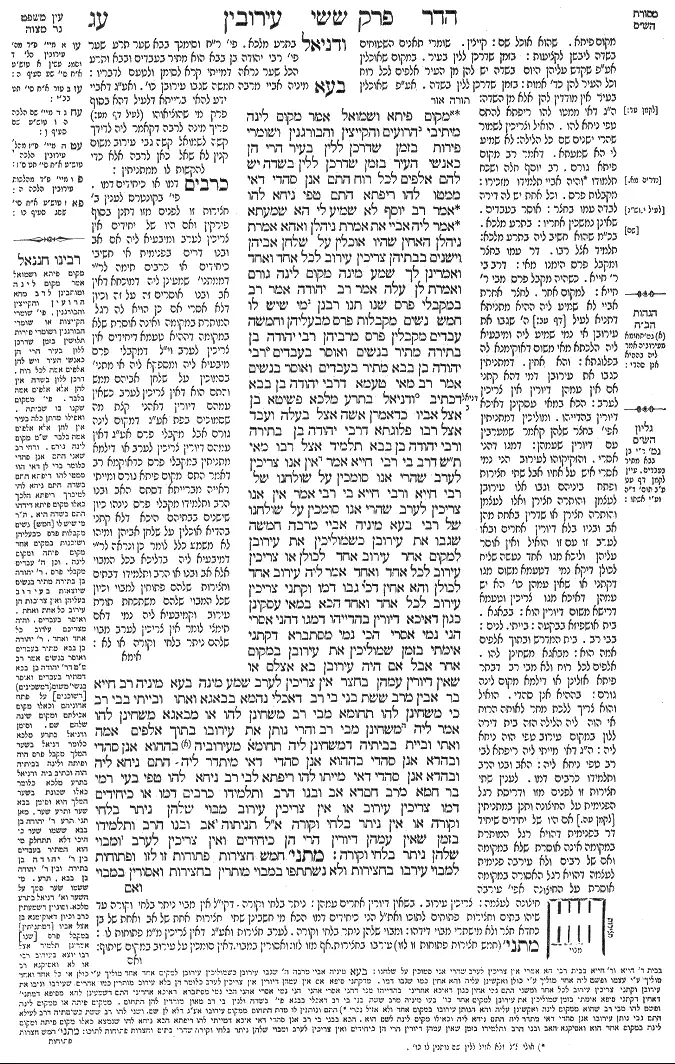
Eruvin 73a - Guemara
מקום פיתא ושמואל אמר מקום לינה מיתיבי הרועים והקייצין והבורגנין ושומרי פירות בזמן שדרכן ללין בעיר הרי הן כאנשי העיר בזמן שדרכן ללין בשדה יש להם אלפים לכל רוח התם אנן סהדי דאי ממטו להו ריפתא התם טפי ניחא להו אמר רב יוסף לא שמיע לי הא שמעתא אמר ליה אביי את אמרת ניהלן ואהא אמרת ניהלן האחין שהיו אוכלין על שלחן אביהן וישנים בבתיהן צריכין עירוב לכל אחד ואחד ואמרינן לך שמע מינה מקום לינה גורם ואמרת לן עלה אמר רב יהודה אמר רב במקבלי פרס שנו תנו רבנן מי שיש לו חמש נשים מקבלות פרס מבעליהן וחמשה עבדים מקבלין פרס מרביהן רבי יהודה בן בתירה מתיר בנשים ואוסר בעבדים רבי יהודה בן בבא מתיר בעבדים ואוסר בנשים אמר רב מאי טעמא דרבי יהודה בן בבא דכתיב (דניאל ב, מט) ודניאל בתרע מלכא פשיטא בן אצל אביו כדאמרן אשה אצל בעלה ועבד אצל רבו פלוגתא דרבי יהודה בן בתירה ורבי יהודה בן בבא תלמיד אצל רבו מאי ת"ש דרב בי רבי חייא אמר אין אנו צריכין לערב שהרי אנו סומכין על שולחנו של רבי חייא ורבי חייא בי רבי אמר אין אנו צריכין לערב שהרי אנו סומכין על שולחנו של רבי בעא מיניה אביי מרבה חמשה שגבו את עירובן כשמוליכין את עירובן למקום אחר עירוב אחד לכולן או צריכין עירוב לכל אחד ואחד אמר ליה עירוב אחד לכולן והא אחין דכי גבו דמו וקתני צריכין עירוב לכל אחד ואחד הכא במאי עסקינן כגון דאיכא דיורין בהדייהו דמגו דהני אסרי הני נמי אסרי הכי נמי מסתברא דקתני אימתי בזמן שמוליכין את עירובן במקום אחר אבל אם היה עירובן בא אצלם או שאין דיורין עמהן בחצר אין צריכין לערב שמע מינה בעא מיניה רב חייא בר אבין מרב ששת בני בי רב דאכלי נהמא בבאגא ואתו ובייתי בבי רב כי משחינן להו תחומא מבי רב משחינן להו או מבאגא משחינן להו אמר ליה משחינן מבי רב והרי נותן את עירובו בתוך אלפים אמה ואתי וביית בביתיה דמשחינן ליה תחומא מעירוביה בההוא אנן סהדי ובהדא אנן סהדי בההוא אנן סהדי דאי מיתדר ליה התם ניחא ליה ובהדא אנן סהדי דאי מייתו להו ריפתא לבי רב ניחא להו טפי בעי רמי בר חמא מרב חסדא אב ובנו הרב ותלמידו כרבים דמו או כיחידים דמו צריכין עירוב או אין צריכין עירוב מבוי שלהן ניתר בלחי וקורה או אין ניתר בלחי וקורה א"ל תניתוה אב ובנו הרב ותלמידו בזמן שאין עמהן דיורין הרי הן כיחידים ואין צריכין לערב ומבוי שלהן ניתר בלחי וקורה:
מתני׳ חמש חצירות פתוחות זו לזו ופתוחות למבוי עירבו בחצירות ולא נשתתפו במבוי מותרין בחצירות ואסורין במבוי
Comments from Rashi on Masechet Eruvin Page 73a
מקום פיתא . שהוא אוכל שם: קייצין . שומרי תאנים השטוחים בשדה ליבשן לקציעות: בזמן שדרכן ללין בעיר . במקום שאוכלין אע"פ שקדש עליהן היום בשדה יש להן מן העיר אלפים לכל רוח וכל העיר להן כד' אמות: בזמן שדרכן ללין בשדה . אע"פ שאוכלין בעיר אין מודדין להן אלא מן השדה: ה"ג דאי ממטו להו ריפתא להתם טפי ניחא להו . הואיל וצריכין לשמור שהרי ישנים שם כל הלילה: לא שמיע לי הא שמעתא . דאמר רב מקום פיתא גורם רב יוסף חלה ושכח תלמודו והיה אביי תלמידו מזכירו: מקבלות פרס . וכל אחת יש לה דירה לבדה עמו בחצר: אוסר בעבדים . שאינן נמשכין אחריו: בתרע מלכא . בכ"מ שהוא חשיב ליה בתרע מלכא: תלמיד אצל רבו . דר עמו בחצר ומקבל פרס הימנו מאי: דרב בי ר' חייא . כשהיה מקבל פרס מבי ר' חייא: למקום אחר . לחצר אחרת אביי לא שמיע ליה ההיא מתניתא דתניא לעיל [עירובין דף עב:] חמשה שגבו את עירובן אי נמי שמיע ליה ומיבעיא ליה הלכתא מאי משום דאוקימנא לה בפלוגתא: והא אחין . דמתניתין כגבו את עירובן דמי דהא קתני אם אין עמהן דיורין אין צריכין לערב: הכא במאי עסקינן דאיכא דיורין בהדייהו . ומוליכין דמתניתין אפי' בחצר שלהן קאמר שמערבין עם דיורין שעמהן: דמגו דהני אסרי . והזקיקוהו לעירוב הני נמי אסרי איש על אחיו אבל שתי חצירות ופתח ביניהם וגבו אלו עירובן לעצמן והותרה חצירן ואלו לעצמן והותרה חצירן או שדרין באחת מהן אב ובניו בלא דיורין אחרים ובאו לערב זו עם זו הואיל ואין אוסר עליהן וליכא מגו אחד נעשה שליח לכולן דיקא נמי דטעמא משום מגו דקתני או שאין עמהן כו' הא יש עמהן דאיכא מגו צריכין וטעמא דרישא משום דיורין הוא: בבאגא . בית אושפיזא בבקעה: בייתי . לנים: בבי רב . בית המדרש ובתוך אלפים אמה הוא: מבאגא משחינן להו . אלפים לכל רוח ולא מבי רב דבתר פיתא אזלינן או דילמא מקום לינה גורם: בההיא אנן סהדי . הואיל והוא צריך ללכת מחר לאותה הרוח אי הוה ליה הלילה הזה בית דירה ללון במקום עירוב טפי הוה ניחא ליה: ה"ג דאי מייתי ליה ריפתא לבי רב טפי ניחא ליה: האב ובנו הרב ותלמידו כרבים דמו . לענין שתי חצירות זו לפנים מזו ודריסת רגל הפנימית על החיצונה ותנן במתניתין [לקמן (עירובין עה.)] אם היו של יחידים שיחיד דר בפנימית דהויא רגל המותרת במקומה אינה אוסרת שלא במקומה ואם של רבים ולא עירבה פנימית לעצמה דהויא רגל האסורה במקומה אוסרת על החיצונה אפי' עירבה חיצונה לעצמה: צריכין עירוב . בשאין דיורין אחרים עמהן: ניתר בלחי וקורה . דקי"ל אין מבוי ניתר בלחי וקורה עד שיהו בתים וחצירות פתוחים לתוכו ואת"ל הני כיחידים דמו הכא מי חשבינן שתי חצירות אחת של אב ואחת של בן כחדא חצר ולא מישתרי מבוי דידהו: ומבוי שלהן ניתר בלחי וקורה . לערב חצירות ואע"ג דאין צריכין מ"מ פתוחות לו: מתני' (חמש חצירות פתוחות זו לזו)  עירבו בחצירות . אף מזו לזו: ואסורין במבוי . דאין סומכין על עירוב במקום שיתוף:
Comments from Tosafot - Eruvin 73a
ודניאל בתרע מלכא . פי' ר"ח וסימנך בבא שער תרע שער פי' רבי יהודה בן בבא הוא מתיר בעבדים ובבא ותרע הכל שער נראה דמייתי קרא לסימן ולטעם לדבריו: בעא מיניה אביי מרבה חמשה שגבו עירובן כו' . ואע"ג דאביי ידע להאי ברייתא דלעיל דהא בסוף פרק מי שהוציאוהו (לעיל עירובין דף מט:) פריך מינה לרבה דקאמר ליה לדידך קשה לשמואל קשה גבי עירוב משום קנין לא שאל כאן לרבה אלא כדי להקשות לו ממתניתין: כרבים דמו או כיחידים דמו . פי' בקונטרס לענין ב' חצירות זו לפנים מזו דתנן בסוף פירקין ואם היו של יחידים אין צריכין לערב ומיבעיא ליה אם אב ובנו דרים בפנימית אי חשיבי כיחידים או כרבים תימה לר"י דממתני' שמעינן ליה דמוכחא דאין אב ובנו אוסרים זה על זה וכיון דלא אסרי אם כן הויא לה רגל המותרת במקומה ואינה אוסרת שלא במקומה דההיא טעמא דיחידים אין צריכין לערב וי"ל דמקבלי פרס מיבעיא ליה ומספקא ליה אי מתני' בסמוכין על שלחן אביהם ממש והתם הוא דאין צריכין לערב כשאין עמהם דיורין דאהני קצת מה שסמוכים בפת אע"ג דמקום לינה גורם אבל מקבלי פרס אע"ג דאין עמהם דיורין צריכין לערב או דילמא מתניתין במקבלי פרס כדאוקמא רב דאמר התם מקום פיתא גורם ומייתי ראייה מברייתא דסתם האב ובנו הרב ותלמידו מקבלי פרס נינהו כיון שישנים בבתיהם היכא דלא קתני בהדיא אוכלין על שלחן אביהן ומיהו לא משמע כלל לומר כן ונראה לר"י דמיבעיא ליה בדליכא בכל המבוי אלא אב ובנו או הרב ותלמידו דבתים וחצירות שלהם פתוחין למבוי וכיון שכל המבוי שלהם משתכחת תורת עירוב וקמיבעיא ליה נמי דאם תימצי לומר אין צריכין לערב מבוי שלהם ניתר בלחי וקורה או לא:
Eruvin 73a - Mishnah translated into english
The place where he eats his bread, and Shmuel said: His place of sleep.
The Gemara raises an objection to Rav’s opinion from a baraita: With regard to shepherds; fig watchmen, who guard figs spread out in the field; guardsmen who sit in small guardhouses; and produce watchmen; when they customarily sleep in the city in addition to eating there, they are like the residents of the city with regard to their Shabbat limit, even though they were in the field when Shabbat began. However, when they customarily sleep in the field, even though they eat in the town, they have only two thousand cubits in each direction from the places where they sleep. This seems to contradict the opinion of Rav, who maintains that a person’s place of dwelling is determined by where he eats, not by where he sleeps.
The Gemara answers: There, in the case of the people in the field, we are witnesses, i.e., it is clearly evident, that if people would bring them bread there, to the place where they sleep, it would be more convenient for them. Fundamentally, however, a person’s dwelling place is determined by where he eats, rather than where he sleeps.
Rav Yosef said: I have not heard this halakha stated by Rav. An illness had caused Rav Yosef to forget his studies. His student, Abaye, said to him: You yourself said it to us, and it was with regard to this that you said it to us: With regard to brothers who were eating at their father’s table and sleeping in their own houses in the same courtyard, a separate contribution to the eiruv is required for each and every one of them. And we said to you: Can one learn from here that a person’s place of sleep determines the location of his Shabbat residence? And you said to us in this regard that Rav Yehuda said that Rav said: They taught this mishna with regard to brothers who receive a portion from their father and are therefore considered as though they eat at his table, whereas in actual fact they eat their meals in their own homes.
The Sages taught in a baraita: With regard to one who has five wives who receive a portion from their husband while each living in her own quarters in the courtyard, and five slaves who receive a portion from their master while living in their own lodgings in the courtyard, Rabbi Yehuda ben Beteira permits in the case of the wives, i.e., they do not each have to contribute separately to the eiruv, as they are all considered to be residing with their husband. And he prohibits in the case of the slaves, meaning that he holds that as they live in separate houses, each is considered as residing on his own.
Rabbi Yehuda ben Bava permits in the case of the slaves, as a slave necessarily follows his master, and he prohibits in the case of the wives, as each woman is significant in her own right, and is not totally dependent on her husband.
Rav said: What is the rationale for the opinion of Rabbi Yehuda ben Bava? As it is written: “But Daniel was in the gate of the king” (Daniel 2:49). The verse refers to Daniel’s function rather than to an actual location, indicating that wherever Daniel went, it was as though he was in the king’s gate. The same applies to any slave vis-à-vis his master.
The Gemara proceeds to clarify various aspects of this issue, starting with a summary of what has already been stated. The halakha is obvious in the case of a son with his father, as we stated it above the mishna. A wife with her husband and a slave with his master are subject to the dispute between Rabbi Yehuda ben Beteira and Rabbi Yehuda ben Bava. With regard to a student who lives with his master in the same courtyard and receives his sustenance from him, what is his status with regard to eiruv?
Come and hear a resolution to this question: As Rav, when he was in the school of Rabbi Ḥiyya, said: We do not need to establish an eiruv, as we are dependent upon the table of Rabbi Ḥiyya. And similarly, Rabbi Ḥiyya himself, when he was in the school of Rabbi Yehuda HaNasi, said: We do not need to establish an eiruv, as we are dependent upon the table of Rabbi Yehuda HaNasi.
Abaye raised a dilemma before Rabba: With regard to five people who live in the same courtyard and collected their eiruv, when they take their eiruv elsewhere in order to merge their courtyard with a different one, is one contribution to the eiruv sufficient for all of them, or do they need a separate contribution to the eiruv for each and every one of them? Rabba said to him: One contribution to the eiruv suffices for all of them.
Abaye asked: But in the case of brothers, who are comparable to people who collected their eiruv, the mishna nonetheless teaches: They require a separate eiruv for each and every one of them. Rabba responded: With what are we dealing here? We are dealing with a case where there are other residents, in addition to the father and his sons, living with them. In that case, since these additional residents render carrying in the same courtyard prohibited unless they join in an eiruv, those brothers also render it prohibited for one another to carry in the other courtyard unless each of them contributes to the eiruv.
The Gemara comments: So too, it is reasonable to understand, as the mishna teaches: When do they state this halakha? When they bring their eiruv elsewhere in the courtyard. But if their eiruv was coming to them, or if there are no other residents with them in the courtyard, they do not need to establish an eiruv, as they are considered like a single individual living in a courtyard. Learn from this that the preceding ruling refers to a situation where they shared the courtyard with other residents.
The Gemara addresses a similar issue with regard to a joining of Shabbat boundaries: Rav Ḥiyya bar Avin raised a dilemma before Rav Sheshet: With regard to students in their master’s house who eat their bread in their houses in the field [baga] and then come and sleep in their master’s house, when we measure their Shabbat limit for them, do we measure it for them from their master’s house, where they sleep, or do we measure it for them from the field, where they eat? He said to him: We measure it from their master’s house.
Rav Ḥiyya bar Avin asked: But in the case of one who deposits his eiruv, which establishes the location of his meal, within two thousand cubits, and then goes back and sleeps in his house, we measure his Shabbat limit from his eiruv. This implies that the determining factor is where he eats, rather than where he sleeps.
The Gemara answers: In that case we are witnesses, and in this case we are witnesses, i.e., in both cases the person’s intentions regarding his place of residence are clearly evident. In that case, where the person deposits his eiruv, we are witnesses that if he could reside there, at the site of his eiruv, it would be better for him, i.e., if he could spend the night there he would do so, since he wishes to continue from that place onward on the following day. And in this case of the students in their master’s house, we are witnesses that if people would bring them bread in their master’s house, enabling them to eat there, it would be better for them. Consequently, it is considered their place of residence.
Rami bar Ḥama raised a dilemma before Rav Ḥisda: With regard to a father and his son, or a master and his student, are they considered as many people or as individuals? The practical import of the question is as follows: If they lived together in a courtyard that was within another courtyard, are they considered as many people, who require an eiruv in order to render it permitted to carry in the outer courtyard, or do they not require an eiruv, as they are treated as an individual, who does not render carrying in the outer courtyard prohibited? Is their alleyway rendered permitted for carrying through a side post and a cross beam, like one that has multiple residents, or is it not rendered permitted for carrying through a side post and a cross beam?
Rav Ḥisda said to him: You have already learned this in the following baraita: With regard to a father and his son or a master and his student, when there are no other residents with them, they are considered like individuals, and they do not need to establish an eiruv, and their alleyway becomes permitted for carrying through a side post and a cross beam without a merging of alleyways.
MISHNA: If five courtyards open into one another and also open into an alleyway, the following distinctions apply: If the residents of the courtyard established an eiruv in the courtyards and did not merge the courtyards that open into the alleyway, they are permitted to carry in the courtyards and they are prohibited to carry in the alleyway. The eiruv they established cannot also serve as a merging of the courtyards that open into the alleyway.
Traduction : The William Davidson digital edition of the Koren Noé Talmud, with commentary by Rabbi Adin Even-Israel Steinsaltz.