 Talmud Bavli
Eruvin 52a : Youtube
Rabi Yitzchok LobensteinYoutube
2 video classes :
Eruvin Page 52a
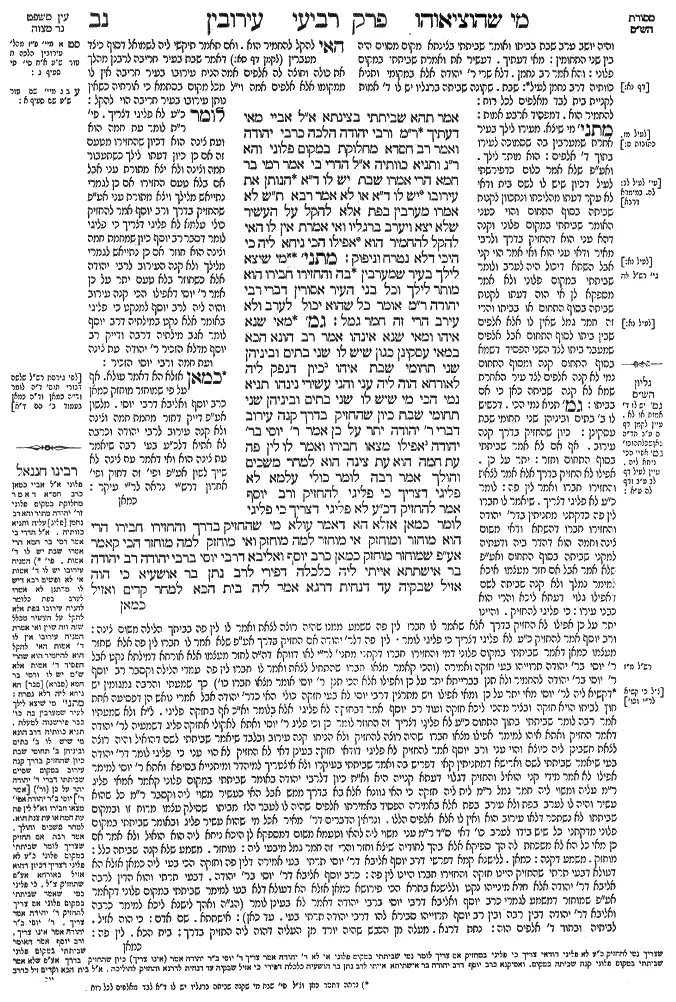
Eruvin 52a - Guemara
אמר תהא שביתתי בצינתא א"ל אביי מאי דעתיך ר"מ ורבי יהודה הלכה כרבי יהודה ואמר רב חסדא מחלוקת במקום פלוני והא ר"נ ותניא כוותיה א"ל הדרי בי אמר רמי בר חמא הרי אמרו שבת יש לו ד"א הנותן את עירובו יש לו ד"א או לא אמר רבא ת"ש לא אמרו מערבין בפת אלא להקל על העשיר שלא יצא ויערב ברגליו ואי אמרת אין לו האי להקל להחמיר הוא אפילו הכי ניחא ליה כי היכי דלא נטרח וניפוק:
מתני׳ מי שיצא לילך בעיר שמערבין בה והחזירו חבירו הוא מותר לילך וכל בני העיר אסורין דברי רבי יהודה ר"מ אומר כל שהוא יכול לערב ולא עירב הרי זה חמר גמל:
גמ׳ מאי שנא איהו ומאי שנא אינהו אמר רב הונא הכא במאי עסקינן כגון שיש לו שני בתים וביניהן שני תחומי שבת איהו כיון דנפק ליה לאורחא הוה ליה עני והני עשירי נינהו תניא נמי הכי מי שיש לו שני בתים וביניהן שני תחומי שבת כיון שהחזיק בדרך קנה עירוב דברי ר' יהודה יתר על כן אמר ר' יוסי בר' יהודה אפילו מצאו חבירו ואמר לו לין פה עת חמה הוא עת צינה הוא למחר משכים והולך אמר רבה לומר כולי עלמא לא פליגי דצריך כי פליגי להחזיק ורב יוסף אמר להחזיק דכ"ע לא פליגי דצריך כי פליגי לומר כמאן אזלא הא דאמר עולא מי שהחזיק בדרך והחזירו חבירו הרי הוא מוחזר ומוחזק אי מוחזר למה מוחזק ואי מוחזק למה מוחזר הכי קאמר אע"פ שמוחזר מוחזק כמאן כרב יוסף ואליבא דרבי יוסי ברבי יהודה רב יהודה בר אישתתא אייתי ליה כלכלה דפירי לרב נתן בר אושעיא כי הוה אזיל שבקיה עד דנחית דרגא אמר ליה בית הכא למחר קדים ואזיל
Comments from Rashi on Masechet Eruvin Page 52a
מאי דעתיך . דעשיר את ואמרת שביתתי במקום פלוני: והא אמר רב נחמן . דלא שרי ר' יהודה אלא במקומי ותניא כוותיה דרב נחמן לעיל: שבת . שקונה שביתה ברגליו יש לו ד' אמות לקניית בית לבד מאלפים לכל רוח: להחמיר הוא . דמפסיד ארבע אמות: מתני' מי שיצא . מעירו לילך בעיר אחרת שמערבין בה שסמוכה לעירו בתוך ד' אלפים: הוא מותר לילך . ואע"פ שלא אמר כלום כדפירשתי לעיל דכיון שיש לו לשם בית ודאי לא עקר דעתו מהליכתו ונתכוון לקנות שביתה בסוף התחום והוי כעני האומר שביתתי במקום פלוני וקנה דהא עני הוא דהחזיק בדרך ולרבי מאיר ודאי עני הוא ואי אמר הוי קני אבל השתא דיכול היה לערב ולומר שביתתי במקום פלוני ולא אמר מספקא לן אי הוה דעתו לקנות שביתה בסוף התחום או בביתו והרי זה חמר גמל שאין לו אלא אלפים שבין ביתו לסוף התחום אבל אלפים שמעבר ביתו לצד השני הפסיד דשמא בסוף התחום קנה ומסוף התחום נמי לא קנה אלפים לצד עיר האחרת שמא לא קנה שביתה כאן כי אם בביתו: גמ' תניא נמי הכי . דכשיש לו שני בתים וביניהן שני תחומי שבת עסקינן: כיון שהחזיק בדרך קנה עירוב . אף אם לא אמר שביתתי בסוף התחום וחזר: יתר על כן . אפילו לא החזיק בדרך אלא אמר לצאת והחזירו חברו ואמר לין פה: לומר כ"ע לא פליגי דצריך . שיאמר לו חברו לין פה כדקתני מתניתין בדר' יהודה והחזירו חברו דהשתא ודאי משום צינה וחמה הוא דהדר ביה ודעתיה למקני שביתה בסוף התחום ואע"פ שלא אמר אבל אם חזר מעצמו איכא למימר נמלך ולא קנה שביתה לשם דאפילו גלוי דעתא ליכא והרי הוא כבני עירו: כי פליגי להחזיק . והיינו יתר על כן אפילו לא החזיק בדרך אלא שאמר לו חברו לין פה ששמע ממנו שהיה רוצה לצאת ואמר לו לין פה בביתך הלילה משום צינה: ורב יוסף אמר להחזיק כ"ע לא פליגי דצריך כי פליגי לומר . לין פה דלר' יהודה אם החזיק בדרך אע"פ שלא אמר לו חברו לין פה אלא שחזר מעצמו כמאן דאמר שביתתי במקום פלוני דמי והחזירו חברו דקתני מתניתין לר"י לאו דוקא דה"ה לחזר מעצמו אלא אורחא דמילתא נקט אבל ר' יוסי בר' יהודה תרוייהו בעי חזקה ואמירה (והכי קאמר מצאו חברו שהתחיל לצאת ואמר לו חברו לין פה עמדי הלילה וקסבר רב יוסף ר' יוסי בר' יהודה להחמיר ולא תנן בברייתא יתר על כן ואפילו אלא הכי תנן ר' יוסי אומר מצאו חברו כו') כך שמעתי והרבה גמגומין יש דקשיא ליה לר' יוסי מאי יתר על כן ומאי אפילו ויש מתרצין דרבי יוסי לא בעי חזקה כולי האי כדר' יהודה אבל אמרי נואש הן דפסיעה אחת חוץ לביתו הויא חזקה ובציר מהכי ליכא חזקה ועוד רב יוסף אמר דבחזקה לא פליגי אלא בלומר וא"כ אף בחזקה פליגי: ל"א ולא שמעתיו אמר רבה לומר שביתתי בתוך התחום כ"ע לא פליגי דצריך זה החוזר לומר כן וכי פליג ר' יוסי ואתא לאקולי אחזקה פליג דשמעיה לר' יהודה דאמר החזיק ואתא איהו למימר אפילו מצאו חברו שהיה רוצה להחזיק ולא הניחו קנה עירוב ובלבד שיאמר שביתתי לשם דהואיל והיה רוצה לצאת חשבינן ליה כיוצא והוי עני ורב יוסף אמר להחזיק לא פליגי דודאי חזקה בעינן דאי לא החזיק לא הוי עני כי פליגי לומר דר' יהודה בעי שיאמר שביתתי לשם וארישא דמתניתין קאי דפריש בה ואמר שביתתי בעיקרו ולא איצטריך למיהדר ומיתנייא בסיפא ואתא ר' יוסי למימר אפילו לא אמר מידי קני הואיל והחזיק דגלוי דעתא קנייה היא וא"ת כיון דלרבי יהודה באומר שביתתי במקום פלוני קאמר אמאי פליג ר"מ עליה ומשוי ליה חמר גמל ר"מ לית ליה חזקה כי האי גוונא אלא בא בדרך ממש אבל האי כעשיר משוי ליה וקסבר ר"מ כל שהוא עשיר והיה לו לערב בפת ולא עירב בפת אלא באמירה הפסיד באמירתו אלפים שהיה לו לעבר הלז מביתו שסילק עצמו מרוח זו ובמקום שביתתו לא נשתכר דלאו עירוב הוא ואין לו אלא אלפים הללו ונראין הדברים דר' מאיר אכל מי שהוא עשיר פליג ובאומר שביתתי במקום פלוני מדקתני כל שיש בידו לערב כו' דאי ס"ד ר"מ עני משוי ליה להאי וטעמא משום דמספקא לן היכא ניחא ליה הוא הואיל ולא אמר אם כן מאי כל הא לא משכחת לה הך ספיקא אלא בהך לחודיה שיצא וחזר והרי זה חמר גמל מיבעי ליה: מוחזר . משמע שלא קנה שביתה כלל: מוחזק . משמע דקנה: כמאן . ללישנא קמא דפרשי דרב יוסף אליבא דר' יוסי תרתי בעי אמירה דלין פה וחזקה הכי בעי ליה כמאן אזלה הא דעולא דבעי תרתי שהחזיק היינו חזקה והחזירו חברו היינו לי פה: כרב יוסף אליבא דר' יוסי בר' יהודה . דבעי תרתי והוא הדין לרבה אליבא דר' יהודה אלא חדא מינייהו נקט וללישנא בתרא הכי פירושא כמאן אזלא הא דעולא דלא בעי למימר שביתתי במקום פלוני דקאמר אע"פ שמוחזר דמשמע לגמרי כרב יוסף ואליבא דרבי יוסי ברבי יהודה דאמר לא בעינן לומר (הג"ה ואהך לישנא ליכא למימר כרבה ואליבא דר' יהודה דבין רבה ובין רב יוסף תרוייהו סבירא להו דרבי יהודה תרתי בעי. עד כאן): אישתתא . שם אדם: כי הוה אזיל . לביתיה ובתוך ד' אלפים הוה: נחת דרגא . מעלה מן הכבש שהיה יורד מן העליה דהוה ליה החזיק בדרך: בית הכא . לין פה:
Comments from Tosafot - Eruvin 52a
האי להקל להחמיר הוא . ואם תאמר תיקשי ליה לשמואל דסוף כיצד מעברין (לקמן עירובין דף סא:) דאמר שבת בעיר חריבה לרבנן מהלך את כולה וחוצה לה אלפים אמה הניח עירובו בעיר חריבה אין לו ממקומו אלא אלפים אמה וי"ל מכל מקום בסתמא כי אורחיה כשאין נותן עירובו בעיר חריבה הוי להקל: לומר כ"ע לא פליגי דצריך . פי' ר"ת לומר עת חמה הוא ועת צינה הוא דכיון שהחזירו מטעם זה אם כן כיון דעתו לילך כשתעבור חמה וצינה ולא יצא מתורת עני אבל אם בלא טעם החזירו אם כן לגמרי נתייאש מלילך ויצא מתורת עני אע"פ שהחזיק בדרך ורב יוסף אמר להחזיק כולי עלמא לא פליגי דצריך כי פליגי לומר דסבר רב יוסף כיון שמחמת חמה וצינה הוא חוזר אם כן נתייאש לגמרי מלילך ולא קנה העירוב לרבי יהודה אלא כשחוזר בלא טעם יתר על כן אמר ר' יוסי דאפילו הכי קנה עירוב והוה ליה לרב יוסף למנקט כי פליגי באומר אלא נקט במילתיה דרב יוסף לומר אגב מילתיה דרבה ודייק רב יוסף מדלא הזכיר ר' יהודה עת צינה ועת חמה ורבי יוסי הזכיר: כמאן אזלא הא דאמר עולא אף על פי שמוחזר מוחזק כמאן כרב יוסף ואליבא דרבי יוסי . מלשון אע"פ דייק דחזר מחמת חמה וצינה ולא קנה עירוב לרבי יהודה וכרבה לא אתיא דלכ"ע בעי רבה שיאמר עת צינה הוא ואי דאמר עת צינה לא שייך לשון אע"פ ופי' זה דחוק ופי' אחרון דרש"י נראה לר"י עיקר:
Eruvin 52a - Mishnah translated into english
He would declare on Shabbat eve: My residence is in Tzinta, a settlement located between the Shabbat limits of the two places. Abaye said to him: What is your opinion that led you to act in that manner? Is it because in a dispute between Rabbi Meir and Rabbi Yehuda, the halakha is in accordance with the opinion of Rabbi Yehuda, and Rav Ḥisda said: The dispute between these two Sages is in a case where the person said: My residence is in such-and-such place, and you rely on Rabbi Yehuda and establish residence at a place between the two cities even though you are still at home?
But didn’t Rav Naḥman explain the dispute between Rabbi Meir and Rabbi Yehuda differently, and furthermore, a baraita was taught in accordance with his opinion. Rabba bar Rav Ḥanan said to him: I retract my opinion and will no longer do so.
Rami bar Ḥama said: The Sages have said that one who establishes residence by foot has four cubits at that location, and another two thousand cubits beyond. However, with regard to one who deposits his eiruv in a certain place, there is a dilemma whether he has four cubits from the site of his eiruv, or not.
Rava said: Come and hear a resolution from the mishna: The Sages said that one establishes an eiruv with bread only to be lenient with the wealthy person, so that he need not exert himself and go out and establish an eiruv with his feet. And if you say that one who establishes an eiruv with bread does not have four cubits, is this really a leniency? It is a stringency. Based on the mishna, apparently, all leniencies that apply to one who establishes an eiruv by foot must also apply to one who establishes an eiruv with bread.
The Gemara rejects this argument: No proof can be cited from there, as even if he without the four cubits, this is preferable to him, so that he need not exert himself and go out and establish an eiruv by foot. Therefore, it can be said that establishing an eiruv with bread constitutes a leniency even if it entails the loss of four cubits.
MISHNA: If a person set out to go on a Shabbat eve to a town for which an eiruv is established in order to go there on Shabbat, and another person caused him to return home, he himself is permitted to go to that city on Shabbat, and for all the other residents of the town it is prohibited to go there. This is the statement of Rabbi Yehuda.
Rabbi Meir says: Anyone who can establish an eiruv, and negated his residence in his original place, and did not establish an eiruv, i.e., he did not at least state that he seeks to establish residence somewhere else, is likened to both a donkey driver, who walks behind the animal and prods it, and a camel driver, who walks before the animal and leads it, in the sense that he is pulled in two opposite directions. Due to the uncertainty with regard to the location of his Shabbat limit, his movement is restricted as though his residence was established in both his city and at a location along the way to the other city. He may not venture beyond two thousand cubits from either location.
GEMARA: With regard to the mishna’s statement that according to Rabbi Yehuda, he himself is permitted to go to the other city, while for all the rest of the residents of his city it is prohibited to do so, the Gemara asks: What is different about him and what is different about them? Why is he permitted to proceed to the other city, while they are not? Rav Huna said: We are dealing here with a case where that person has two houses, one in each town, with the distance of two Shabbat limits, four thousand cubits, between them.
With regard to him, since he set out on his way, his legal status is that of a pauper, as he did not intend to return to his first house but to continue to his other house, and he can therefore establish residence at the end of his Shabbat limit simply by declaring that he wishes to acquire residence in such-and-such place. And the legal status of these other inhabitants of his city, is that of wealthy people, as they are in their houses and have food. Consequently, they can only establish residence at the end of their Shabbat limit by depositing food there prior the onset of Shabbat.
That was also taught in a baraita: With regard to one who has two houses, with the distance of two Shabbat limits between them, once he set out on the way, clearly demonstrating his intention to leave, although he did not explicitly say: My residence is at the end of my Shabbat limit, he acquired an eiruv there. This is the statement of Rabbi Yehuda.
Furthermore, Rabbi Yosei, son of Rabbi Yehuda said: Even if another found him before he left, and said to him: Spend the night here, it is a hot period, or it is a cold period and inadvisable to set out now, on the following day he may rise early and go to the other town, as his intention to walk is sufficient.
Rabba said: With regard to saying that he is establishing residence at the end of his Shabbat limit, everyone agrees that this is necessary, as otherwise it could be understood that he is returning to his house because he changed his mind about establishing residence elsewhere. When they disagree is with regard to whether or not it is necessary for him actually to set out on his way. Rabbi Yehuda maintains that he must have set out on his way, whereas Rabbi Yosei, son of Rabbi Yehuda, maintains that he need not even set out on his way, as his intention to leave is sufficient.
And Rav Yosef said: With regard to actually setting out on his way, everyone agrees that this is necessary. Where they disagree is with regard to whether or not it is necessary for him to say that he is establishing his residence at the end of his Shabbat limit.
The Gemara asks: In accordance with whose opinion is this halakha that Ulla stated? If a person set out on his way, and another persuaded him to return home, he is considered returned and is considered set out on his way.
The Gemara analyzes Ulla’s statement itself: If he is considered returned, with the same legal status as the rest of the residents of his city and has not established residence elsewhere, why is he described as set out on his way? And if he is considered set out on his way, indicating that he established residence at the end of his Shabbat limit, why is he described as returned?
The Gemara answers: Emend Ulla’s statement and explain that this is what he is saying: Although he was returned to his original place, he is nonetheless regarded as having set out on his way. In accordance with whose opinion did he state this ruling? According to the opinion of Rav Yosef, that everyone agrees he must set out on his way, and in accordance with the opinion of Rabbi Yosei, son of Rabbi Yehuda, that he need not declare he is establishing his residence at the end of his Shabbat limit.
The Gemara relates that Rav Yehuda bar Ishtata once brought a basket of fruit to Rav Natan bar Oshaya in a nearby town, four thousand cubits away, on Shabbat eve. When he was going, Rav Natan left him until he descended one step, and then said to him: Lodge here tonight. He allowed him start his journey so that he would be considered as having set out on his way. On the following day Rav Yehuda bar Ishtata rose early and went home.
Traduction : The William Davidson digital edition of the Koren Noé Talmud, with commentary by Rabbi Adin Even-Israel Steinsaltz.