 Talmud Bavli
Eruvin 88b : Youtube
Rabi Yitzchok LobensteinYoutube
2 video classes :
Eruvin Page 88b
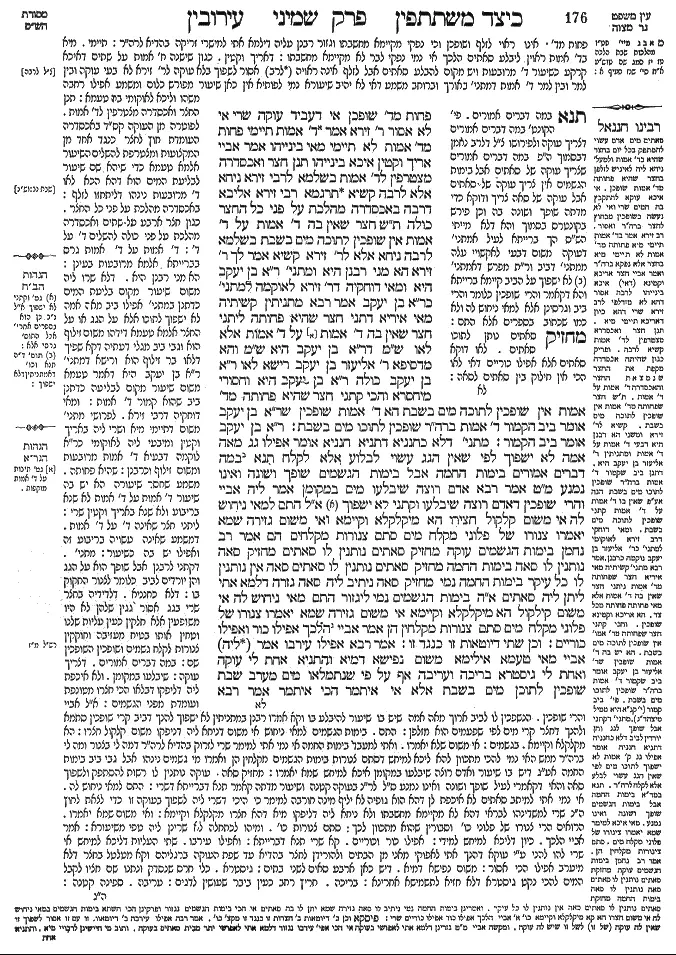
Eruvin 88b - Guemara
פחות מד' שופכן אי דעביד עוקה שרי אי לא אסור ר' זירא אמר ד' אמות תיימי פחות מד' אמות לא תיימי מאי בינייהו אמר אביי אריך וקטין איכא בינייהו תנן חצר ואכסדרה מצטרפין לד' אמות בשלמא לרבי זירא ניחא אלא לרבה קשיא תרגמא רבי זירא אליבא דרבה באכסדרה מהלכת על פני כל החצר כולה ת"ש חצר שאין בה ד' אמות על ד' אמות אין שופכין לתוכה מים בשבת בשלמא לרבה ניחא אלא לר' זירא קשיא אמר לך ר' זירא הא מני רבנן היא ומתני' ר"א בן יעקב היא ומאי דוחקיה דר' זירא לאוקמה למתני' כר"א בן יעקב אמר רבא מתניתין קשיתיה מאי איריא דתני חצר שהיא פחותה ליתני חצר שאין בה ד' אמות על ד' אמות אלא לאו ש"מ דר"א בן יעקב היא ש"מ והא מדסיפא ר' אליעזר בן יעקב רישא לאו ר"א בן יעקב כולה ר"א בן יעקב היא וחסורי מיחסרא והכי קתני חצר שהיא פחותה מד' אמות אין שופכין לתוכה מים בשבת הא ד' אמות שופכין שר"א בן יעקב אומר ביב הקמור ד' אמות ברה"ר שופכין לתוכו מים בשבת:
ר"א בן יעקב אומר ביב הקמור:
מתני' דלא כחנניא דתניא חנניא אומר אפילו גג מאה אמה לא ישפוך לפי שאין הגג עשוי לבלוע אלא לקלח תנא במה דברים אמורים בימות החמה אבל בימות הגשמים שופך ושונה ואינו נמנע מ"ט אמר רבא אדם רוצה שיבלעו מים במקומן אמר ליה אביי והרי שופכין דאדם רוצה שיבלעו וקתני לא ישפוך א"ל התם למאי ניחוש לה אי משום קלקול חצירו הא מיקלקלא וקיימא ואי משום גזירה שמא יאמרו צנורו של פלוני מקלח מים סתם צנורות מקלחים הם אמר רב נחמן בימות הגשמים עוקה מחזיק סאתים נותנין לו סאתים מחזיק סאה נותנין לו סאה בימות החמה מחזיק סאתים נותנין לו סאתים סאה אין נותנין לו כל עיקר בימות החמה נמי מחזיק סאה ניתיב ליה סאה גזרה דלמא אתי ליתן ליה סאתים א"ה בימות הגשמים נמי ליגזור התם מאי ניחוש לה אי משום קילקול הא מיקלקלא וקיימא אי משום גזירה שמא יאמרו צנורו של פלוני מקלח מים סתם צנורות מקלחין הן אמר אביי הלכך אפילו כור ואפילו כוריים:
וכן שתי דיוטאות זו כנגד זו:
אמר רבא אפילו עירבו אמר (ליה) אביי מאי טעמא אילימא משום נפישא דמיא והתניא אחת לי עוקה ואחת לי גיסטרא בריכה ועריבה אף על פי שנתמלאו מים מערב שבת שופכין לתוכן מים בשבת אלא אי איתמר הכי איתמר אמר רבא
Comments from Rashi on Masechet Eruvin Page 88b
פחות מד' . אינו ראוי לזלף ושופכן וכי נפקי מקיימא מחשבתו וגזור רבנן עליה דילמא אתי למישרי זריקה בהדיא לרה"ר: תיימי . מיא בד' אמות ראוין ליבלע סאתים הלכך אי נמי נפקי לבר לא מקיימא מחשבתו: דאריך וקטין . כגון שישנה ח' אמות על שתים דאיכא קרקע כשיעור ד' מרובעות ויש מקום להבלע סאתים אבל לזלף אינה ראויה (לרב) אסור לשפוך בלא עוקה לר' זירא לא בעי עוקה ובין למר ובין למר ד' אמות דמתני' באורך וברוחב משמע דאי לא יהיב שיעורא נמי לפותיא אין כאן שיעור מפורש כלום ומשמע אפילו רחבה משהו וליכא לאוקומי בה טעמא: תנן החצר ואכסדרה מצטרפין לד' אמות . לפוטרה מן העוקה קס"ד באכסדרה העומדת חוץ לחצר כנגד אחד מן המקצועות ומצטרפת להשלים השיעור אלמא טעמא כדי שיהא שם שיעור לבליעת המים הוא דהא הכא לאו ד' מרובעות נינהו דליתחזו לזלף: באכסדרה מהלכת על פני כל החצר . כגון חצר ארבע על שתים ואכסדרה מהלכת על פני כולה להשלים ד' על ד': ד' אמות על ד' אמות . גרס בברייתא אלמא מרובעות בעינן: הא מני רבנן היא . דלא שרו ליה משום שיעור מקום בליעת המים כדתנן במתני' אפילו ביב מאה אמה לא ישפוך לתוכו אלא על הגג או על החצר אלמא טעמא דידהו משום זילוף הוא וגבי ביב מגלי דעתיה דקא שפיך דלאו בר זילוף הוא ורישא דמתניתין ר"א בן יעקב היא דאמר טעמא משום שיעור מקום לבליעה כדתנן ביב שהוא קמור ד' אמות: ומאי דוחקיה דרבי זירא . לפרושי מתני' משום דתיימי מיא ושרי ליה באריך וקטין ומיבעי ליה לאוקומי כר"א לוקמה דבעיא ד' אמות מרובעות ומשום זילוף וכרבנן: שהיא פחותה . משמע שחסר שיעורה הא יש בה שיעור ד' אמות על ד' אמות לא שנא בריבוע ולא שנא באריך וקטין שרי: ליתני חצר שאינה ד' על ד' אמות . דמשמע שאינה עשויה בריבוע זה ואפילו יש בה כשיעור: מתני' . דקתני לרבנן אבל שופך הוא על הגג והן יורדין לביב כלומר לצנור החקוק בו: דלא כחנניא . דלדידיה בחצר שרי בגג אסור גגין שלהן לא היו משופעין אלא חלקין כעין עליות שלנו וטחין אותו בטיח מעזיבה וחוקקין צנורות לקלח גשמים ושופכין השופכין שם: במה דברים אמורים . דצריך עוקה: שיבלעו במקומן . ולא איכפת ליה דליפקו דבלאו הכי חצרו מטונפת ועומדת מפני הגשמים: א"ל אביי והרי שופכין . הנשפכין לו לביב ארוך מאה אמה שיש בו שיעור להיבלע בו וקא אמרו רבנן במתניתין לא ישפוך להנך דביב קרי שופכין סתמא ולהנך דחצר קרי מים לפי שפעמים הוא מזלפן: התם . בימות הגשמים למאי ניחוש אי משום דניחא ליה דניפקו משום קלקול חצרו: הא מקלקלא וקיימא . בגשמים: ואי משום שמא יאמרו . הרואים הרי צנורו של פלוני כו' וסבורין שהוא מתכוון לכך: מחזיק סאה . עוקה נותנין לו רשות להסתפק ולשפוך סאה והאי דקאמרי לעיל שופך ושונה ואינו נמנע ס"ל לר"נ בעוקה קטנה ושיעור מדתה קאמר תנא דברייתא דשרי: התם למאי ניחוש לה . אי נמי אתי למיתב סאתים לא איכפת לן דהא הוא גופיה לא יליף מינה חורבה למימר כי היכי דשרי ליה לשפוך בעוקה זו כדי לצאת לחוץ ה"נ שרי למשדינהו לבראי דהא לא מקיימא מחשבתו ולא ניחא ליה דליפקו מיא דהא חצרו מקלקלא וקיימא: ואי משום שמא יאמרו . הרואים הרי צנורו של פלוני כו' וסבורין שהוא מתכוון לכך: סתם צנורות כו' . ומיהו לכתחלה לא שרינן ליה טפי משיעורא: אמר אביי הלכך . כיון דליכא למיחש למידי: אפילו כור וכוריים . קא שרי תנא דברייתא: ואפילו עירבו . שתי העליות דליכא למיחש אי שרי להו להני ע"י עוקא דהנך אתי לאפוקי מאני מן הבתים ולהורידן לחצר בהדיא עד שפת העוקה ברגליהם וקא מטלטל בחצר דלא מיערב אפילו הכי אסור: משום נפישא דמיא . דיש כאן ארבע סאים לשני בתים: גיסטרא . כלי חרס שנסדק ונתנו שם חציו לקבל המים להכי נקט גיסטרא דלא חזיא לתשמישא אחרינא: בריכה . חריץ רחב כעין ביבר שעושין לדגים: עריבה . ספינה קטנה:
Comments from Tosafot - Eruvin 88b
תנא במה דברים אמורים . פי' הקונט' במה דברים אמורים דצריך עוקה ולפירושו צ"ל דלרב נחמן דבסמוך ה"פ במה דברים אמורים שצריך עוקה של סאתים אבל בימות הגשמים אין צריך עוקה של סאתים אבל עוקה של סאה צריך ודוקא כדי מדתה שופך ושונה בה וכן פירש בקונטרס בסמוך והא דלא מייתי הש"ס הך ברייתא לעיל אמתני' דעוקה משום דבעי לאקשויי עלה ממתני' דביב ור"ת מפרש דאמתני' לא ישפוך על הביב קיימא ברייתא והא דקאמר והרי שופכין כלומר והרי ביב וגרסינן אלא למאי ניחוש לה ולא כמו שכתוב בספרים אלא התם: מחזיק סאתים נותן לתוכו סאתים . לאו דוקא סאתים אלא אפילו כוריים דאי לאו הכי אין חילוק בין סאתים לסאה:
Eruvin 88b - Mishnah translated into english
But if the courtyard is less than four cubits by four cubits in area, one simply pours the water out, as the place is not fit for sprinkling. Therefore, if one fashioned a pit, it is permitted to pour out water; but if not, it is prohibited to do so, as one certainly intends for the water to flow outside.
Rabbi Zeira offered a different reason and said: In a courtyard of four cubits by four cubits, the water is likely to be absorbed into the ground. If it is less than four cubits in size, the water will not be absorbed but will flow out.
The Gemara asks: What is the practical difference between these two explanations? Abaye said: There is a difference between them with regard to a long and narrow courtyard. As the area of this courtyard is also sixteen square cubits, it likewise absorbs the water. Rabbi Zeira would therefore rule that it does not require a pit. However, as this courtyard is not in need of sprinkling, it requires a pit according to Rabba.
We learned in the mishna: A courtyard and a portico combine for the requisite four cubits, permitted the pouring of water into a courtyard that lacks a pit. The Gemara asks: Granted, according to the opinion of Rabbi Zeira, this works out well, as the total area is large enough to absorb the water. However, according to Rabba it is difficult, for when the courtyard is joined with the portico it is no longer in the shape of a square, and it is therefore unfit for sprinkling.
Rabbi Zeira explained the mishna in accordance with the opinion of Rabba, by saying that it is referring to a portico that extends along the entire courtyard, so that it adds to its width alone. Consequently, the courtyard and the portico together form a square of four by four cubits, an area that is fit for sprinkling.
The Gemara suggests: Come and hear a baraita that can decide this dispute. With regard to a courtyard that is not four cubits by four cubits in area, one may not pour water into it on Shabbat. The Gemara assumes that the baraita, which teaches that one may pour water only into a courtyard that it is four by four cubits, is precise in its wording. Granted, according to Rabba, this works out well, as he maintains that it is prohibited to pour water into a long and narrow courtyard. However, according to Rabbi Zeira, who maintains that the critical factor is the area of the courtyard, this is difficult.
The Gemara answers that Rabbi Zeira can say to you: In accordance with whose opinion is this baraita? It is in accordance with the opinion of the Rabbis at the end of the mishna, who maintain that the area of the courtyard is of no importance, whereas our unattributed mishna is in accordance with the opinion of Rabbi Eliezer ben Ya’akov, according to whom the area is the decisive factor.
The Gemara asks: And what forced Rabbi Zeira to establish the mishna in accordance with the opinion of Rabbi Eliezer ben Ya’akov? Rava said: The mishna was difficult for him. Why did the tanna specifically teach his ruling with respect to a courtyard that is less than four cubits, from which it can be inferred that if it has an area of four by four cubits it is permitted to pour water, even if it is not square in shape? Let the mishna teach: A courtyard that is not four cubits by four cubits, i.e., one that is not square shaped, even if it includes an area of sixteen square cubits.
Rather, shouldn’t one conclude from this argument that the unattributed section of the mishna is in accordance with the opinion of Rabbi Eliezer ben Ya’akov? The Gemara summarizes: Indeed, conclude from this that it is so.
The Gemara raises a difficulty with this conclusion: But from the fact that a latter clause of the mishna explicitly cites the opinion of Rabbi Eliezer ben Ya’akov, it can be inferred that the first clause does not represent the opinion of Rabbi Eliezer ben Ya’akov.
The Gemara rejects this argument: In fact, the entire mishna is in accordance with the opinion of Rabbi Eliezer ben Ya’akov, and as for its problematic style, the mishna is incomplete and it teaches the following: With regard to a courtyard that is less than four cubits in area, one may not pour waste water into it on Shabbat. Consequently, if it is four cubits in area, one may pour water into it, as Rabbi Eliezer ben Ya’akov says: If the first four cubits of a drainage ditch were arched over in the public domain, one may pour waste water into it on Shabbat.
We learned in the mishna that Rabbi Eliezer ben Ya’akov says: If the first four cubits of a drainage ditch were arched over in the public domain, it is permitted to pour waste water into it on Shabbat. However, the Rabbis say: One may pour water only upon the roof, from which it will spill into the drain of its own accord.
The Gemara comments: The mishna was not taught in accordance with the opinion of Ḥananya. For it was taught in a baraita that Ḥananya says: Even with regard to a roof one hundred cubits in area, one may not pour water onto it, because a roof is not apt to absorb the water. Rather, it causes it to run off. Consequently, pouring water onto this roof is equivalent to pouring it directly outside.
A tanna taught: In what case is this statement, that a pit is required, said? In the summer, but in the rainy season, one may pour and repeat, and he need not hold back. What is the reason? Rava said: A person is equally willing for the water to be absorbed on the spot, i.e., as there is abundant water in the courtyard during the rainy season, it will remain muddy in any case, and he therefore does not care whether the added waste water remains in the courtyard or if it flows out.
Abaye said to him: With regard to waste water poured into a drainage ditch, that a person wants it to be absorbed in the ditch itself, rather than flow out, and yet the mishna teaches that one may not pour water into the ditch.
Rava said to him: There, during the rainy season, there is no reason to prohibit the practice, for with regard to what need we be concerned? If you say he wants the water to flow out into the public domain because he is concerned about spoiling and sullying his courtyard, it is already spoiled by the rainwater. And if you say it should be prohibited due to a decree lest people say that so-and-so’s gutter is flowing with water on Shabbat, which might lead them to think he is watering his garden or violating some other prohibition, and they might act likewise even in the summer, this is not a relevant concern. As gutters ordinarily flow with water in the rainy season, people do not entertain this suspicion.
Rav Naḥman said: In the rainy season, with regard to a pit that holds two se’a, we grant him permission to pour two se’a of water into it. If it holds only one se’a, we grant him one se’a. However, in the summer, if the pit has a capacity of two se’a, we grant him two se’a; if it holds only one se’a, we do not grant him permission to pour any water at all.
The Gemara raises a difficulty: In the hot season as well, if the pit holds one se’a, let us grant him one se’a, for if he pours only this amount of water, it will not flow out into the public domain. The Gemara answers: This is prohibited due to a decree lest he come to put two se’a into it. The Gemara asks: If so, in the rainy season let us also apply the same preventive measure.
The Gemara answers: There, in the rainy season, there is no reason to prohibit the practice, for if one pours more water into a pit than it can take, about what need we be concerned? If you say he wants the waste water to flow out into the public domain because he is concerned about spoiling his courtyard, it is already spoiled by the rainwater. If you say it should be prohibited due to a decree lest people say that so-and-so’s gutter is flowing with water on Shabbat, gutters ordinarily gush with water in the rainy season, as stated above.
Abaye said: Therefore, in accordance with this reasoning, one can pour even a kor and even two kor of waste water into a small pit. As all gutters flow with water in the rainy season, there is no cause for any concern.
We learned in the mishna: And likewise, with regard to two upper stories, one opposite the other in the same courtyard, the residents of the one who dug a pit in the courtyard may pour water into it, while the residents of the other one who did not dig a pit in the courtyard are prohibited from doing so. Rava said: This halakha applies even if the residents of the two upper stories established an eiruv together.
Abaye said to him: What is the reason for this ruling? If you say it is due to the increase in the amount of water, as two upper stories pour out more water than one, wasn’t it taught in a baraita: The same halakha applies to a pit, and the same applies to a cracked earthenware vessel used as a receptacle for water, or a small pond, or a basin: Even though they were already filled with water on Shabbat eve, one may pour water into them on Shabbat. It is evident from here that as long as the pit is the requisite size, there is no concern about the amount of water that will flow out from it.
Rather, if it was stated it was stated as follows. Rava said:
Traduction : The William Davidson digital edition of the Koren Noé Talmud, with commentary by Rabbi Adin Even-Israel Steinsaltz.