 Talmud Bavli
Eruvin 52b : Youtube
Rabi Yitzchok LobensteinYoutube
2 video classes :
Eruvin Page 52b
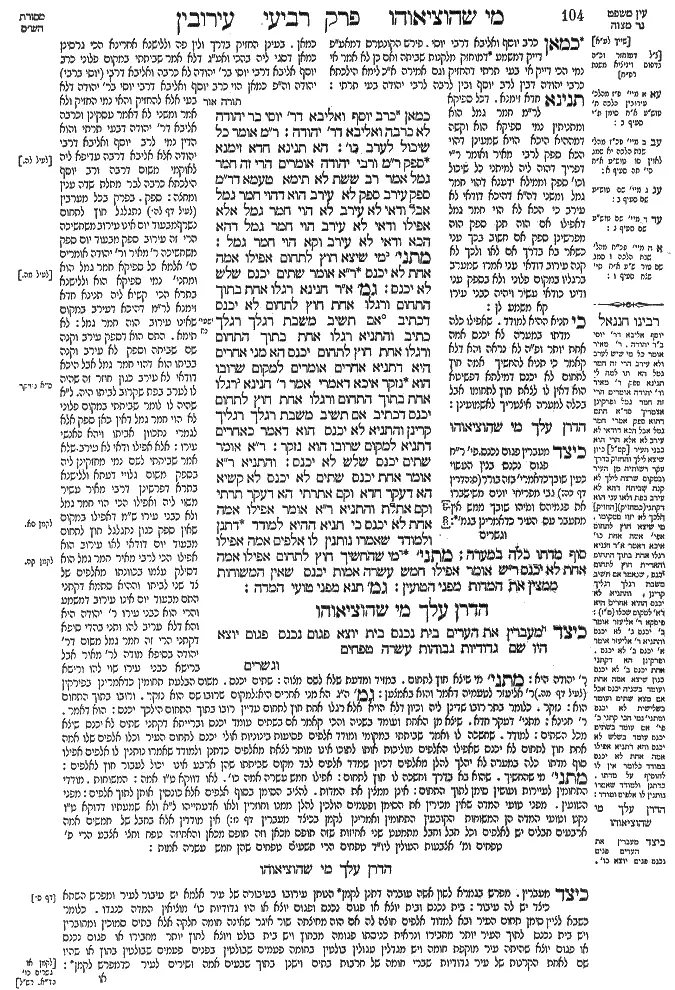
Eruvin 52b - Guemara
כמאן כרב יוסף ואליבא דר' יוסי בר יהודה לא כרבה ואליבא דר' יהודה:
ר"מ אומר כל שיכול לערב כו':
הא תנינא חדא זימנא ספק ר"מ ורבי יהודה אומרים הרי זה חמר גמל אמר רב ששת לא תימא טעמא דר"מ ספק עירב ספק לא עירב הוא דהוי חמר גמל אבל ודאי לא עירב לא הוי חמר גמל אלא אפילו ודאי לא עירב הוי חמר גמל דהא הכא ודאי לא עירב וקא הוי חמר גמל:
מתני׳ מי שיצא חוץ לתחום אפילו אמה אחת לא יכנס ר"א אומר שתים יכנס שלש לא יכנס:
גמ׳ א"ר חנינא רגלו אחת בתוך התחום ורגלו אחת חוץ לתחום לא יכנס דכתיב (ישעיהו נח, יג) אם תשיב משבת רגלך רגלך כתיב והתניא רגלו אחת בתוך התחום ורגלו אחת חוץ לתחום יכנס הא מני אחרים היא דתניא אחרים אומרים למקום שרובו הוא נזקר איכא דאמרי אמר ר' חנינא רגלו אחת בתוך התחום ורגלו אחת חוץ לתחום יכנס דכתיב אם תשיב משבת רגלך רגליך קרינן והתניא לא יכנס הוא דאמר כאחרים דתניא למקום שרובו הוא נזקר:
ר"א אומר שתים יכנס שלש לא יכנס:
והתניא ר"א אומר אחת יכנס שתים לא יכנס לא קשיא הא דעקר חדא וקם אתרתי הא דעקר תרתי וקם אתלת והתניא ר"א אומר אפילו אמה אחת לא יכנס כי תניא ההיא למודד דתנן ולמודד שאמרו נותנין לו אלפים אמה אפילו סוף מדתו כלה במערה:
מתני׳ מי שהחשיך חוץ לתחום אפילו אמה אחת לא יכנס ר"ש אומר אפילו חמש עשרה אמות יכנס שאין המשוחות ממצין את המדות מפני הטועין:
גמ׳ תנא מפני טועי המדה:
הדרן עלך מי שהוציוהו
מתני׳ כיצד מעברין את הערים בית נכנס בית יוצא פגום נכנס פגום יוצא היו שם גדודיות גבוהות עשרה טפחים
Comments from Rashi on Masechet Eruvin Page 52b
כמאן . בעינן החזיק בדרך ולין פה וללישנא אחרינא הכי גרסינן כמאן דסגי ליה בהכי ואע"ג דלא אמר שביתתי במקום פלוני כרב יוסף אליבא דר' יוסי בר' יהודה לא כרבה ואליבא דרבי (יוסי ברבי) יהודה וה"פ כמאן הוי כרב יוסף ואליבא דרבי יוסי בר' יהודה דלא בעי אלא להחזיק והאי נמי החזיק ולא אמר ומשני לא דאמר עסקינן וכרבה אליבא דר' יהודה דבעי תרתי והוא הדין נמי לרב יוסף ואליבא דרבי יהודה אלא אליבא דרבה עדיפא ליה לאוקמי משום דרבה ורב יוסף הילכתא כרבה לבר מתלת שדה ענין ומחצה: ספק . בפרק בכל מערבין (לעיל עירובין לה.) נתגלגל חוץ לתחום נשרף מבעוד יום אינו עירוב משחשיכה הרי זה עירוב ספק מבעוד יום ספק משחשיכה ר' מאיר ור' יהודה אומרים כו' אלמא כל ספיקא חמר גמל הוא ומתני' נמי ספיקא הוא וללישנא בתרא הכי קשיא ליה תנינא חדא זימנא לר"מ דהיכא דעירב במקום שאינו עירוב הוה חמר גמל: לא תימא . התם הוא דספק עירב וקנה שם שביתה וספק לא עירב וקנה בביתו הוא דהוי חמר גמל אבל היכא דודאי לא עירב כגון חוזר זה שהיה לו לערב בפת שקרוב לביתו היה. ל"א שהיה לו לומר שביתתי במקום פלוני לא הוי חמר גמל דאין כאן ספק אלא לגמרי נתכוון אביתו ויהא כאנשי עירו: אלא אפילו ודאי לא עירב . שלא אמר שביתתי לשם נמי מחזקינן ליה בספק משום גלויי דעתא וללישנא בתרא דפרשינן דרבי מאיר עשיר משוי ליה ואפילו הכי הוי חמר גמל ולא כבני עירו ש"מ דאפילו במקום שאין ספק כגון נתגלגל חוץ לתחום מבעוד יום דודאי לאו עירוב הוא אפילו הכי לרבי מאיר חמר גמל הוא דסילק עצמו בכוונתו מאלפים של צד שני לביתו וההיא סתמא דקתני התם מבעוד יום אינו עירוב דמשמע והרי הוא כבני עירו ר' יהודה היא והא דלא עריב להו ותני בהדי סיפא דקתני הרי זה חמר גמל משום דר' יהודה בסיפא מודה לר' מאיר אבל ברישא כבני עירו שוי להו ורישא ר' יהודה היא: מתני' מי שיצא חוץ לתחום . במזיד ומדעת שלא לשם מצוה: שתים יכנס . משום הבלעת תחומין כדאמרינן בפירקין (לעיל עירובין דף מה.) ר' אליעזר לטעמיה דאמר והוא באמצען: גמ' ה"ג הא מני אחרים היא: למקום שרובו שם הוא נזקר . ורובו בתוך התחום הוא: נזקר . כלומר בתר רובו שדינן ליה וכיון דלא הויא אלא רגלו אחת חוץ לתחום עדיין רובו בתוך התחום הילכך יכנס: הוא דאמר . ר' חנינא: מתני' דעקר חדא . שיצא מן האחת ועומד בשניה והכי קאמר אם בשתים עומד יכנס וברייתא דקתני שתים לא יכנס שיצא מכל השתים: למודד . שחשכה לו ואמר שביתתי במקומי ומודד אלפים פסיעות בינוניות אולי יכנס לתחום העיר וכלו אלפים שלו אמה אחת חוץ לתחום לא יכנס שאפילו האלפים מוליכות אותו לתוכו אינו מותר לצאת מאלפים כדתנן ולמודד שאמרו נותנין לו אלפים אפילו סוף מדתו כלה במערה לא יהלך להלן מאלפים דכיון שמדד אלפים לבד מקום שביתתו שהן ארבע אינו יכול לעבור חוץ לאלפים: מתני' מי שהחשיך . שהוא בא בדרך וחשכה לו חוץ לתחום: אפילו חמש עשרה אמה כו' . לאו דווקא ט"ו אמה: המשוחות . מודדי התחומין לעיירות ועושין סימן לתוך התחום: אינן ממצין את המדות . להציב הסימן בסוף אלפים אלא כונסין אותן לתוך אלפים: מפני הטועין . מפני טועי המדה שאין מכירין את הסימן ופעמים הולכין להלן ממנו וחוזרין ולאו אדעתייהו ל"א ולא שמעתיו דדוקא ט"ו נקט וטועי המדה הן המשוחות הקובעין התחומין ואמרינן לקמן בכיצד מעברין (עירובין דף נז:) אין מודדין אלא בחבל של חמשים אמה ארבעים חבלים יש לאלפים וכל חבל וחבל מתמעט שני אחיזות שזה תופס מכאן וזה תופס מכאן והאחיזה טפח וחצי אצבע הרי פ' טפחים ומ' אצבעות העולין ליו"ד טפחים הרי תשעים טפחים שהן חמש עשרה אמות: מתני' כיצד מעברין . מפרש בגמרא לשון אשה עוברה דתנן לקמן הנותן עירובו בעיבורה של עיר אלמא יש עיבור לעיר ומפרש השתא כיצד יש לה עיבור: בית נכנס ובית יוצא או פגום נכנס ופגום יוצא או היו גדודיות כו' מוציאין המדה כנגדו . כלומר כשבא לציין סימן תחום העיר ובא למדוד אלפים חוצה לה אם הוה מחיצתה שור איגר שאינה חומה חלקה אלא בתים סמוכין ומחוברין ויש בית נכנס לתוך העיר יותר מחבירו ונראית כניסתו פגומה מבחוץ ויש בית בולט ויוצא לחוץ יותר מחבירו או פגום נכנס או פגום יוצא שהיתה עיר מוקפת חומה ויש מגדלין עגולין בולטין בחומה פעמים שבולטין בפנים פעמים שבולטין בחוץ או שהיו שם לאחת הקרנות של עיר גדודיות שברי חומה של חרבות בתים וישנן בתוך שבעים אמה ושירים לעיר כדמפרש לקמן:
Comments from Tosafot - Eruvin 52b
כמאן כרב יוסף ואליבא דרבי יוסי . פירש הקונטרס דמאע"פ דייק דמשמע דמוחזק מלקנות שביתה ואם כן לא אמר אי נמי הכי דייק אי בעי תרתי דהחזיק וגם אמירה א"כ לימא הילכתא כרבי יהודה דבין לרב יוסף ובין לרבה לרבי יהודה בעי תרתי: תנינא חדא זימנא . דכל ספיקא לר"מ חמר גמל הוא ומתניתין נמי ספיקא הוא וקשה דמההיא היכא הויא שמעינן דהוי הכא ספק לרבי מאיר ואומר ר"י דפריך דהוה ליה למיתני כל שיכול וכו' ספק וממילא ידענא דהוי חמר גמל ומשני דה"א דהיכא דודאי לא עירב כי הכא לא הוי חמר גמל דאפילו אם הוה תנן ספק הוה מפרשינן ספק אם חשוב בכך עני כשאר בא בדרך אם לאו ולכך לא קנה עירוב דודאי עני אמרו שמערב ברגליו במקום פלוני ולא בספק עני ודינו כודאי עשיר ויהיה כבני עירו קא משמע לן: כי תניא ההיא למודד . שאפילו כלה מדתו במערה לא יכנס אמה אחת יותר ופ"ה לא נראה והא דלא קאמר כי תניא להחשיך אמה חוץ לתחום לא יכנס דמילתא דפשיטא הוא דאין לו לצאת חוץ לתחומו אבל בכלה למערה איצטריך לאשמועינן: מתני' כיצד מעברין פגום נכנס . פי' ר"ח פגום נכנס בנין העשוי כעין שובך כדאמרי' בזה בורר (סנהדרין דף כה:) גבי מפריחי יונים משישברו את פגמיהם ומיהו שובך ממש אין מתעבר עם העיר כדאמרינן בגמ':
Eruvin 52b - Mishnah translated into english
The Gemara comments: In accordance with whose opinion did Rav Natan bar Oshaya act? Apparently, it was in accordance with the opinion of Rav Yosef that everyone agrees that he must set out on his way, and in accordance with the opinion of Rabbi Yosei bar Yehuda that he need not declare that he is establishing his residence at the end of his Shabbat limit.
The Gemara rejects this suggestion: No, that is not necessarily so, as it is possible to say that he acted according to the opinion of Rabba, and in accordance with the opinion of Rabbi Yehuda, and Rav Yehuda bar Ishtata declared that he establishes his residence at the end of his Shabbat limit.
We learned in the mishna that Rabbi Meir says: Anyone who can establish an eiruv, and negated his residence in his original place, and did not establish an eiruv, is likened to both a donkey driver and a camel driver. The Gemara asks: Didn’t we have already learned it once before in another mishna: In a case of uncertainty, Rabbi Meir and Rabbi Yehuda say: This person is likened to both a donkey driver and a camel driver. Here too, it is obvious that the same applies, as that is Rabbi Meir’s opinion with regard to all uncertain cases.
Rav Sheshet said: It is necessary to state this ruling here as well, so that you will not say the reason for Rabbi Meir’s statement only applies in a case where there is uncertainty whether one established an eiruv or did not establish an eiruv, and in that case he is in likened to both a donkey driver and a camel driver. However, in a case where there is certainty that he did not establish an eiruv he is not likened to both a donkey driver and a camel driver, but his Shabbat limit is the same as the rest of the residents of his city.
Rather, say that even in a case where there is certainty that he did not establish an eiruv he is sometimes likened to both a donkey driver and a camel driver, as here he certainly did not establish an eiruv, and yet he is likened to both a donkey driver and a camel driver. It was therefore necessary to state that even in that case, where there is no uncertainty whether or not he established the eiruv, but only with regard to the location of his residence, he nonetheless has the status of both a donkey driver and a camel driver.
MISHNA: One who intentionally, not for the purpose of performing a mitzva, went out beyond his Shabbat limit, even if only one cubit, may not reenter. Rabbi Eliezer says: If he went out two cubits he may reenter; however, if he went out three cubits he may not reenter.
GEMARA: Rabbi Ḥanina said: If one of his feet was within the Shabbat limit, and his other foot was beyond the Shabbat limit, he may not reenter, as it is written: “If you turn away your feet [raglekha] due to Shabbat” (Isaiah 58:13). The word raglekha is written in defective form without the letter yod, and can therefore be read as your foot in the singular, indicating that Shabbat can be desecrated by the reentry of even a single foot.
The Gemara raises a difficulty: But wasn’t the opposite taught in a baraita? If one of his feet was within the Shabbat limit, and his other foot was beyond the Shabbat limit, he may reenter. The Gemara answers: In accordance with whose opinion is this taught? It is in accordance with the opinion of Aḥerim, as it was taught in a baraita: Aḥerim say: He is attributed to the place where the majority of his body lies, and therefore, it is permitted for him to enter, as he stepped out with only one foot.
The Gemara cites a different version of the previous discussion. Some say that Rabbi Ḥanina said: If one of his feet was within the Shabbat limit, and his other foot was beyond the Shabbat limit, he may reenter, as it is written: “If you turn away your feet due to Shabbat” (Isaiah 58:13). We read the word raglekha as your feet, in the plural, indicating that the entry of a single foot is permitted.
The Gemara raises a difficulty. But wasn’t the opposite taught in a baraita: He may not reenter? The Gemara answers: Rabbi Ḥanina stated his opinion in accordance with the opinion of Aḥerim, as it was taught in a baraita: He is attributed to the place where the majority of his body is located, and it is therefore permitted to enter, as most of his body remains within the Shabbat limit.
We learned in the mishna that Rabbi Eliezer says: If he went out two cubits he may reenter; however, if he went out three cubits he may not reenter. The Gemara asks: But wasn’t it taught otherwise in a baraita? Rabbi Eliezer says: If he went out one cubit he may reenter; however, if he went out two cubits he may not reenter. The Gemara answers: That is not a difficulty. This, the mishna, is referring to a case where he moved from the first cubit and is now standing two cubits out, and therefore it is permitted for him to reenter; however, that, the baraita, is referring to a case where he moved from the second cubit and is now standing three cubits out. Consequently, it is prohibited for him to reenter.
The Gemara raises another difficulty. But wasn’t it taught in a different baraita that Rabbi Eliezer says: Even if he went one cubit out, he may not enter. The Gemara answers: When that baraita was taught it was with regard to one measuring his limit by counting two thousand steps. As we learned in a mishna: And for one established residence in a particular place, and is now measuring his limit by counting out steps, with regard to whom the Sages said one provides him with two thousand cubits, even if his measurement ended in a cave he may not walk even one cubit beyond his measurement.
MISHNA: With regard to one for whom it grew dark while he was traveling outside the Shabbat limit of the town where he was heading, even if he was only one cubit outside the limit he may not enter the town. Rabbi Shimon says: Even if he was fifteen cubits beyond the limit he may enter the town, because the surveyors do not precisely demarcate the measures; rather, they mark the Shabbat limit within the two thousand cubits, due to those who err.
GEMARA: With regard to the mishna’s statement: Due to those who err, it is taught in a baraita: Due to those who err in their measurement. In other words, because the surveyors are concerned that they might have erred in their measurements, they are stringent and do not position the mark at the edge of the limit, but move it several cubits within the limit.
MISHNA: How does one extend the boundaries of cities in order to ensure that all its protrusions are included within the borders of the city? He extends a straight line across the edge of the city, and if a house is recessed and another house protrudes, or a turret [pagum] is recessed and another turret protrudes from that line, and similarly, if there were remnants of walls ten handbreadths high,
Traduction : The William Davidson digital edition of the Koren Noé Talmud, with commentary by Rabbi Adin Even-Israel Steinsaltz.