 Talmud Bavli
Eruvin 21b : Youtube
Rabi Yitzchok LobensteinYoutube
2 video classes :
Eruvin Page 21b
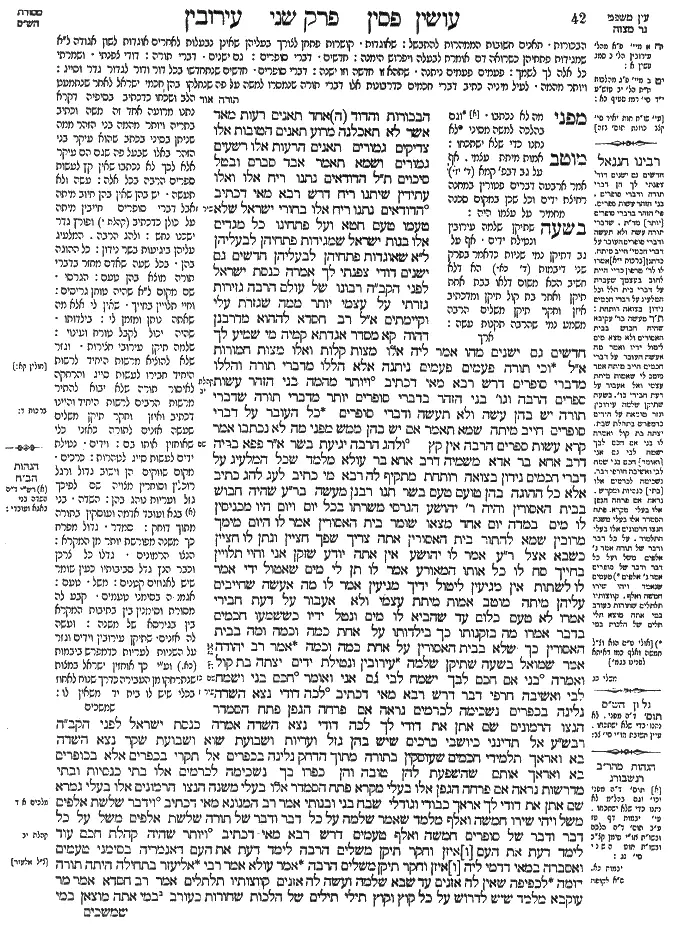
Eruvin 21b - Guemara
הבכורות והדוד (ה) אחד תאנים רעות מאד אשר לא תאכלנה מרוע תאנים הטובות אלו צדיקים גמורים תאנים הרעות אלו רשעים גמורים ושמא תאמר אבד סברם ובטל סיכוים ת"ל הדודאים נתנו ריח אלו ואלו עתידין שיתנו ריח דרש רבא מאי דכתיב (שיר השירים ז, יד) הדודאים נתנו ריח אלו בחורי ישראל שלא טעמו טעם חטא ועל פתחינו כל מגדים אלו בנות ישראל שמגידות פתחיהן לבעליהן ל"א שאוגדות פתחיהן לבעליהן חדשים גם ישנים דודי צפנתי לך אמרה כנסת ישראל לפני הקב"ה רבונו של עולם הרבה גזירות גזרתי על עצמי יותר ממה שגזרת עלי וקיימתים א"ל רב חסדא לההוא מדרבנן דהוה קא מסדר אגדתא קמיה מי שמיע לך חדשים גם ישנים מהו אמר ליה אלו מצות קלות ואלו מצות חמורות א"ל וכי תורה פעמים פעמים ניתנה אלא הללו מדברי תורה והללו מדברי סופרים דרש רבא מאי דכתיב (קהלת יב, יב) ויותר מהמה בני הזהר עשות ספרים הרבה וגו' בני הזהר בדברי סופרים יותר מדברי תורה שדברי תורה יש בהן עשה ולא תעשה ודברי סופרים כל העובר על דברי סופרים חייב מיתה שמא תאמר אם יש בהן ממש מפני מה לא נכתבו אמר קרא עשות ספרים הרבה אין קץ (קהלת יב, יב) ולהג הרבה יגיעת בשר א"ר פפא בריה דרב אחא בר אדא משמיה דרב אחא בר עולא מלמד שכל המלעיג על דברי חכמים נידון בצואה רותחת מתקיף לה רבא מי כתיב לעג להג כתיב אלא כל ההוגה בהן טועם טעם בשר תנו רבנן מעשה בר"ע שהיה חבוש בבית האסורין והיה ר' יהושע הגרסי משרתו בכל יום ויום היו מכניסין לו מים במדה יום אחד מצאו שומר בית האסורין אמר לו היום מימך מרובין שמא לחתור בית האסורין אתה צריך שפך חציין ונתן לו חציין כשבא אצל ר"ע אמר לו יהושע אין אתה יודע שזקן אני וחיי תלויין בחייך סח לו כל אותו המאורע אמר לו תן לי מים שאטול ידי אמר לו לשתות אין מגיעין ליטול ידיך מגיעין אמר לו מה אעשה שחייבים עליהן מיתה מוטב אמות מיתת עצמי ולא אעבור על דעת חבירי אמרו לא טעם כלום עד שהביא לו מים ונטל ידיו כששמעו חכמים בדבר אמרו מה בזקנותו כך בילדותו על אחת כמה וכמה ומה בבית האסורין כך שלא בבית האסורין על אחת כמה וכמה אמר רב יהודה אמר שמואל בשעה שתיקן שלמה עירובין ונטילת ידים יצתה בת קול ואמרה (משלי כג, טו) בני אם חכם לבך ישמח לבי גם אני ואומר (משלי כז, יא) חכם בני ושמח לבי ואשיבה חרפי דבר דרש רבא מאי דכתיב (שיר השירים ז, יב) לכה דודי נצא השדה נלינה בכפרים נשכימה לכרמים נראה אם פרחה הגפן פתח הסמדר הנצו הרמונים שם אתן את דודי לך לכה דודי נצא השדה אמרה כנסת ישראל לפני הקב"ה רבש"ע אל תדינני כיושבי כרכים שיש בהן גזל ועריות ושבועת שוא ושבועת שקר נצא השדה בא ואראך תלמידי חכמים שעוסקין בתורה מתוך הדחק נלינה בכפרים אל תקרי בכפרים אלא בכופרים בא ואראך אותם שהשפעת להן טובה והן כפרו בך נשכימה לכרמים אלו בתי כנסיות ובתי מדרשות נראה אם פרחה הגפן אלו בעלי מקרא פתח הסמדר אלו בעלי משנה הנצו הרמונים אלו בעלי גמרא שם אתן את דודי לך אראך כבודי וגודלי שבח בני ובנותי אמר רב המנונא מאי דכתיב (מלכים א ה, יב) וידבר שלשת אלפים משל ויהי שירו חמשה ואלף מלמד שאמר שלמה על כל דבר ודבר של תורה שלשת אלפים משל על כל דבר ודבר של סופרים חמשה ואלף טעמים דרש רבא מאי דכתיב (קהלת יב, ט) ויותר שהיה קהלת חכם עוד לימד דעת את העם [ו] איזן וחקר תיקן משלים הרבה לימד דעת את העם דאגמריה בסימני טעמים ואסברה במאי דדמי ליה [ו] איזן וחקר תיקן משלים הרבה אמר עולא אמר רבי אליעזר בתחילה היתה תורה דומה לכפיפה שאין לה אזנים עד שבא שלמה ועשה לה אזנים קווצותיו תלתלים אמר רב חסדא אמר מר עוקבא מלמד שיש לדרוש על כל קוץ וקוץ תילי תילים של הלכות שחורות כעורב במי אתה מוצאן במי
Comments from Rashi on Masechet Eruvin Page 21b
הבכורות . תאנים חשובות הממהרות להתבשל: שאוגדות . קושרות פתחן לצורך בעליהן שאינן נבעלות לאחרים אוגדות לשון אגודה ל"א שמגידות פתחיהן כשרואה דם אומרת לבעלה ויפרוש הימנה: חדשים . דברי סופרים: גם ישנים . דברי תורה: דודי צפנתי . ושמרתי כל אלה לך לשמך: פעמים פעמים ניתנה . שתהא זו חדשה וזו ישנה: דברי סופרים . חדשים שנתחדשו בכל דור ודור לגדור גדר וסייג: ויותר מהמה . לעיל מיניה כתיב דברי חכמים כדרבונות אלו דברי תורה שנמסרו למשה על פה שנחלקו בה חכמי ישראל לאחר שנתמעט הלב ושכחו כדכתיב בסיפיה דקרא נתנו מרועה אחד זה משה וכתיב בתריה ויותר מהמה בני הזהר ממה שניתן בסיני בכתב שהוא עיקר בני הזהר באלו שבעל פה שגם הם עיקר אלא לכך לא נכתבו שאין קץ לעשות ספרים הרבה בכל אלה: עשה ולא תעשה . יש בהן שאין בהם חיוב מיתה אבל דברי סופרים חייבין מיתה על כולן כדכתיב (קהלת י) ופורץ גדר ישכנו נחש: ולהג הרבה . המלעיג עליהן ביגיעות בשר נידון: כל ההוגה בהן . בכל שעה שאדם מחזר בדברי תורה מוצא בהן טעם: הגרסי . שם מקום ל"א שהיה טוחן גריסים: וחיי תלויין בחייך . שאין לי אלא מה שאתה נותן ומזמן לי: בילדותו . שהיה יכול לקבל טורח ועינוי: שלמה תיקן עירובי חצירות . וגזר שלא להוציא מרשות היחיד לרשות היחיד חבירו לעשות סייג והרחקה לאיסור תורה שלא יבוא להתיר מרשות הרבים לרשות היחיד והיינו דכתיב ואיזן וחקר תיקן משלים שעשה אזנים לתורה כאזני כלי שאוחזין אותו בם: וידים . נטילת ידים לעשות סייג לטהרות: כרכים . מקום שווקים הן וישוב גדול ורגל רוכלין וסוחרין מצויה שם לפיכך גזל ועריות נוהג בהן: השדה . בני בגא ועובד אדמה ועוסקין בתורה מתוך דוחק: סמדר . גדול מפרח כך משנה מפורשת יותר מן המקרא: הנצו הרמונים . גדלו כל צרכן וכבר הנץ גדל סביבותיו כעין שומר שיש לאגוזים קטנים: משל . טעם: אגמריה בסימני טעמים . קבע לה מסורת וסימנין בין בתיבות המקרא בין בגירסא של משנה: ועשה לה אזנים . שתיקן עירובין וידים וגזר על השניות לעריות כדמפרש ביבמות (כא.) וע"י כך אוחזין ישראל במצות שנתרחקו מן העבירה כדרך שנוח לאחוז בכלי שיש לו בית יד משאין לו:
Comments from Tosafot - Eruvin 21b
מפני מה לא נכתבו . וגם בהלכה למשה מסיני לא נתנו כדי שלא ישתכחו: מוטב אמות מיתת עצמי . אף על גב דבפ' קמא (ד' יז.) אמר ארבעה דברים פטורין במחנה רחיצת ידים וכל שכן במקום סכנה מחמיר על עצמו היה: בשעה שתיקן שלמה עירובין ונטילת ידים . אף על גב דתיקן נמי שניות כדאמר בפרק שני דיבמות (ד' כא.) הא דלא חשיב הכא משום דלאו בבת אחת תיקן ואחר בת קול תיקן ומדכתיב איזן וחקר תיקן משלים הרבה משמע נמי שהרבה תקנות עשה:
Eruvin 21b - Mishnah translated into english
that are first ripe, and the other basket [dud] had very bad figs, so bad they could not be eaten” (Jeremiah 24:1–2).
Good figs, these are the full-fledged righteous people; bad figs, these are the full-fledged wicked people. And lest you say that the hope of the wicked is lost and their prospect is void, the verse states, interpreting the word duda’im homiletically: “The baskets [duda’im] yield a fragrance” (Song of Songs 7:14), meaning that both of them, the righteous and the wicked, will eventually yield a fragrance.
Rava interpreted the verse cited above homiletically as follows: What is the meaning of that which is written: “The mandrakes [duda’im] yield a fragrance, and at our doors are all manner of choice fruits, new and old, which I have laid up for you, O my beloved” (Song of Songs 7:14)? “The mandrakes [duda’im] yield a fragrance,” these are the young men of Israel who have never tasted the taste of sin.
“And at our doors [petaḥeinu] are all manner of choice fruits [megadim],” these are the daughters of Israel who inform [maggidot] their husbands about their passageway [pit’ḥeihen], i.e., they tell them when they are menstruating. Another version of this interpretation is: They bind [ogedot] their passageway and save it for their husbands, and do not have relations with others.
“New and old, which I have laid up for you, O my beloved,” the Congregation of Israel said before the Holy One, Blessed be He, and continued: Master of the Universe, I have decreed many decrees upon myself through the enactments and ordinances of the Sages, more than what You decreed upon me in the Torah, and I have fulfilled them. These are the new laws which were added to the old ones stated in the Torah.
It was related that Rav Ḥisda said to one of the Sages who would arrange the traditions of the aggada before him: Did you hear what the meaning of: New and old is? He said to him: These, the new, are the more lenient mitzvot, and these, the old, are the more stringent mitzvot.
Rav Ḥisda said to him: This cannot be so, for was the Torah given on two separate occasions, i.e., were the more lenient and more stringent mitzvot given separately? Rather, these, the old, are mitzvot from the Torah, and these, the new, are from the Sages.
Rava expounded another verse in similar fashion: What is the meaning of that which is written: “And more than these, my son, be careful: of making many books [sefarim] there is no end; and much study is a weariness of the flesh” (Ecclesiastes 12:12)? My son, be careful to fulfill the words of the Sages [soferim] even more than the words of the Torah. For the words of the Torah include positive and negative commandments, and even with regard to the negative commandments, the violation of many of them is punishable only by lashes. Whereas with respect to the words of the Sages, anyone who transgresses the words of the Sages is liable to receive the death penalty, as it is stated: “And whoever breaches through a hedge, a snake shall bite him” (Ecclesiastes 10:8), taking hedges to refer metaphorically to decrees.
Lest you say: If the words of the Sages are of substance and have such great importance, why were they not written in the Torah, therefore, the verse states: “Of making many books there is no end,” meaning that it is impossible to fully commit the Oral Torah to writing, as it is boundless.
What is the meaning of the words: “And much study [lahag] is a weariness of the flesh”? Rav Pappa, son of Rav Aḥa bar Adda, said in the name of Rav Aḥa bar Ulla: This teaches that whoever mocks [malig] the words of the Sages will be sentenced to boiling excrement, which results from the weariness of the flesh of man.
Rava strongly objects to this explanation: Is it written: Mock [la’ag]? “Lahag” is the word that is written. Rather, the verse must be understood in the opposite manner: Whoever meditates [hogeh] upon them, the words of the Sages, experiences enjoyment as if it had the taste of meat.
Concerning the significance of observing the words of the Sages, the Gemara relates: The Sages taught in a baraita: It once happened that Rabbi Akiva was incarcerated in a prison, and Rabbi Yehoshua HaGarsi would come to the prison to attend to his needs. Every day his disciples would bring him water in a measured quantity. One day the prison guard met Rabbi Yehoshua HaGarsi and said to him: The amount of your water today is more than usual; perhaps you need it in order to soften the walls and thus undermine the prison. He then poured out half the water, and gave him the other half to take in to Rabbi Akiva.
When Rabbi Yehoshua came to Rabbi Akiva, and the latter saw the small amount of water he had brought, he said to him: Yehoshua, do you not know that I am old, and my life depends on your life? No one else brings me water, so if you bring me less than I need, my life is endangered.
After Rabbi Yehoshua related to him the entire incident, Rabbi Akiva said to him: Give me water so that I may wash my hands. Rabbi Yehoshua said to him: The water that I brought will not suffice for drinking; how will it suffice for washing your hands? He said to him: What can I do; for transgressing the words of the Sages and eating without first washing hands one is liable to receive the death penalty. And if so, it is better that I should die my own death by thirst, rather than transgress the opinion of my colleagues who enacted that one must wash hands before eating.
They said that he would not taste anything until Rabbi Yehoshua brought him water and he washed his hands. When the Sages heard about this, they said: If in his old age and weakened state he is still so meticulous in his observance of the mitzvot, how much more so must he have been in his youth. And if in prison he is so scrupulous in his behavior, how much more so must he have been when not in prison.
Rav Yehuda said that Shmuel said: At the time that King Solomon instituted the ordinances of eiruv of courtyards and of washing hands to purify them from their impurity, which are added safeguards to the words of the Torah, a Divine Voice emerged and said in his praise: “My son, if your heart is wise, My heart will be glad, even Mine” (Proverbs 23:15). And it states with regard to him: “My son, be wise and make My heart glad, that I may respond to he who taunts Me” (Proverbs 27:11).
The Gemara cites additional teachings that Rava interpreted homiletically: What is the meaning of that which is written: “Come, my beloved, let us go forth into the field; let us lodge in the villages. Let us get up early to the vineyards; let us see if the vine has flowered, if the grape blossoms have opened, if the pomegranates are in flower; there will I give you my loves” (Song of Songs 7:12–13)?
With regard to the words: “Come, my beloved, let us go forth into the field,” the Congregation of Israel said before the Holy One, Blessed be He: Master of the Universe, do not judge me like those who reside in large cities where there is robbery and licentiousness, and vain oaths and false oaths, but rather: “Let us go forth into the field,” come and I will show You Torah scholars who work the land but nonetheless engage in Torah study, in poverty and in distress.
With regard to the words, “Let us lodge in the villages,” do not read the phrase as: In the villages [bakefarim], but rather as: By the deniers [bakoferim], meaning, come and I will show You the nations of the world, whom You showered with good, but yet they have denied You.
“Let us get up early to the vineyards,” these are the synagogues and houses of study. “Let us see if the vine has flowered,” these are the masters of Bible, who are proficient in the first stage of Torah study. “If the grape blossoms have opened,” these are the masters of Mishna. “If the pomegranates are in flower,” these are the masters of Gemara. “There will I give you my loves,” means I will show You my glory and my greatness, the praise of my sons and daughters, how they adhere to sanctity.
The Gemara expounds further concerning King Solomon. Rav Hamnuna said: What is the meaning of that which is written: “And he spoke three thousand proverbs, and his poems were a thousand and five” (i Kings 5:12)? This teaches that Solomon pronounced three thousand proverbs for each and every word of the Torah, and one thousand and five reasons for each and every word of the Scribes.
Rava also taught: What is the meaning of that which is written: “And besides being wise, Koheleth also taught the people knowledge; and he weighed, and sought out, and set in order many proverbs” (Ecclesiastes 12:9). Rava interpreted homiletically: He taught the people knowledge, meaning he taught it with the accentuation marks in the Torah, and he explained each matter by means of something similar to it.
With regard to: “And he weighed [izzen], and sought out, and set in order many proverbs,” Ulla said that Rabbi Eliezer said: At first the Torah was like a basket without handles [oznayim], until Solomon came and made handles for it. By means of his explanations and proverbs he enabled each person to understand and take hold of the Torah, fulfill its mitzvot, and distance himself from transgressions.
With regard to the verse, “His head is as the most fine gold, his locks [kevutzotav] are wavy [taltalim], and black as a raven” (Song of Songs 5:11), Rav Ḥisda said that Mar Ukva said: This teaches that it is possible to expound from each and every stroke [kotz] of the letters in the Torah mounds upon mounds [tilei tilim] of laws.
Black [sheḥorot] as a raven [orev] means: In whom do you find the words of Torah? In him
Traduction : The William Davidson digital edition of the Koren Noé Talmud, with commentary by Rabbi Adin Even-Israel Steinsaltz.