 Talmud Bavli
Eruvin 72b : Youtube
Rabi Yitzchok LobensteinYoutube
2 video classes :
Eruvin Page 72b
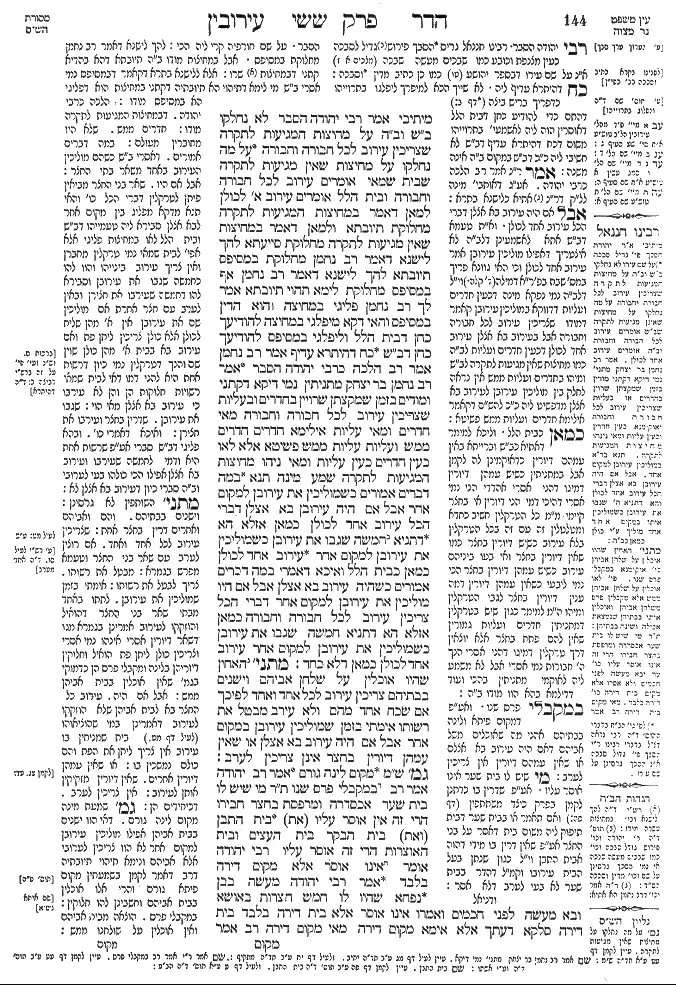
Eruvin 72b - Guemara
מיתיבי אמר רבי יהודה הסבר לא נחלקו ב"ש וב"ה על מחיצות המגיעות לתקרה שצריכין עירוב לכל חבורה וחבורה על מה נחלקו על מחיצות שאין מגיעות לתקרה שבית שמאי אומרים עירוב לכל חבורה וחבורה ובית הלל אומרים עירוב א' לכולן למאן דאמר במחיצות המגיעות לתקרה מחלוקת תיובתא ולמאן דאמר במחיצות שאין מגיעות לתקרה מחלוקת סייעתא להך לישנא דאמר רב נחמן מחלוקת במסיפס תיובתא להך לישנא דאמר רב נחמן אף במסיפס מחלוקת לימא תהוי תיובתא אמר לך רב נחמן פליגי במחיצה והוא הדין במסיפס והאי דקא מיפלגי במחיצה להודיעך כחן דבית הלל וליפלגי במסיפס להודיעך כחן דב"ש כח דהיתרא עדיף אמר רב נחמן אמר רב הלכה כרבי יהודה הסבר אמר רב נחמן בר יצחק מתניתין נמי דיקא דקתני ומודים בזמן שמקצתן שרויין בחדרים ובעליות שצריכין עירוב לכל חבורה וחבורה מאי חדרים ומאי עליות אילימא חדרים חדרים ממש ועליות עליות ממש פשיטא אלא לאו כעין חדרים כעין עליות ומאי ניהו מחיצות המגיעות לתקרה שמע מינה תנא במה דברים אמורים כשמוליכין את עירובן למקום אחר אבל אם היה עירובן בא אצלן דברי הכל עירוב אחד לכולן כמאן אזלא הא דתניא חמשה שגבו את עירובן כשמוליכין את עירובן למקום אחר עירוב אחד לכולן כמאן כבית הלל ואיכא דאמרי במה דברים אמורים כשהיה עירוב בא אצלן אבל אם היו מוליכין את עירובן למקום אחר דברי הכל צריכין עירוב לכל חבורה וחבורה כמאן אזלא הא דתניא חמשה שגבו את עירובן כשמוליכין את עירובן למקום אחר עירוב אחד לכולן כמאן דלא כחד:
מתני׳ האחין שהיו אוכלין על שלחן אביהם וישנים בבתיהם צריכין עירוב לכל אחד ואחד לפיכך אם שכח אחד מהם ולא עירב מבטל את רשותו אימתי בזמן שמוליכין עירובן במקום אחר אבל אם היה עירוב בא אצלן או שאין עמהן דיורין בחצר אינן צריכין לערב:
גמ׳ ש"מ מקום לינה גורם אמר רב יהודה אמר רב במקבלי פרס שנו ת"ר מי שיש לו בית שער אכסדרה ומרפסת בחצר חבירו הרי זה אין אוסר עליו (את) בית התבן (ואת) בית הבקר בית העצים ובית האוצרות הרי זה אוסר עליו רבי יהודה אומר אינו אוסר אלא מקום דירה בלבד אמר רבי יהודה מעשה בבן נפחא שהיו לו חמש חצרות באושא ובא מעשה לפני חכמים ואמרו אינו אוסר אלא בית דירה בלבד בית דירה סלקא דעתך אלא אימא מקום דירה מאי מקום דירה רב אמר
Comments from Rashi on Masechet Eruvin Page 72b
הסבר . על שם חורפיה קרי ליה הכי: להך לישנא דאמר רב נחמן מחלוקת במסיפס . אבל במחיצות מודו ב"ה תיובתא דהא בהדיא קתני דבמחיצות שרו: אלא ללישנא בתרא דקאמר דבמסיפס נמי אסרי ב"ש מי לימא דתהוי הא תיובתיה דקתני במחיצות הוא דפליגי הא במסיפס מודו: הלכה כרבי יהודה . דבמחיצות המגיעות לתקרה מודו: חדרים ממש . שלא היו מחוברין מעולם: במה דברים אמורים . דאסרי ב"ש כשהם מוליכין העירוב באחד משאר בתי החצר: אבל אם היו . שאר בני החצר מביאין פיתן לטרקלין דברי הכל כו' והאי תנא מדקא מפליג בין מקום אחר לבא אצלן סבירא ליה טעמייהו דב"ש ובית הלל לאו במחיצות פליגי אלא אפי' לבית שמאי נמי טרקלין מחברן ואין צריך עירוב בינייהו והוו להו כחמשה שגבו את עירובן וסבירא להו דחמשה שעירבו את חצירן ובאין לערב עם חצר אחרת אם מוליכין שם את עירובן אין א' מהן שליח לכולן אלא כולן צריכין ליתן פת ואם עירוב בא בבית א' מהן כולן שוין שם והנך דטרקלין נמי כיון דרשות אחת היא להני דמו דאי לבית שמאי רשויות חלוקות הן והן לא עירבו כי עירוב בא אצלן מאי הוי: שגבו את עירובן . שדרין בחצר ועירבו את חצירן: ואיכא דאמרי כו' . ובהא פליגי דב"ש סברי אע"פ שרשות אחת היא ודמי לחמשה שעירבו ועירוב בא אצלן אפילו הכי כולהו בעי לערובי וב"ה סברי כיון דעירוב בא אצלן לא: מתני' השותפין לא גרסינן: וישנים בבתיהם . והם ואביהם ואחרים דרין בחצר אחת: שצריכין עירוב לכל אחד ואחד . אם רוצין לערב עם שאר בני החצר וטעמא מפרש בגמרא: מבטל את רשותו . צריך לבטל את רשותו: אימתי בזמן שמוליכין את עירובן . לתתו באחד מבתי שאר בני החצר דהואיל והוזקקו לעירוב אמרינן בגמרא מגו דשאר דיורין אסרי אינהו נמי אסרי וצריכין כולן ליתן פת הואיל וחלוקין דיוריהן בלינה ומקבלי פרס הן כדמוקי בגמ' שאין אוכלין בבית אביהן ממש: אבל אם היה . עירוב כל החצר בא לבית אביהן שלא הוזקקו לעירוב דאמרינן במי שהוציאוהו (לעיל עירובין דף מט.) בית שמניחין בו עירוב אין צריך ליתן את הפת והם כולם נמשכין בו: או שאין עמהן דיורין אחרים . שאין דיורין מזקיקין אותו לעירוב: אין צריכין לערב . דכיחידים הן: גמ' שמעת מינה מקום לינה גורם . דאי הוו ישנים בבית אביהן אפילו מוליכין עירובן למקום אחר לא הוו צריכין לערובי אלא אביהם ונימא תיהוי תיובתיה דרב דאמר לקמן בשמעתין מקום פיתא גורם והרי אלו אוכלין בבית אביהם וחשבינן להו חלוקין: במקבלי פרס . הוצאה מבית אביהם ואין אוכלין על שולחנו ממש:
Comments from Tosafot - Eruvin 72b
רבי יהודה הסבר . רבינו חננאל גריס הסבך פירוש גדיל לסבכה כעין מצנפת וכובע כמו שבכים מעשה שבכה (מלכים א ז) א"נ על שם עירו דבספר יהושע (טו) כמו כן כתיב מדין וסבכה: כח דהיתרא עדיף ליה . לא שייך הכא למיפרך ליפלגו בתרוייהו כדפריך בריש ביצה (דף ב:) דהתם כדי להודיע כחן דבית הלל דאוסרין הוה ליה לאשמעי' בתרוייהו משום דכח דהיתרא עדיף דב"ש לא חשיבי ליה כ"כ דב"ש במקום ב"ה אינה משנה: אמר ר"נ אמר רב הלכה כרבי יהודה . אע"ג דאותבי' מינה לל"ק דר"נ אתיא כלישנא בתרא: אבל אם היה עירוב בא אצלן דברי הכל עירוב אחד לכולן . וא"ת טעמא דב"ש אתא לאשמעינן דלב"ה לא איצטריך דאפילו מוליכין עירובן אמר עירוב אחד לכולן וכי האי גוונא פריך במס' שבת בפ' ר"א דמילה (ד' קלה.) וי"ל דלב"ה נמי נפקא מינה דכעין חדרים ועליות דדווקא במוליכין עירובן קאמר דמודו שצריכין עירוב לכל חבורה וחבורה אבל בעירוב בא אצלן עירוב אחד לכולן דכעין חדרים ועליות לב"ה כמו מחיצות שאין מגיעות לתקרה לב"ש ומיהו בחדרים ועליות ממש אין נראה לחלק בין מוליכין עירובן לעירוב בא אצלן מדפשיט ליה כ"כ להש"ס דקאמר אילימא חדרים ועליות ממש פשיטא: כמאן כבית הלל . וליכא למימר דאתיא כב"ש וברייתא באין עמהם דיורין כדאוקמינן לה לקמן אבל במתניתין כשיש עמהן דיורין דמיגו דהני אסרי אהדדי הני נמי אסרי דהיכי דמי הני דיורין אי בחצר קיימי מ"מ כל הטרקלין חשיב כחדא ומטלטלין זה עם זה בכל הטרקלין בלא עירוב כשיש דיורין בחצר כמו שאין דיורין בחצר ואי בעו ביניהם עירוב כשיש עמהן דיורין בחצר הכי נמי ליבעי כשאין עמהן דיורין דמה ענין דיורין בחצר לגבי הטרקלין ומיהו ה"מ למימר כגון שיש בטרקלין דמתניתין חדרים ועליות גמורין שאין להם פתח בחצר אלא יוצאין דרך טרקלין דמיגו דהני אסרי הנך ה' חבורות נמי אסרי אבל לא משמע ליה לאוקמי מתניתין בהכי ועוד דדילמא בהא הוו מודו ב"ה: במקבלי פרס שנו . ואע"פ דמקום פיתא ולינה בבתיהם אהני מה שאוכלים משל אביהם דאם היה עירוב בא אצלם או שאין עמהם דיורין אין צריכין לערב: מי שיש לו בית שער אינו אוסר עליו . אע"פ שדרין בו כדתנן לקמן בפרק כיצד משתתפין (עירובין דף פה:) ואם תאמר אי בבית שער דבית תיפוק ליה משום בית דאסר על בני החצר אע"פ שאין דרין בו מידי דהוה אבית התבן וי"ל כגון שנתן בעל הבית עירובו וקמ"ל דהדר בבית שער לא בעי לערב דלא אסר:
Eruvin 72b - Mishnah translated into english
The Gemara raises an objection based on the following baraita: Rabbi Yehuda the Keen [hasabbar], who was known by this name due to his sharp mind, said: Beit Shammai and Beit Hillel did not disagree about partitions that reach the ceiling, as all agree that they require a separate contribution to the eiruv for each and every group. With regard to what did they disagree? With regard to partitions that do not reach the ceiling, as Beit Shammai say: A separate contribution to the eiruv is required for each and every group, and Beit Hillel say: One contribution to the eiruv suffices for all of them.
According to the one who said that it was with regard to partitions that reach the ceiling that there was a dispute, this baraita offers a conclusive refutation. And according to the one who said that it was with regard to partitions that do not reach the ceiling that there was a dispute, the baraita offers support. With regard to that version which holds that Rav Naḥman said: The dispute applies only where they divided the hall with a mesifas, this baraita is a conclusive refutation.
However, the following issue needs further clarification: With regard to that version which holds that Rav Naḥman said: The dispute applies even where the hall was divided with a mesifas, shall we say that Rabbi Yehuda the Keen’s statement is a conclusive refutation? That is to say, does it imply that all agree that in the case of a mesifas, one eiruv suffices for them all?
Rav Naḥman could have said to you: They explicitly disagreed about a partition, and the same is true of a partition of pegs. And the fact that they disagree with regard to a partition rather than a partition of pegs is to convey to you the far-reaching nature of the opinion of Beit Hillel. Even where the compartments are divided by full-fledged partitions, Beit Hillel remain of the opinion that one contribution to the eiruv suffices for all of them, as the partitions do not turn them into separate residences.
The Gemara asks: If they disagreed in both cases, let them disagree in the baraita about a mesifas, and thereby inform you of the strength of Beit Shammai. They are stringent and require a separate contribution to the eiruv for each and every group, even in the case of a mesifas. The Gemara answers: It is preferable for the tanna to teach us the strength of a permissive ruling. If a tanna can formulate a dispute in a manner that emphasizes the strength of the more lenient position, he will do so.
Rav Naḥman said that Rav said: The halakha is in accordance with the statement of Rabbi Yehuda the Keen, that all agree that where the partitions reach the ceiling, a separate contribution to the eiruv is required for each group, and that they disagree only about partitions that do not reach the ceiling.
Rav Naḥman bar Yitzḥak said: The mishna is also precise according to this view, as it teaches: And Beit Hillel concede that when some of them occupy separate rooms or upper stories, they require a separate eiruv for each and every group. What is the meaning of the word rooms, and what is the meaning of the term upper stories? If you say that the word rooms refers to actual rooms and the term upper stories refers to actual upper stories, i.e., they were separate from the beginning and are not subdivisions of a larger room, it is obvious, as this is the halakha governing the case of many people residing in the same courtyard. Rather, doesn’t it mean that they are similar to rooms and similar to upper stories? And what are these partitions? They are partitions that reach the ceiling; and even though they are not actual rooms or upper stories, they are considered like rooms and upper stories. The Gemara concludes: Indeed, learn from this that this is the case.
It was taught in a baraita: In what case is this statement, that Beit Shammai require a separate contribution to the eiruv from each group, said? It is in a case where the groups in the hall bring their eiruv elsewhere in the courtyard, i.e., to a different house. But if their eiruv was coming to them, i.e., if the other members of the courtyard brought their contributions and established the eiruv in that hall, all agree that one contribution to the eiruv suffices for all of them. The fact that the eiruv is placed in this house renders all of its residents members of a single unit.
The Gemara comments: In accordance with whose opinion is the ruling that was taught in the following baraita: With regard to five people who live in the same courtyard and collected their eiruv, when they take their eiruv elsewhere in the courtyard, one contribution to the eiruv suffices for all of them. In accordance with whose opinion is this ruling? In accordance with the opinion of Beit Hillel.
And some say a different version of the previous passage: In what case is this statement, that Beit Hillel require only one contribution for all the groups together, said? It is in a case where the eiruv was coming to them. But if the groups in the hall were bringing their eiruv elsewhere in the courtyard, all agree that a separate contribution to the eiruv is required for each and every one of them.
If so, in accordance with whose opinion is the ruling that was taught in the baraita: With regard to five people who live in the same courtyard and collected their eiruv, when they take their eiruv elsewhere in the courtyard, one contribution to the eiruv suffices for all of them. In accordance with whose opinion is this ruling? It is not in accordance with either one of them.
MISHNA: In the case of brothers who were eating at their father’s table and sleeping in their own houses in the same courtyard, a separate contribution to the eiruv is required for each and every one of them. Therefore, if one of them forgot and did not contribute to the eiruv, he must renounce his rights in the courtyard in order to render carrying in the courtyard permitted to the rest of the courtyard’s residents.
When do they state this halakha? They state it when they take their eiruv elsewhere in the courtyard, i.e., to the house of one of the other residents. But if the eiruv was coming to them, i.e., if it was placed in their father’s house, or if there are no other residents with the brothers and their father in the courtyard, they are not required to establish an eiruv, as they are considered like a single individual living in a courtyard.
GEMARA: The Gemara comments on the statement in the mishna that a separate contribution to the eiruv must be made by each of the brothers if they sleep in their own houses: Learn from it that one’s place of sleep determines the location of his residence. The Gemara rejects this conclusion. Rav Yehuda said that Rav said: They taught this mishna with regard to brothers who receive a portion from their father. The mishna is not referring to brothers who actually eat at their father’s table, but rather to brothers whose father supplies them with food that they eat in their own homes.
The Sages taught in a baraita: One who has a gatehouse, porch, or balcony in his friend’s courtyard does not render the owner of the courtyard prohibited from carrying there without an eiruv, as these locations are not considered residences. However, if he has a storeroom of straw, a cattle shed, a woodshed, or a storehouse in his friend’s courtyard, he renders it prohibited for his friend to carry there without an eiruv. Rabbi Yehuda says: Only a place of actual dwelling renders carrying prohibited, but a building that is not designated for residence does not render carrying without an eiruv prohibited for another resident of the courtyard.
Rabbi Yehuda said: There was an incident with ben Nappaḥa, who had houses in five courtyards in Usha, only one of which served as his own residence. And the case came before the Sages to decide whether an eiruv must be made for all of them, and they said: Only a house of residence renders carrying prohibited.
The Gemara expresses surprise at the wording of the baraita: Does it enter your mind that the correct reading is a house of residence? He has a house in each of the five courtyards. Rather, say: A place of residence, i.e., it is prohibited to carry in the place where he actually lives, but nowhere else.
The Gemara asks: What is considered one’s place of residence? Rav said:
Traduction : The William Davidson digital edition of the Koren Noé Talmud, with commentary by Rabbi Adin Even-Israel Steinsaltz.