 Talmud Bavli
Eruvin 66b : Youtube
Rabi Yitzchok LobensteinYoutube
2 video classes :
Eruvin Page 66b
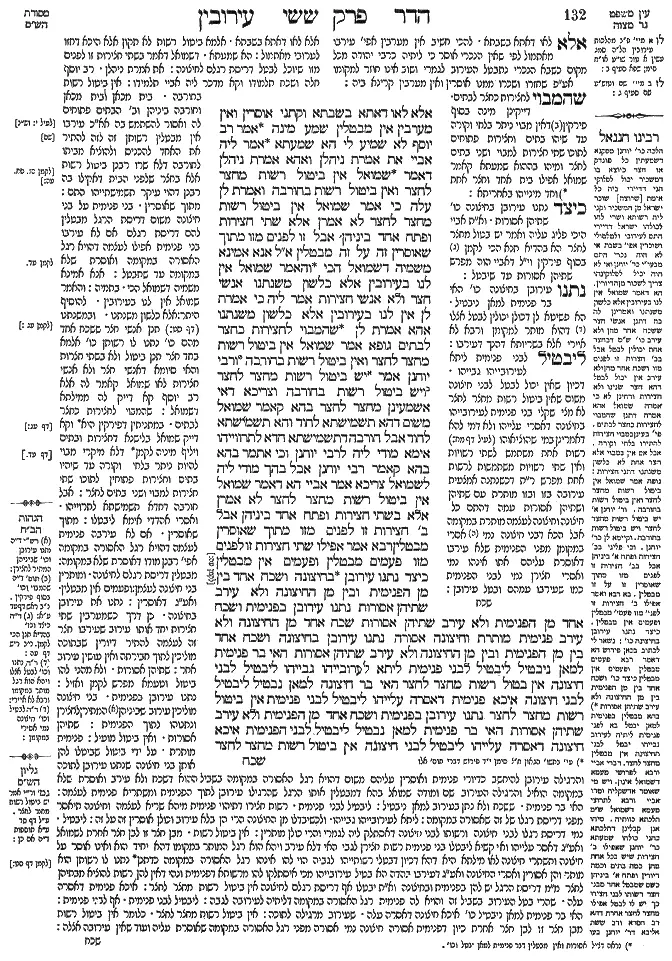
Eruvin 66b - Guemara
אלא לאו דאתא בשבתא וקתני אוסרין ואין מערבין אין מבטלין שמע מינה אמר רב יוסף לא שמיע לי הא שמעתא אמר ליה אביי את אמרת ניהלן ואהא אמרת ניהלן דאמר שמואל אין ביטול רשות מחצר לחצר ואין ביטול רשות בחורבה ואמרת לן עלה כי אמר שמואל אין ביטול רשות מחצר לחצר לא אמרן אלא שתי חצירות ופתח אחד ביניהן אבל זו לפנים מזו מתוך שאוסרין זה על זה מבטלין א"ל אנא אמינא משמיה דשמואל הכי והאמר שמואל אין לנו בעירובין אלא כלשון משנתנו אנשי חצר ולא אנשי חצירות אמר ליה כי אמרת לן אין לנו בעירובין אלא כלשון משנתנו אהא אמרת לן שהמבוי לחצירות כחצר לבתים גופא אמר שמואל אין ביטול רשות מחצר לחצר ואין ביטול רשות בחורבה ורבי יוחנן אמר יש ביטול רשות מחצר לחצר ויש ביטול רשות בחורבה וצריכא דאי אשמעינן מחצר לחצר בהא קאמר שמואל משום דהא תשמישתא לחוד והא תשמישתא לחוד אבל חורבה דתשמישתא חדא לתרווייהו אימא מודי ליה לרבי יוחנן וכי אתמר בהא בהא קאמר רבי יוחנן אבל בהך מודי ליה לשמואל צריכא אמר אביי הא דאמר שמואל אין ביטול רשות מחצר לחצר לא אמרן אלא בשתי חצירות ופתח אחד ביניהן אבל ב' חצירות זו לפנים מזו מתוך שאוסרין מבטלין רבא אמר אפילו שתי חצירות זו לפנים מזו פעמים מבטלין ופעמים אין מבטלין כיצד נתנו עירובן בחיצונה ושכח אחד בין מן הפנימית ובין מן החיצונה ולא עירב שתיהן אסורות נתנו עירובן בפנימית ושכח אחד מן הפנימית ולא עירב שתיהן אסורות שכח אחד מן החיצונה ולא עירב פנימית מותרת וחיצונה אסורה נתנו עירובן בחיצונה ושכח אחד בין מן הפנימית ובין מן החיצונה ולא עירב שתיהן אסורות האי בר פנימית למאן ניבטיל ליבטיל לבני פנימית ליתא לערובייהו גבייהו ליבטיל לבני חיצונה אין בטול רשות מחצר לחצר האי בר חיצונה למאן נבטיל ליבטיל לבני חיצונה איכא פנימית דאסרה עלייהו ליבטיל לבני פנימית אין ביטול רשות מחצר לחצר נתנו עירובן בפנימית ושכח אחד מן הפנימית ולא עירב שתיהן אסורות האי בר פנימית למאן נבטיל ליבטיל לבני הפנימית איכא חיצונה דאסרה עלייהו ליבטיל לבני חיצונה אין ביטול רשות מחצר לחצר
Comments from Rashi on Masechet Eruvin Page 66b
אלא לאו דאתא בשבתא . אלמא ביטול רשות לא תקון אלא היכא דחזו לערובי מאתמול: הא שמעתא . דשמואל דאמר בשתי חצירות זו לפנים מזו שיוכל לבטל דריסת רגלם לחיצונה: את אמרת ניהלן . רב יוסף חלה ושכח תלמודו וקא מדכר ליה אביי תלמידו: אין ביטול רשות בחורבה . בית מכאן ובית מכאן וחורבה ביניהן וב' הבתים פתוחים לה ואסור להשתמש בה אא"כ עירבו אין מבטלין רשותן זה לזה להתיר את האחד להכניס ולהוציא מביתו לחורבה דלא שרו רבנן ביטול רשות אלא בחצר שלפני הבית דאקילו בה רבנן דהוי עיקר תשמישתייהו התם: מתוך שאוסרין . בני פנימית על בני חיצונה משום דריסת הרגל מבטלין להם דריסת רגלם אם לא עירבו בני פנימית אפילו לעצמה דהויא רגל האסורה במקומה ואוסרת שלא במקומה עד שתבטל: אנא אמינא משמיה דשמואל הכי . בתמיה: והאמר שמואל אין לנו בעירובין . להוסיף היתר: אלא כלשון משנתנו . ובמשנתנו (דף סט:) תנן אנשי חצר ששכח אחד מהם כו' נתנו לו רשותן כו' אלמא בחד חצר תנן ביטול ולא בשתי חצרות והאי סיומא דאנשי חצר ולא אנשי חצירות לאו שמואל קאמר לה אלא רב יוסף קא דייק לה ממילתא דשמואל: שהמבוי לחצירות כחצר לבתים . במתניתין דפירקין היא וקא דייק שמואל בלישנא דחצירות ובתים ויליף מיניה לקמן דלא מיקרי מבוי להיות ניתר בלחי וקורה עד שיהיו בתים וחצירות פתוחין לתוכו שתי חצירות למבוי ושני בתים לחצר: אבל חורבא דחדא תשמישתא לתרוייהו . ואסרי אהדדי אימא ליבטלו: מתוך שאוסרין . אם לא עירבה פנימית לעצמה דהויא רגל האסורה במקומה אפי' רבנן מודו דאוסרת שלא במקומה: מבטלין . דריסת רגלם לחיצונה ומותרין בני חיצונה לעצמן: ופעמים אין מבטלין . ואע"ג דאוסרין: נתנו את עירובן בחיצונה . כן דרך כשמערבין שתי חצירות יחד עירוב שעירבו חצר זה לעצמה להתיר דיורין שבתוכה מוליכין לתוך חבירתה ואין עושין עירוב אחר: שתיהן אסורות . ולא מהני להו ביטול וטעמא מפרש לקמן ואזיל: נתנו עירובן בפנימית . בני חיצונה מוליכין עירוב שביניהן המתירן לחצירן ונתנוהו לתוך הפנימית: שתיהן אסורות . ואין ביטול מועיל: פנימית מותרת . על ידי ביטול שביטלו להן אותן בני חיצונה שנתנו עירובן לתוכה והרגילה עירובן להיחשב כדיורי פנימית ואוסרין עליהם משום דהויא רגל האסורה במקומה בשביל ההוא דשכח ולא עירב ואוסרת שלא במקומה הואיל והרגילה העירוב שם ומודה שמואל בהא דמבטלין אותו הרגל שהרגילו עירובן לתוך הפנימית ומשתריא פנימית לעצמה: האי בר פנימית . ששכח ולא נתן בעירוב למאן ניבטיל: ליבטיל לבני פנימית . רשות חצירו דתיהוי פנימית מיהא שריא לעצמה וחיצונה תיאסר מפני דריסת רגלו של זה שאסורה במקומה: ליתא לעירובייהו גבייהו . ולכשיבדלו מן החיצונה הרי הן בלא עירוב וכולן אוסרין זה על זה: ליבטיל . נמי דריסת רגלו לבני חיצונה ורשותו לבני חיצונה דאסתלק ליה לגמרי והרי כולן מותרין: איכא פנימית דאסרה עלה . שהרי בטל העירוב בשביל זה והוי לה פנימית רגל האסורה במקומה דליתיה לעירובה לגבה: אין ביטול רשות . מבן חצר זו לבן חצר אחרת לשמואל ואע"ג דאסר עלייהו ואי קשיא ליבטלו בני פנימית רשות חצירן לגבי האי דלא עירב ויהא הוא רגל המותר במקומו דהא יחיד הוא ואינו אוסר על חיצונה ותשתרי חיצונה לאו מילתא היא דהא דכיון דבטלי רשותייהו לגביה הוי להו אינהו רגל האסורה במקומה כדתנן נתנו לו רשותן הוא מותר והן אסורין ואסרי החיצונה ואע"ג דעירבו בהדה הא בטיל עירובייהו מכי איסתלקו להו מרשותא דפנימית ונהי דאין להן רשות להוציא מבתיהן לחצר מ"מ דריסת הרגל יש להן בפנימית ובחיצונה וא"ת יבטלו אף דריסת רגלם לחיצונה אין ביטול רשות מחצר לחצר: ליבטיל לבני פנימית . אף לבני פנימית: האי בר פנימית למאן ניבטיל כו' איכא חיצונה דאסרה עלה . שעירוב מרגילה לתוכה: אין ביטול רשות מחצר לחצר . כלומר אין ביטול רשות מבן חצר זו לבן חצר אחרת כיון דפנימית אסורה חיצונה נמי אסורה מפני רגל האסורה במקומה שאוסרת עליה ועוד שאין עירובה אצלה:
Comments from Tosafot - Eruvin 66b
אלא לאו דאתא בשבתא . להכי חשיב אין מערבין אפי' עירבו מאתמול לפי שאין הנכרי אוסר כי ליתיה כרבי יהודה מכל מקום כשבא הנכרי נתבטל העירוב לגמרי ושוב אינו חוזר למקומו אע"פ שחזרו ושכרו ממנו אוסרין ואין מערבין קרינא ביה: שהמבוי לחצירות כחצר לבתים . דייקינן מינה בסוף פירקין דאין מבוי ניתר בלחי וקורה עד שיהו בתים וחצירות פתוחים לתוכו שתי חצירות למבוי ושני בתים לחצר ומיהו בההוא שמעתא קאמר שמואל אפילו בית אחד וחצר אחת וחד מינייהו באחריתא: כיצד נתנו עירובן בחיצונה כו' שתיהן אסורות . וא"ת אביי היכי פליג עליה ואמר יש בטול מחצר לחצר הא בהדיא תנא הכי לקמן בסוף פירקין וי"ל דאביי הוה מפרש שתיהן אסורות עד שיבטל: נתנו עירובן בחיצונה כו' האי בר פנימית למאן ניבטיל . הא פשיטא לן דכולן יכולין לבטל אצלו דהוא מותר למקומן ורבא לא איירי אלא בשריותא דהנך דעירבו: ליבטיל לבני פנימית ליתא לעירובייהו גבייהו . דכיון שאין יכול לבטל לבני חיצונה משום שאין ביטול רשות מחצר לחצר לא מצי שקלי בני פנימית לעירובייהו בחיצונה דאסרי עלייהו ולא דמי להא דאמרינן במי שהוציאוהו (לעיל עירובין דף מח:) רשות אחת משתמש לשתי רשויות ואין שתי רשויות משתמשות לרשות אחת מפרש ר"ת דכשנתנה אמצעית עירובה בזו ובזו מותרת עם שתיהן ושתיהן אסורות עמה דהתם כל חיצונה וחיצונה לעצמה מותרת במקומה אבל הכא דבני חיצונה נמי אסרי במקומן מפני הפנימית שלא עירבו דאוסרת עליהם אתו אינהו נמי ואסרי חצירן נמי לבני הפנימית כמו שעירבו עמהם ובטל עירובן:
Eruvin 66b - Mishnah translated into english
Rather, is it not referring to a case where the gentile arrived on Shabbat, and Shmuel is teaching: In a place where they render each other prohibited from carrying but they may not establish an eiruv together, in such a situation they may not renounce their rights for each other. Therefore, you can learn from this that if the gentile arrived on Shabbat, they cannot rent his property and then renounce their rights to one of them. This explains Rabbi Elazar’s surprise at Rabbi Yoḥanan’s ruling, as it appears to contradict this teaching of Shmuel, his first teacher.
Rav Yosef said: I have not heard this halakha of Shmuel’s with regard to two courtyards situated one within the other, that the residents of the inner courtyard may renounce their rights to the outer courtyard in favor of the residents of that courtyard. Abaye said to him: You yourself told it to us. Rav Yosef forgot his studies due to illness, so his student Abaye would remind him of his own teachings. Abaye continued: And it was with regard to this that you told it to us. As Shmuel said: There is no renunciation of rights from one courtyard to another. In other words, while one may renounce his rights to his own courtyard for the other residents of that courtyard, he may not renounce his rights to another courtyard for the residents of that courtyard.
Likewise, there is no renunciation of property rights in a ruin. If a ruin was shared by two houses, neither can renounce its rights to the ruin in favor of the other. The Sages instituted renunciation of rights only with regard to a courtyard, as that is the typical case.
And you said to us with regard to this matter: When Shmuel said that there is no renouncing of rights from one courtyard to another, we said this only with regard to a case of two courtyards, one alongside the other and each opening into an alleyway, that have a single opening between them. However, if the two courtyards were situated one within the other, since the residents of the courtyards render each other prohibited from carrying, they may also renounce their rights in favor of each other.
Rav Yosef said to Abaye in surprise: I said that in the name of Shmuel? Didn’t Shmuel say: We may be lenient with regard to the laws of eiruvin only in accordance with the wording of the mishna, which states that the residents of a courtyard, in the singular, may renounce their rights, but not the residents of courtyards in the plural. Therefore, the option of renouncing rights does not apply to two courtyards.
Abaye said to him: When you told us this ruling of Shmuel’s that we may be lenient with regard to the laws of eiruvin only in accordance with the wording of the mishna, you said it to us with regard to the following mishna, which states: That an alleyway in relation to its courtyards is like a courtyard in relation to its houses. Shmuel inferred from this that there must be at least two courtyards with two houses each that open into an alleyway in order to permit carrying there by means of a side post or a cross beam.
The Gemara examines the ruling of Shmuel that was cited in the previous discussion. Returning to the matter itself, Shmuel said: There is no renunciation of rights from one courtyard to another, and there is no renunciation of rights in a ruin. But Rabbi Yoḥanan disagreed and said: There is renunciation of rights from one courtyard to another, and there is renunciation of rights in a ruin.
The Gemara comments: It is necessary to explain that Shmuel and Rabbi Yoḥanan disagreed with regard to both cases, as neither case could have been learned from the other. As, if it had taught only that there is no renunciation of rights from one courtyard to another, one could have said that it is only with regard to this case that Shmuel said that there is no renunciation of rights, because the use of the one courtyard stands alone and the use of the other courtyard stands alone. Each courtyard is not used by the residents of the other courtyard, and therefore there is no renunciation of rights from one courtyard to the other. However, with regard to a ruin, where there is one common use for both neighbors, as the residents of both houses use it, I would say that he concedes to Rabbi Yoḥanan.
And conversely, if it was stated only with regard to the case of a ruin, one could have said that it is only with regard to this case that Rabbi Yoḥanan stated his position, but with regard to the other case, renouncing rights from one courtyard to another, perhaps he concedes to Shmuel. Therefore, it is necessary to teach both cases.
Abaye said: With regard to that which Shmuel said, that there is no renunciation of rights from one courtyard to another, we said this only with regard to two courtyards, one alongside the other and each opening into an alleyway, that have a single opening between them. However, if there were two courtyards, one within the other, since the residents render each other prohibited to carry, they may also renounce their rights in favor of each other.
Rava said: Even in the case of two courtyards, one within the other, sometimes the residents may renounce their rights in favor of each other, and sometimes they may not renounce them. How so? If the residents of the two courtyards placed their eiruv in the outer courtyard, and one person forgot to do so, whether he was a resident of the inner courtyard or of the outer courtyard, and he therefore did not establish an eiruv with the others, then it is prohibited to carry in both courtyards. The person who neglected to establish an eiruv renders it prohibited for the residents of both courtyards to carry, because the eiruv for both courtyards is located in the outer one, and it is prohibited to carry there without an eiruv due to the right of passage of the residents of the inner courtyard through the outer courtyard. Therefore, there is no effective eiruv at all, not even for the residents of the inner courtyard.
However, if the residents of the two courtyards placed their eiruv in the inner courtyard, the following distinction applies: If a resident of the inner courtyard forgot and did not establish an eiruv, both courtyards are prohibited. In that case, it is prohibited to carry in the inner courtyard itself, due to the one who did not join in the eiruv. Since the inner courtyard is prohibited, it also renders the outer one prohibited, as the residents of the inner courtyard must pass through it.
On the other hand, if a resident of the outer courtyard forgot and did not establish an eiruv, it is permitted to carry in the inner courtyard and it is prohibited to carry in the outer courtyard. The residents of the inner courtyard have an eiruv, as they established an eiruv together, and therefore they may carry in their courtyard. The residents of the outer courtyard do not render it prohibited for them to carry, as they do not have the right to pass through the inner courtyard, and the inhabitants of the latter could bar their entrance to the inner courtyard by locking their doors.
The Gemara explains why the residents of these courtyards cannot avail themselves of the option of renunciation: If the residents of the two courtyards placed their eiruv in the outer courtyard, and one person forgot to do so, whether he was a resident of the inner courtyard or of the outer courtyard, and he therefore did not establish an eiruv with the others, then it is prohibited to carry in both courtyards, and the person who forgot to join in the eiruv cannot renounce his rights to the courtyard. The reason for this is as follows: That resident of the inner courtyard who forgot to place his eiruv, in favor of whom can he renounce his rights? Let him renounce them in favor of the residents of the inner courtyard, yet that is ineffective, as their eiruv is not with them but in the outer courtyard. Consequently, they would remain without an eiruv, which means they would render it prohibited to carry in the outer courtyard. Let him renounce them in favor of the residents of the outer courtyard, but that too is ineffective, as Shmuel ruled that there is no renunciation of rights from one courtyard to another.
Similarly, that resident of the outer courtyard who forgot to place his eiruv, in favor of whom can he renounce his rights? Let him renounce them in favor of the residents of the outer courtyard, but there is still the inner courtyard that renders them prohibited from carrying. Let him renounce them in favor of the residents of the inner courtyard, but there is no renunciation of rights from one courtyard to another. Therefore, the mechanism of permitting carrying by means of renunciation cannot be applied in these cases.
Likewise, if the residents of the two courtyards placed their eiruv in the inner courtyard, and a resident of the inner courtyard forgot to do so and did not establish an eiruv, it is prohibited to carry in both courtyards. The reason is as follows: That resident of the inner courtyard who forgot to place his eiruv, in favor of whom can he renounce his rights? Let him renounce them in favor of the residents of the inner courtyard, yet there is still the outer courtyard that renders them prohibited from carrying, as the eiruv shared by the courtyards is in essence a valid eiruv, which gives the residents of the outer courtyard the right to enter the inner one. Let him renounce them in favor of the residents of the outer courtyard, but that is ineffective, as Shmuel maintains that there is no renunciation of rights from one courtyard to another. In that case, since the inner courtyard is prohibited, it renders it prohibited to carry in the outer one as well.
Traduction : The William Davidson digital edition of the Koren Noé Talmud, with commentary by Rabbi Adin Even-Israel Steinsaltz.