 Talmud Bavli
Eruvin 57b : Youtube
Rabi Yitzchok LobensteinYoutube
2 video classes :
Eruvin Page 57b
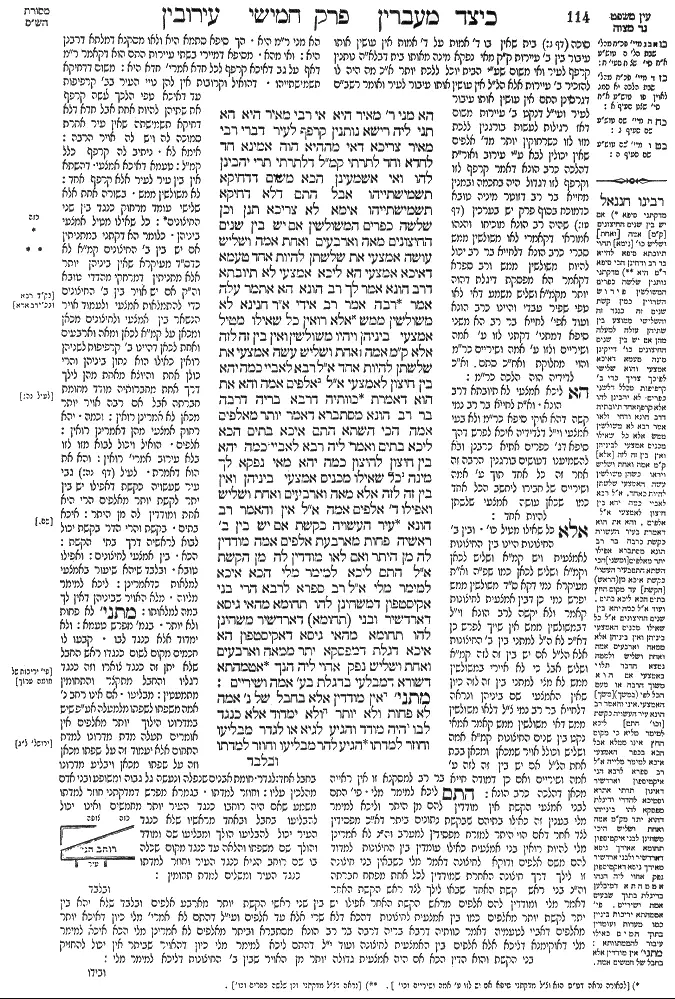
Eruvin 57b - Guemara
הא מני ר' מאיר היא אי רבי מאיר היא הא תני ליה רישא נותנין קרפף לעיר דברי רבי מאיר צריכא דאי מההיא הוה אמינא חד לחדא וחד לתרתי קמ"ל דלתרתי תרי יהבינן להו ואי אשמעינן הכא משום דדחיקא תשמישתייהו אבל התם דלא דחיקא תשמישתייהו אימא לא צריכא תנן וכן שלשה כפרים המשולשין אם יש בין שנים החיצונים מאה וארבעים ואחת אמה ושליש עושה אמצעי את שלשתן להיות אחד טעמא דאיכא אמצעי הא ליכא אמצעי לא תיובתא דרב הונא אמר לך רב הונא הא אתמר עלה אמר רבה אמר רב אידי א"ר חנינא לא משולשין ממש אלא רואין כל שאילו מטיל אמצעי ביניהן ויהיו משולשין ואין בין זה לזה אלא ק"מ אמה ואחת ושליש עשה אמצעי את שלשתן להיות אחד א"ל רבא לאביי כמה יהא בין חיצון לאמצעי א"ל אלפים אמה והא את הוא דאמרת כוותיה דרבא בריה דרבה בר רב הונא מסתברא דאמר יותר מאלפים אמה הכי השתא התם איכא בתים הכא ליכא בתים ואמר ליה רבא לאביי כמה יהא בין חיצון לחיצון כמה יהא מאי נפקא לך מינה כל שאילו מכניס אמצעי ביניהן ואין בין זה לזה אלא מאה וארבעים ואחת ושליש ואפילו ד' אלפים אמה א"ל אין והאמר רב הונא עיר העשויה כקשת אם יש בין ב' ראשיה פחות מארבעת אלפים אמה מודדין לה מן היתר ואם לאו מודדין לה מן הקשת א"ל התם ליכא למימר מלי הכא איכא למימר מלי א"ל רב ספרא לרבא הרי בני אקיסטפון דמשחינן להו תחומא מהאי גיסא דארדשיר ובני (תחומא) דארדשיר משחינן להו תחומא מהאי גיסא דאקיסטפון הא איכא דגלת דמפסקא יתר ממאה וארבעים ואחת ושליש נפק אחוי ליה הנך אטמהתא דשורא דמבלעי בדגלת בע' אמה ושיריים:
מתני׳ אין מודדין אלא בחבל של נ' אמה לא פחות ולא יותר ולא ימדוד אלא כנגד לבו היה מודד והגיע לגיא או לגדר מבליעו וחוזר למדתו הגיע להר מבליעו וחוזר למדתו
Comments from Rashi on Masechet Eruvin Page 57b
הא מני ר"מ היא . הך סיפא סתמא היא ולאו מסקנא דמלתא דרבנן היא: ואי מהא . מסיפא דמיירי בשתי עיירות התם הוא דקאמר ר"מ דאף על גב דאיכא קרפף לכל חדא אמרי' חדא היא: משום דדחיקא תשמישתייהו . דהואיל וקרובות אין להן נויי העיר בב' קרפיפות עד דאיכא טפי הלכך עשה קרפף את שתיהן להיות אחת אבל חדא דלא דחיקא תשמישתיה שאין עיר אחרת סמוכה לה ויש לה אויר הרבה: אימא לא . ניתיב לה קרפף כלל קמ"ל: טעמא דאיכא אמצעי . דהשתא אין בין עיר לעיר אלא קרפף אחד: לא משולשין ממש . בשורה אחת אלא שלישי עומד מרחוק כנגד בין שני החיצונים: כל שאילו מטיל אמצעי ביניהן . כלומר הא דקתני במתניתין אם יש בין ב' החיצונים קמ"א לא כדס"ד מעיקרא שאין ביניהן יותר אלא מתניתין דמרחקי מהדדי טובא וה"ק אם יש אויר בין ב' החיצונים כדי להתמלאות אמצעי ולעמוד אויר הנשאר בין אמצעי ולחיצונים מכאן ומכאן על קמ"א לכאן ומאה וארבעים ואחת לכאן דהיינו ב' קרפיפות לשניהן רואין כאילו הוא נתון ביניהן והרי כולן אחת והיוצא מאחת מהן לילך דרך אחת מחברותיה מודד מחומת חברתה אבל אם רבה אויר יותר מכאן לא אמרינן רואין: וכמה . יהא רחוק אמצעי מהן דאמרינן רואין: אלפים . הואיל ויכול לבוא מזו לזו בלא עירוב אמרי' רואין: והא את הוא דאמרת . לעיל (עירובין דף נה:) גבי עיר שעשויה כקשת דאפילו יש בין יתר לקשת יותר מאלפים הרי היא אחת ומודדין לה מן היתר: איכא בתים . בקשת והרי הדר בקשת יכול לבוא לראשיה דרך בתי הקשת: הכא . בין אמצעי לחיצונים: ואפילו טובא . ובלבד שיהא שיעור באמצעי למלאות כדאמרינן: ליכא למימר מליוה . מלא האויר שביניהן דאין לך במה למלאותו: מתני' לא פחות ולא יותר . בגמ' מפרש טעמא: ולא ימדוד אלא כנגד לבו . קבעו לו חכמים מקום לשום כנגדו ראש החבל שלא יתן זה כנגד צוארו וזה כנגד רגליו והחבל מתקצר והתחומין מתמעטין: לגדר . חומת אבנים שנפלה ונעשה גל גבוה ומשופע ובני אדם מהלכין עליו: מבליעו . אם אינו רחב נ' אמה משפתו לשפתו מלמעלה אע"פ שיש במדרונו הילוך יותר מאלפים אין אומרים תעלה מדת מדרונו למדת התחום אלא יעמוד זה על שפתו מכאן וזה על שפתו מכאן ויבליע מדרונו בחבל אחד: וחוזר למדתו . בגמרא מפרש דמדקתני חוזר למדתו משמע שאם היה רוחבו כנגד העיר יותר מחמשים ואינו יכול להבליעו בחבל ובאחד מראשיו שלא כנגד העיר יכול להבליעו הולך ומבליעו שם ומודד והולך שם משפתו והלאה עד כנגד מקום שכלה בו שם רוחב הגיא כנגד העיר וחוזר למדתו כנגד העיר ומשלים למדת תחומין: 
Comments from Tosafot - Eruvin 57b
הא ליכא אמצעי לא תיובתא דרב הונא . וא"ת לחייא בר רב נמי קשה דהא אוקי סיפא כר"מ ולא בעי אמצעי וי"ל דלדידיה איכא לפרש דהך סיפא דג' כפרים אתיא כרבנן ובא להשמיענו דעושים בורגנין הרבה זה אחר זה כל אחד תוך ע' אמה ושיריים של חבירו ליחשב הכל אחד כמו שכאן עושה אמצעי שלשתן להיות אחד: אלא כל שאילו מטיל כו' . ובין ב' החיצונות היינו בין החיצונות לאמצעית ויש קמ"א ושליש לכאן וקמ"א ושליש לכאן כמו שפ"ה וא"ת מעיקרא נמי דקא ס"ד משולשין ממש יפרש נמי כן דבין אמצעית לחיצונות קאמר ולא יקשה לרב הונא וי"ל דבמשולשין ממש אין שייך לפרש כן דא"כ לא ה"ל למתני בין ב' החיצונות אלא הל"ל אם יש בין זה לזה קמ"א ושליש אבל כי לא איירי במשולשין ממש לא מצי למתני בין זה לזה כיון שאין האמצעי שם ביניהן ונראה דלחייא בר רב נמי צ"ל דלאו משולשין ממש דאי משולשין ממש קאמר אמאי נקט בין שנים החיצונות קמ"א אמה ושליש וכולל אויר שמכאן ומכאן בבת אחת הל"ל אם יש בין זה לזה ע' אמה ושיריים ואם כן דמודה חייא בר רב למסקנא זו אין ראייה מכאן דהלכה כרב הונא: התם ליכא למימר מלי . פי' התם לבני אמצעי הקשת אין מודדין להם מן היתר וליכא למימר מלי בענין זה כאילו בתיהם שבקשת נתונים ביתר דא"כ מפסידין לצד אחר דאם הוי היתר למזרח מפסידין למערב וה"נ לא אמרינן מלי להיות רואין בני אמצעית כאילו עומדין בין החיצונות למדוד להם משם אלפים ודוקא לחיצונה דאמר מלי כשבאין בני חיצונה זו לילך דרך חיצונה האחרת שמודדין לכל אחת מפתח חברתה וה"נ בני ראש קשת האחד שבאו לילך לצד ראש הקשת האחר דאמר מלי ומודדין להם אלפים מראש הקשת האחר אפילו יש בין שני ראשי הקשת יותר מארבע אלפים ובלבד שלא יהא בין יתר לקשת יותר מאלפים כמו בין אמצעית לחיצונות דהכא דלא שרי אלא עד אלפים ועי"ל דהתם לא אמרי' מלי כיון דאיכא יותר מאלפים דאביי לטעמיה דאמר כוותיה דרבא בריה דרבה בר רב הונא מסתברא וביתר מאלפים לא אמרינן מלי הכא איכא למימר מלי דאוקימנא דליכא אלא אלפים בין האמצעית לחיצונה ועוד י"ל דהתם ליכא למימר מלי כיון דהאויר שביתר אין יכול להחזיק בני הקשת והוא הדין הכא אם היה אמצעית גדולה יותר מן האויר שבין ב' החיצונות דליכא למימר מלי: הגיע להר מבליעו . וא"ת אמאי לא כייל להו בהדי הדדי הגיע להר או לגדר מבליעו וי"ל משום סיפא דתני שמעתי שמקדרין בהרים לכך תני הר בפני עצמו אע"ג דקידור שייך נמי בגיא וגדר ואם נאמר דגיא וגדר שוין לגמרי והר חלוק קצת מהן הוה ניחא:
Eruvin 57b - Mishnah translated into english
In accordance with whose opinion is this clause of the mishna? It is the opinion of Rabbi Meir, who maintains that one allocates a karpef to each city.
The Gemara continues to ask: If it is in accordance with the opinion of Rabbi Meir, didn’t we already learn in the first clause: One allocates a karpef to each city; this is the statement of Rabbi Meir? What need is there to mention Rabbi Meir’s opinion again?
The Gemara answers: It was necessary to mention his opinion again, as, if we had learned his opinion only from that first clause, I might have said that one allocates one karpef for one city and also one karpef for two cities. Therefore, the mishna teaches us that for two cities, one allocates two karpef areas.
And conversely, if the mishna had taught us this law only here, with regard to two cities, one might have said that only in that case is each city granted a separate karpef, because a smaller space between the two adjacent cities would be too crowded for the use of both cities. But there, with regard to one city, where the area of the city itself is not too crowded for the use of its residents, one might say that it is not given any karpef whatsoever. Therefore, it was necessary for the mishna to teach both clauses.
The Gemara tries again to adduce proof from the mishna, in which we learned: And likewise, in the case of three villages that are aligned in a row, if there is only 141⅓ cubits separating between the two outer ones, the middle village combines the three villages into one. At this point the Gemara understands that the mishna here is dealing with three villages arranged in a straight line. Therefore, it makes the following inference: The reason that the three villages are considered as one is only because there is a middle village, but were there no middle village, they would not be considered as one. This appears to be a conclusive refutation of the opinion of Rav Huna. According to Rav Huna, the two villages should be considered as one even without the middle village, due to the double karpef.
The Gemara rejects this argument: Rav Huna could have said to you: Wasn’t it stated with regard to that mishna that Rabba said that Rav Idi said that Rabbi Ḥanina said: It does not mean that the villages are actually aligned in a row of three villages in a straight line. Rather, even if the middle village is off to one side and the outer villages are more than two karpef lengths apart, we see their spacing and make the following assessment: Any case where, if the middle village were placed between the other two so that they were three villages aligned in a row, there would be only a distance of 141⅓ cubits between one and the other, then the middle village turns the three villages into one. According to this explanation, the mishna can be understood even as a support for the opinion of Rav Huna.
With regard to this case, Rava said to Abaye: How much distance can there be between an outer village and the middle one, if the latter is still to combine the three villages into one? Abaye said to him: Two thousand cubits.
Rava replied: Wasn’t it you yourself who said: It is reasonable to rule in accordance with the opinion of Rava, son of Rabba bar Rav Huna, who said: The Shabbat limit of a bow-shaped city is measured from the imaginary bowstring stretched between the two ends of the city, even if the distance between the center of the string and the center of the bow is more than two thousand cubits. Why shouldn’t the three villages in this case be considered a single village also, even if they are separated by more than two thousand cubits?
Abaye rejected the comparison: How can you compare? There, in the case of the bow-shaped city, there are houses that combine the city into a single unit, whereas here, there are no houses linking the outer villages. Therefore, if two villages are separated by more than two thousand cubits, the measure of the Shabbat limit, they cannot be considered a single entity.
And Rava said to Abaye: How much distance can there be between one outer village and the other outer village? Abaye expressed surprise at this question: How much distance can there be between them? What is the practical difference to you? Any case where, if the middle village were placed between them, there would be only a distance of 141⅓ cubits between one and the other, the middle village turns the three villages into one. Therefore, the critical detail is not the distance between the outer villages but the size of the middle village.
Rava continued his line of questioning: Is this true even if the distance between the two outer villages is four thousand cubits? Abaye said to him: Yes. Rava asked: Didn’t Rav Huna say the following with regard to a city shaped like a bow: If the distance between its two ends is less than four thousand cubits, one measures the Shabbat limit from the imaginary bowstring stretched between the two ends of the bow; and if not, one measures the Shabbat limit from the bow itself? This indicates that even if there is an uninterrupted string of houses linking the two ends of the city, if the two ends are separated by more than four thousand cubits, the distance is too great for it to be considered a single city.
Abaye said to him: There, in the case of the bow-shaped city, there is no room to say: Fill it in, as there is nothing with which to fill in the empty space between the two ends of the city. However, here, in the case of the villages, there is room to say: Fill it in, as the middle village is seen as though it were projected between the two outer villages, and therefore all three combine into a single village.
Rav Safra said to Rava: With regard to the people of the city of Akistefon, for whom we measure the Shabbat limit from the far end of the city of Ardeshir, and the people of Ardeshir, for whom we measure the Shabbat limit from the far end of Akistefon, as though the two settlements were a single city; isn’t there the Tigris River, which separates them by more than 141⅓ cubits? How can two cities that are separated by more than two karpef-lengths be considered a single entity?
Rava went out and showed Rav Safra the foundations of a wall of one of the cities, which were submerged in the Tigris River at a distance of seventy cubits and a remainder from the other city. In other words, the two cities were in fact linked through the remnants of a wall submerged in the river.
MISHNA: One may measure a Shabbat limit only with a rope fifty cubits long, no less and no more, as will be explained in the Gemara. And one may measure the limit only at the level of one’s heart, i.e., whoever comes to measure the limit must hold the rope next to his chest.
If one was measuring the limit and he reached a canyon or a fence, the height of the fence and the depth of the canyon are not counted toward the two thousand cubits; rather, he spans it and then resumes his measurement. Two people hold the two ends of the rope straight across the canyon or the fence, and the distance is measured as though the area were completely flat. If one reached a hill, he does not measure its height; rather, he spans the hill as if it were not there and then resumes his measurement,
Traduction : The William Davidson digital edition of the Koren Noé Talmud, with commentary by Rabbi Adin Even-Israel Steinsaltz.