 Talmud Bavli
Eruvin 45b : Youtube
Rabi Yitzchok LobensteinYoutube
2 video classes :
Eruvin Page 45b
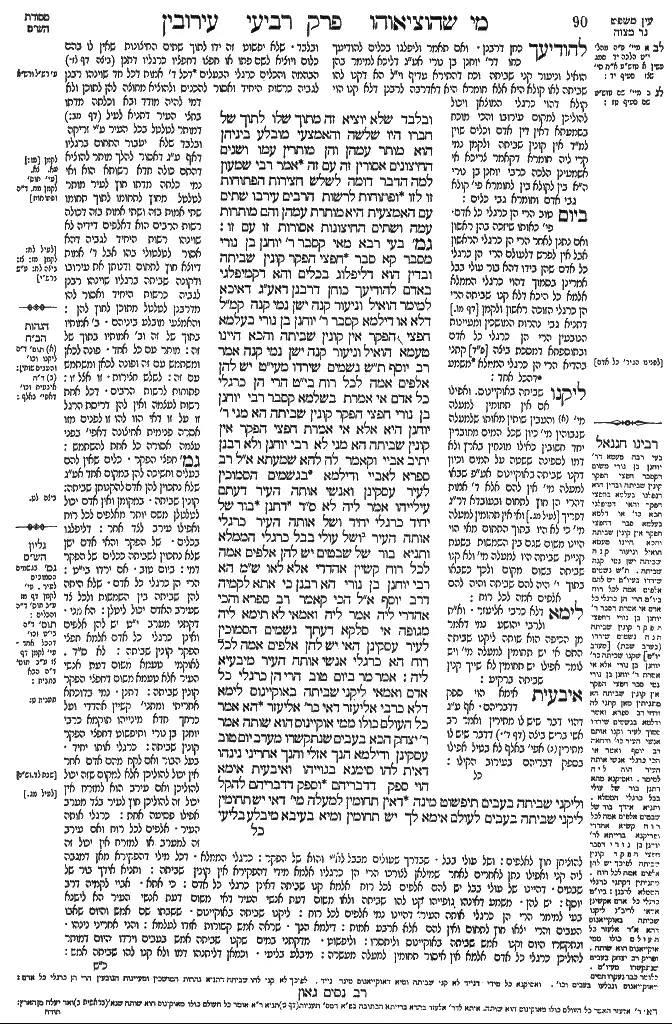
Eruvin 45b - Guemara
ובלבד שלא יוציא זה מתוך שלו לתוך של חברו היו שלשה והאמצעי מובלע ביניהן הוא מותר עמהן והן מותרין עמו ושנים החיצונים אסורין זה עם זה אמר רבי שמעון למה הדבר דומה לשלש חצירות הפתוחות זו לזו ופתוחות לרשות הרבים עירבו שתים עם האמצעית היא מותרת עמהן והם מותרות עמה ושתים החיצונות אסורות זו עם זו:
גמ׳ בעי רבא מאי קסבר ר' יוחנן בן נורי מסבר קא סבר חפצי הפקר קונין שביתה ובדין הוא דליפלוג בכלים והא דקמיפלגי באדם להודיעך כוחן דרבנן דאע"ג דאיכא למימר הואיל וניעור קנה ישן נמי קנה קמ"ל דלא או דילמא קסבר ר' יוחנן בן נורי בעלמא חפצי הפקר אין קונין שביתה והכא היינו טעמא הואיל וניעור קנה ישן נמי קנה אמר רב יוסף ת"ש גשמים שירדו מעי"ט יש להן אלפים אמה לכל רוח בי"ט הרי הן כרגלי כל אדם אי אמרת בשלמא קסבר רבי יוחנן בן נורי חפצי הפקר קונין שביתה הא מני ר' יוחנן היא אלא אי אמרת חפצי הפקר אין קונין שביתה הא מני לא רבי יוחנן ולא רבנן יתיב אביי וקאמר לה להא שמעתא א"ל רב ספרא לאביי ודילמא בגשמים הסמוכין לעיר עסקינן ואנשי אותה העיר דעתם עילייהו אמר ליה לא ס"ד דתנן בור של יחיד כרגלי יחיד ושל אותה העיר כרגלי אותה העיר ושל עולי בבל כרגלי הממלא ותניא בור של שבטים יש להן אלפים אמה לכל רוח קשיין אהדדי אלא לאו ש"מ הא רבי יוחנן בן נורי הא רבנן כי אתא לקמיה דרב יוסף א"ל הכי קאמר רב ספרא והכי אהדרי ליה אמר ליה ואמאי לא תימא ליה מגופה אי סלקא דעתך גשמים הסמוכין לעיר עסקינן האי יש להן אלפים אמה לכל רוח הא כרגלי אנשי אותה העיר מיבעיא ליה:
אמר מר ביום טוב הרי הן כרגלי כל אדם ואמאי ליקני שביתה באוקיינוס לימא דלא כרבי אליעזר דאי כר' אליעזר הא אמר כל העולם כולו ממי אוקיינוס הוא שותה אמר ר' יצחק הכא בעבים שנתקשרו מערב יום טוב עסקינן ודילמא הנך אזלי והנך אחריני נינהו דאית להו סימנא בגוייהו ואיבעית אימא הוי ספק דדבריהם וספק דדבריהם להקל וליקני שביתה בעבים תיפשוט מינה דאין תחומין למעלה מי' דאי יש תחומין ליקני שביתה בעבים לעולם אימא לך יש תחומין ומיא בעיבא מיבלע בליעי
Comments from Rashi on Masechet Eruvin Page 45b
ובלבד . שלא יפשוט זה ידו לתוך שתים החיצונות שאין לו בהם כלום ויוציא לשם פתו או חפצו דחפציו כרגליו דתנן (ביצה דף לז.) הבהמה והכלים כרגלי הבעלים דכל ד' אמות דכל חד שוינהו רבנן לגביה כרשות היחיד ואסור להכניס ולהוציא מחוצה להן לתוכן ולא דמי להיה מודד ובא וכלתה מדתו בחצי העיר דתניא לעיל (עירובין דף מב:) דמותר לטלטל בכל העיר ע"י זריקה ובלבד שלא יעבור התחום ברגליו דאף ע"ג דאסור להלך מותר להוציא דהתם כולה חדא רשותא הוא ואי נמי כלתה מדתו חוץ לעיר מותר לטלטל מחוץ לתחומו לתוך תחומו שתי אמות בזה ושתי אמות בזה דכולה רשות הרבים הוא דאלפים דידיה לא שוינהו רשות היחיד לגביה דהא אסור לטלטולי בהו אבל ד' אמות דיוצא חוץ לתחום ודנותן את עירובו ודקונה שביתה ברגליו שוינהו רבנן לגביה כרשות היחיד ואסור להו מדרבנן לטלטל מתוכן לחוץ להן: והאמצעי מובלע ביניהם . ב' אמותיו בתוך של זה ושתי אמותיו בתוך של זה: מותר עם כל אחד . פונה לכאן ומשתמש עם זה ופונה לכאן ומשתמש עם זה: לשלש חצירות . זו אצל זו: פתוחות לרה"ר . דכל אחת רשות לעצמה ואין להן דריסת הרגל זו על זו דאי הוו להו זו לפנים מזו אסרה פנימית אחיצונה דאפילו בפני עצמה אסורה כל אחת להשתמש: גמ' חפצי הפקר . כלים שאין להם בעלים וחשיכה להן במקום אחד אע"ג שלא נתכוין להן אדם להקנותן שביתה: קונין שביתה . במקומן ואין אדם יכול לטלטלן משם יותר מאלפים לכל רוח ואפילו עירב לצד אחר: דליפלגו בכלים . של הפקר והאי אדם ישן שלא נתכוין לשביתה ככלים של הפקר דמי: ביום טוב . אם ירדו בי"ט: הרי הן כרגלי כל אדם . שלא היתה להן שביתה בין השמשות ולכל צד שעירב האדם יכול ליטלן: הא מני . דקתני מערב י"ט יש להן אלפים ואינן כרגלי כל אדם אלמא חפצי הפקר קונין שביתה: לא ס"ד . לאוקמי טעמא משום דעת אנשי העיר אלא טעמא משום דחפצי הפקר קונין שביתה: דתנן . נמי בדוכתא אחריתי ומתני' קשיין אהדדי ועל כרחך חדא מינייהו תוקמא כרבי יוחנן בן נורי ותיפשוט דחפצי הפקר קונין שביתה: כרגלי אותו יחיד . בעל הבור ואם לקח מהם אדם אחר אין יכול להוליכן אלא למקום שזה יכול להוליכן ואם עירב הוא למזרח אין יכול זה להוליכן חוץ לעיר בצד מערב אפילו פסיעה אחת: כרגלי אותה העיר . אלפים לכל רוח ואם עירב זה למערב או למזרח אין יכול זה להוציאן חוץ לאלפים: ושל עולי בבל . שבדרך שעולים מבבל לא"י והוא של הפקר: כרגלי הממלא . דכל מילי דהפקירא מאן דמגבה ליה קני ואפילו נתן לאחרים לאחר שמילאן לצורכו הרי הן כרגליו אלמא מידי דהפקירא אין קונין שביתה: ותניא אידך בור של שבטים . דהיינו של עולי בבל יש להם אלפים לכל רוח אלמא קנו שביתה דאינן כרגלי כל אדם: כי אתא . אביי לקמיה דרב יוסף: יש להן . משמע דאינהו גופייהו קנו להו שביתה ולאו משום דעת אנשי העיר דאי משום דעת אנשי העיר הא לישנא בעי למימר הרי הן כרגלי אותה העיר דהיינו נמי אלפים לכל רוח: ליקנו שביתה באוקיינוס . ששבתו שם אמש והיום שאבו העבים והרי יצאו חוץ לתחום ואין להם אלא ארבע אמות: דילמא הנך . שראה אמש קשורות אזדו לעלמא: והני אחריני נינהו . ונתקשרו היום וקנו אמש שביתה באוקיינוס וליתסרו: וליפשוט . מדקתני במים שקנו שביתה אמש בעבים וירדו היום דמותר להוליכן כרגלי כל אדם אלמא אין איסור תחומין למעלה מעשרה: מיבלע בליעי . וכמאן דליתנהו דמו ולא קנו להו שביתה אמש:
Comments from Tosafot - Eruvin 45b
להודיעך כחן דרבנן . ואם תאמר וליפלגו בכלים להודיעך כחו דר' יוחנן בן נורי אע"ג דליכא למימר בהן הואיל וניעור קני שביתה וכח דהתירא עדיף וי"ל הא דקנו להו שביתה לאו קולא היא אלא חומרא היא דאדרבה לרבנן דלא קנו הוי קולא דהוי כרגלי המוצאן ויכול להוליכן למקום עירובו והכי מוכח בשמעתא דאין דין אדם וכלים שוין למ"ד אין קונין שביתה ולקמן נמי קרי ליה חומרא דקאמר צריכא אי אשמעינן הלכה כרבי יוחנן בן נורי ה"א בין לקולא בין לחומרא פי' קולא גבי אדם וחומרא גבי כלים: ביום טוב הרי הן כרגלי כל אדם . פי' כאותו שיזכה בהן ראשון ואם נתנן לאחר הרי הן כרגלי הראשון אבל אין לפרש דלעולם הרי הן כרגלי כל אדם שהן בידו דהא בור עולי בבל אמרינן בסמוך דהוי כרגלי הממלא אלמא כל היכא דלא קנו שביתה הרי הן כרגלי הזוכה ראשון ולקמן [עירובין דף מו.] דתניא גבי נהרות המושכין ומעיינות הנובעין הרי הן כרגלי כל אדם ובתוספתא דמסכת ביצה [פ"ד] קתני בהדיא הרי הן כרגלי הממלא משמע דהכל אחד: ליקנו שביתה באוקיינוס . ואפילו אם אין תחומין למעלה מי' והעבין שותין מאותו שלמעלה שגבוהין מי' כיון שכל המים מחוברין יחד חשובין כאילו מונחין בארץ ולא דמו לספינה ששטה על המים וכיון דקנו שביתה באוקיינוס אע"פ שבאו למעלה מי' אין להם אלא ד' אמות דהרי הן חוץ לתחום ובעובדא דר"ג דפריך [לעיל (עירובין מג.)] ואי אין תחומין למעלה מי' כי לא היו בתוך התחום מאי הוי היינו משום שגם בין השמשות בשעת קניית שביתה היו למעלה מי' ולא קנו שביתה בשום מקום ולכך כשבאו בתוך י' היה להם שביתה והיה להם אלפים אמה לכל רוח: לימא דלא כרבי אליעזר . וא"ת ולרבי יהושע נמי דאמר מן הכיפה הוא שותה ליקנו שביתה התם אי יש תחומין למעלה מי' ויש לומר אפילו יש תחומין לא שייך קנין שביתה ברקיע: איבעית אימא הוי ספק דדבריהם . אף ע"ג דהוי דבר שיש לו מתירין ואמר רב אשי בריש ביצה (דף ד'.) דדבר שיש לו מתירין אפי' באלף לא בטיל אפילו בספק דבריהם בעירוב הקילו:
Eruvin 45b - Mishnah translated into english
provided that the one does not carry anything from his four-cubit limit into that of his fellow.
With regard to a case where there were three people in this situation, and certain parts of the four cubits of the middle one were subsumed within the respective limits of each of the others, so that he shared a certain area with each of them, he is permitted to eat with either of them, and they are both permitted to eat with him; but the two outer ones are forbidden to eat with each other, since they share no common area.
Rabbi Shimon said: To what is this comparable? It is like three courtyards that open into one another, and also open into a public domain. If the two outer courtyards established an eiruv with the middle one, the middle one is permitted to carry to the two outer ones, and they are permitted to carry to it, but the two outer courtyards are prohibited to carry from one to the other, as they did not establish an eiruv with one another.
GEMARA: Rava raised a dilemma: What does Rabbi Yoḥanan ben Nuri hold? Does he hold that ownerless objects acquire residence for Shabbat, i.e., even an article that does not belong to anyone acquires residence at the onset of Shabbat and can therefore be carried two thousand cubits in each direction?
And according to this understanding, Rabbi Yoḥanan ben Nuri should by right have disagreed with the Rabbis even about utensils that were left in the field, i.e., that according to the opinion of Rabbi Yoḥanan ben Nuri, ownerless utensils can be moved two thousand cubits in each direction. And the reason that they disagreed about a person is to convey the far-reaching nature of the stringent ruling of the Rabbis, that although there is room to say: Since a person who is awake acquires for himself two thousand cubits, he also acquires them if he is sleeping, the mishna nonetheless teaches us that the Rabbis did not accept this argument, and this is why the dispute is taught specifically with respect to a person.
Or perhaps we should understand his position differently, that in general Rabbi Yoḥanan ben Nuri holds that ownerless objects do not acquire residence of their own. But here, with regard to a person, the reason is as follows: Since a person who is awake acquires for himself two thousand cubits, he also acquires them if he is sleeping.
Rav Yosef said: Come and hear a solution to this dilemma from the following baraita: Rain that fell on the eve of a Festival has two thousand cubits in each direction, meaning that one is permitted to carry the rainwater within a radius of two thousand cubits. But if the rain fell on the Festival itself, it is like the feet of all people, as it did not acquire residence, and consequently one is permitted to carry this water wherever he is permitted to walk.
Granted, it is understandable if you say that Rabbi Yoḥanan ben Nuri holds that ownerless objects acquire residence; in accordance with whose opinion is this baraita? It is that of Rabbi Yoḥanan ben Nuri, and consequently the rain that fell on the eve of the Festival acquired residence in the spot where it fell.
However, if you say that he maintains that ownerless objects do not acquire residence, in accordance with whose opinion is this baraita? Neither that of Rabbi Yoḥanan ben Nuri, nor that of the Rabbis, as it clearly indicates that rain acquires a place of residence even though it has no owner. Rather, we must say that Rabbi Yoḥanan ben Nuri is of the opinion that ownerless objects acquire residence, and this baraita is in accordance with his opinion.
Abaye sat and recited this tradition. Rav Safra said to Abaye: Perhaps we are dealing with rain that fell near a city, and the inhabitants of that city had it in mind, and that is why it acquires two thousand cubits in each direction.
Abaye said to him: It should not enter your mind that such an understanding is correct, as we learned in a mishna: A cistern that belongs to an individual, its water is like the feet of that individual, the owner of the cistern, in that it may be carried wherever he is permitted to walk. And a cistern that belongs to a particular city, its water is like the feet of the people of that city, in that it may be carried wherever the inhabitants of that city may walk, i.e., two thousand cubits in each direction from the city. And a cistern that belongs to pilgrims from Babylonia on the way to Eretz Yisrael, meaning that it belongs to all Jews and has no particular owner, its water is like the feet of the one who draws the water, in that it may be carried wherever he is permitted to walk.
And it was taught in a baraita: A cistern that belongs to one of the tribes and has no particular owner, its water has two thousand cubits in each direction. If so, these two sources contradict each other, as the mishna teaches that water that belongs to the entire community does not establish residence, whereas the tanna of the baraita holds that it may be carried two thousand cubits from its place.
Rather, in order to resolve the contradiction, learn from here: This source, which states that the water may be carried two thousand cubits, was taught in accordance with the opinion of Rabbi Yoḥanan ben Nuri, who says that even ownerless objects acquire residence; that source, which states that water that does not belong to any particular person is like the feet of the one who draws it, was taught in accordance with the opinion of the Rabbis, who say that ownerless objects do not acquire residence.
The Gemara relates that when Abaye came before Rav Yosef, he said to him: This is what Rav Safra said, and this is what I answered him. Rav Yosef said to him: And why did you not answer him from the baraita itself? If it should enter your mind that we are dealing with rain that fell near a city, how can you understand the statement that the rainwater has two thousand cubits in each direction?
According to your understanding, that the rainwater may be carried two thousand cubits because the inhabitants of the town had it in mind, the baraita should have said: The rainwater is like the feet of the inhabitants of that city. Rather, you must say that the inhabitants of the city did not acquire the water and that it may be carried within a radius of two thousand cubits, because the baraita was taught in accordance with the opinion of Rabbi Yoḥanan ben Nuri, that ownerless objects acquire residence.
The Gemara further examines the baraita cited earlier. The Master said: If rain fell on the Festival itself, it is like the feet of all people. The Gemara raises a difficulty: And why should this be? The water should have acquired residence in the ocean [okeyanos], where it was when the Festival began. And since the water went out on the Festival beyond its limit after it evaporated and formed into clouds, moving the water more than four cubits should be prohibited.
Let us say that this baraita was taught not in accordance with the opinion of Rabbi Eliezer. Because if it is in accordance with the opinion of Rabbi Eliezer, he said: The entire world drinks from the waters of the ocean; that is to say, evaporated ocean water is the source of rain.
Rabbi Yitzḥak said: Here we are dealing with clouds that were already formed on the eve of the Festival. Since these clouds were already formed before the Festival, the water did not acquire residence in the ocean or travel beyond its limit on the Festival.
The Gemara asks: But perhaps those clouds that had already been formed on the eve of the Festival went away, and these clouds, from which the rain fell, are others that did acquire residence in the ocean? The Gemara answers: We are dealing here with a case where there is an identifying sign that these are the same clouds and not others.
And if you wish, say that there is another reason we are not concerned that these might be other clouds: This matter of whether or not they are the same clouds pertains to an uncertainty with respect to a rabbinic law, and the principle is that with regard to an uncertainty concerning a rabbinic law, one may follow the lenient understanding.
The Gemara asks: Let the water acquire residence in the clouds, where it was when the Festival began, and its limit should be measured from there. Since the baraita taught that the water is like the feet of all people, if so, resolve from here another dilemma, and say that there is no prohibition of Shabbat limits above ten handbreadths, and one is permitted to travel more than two thousand cubits above this height. For if there is a prohibition of Shabbat limits above ten handbreadths, let the water acquire residence in the clouds.
The Gemara rejects this argument: Actually, I can say to you: There is a prohibition of Shabbat limits even above ten handbreadths, and the water does not acquire residence in the clouds because it is absorbed in the clouds. Since water does not exist in its usual state within the clouds, but rather takes on a different form, it does not acquire residence there.
Traduction : The William Davidson digital edition of the Koren Noé Talmud, with commentary by Rabbi Adin Even-Israel Steinsaltz.